Hiking Backpacks
Atom Packs Mo 50L Review: A Lightweight Handmade Pack for Multi-Day Adventures
A detailed look at the Atom Packs Mo 50L, a roughly 900 g roll-top backpacking pack with custom torso and hip belt sizing, tough fabrics and a mouldable frame.
Introduction
The Atom Packs Mo 50L is a lightweight backpacking pack built for multi-day trips, and it arrives with a set of design decisions that clearly come from time spent on real trails. It offers 50 litres of capacity, weighs just over 900 g, and retails at around £265.
Atom Packs is based in Cumbria and builds its packs around an environmental sustainability mission, with a strong emphasis on hand-built construction and customer customisation. The Mo is a clear expression of that approach: a stripped-back roll-top pack that can be ordered to fit an individual torso and hip belt size rather than adjusted after the fact.
This article breaks down the fabrics, the carry system, the storage layout and the practical trade-offs, so you can judge whether the Mo 50L matches the way you actually hike.
Who This Pack Is For
The Mo 50L suits hikers covering multi-day routes who want to keep pack weight low without giving up structure. Atom Packs lists a maximum load of 19 kg, though the pack is at its most comfortable closer to the 10 to 12 kg mark, which is where most multi-day kit lists land once food and water are counted.
Customisation is the other half of the pitch. Torso sizing runs from small to extra large, and the hip belt is available in multiple sizes, so the two dimensions that most affect fit can be matched to your body from the outset. That is meaningful if you have struggled with packs that sit too high, sit too low, or pull on the shoulders.
It is also a reasonable choice for photographers and others carrying denser loads, provided the total stays inside the range the pack was designed for.

Hikers already running a light setup will find the Mo familiar. Those moving away from a heavier framed pack should expect a short adjustment period while they adapt their packing style to a roll-top design.
Fabric And Build Quality
Durability is a headline claim here, and the fabric specification backs it up. The body and base use 210 denier Robic Extrema, the back panel uses 500 denier textured nylon, and the front and base pockets use Dyneema mesh. EPX 200 material is used across a number of the pack’s components.
Denier is a measure of weave density, and higher numbers generally translate into a tougher, more snag-resistant fabric. For context, many waterproof shells sit around 70 denier, and lightweight down jackets can be closer to 20 denier. Seeing 210 and 500 denier components on a pack at this weight is a genuinely strong result, and it is the specification detail most likely to reassure anyone who is hard on their gear.
In practice, the construction feels dense and tightly woven rather than fragile. Stitching across the pack is neat and consistent, and the materials should cope with being dragged across rock, snagged on brambles and generally treated without ceremony.
Carry Comfort And Fit
The back system is where the design effort shows. The back panel is fabric rather than mesh, and it starts with a large lumbar pad, roughly 10 mm thick and cushioned, that sits at the base of the spine and lifts the pack slightly away from the back. That detail alone does a lot for comfort on longer days.
Inside the panel sits a frame made from plastic and alloy. The sheet is malleable, so it can be moulded to the curve of your back and then left alone. That helps keep a fully loaded pack sitting in the right places on your body, which in turn supports endurance over long distances.
The shoulder straps are well padded, with stretch mesh pockets on both that will comfortably take a phone, a satellite communicator or spare batteries. They are adjustable at the top, and there is a simple clip sternum strap. The fit sequence is the usual one: hip belt first, then tighten the shoulder straps, with no more than a snug gap against the body.
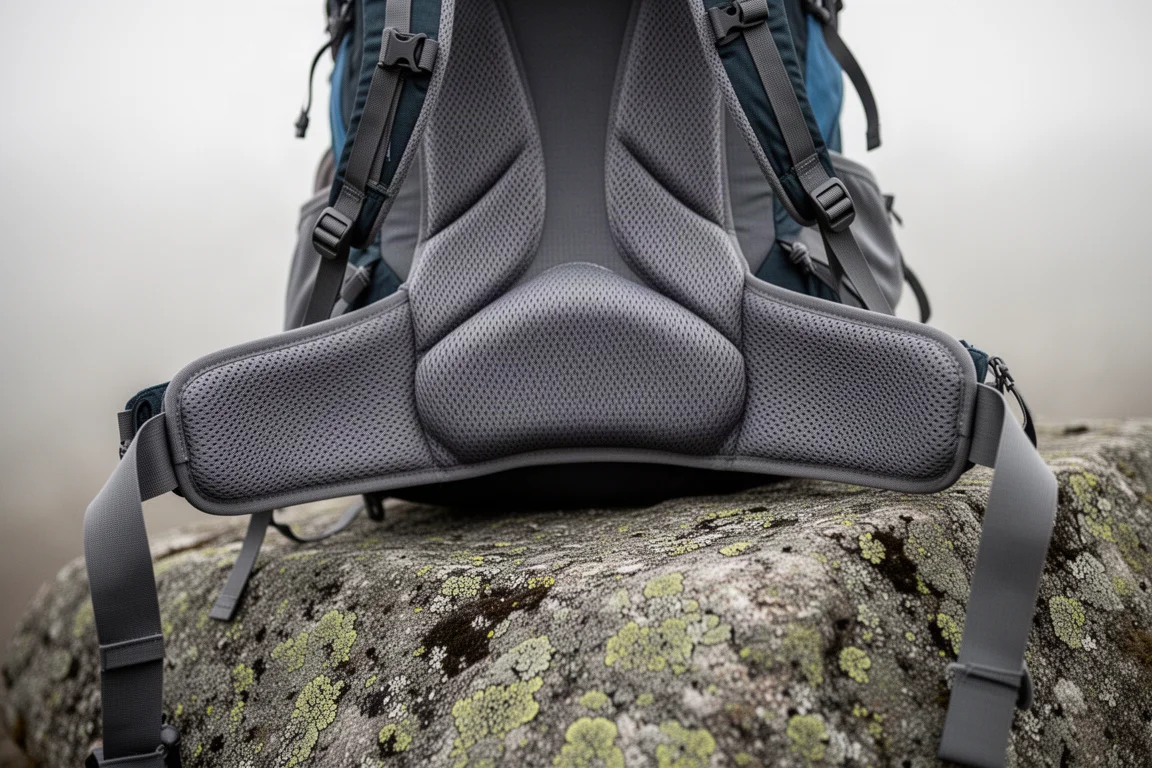
The hip belt is supplied in addition to the pack, which is worth noting because not everyone hikes with one. It is four inches wide, giving a large contact area across the hips to take the bulk of the load, and it uses the same 10 mm foam with a breathable mesh. Four tensioning points replace the traditional single-strap arrangement, so you can cross-pull the belt to distribute weight and relieve any pressure point that starts to rub.
Storage And Outside Features
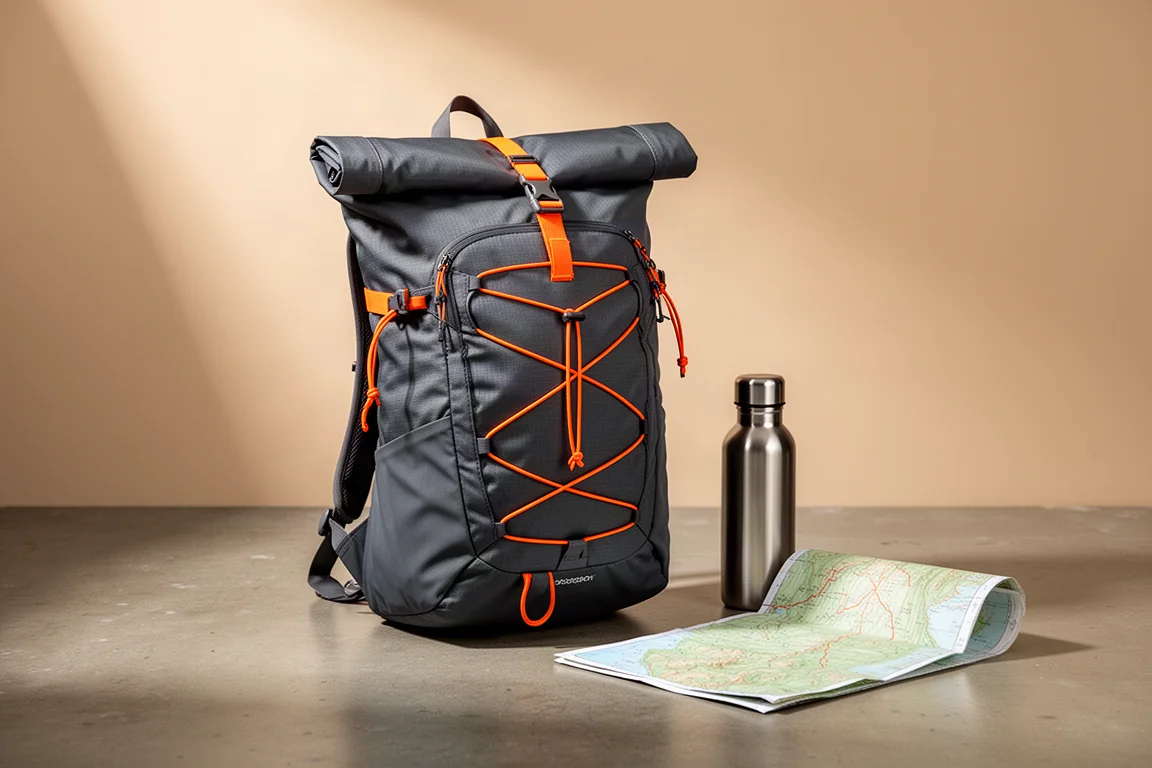
The front pocket is made from the same stretchy, elasticated Dyneema mesh, with elasticated drawcords in a bright orange finish. It holds a surprising amount, and the dense weave means a bramble is unlikely to tear a large hole in it. It is cut at an angle that pulls the opening to one side, which makes it easy to reach while the pack is on your back.
On each side there is a 2.5 litre side pocket with a drawcord at the top, so you can set the tension to suit. A glove-friendly retention cord on each side lets you cinch things down without removing your hands from the straps. A one litre bottle goes in and out without difficulty, and walking poles can also be carried there.
At the base there is an ice axe loop, and one of the more distinctive features: a mesh pocket running along the bottom of the pack, accessible from one side, using the same mesh as the front. It is a good place for walking poles, a sit mat or a tent, although it does take some thought to work into an existing routine.
The main compartment is a straightforward 45 litres of open space with a small internal clip for a hydration bladder. The hose port is neatly handled by an overlapping piece of fabric at the corner, which the tube feeds through. The closure is a roll top with no lid or brain: you roll the fabric down to the size of your load and clip it. Two generous 15 mm straps with two tensioning points sit across the top, and there is enough room under them to strap down a small bear canister or a tent to dry.
Hip Belt And Removable Pockets
The hip belt pockets are a separate add-on, and they are easy to recommend. They clip securely onto the belt itself and are fully removable, so you can run them on long trips and leave them at home on short ones.
Capacity is generous for this kind of pocket. A spare camera lens fits in one side, spare batteries in the other, and there is always room for a snack that sneaks in. For anyone carrying camera equipment, that accessibility matters more than the small weight penalty.
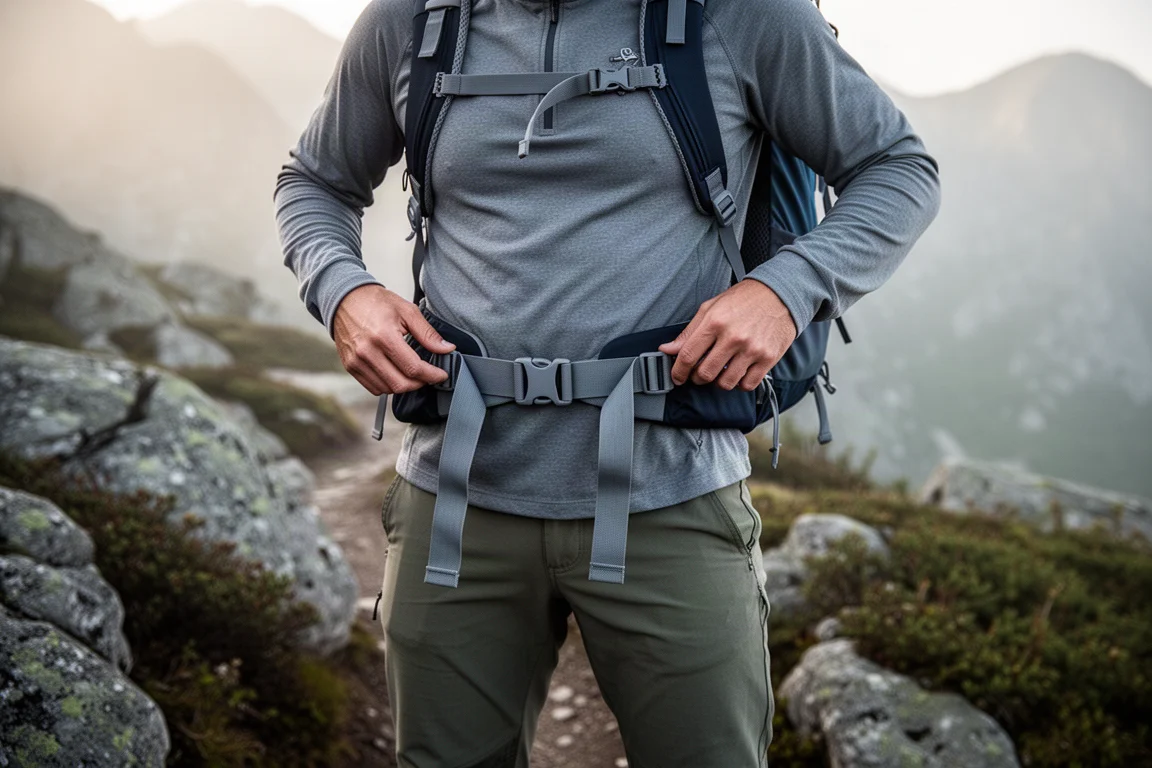
Because the belt itself is sized separately from the torso, the pockets sit where you want them rather than where a fixed belt happens to place them. It is a small detail that adds up over a long day.
Things To Consider Before Buying
The roll-top design has no lid, so there is no quick-access top pocket for items you want within reach. Everything either goes in the main compartment or into the external mesh and hip belt pockets.
There are no attachment loops on the base, so strapping a tent underneath, a common habit, is not an option here. The base mesh pocket is the alternative, and it takes some experimenting to use well.
The hip belt is an addition rather than standard, and so are the hip belt pockets, so the total cost climbs once you configure the pack the way you want it. At around £265 for the pack itself, this is a considered purchase.
Finally, the custom sizing is a genuine benefit but it does put the onus on you to know your torso and hip belt measurements before ordering.
Buying Advice
The Mo 50L makes most sense for hikers who already know roughly what they carry, have weighed their kit, and want a pack that fits properly and lasts. If that describes you, order with your measured torso and hip belt size rather than guessing, and budget for the hip belt and pockets if you plan to use them.

If you are earlier in your hiking journey, a cheaper off-the-shelf pack will still get you out on the trail. The case for the Mo is about fit, low weight, hard-wearing fabrics and a hand-built pack from a company with a clear environmental stance. For a multi-day setup you intend to keep for years, that is a reasonable place to put your money.
Conclusion
The Atom Packs Mo 50L is light, highly customisable and very well built. The fabrics are tougher than the weight suggests, the lumbar pad and mouldable frame make a real difference to comfort with a loaded pack, and the storage layout is thoughtful once you learn its logic. The trade-offs are the ones the design intends: no lid, no base attachment loops, and a price that reflects hand-built construction and made-to-fit sizing. If your trips are multi-day and your kit is already dialled in, this is a pack worth serious consideration.
Product link
View more details for Atom Packs Mo 50L
This product is mentioned in the review. Check the specifications, options, and compatibility before buying.
View more details for Atom Packs Mo 50LFurther reading
Related Reviews
Hiking Backpacks
Decathlon MT 900 70+10 Backpack Review: Big Capacity, Heavy Weight, High Price
A feature-dense 80-liter hiking backpack with excellent build quality, ten pockets, and dual loading, held back by a six-pound weight and a $210 price.
Hiking Backpacks
Martingtop 65L MOLLE Hiking Backpack Review: Capacity and Value, Undone by Hardware
A 65-liter tactical-style internal frame pack with MOLLE webbing, an adjustable torso, and a rain cover, held back by slipping hardware and a flexible frame.
Hiking Backpacks
Osprey Rook 65L First Look: Osprey's Most Affordable 65L Backpack
A detailed first look at the Osprey Rook 65L, the least expensive 65-litre pack Osprey makes at $190, covering its suspension, storage layout, weight, materials, and the trade-offs to weigh before buying.