Road Bikes
Argonaut Supernaut RM3 First Look: A Hand-Built Carbon Road Frame
Argonaut's new stock carbon road frame brings the company's bespoke engineering story to a fixed platform, with the carbon layup left visible under a clear coat.
Introduction
Argonaut Cycles builds carbon frames in Bend, Oregon, and most of what leaves the workshop is bespoke. Around 90 percent of the company’s frames are made for a single rider, with geometry and carbon layup tailored to that person’s fit data, weight, power output and riding style. Output is deliberately small at roughly 30 bikes a year across 13 sizes.
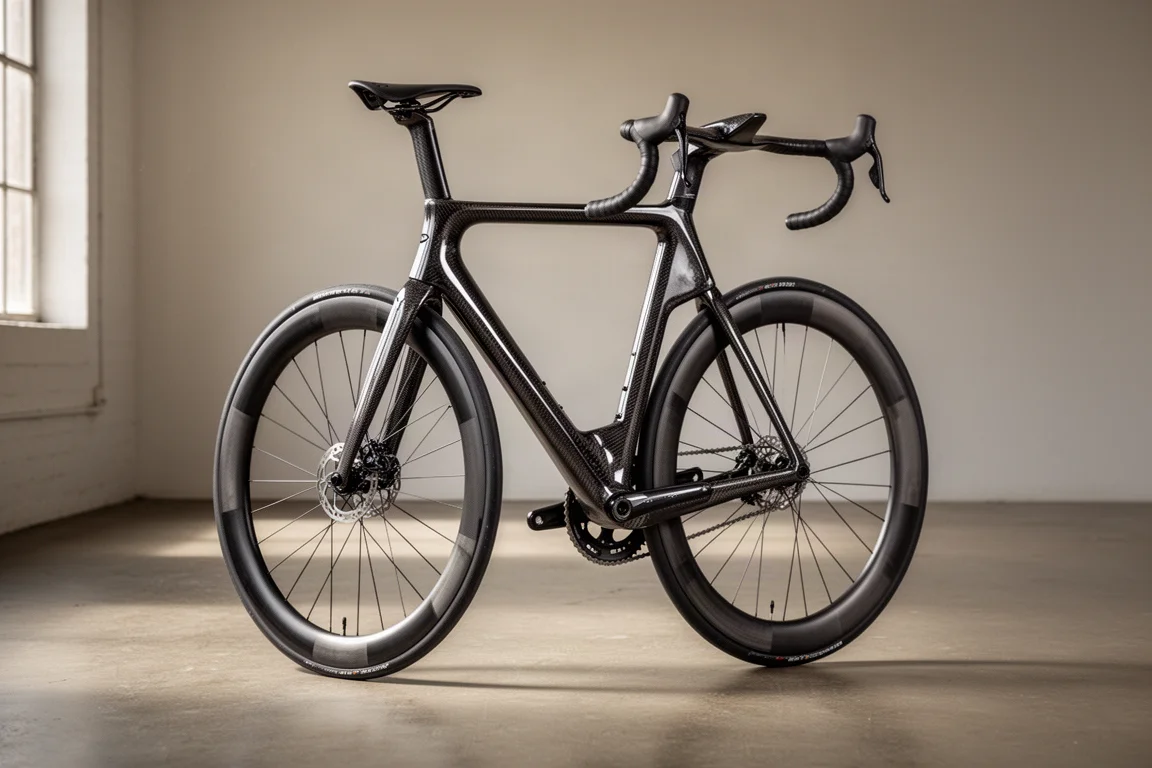
The Supernaut RM3 is the new stock frame, a fixed platform that carries the same engineering thinking without asking the buyer to work through a full custom project. The carbon layup sits beneath a clear coat rather than under paint, so the construction stays visible on the finished frame. There is a gravel version as well, but this road frame is the clearest statement of how Argonaut approaches a bike.
Who the Argonaut Supernaut RM3 Is For
Argonaut describes the Supernaut as the chef’s choice of its range, essentially the bike the shop itself would build and ride. It exists because a particular kind of rider kept arriving with the same request. They wanted a great riding bike, they wanted to know who was making it, and they were genuinely interested in the engineering story, but they did not want to work through every decision that a bespoke frame involves.
A fully custom project asks a lot of questions, from paint and head tube length to component choices, and it comes with a long conversation about how the frame should be engineered for one person. Some riders love that process. Others find it overwhelming and simply want the best version of the bike, chosen for them.

The Supernaut is aimed at that second group. Argonaut still works from rider fit data and the range spans 13 sizes, so the finished bike is not a generic off-the-peg machine. The difference is the starting point: a design the company already believes in rather than a blank sheet of paper.
Frame Details and Craftsmanship
The frame itself is a classic silhouette brought up to date. There is a triangular down tube, a flat-sided top tube, an oversized tapered head tube, and a fork that flows cleanly into the head tube and down tube junction. The top tube carries only a slight slope, and the rear end uses no-drop stays with a wishbone assembly.
Further back, the chain stays are notably chunky and the seat stays are square in section. There is a direct mount for the rear derailleur, a T47 threaded bottom bracket shell, internal routing, and an external seat clamp.
What separates the Supernaut visually is the finish. Argonaut does not hide the carbon. The layup is left on display beneath the clear coat, visible around the dropouts, along the chain stays and across the top tube junction. The logic is the same one that applies to a well-finished steel frame: if the workmanship is good, there is no reason to cover it up.
How the Carbon Layup Is Tuned
Argonaut’s core argument is that many high-end race frames miss the ideal flex curve for most riders, which is why they can feel dead and stiff unless a very strong rider is driving hard through them. The goal of a tuned layup is to keep the rider near the centre of the frame’s torsional flex characteristic, so the frame returns energy instead of lagging behind the pedal stroke.
Power output does not scale neatly with weight. A rider weighing around 63 to 67 kg with an FTP near 300 watts, who can hold 500 watts for a minute, will sit in a different part of that flex curve than someone of the same weight producing less power. Both riders, however, tend to want similar compliance over rough road.
That is where unidirectional carbon earns its place. Vertical bending stiffness can be held steady while torsional stiffness is raised, so a frame can feel lively and snappy without turning harsh or chattery.
Over roughly five years of building the RM3, Argonaut settled on about five key layup patterns covering a spectrum of rider case studies from around 115 lb to 165 lb. The down tube is the most variable part of the frame and the most influential on ride quality, while the chain stays and seat tube change far less.
Tuning happens in small, specific steps. Changing a couple of interlaminate plies from a 15 degree bias to 25 degrees in opposition can add roughly 10 to 12 percent torsional stiffness without altering bending stiffness. Adding a pair of strips to the top and bottom of the down tube raises vertical bending stiffness without touching torsional stiffness.
For context, Argonaut notes that high-volume production carbon frames typically use five to seven layers at any given cross section, with more weave and thicker plies. That is quicker to lay up, but it leaves far less control over the nuance of ride quality.
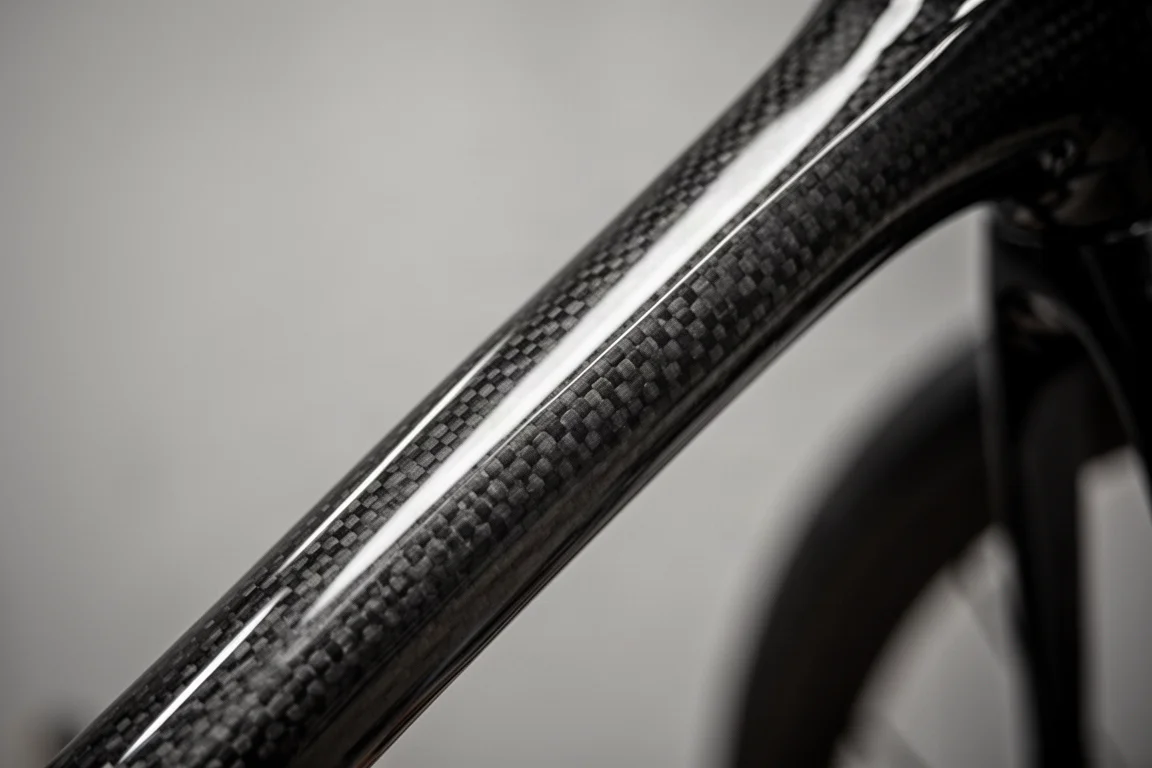
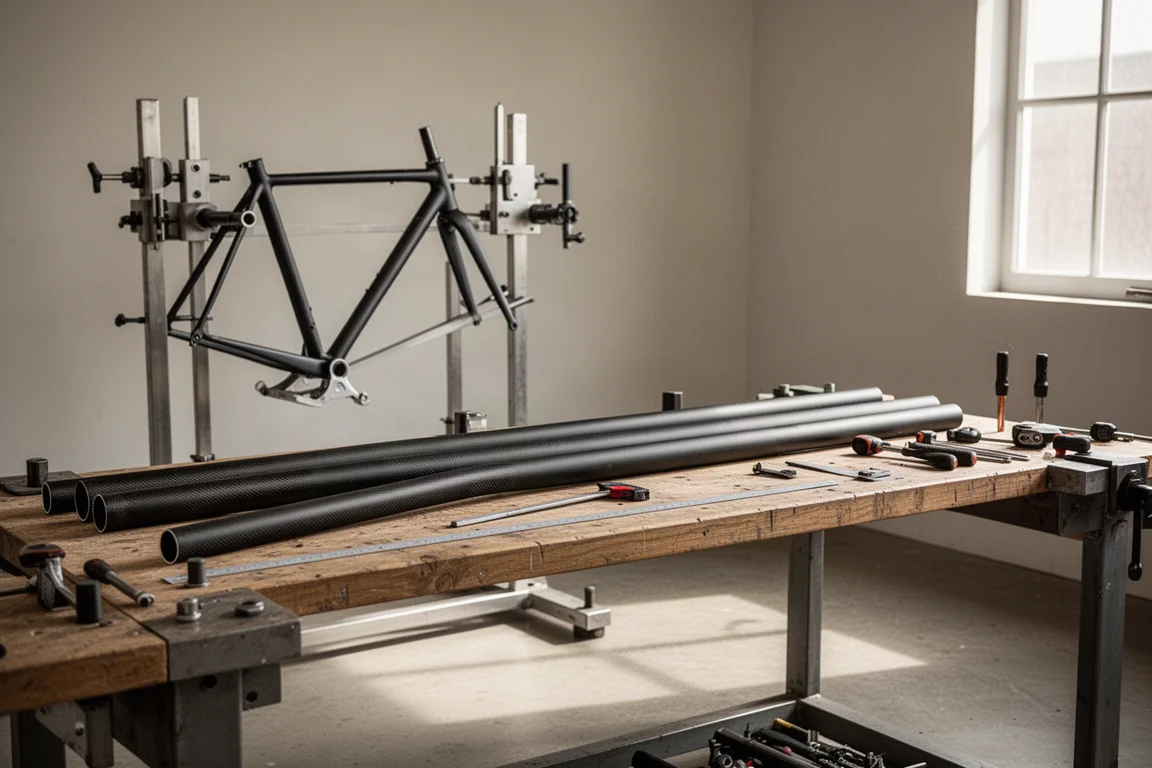
The manufacturing story behind those layups runs through high pressure silicone moulding and a long apprenticeship in composite work. It is the part of the bike that a custom paint conversation tends to bury, and the Supernaut exists partly to give it a permanent home.
Build Kit and Components
The build is top end throughout. There is a new one-piece Enve cockpit with a slim taper from the centre to the tops and an out-front mount, a matching Enve seat post, and a Repente saddle. The groupset is Shimano Dura-Ace Di2, paired with a CeramicSpeed oversized pulley wheel and a matching CeramicSpeed bottom bracket.
Argonaut’s own wheels are part of the same philosophy. They were designed to be as stiff as the company wanted so that they complement the compliance engineered into the frame, a deliberate pairing of wheel and frame stiffness that is rarely stated so plainly.
Price and Positioning
There is no way around it: this is an expensive bike, and it is not the cheapest route to a fast road frame. The more useful question is what it is being compared against. A Trek Madone SLR in its top build sits around $17,000, and a Pinarello Dogma F runs from roughly $16,000 to $20,000 depending on build and finishing kit. Neither of those frames is made in the United States or Italy.
Argonaut makes no claim that American manufacturing is inherently better, and the company is quick to acknowledge how strong composite work in Asia can be. The difference is scale and control. Argonaut is an 18-person company, and because it is not amortising an expensive mould across as many frames as possible, it can change things when it wants to and stay close to every step of a frame’s life, from idea to finished bike.
There is also the nature of the relationship. Buying from a small independent builder is a more personal transaction than buying from a large brand, and that is part of what the price reflects.
First Ride Impressions
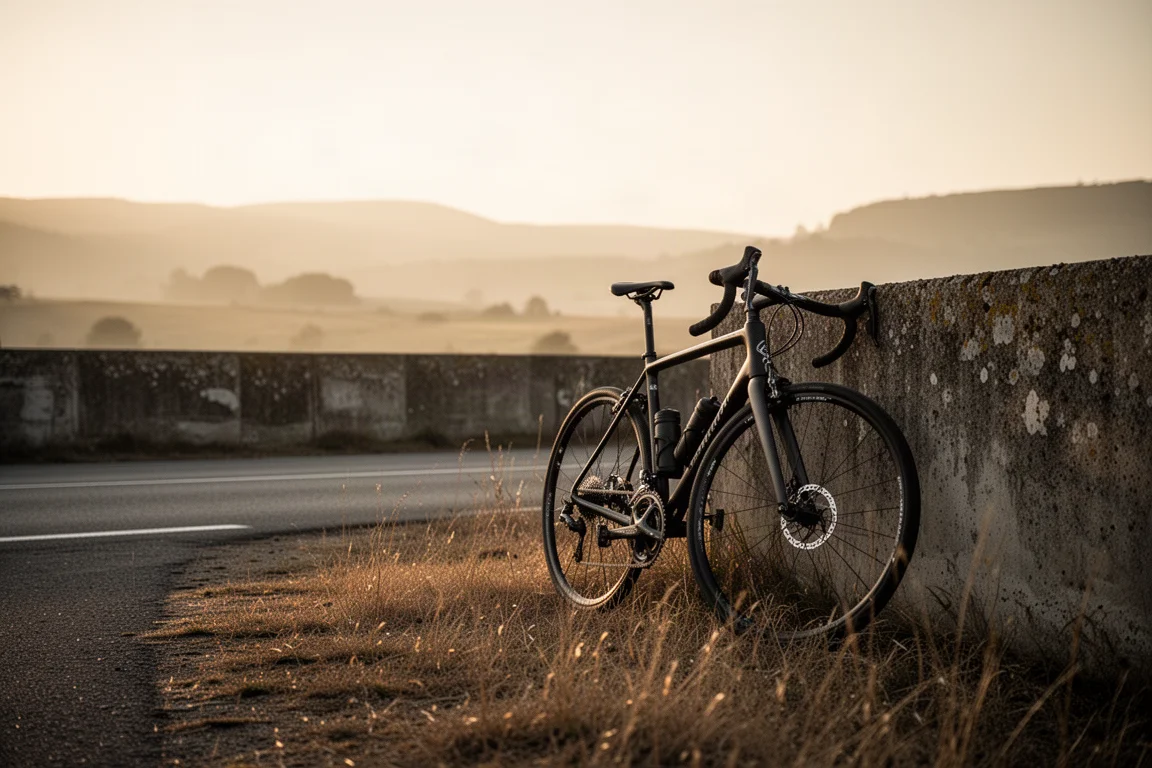
Early riding on the Supernaut RM3 has been genuinely surprising. It floats along the road, closer to riding on a cushion of air than to the sharp-edged feel many carbon race bikes deliver.
That is precisely the point Argonaut is making with its layup work. A great many carbon race bikes, including some excellent ones, are simply too stiff for most riders. They can feel like riding a metal gate, with little useful feedback from the road surface, and the result is a bike that is fast but soulless.
Ride quality is difficult to quantify. It cannot be reduced to a number, and it is more subjective than aerodynamics or weight. It is also, for many riders, the thing that decides whether they actually want to keep riding the bike. So far this one has been enjoyable from the first pedal stroke to the last, in a way that makes the weather irrelevant.
Buying Advice
The first decision is which process you want. If you enjoy specifying geometry, paint and component detail, and you want the frame engineered around your own numbers, the bespoke route is the one Argonaut is built on. If you want the outcome without the decisions, the Supernaut is designed for exactly that, and it is the version the company itself would choose.
Build options include SRAM Red or Shimano Dura-Ace Di2, both top-tier groupsets, so the sensible tiebreaker is ergonomics and whichever ecosystem you already know. Because the frame’s compliance is deliberately tuned, and the company’s own wheels are built stiff to pair with it, it is worth thinking about what wheels you plan to run.
Price positioning deserves a clear-eyed look. Against flagship superbikes from the largest brands, the Supernaut sits above them, and annual output is around 30 bikes. If you want a hand-built frame with the engineering visible and a direct line to the people who made it, that trade is the whole point. If you want maximum performance per dollar, there are cheaper ways to go fast.
Conclusion
The Supernaut RM3 is Argonaut’s engineering story made permanent: a stock carbon road frame with the layup left on display, tuned to deliver a specific ride quality rather than a generic one. It is expensive and made in very small numbers, and it is not trying to compete on value.
What it offers instead is craft you can see, a ride that prioritises feel over raw stiffness, and a build kit that leaves little to upgrade. Riders who have been drawn to the way a fine steel or titanium frame behaves, but who want carbon’s tunability, are the ones most likely to find it worth the money.
Product link
View more details for Argonaut Supernaut RM3
This product is mentioned in the review. Check the specifications, options, and compatibility before buying.
View more details for Argonaut Supernaut RM3Further reading
Related Reviews

Road Bikes
10 New Road Bikes Worth Watching: Aero, Titanium, Steel and Endurance Standouts
A practical roundup of 10 new road bikes, from aero flagships chasing single-watt gains to titanium, steel and endurance platforms built for real roads.
Road Bikes
2026 Tour de France Road Bikes: Six Race Machines Worth a Closer Look
Six race bikes from the 2026 Tour de France grid, reviewed for paint, silhouette, wheels and the specification details that matter to buyers.
Road Bikes
3T Strada Italia Review: A Radical Aero Road Bike That Rides Smooth
A made in Italy carbon aero road bike with a deep head tube, wide tire clearance and a genuinely comfortable ride. Here is what to know before buying.