Floorstanding Speakers
Arendal Sound 1723 THX Tower Review: A Flagship Tower Built Like a Tank
A close look at the Arendal Sound 1723 THX Tower, a heavy, THX-certified flagship floorstander with four 8-inch woofers, deep bass extension, and exceptional cabinet construction.
Introduction
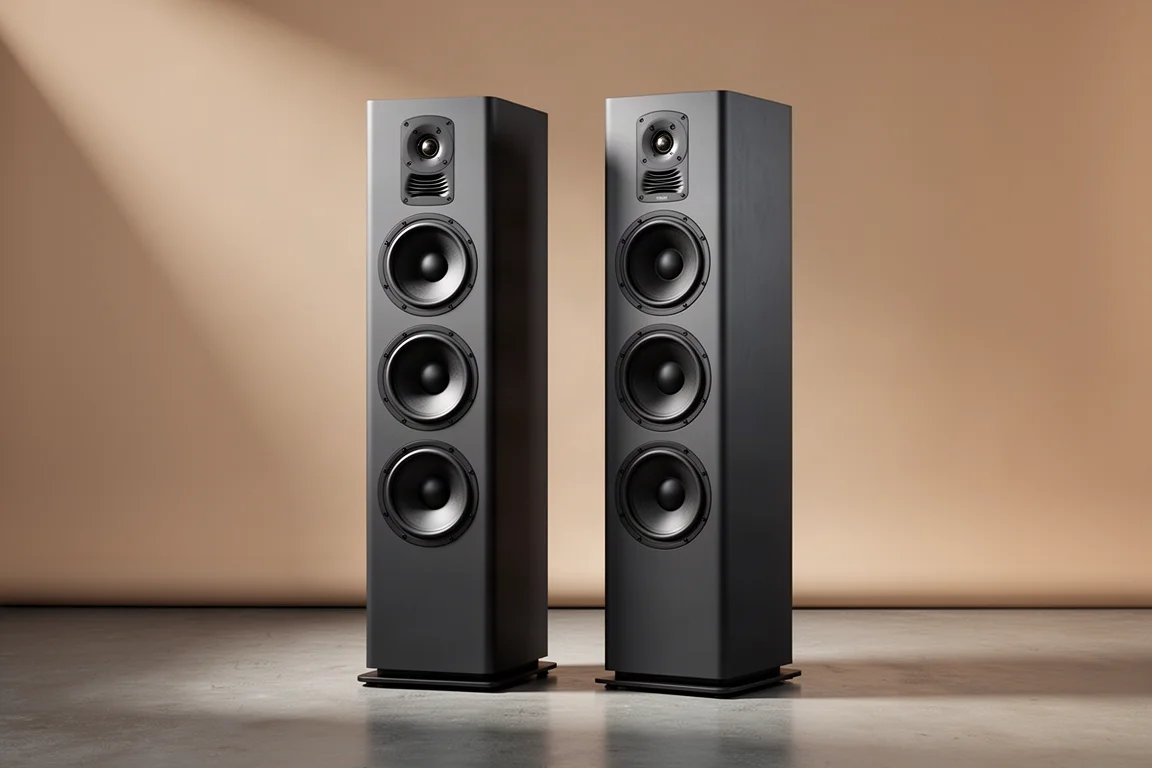
The Arendal Sound 1723 THX Tower is the flagship floorstanding speaker from a Norwegian manufacturer known for engineering-led design rather than marketing. It is a large, heavy, THX-certified tower built to deliver reference-level output and genuinely deep bass without leaning on a subwoofer.
At roughly $3,900 per pair, shipped, it sits at the top of the company’s range. That is not a small amount of money, but it buys a level of cabinet construction and dynamic capability that is difficult to find anywhere near this price.
Who This Product Is For
The 1723 THX Tower is aimed at listeners who want one pair of speakers to cover everything: two-channel music at realistic levels, and movie soundtracks with real low-frequency weight. Because the tower reaches deep on its own, it also appeals to buyers who would rather not add a subwoofer at all.
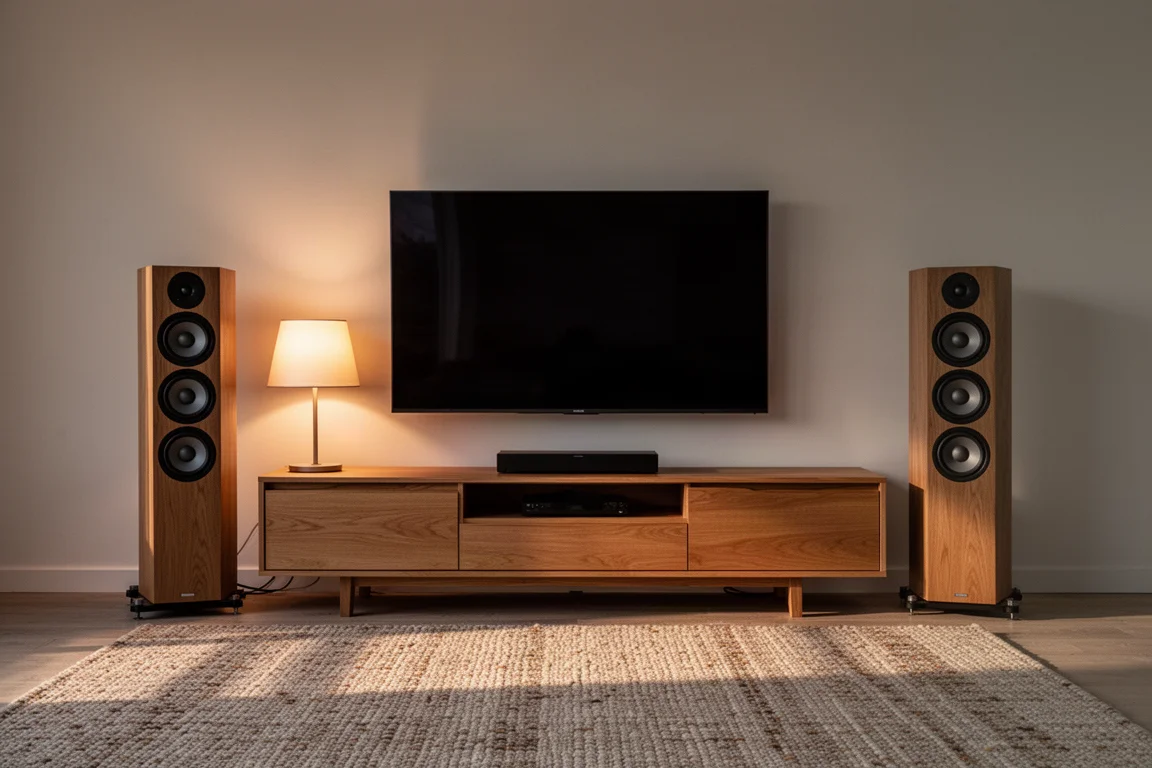
It suits a dedicated listening room or a home theater where the speakers can be positioned with some freedom, since placement and toe-in have a meaningful effect on the sound. At 111 lb per side, it also fits owners who plan to set the speakers once and leave them in place rather than move them around.
Main Strengths
Cabinet Construction and Materials
The cabinet is made from HDF and finished to a standard that is rare at this price, with the interior primed and painted as well as the exterior so moisture cannot work its way into the material. Damping is generous: stuffing inside the cabinet is paired with a gel layer applied to the side panels to control resonances. That overbuilt approach explains much of the 111 lb per side weight.
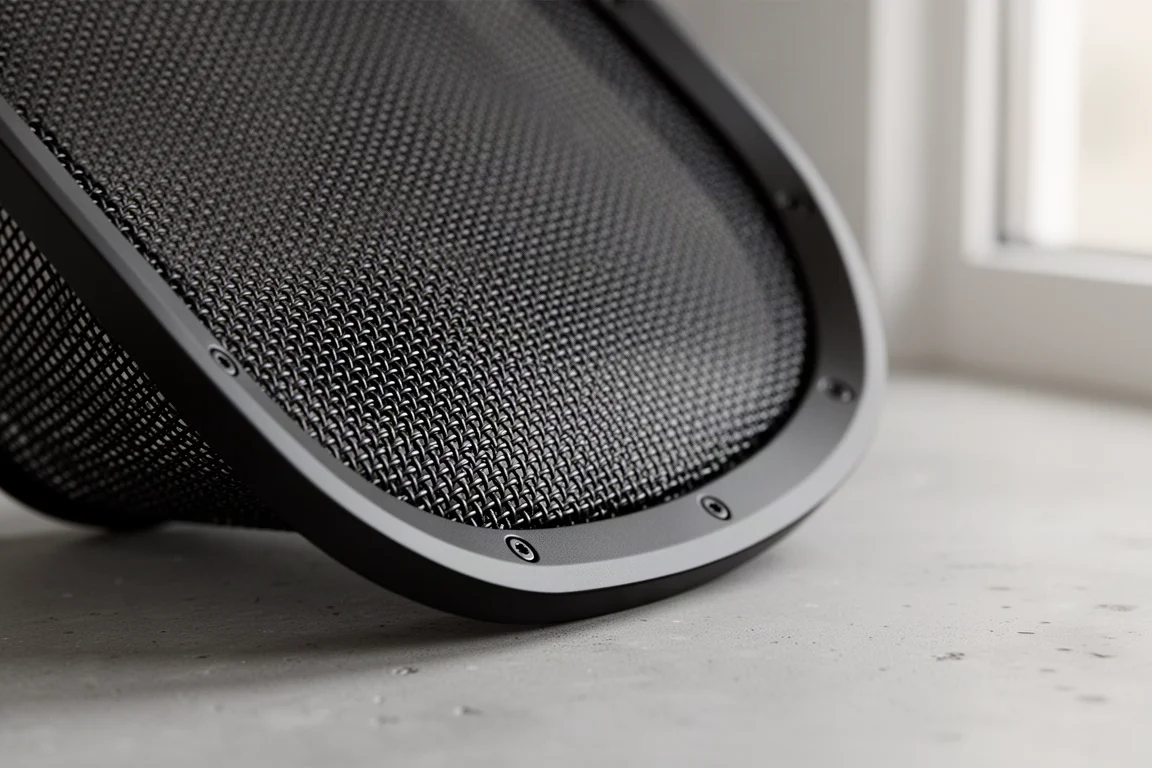
The details hold up under inspection. The grilles use a thick metal mesh rather than fabric stretched over a frame, with a gentle curvature that keeps the speakers looking purposeful with the grilles fitted or removed, and they attach via strong neodymium magnets. The outrigger feet are metal and individually height adjustable, and buyers can choose metal or rubber footing. The terminal plate uses brushed, rhodium-plated connections. Even the packaging is unusually thorough, with double boxing, polyethylene foam across the surfaces, and thick plywood panels top and bottom to protect the corners in transit.
Bass Depth and Dynamic Range
This is a 2.5-way design with four 8-inch woofers and a waveguide-loaded tweeter. The upper pair of woofers runs up to about 1,500 Hz while the lower pair handles roughly 120 Hz and below, which gives the speaker a large amount of air-moving surface and, in turn, a very wide dynamic range. THX certification reflects its ability to play loudly and cleanly.
Bass tuning is adjustable through three ports. With all ports open, the response stays flat down to below 30 Hz. Plugging one port extends that flat response into the mid-20s. Plugging two ports pushes extension lower still, but it costs a large amount of output and increases the risk of port chuffing, and the manufacturer’s own manual cautions against it. Realistically, this speaker should be run with all ports open or with a single port plugged. Sealing all three is not a sensible use of a tower this size.
Sensitivity measures around 91 dB against a 92 dB specification, and the impedance minimum sits at roughly 3 ohms, occurring at 30 Hz. That is not a punishing load. A mid-level or upper-level AVR will drive these without trouble, and a single good quality amplifier is the better route than bi-amping. The speaker is bi-ampable, but the upper jumper pair only feeds the tweeter, so splitting the load between two amplifiers does not deliver the benefit buyers might expect.
One important note: do not high-pass these speakers. Even with a subwoofer in the system, run them full range in bass management. Their low-frequency capability is a large part of what you are paying for, and filtering it away throws that away while making subwoofer integration harder.
Imaging and Directivity
The waveguide around the tweeter does more than protect the dome. It lets the roughly one-inch tweeter play lower, matches its directivity to the 8-inch woofers, and produces wider dispersion at higher frequencies than a dome mounted flat on a baffle would manage. The waveguide itself has an MDF backing to prevent ringing, and the tweeter uses a powerful neodymium magnet.
Measured on-axis and off-axis responses correlate closely, with only a small dip around the 1.3 to 1.5 kHz crossover region and a mild dip in the very top treble. On-axis, the upper midrange and lower treble sit slightly elevated relative to the woofers. At about 25 degrees off-axis, the balance evens out.
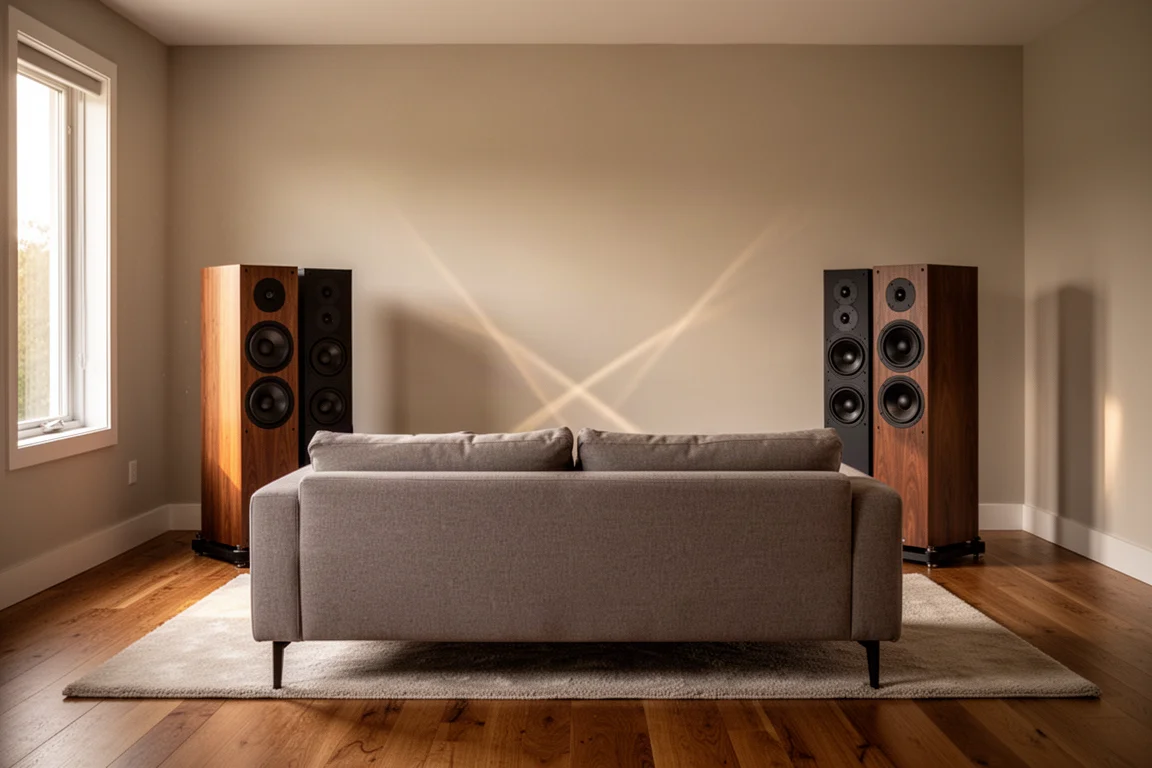
That behaviour makes the speaker unusually tunable through placement alone. Firing straight at the listening position adds a little extra presence, while angling the speakers outward takes some of that energy off the tweeter for a mellower balance. A time-intensity arrangement, where the speakers are angled so their axes cross in front of the listener, delivers especially tight imaging and is well worth trying.
Things to Consider Before Buying
The most obvious consideration is size and weight. At 111 lb each, these are not speakers to move on a whim, and they take up real floor space.
Placement sensitivity is the second point. Because the tonal balance shifts with toe-in and with distance from the rear wall, buyers who want a speaker that sounds consistent regardless of positioning may prefer a more predictable design. For owners willing to experiment, that adjustability is an advantage rather than a flaw.
The slight on-axis elevation in the upper midrange and lower treble is worth knowing about, particularly for listeners who prefer a softer top end. Angling the speakers can address most of it.
Finally, port tuning deserves respect. Plugging two ports or sealing the cabinet sacrifices most of the output and low-frequency headroom that make this tower worth owning.
Buying Advice
Two ownership terms stand out. The 1723 THX Tower carries a 10-year warranty, which is double what many loudspeaker brands offer, and it comes with a 60-day trial period. Returns are covered by the manufacturer, including shipping, which matters because these speakers are expensive to send back. That combination suggests a company confident in its product.
On price, roughly $3,900 per pair shipped puts these at around $1,000 less than several direct competitors in the $4,000 class, and the build quality is a step above what is typically found even in more expensive towers.
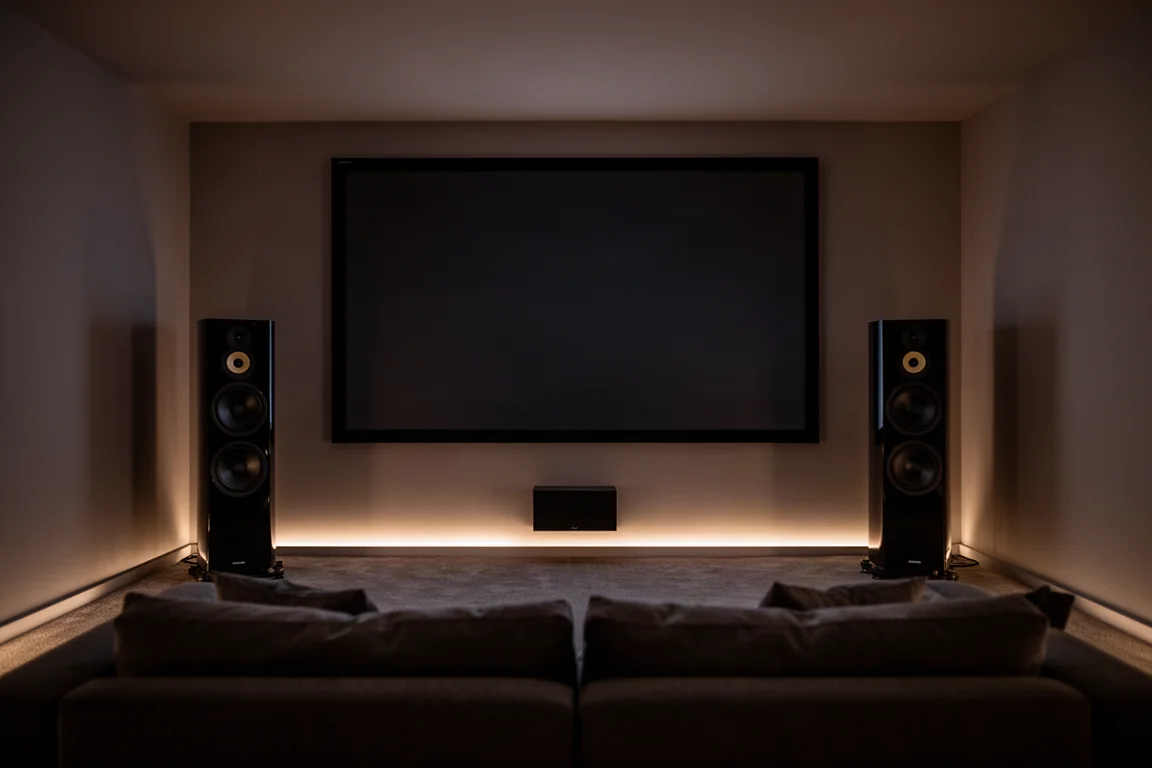
If the size or weight is a concern, the smaller 1723 Tower S is worth a look. It uses 6-inch drivers instead of 8-inch units, costs around $3,100 per pair, and measures a little more neutral in response, though it gives up some of the flagship’s dynamic capability.
For amplification, a single quality amplifier is the sensible choice, and most mid-level and upper-level AVRs will handle the load comfortably. Keep the speakers running full range even if subwoofers are added.
Conclusion
The Arendal Sound 1723 THX Tower is a flagship that earns the description. Its cabinet construction is exceptional, its bass reaches deep enough that a subwoofer becomes optional rather than necessary, and its imaging is genuinely impressive once placement is dialled in. The trade-offs are the size and weight, a slightly forward on-axis top end, and the need to spend some time on positioning.
For listeners who want a full-range tower that can handle music and film at high volume, and who value build quality above convenience, this is a compelling proposition at its price.
Product link
View more details for Arendal Sound 1723 THX Tower
This product is mentioned in the review. Check the specifications, options, and compatibility before buying.
View more details for Arendal Sound 1723 THX TowerFurther reading
Related Reviews
Floorstanding Speakers
Acoustic Energy AE109 Mark II Review: A Refined Floorstander at £699
The Acoustic Energy AE109 Mark II is a slim, warm sounding floorstander that delivers clarity, midrange body and strong imaging in small to medium rooms.
Floorstanding Speakers
Acoustic Energy AE509 Review: A Slim Floorstander With Deep, Defined Bass
A practical look at the Acoustic Energy AE509, a slim floorstanding speaker with carbon fibre drivers, deep and well-defined bass, and an easy-going character that rewards careful system matching.
Floorstanding Speakers
Arendal 1528 Tower 8 Review: Reference Neutrality With Real Demands
A close look at the Arendal 1528 Tower 8, a nearly five-foot, 200-pound floorstander that rewards generous space, serious power, and high listening levels with reference-grade neutrality.