Floorstanding Speakers
Arendal 1723 Tower THX Review: A Floorstander That Earns the Giant Killer Label
A close look at the Arendal 1723 Tower THX, a $3,700 floorstanding speaker with an HDF cabinet, four 8-inch woofers, 92 dB sensitivity, and three tunable rear ports.
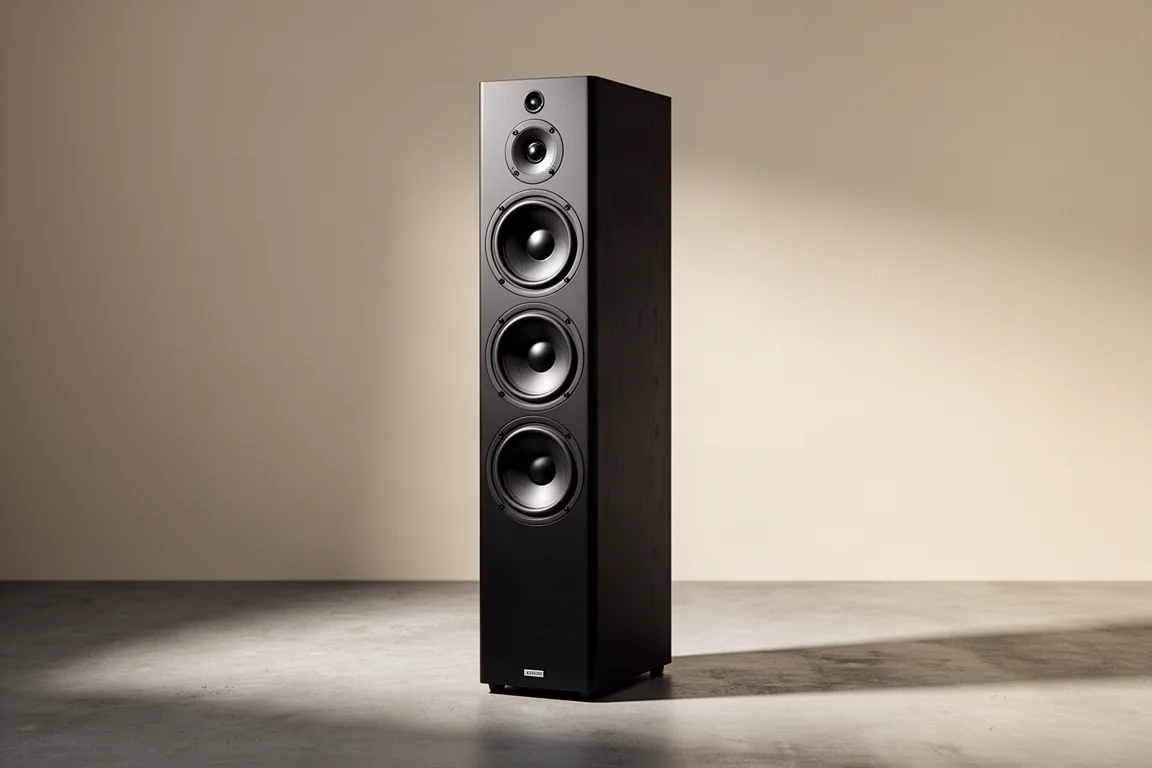
Introduction
The phrase “giant killer” gets attached to affordable audio gear far too easily. Usually the claim collapses once you listen closely. Something in the chain gives way: the cabinet material is thin, the bass stops short, or the midrange and treble cannot match what the price tag promises. The result competes on a few dimensions and quietly concedes the rest.
The Arendal 1723 Tower THX is a different proposition. It is a large floorstanding loudspeaker priced at $3,700, with shipping included to your door, a 60-day in-home trial, and a 10-year warranty. On paper that is a lot of confidence for a brand better known in the home theater world than in two-channel hi-fi. In practice, the 1723 Tower delivers on the claim in ways that are genuinely unusual at this price.
Who This Speaker Is For
This is a speaker for listeners who want a full-range floorstander without adding a subwoofer. It reaches low enough that a separate bass unit stops feeling necessary, and it carries the scale and dynamic contrast of a genuinely large loudspeaker.
It also suits two distinct kinds of buyer. The first is the home theater owner who wants a tower that can anchor a multichannel system and still perform in two-channel listening. The second is the enthusiast running low-power amplification. With a rated sensitivity of 92 dB and a nominal 4-ohm impedance, the 1723 Tower is flexible about what drives it, from a conventional receiver to a low-wattage tube amplifier.
If your room is small and your listening is mostly background-level, this is more speaker than the situation requires. The 1723 Tower rewards listeners who have space and who actually sit down to listen.
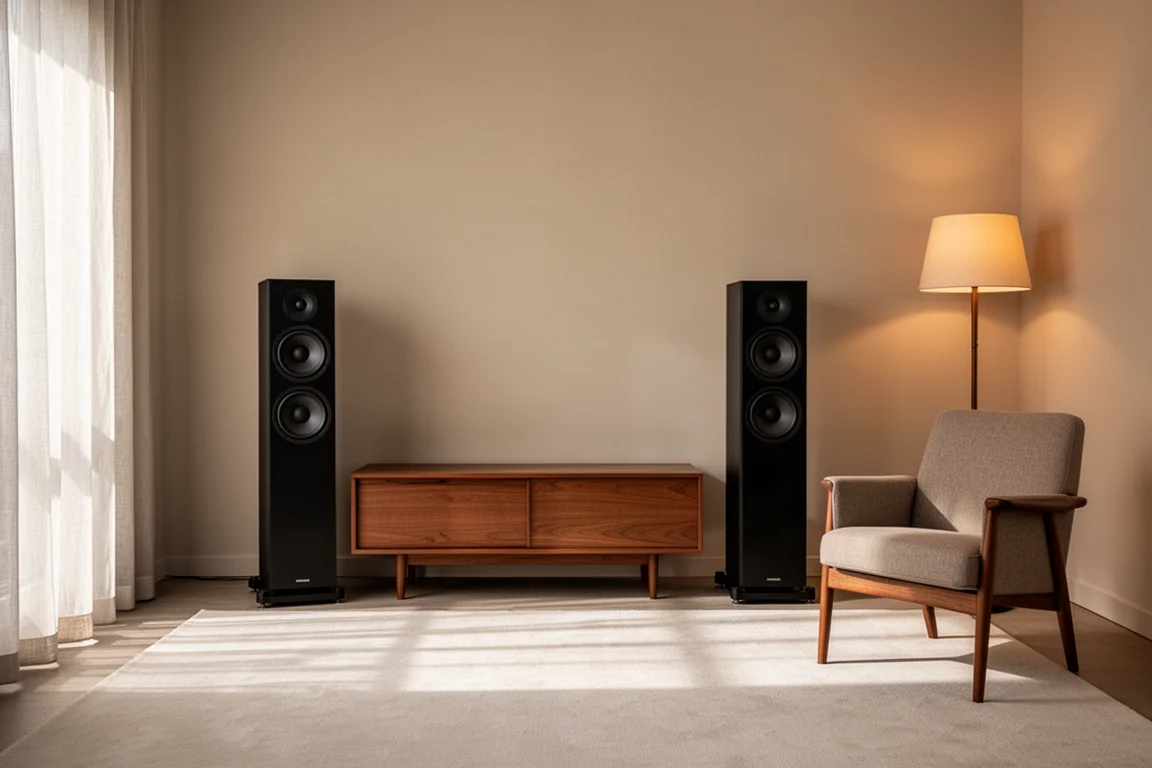
Main Strengths
Cabinet and Build Quality
The cabinet is the first place the 1723 Tower separates itself from the price bracket. Where a tower this size would normally use MDF, Arendal uses HDF, a high-density board associated with considerably more expensive designs. Combined with proper internal bracing, the cabinet stays inert and resists the unwanted resonances that color the sound of lesser towers.
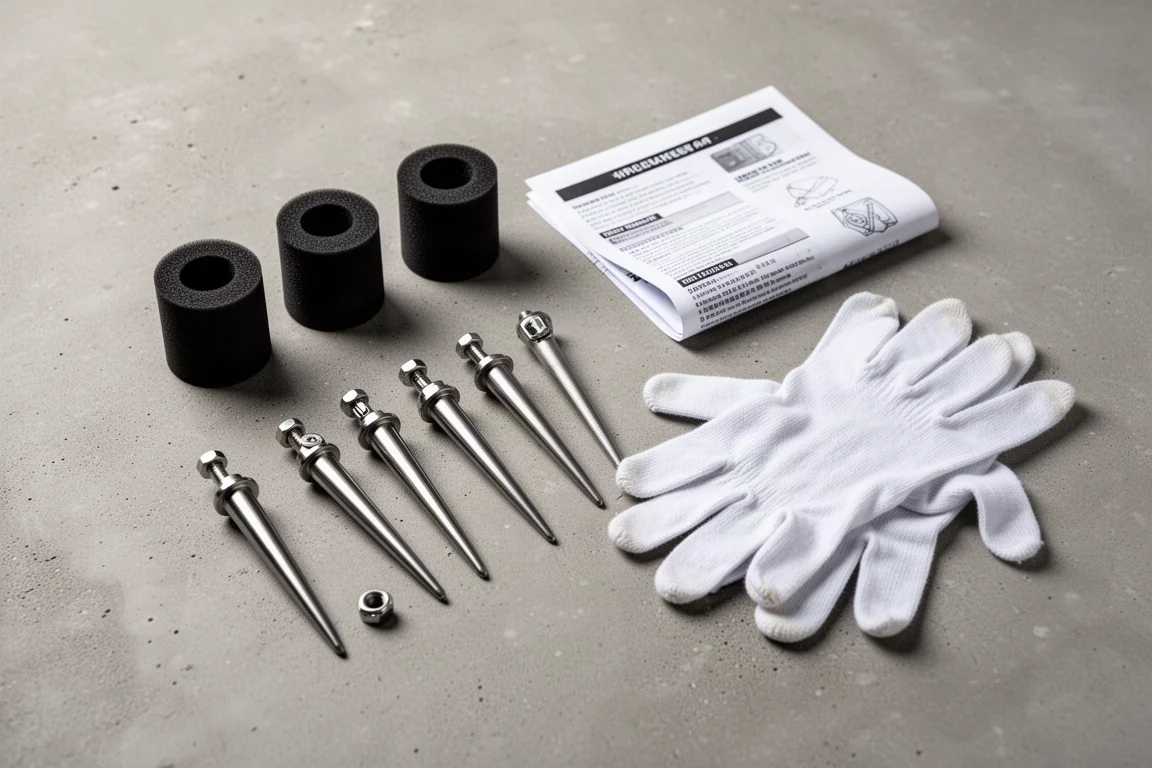
The hardware follows the same logic. The binding posts are rhodium-plated copper terminals, a specification that appears in far more expensive speakers and often not even there. The floor feet use high-quality steel bars and premium spikes, and the supplied grilles are magnetic. Arendal also supplies an unusually thorough setup manual, covering what each configuration should sound like rather than simply listing parts.
Driver Design and Sensitivity
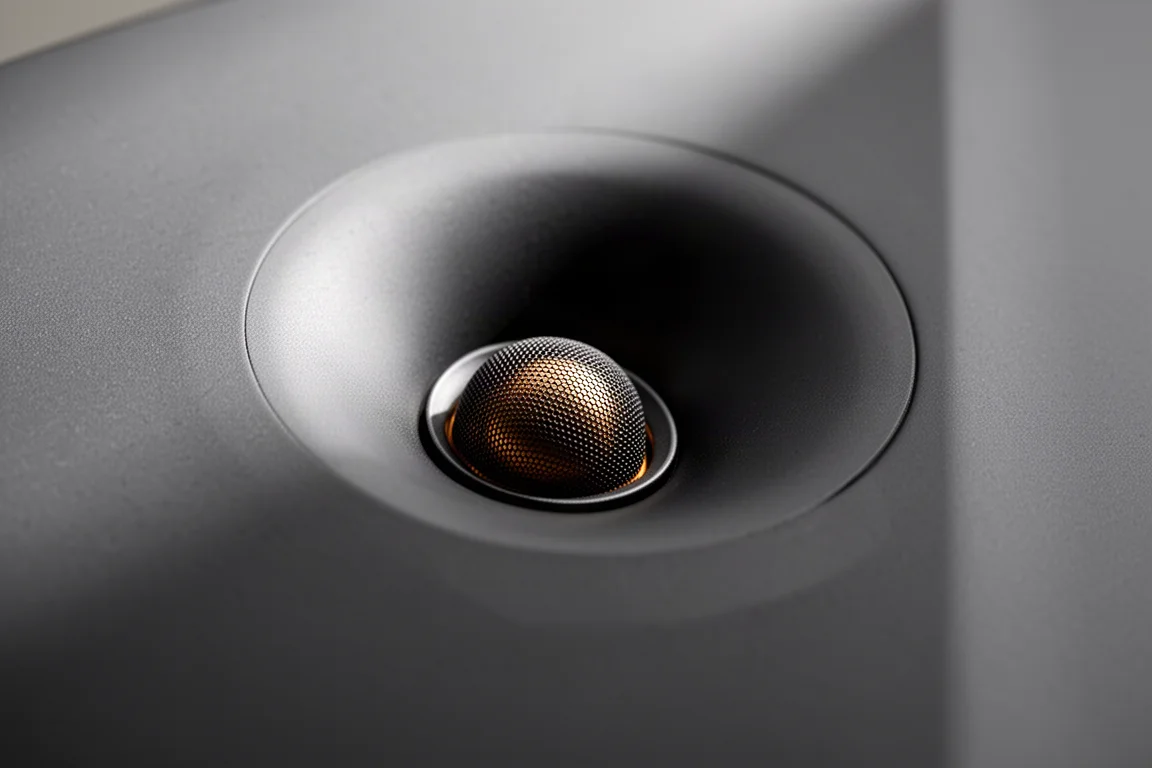
The 1723 Tower is a 2.5-way design built around four 8-inch woofers and a 1-inch (28 mm) soft dome tweeter mounted in a waveguide. The drivers are not off-the-shelf units. They are made specifically to the brand’s requirements, which is one reason the speaker’s tonal character holds together across the range.
The tweeter waveguide matters more than it might appear. It helps widen the sweet spot and supports the sense of air and openness in the treble, which is a common weak point in large floorstanders.
That 92 dB sensitivity is the practical headline. It means the speaker can be driven by a wide variety of amplifiers without strain, and it opens the door to tube amplification in a way most towers this size cannot.
Port Tuning and Room Flexibility
The rear of the cabinet has three ports, and Arendal ships three matching plugs. That gives you real control over how the speaker behaves in your room, and it is the kind of adjustment most manufacturers leave out.
Plugging all three ports creates a sealed alignment. Arendal specifies roughly 55 Hz at plus or minus 3 dB in that state, which is the least bass extension on offer but also the gentlest roll-off. Leaving the largest opening free gives the most bass extension, though the manual notes that port noise can appear at high playback levels in that configuration. A partial configuration sits between the two. Somewhere in that range is the setting that fits your room, and it is worth experimenting rather than settling on the first option.
Positioning is less fussy than the rear ports suggest. Despite the three ports, the speaker does not demand being pulled several feet into the room. Around two feet from the wall behind worked well, preserving linear extension while keeping good depth. A very slight amount of toe-in helps the center image snap into focus.
Sound Quality and Dynamics
The bass is the most immediately striking quality. In-room, the 1723 Tower reached down to roughly 30 Hz flat, which is why a subwoofer never felt necessary during listening. More importantly, the bass has texture and nuance, not just extension. There is contrast, impact, and definition rather than a single blunt thump.
The midrange is linear with a touch of warmth. It stays neutral and natural, and it passes the character of the amplifier through clearly, which is a sign of an honest design rather than a voiced one. Vocals and instruments are rendered with layering and placement that hold up under close listening.
The treble is where the speaker is most distinctive. It is sweet, airy, and detailed without tipping into brightness, and it stays that way over long sessions. That balance is difficult to achieve, and it is the quality that makes the 1723 Tower feel like more than its price suggests.
Practical behavior matters too. The speaker is revealing without being brutal with lesser recordings, which means a flawed master still sounds listenable rather than shredded. At medium and high levels the bass really engages, but even at low volumes the low-frequency extension is still perceptible and the treble sweetness survives intact.
Things to Consider Before Buying
Sound staging is the honest limitation. This is an intimate presentation rather than a wide, room-filling one, and it does not match what a good bookshelf speaker can do in that specific respect. Toeing the speakers out into the room helps somewhat, and pairing the 1723 Tower with tube amplification transforms the sense of space considerably. But if expansive staging is your top priority, this is the trade-off to weigh.
The speaker is also large and heavy, which is worth planning for before it arrives. It is not a component you move around casually.
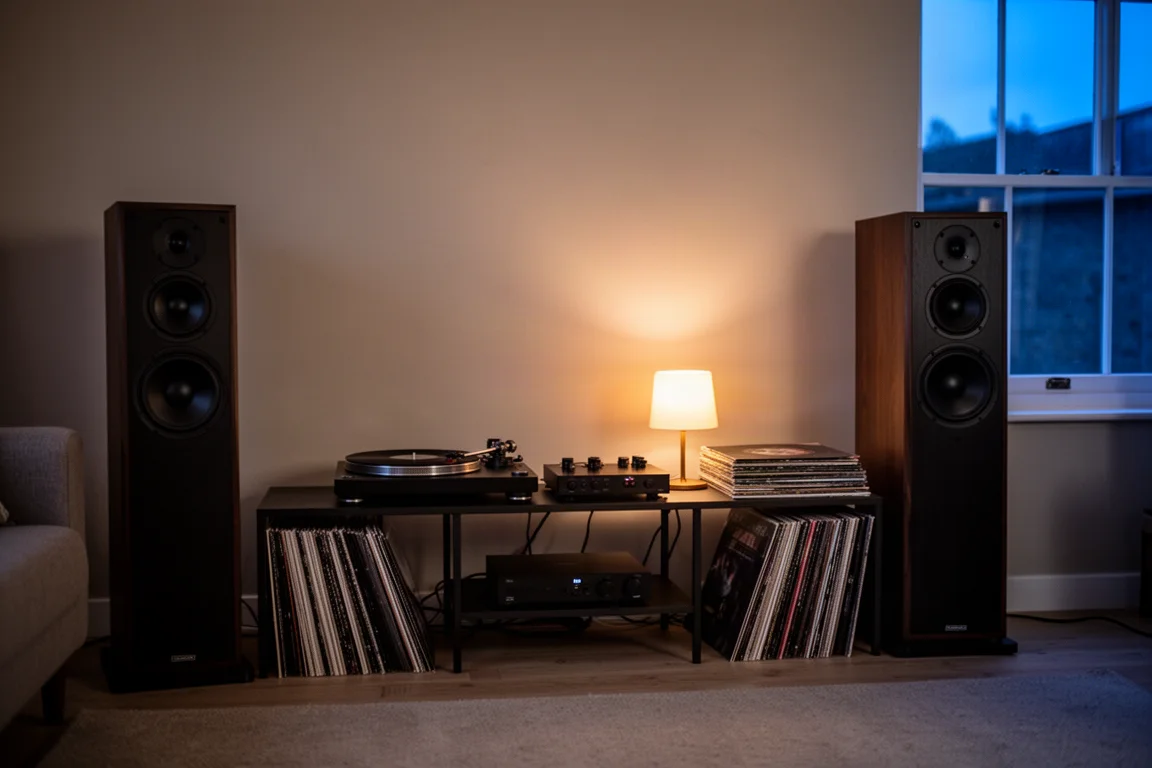
Amplifier matching deserves thought rather than assumption. Solid state brings tighter, quicker bass and a cleaner overall grip. Tube amplification opens up the sound stage dramatically and plays to the speaker’s natural warmth. A hybrid integrated amplifier proved the most satisfying middle ground, combining a wider stage with the bass extension and punch of solid state. A hybrid with tone controls adds another practical advantage: in a small or untreated room, you can trim the bass slightly and keep the response linear without changing speakers.
Finally, port tuning is not set-and-forget. Plan to spend an evening trying the different plug configurations and speaker positions. The right answer depends on your room, not on a generic recommendation.
Buying Advice
The $3,700 price includes shipping to your door, a 60-day in-home trial, and a 10-year warranty. The trial period is the most useful part of that package, because a speaker this size interacts with the room in ways no specification sheet can predict. Take the full window, try the port configurations, and try a couple of positions before deciding.
The warranty length is a reasonable signal of how the manufacturer views its own build quality. So is the pricing approach: the brand positions itself around delivering its best possible price from the start rather than running frequent discount events. That is a meaningful difference for buyers who dislike waiting for a sale that may or may not arrive.
On amplification, start with what you already own. The 92 dB sensitivity means the 1723 Tower will make music with almost anything, and that flexibility is one of its best features. If you later want a bigger sound stage, tube or hybrid amplification is the most direct route. If you want maximum grip and punch in the bass, solid state remains the straightforward answer.
Conclusion
The Arendal 1723 Tower THX is one of the rare products that justifies the giant killer label. It does not win by cutting corners in the cabinet, the terminals, or the drivers, and it does not concede the midrange and treble in order to deliver impressive bass. It offers all three, along with THX certification earned through a rigorous measurement process and a build that competes with speakers costing considerably more.
The compromises are narrow and specific: a more intimate sound stage than some rivals, a large physical footprint, and a tuning process that rewards a little patience. None of them undermine the core performance.
For listeners who want a full-range floorstander that works equally well for music and home theater, pairs happily with a wide range of amplifiers, and arrives with a 60-day trial and a 10-year warranty, the 1723 Tower is an easy recommendation. It is the sort of speaker that makes you keep listening long after you intended to stop.
Product link
View more details for Arendal 1723 Tower THX
This product is mentioned in the review. Check the specifications, options, and compatibility before buying.
View more details for Arendal 1723 Tower THXFurther reading
Related Reviews
Floorstanding Speakers
Acoustic Energy AE109 Mark II Review: A Refined Floorstander at £699
The Acoustic Energy AE109 Mark II is a slim, warm sounding floorstander that delivers clarity, midrange body and strong imaging in small to medium rooms.
Floorstanding Speakers
Acoustic Energy AE509 Review: A Slim Floorstander With Deep, Defined Bass
A practical look at the Acoustic Energy AE509, a slim floorstanding speaker with carbon fibre drivers, deep and well-defined bass, and an easy-going character that rewards careful system matching.
Floorstanding Speakers
Arendal 1528 Tower 8 Review: Reference Neutrality With Real Demands
A close look at the Arendal 1528 Tower 8, a nearly five-foot, 200-pound floorstander that rewards generous space, serious power, and high listening levels with reference-grade neutrality.