Stationery
Archer and Olive vs Notebook Therapy: B5 Dotted Journal Comparison
Two B5 dotted journals with near-identical 160 GSM paper, compared on page count, margins, extras, and everyday durability.
Introduction
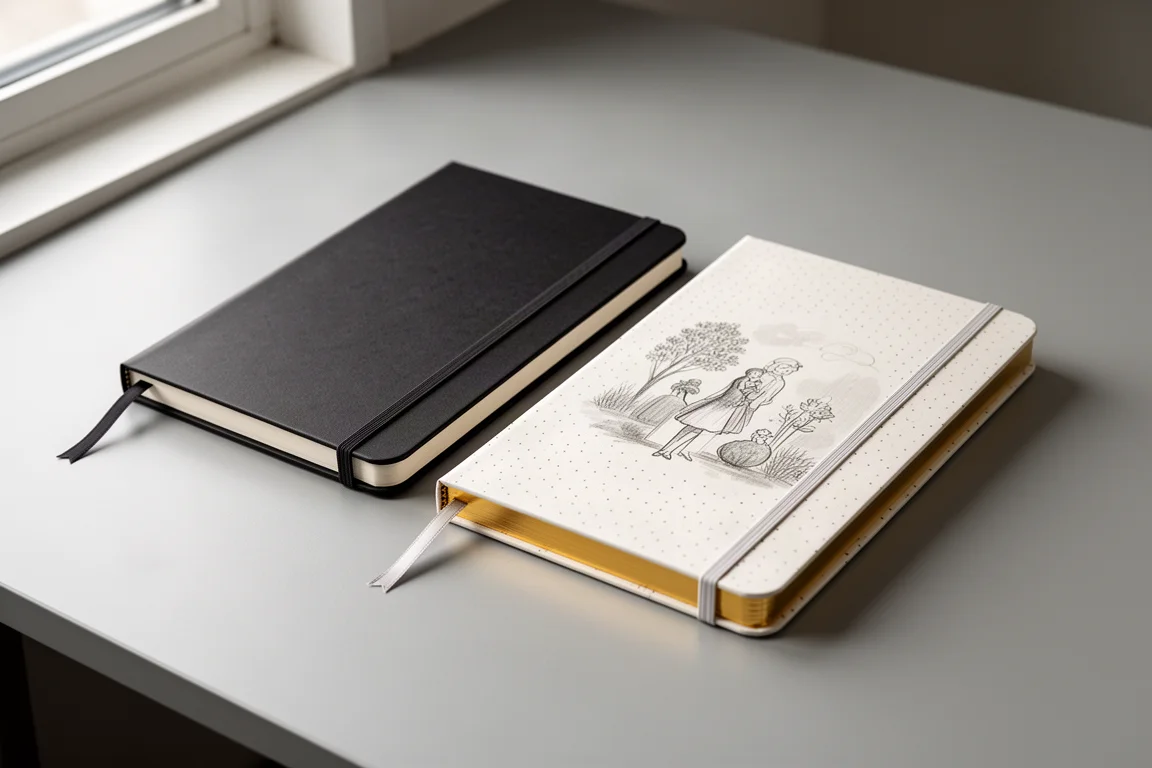
The B5 size has quietly become a favorite for bullet journalers who want more room than a standard A5, and two notebooks dominate that conversation: the Archer and Olive B5 dotted journal and the Notebook Therapy B5 dotted journal. This comparison looks at how they stack up on the things that matter most for daily journaling: paper quality, page layout, page count, extras, and how well they hold up to being carried around.
One practical reason this comparison matters right now: Archer and Olive’s inventory has been noticeably limited recently, with far fewer journals in stock than in previous years. If you are wondering whether Notebook Therapy is a safe switch, the short answer is that the two are remarkably close.
Paper Quality: Practically Identical
Paper is arguably the single most important part of a dotted journal, and here the two are practically identical. Both use bright white 160 GSM paper, which is thick and durable, similar in feel to card stock. In everyday use that translates to no ghosting or bleed-through with gel pens, fountain pens, pencils, colored pencils, or water-based markers.
The one clear caution: alcohol markers. Testing with a Sharpie did produce ghosting and bleed-through on this type of paper, so alcohol-based markers are best avoided. Watercolors are a different story. As long as water is used sparingly, both journals hold up well, with no seepage through to the other side. You may see some warping of the pages from watercolor use, but no bleed-through.

Page Layout and Margins
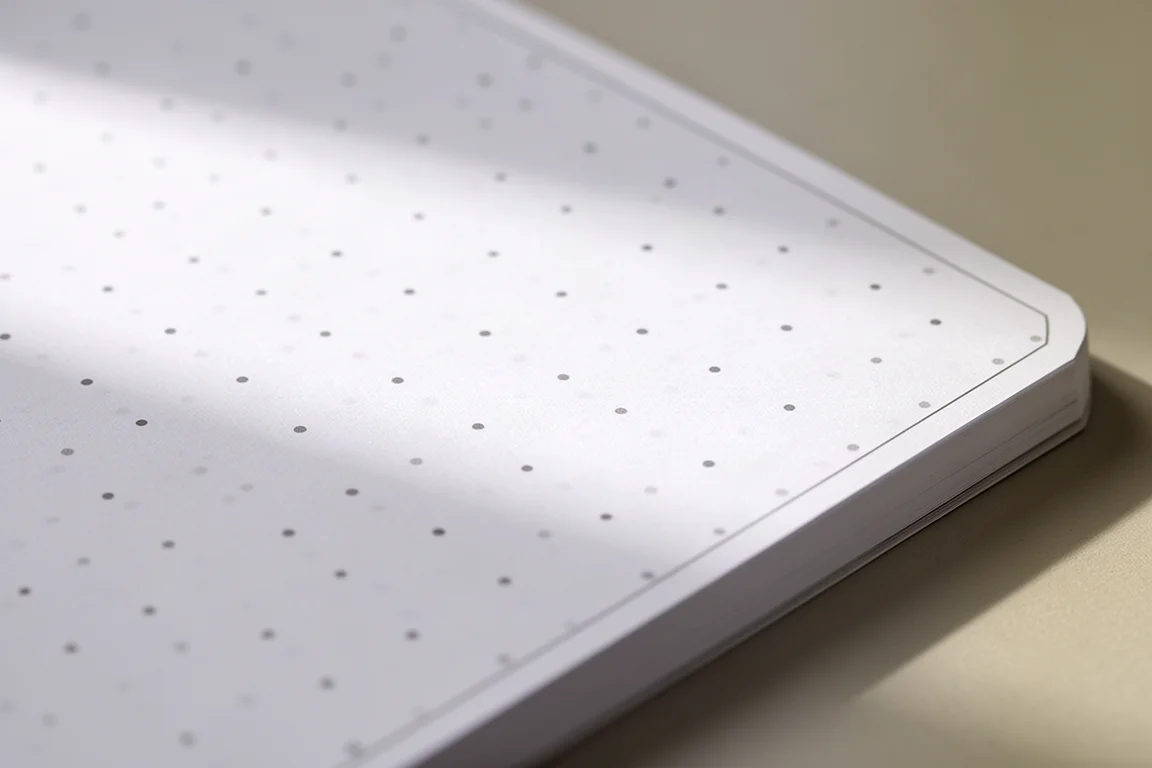
Both journals use the same dot grid density: 32 squares across the page and 46 squares going down. The difference is in the page dimensions. The Notebook Therapy pages are slightly shorter, and the Archer and Olive pages are slightly wider. Because the Notebook Therapy pages are a touch smaller, the margins around the dots are slightly smaller too.
The practical takeaway: you are not missing out on any usable dot grid area with either journal. The total number of dots and squares is the same on both. The only trade-off is slightly narrower side margins on the Notebook Therapy pages, which matters mainly if you like writing or decorating close to the edge.
Page Count, Bookmarks, and Built-In Extras
This is where the two notebooks genuinely diverge.
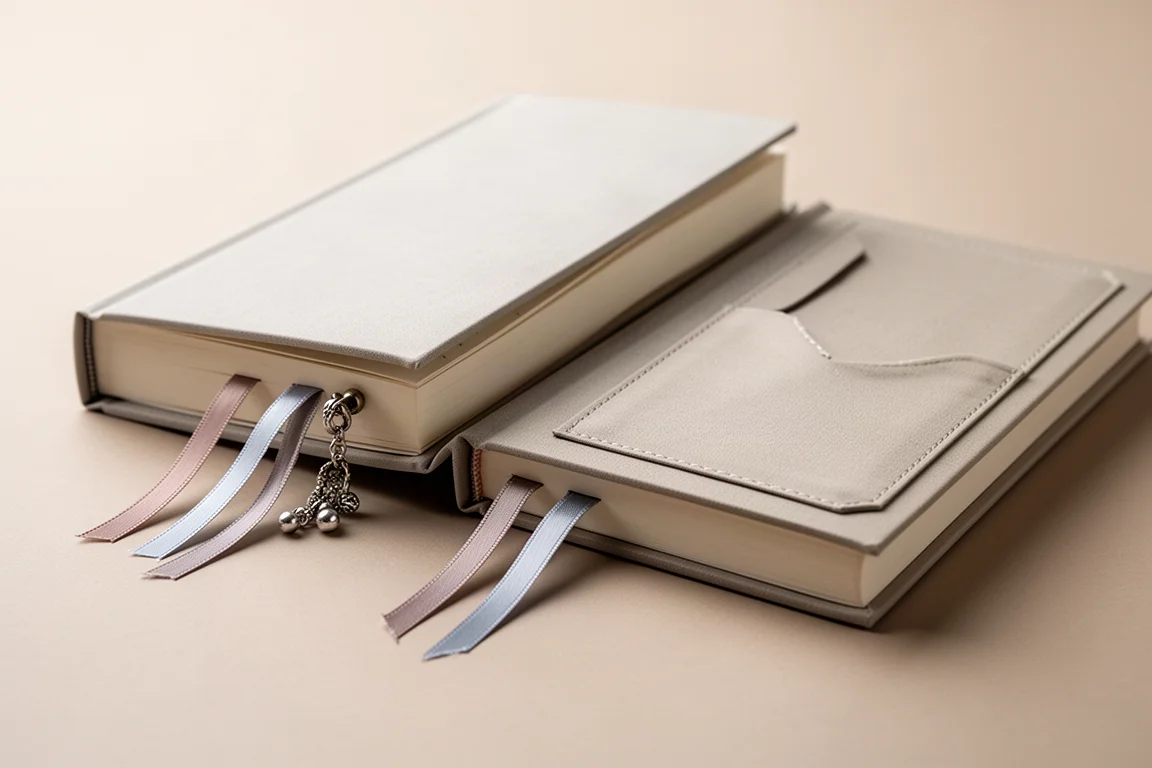
The Archer and Olive B5 comes with 160 pages, while the Notebook Therapy B5 offers 176 pages, giving you 16 additional pages for roughly the same price. Both include two ribbon bookmarks each, though the Archer and Olive adds a small charm to one of its ribbons. Both also feature a pocket in the back cover and an elastic closure.
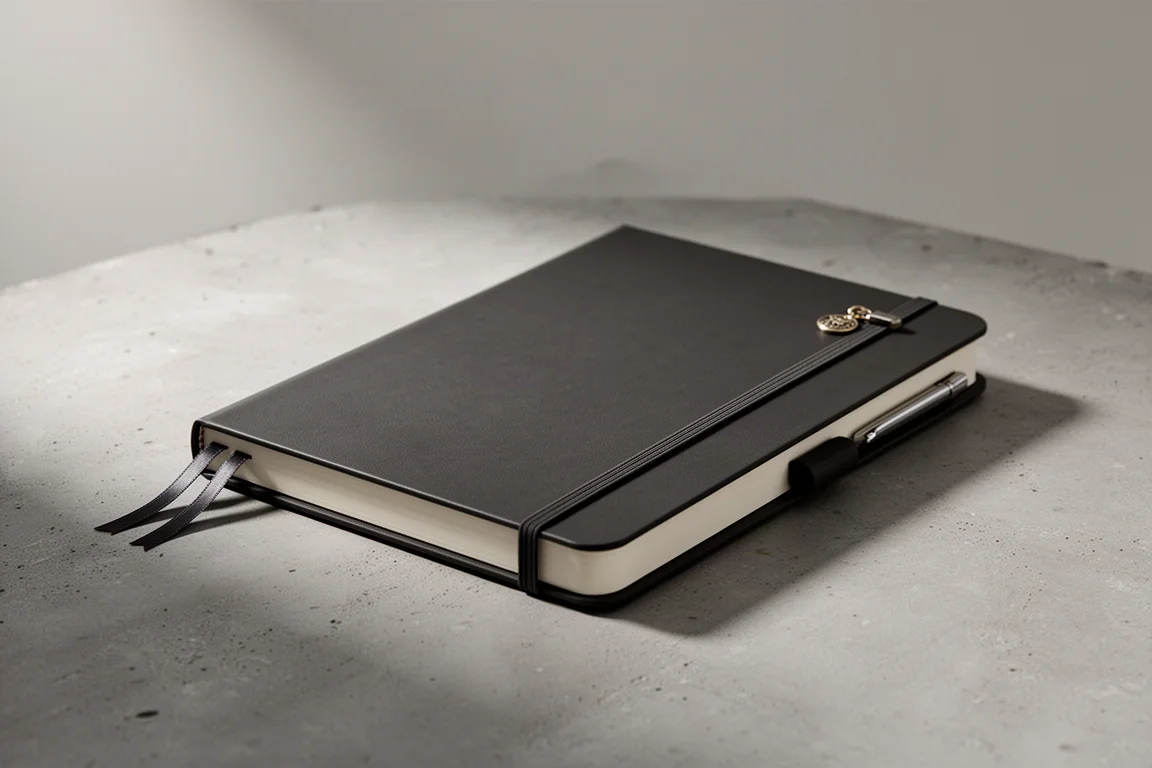
The most noticeable structural difference is the pen loop. The Archer and Olive integrates a pen loop inside the back cover, while the Notebook Therapy does not include one. If you need a pen loop, a 12-pack of self-adhesive pen loops can be bought separately for around $9, and the adhesive has held up well over months of daily use with no peeling.
On finishing touches: the Notebook Therapy journals have gilded, metallic page edges, while the Archer and Olive journals typically ship without gilding. Notebook Therapy journals also tend to include a small paperclip charm in the back pocket, often matching the cover design, which is a nice unboxing touch.
Price and Value
Both notebooks were purchased for about $39 each. At first glance the Notebook Therapy can look slightly more expensive, since the separate pen loop purchase adds cost. But you also get 16 additional pages compared to the Archer and Olive, and if a pen loop is not something you need, you can skip that accessory entirely and come out ahead.
The Case for Notebook Therapy
If your priority is maximum pages per dollar, gilded edges, and a charming paperclip bonus, the Notebook Therapy B5 is the stronger pick. You give up the integrated pen loop and accept slightly smaller side margins, but you gain 16 pages and a distinctive finish.
Durability for Everyday Carry
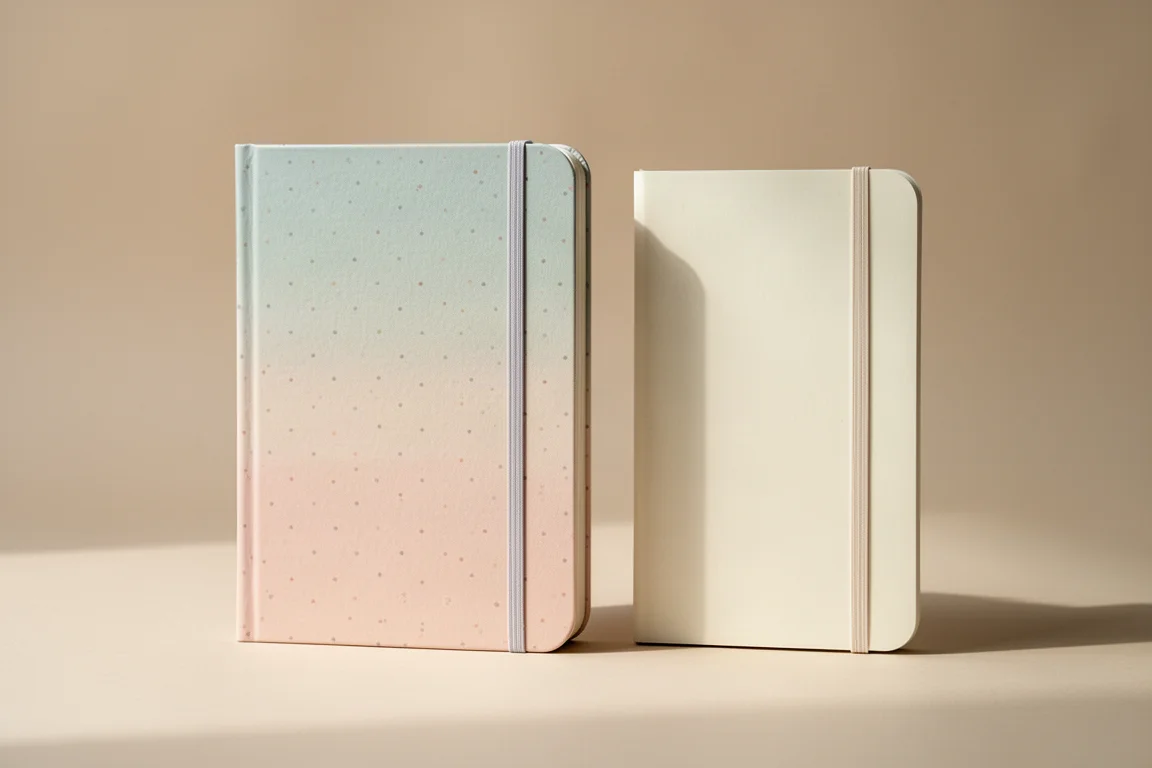
Both journals have been carried to an office job regularly, and neither has picked up any damage while traveling. That is reassuring if you plan to toss your journal into a bag daily rather than keep it on a desk. Combined with the identical thick 160 GSM paper, the durability difference between the two is effectively zero in real-world use.

Buying Advice
Switching from Archer and Olive to Notebook Therapy is a low-risk move. The paper quality is the same, the dot grid is the same, and both hold up equally well to pens, pencils, watercolors, and daily transport. Choose the Archer and Olive if you want the integrated pen loop and slightly wider margins. Choose the Notebook Therapy if you want more pages, gilded edges, and the option to skip the pen loop entirely. With Archer and Olive’s stock situation uncertain, having a proven alternative is genuinely useful.
Conclusion
These two B5 dotted journals are close enough in price and quality that neither is a wrong choice. Same 160 GSM paper, same dot grid, both durable enough for everyday carry. The differences come down to page count, margins, and small extras, and any of those can tip the decision based on what you value in a journal.
Further reading
Related Reviews
Stationery
Musgrave Pencils Review: Four Classic Pencils from Tennessee's Last Pencil Factory
We put four Musgrave pencils to paper, from the classic Harvest to the Unigraph 1200 drawing pencil, to see what a century-old Tennessee workshop can still do.
Stationery
Fountain Pen Tiers Explained: From Starter Pens to Luxury Grails
A practical overview of the different levels of fountain pens and inks, from a sub-$20 starter setup to Italian piston fillers and retractable gold-nib everyday carries.
Stationery
HP Premium 32 lb Copy Paper Review: A Fountain Pen Friendly Everyday Printer Paper
A heavy, smooth 120 GSM copy paper that handles fountain pens far better than standard printer stock, with only minor trade-offs in shading and sheen.