Aquarium Lighting
Aqua Illuminations Prime 16HD Reef Review: Compact Power for Reef Tanks
A compact, full-spectrum LED reef fixture with app control, flexible mounting, and a modular design that scales from nano tanks up to larger aquariums.
Introduction
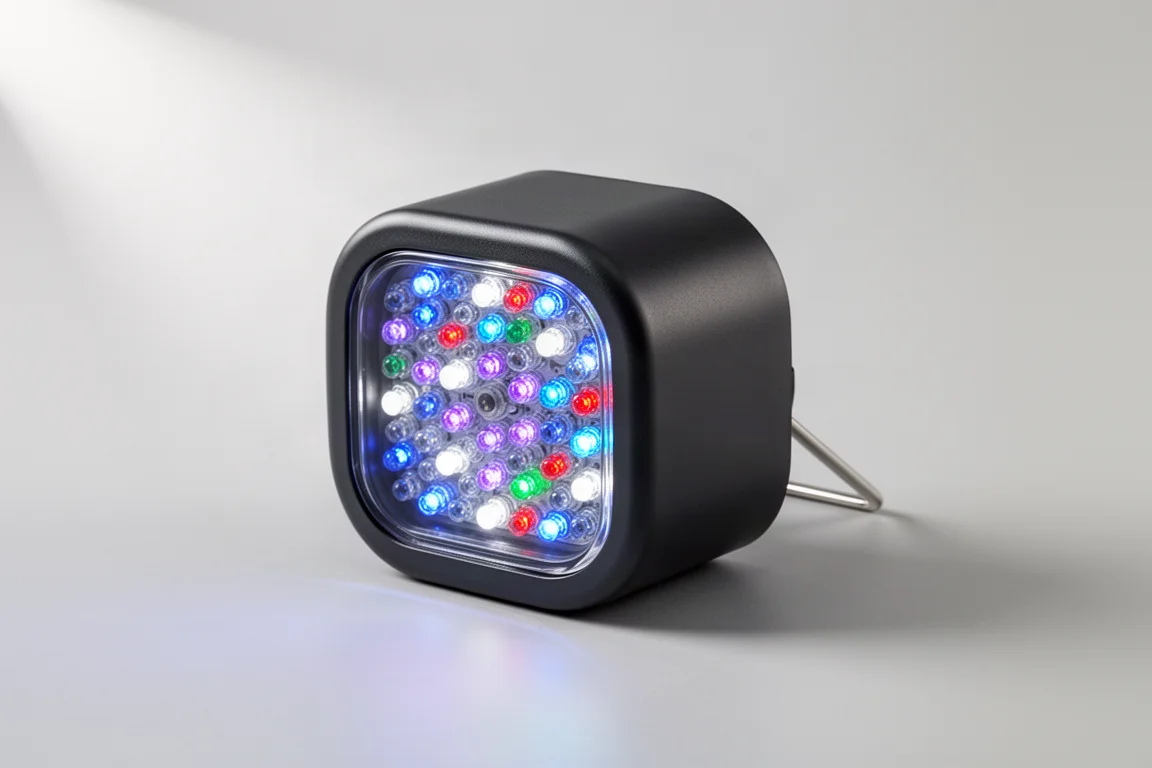
The Aqua Illuminations Prime 16HD Reef is one of the smallest serious LED fixtures you can place over a reef tank, and it is also one of the most popular. It carries the same spectrum and app control found on the larger fixtures in the same family inside a body that fits neatly over a nano tank, and with the right mounting hardware it performs well on considerably larger aquariums too.
At just over $200, it costs roughly half as much as a Radion XR15, which makes it one of the most affordable flagship-class reef lights around. The compact single-puck design is not purely a compromise either. Spread several Prime fixtures across a bigger tank and the light distribution can end up more even than with a smaller number of larger fixtures.
Who the Prime 16HD Reef Is For
This fixture covers the full range of common reef corals, from the easiest softies through to more light-demanding SPS, using the same control and spectrum options as the bigger models in the lineup but with a single LED puck.
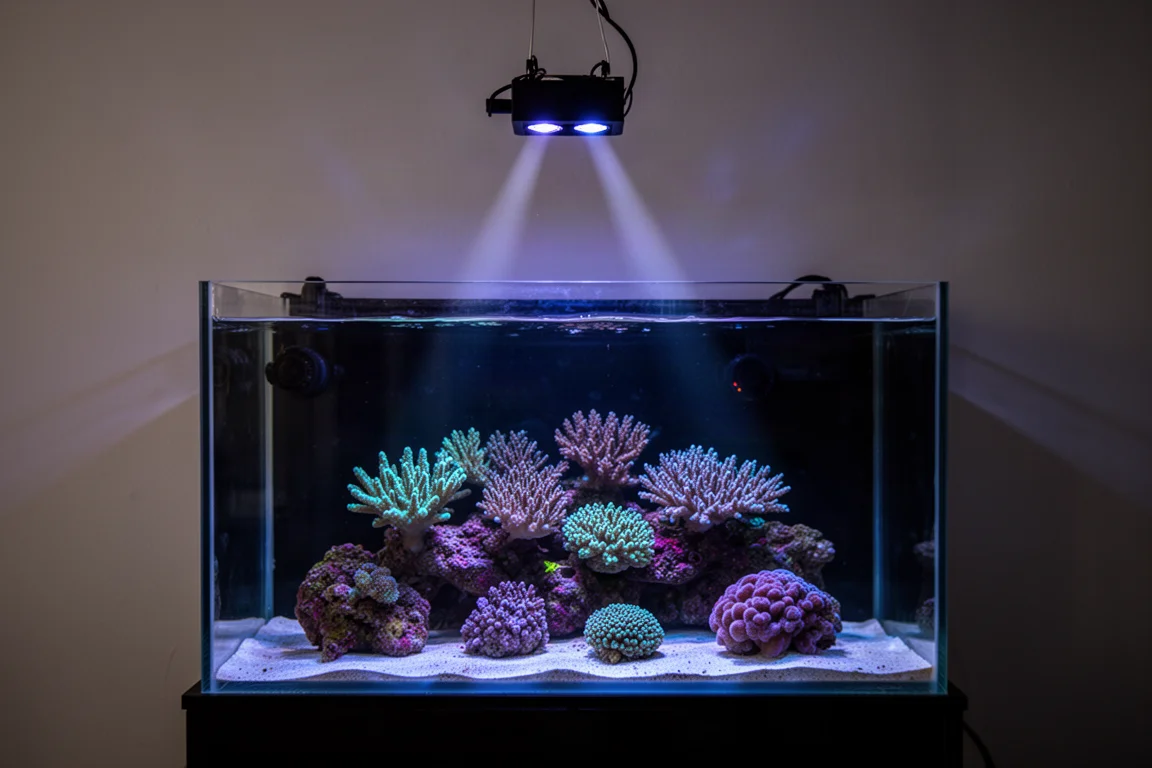
Aqua Illuminations builds four versions of the Prime: the Reef, the Fuge, a freshwater model, and the Sol. The Reef is the full-spectrum reef option. The same family also includes the Prime 16 Sol, a simplified three-channel version with a bluer spectrum that leaves out the green, red, violet, and UV diodes, draws about 13 W less, and costs roughly $20 less.
A single Prime 16HD Reef provides enough light for softies and LPS across a 24 by 24 inch footprint, or a 16 by 16 inch footprint if SPS is the goal. That makes it a natural fit for a wide range of nano tanks, while a pair or a trio of units is an excellent option for 36 and 48 inch aquariums.
Main Strengths: Spectrum and App Control
The spectrum is what you would expect from a premium reef LED: broad coverage on the blue end including UV and violet, balanced by cool white, red, and green diodes for a brighter, more natural appearance. The wide blue range delivers plenty of PAR and fluorescence for coral growth and color, and it flatters the fluorescent tones that reef keepers look for.
Control runs through the My AI app on Android and iOS. You can tune spectrum and intensity to suit your goals, build a schedule in a few taps with the easy setup, or create a fully custom schedule by adding, removing, and dragging points on the graph while setting a different spectrum for each point. Lunar and acclimation modes are also available for night viewing and for easing new corals into your lighting.
One genuinely useful feature is channel overdrive. If you rarely use much white, green, or red, the app can push the wattage freed up by those dialed-down channels into the blue and UV channels. A widely used example sets UV and violet at 166 percent, royal blue and blue at 125 percent, red and green at 10 percent, and cool white at 65 percent, producing a spectrum that comes very close to the ATI Blue Plus that has long been a benchmark for colorful coral growth.
Mounting Options for Nano and Larger Tanks
Mounting is unusually flexible. Two flexible goosenecks are available in 12 inch and 18 inch lengths, and they fit panels up to 1.2 inches thick, with or without trim. The necks have a rubberized coating and come with clips that hold the cable neatly against the gooseneck for a clean look.
For a rigid setup, the tank mount arm is made from lightweight aluminum and is light enough for small tanks with thin panels, yet it still fits panels up to 1.25 inches thick. Height adjusts from roughly 5 inches to 12 inches and length from 6 inches to 12 inches, which covers tanks from a 12 inch cube up to a 24 inch front-to-back depth such as a 120 gallon. A ball joint lets you pivot the light where you need it most, and cord routing channels keep the installation tidy.
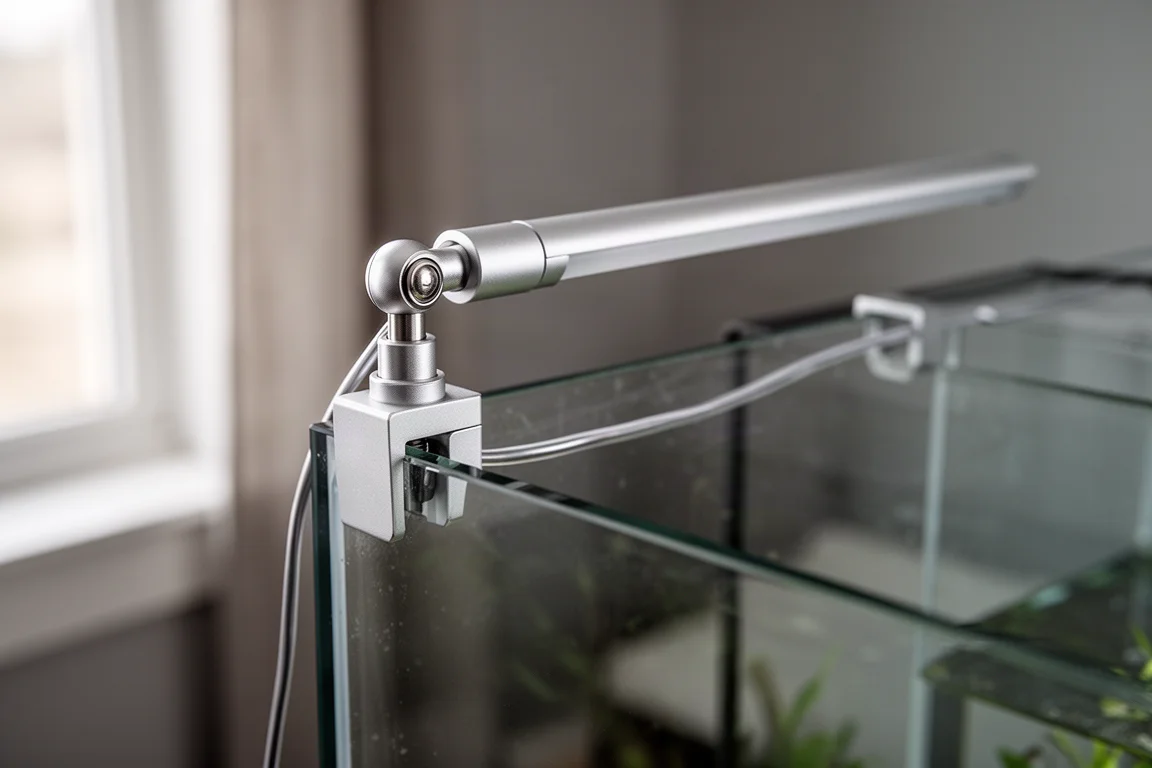
If you would rather suspend the fixture, or attach it to a universal hybrid bracket or mounting rail, a hanging kit is available. It includes an L bracket with the same ball joint connection plus the hardware needed to hang the light from a ceiling. The open slot on top of the bracket accepts generic stainless steel nuts and bolts, so it can be fixed to the universal brackets supplied with hybrid T5 fixtures.
Spread and Coverage: How Many Fixtures You Need
Because each Prime uses a single LED puck, one unit concentrates its output over a defined area. That is exactly what makes a group of them so effective: spreading several pucks further apart across a tank produces a more even distribution of light, with fewer hotspots and less shadowing between coral colonies.
The approach compares well on cost too. Choosing several smaller fixtures instead of a smaller number of larger ones can deliver better spread and PAR distribution for close to the same money, which is a strong argument for the Prime when you are planning lighting for a mid-sized tank.
Growing With the Fixture Over Time
The other advantage of a modular fixture is that it scales with the tank. If you start with a pair of Primes over a 36 by 18 inch 40 gallon breeder and the colonies grow out, adding another pair is often enough to fill the shadowed gaps between them. Everything stays on the same app and the same schedule, and you avoid the cost and disruption of replacing the entire lighting system.
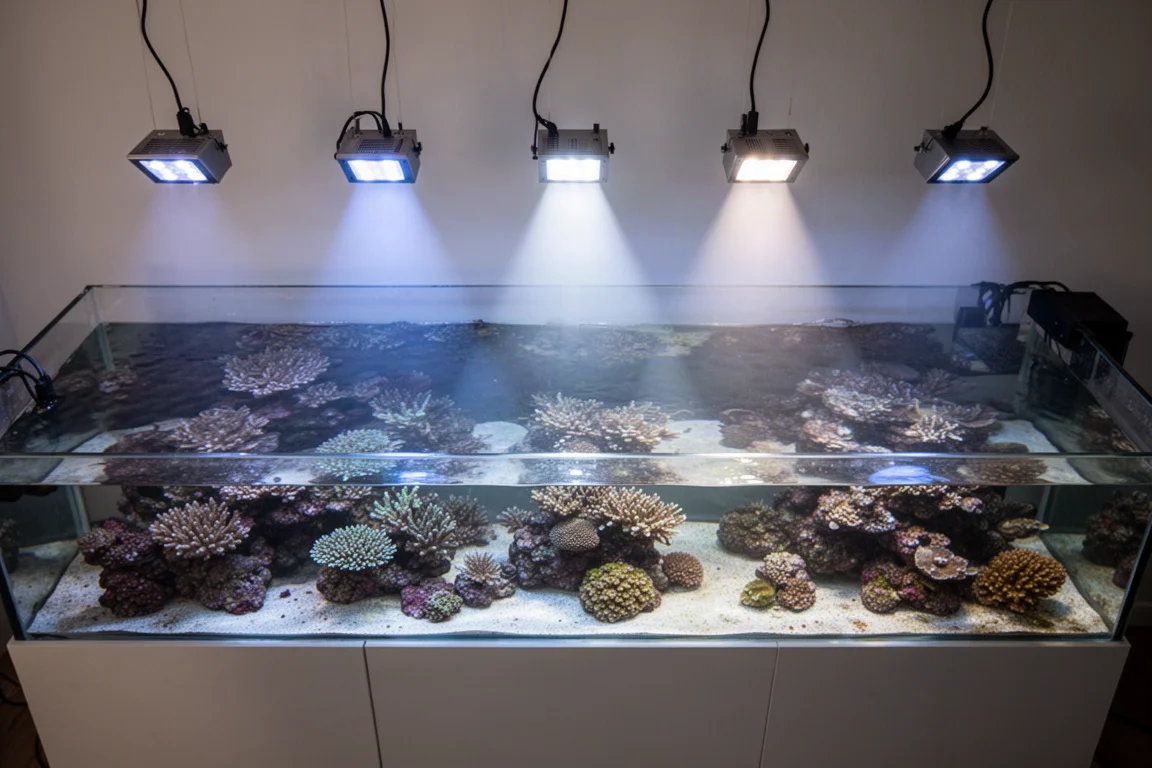
The same logic applies when you move to a bigger aquarium. Rather than buying all-new lighting that your corals have to acclimatize to, you can extend the existing setup to cover the larger footprint. Day-to-day ownership is simple as well, and the box includes a small tool for removing the screen whenever the fixture needs cleaning.
Things to Consider Before Buying
The main thing to plan for is coverage. One fixture is genuinely capable, but its footprint for light-demanding SPS is smaller than its footprint for softies and LPS, and larger tanks will need more than one unit. Working out the number of fixtures before you buy avoids the situation where a single light is being asked to do more than it should.
Mounting also deserves a decision at the same time as the fixture. Panel thickness, trim, and the layout of your aquascape all affect whether a gooseneck, a rigid arm, or a hanging kit gives you the cleanest result. If you intend to keep a white-leaning tank and want as much PAR as possible for high-demand corals, the full-spectrum Prime 16HD Reef is the version to choose.
Buying Advice
At just over $200, the Prime 16HD Reef costs roughly half as much as a Radion XR15, and it is one of the most affordable routes into flagship-level spectrum and app control. The value argument gets stronger the more fixtures you plan to run, because the modular design lets you spread light more evenly and add units only when you actually need them.
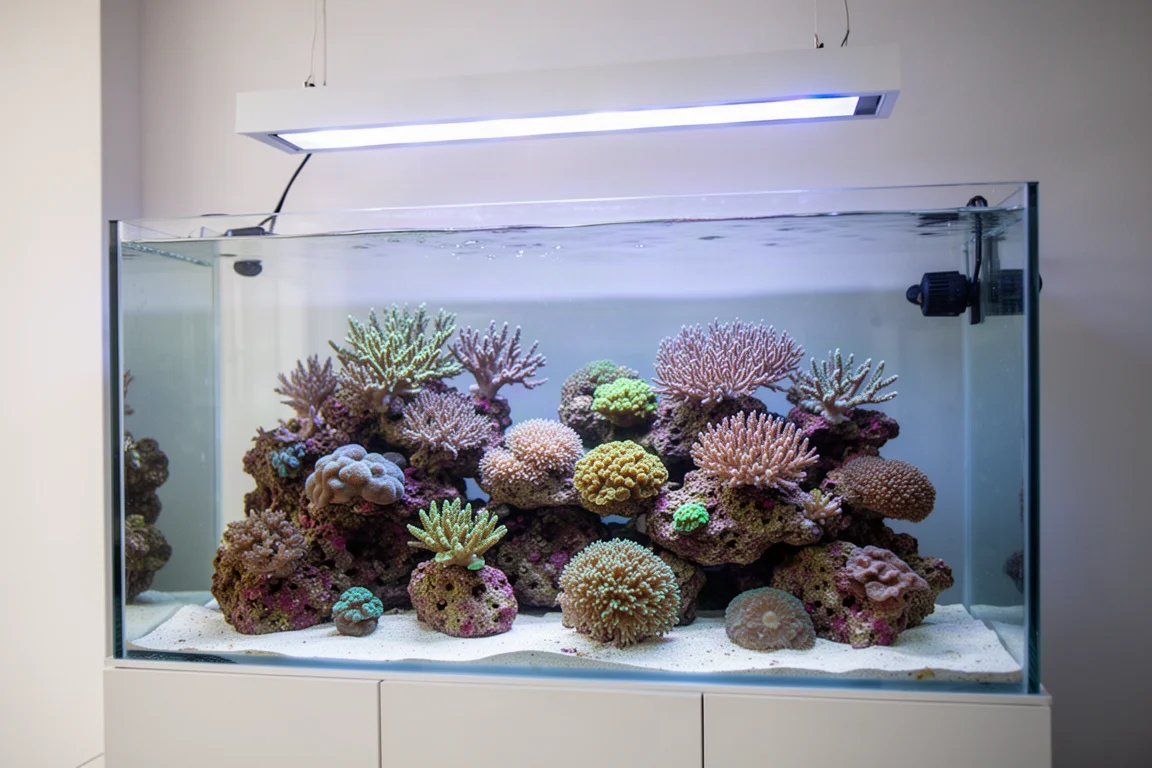
If you are lighting a nano tank, one fixture is a straightforward purchase. If you are lighting a 36 or 48 inch tank, plan for a pair or a trio from the start and budget for the mount that suits your panel thickness. Either way, you are buying into one app, one schedule, and a lighting system that can follow you to the next tank.
Conclusion
The Aqua Illuminations Prime 16HD Reef earns its popularity by doing three things well at once: it delivers a full reef spectrum with UV and violet, it gives you complete schedule and intensity control from a phone app, and it stays small and affordable enough to buy in multiples. For a nano reef it is an easy recommendation, and for a larger tank the modular approach can produce more even coverage and less shadowing than fewer, bigger fixtures for close to the same cost.
Go in with a clear idea of the footprint you need to cover and the mount that fits your tank, and this compact fixture is a confident, long-term choice that can grow along with your reef.
Product link
View more details for Aqua Illuminations Prime 16HD Reef
This product is mentioned in the review. Check the specifications, options, and compatibility before buying.
View more details for Aqua Illuminations Prime 16HD ReefFurther reading
Related Reviews
Aquarium Lighting
AI Blade LED Lights Review: A Versatile Strip Light for Reef Tanks
A practical look at the AI Blade LED line, including the value-focused Grow spectrum, mounting options, app control and PAR performance.
Aquarium Lighting
AI Hydra 32 and Hydra 64 Setup Guide: Mounting Heights, Spacing, and Add-On Lighting
A practical reef lighting guide covering optimal mounting heights for the AI Hydra 32 and Hydra 64, spacing for even coverage, and when add-on lighting is worth it.
Aquarium Lighting
AI Prime Review: A Compact Reef Light That Grows With Your Tank
A small, modular reef aquarium LED that reaches LPS and soft coral PAR levels over a 60-gallon cube, plus the spacing, mounting height, and control habits that make it work.