Aquarium Lighting
Aqua Illumination Blade Grow and Glow: A Beginner-Friendly Reef Tank Lighting Setup
A practical look at the Aqua Illumination Blade strip LEDs, why three fixtures reduce shadowing, and how to set intensity and schedule for a new reef tank.
Introduction
Lighting is often the most intimidating part of a first reef tank build. Before the tank is even filled, a new aquarist is faced with dozens of fixtures, and the vocabulary around PAR, spectrum, and spread can make a straightforward decision feel complicated.
It helps to reduce the problem to two questions. First, how does the light mount? Second, what will the tank look like one, two, or three years from now? A fixture that rests on the tank is far easier for most beginners than one that has to be hung from a ceiling, and a light designed to support coral growth keeps more options open than one chosen only for fish.
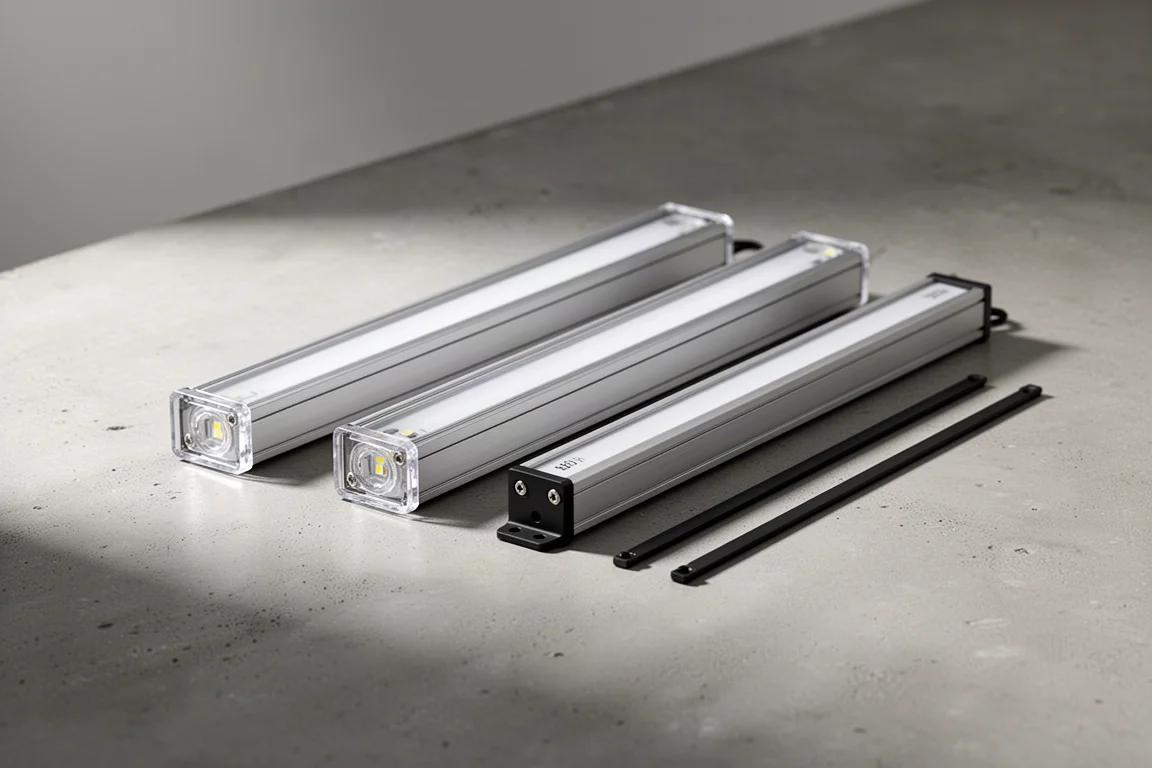
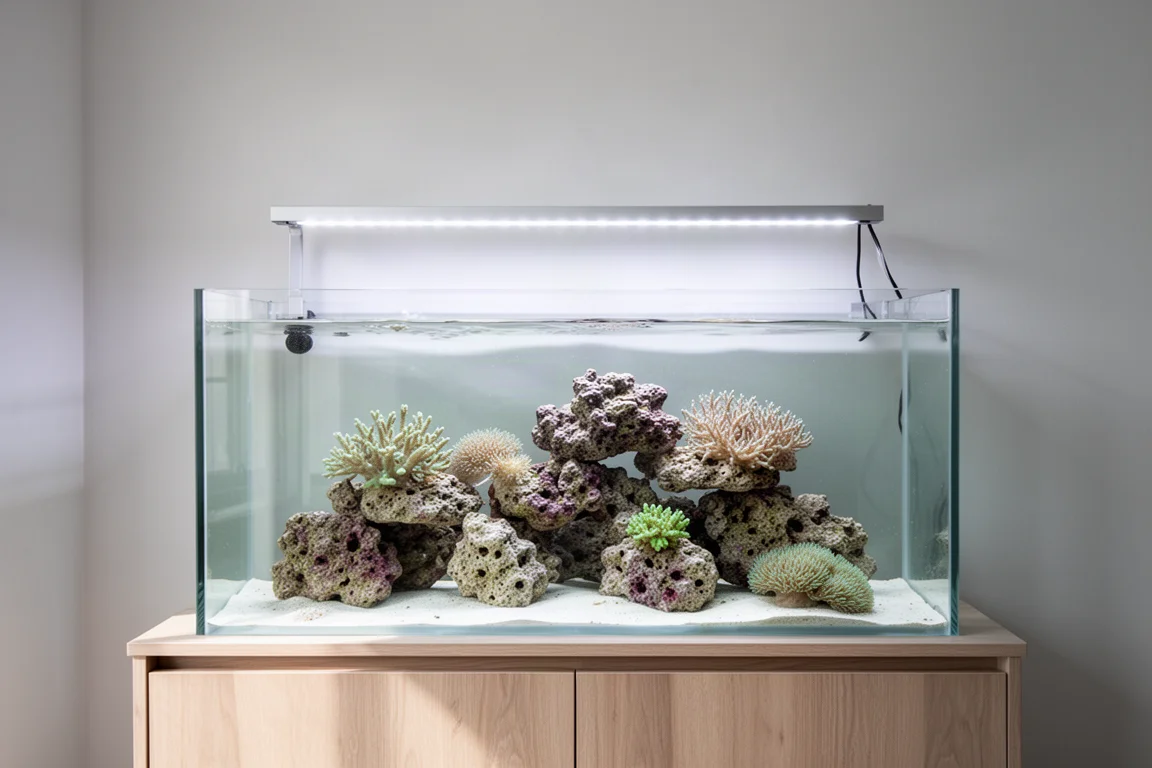
This guide looks at the three Aqua Illumination Blade strip LEDs used over a beginner reef build: two Blade Grow fixtures and one Blade Glow.
What to Consider Before Choosing a Reef Tank Light
Mounting comes first. A fixture that can only be attached to the ceiling is a harder proposition for most beginners, while a light that sits directly on the tank glass is ready in minutes. For a first build, that difference in effort is worth weighing before anything else.
Then think about where the tank is heading. In a simple fish-only setup, PAR, spectrum, and spread matter far less. In a tank that will eventually be packed with coral, a light designed specifically for coral growth becomes a genuine priority. Anyone who is unsure whether they will keep coral is better served by a light that leaves that door open rather than one that closes it.
Coverage deserves the same attention. A single light source can leave large shadowed areas where corals receive significantly less light, and that can be detrimental to coral health and growth. Multiple strip LEDs are one practical way to soften that problem.
Aqua Illumination Blade: The Strip LED Foundation
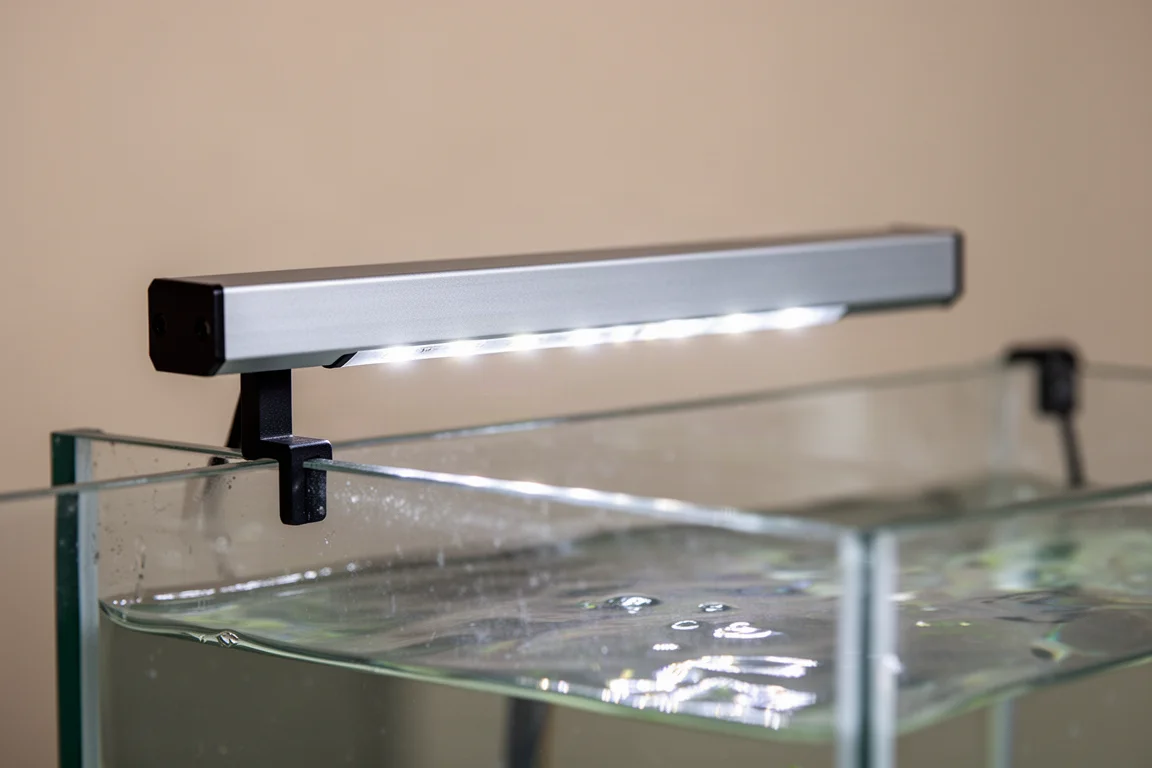
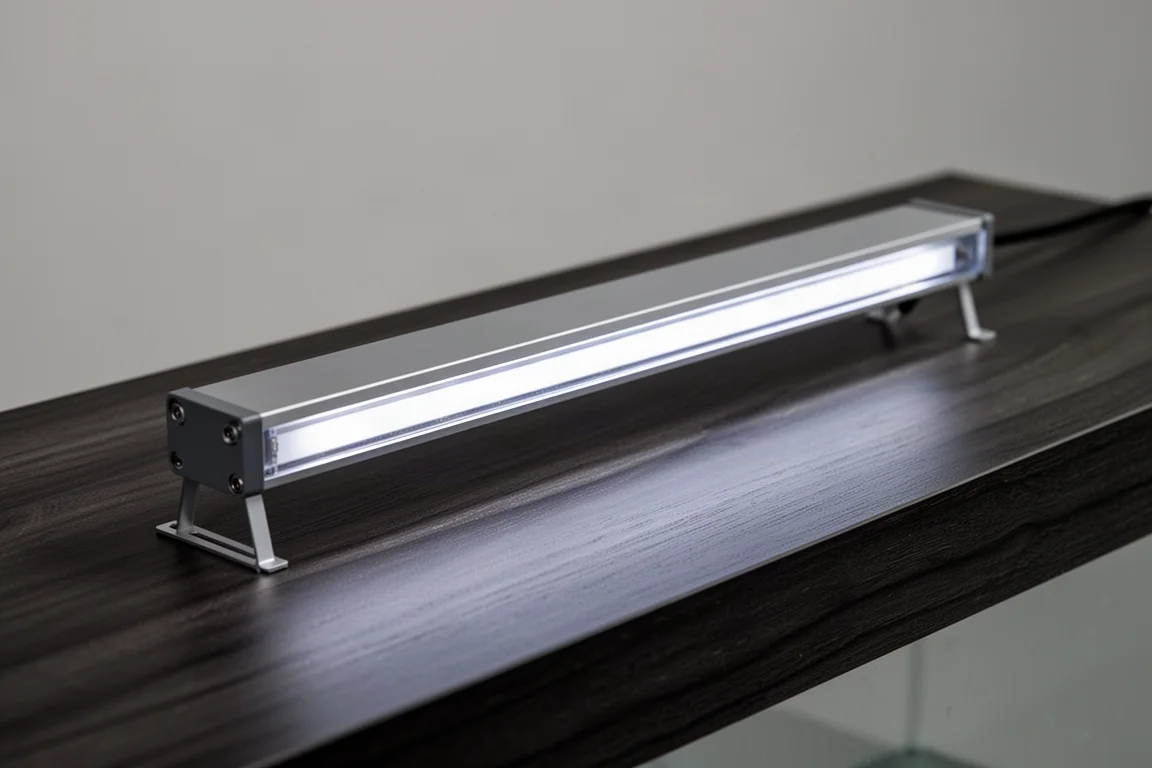
The Aqua Illumination Blade is a slim strip LED fixture, and its appeal for a beginner build is mostly about simplicity. The included tank rests slide into place and the fixture then sits on top of the aquarium glass, so there is nothing to hang and no ceiling hardware to install. The version used in this layout measures 30 inches.
Cable management is refreshingly straightforward as well. Power supplies can be organized on a control board with mounting brackets, and a short extension cord ties the three fixtures together so they draw from a single outlet.
Control runs through either the myAI app or the Mobius app. The Mobius app is the more convenient choice for anyone who already has other equipment set up inside it, since everything can then be managed from one place. Adding a fixture to a tank is quick, and the app opens straight into the settings that matter.
Aqua Illumination Blade Grow
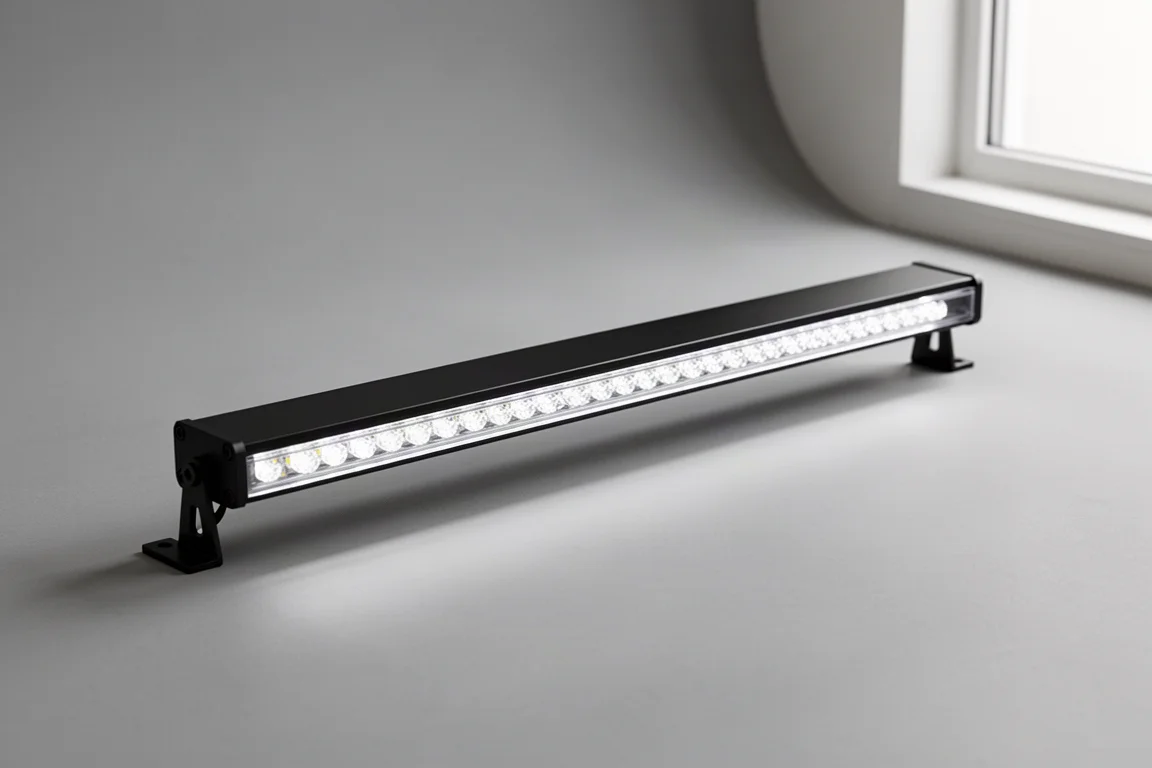
The Blade Grow is the version of the fixture designed to grow coral, which makes it the natural starting point for a tank that may one day hold more than fish. Two of them are used over this aquarium, one at the front of the tank and one at the rear, so the light reaches both the front edge and the back of the rockwork.
That front-and-rear arrangement matters more than it first appears. A single strip tends to leave the far side of a tank in weaker light, and the two-fixture layout keeps the whole footprint closer to an even field. Because both units are the same model, the front and rear of the aquarium receive comparable intensity rather than one bright zone and one dim one.
Setup itself is minimal. The included rests slot into position, the fixtures settle onto the glass rim, and each light is added in the app before any programming begins.
One thing worth flagging for beginners is that the Grow fixtures are a growth light first. Their job is not to make the tank look a particular way in the evening, and the schedule that suits coral is not necessarily the schedule that suits a viewing session. That is what the third fixture is for.
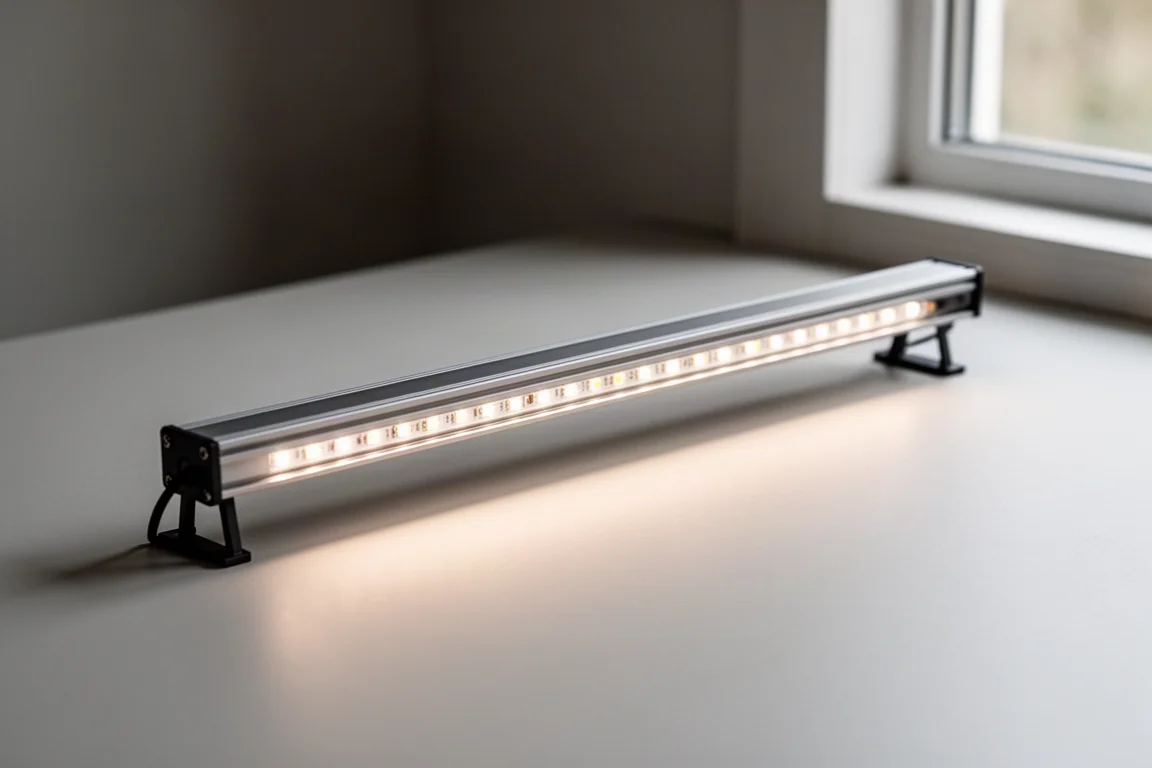
Aqua Illumination Blade Glow
The third fixture is a single Blade Glow, placed in the middle of the tank between the two Grow units. Its role is deliberately different. The Grow fixtures carry the main responsibility for coral growth, while the Glow fixture helps coral fluorescence stand out, adding the visual character that makes a reef tank rewarding to look at.
The useful part is that the app treats the two models as a matched pair rather than unrelated lights. A dedicated combined preset applies the appropriate settings to each fixture at once, so the Glow does not have to be dialed in from scratch. For a first-time aquarist, that removes a lot of trial and error.
Coverage and Shadowing: Why Three Strips Beat One
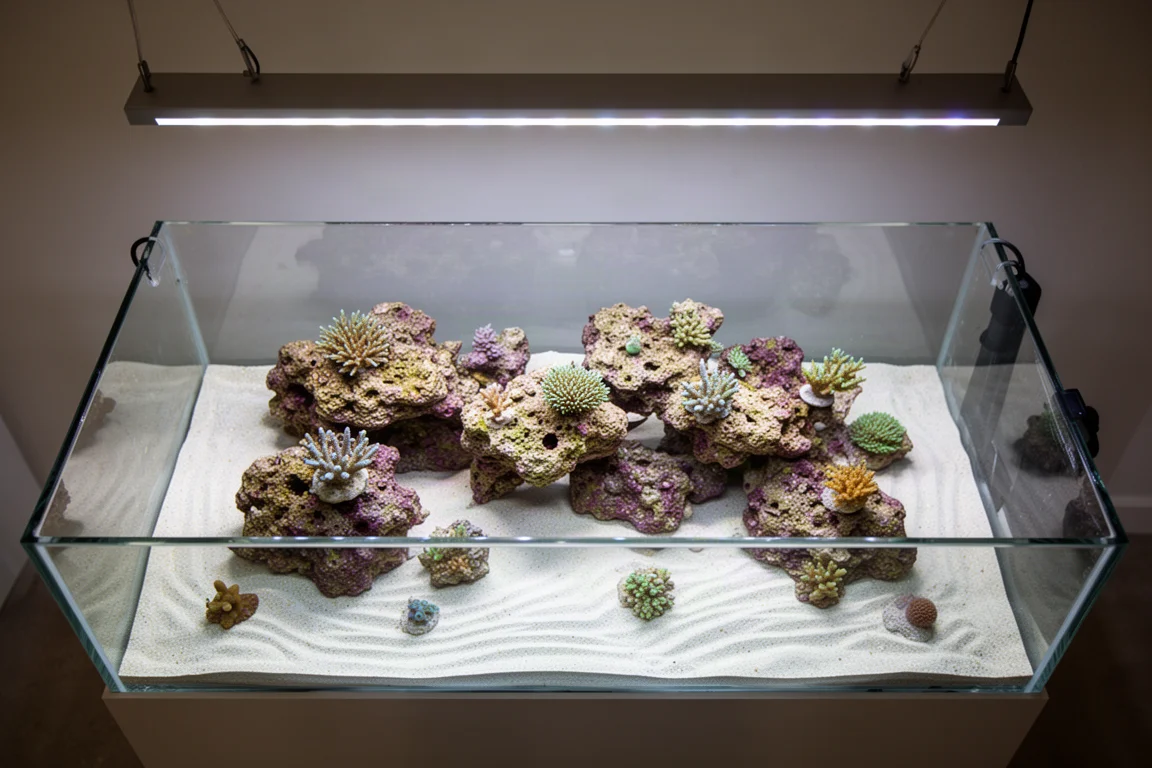
A single Blade would have been enough over this tank, and that is a useful point for anyone working to a budget. Three fixtures were chosen for two reasons: shadowing and spread. The aim is an even blanket of light across the entire aquarium and the ability to place coral anywhere inside it.
Multiple strip LEDs handle this well because the light arrives from several positions instead of one. That reduces shadowing to a minimum. Large shadows create zones inside a tank where light levels are significantly lower, and those zones can be detrimental to coral health and growth, so the benefit is not only cosmetic. It is also what allows the aquarist to decide later where corals go rather than being restricted to the brightest spot in the tank.
A Practical Lighting Schedule and Intensity Target
The Mobius app includes a template built for exactly this kind of three-fixture combination. Applying the combined preset sets both fixture types to 20 percent intensity as a starting point, and the preset schedule runs a slow ramp from 6am to 8am, holds full power for five hours between 10am and 3pm, ramps down quickly until 5pm, and closes with a sunset cycle until the lights switch off at 8pm.
That schedule is worth trusting for a first setup rather than immediately rewriting. It produces a long, gentle photoperiod with a clear midday peak, which is a sensible baseline for a new tank.
Intensity still deserves a check with a PAR meter. With the return pump and wave makers switched off, readings taken throughout the tank at 20 percent intensity ranged between 20 and 60. That is a good range for fish and soft corals. If stony corals are added later, intensity will need to be increased. More light is not automatically better, since excessive output can encourage nuisance algae and can harm coral.
Overall Buying Advice
The Blades are one option among many rather than the only sensible answer. Roughly 25 other fixtures would have worked well over the same tank, and there is a light suited to essentially every design and every budget. Nobody should feel locked out of the hobby because a particular strip layout does not fit their setup.
For anyone still weighing choices, the most reliable shortcut is to find an established tank you admire and copy its lighting setup. That approach removes most of the guesswork and shortens the decision from weeks to an afternoon.
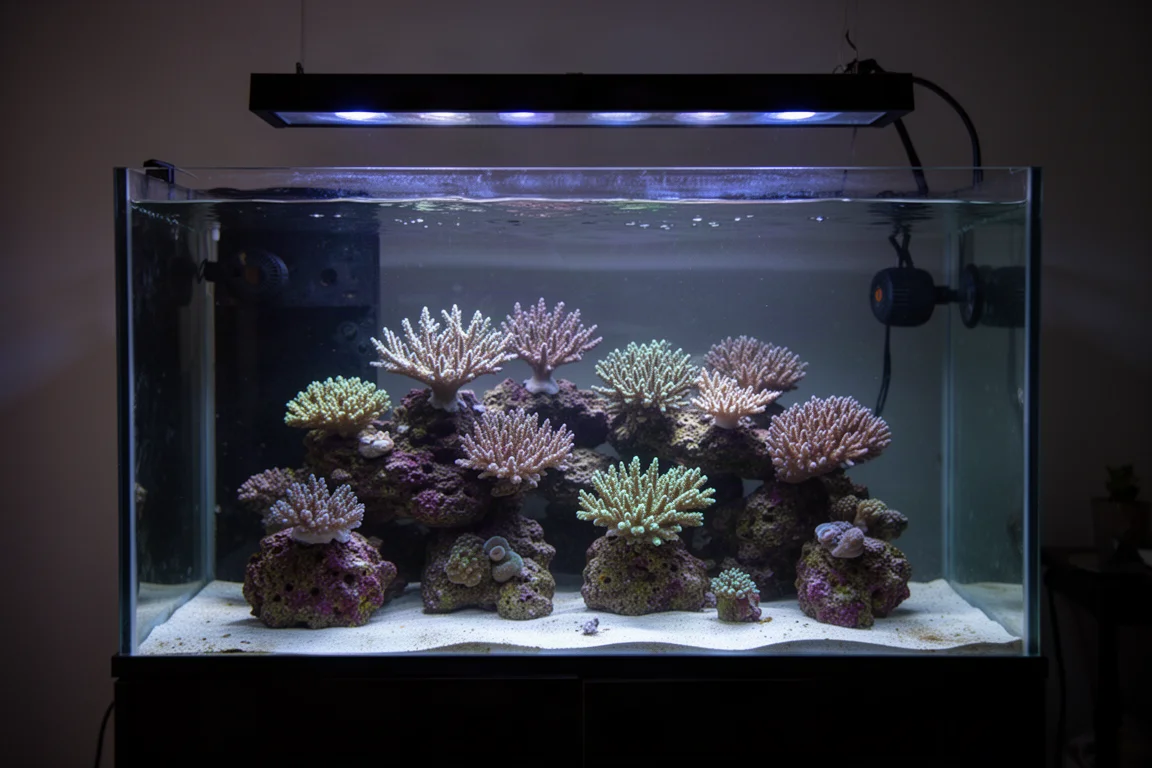
For a beginner tank that may or may not end up full of coral, the combination of tank-mounted hardware, app-based control, and multi-fixture coverage is exactly what makes this layout worth considering. It is easy to install, easy to schedule, and it keeps the option of a coral-heavy tank open without forcing that decision today.
Conclusion
The Aqua Illumination Blade layout is built around three ideas that matter to a new reef aquarist: a fixture that rests on the tank instead of the ceiling, enough strips to spread light evenly and minimize shadowing, and app templates that handle the initial programming. Two Blade Grow units carry coral growth, a single Blade Glow adds fluorescence, and a 20 percent starting intensity with a gentle photoperiod gives a safe baseline to measure against. If the format suits your tank, it is a calm and forgiving way to start. If it does not, there are many other lights that would serve the same tank just as well.
Further reading
Related Reviews
Aquarium Lighting
AI Blade LED Lights Review: A Versatile Strip Light for Reef Tanks
A practical look at the AI Blade LED line, including the value-focused Grow spectrum, mounting options, app control and PAR performance.
Aquarium Lighting
AI Hydra 32 and Hydra 64 Setup Guide: Mounting Heights, Spacing, and Add-On Lighting
A practical reef lighting guide covering optimal mounting heights for the AI Hydra 32 and Hydra 64, spacing for even coverage, and when add-on lighting is worth it.
Aquarium Lighting
AI Prime Review: A Compact Reef Light That Grows With Your Tank
A small, modular reef aquarium LED that reaches LPS and soft coral PAR levels over a 60-gallon cube, plus the spacing, mounting height, and control habits that make it work.