GPS Sports Watches
Apple Watch Ultra Ultra-Ready? Comrades Marathon Battery and GPS Test vs Garmin and Polar
A 12-hour race test at the Comrades Marathon puts the Apple Watch Ultra's GPS battery life up against the Garmin Enduro 2, Fenix 7 Pro and a Polar chest strap.
Introduction
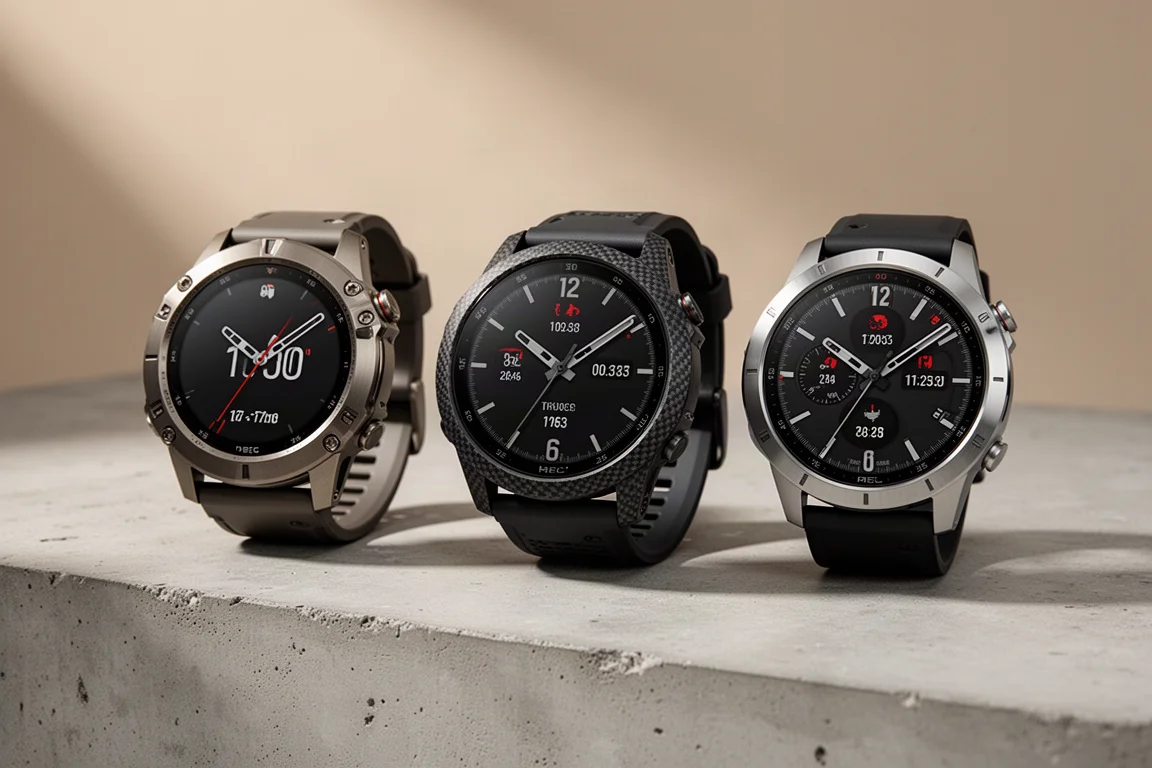
The Comrades Marathon, with its 12-hour cutoff, is close to a perfect stress test for a watch marketed at ultra runners. A run of just under nine hours, plus a long block off the charger before the start, gives a brutally honest answer on whether the Apple Watch Ultra can genuinely survive an ultra distance. This test also put it up against two established endurance watches, the Garmin Enduro 2 and the Garmin Fenix 7 Pro, with a Polar chest strap on hand as the heart rate reference.
The Race Test: 12 Hours or Nothing
The Comrades Ultra starts at 5:30 in the morning, which means an early bus to the start and a pre-race routine that begins long before the gun. The watch came off charge at around 2:30 AM, so the Apple Watch Ultra had to cover roughly three hours of standby time before the race even began, on top of the full GPS-tracked run within the 12-hour cutoff.
That makes this a fair stand-in for a 100K ultra in the UK with a 12-hour target. If the watch can last this, it can handle most single-day road ultras.

Battery Life Results
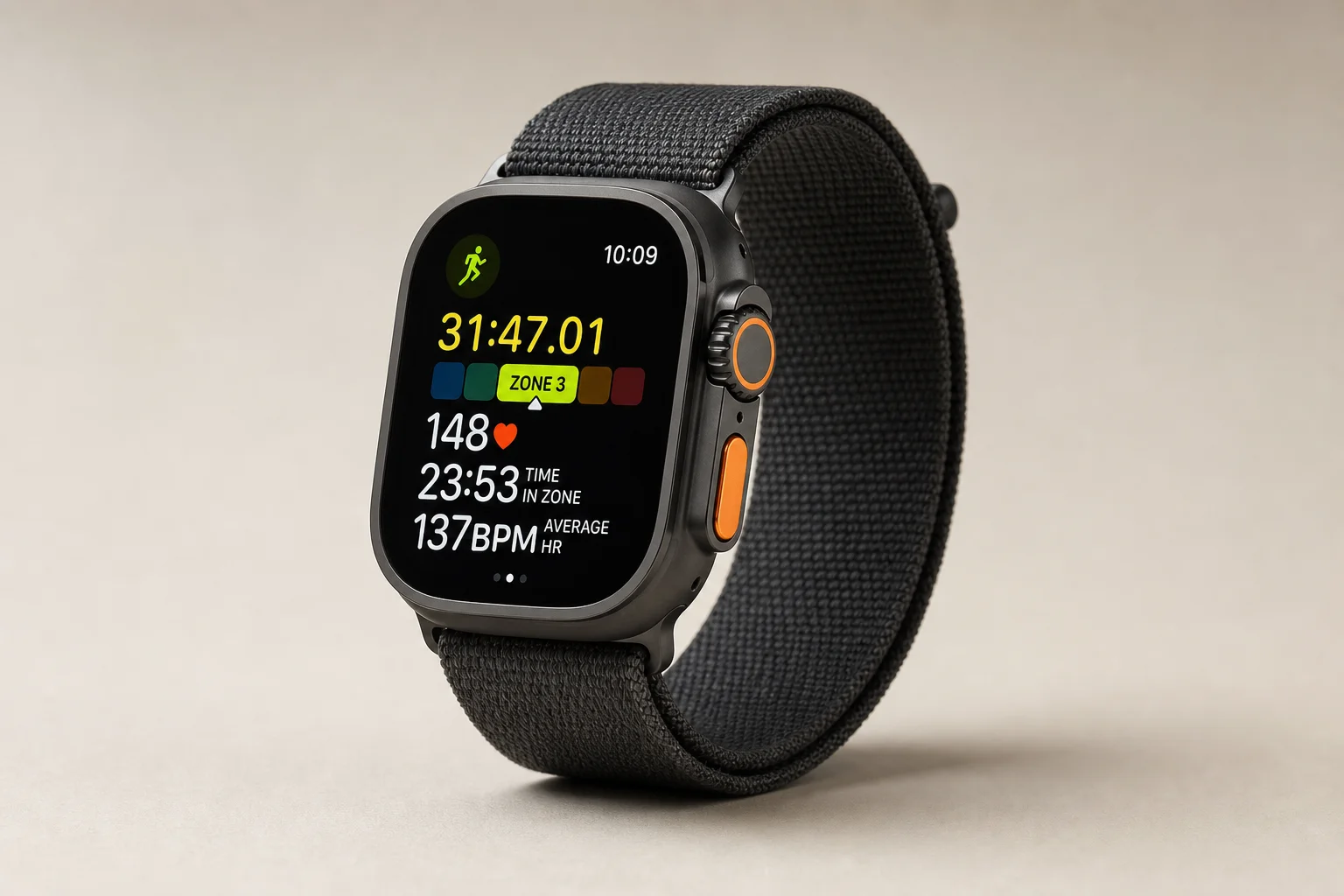
Crossing the finish line after 8 hours and 48 minutes, the Apple Watch Ultra was down to 35 percent. That is 60 percent of battery used across roughly nine hours of GPS track time, an average drain of about 6.5 percent per hour. For a single stint, that is a strong result for an Apple Watch, suggesting around 14 hours of GPS tracking is realistic, provided you are not streaming music, taking calls, or leaning heavily on the smartwatch extras.
Had the race taken the full 12 hours, the Ultra probably would have lasted the distance, with enough left in the tank to hail an Uber or pay for a celebratory beer. For context, that staying power covers a 100K ultra at around 8:30 per kilometre, or 13:30 per mile. No previous Apple Watch, or most other smartwatches, would get near that.
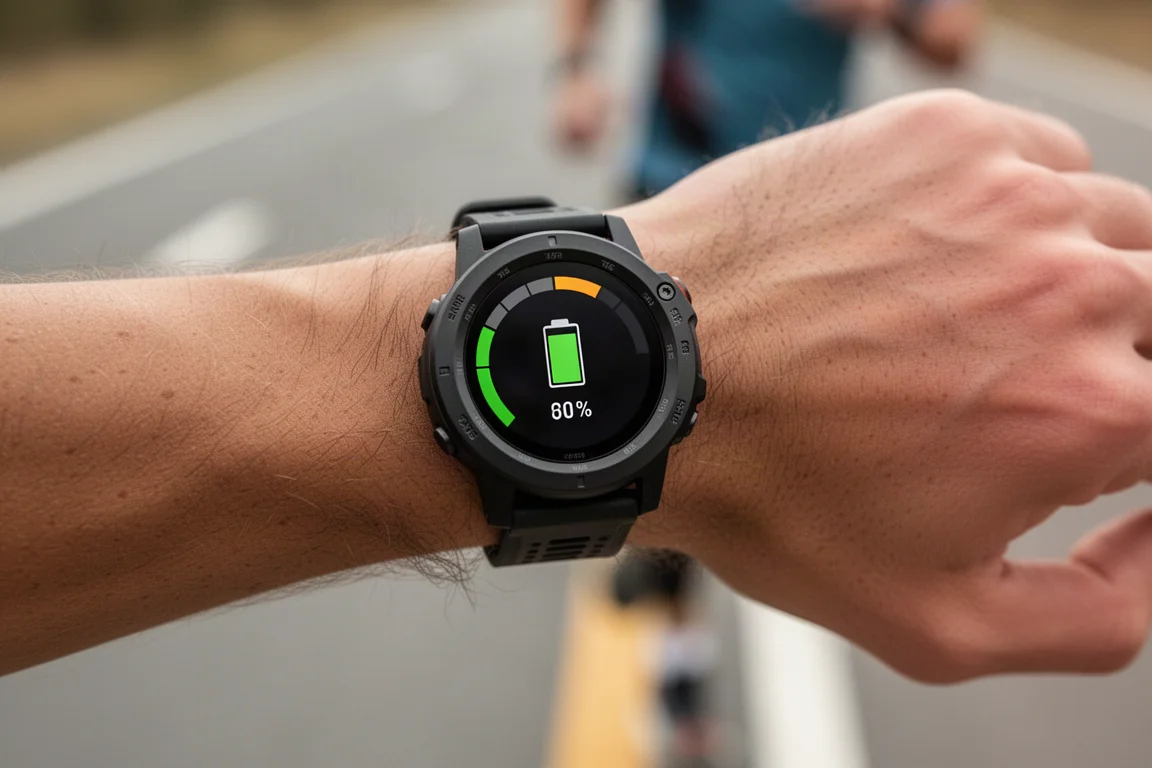
The classic running watches are a different story, of course. The Garmin Enduro 2 burned just 14 percent from charger to finish line, and the new Fenix 7 Pro burned 27 percent. The Apple Watch Ultra is not yet anywhere near those two endurance beasts, and multi-day or 24-hour races remain out of its comfort zone.
GPS Accuracy Across 55 Miles
All three watches were set to their most accurate dual-frequency multi-band GPS modes, so they were all running in high-power mode. Across the roughly 55 miles of South African countryside, the results were impressively consistent. The Apple Watch Ultra’s overall distance was marginally higher than the Enduro 2 and the Fenix 7 Pro, but the difference was around 0.4 percent, which is insignificant over such a long distance.
The GPS traces told the same story. All three followed similar lines, with no significant deviation through buildings or alarming wandering off-piste. Each drifted slightly at times, but not enough to affect overall accuracy, and the clear open skies likely helped. Real-time pacing was less convincing across the board: all three watches flickered up and down and rarely agreed at the same moment, so the Ultra was neither better nor worse than the two Garmins here.
Heart Rate Performance
Comrades is hot and very hilly, exactly the kind of race where optical heart rate sensors can struggle with rapid shifts in intensity. Impressively, all three watches agreed closely on average heart rate, which rarely happens, and all matched the Polar chest strap almost exactly. The chest strap averaged 140 BPM against 141 BPM on every watch.
Max heart rate showed less consensus. The Enduro 2 clocked the highest at 171 BPM, the Fenix 7 Pro the lowest at 165, and the Apple Watch Ultra sat in between at 169. The chest strap peaked at 164. Those higher reads tended to be momentary spikes, and for large parts of the race the sensors were closely matched. There was no standout optical performer here.
Verdict: Is the Apple Watch Ultra Ultra-Ready?
When Apple launched the Ultra with imagery of desert runners and an “Ultra” badge on the name, there was healthy skepticism about its long-course endurance credentials. This Comrades test suggests the picture has genuinely changed. For well-marked road ultras up to 100 kilometres, especially for faster runners, this is finally an Apple Watch you can rely on to last the distance and track with good accuracy.
There are still caveats. Battery life is nowhere near the Enduro 2 or Fenix 7 Pro, so multi-day or 24-hour races remain beyond its reach, and the native navigation is somewhat limited. But for races up to around 14 or 15 hours on a marked course, the Ultra delivers, and it adds the everyday smartwatch smarts you will not find on Garmin or Polar devices.

Conclusion
The Apple Watch Ultra passed a genuinely hard ultra test with credit: near-identical GPS accuracy to the endurance specialists, heart rate readings that matched a chest strap, and enough battery to cover nine hours of running plus a long pre-race morning, with margin to spare toward 14 hours of tracking. If your racing sits inside that envelope and you value the smartwatch experience, it is now a credible ultra option. If your ambitions run to 24-hour or multi-day events, the Garmin Enduro 2 remains the safer bet.
Further reading
Related Reviews
GPS Sports Watches
Polar Grit X2 Pro vs Vantage V3 vs COROS Vertix 2S: Which Flagship Adventure Watch Makes Sense
Polar's new flagship shares its internals with the Vantage V3 and goes up against the COROS Vertix 2S. Here is what two months of testing revealed about GPS, heart rate, navigation, and value.
GPS Sports Watches
Coros Apex 2 vs Garmin: Six GPS Sports Watches Worth Comparing
A practical look at the Coros Apex 2, Apex 2 Pro, Vertex 2, and three Garmin rivals, with what each does well and where the trade-offs sit.
GPS Sports Watches
Coros Apex 4 Hands-On: Titanium Build, Faster Mapping, and a Battery Built for the Mountains
A first look at the new Coros Apex 4 GPS sports watch, including its titanium construction, improved mapping, built-in speaker, and standout battery life.