Portable Power Stations
Anker SOLIX F3800 Whole House Test: Two Units, One Full Day, No Solar
We ran a full house on two linked Anker SOLIX F3800 units for nearly 12 hours to see what they can handle and how long they actually last.
Introduction
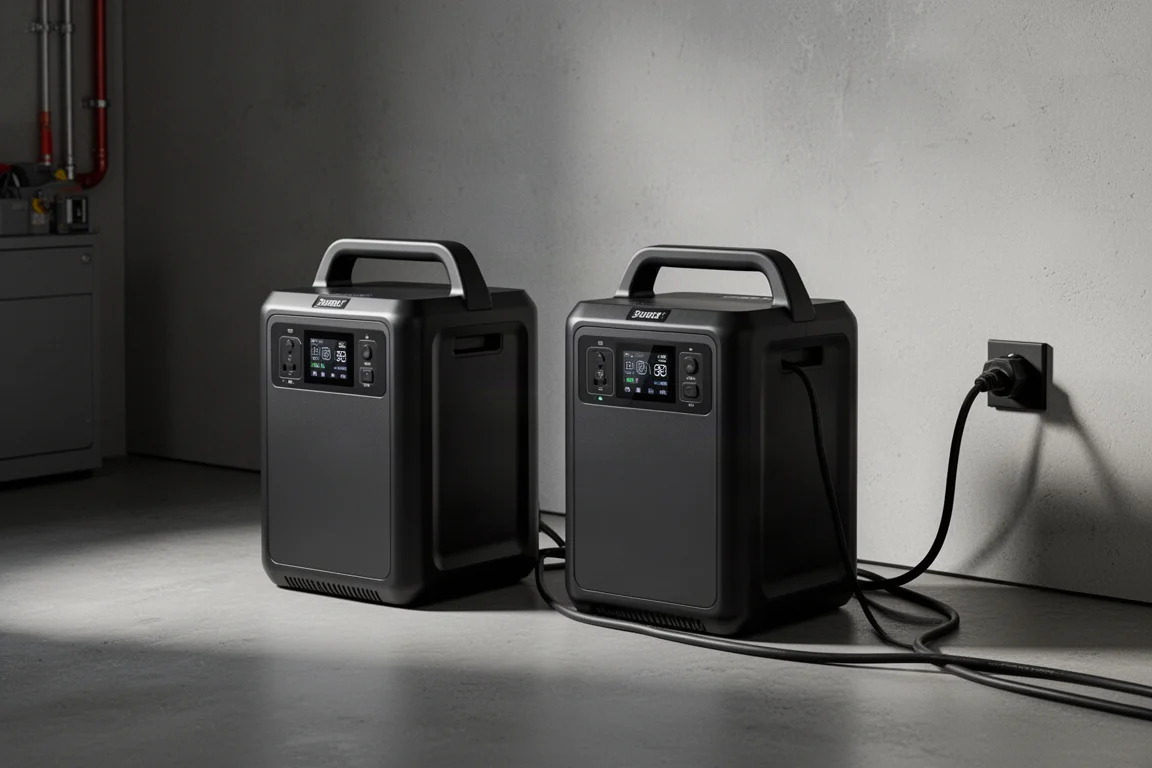
The Anker SOLIX F3800 has already earned a reputation as one of the strongest battery banks on the market, but one question keeps coming up: can it really run an entire house? To find out, we expanded the setup with a second F3800 and ran a full-day test with no solar input at all, using the house exactly as we would on a normal day. Here is what the setup looked like, what it could and could not handle, and how long the whole system actually lasted.
Who This Product Is For
This setup is aimed at homeowners who want genuine whole-house backup without a gas generator. If you want to keep your refrigerator, freezer, Wi-Fi, furnace, security cameras, lights, and work equipment running through an outage, and do it silently and safely indoors, the F3800 is built for exactly that use case. It is also interesting for anyone looking to shift electricity use to cheaper off-peak hours with the optional smart hub setup.
How the Two-Unit Setup Works
Linking two F3800 units is straightforward with Anker’s Double Power Hub, which costs around $250 and is far less expensive than the full Anker SOLIX Smart Hub for the home. The hub effectively turns two units into one system: two cables run from the hub, one snapping into each unit’s side port, and from then on both batteries deplete evenly and report as a single system. You are limited to two units per hub, but you can still add expansion batteries on top if you want more capacity.
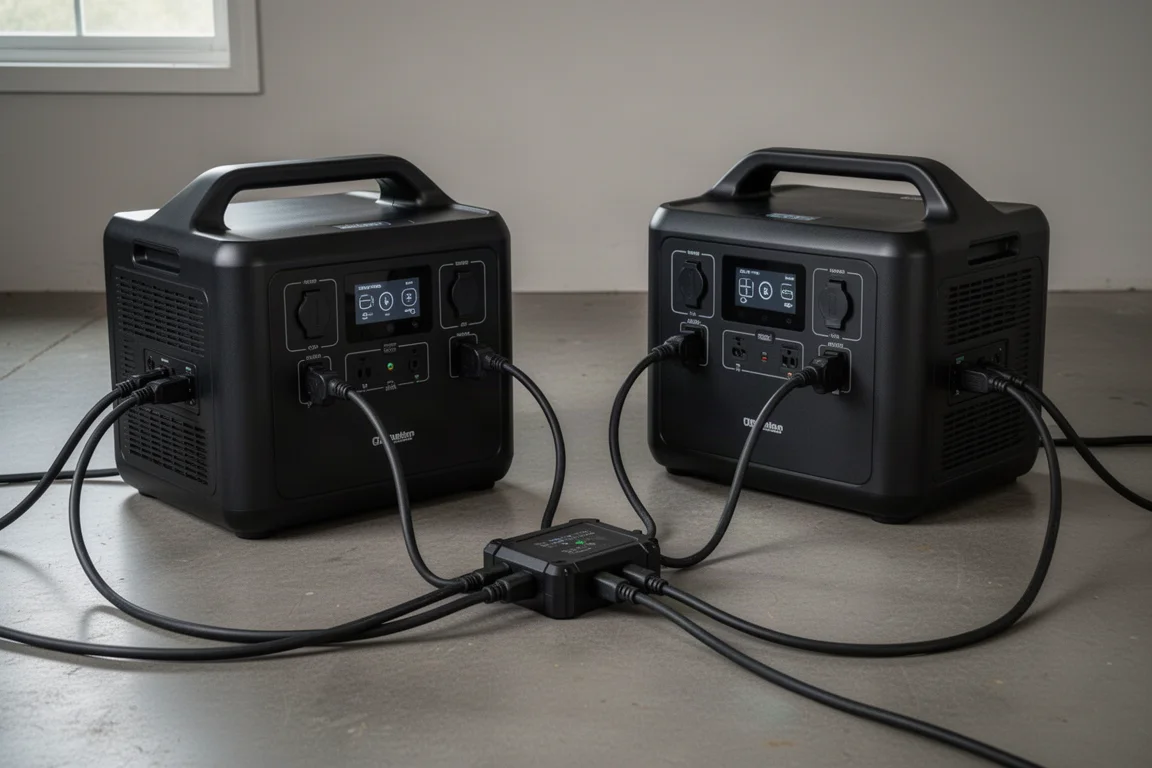
The Anker app detects the setup automatically and shows live output for each unit, letting you switch between the two and monitor draw in real time. It also sends alerts as the battery gets low, which proved useful late in the test day.
Safety First: Wiring It Into the House
Getting the power into the house required a bit of planning. The Double Power Hub output is a 50 amp connection, and the house inlet needed an additional four-prong 50 amp to 30 amp generator plug adapter, plus a longer heavy-duty cable. Once connected, the setup is plug and play, and everything locks in and stays water resistant when assembled correctly.
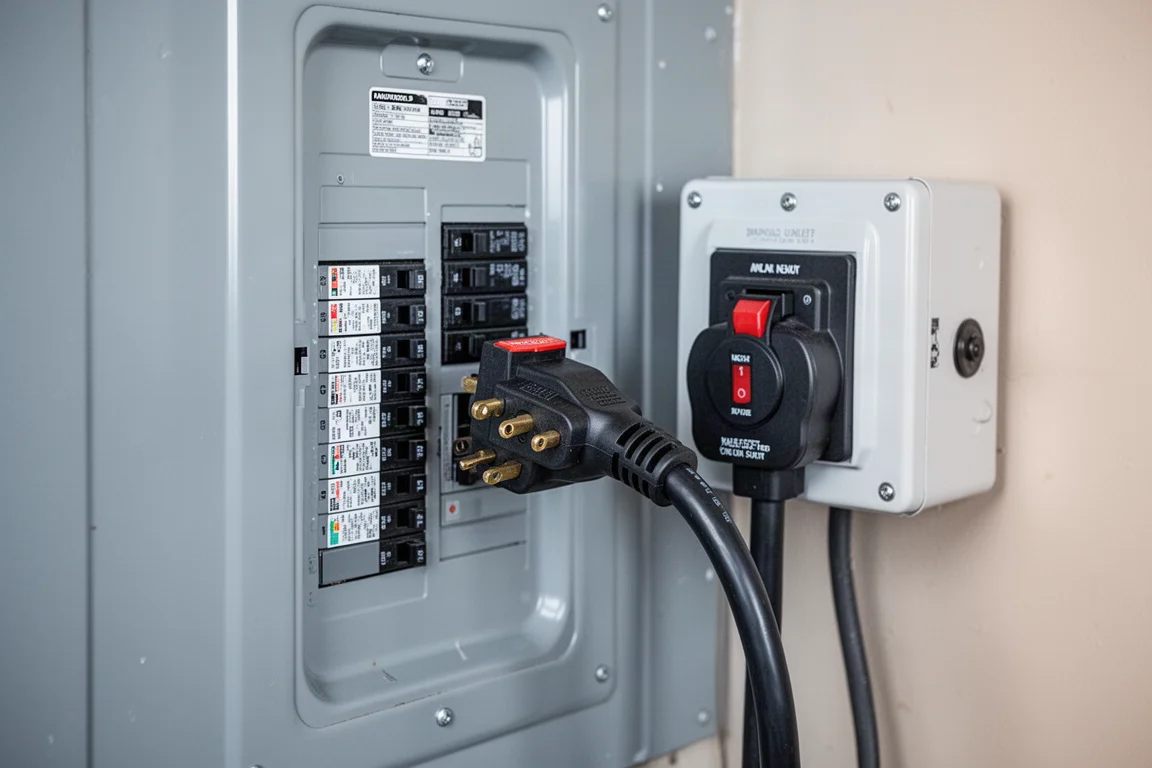
Safety matters here. Before connecting, the main house breaker must be shut off, and the transfer switch should be an interlocked one, meaning the main breaker cannot be on while the battery power is feeding the panel. This prevents back-feeding the utility lines while anyone might be working on them. Once the interlock is set, you bring up the generator switch and the house runs entirely from the units.
What It Can and Cannot Run
With everything hooked up, the house ran completely off the two units. Lights, refrigerator, freezers, Wi-Fi routers, security cameras, television, and a work computer with three monitors all ran without issue. Even the washer and dryer worked, with the dryer briefly spiking to around 1,200 watts before settling near 700. Major appliances including the oven would also run, though high-draw items deserve caution.
The one category to treat carefully is sustained high-draw heating. A space heater on high can pull around 1,500 watts, and running items like that for long periods will drain the batteries much faster. The system has a massive 12,000 watt output ceiling, which is far more than a typical household needs at any given moment, so the real question is never whether it can power things but how long it can keep doing so.
A Full Day of Normal Household Use
The test started around 8:00 in the morning with the whole house drawing around 595 watts, then trimmed to roughly 540 after shutting off unnecessary exterior lights. Morning use included heating pancakes in the microwave, which briefly spiked the draw to about 2,300 watts, running a heavy editing workstation, and charging camera batteries. Through the day, each unit typically carried around 200 to 350 watts.

By evening, with the family home and laptops plugged in, draw climbed to 500 to 600 watts and occasionally spiked to around 1,000. Both units stayed perfectly in sync the entire time, depleting at the same rate, and the only noise was the occasional quiet whir of the internal fans. Being fully silent and fume-free means the system can run safely inside the house, unlike a gas generator that must stay outside in the dry.
How Long It Actually Lasted
The benchmark here was the average US power outage, which for everyday incidents like a blown transformer runs roughly five and a half to seven hours. The system passed that mark with room to spare. By 1:38 in the afternoon both units still sat at 57%, and around 6:00 in the evening they were still at 14% and 11% after more than ten hours of continuous use.
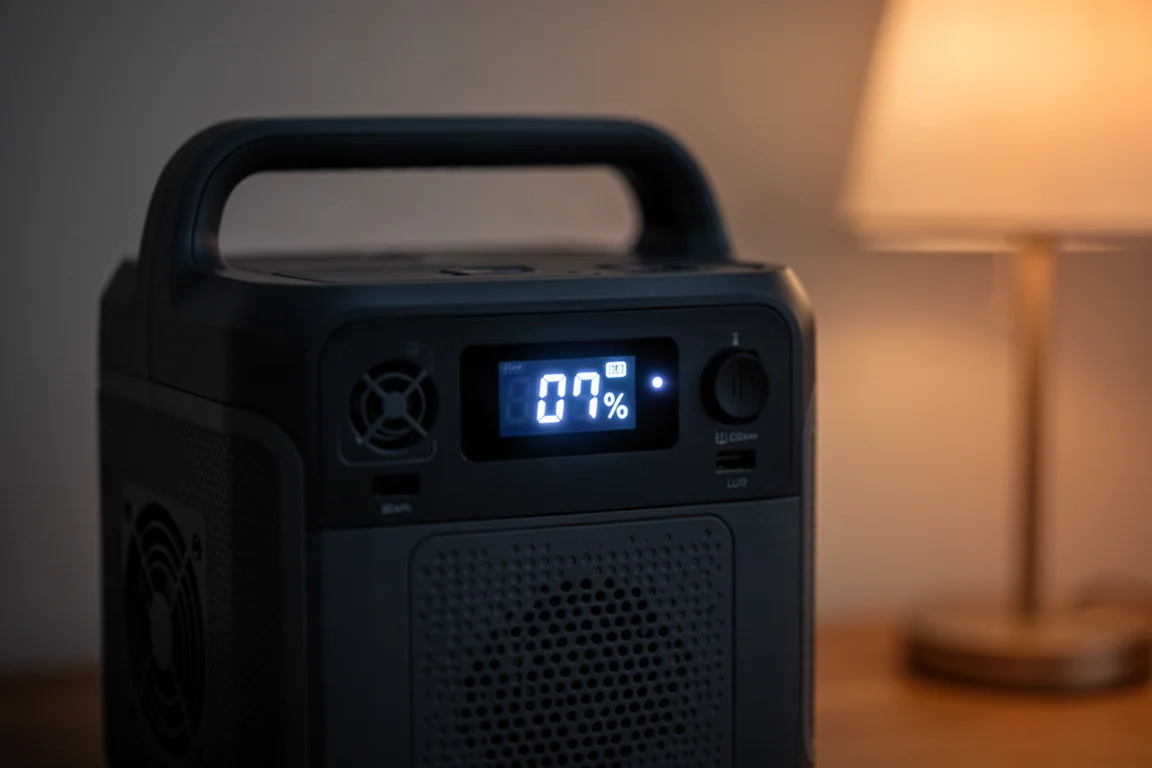
The units finally ran out around 7:30 to 7:45 at night, roughly 12 hours after the test began. That covered an entire day of normal use, including power-hungry detours like the dryer test, with no solar input whatsoever. Adding solar input, which the system supports at up to 2,400 watts per unit, or expansion batteries, would extend that runtime considerably.
Buying Advice
For the average household outage of five and a half hours or more, two linked F3800 units comfortably cover a full day of realistic use. If you want longer endurance, Anker’s expansion batteries can stretch the system to run for days. And if your goal is cost savings rather than outage backup, the Smart Hub setup lets you run the house on battery during expensive peak hours and recharge automatically overnight at off-peak rates.
Conclusion
Two Anker SOLIX F3800 units linked with the Double Power Hub ran an entire house, including a workday, family electronics, and even a dryer test, for close to 12 hours without any solar. For anyone who has doubted whether a battery setup can power a whole home, this test makes a strong case that it can, quietly and safely, right inside the house.
Product link
View more details for Anker Solix F3800
This product is mentioned in the review. Check the specifications, options, and compatibility before buying.
View more details for Anker Solix F3800Further reading
Related Reviews

Portable Power Stations
Anker SOLIX F3000 Review: A Powerful Portable Power Station With a Few Design Quirks
The Anker SOLIX F3000 delivers strong performance, fast charging, and a competitive price, but a few design choices may give you pause.

Portable Power Stations
EcoFlow Delta 3 Series: Five New Power Stations Previewed
EcoFlow expands the Delta 3 lineup with five models, from the compact Classic to the flagship Ultra Plus. Here is what each one offers.
Portable Power Stations
Oscal Power Max 6000 Review: A Large Solar Generator With Real Trade-Offs
A week of off-grid use shows what the Oscal Power Max 6000 handles well, where it falls short, and when a fuel generator still makes more sense.