Home Energy
Anker Solix F3800 Review: A Home Battery You Can Actually Live With
A 3,840Wh portable power station that can back up your whole house, charge from solar, and even shave money off peak-hour electricity bills.
Introduction
Everyone loses power eventually, and outages are never fun. When it is cold outside you have no heat, food in the fridge and freezer is at risk, and if the Wi-Fi drops the whole household feels it. After living through a multi-day outage, it is easy to see why whole-home backup has become such a serious topic.
The Anker Solix F3800 is different from most battery power supplies in one important way: it is not just a big battery for camping, it can actually power your house through a transfer switch. It also has a trick that most competitors lack: it can automatically take your home off the grid during expensive peak hours and switch back when prices drop.
This review walks through what it can do, what it cannot do, and whether it makes sense before you spend the money.
Who This Product Is For
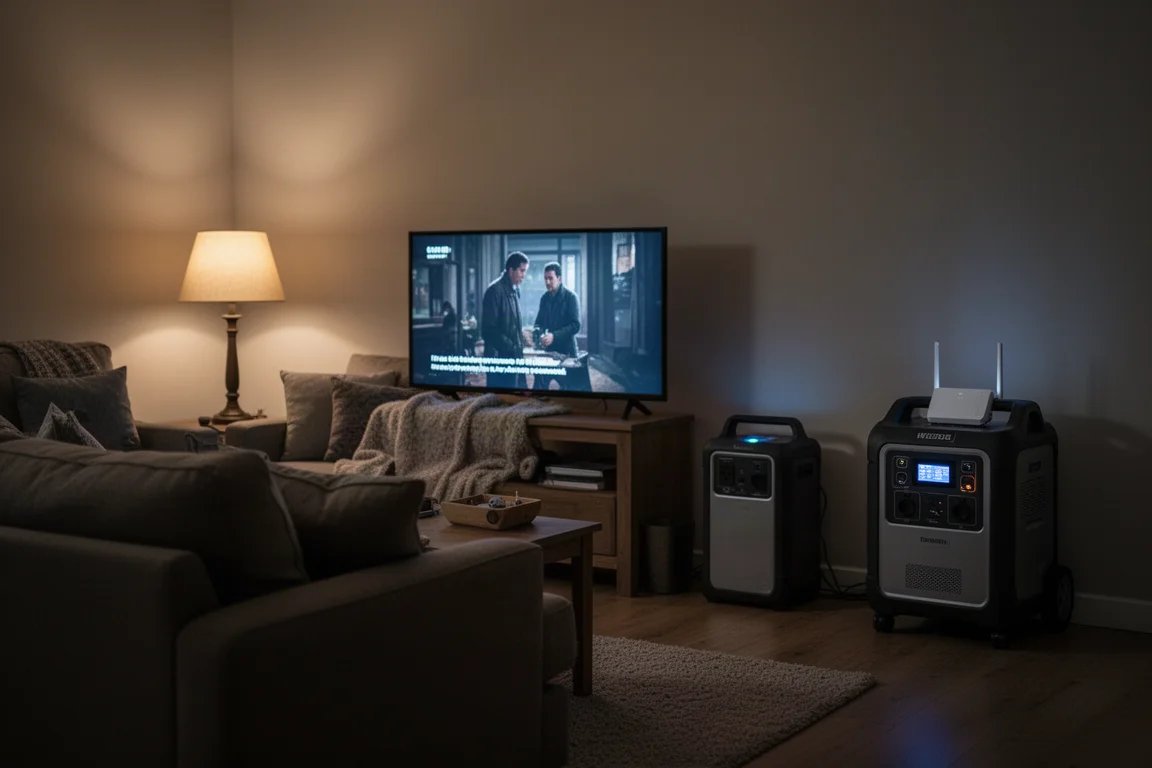
If you want to keep essential circuits alive during an outage, the F3800 is built for you. In a real-house test it comfortably ran two refrigerators, a deep freezer, lights, fans, the Wi-Fi, a television, and even an Xbox at the same time. With the hot water tank running, output sat around 700 to 760 watts and the display estimated 4.3 to 4.8 hours of runtime. With the heater off and only basic necessities drawing power, that stretched to roughly 8 to 9 hours.
It is also a strong pick if you live in an apartment or anywhere a gas generator is not practical. There are no fumes, no gas, and no carbon monoxide, so it is completely safe to run indoors all day and night. It is extremely quiet too: even when the fan kicks on under load, it is essentially silent.
Main Strengths
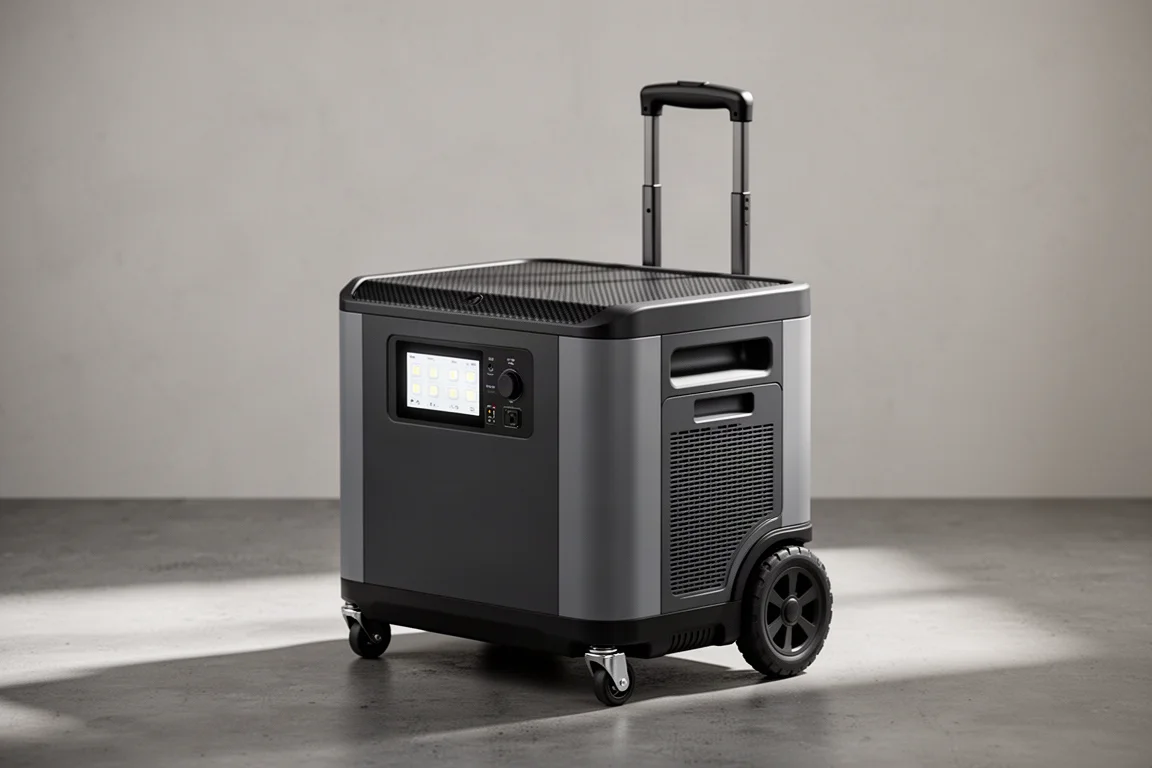
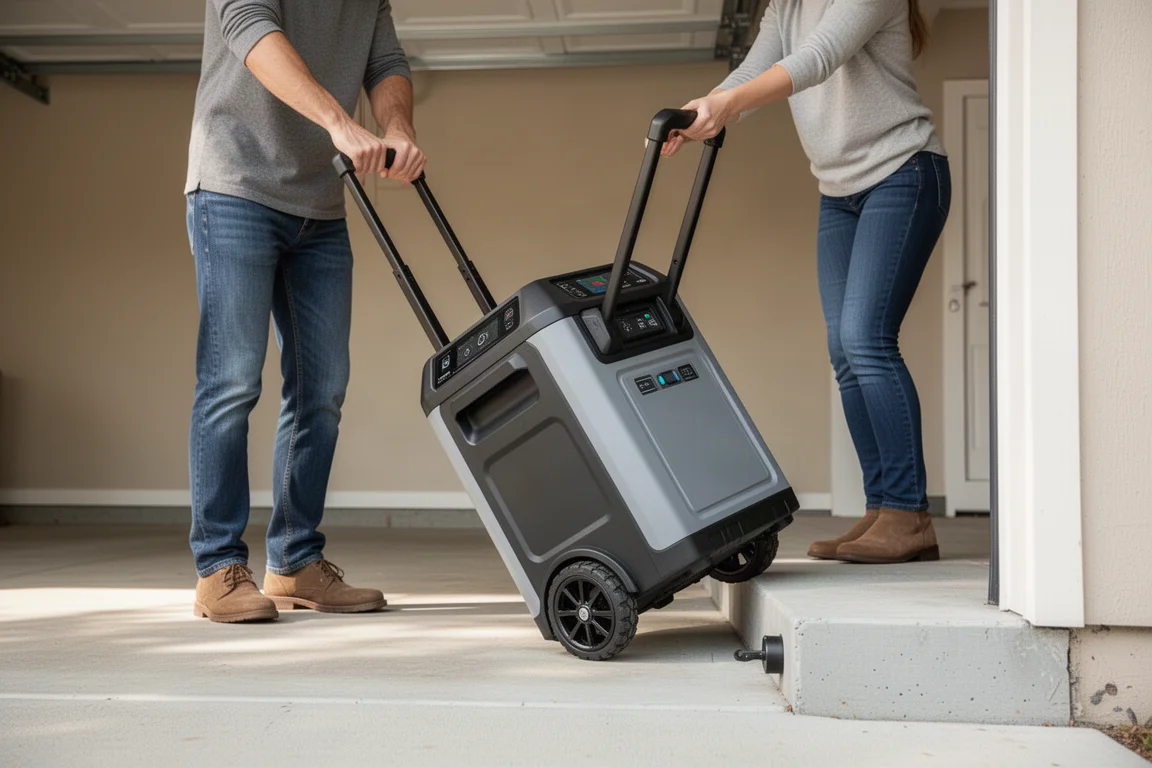
The first thing you notice is the design. A dark grey and grey shell, a bright LED screen, a carbon-fibre-look top, and a sleek rear panel make it genuinely attractive, something you would not mind having visible in your home. Portability is handled well: two small casters with locks at the front, larger rear wheels, a push-button telescopic handle, rubber pads on top so you can lay it flat in a van, and a hidden handle underneath for two-person lifting. At around 132 lbs, you really do want help moving it.
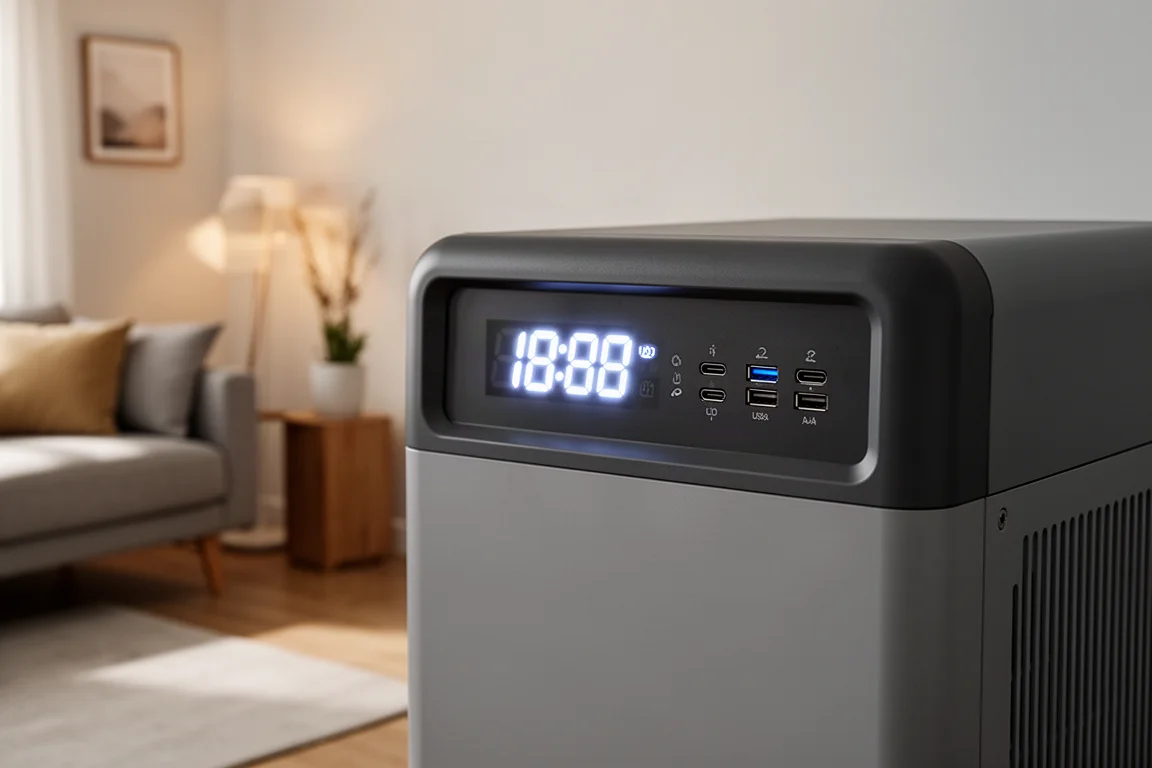
Pure sine wave output on the USB ports and outlets means clean power, so phones, laptops, and tablets are safe from surges and fluctuations. The connectivity is generous: a car socket, three USB-C ports, USB-A ports, six AC outlets on 20-amp circuits you can stagger, individual reset buttons, and independent on/off switches for each panel. On the sides you get a 240V outlet that can run an RV or charge an EV, a house-backup outlet for transfer-switch hookups, dual solar inputs, and an expansion battery port.
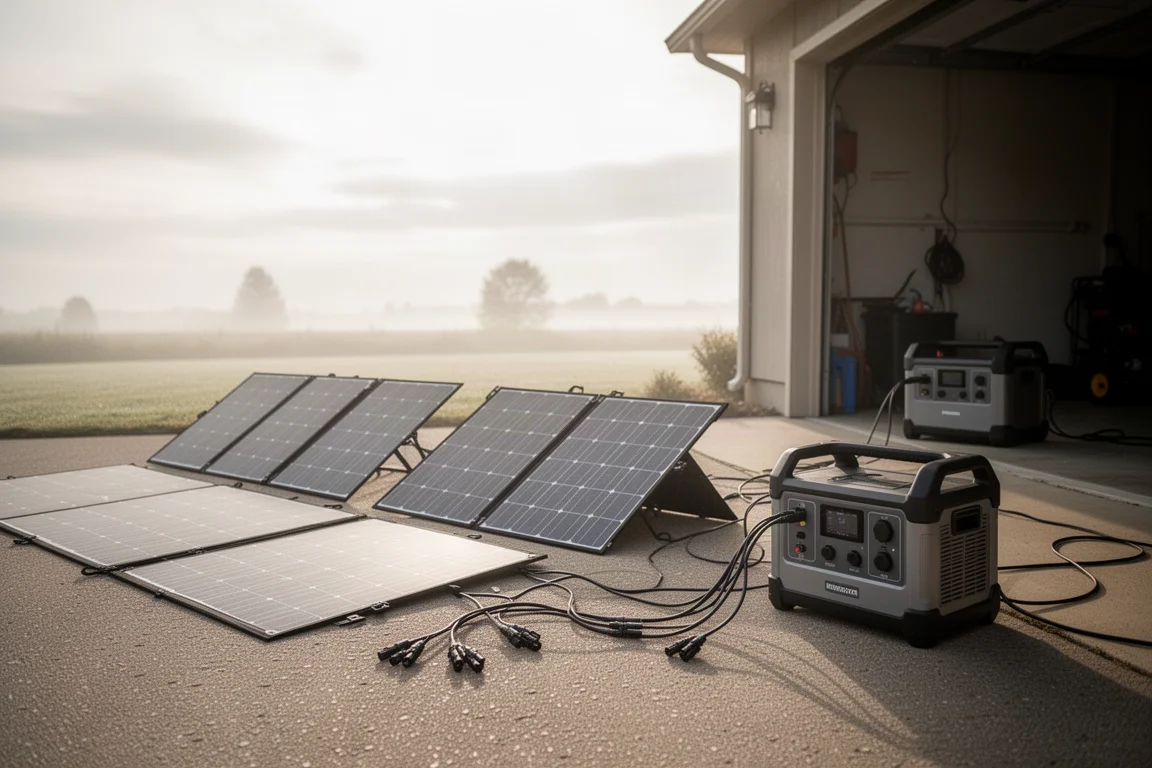
Charging is fast. On AC it pulls up to 1,800 watts and reached a full charge in roughly two and a half hours. Solar is even more interesting: two inputs accepting up to 2,400 watts combined, and a firmware update now allows charging from AC and solar at the same time. Compatible panel voltages are 11-32V (10 amps, slower) or 32-60V (25 amps, faster). Expensive panels are not required; cheap 100W and 200W panels all worked fine. One practical tip: wire your panels in parallel, not series, and use the included splitters. You can even run separate panel groups on each input, for example all your 100W panels on one and your 200W panels on the other, without them interfering.
The headline test was running an entire house through a transfer switch. With the main breaker off and the unit backfeeding the panel, everything worked: lights, refrigerators, the deep freezer, TV, Wi-Fi, the garage door opener, and power tools (a 12-inch miter saw ran with no issues). With a furnace running full blast, output peaked around 915 watts with 3.5 hours estimated, and closer to 7 hours once the furnace cycled off. In cold weather, a 2-hour outage is easily covered even with continuous heating.
Then there is the money-saving feature. Connected to the Anker Smart Home Box, the F3800 can automatically power your home during expensive peak-rate hours (say 2pm to 8pm), switch back to the grid off-peak, and recharge itself during cheap hours. For anyone on time-of-use pricing, that can pay the unit back over time.
Things to Consider Before Buying
There are real limitations worth knowing before you buy. When the unit is charging from the AC wall cord, the 240V outlet and the six-outlet side panel do not work; only the three UPS-designated outlets remain active. Charge from solar instead, and everything works at once.
Solar input takes a little planning. The splitters come in the box, but the MC4-to-input adapter cable does not, so budget for that small extra purchase. Wiring in parallel rather than series is the recommended setup, and it is simple once you have done it once.
Installation for whole-home backup is straightforward if you are comfortable with electrical work: a transfer switch runs into your main panel, you never backfeed with the main breaker on, and a simple safety interlock keeps the two breakers from being on simultaneously. If any of that makes you uneasy, hire an electrician. Runtime is finite too: heavy whole-house loads like heating and the hot water tank will drain the 3,800-class battery in a few hours, though solar charging on a sunny day can genuinely offset that, with a real test showing more than 500 watts of solar input while the house drew around 226 watts.
Buying Advice
If you just want a backup for short outages, this is already one of the most capable and flexible units available: quiet, fume-free, indoor-safe, portable, and expandable with extra batteries. With roughly 6,000W continuous output and 9,000W startup, expandable to 12,000W for heavy appliances running simultaneously, it goes well beyond what most portable stations offer.
If you are on time-of-use electricity pricing, the Smart Home Box integration is the feature that separates it from the pack, letting it pay for itself by avoiding peak rates. And if you also want EV charging, RV power, or jobsite tool capability from the same box, the 240V output covers those too. For the price, which has been running about $1,000 off, it is hard to beat for expandability and sheer capability.
Conclusion
The Anker Solix F3800 is the rare power station that works equally well as a whole-home backup, a portable battery for camping or tailgating, and an everyday bill-reducing tool. It looks good, runs silently, charges fast from AC or solar, and its smart-grid integration is genuinely ahead of most competitors. If whole-home backup without fumes, noise, or a permanent generator install is on your list, this is an easy recommendation.
Product link
View more details for Anker Solix F3800
This product is mentioned in the review. Check the specifications, options, and compatibility before buying.
View more details for Anker Solix F3800Further reading
Related Reviews

Portable Power Stations
Anker SOLIX F3000 Review: A Powerful Portable Power Station With a Few Design Quirks
The Anker SOLIX F3000 delivers strong performance, fast charging, and a competitive price, but a few design choices may give you pause.

Power Stations
Anker SOLIX F3800 Plus Review: A Powerful 6,000W Power Station With Some Trade-Offs
The Anker SOLIX F3800 Plus delivers a robust 6,000W inverter, fast solar charging, and solid UPS performance, but high idle draw and a hefty weight give buyers real things to consider.

Power Stations
BLUETTI Handsfree Backpack Power Stations: Portable Power for the Trail
BLUETTI's Handsfree backpack power stations combine weather-resistant backpacks with built-in power stations, offering a unique solution for carrying power on foot.