Wearables
Amazfit T-Rex 3 Review: Impressive Battery, Half-Baked Features
After two months of daily use across runs, rides, swims, and hikes, the Amazfit T-Rex 3 shows real strengths and clear rough edges. Here is what to know before buying.
Introduction
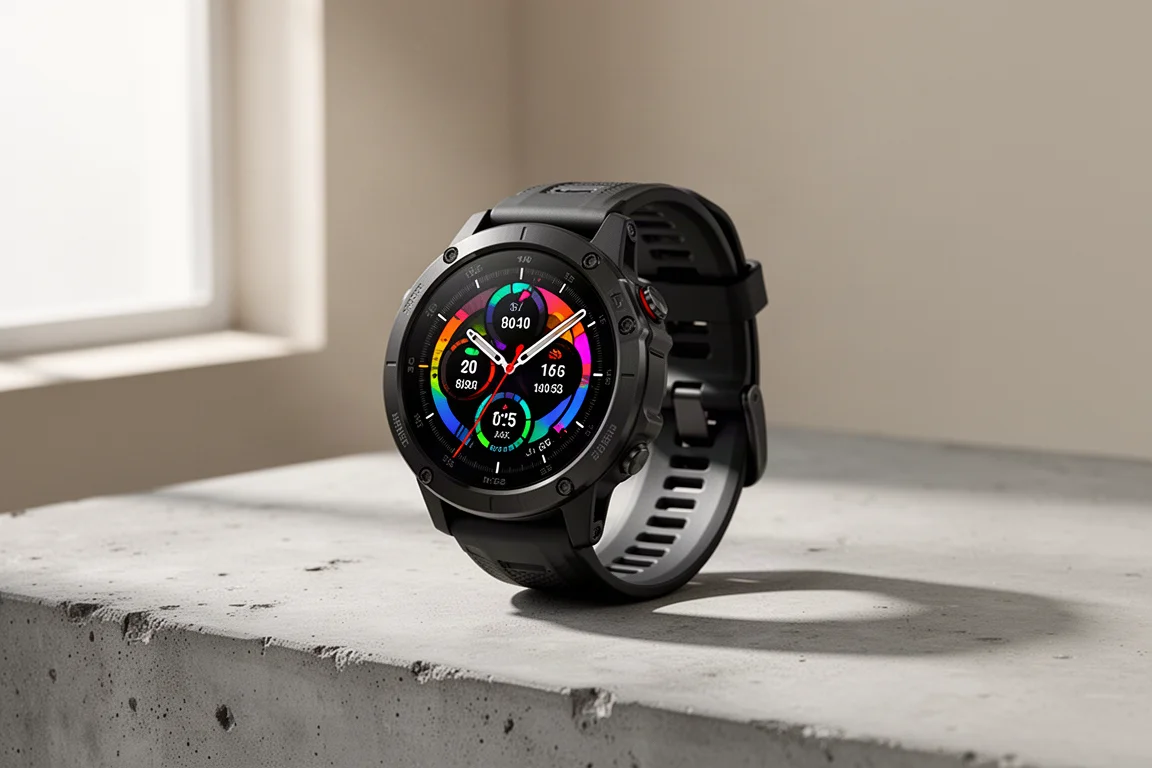
The Amazfit T-Rex 3 has been called a Garmin killer by plenty of people, and after more than two months of continuous daily wear on runs, rides, swims, hikes, and everything in between, the honest answer is that it is not. It is, however, a genuinely interesting watch that does some things exceptionally well, sometimes better than competitors, while also doing plenty of other things in a way that feels half finished.
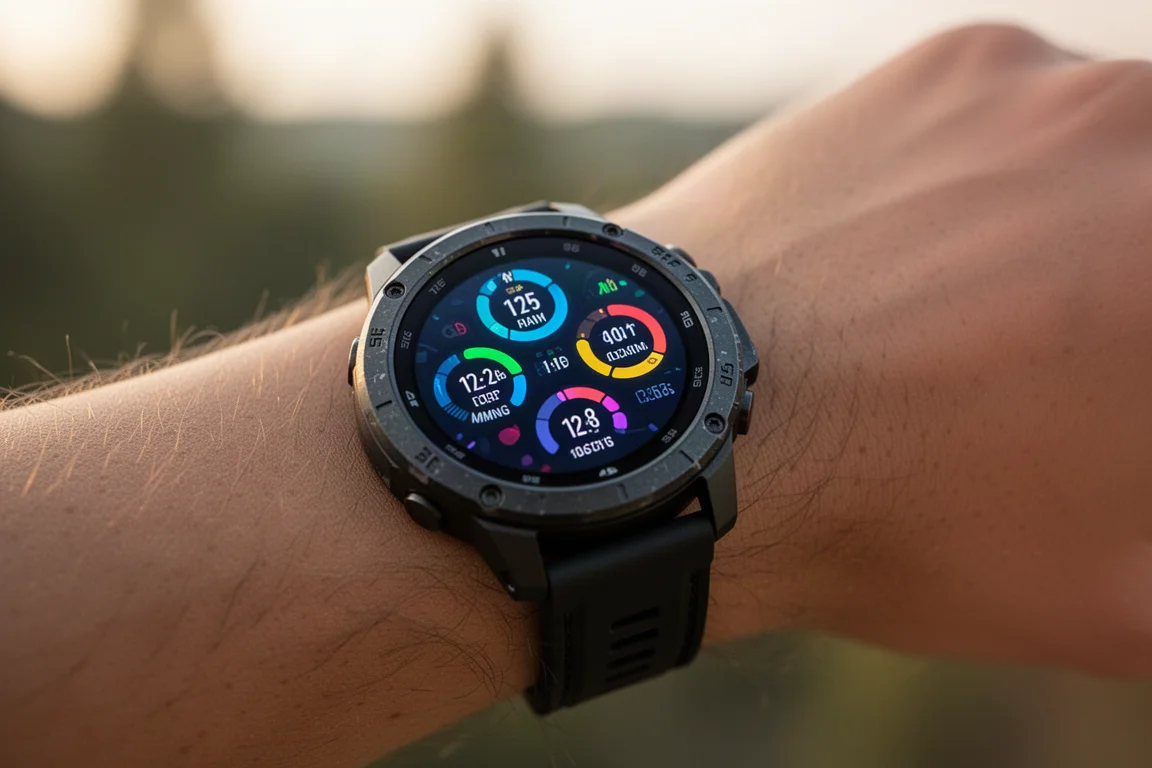
The core specs are easy to summarize: a 1.5-inch AMOLED display that is big and brilliant, a 48mm case that may feel slightly wider due to its design styling, an optical heart rate sensor package on the back, and even a depth gauge rated down to 45 meters, putting it in the same conversation as higher-end rugged watches. The most impressive thing, though, is the price: $279, with holiday sales pushing it down to $234. That puts it roughly in Garmin Instinct 2 territory, around a third of the cost of a Garmin Fenix 7 or Fenix 8 series. Understandable interest follows.
Daily Use and Everyday Features
Out of the box, the watch uses a default watch face that is easy to live with, and the widget list below it can be reordered, added to, or trimmed. The first widget by default is Zepp Flow, a voice assistant that answers on the screen only, since there is a beeper but no speaker. Opening a sport profile or checking your heart rate works fine; asking most other questions confuses it easily. Asking about tomorrow’s weather, for example, reliably returns today’s current conditions at your location no matter how many times you try.
One quirk to note: widgets populate with a delay, updating a second or two after you scroll to them, which is especially noticeable in the morning when yesterday’s data lingers briefly. The data itself is explained well once it arrives.
Sleep tracking, once it works, is solid. The watch nails when you fell asleep and when you woke up, and it handled the occasional nap well. There was a rough start, though: for the first week and a half, the watch tracked sleep and activity data, then immediately deleted it the moment it synced to the Zepp smartphone app. Workouts survived, everything else did not. This has apparently been a known issue for years, and support eventually suggested deleting the app and resetting the watch, which did fix it.
The Readiness score is a bigger problem. Similar in concept to Garmin’s Training Readiness or Fitbit’s Daily Readiness, it blends your sleep, HRV, and activity into a daily score. The underlying data is strong; nightly HRV closely matched both Garmin watches and an Aura band. But the blended score is virtually identical every single day, hovering between roughly 76 and 90 regardless of what you did. A four-hour ride, an hour run, and three hours of sleep still produced a cheery 80 percent. Compared to competitors, it is essentially non-actionable, which is a shame given how good the raw inputs are.
Battery Life and Charging
The watch ships with a small charging puck that uses your own USB-C cable, a common trend and one that works fine. Charging is a bit slow at around two to two and a half hours, but the battery life more than makes up for it. With an always-on display and one to four hours of daily GPS activity, it lasts seven to ten days per charge. That is genuinely impressive, and one of the strongest arguments for this watch.
Sport Modes and Workout Tracking
There are 176 sport modes, organized into categories on the watch, and browsing them is an experience in itself. Running, swimming, cycling, and skiing all make sense. Paragliding, skydiving, and wingsuit flying qualify as extreme. Then there are leisure workouts like hula hooping, frisbee, darts, kite flying, and tug of war, plus a board and card games category where you can, in fact, track your chess and checkers workouts.

GPS profiles locate a signal and start with a tap of the Go button. Cycling profiles support Bluetooth Smart sensors including power meters, cadence sensors, and heart rate straps, and the watch can also broadcast its heart rate out. Structured workouts can be created on the watch or in the app, though targets are fairly limited; cycling power targets are not supported.
Data pages are customizable on the watch itself, with up to six fields per page and plenty of pages. Saving a workout shows a summary on the watch and a fuller one in the Zepp app, which syncs to Strava if linked. TrainingPeaks is only supported via a third-party bridge rather than natively, which feels like an unnecessary omission.
A few data bugs surfaced too. Cycling power data that displayed fine in the app was not sent to Strava. Some workouts fired a blank for elevation entirely: a simple family hike showed zero altitude on the watch, though the app reconstructed it after the fact.
On training load, there is one thing to like and one to dislike. The watch keeps a proper 7-day trailing average rather than resetting every Monday, which is the right approach. However, the load values run almost double what other companies produce for the same workouts, so the weighting feels odd, though at least it is consistently odd. The watch also shows a VO2 Max score, but only for running, and it came out six to seven units below a recently tested value.
Navigation and Mapping
The watch supports downloadable maps: base maps, ski maps, and contour maps, selected by region on your phone and downloaded over Wi-Fi, usually in seconds for small areas or minutes for larger ones.
Creating routes is where things get messy. There is no route builder in the Zepp app, so you have to create a route elsewhere, export it as a GPX or TCX file, import it into your phone, open it with Zepp, and then push it to the watch. Komoot integration exists, but the flow is bizarrely siloed: to import a route you must go into settings, then profile, then third-party account linking, connect Komoot, import the route, download it to the app, back all the way out to the workout panel, open My Routes, select the route, and send it to the watch. Every single time.
Once a route is on the watch, following it is reasonably good. Navigation is breadcrumb style with turn prompts and off-course deviation warnings, and you can customize how far off course you get before the warning triggers, which is a genuinely rare feature. Route details show the map, elevation profile, and climb splits.
The maps themselves have a serious flaw, at least in Mallorca: water and fields are rendered in the exact same color. On an island, that means you cannot tell whether you are heading inland or toward a cliff and the sea. Some street names do display, which helps, but anything and everything about the navigation experience is the clearest sign this is not a Garmin Fenix competitor.
Free Diving and the Depth Gauge
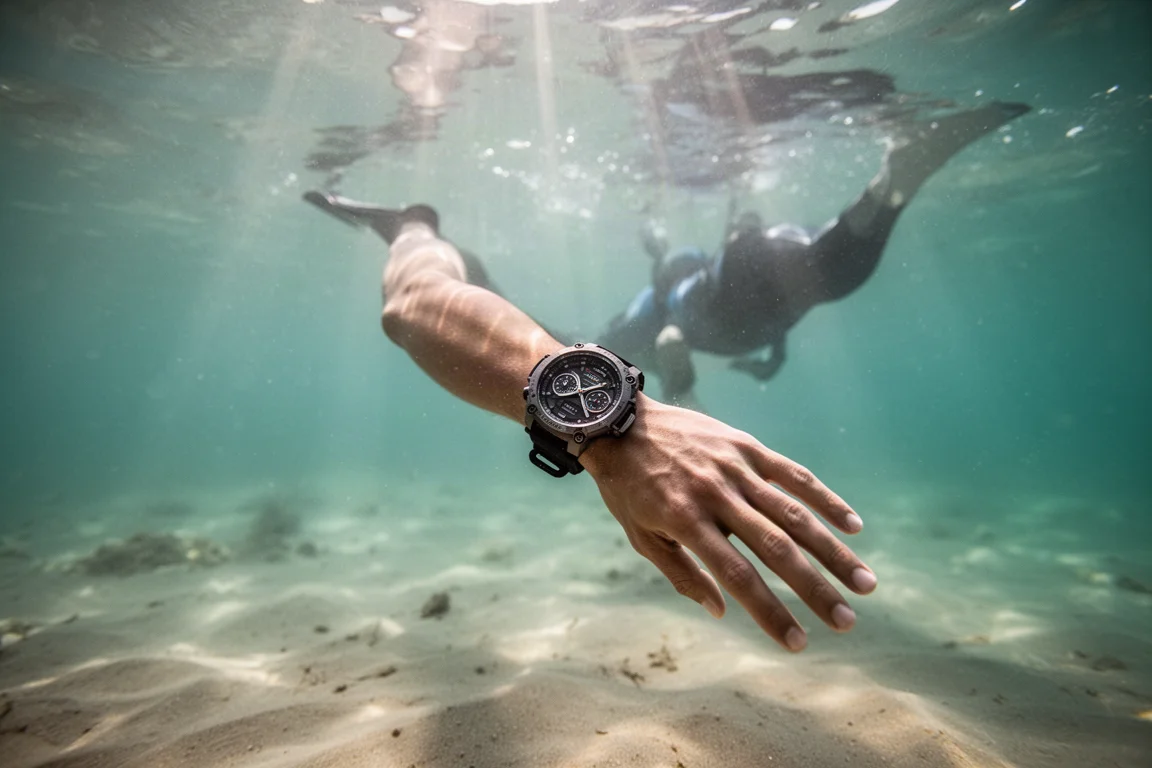
One genuinely new feature is free diving support, with a depth gauge rated to 45 meters and what the company describes as standard dive-industry certifications around the depth gauge itself. Scuba diving is not supported as a profile, but free diving and snorkeling are.
In shallow testing at depths of seven to eight meters, the basics work like other watches: live depth, maximum depth, and ascent rate all display nicely. But during repeated descents, a battery warning appeared over the top of the screen and could not be dismissed while underwater. It only cleared upon surfacing and viewing the per-descent summaries. Not being able to see your depth or time while free diving is a significant safety concern and would run against the very certifications being claimed. It is an easy bug to fix, but it is also emblematic of the whole watch: cool feature, one small quirk, and the quirk matters.
Accuracy: Heart Rate, GPS, and Elevation
Heart rate accuracy is a split story. An hour and a half interval run was virtually spot-on the entire time, wobbling only briefly in the first couple of minutes, likely from cold. A nearly two-hour indoor cycling interval session was spot-on across the board after the usual brief warm-up period that wrist-based optical sensors often need.
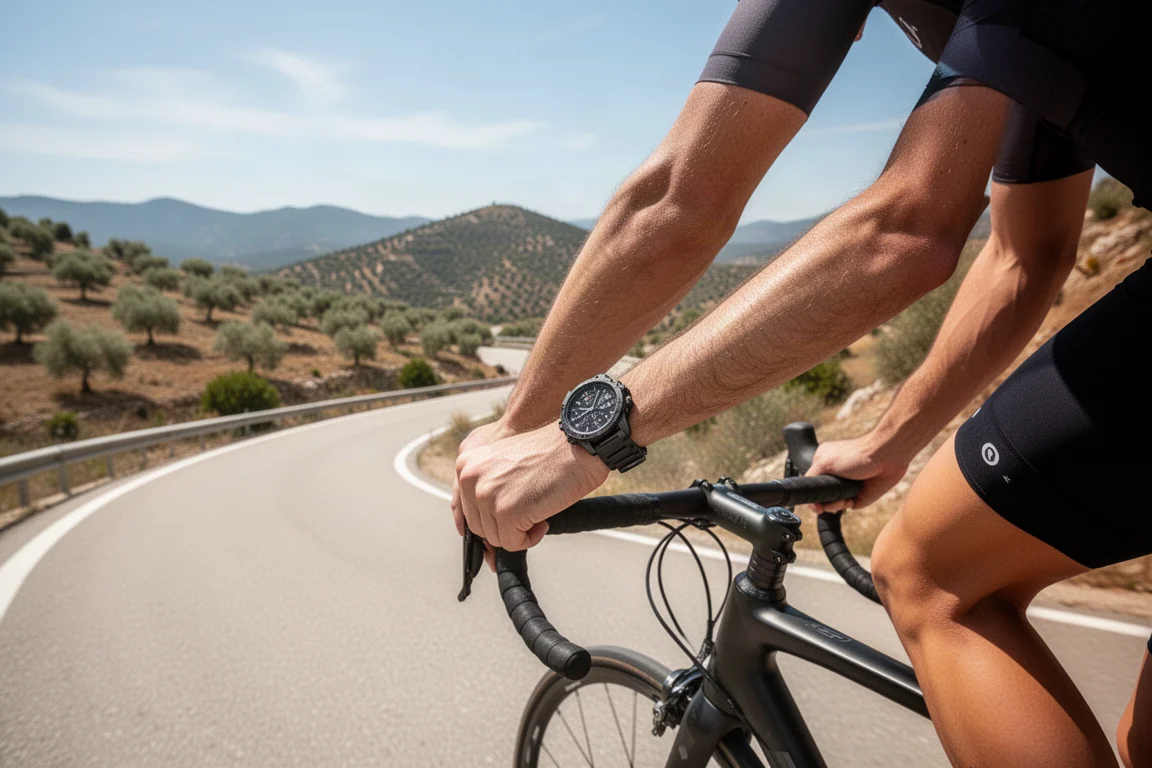
Outdoor cycling is the exception. On a nearly four-hour ride up and down a mountain road, heart rate tracked well for the first hour, then lost the plot during varied-speed rolling sections, and completely dropped out during a long hour-long climb before snapping back at the very end. This happened on every outdoor ride, paved or off-road.
GPS, on the other hand, has been very good across the board. Mountain rides and runs matched reference units on every single outing. The exception is open water swimming, where tracks ranged from barely acceptable to clearly not, landing on the lowest tier of acceptable accuracy. Elevation accuracy, compared against multiple sources, is solid overall.
Buying Advice
The price makes your gut say yes, and at $279 or less on sale, there is a lot of watch here: brilliant display, excellent battery life, good GPS, solid running and indoor heart rate accuracy, and a depth gauge at this price is remarkable. But how much you value the rough edges depends on which features you actually care about. If mapping and navigation are core to your purchase, this is not good at it, and the hoops you jump through to get a route onto the watch are significant.
Amazfit releases a new watch each year in each category, and historically adds almost no new features to older watches. With the T-Rex 4 presumably coming next year, it is tough to recommend this unit knowing the next one might fix what is broken. If the company committed to updating existing watches and finishing half-baked features, it could become a legitimate competitor in this segment. Today, not yet.
Conclusion
The Amazfit T-Rex 3 is fascinating in many ways: the battery life is fascinating, the price is fascinating, the depth gauge is fascinating. But the features are largely checklists rather than finished products, and the navigation experience in particular falls well short of what the “Garmin killer” label implies. If you want long battery life, a great display, and good GPS accuracy for a low price, it has real appeal. If you want polished navigation, dependable open water swim tracking, or meaningful readiness data, look elsewhere for now.
Product link
View more details for Amazfit T-Rex 3
This product is mentioned in the review. Check the specifications, options, and compatibility before buying.
View more details for Amazfit T-Rex 3Further reading
Related Reviews
Wearables
Apple Watch Ultra 3 vs Garmin: Which Training Watch Wins for Athletes
A practical head-to-head comparison of the Apple Watch Ultra 3 and Garmin for serious training, covering GPS accuracy, data tracking, usability, and recovery metrics.
Wearables
Apple Watch vs Garmin for Running: A Year of Training Compared
After a year training for marathons with both devices, here's what actually matters when choosing a running watch.
Wearables
Apple Watch Ultra 3 vs Garmin Fenix 8 Pro: Satellite Messaging Compared
A practical comparison of satellite messaging on the Apple Watch Ultra 3 and the Garmin Fenix 8 Pro, covering connection methods, messaging workflows, coverage, and running costs.