GPS Sports Watches
Amazfit T-Rex 2 Review: A Rugged GPS Watch That Punches Well Above Its Price
An outdoor GPS sports watch with dual-band GPS, route navigation, a bright AMOLED screen, and battery life measured in weeks, all at a very competitive price.
Introduction
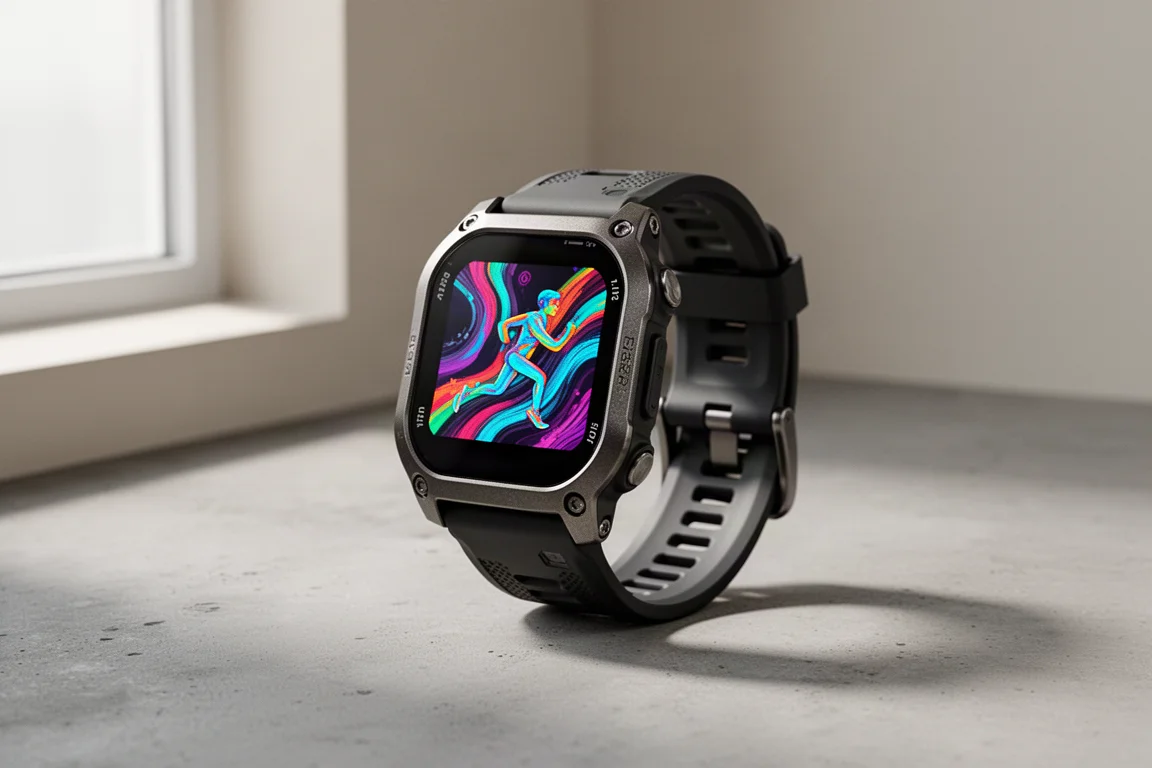
The Amazfit T-Rex 2 is a rugged multi-sport GPS watch that tracks running, cycling, swimming, and other outdoor activities, while doubling as a fairly capable smartwatch for Android and iOS. Compared with the earlier T-Rex and T-Rex Pro, this generation adds mapping and navigation support, dual-band GPS, and a higher-resolution AMOLED display. Crucially, it costs significantly less than the Garmin Fenix, Polar Grit X Pro, or Coros Vertix 2, and even undercuts the Garmin Instinct. The question is whether it holds up as a genuine running watch. After extensive testing, the short answer is yes, with a few caveats worth knowing before you buy.
What the T-Rex 2 Actually Is
Despite the name, there is nothing dinosaur-themed here. What you get is an outdoor multi-sport GPS watch built for the elements: it carries military-grade toughness certifications, handles extreme hot and cold temperatures, resists dust, and is waterproof enough for pool and open-water swimming. It is predominantly plastic construction, but it does not feel cheap, and it stays light and comfortable to wear for long periods, including overnight and all-day wear.
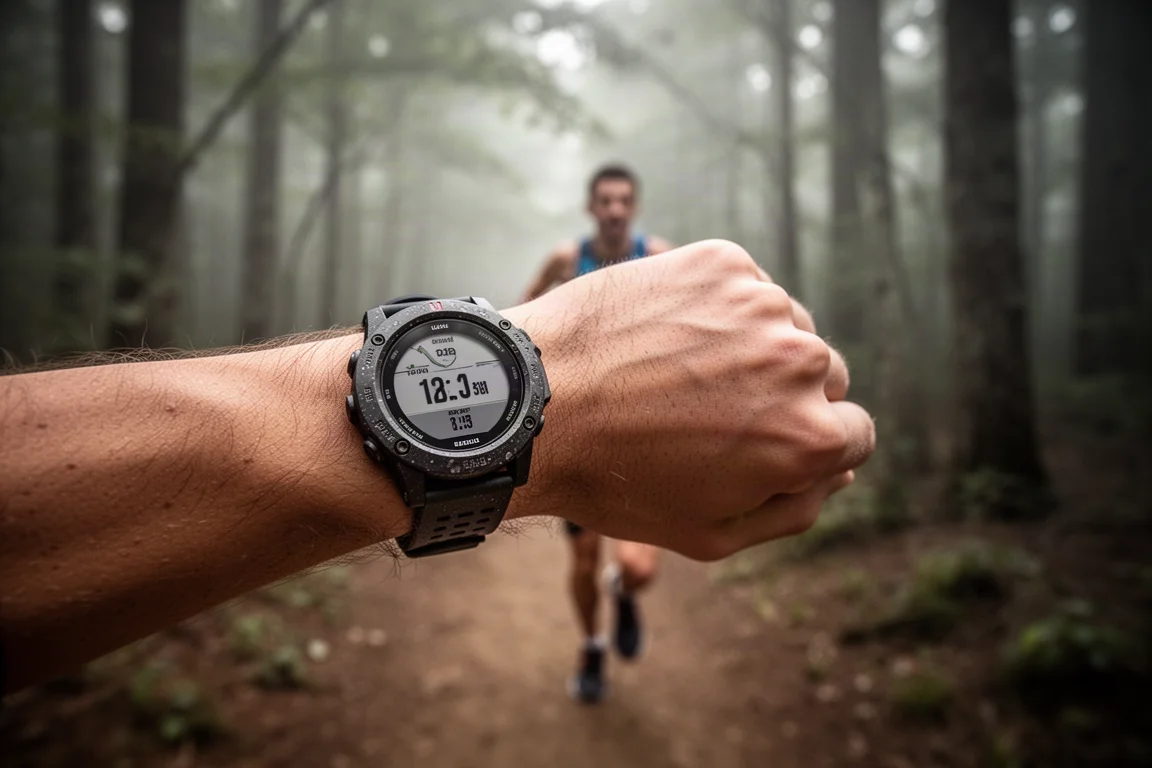
The screen is a color AMOLED touchscreen, the same size as the T-Rex Pro panel but at a higher resolution. It is bright, colorful, and responsive, with a nicely responsive raise-to-wake gesture. The always-on mode drains the battery faster, and the dimmed always-on stats can be hard to read on the run, so you may need a wrist raise to properly wake the screen before checking your pace.
Run Tracking and GPS Accuracy
This is where the T-Rex 2 genuinely surprised. Dual-band GPS is becoming common across brands, but its real-world benefit varies: some watches show no meaningful improvement over single-band tracking. On the T-Rex 2, the dual-band mode was among the most reliable implementations tested, holding up well in tree-heavy forest runs, tight road loops, and a known GPS dead spot that trips up many watches. Distance, pace, and splits closely matched readings from higher-end Garmin dual-band watches.

Heart rate tracking from the built-in optical sensor is good for steady and easy-paced runs, and it generally locked onto accurate readings through interval sessions and progression runs, though it can struggle to keep up with sharp peaks and troughs at high intensity. One notable limitation: you cannot pair an external heart rate monitor or chest strap, which is a shame for a watch with sports-watch ambitions.
The running feature set is solid. You get customizable data screens with a generous choice of stats, an on-watch interval training mode, and training plans created in the companion Zepp app and synced to the watch. The PeakBeats training analysis offers training load, suggested recovery time, and VO2 max estimates. Load and recovery scores tracked reasonably well against a high-end Garmin in testing, though the watch once declared full recovery after two back-to-back hard workouts, so treat the guidance as a hint rather than gospel. Occasional quirks surfaced too, such as a strange lap split even when the underlying GPS track and pace were accurate.
Mapping and Navigation
The biggest upgrade over the T-Rex and T-Rex Pro is navigation support, added via a software update. You can upload routes in the most popular file formats, including GPX, sync them from the Zepp app, or reuse previous tracked sessions as routes. On the watch, you get a blue line showing where you have run, a back-to-start pointer, and simple breadcrumb-style real-time navigation to follow your route.
It is not the rich, detailed mapping of a top-end Garmin Fenix or Epix, and there are no off-course buzzes or vibrations to steer you back. But route syncing worked easily, and at this price very few watches offer any of this, so it is a meaningful addition for trail runners and anyone who likes exploring without a phone.
Smartwatch Features and Everyday Use
As a smartwatch, the T-Rex 2 is better than expected, particularly on Android. Notifications look good on the watch, music controls work well, and the weather forecasts are genuinely nicely presented with practical framing. There is no built-in music player, no payments, and a small app store, but the store includes sensible additions such as a GoPro controller and apps that improve notifications and basic Google Maps directions, though the setup for those is still a bit clunky.
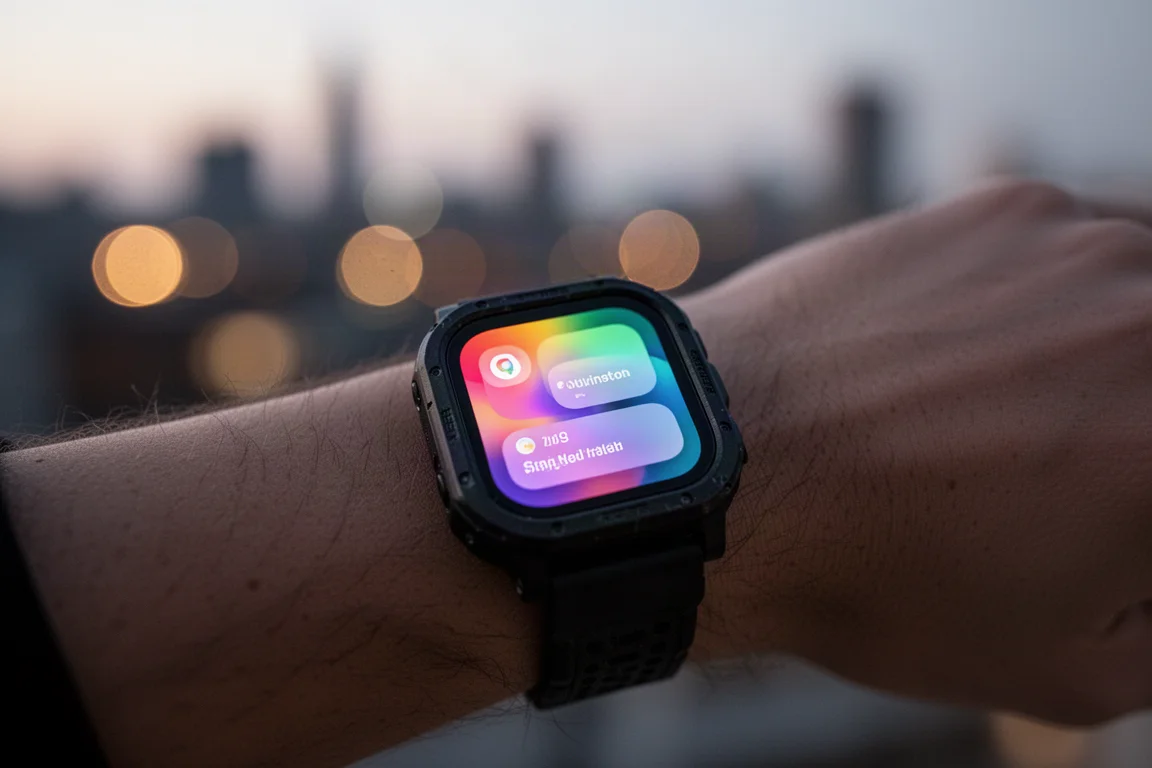
There is no deep third-party app ecosystem, but Strava sync is supported, which covers the most important connection for many runners. The Zepp app keeps improving, and the overall on-watch experience is easy to get to grips with.
Battery Life
Battery life is a strong point, measured in weeks rather than days. Amazfit quotes around 24 days in standard smartwatch mode and about 10 days in heavy usage mode with the always-on display, continuous heart rate, stress tracking, advanced sleep tracking, and blood-oxygen monitoring enabled. Real-world testing landed somewhere between those figures: a solid week or more with regular tracking and smartwatch features, closer to 10 days with the power-hungry options on.
In the highest GPS accuracy mode with dual-band engaged, Amazfit claims around 26 hours; actual testing saw roughly five percent battery drop per hour run, which works out to about 20 hours. That is short of the claim but still respectable, and dropping to single-band or low-power GPS modes stretches it considerably further. A heavy tester who ran nearly every day, cycled, and did yoga still got eight days per charge with the always-on screen and dual-band GPS for every session.
Things to Consider Before Buying
No external sensor pairing, whether a chest strap or other accessories, is the biggest compromise for serious trainers. The always-on screen is too dim to read mid-run without a wrist raise, the training analysis does not always add up, and occasional small bugs like odd lap splits can appear. Garmin’s software and sports-tracking depth remain ahead, and watches like the Huawei GT Runner offer better training analysis even if their GPS accuracy does not match.
Buying Advice
If you own the original T-Rex or T-Rex Pro, the T-Rex 2 is clearly the better watch and the better running watch thanks to navigation and dual-band GPS. Compared with rivals, it is significantly cheaper than the Garmin Fenix, the Polar Grit X Pro, the Coros Vertix 2, and even the Garmin Instinct, while delivering impressive tracking accuracy, a genuinely good AMOLED screen, and excellent battery life.
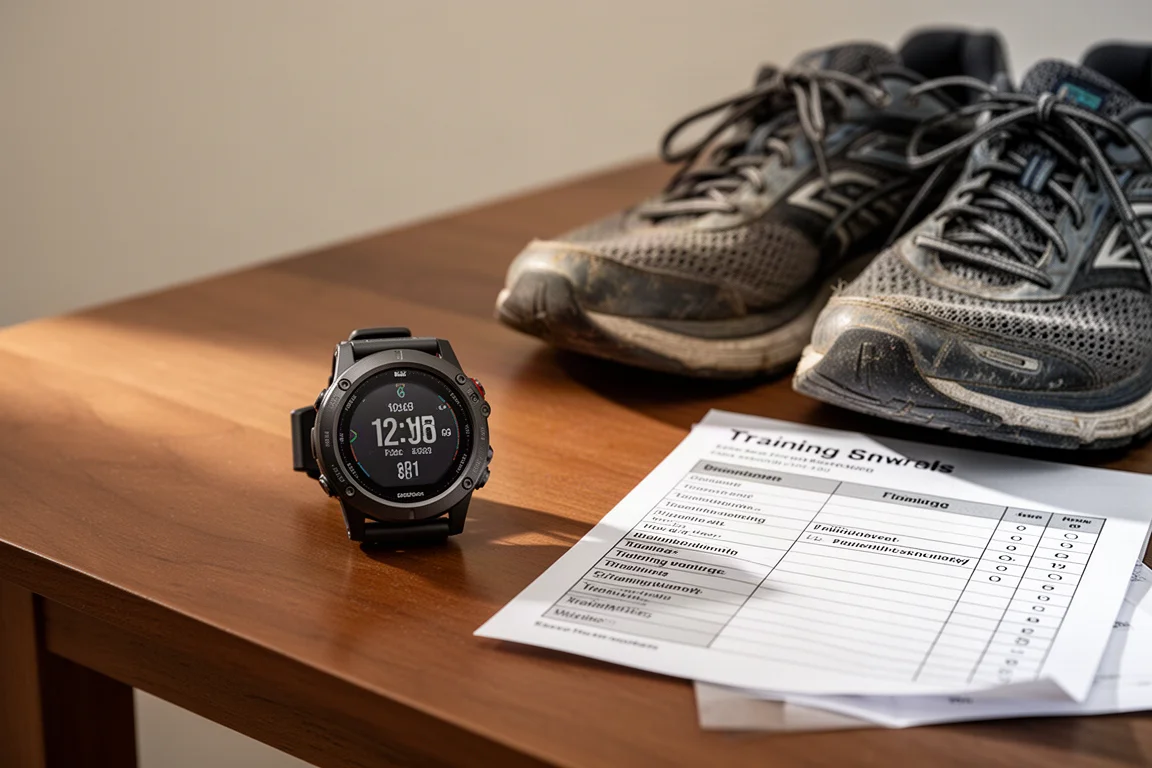
If you can live without pairing external sensors and without a deep third-party app ecosystem, and you want an affordable rugged watch that nails the running basics, the T-Rex 2 is easy to recommend. It is not a full replacement for a premium sports watch, but as an alternative to the usual suspects at this price, it stands out for all the right reasons.
Conclusion
The Amazfit T-Rex 2 is the best-performing running watch the brand has produced in a long time. Dual-band GPS accuracy that rivals far more expensive watches, weeks-long battery life, route navigation, and a pleasant smartwatch experience make it a compelling package. It is not perfect, and the platform is still improving, but there is far more to like here than not, especially at a price that undercuts nearly all of its direct competition.
Product link
View more details for Amazfit T-Rex 2
This product is mentioned in the review. Check the specifications, options, and compatibility before buying.
View more details for Amazfit T-Rex 2Further reading
Related Reviews
GPS Sports Watches
Polar Grit X2 Pro vs Vantage V3 vs COROS Vertix 2S: Which Flagship Adventure Watch Makes Sense
Polar's new flagship shares its internals with the Vantage V3 and goes up against the COROS Vertix 2S. Here is what two months of testing revealed about GPS, heart rate, navigation, and value.
GPS Sports Watches
Coros Apex 2 vs Garmin: Six GPS Sports Watches Worth Comparing
A practical look at the Coros Apex 2, Apex 2 Pro, Vertex 2, and three Garmin rivals, with what each does well and where the trade-offs sit.
GPS Sports Watches
Coros Apex 4 Hands-On: Titanium Build, Faster Mapping, and a Battery Built for the Mountains
A first look at the new Coros Apex 4 GPS sports watch, including its titanium construction, improved mapping, built-in speaker, and standout battery life.