Aquarium Systems
All-in-One vs Reef-Ready Aquariums: How to Choose, With Three All-in-One Tanks
A practical look at the trade-offs between all-in-one and reef-ready aquariums, plus three all-in-one tanks that show how much range the format now covers.
Introduction
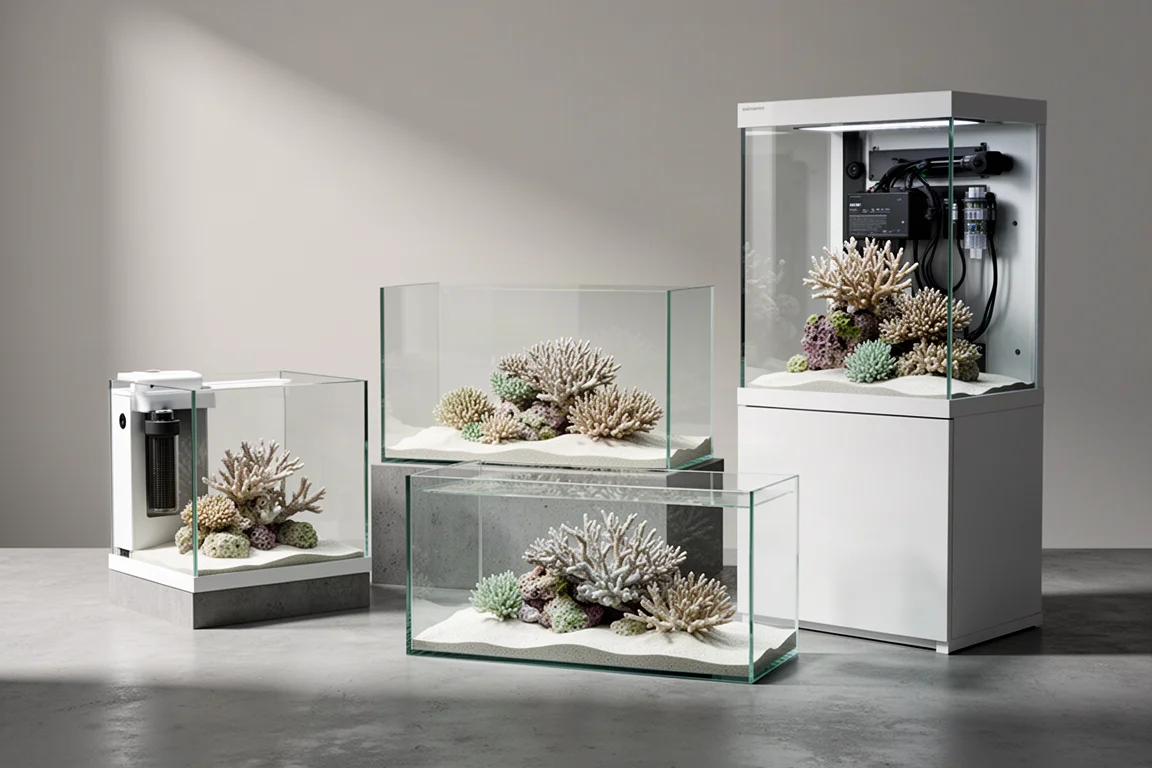
All-in-one and reef-ready aquariums solve the same problem in opposite ways. An all-in-one tank houses its filtration chambers, pumps, and overflow inside the aquarium itself, which makes it close to a one-stop shop. A reef-ready system splits that work across a tank, a sump, pumps, and plumbing, so you assemble the setup from separate components.
Neither route is automatically better. The right answer depends on where the tank will live, how much plumbing you are willing to take on, and how much you expect the system to change over time.
What follows is a breakdown of the key considerations, followed by three all-in-one tanks that show how much range the format now covers.
How All-in-One and Reef-Ready Systems Differ
An all-in-one aquarium keeps filtration, pumps, and the overflow inside the tank’s rear chambers, so there is no separate sump to plumb and no external plumbing run to plan. A reef-ready system is a component build: tank, sump, pumps, and plumbing, each selected separately. That is not a quality difference so much as a difference in how much of the system you want to design yourself.
Space matters more than most people expect. An all-in-one still concentrates its equipment in a slim rear compartment, and the cables, tubing, and power leads leaving the back of the tank can easily become a tangle of cords. Compact probe holders and dosing tube holders, along with thoughtful routing of the power cords, go a long way toward keeping that area presentable in a living room or hallway.
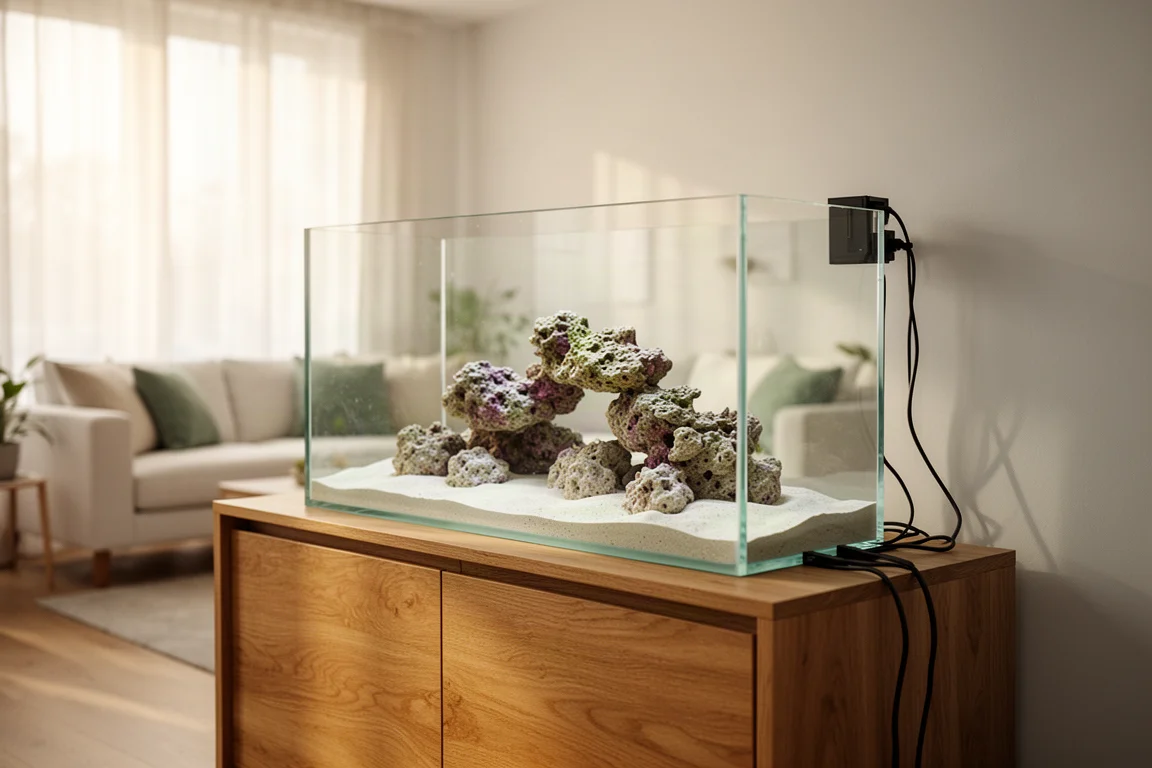
Experience level is the other big divider. For a first saltwater tank, an all-in-one is usually the gentler start: fewer connections, far less plumbing, and fewer places for a leak or an overflow to develop. A reef-ready system asks you to plumb the tank correctly, and mistakes there carry more consequences. That said, plenty of experienced keepers stay with all-in-one tanks simply because they enjoy the simplicity, while others enjoy choosing a sump and building the rest of the system around it.
Filtration is where reef-ready systems have traditionally pulled ahead, because a sump offers more volume, more height inside the stand, and room for larger, more efficient equipment. It also opens up a choice of mechanical filtration, from standard filter socks to manual and automatic fleece rollers, and lets you size a refugium to suit the tank. Modern all-in-one equipment has narrowed that gap considerably, with fleece rollers and stick-on refugium lights designed to work from a rear chamber.
Noise and appearance are worth weighing too, especially if the tank sits in a busy part of the home. Reef-ready systems are typically quieter because the equipment lives down in the sump rather than in an open rear compartment. A sump also keeps refugium lighting from spilling into the room in the evening, which matters when the tank sits near where you watch television.
Red Sea E170: A Large All-in-One That Handles Demanding Reefs
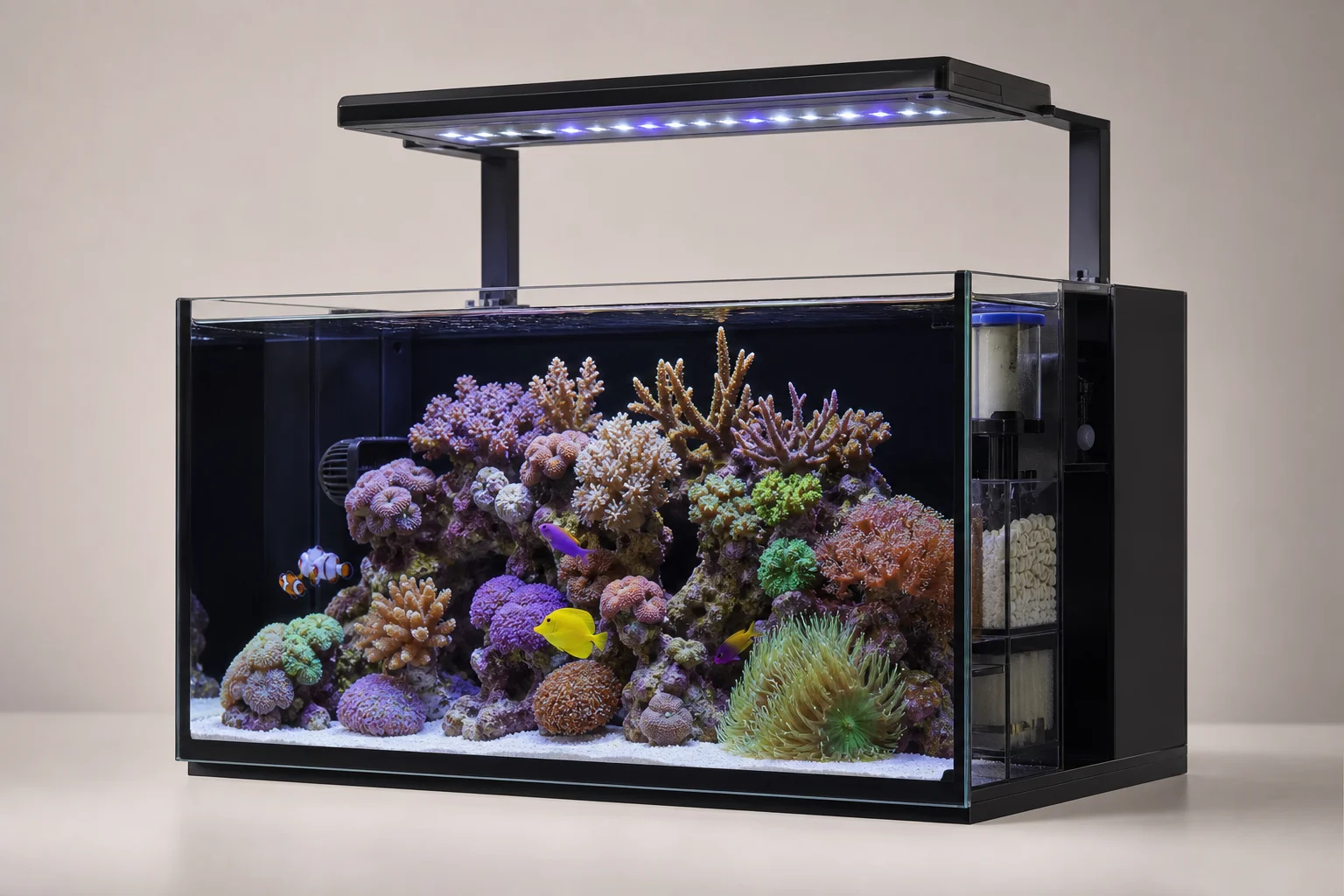
The Red Sea E170 is a good illustration of how much an all-in-one can carry. Run with a bare bottom and minimal rockwork, it has supported a densely packed reef of SPS colonies, the kind of stocking many keepers assume requires a sump.
That does not make it maintenance-free. Heavy stocking in a self-contained tank means staying on top of water changes, feeding, and monitoring. An all-in-one can handle a heavily stocked aquarium, but it asks for discipline to match, and a well-run refugium in the rear chamber does much of the heavy lifting.
For anyone who wants a substantial reef inside one self-contained box, the E170 is a convincing example of the format working at a serious level.
Innovative Marine Shallow Reef Series: All-in-One at Larger Sizes
All-in-one does not have to mean small. The Shallow Reef series from Innovative Marine runs up to 120 gallons, which puts a self-contained system in the same size bracket as many tanks that would normally be paired with a separate sump.
Wider, shallower proportions suit an open aquascape and give corals room to spread without stacking rockwork high. Because filtration sits in the rear chamber, the footprint stays compact and the tank fits into spaces where a separate sump cabinet would be awkward.
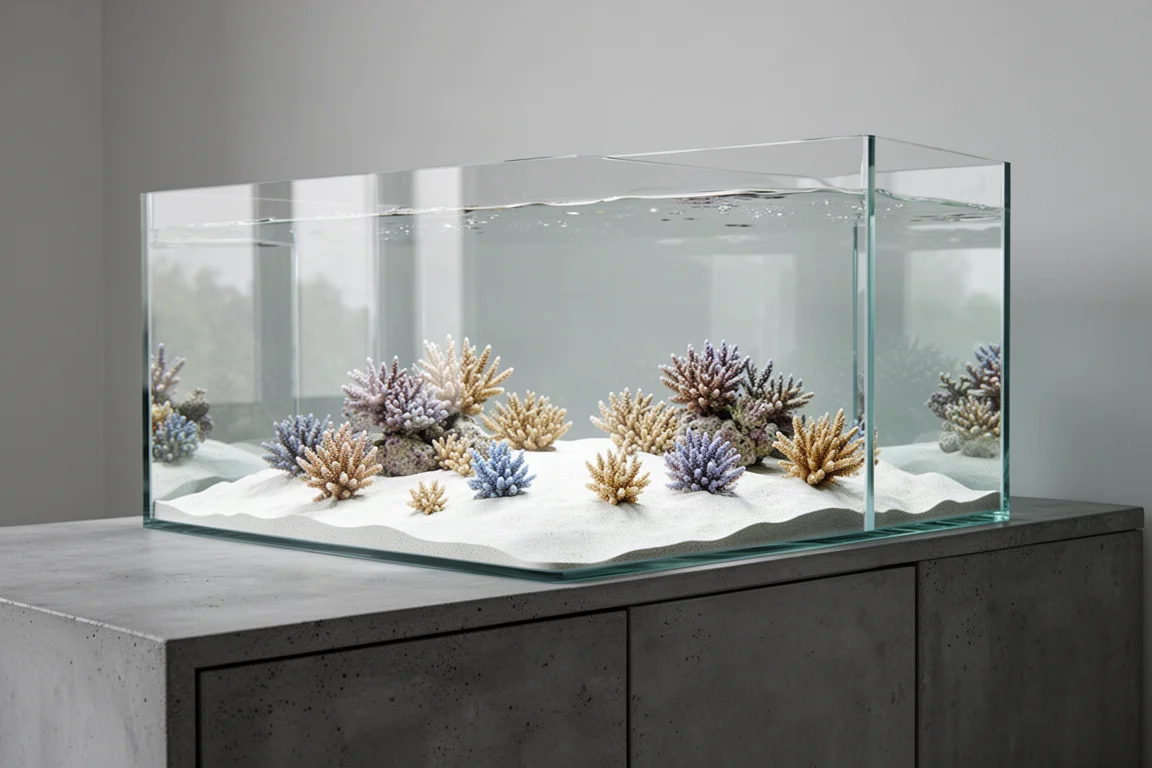
If you keep coming back to the simplicity of a rear chamber but want real display volume, the larger sizes in this range are the ones to look at first. You get the self-contained layout without giving up tank size.
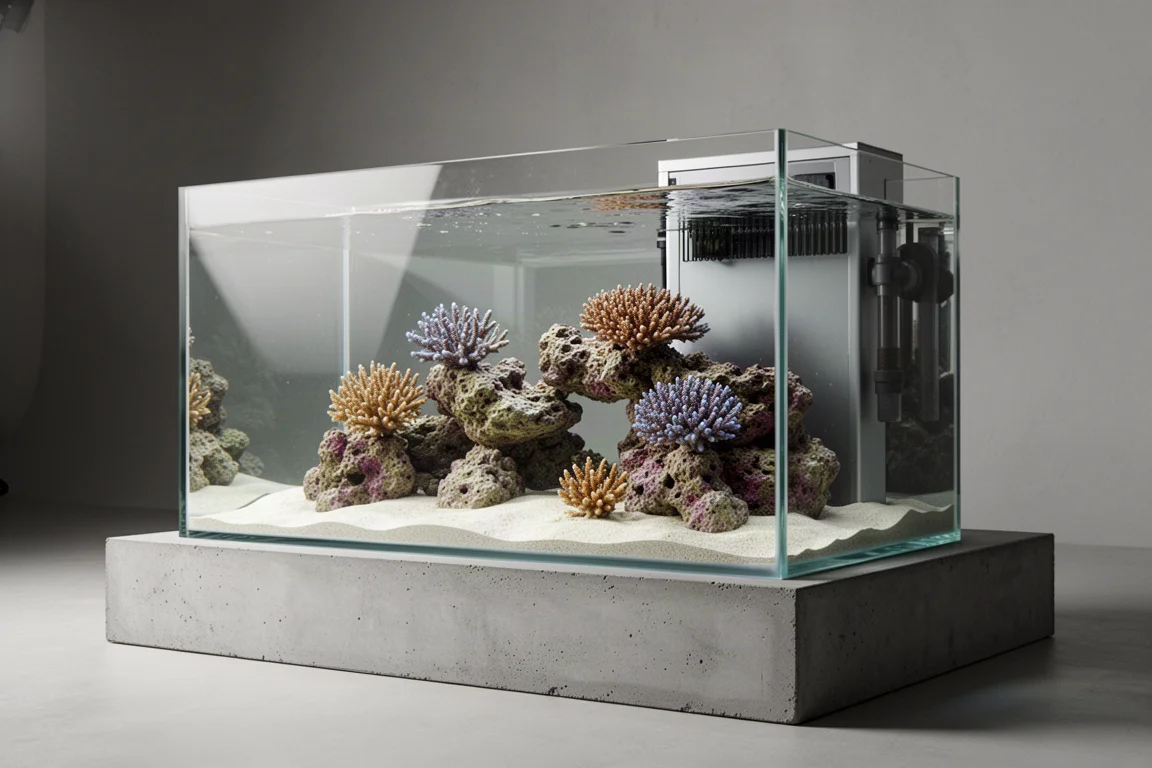
Innovative Marine 20: A Compact All-in-One Starting Point
At the opposite end of the scale, the Innovative Marine 20 is a small desktop all-in-one. It is the kind of tank that makes a first saltwater attempt feel manageable: fewer plumbing connections, less equipment to buy, and a straightforward path to getting water and livestock in.
The trade-off is volume. A small tank leaves less room for extra equipment and less margin if stocking creeps upward, so plan the livestock around the maintenance you will realistically keep up with. A simple, high-performing refugium lit by one of the stick-on lights made for rear chambers can stand in for a nano protein skimmer entirely, which keeps the equipment list short.
For a beginner who wants to find out whether reef keeping suits them, this size class is a sensible and budget-friendly place to start.
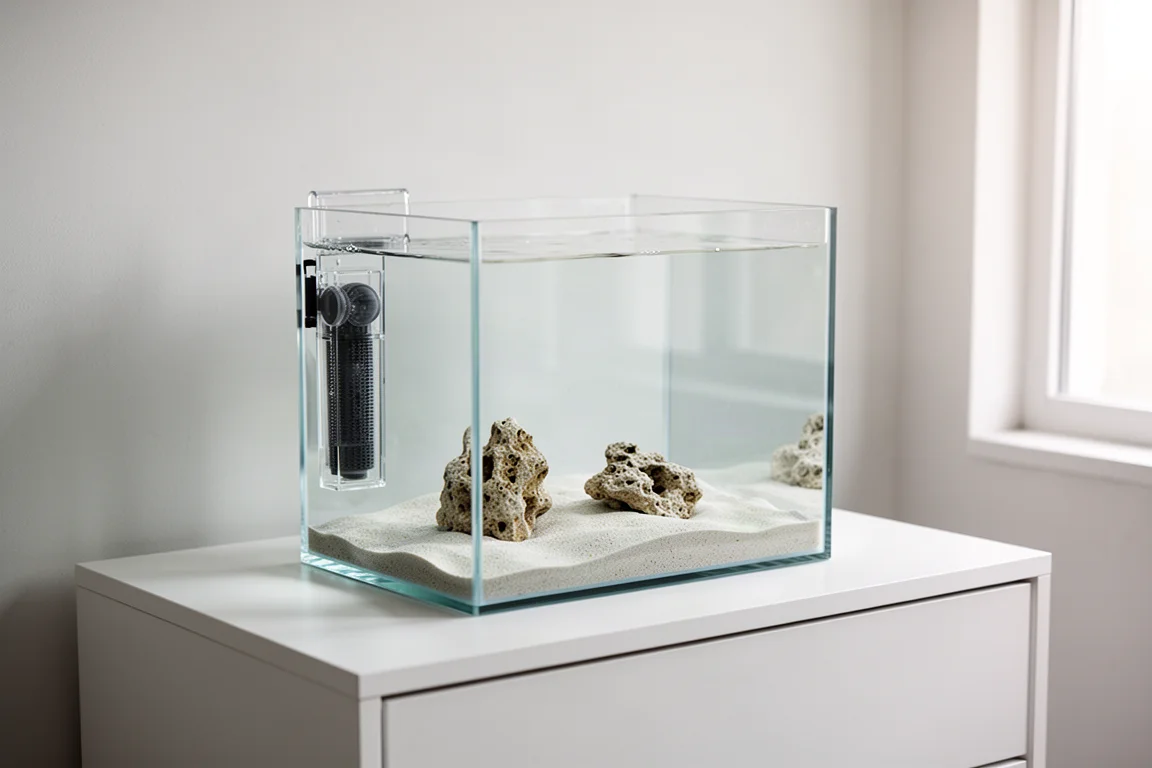
Filtration, Noise, and Everyday Upkeep
There is a persistent idea that all-in-one tanks offer fewer ways to filter properly. In practice, the rear chamber supports more than it used to. A refugium with a capable light, media reactors, and different biological media can cover a lot of ground, and running a strong refugium may mean you never need a small protein skimmer at all. On a small tank that is often the simplest and most effective route.
It is still worth checking a few practical points before you commit to a larger all-in-one. Auto top-off reservoir capacity is limited on many of them, expanding to a controller or a dosing setup can take some planning to keep the installation tidy, and a larger all-in-one often ships with, or is limited to, a small protein skimmer. None of these are deal-breakers, but they are the details that decide whether the tank stays enjoyable two years in.
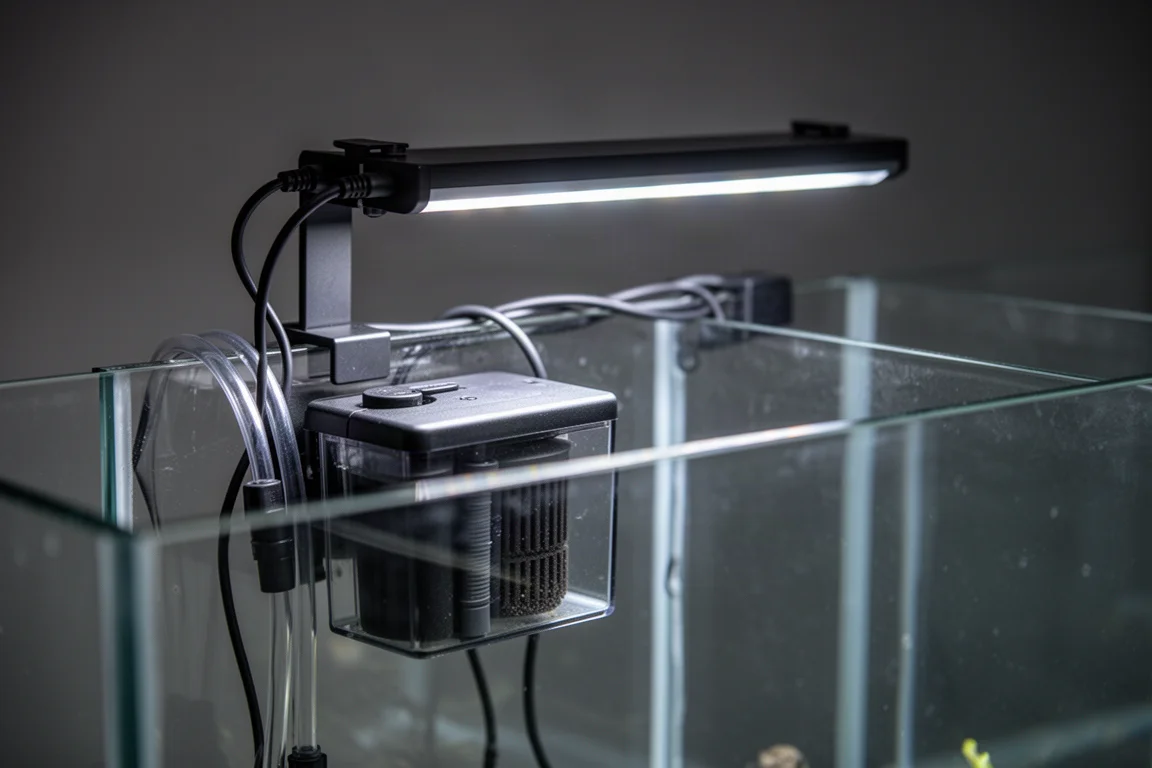
On noise, reef-ready systems generally win because the equipment is enclosed in the sump rather than sitting open behind the display. Whatever you choose, the long-term experience comes down to upkeep: consistent water changes, restrained feeding, and regular monitoring. Keep the cabinet and rear chamber organised and cleaning stays quick, which is the real difference between a tank that thrives and one that becomes a chore.
Buying Advice: Matching the Tank to Your Experience
If you are genuinely unsure, lean toward the more expandable option. You can always remove equipment from a bigger system or dial it back, but an all-in-one will eventually run out of room. If you already suspect you will want a larger tank, or you are not confident a rear chamber will carry the filtration and equipment you have in mind, a reef-ready build is the safer starting point.
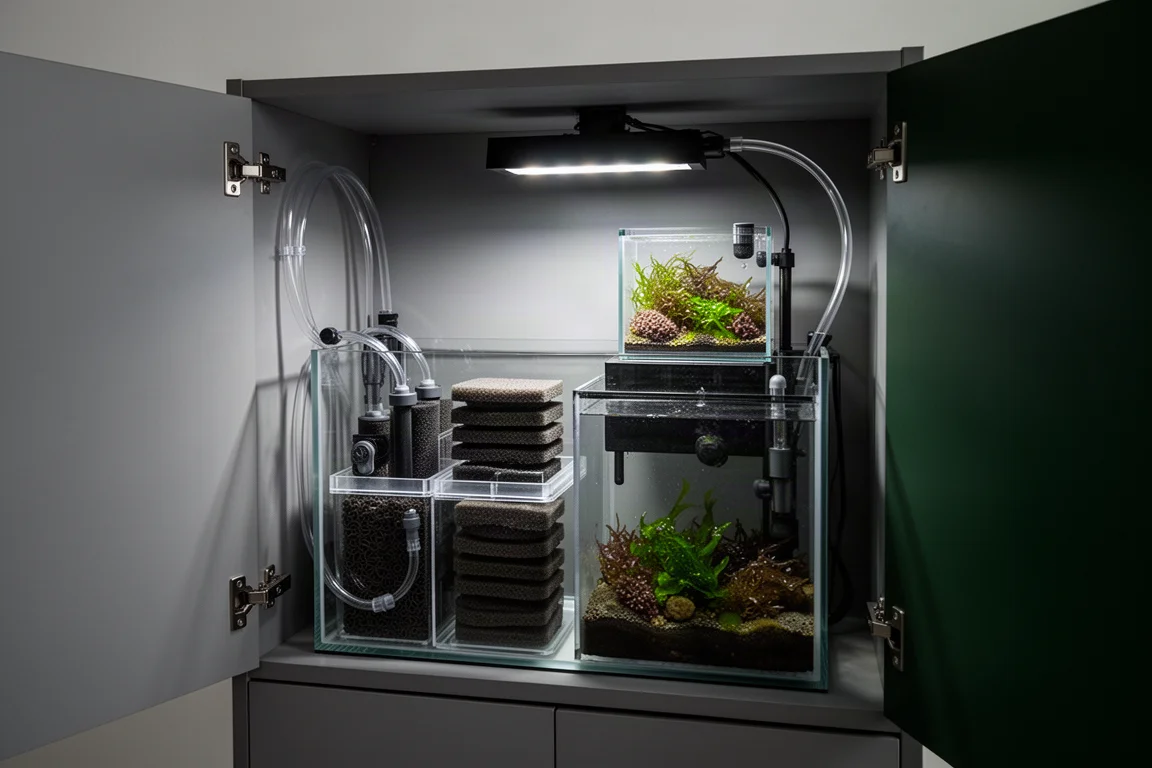
If you simply want to try saltwater for the first time, an all-in-one is the friendlier entry, and it is easier on a budget. Be deliberate about what you buy: you may not need a protein skimmer at all, and a refugium, media reactors, and biological media can offset the tighter equipment options. Whatever you pick, stock it in line with the maintenance you will actually do, because a lightly stocked tank forgives a busy week.
One observation holds up across every setup worth copying: nobody has ever complained about having too much space in an aquarium.
Conclusion
All-in-one and reef-ready systems are two valid answers to the same question. The self-contained tank wins on simplicity, tidiness of plumbing, and a gentler learning curve, while the component build wins on expandability, quieter operation, and room for larger equipment. The Red Sea E170, the Innovative Marine Shallow Reef series, and the Innovative Marine 20 show that a rear-chamber design can range from a first desktop tank to a serious coral display, provided you match the stocking to the upkeep you are prepared to keep up with.
Further reading
Related Reviews
Aquarium Systems
Red Sea Max Nano Peninsula vs Max Nano Cube: Which Plug-and-Play Reef System Fits Your Space?
A practical look at the 26 gallon Max Nano Peninsula and the 20 gallon Max Nano Cube, what ships in the box, and how to choose between the two shapes.
Aquarium Systems
Red Sea REEFER G3 Reef Aquarium Systems: Complete Overview of the Third Generation
The REEFER G3 brings 30 years of reef research into a fully redesigned system with improved water circulation, multiple size options, and seamless smart ecosystem integration for both beginners and experienced aquarists.
Aquarium Systems
Waterbox Frag 105.4 Review: A Complete Frag Tank System for Serious Reef Keepers
A shallow, well-equipped frag tank system with a sturdy cabinet, real filtration capacity and a setup process that rewards patience. Here is what to know before buying.