Português · Stereo Receivers
Outlaw Audio RR 2160 Mark II Review: A Stereo Receiver With Almost Every Input You Need
A feature-dense stereo receiver with a moving magnet and moving coil phono stage, switchable bass management, a built-in streamer, and 110 watts per channel at $999.
Introduction
The Outlaw Audio RR 2160 Mark II is a stereo receiver in the traditional sense: it includes a tuner, and it arrives at $999 with a list of inputs and tuning options that reads more like a checklist for a small system.
That density is the whole story here. There are two pairs of speaker outputs, a moving magnet and moving coil phono stage, switchable bass management, a preamp and main input loop, and a streaming module. Few integrated amplifiers at any price offer this many ways to connect a system.
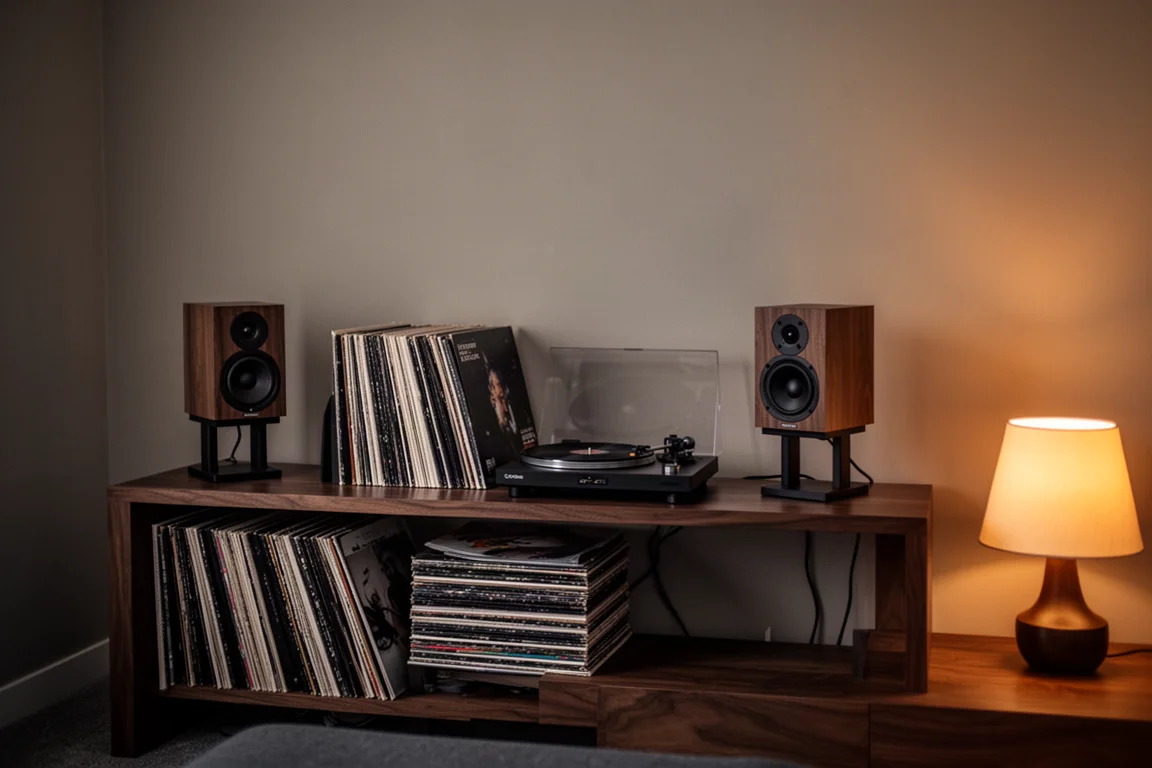
What makes the receiver interesting is not any single feature but the way the features fit together. A listener with a turntable, a disc player, a network streamer, and two pairs of speakers can wire all of it without adding a switch box.
It suits a listener who wants a vinyl rig and a digital source running side by side, who wants to block low frequencies from small bookshelf speakers while sending them to a subwoofer, and who wants the option of running a second pair of speakers in another room. The phono stage handles both moving magnet and moving coil cartridges, which removes a common upgrade obstacle for vinyl listeners.
It is also a reasonable fit for anyone driving speakers that ask more of an amplifier than the price tag suggests. In practice the receiver drove a pair of relatively demanding bookshelf speakers without strain, and it did so more comfortably than some more expensive integrated amplifiers. If your speakers are efficient and easy to drive, that headroom is simply insurance rather than a necessity.
Main Strengths
Power is the first thing worth noting. The RR 2160 Mark II is rated at 110 watts into 8 ohms and 165 watts into 4 ohms, which is generous for a receiver in this bracket and gives it the current delivery to stay composed with harder loads. On demanding bookshelf speakers it held its footing and stayed clean as volume climbed.
The sound signature is full and punchy at the bottom, natural through the midrange, and airy on top. It carries a character that will feel familiar to anyone who has spent time with well-regarded vintage receivers, and it holds up next to modern integrated amplifiers with a similar voicing. Nothing about the presentation sounds thin or forward.
Tuning options are unusually deep for the category. There is a loudness control, a bass EQ with three selectable frequencies intended to be set just below where your speakers begin to roll off, conventional tone controls, a balance control, and a tone control bypass. Bass management on the rear panel is switchable between 60 Hz, 80 Hz, 100 Hz, and bypass, so small speakers can be relieved of low-frequency work while a subwoofer handles it. The preamp and main input loop, joined by a jumper, allows an equalizer or processor to be inserted into the signal path.
Physical controls matter more than they sound on paper. Treble, bass, and balance are on the front panel, so adjustments do not require digging through menus. A headphone jack with its own amplifier is also on board, and USB storage can be connected so music plays directly from a hard drive.
Design, Controls, and Build Quality
The chassis is heavy and the front panel is metal, with layered surfaces and a mix of textures that give it a more substantial feel than the photographs suggest. The volume knob is metal. The treble, bass, and balance knobs are plastic, and a few buttons have a slightly loose feel, as does the small control associated with the headphone amplifier. Outlaw Audio carries a strong reputation for build and value, and nothing here suggests those small tolerances will affect reliability.
The remote control is the surprise of the package. It is metal, with real heft and a textured rear surface that feels closer to brushed aluminium than plastic. It reaches every part of the menu system, and in some cases navigating with the remote is faster than using the front panel. The main criticism is layout: the volume buttons are easy to lose among the individual input keys.
The display and the overall styling look like they came from the 1990s. That is a deliberate aesthetic choice rather than an oversight, and it will divide people. It has no bearing on sound quality, but it does mean this receiver will look more at home in a traditional hi-fi rack than in a minimalist modern living room.
Inputs, Outputs, and Connectivity
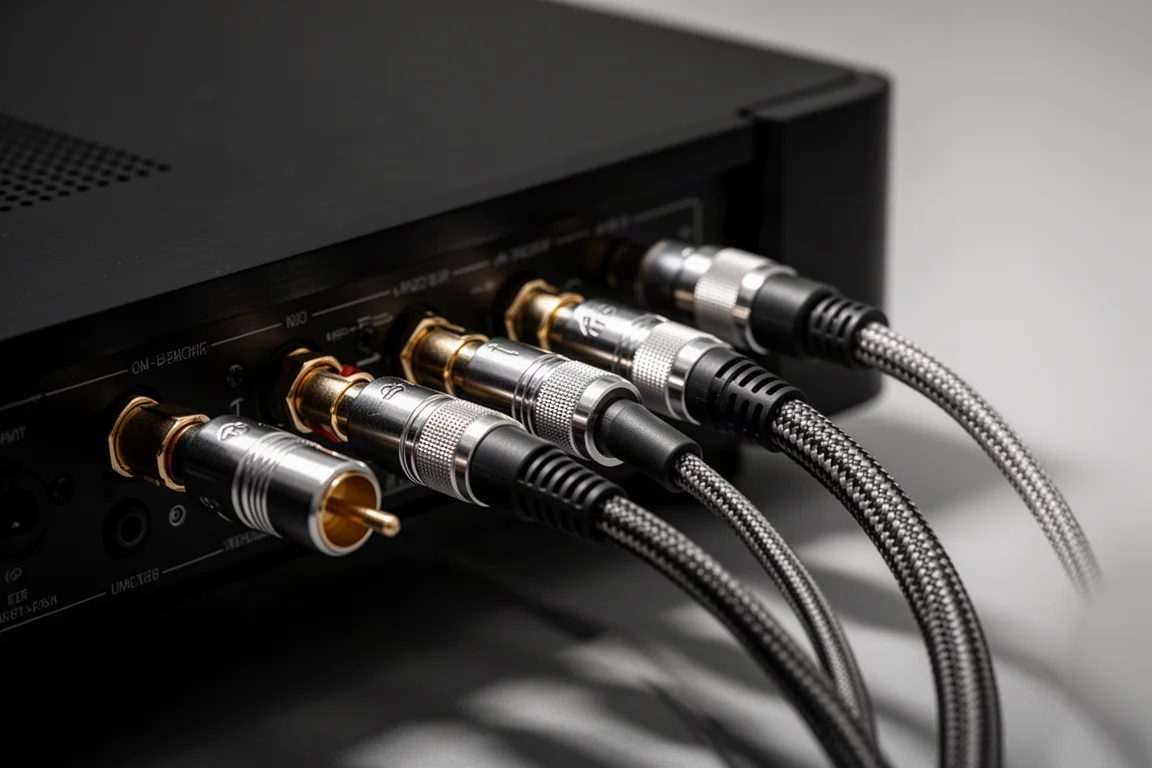
The rear panel is where the value argument becomes concrete. There are four analog inputs, a record output with a record selector for choosing the source to record from, an external processor input and output, and both moving magnet and moving coil phono inputs.
Speaker connectivity is more generous than usual: two pairs of binding posts allow two pairs of speakers to run at the same time, and a passive subwoofer can be driven directly from the receiver alongside two line-level subwoofer outputs. The preamp and main input loop sits between them.
Digital connections include a USB input for a computer or DAC, two coaxial inputs, and two optical inputs. An Ethernet port and a Wi-Fi antenna feed the built-in streaming module. There is also a USB port for firmware updates, IR input and output, a master power switch, an IEC power socket, and an HD Radio antenna connection.
A small accessory power output rated at 5 volts DC and 1 amp is tucked into the layout as well. It can power a compact external streamer directly from the receiver, which saves an outlet and keeps a small component off the wall.
The built-in streamer is the feature that gets the least attention relative to what it does. It supports internet radio alongside terrestrial radio, plays from USB storage, and works through a companion app. It is not as polished as the rest of the package, but it functions, and it means a buyer can get a network source running without adding a separate box.
Things to Consider Before Buying
The honest question to ask is whether you will use what you are paying for. Every option on this receiver has value only if it enters your daily routine. A listener who plays one source through one pair of speakers will pay for capabilities that never get switched on, and a simpler integrated amplifier may be the better use of the money.
The streaming and internet radio side is functional but rough around the edges. Setup and navigation are not as intuitive as the hardware deserves, and the module’s capabilities are not communicated clearly, which makes it harder to know exactly what you are getting. It works, but it is not the reason to buy this receiver.
Some users will also find the styling dated, the display unremarkable, and the plastic knobs out of step with the metal front panel. These are cosmetic and tactile concerns rather than performance ones, but they are the kind of details that shape how much you enjoy living with a component.
Buying Advice
At $999, this receiver is a bargain even if you ignore the streamer entirely. The amplifier section, the phono stage, the bass management, the preamp and main loop, and the ability to run two pairs of speakers are enough on their own to justify the price against the competition.
Buy it if you run multiple sources, if you want a vinyl rig and a digital rig in the same system, or if your speakers benefit from bass management and real power. Skip it if your setup is minimal, if you dislike the styling, or if you would rather spend the same money on a smaller box with fewer features done to a higher polish.
Because Outlaw Audio sells direct, there is no dealer markup layered into the price, which is part of why the feature list looks the way it does at this figure. That model also means you are buying from the company itself rather than through a shop, so it is worth confirming current pricing and availability before you commit.
Conclusion
The RR 2160 Mark II is not a receiver that wins on appearance. It wins on the sheer number of things it can do, on the power it delivers, and on a sound that stays full, natural, and open. For a listener with a busy system and a modest budget, it is one of the most capable options in its class, and at $999 it is easy to recommend to the right buyer.
Link do produto
Ver mais detalhes de Outlaw Audio RR 2160 Mark II
Este produto é mencionado nesta avaliação. Antes de comprar, confirme as especificações, opções e compatibilidade.
Ver mais detalhes de Outlaw Audio RR 2160 Mark IILeituras recomendadas
Avaliações relacionadas
Stereo Receivers
Análise do Onkyo TX-8470: Um Receiver Estéreo com DNA de AVR
Um olhar detalhado sobre o Onkyo TX-8470, um receiver estéreo de US$ 800 com comutação HDMI 2.1, pré de fono integrado e streaming, além das desvantagens a considerar antes de comprar.
Subwoofers
Hsu Research VTF-TN1 vs VTF-15H Mark II: o que muda no novo subwoofer topo de linha
Um olhar prático sobre o novo subwoofer topo de linha Hsu Research VTF-TN1, como ele se compara ao VTF-15H Mark II que substitui e qual modelo faz sentido para cada sala.

Camp Kitchen
Análise do HumanGear GoBites Trio: Um Kit de Talheres Compacto que Merece Seu Lugar
Um kit de talheres de camping de quatro peças com estojo de travamento, faca serrilhada afiada e preço de US$ 15. Veja o que funciona e a única coisa a saber antes de comprar.