Português · Camping Tents
OneWind Solo Vent Bivvy Tent Review: A Smart Awning Extension for Three-Season Camping
A single-wall bivvy tent with a 2.3 lb packed weight, strong ventilation, and an awning extension panel that keeps the front usable in rain.
Introduction
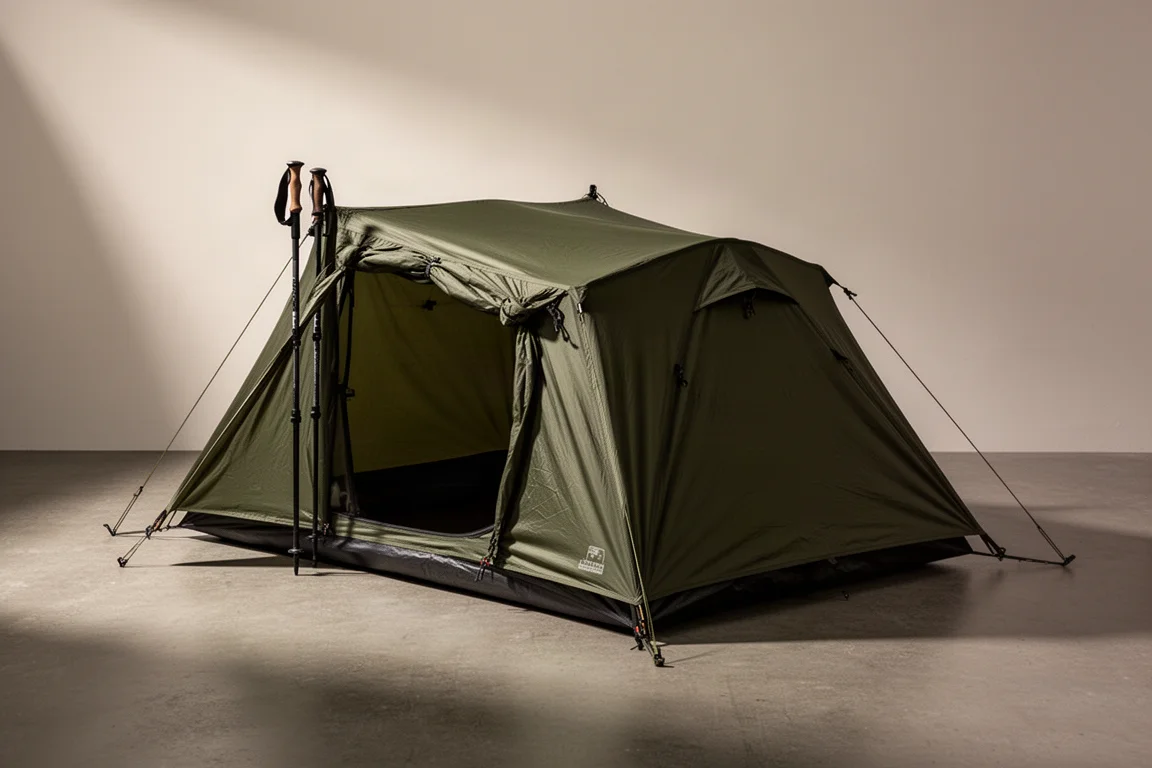
Bivvy tents sit in a useful middle ground between a traditional bivvy sack and a full one-person tent. The OneWind Solo Vent Bivvy Tent is a single-wall, non-freestanding shelter designed for one person, and it carries a detail that separates it from most awning-style bivvy tents: an extension panel on the awning that lets the front stay open in rain.
It is priced at $110 on the OneWind website and sold in a single colour, OD Green. Packed with all components and storage bags, it weighs 2.3 lb. The shelter is a three-season design, and poles are not included, so it relies on trekking poles or suitable sticks found on site.
This guide covers who the tent suits, what it does well, and the practical details worth understanding before ordering.
Who This Tent Is For
The Solo Vent is built for one person, with enough interior space for a sleeping pad, a sleeping bag, and little else. That makes the awning genuinely useful rather than decorative, because most of the time a backpack and extra gear will live outside the inner, sheltered under the extended front panel.
Because the packed size is small at 15.8 by 9.4 by 6.1 inches, the shelter slides into a backpack without much fuss. That makes it relevant for backpacking and hiking, and it also works as an emergency shelter to carry along on trips where an overnight stop is possible but not planned.
The low profile and dark earth-tone colour open up another use case: stealth camping, where a shelter that sits close to the ground and blends into its surroundings is preferable to a taller, brighter tent. The main trade-off in that scenario is that the shelter is not freestanding and needs a fair number of stakes and guy lines to stand properly.
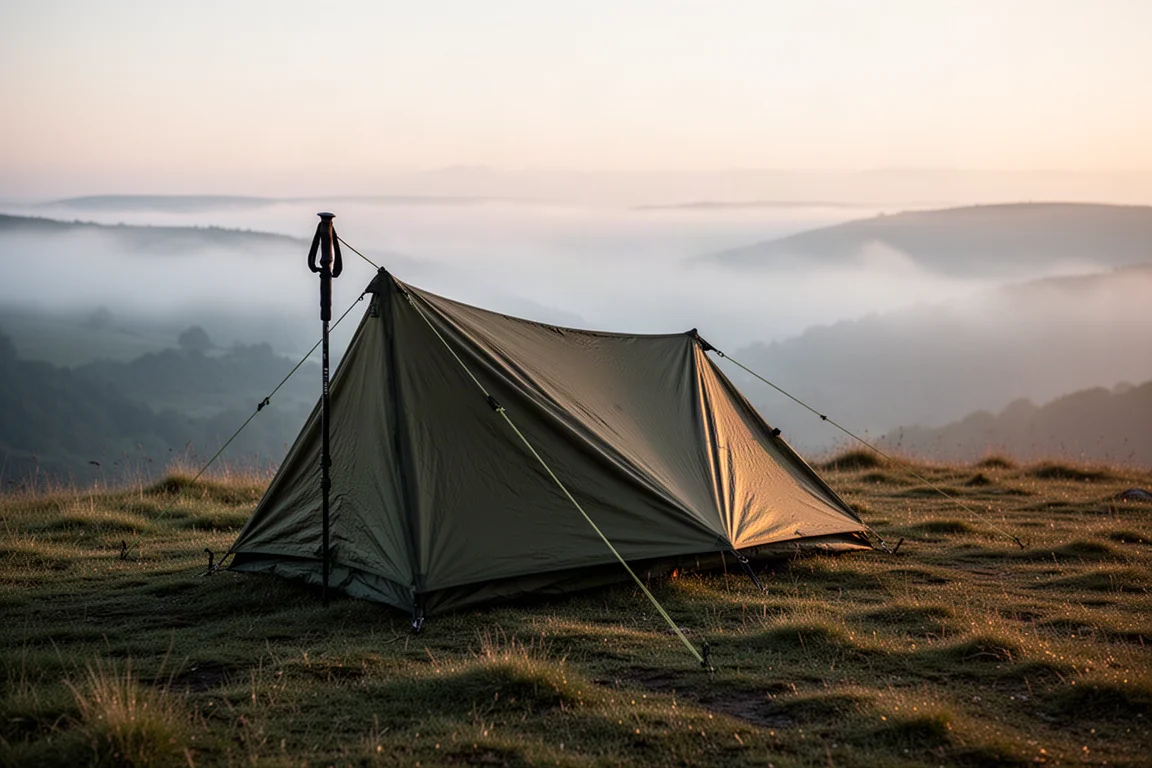
Bikepacking and kayaking trips are a natural fit as well, since the compact packed size matters more than a generous floor area when storage space is tight. The tent is versatile across those activities, but it is worth being clear that it is a solo shelter rather than a roomy two-person option.
The Awning Extension Panel
The headline feature is the awning extension. Unzip the front door, fold the extension panel outward, and stake it down. The panel then covers the opening of the inner, so rain that would otherwise fall straight into the tent is deflected away from the sleeping area. This means the awning can stay up during rain, which is not the case with the vast majority of awning-style bivvy tents, where the front has to be sealed as soon as the weather turns.
The extension only works with one side zipped closed, so the practical sequence is simple: zip that side, stake out the extension, and leave the awning deployed. Only one side of the awning carries an extension panel, so the opposite side does not offer the same rain protection. Even with one side zipped, there is still a substantial covered area outside the inner, enough to sit a chair half inside and half outside the tent while staying under cover.
When the weather is worse, the awning can be lowered into a storm configuration, with the extension panel folded in, the pole dropped, and the panel zipped shut. In that mode the front closes off completely, storm flaps cover the zippers, and the two vents at the back continue to handle airflow.
Main Strengths
Weight and packed size are the first strengths. At 2.3 lb including all components and storage bags, and with a packed footprint of roughly 15.8 by 9.4 by 6.1 inches, the shelter is easy to carry and easy to stow. It is fair to call it lightweight rather than ultra light, since the trekking poles that hold it up are carried separately and add meaningful weight to the total.
Ventilation is the second. The tent has a large mesh front door, a large vent and a smaller vent at the back, and a polyester mesh covering over the vent openings. Air moves through the shelter freely, and on a night out in changeable, damp conditions there were no condensation problems inside. That airflow is exactly why the tent performs best in warmer months: it keeps the interior comfortable in mild and warm weather, but it will not hold heat in cold conditions.
Materials look well chosen for the price. The fly is made from 1.1 oz silnylon with a 3,000 mm hydrostatic head rating, the floor is 40D ripstop nylon with a 5,000 mm rating, and the seams are taped. Aluminum stakes are included. Inside, two mesh pockets, one at the head and one at the foot, keep small items off the floor.
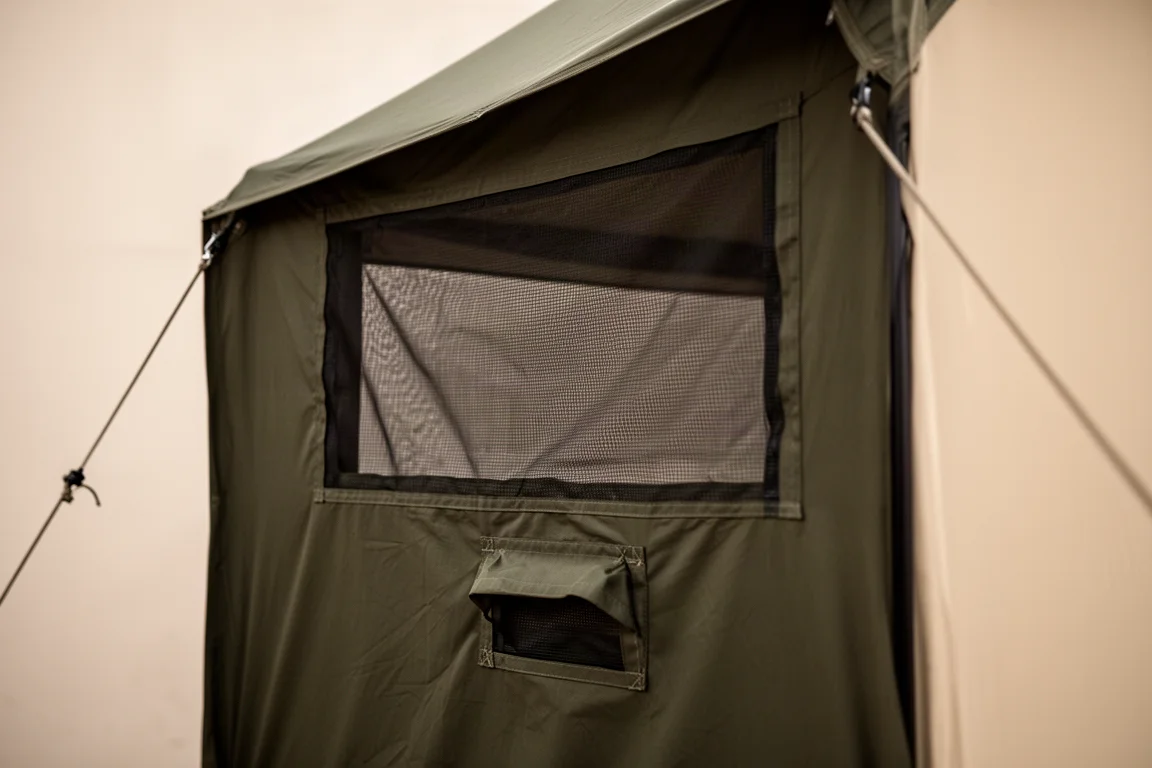
One detail worth calling out: a vent can be closed from inside the sleeping area, so a sudden windy night does not force you out of the shelter to make an adjustment. The second vent has to be closed from outside. The large front door also makes getting in and out noticeably easier than it is on narrower bivvy designs.
Setup, Dimensions, and Living Space
Pitching is straightforward but takes time, mainly because the shelter uses a lot of stakes and guy lines. Expect around 10 minutes without the awning and roughly 15 minutes with it deployed, with the process getting quicker as the pitch becomes familiar. Ten stakes and two additional guy lines are included, which brings the total to seven guy lines once the ones already attached to the tent are counted.
One setup tip matters more than the rest. At the corners, there are elastic loops where the fabric meets the ground. Staking through that elastic causes the tent to lift off the ground. Instead, use the loops that the elastic attaches to, which anchors the shelter properly and keeps it sitting flat.
Usable interior measurements are 81 inches long, or 6 feet 9 inches, 34 inches wide at the head and 28 inches wide at the foot. Peak height is 38 inches at the head and 26 inches at the foot. The company lists full setup dimensions of 82.7 inches long, 23.6 inches wide, and 23.4 inches high.
Inside, there is room for a sleeping pad and a sleeping bag with not much left over, which is why the awning carries so much of the practical value. The living space extends outward rather than upward.
Things to Consider Before Buying
The shelter is lightweight but not ultra light. Once the weight of the poles is added, the total climbs substantially, so it should be judged as a lightweight trekking-pole tent rather than a minimalist one.
Season rating deserves attention. OneWind describes the Solo Vent as a three-season tent, while one retail listing describes it as four-season. The airflow that makes it pleasant in warm weather also means it will not retain heat, so it is not a sensible choice for winter camping, even if it can be used that way.
Silnylon sags. The fly material is very waterproof and very light, but it stretches as it takes on moisture, and after a day and night of rain the fabric needed re-tensioning. Throughout a wet day or night, expect to make small adjustments to keep the pitch taut. In calm conditions this is a minor chore; in wind, loose fabric will flap, so keeping the shelter tight matters more.
No footprint is included, so the floor needs separate protection. A one-person footprint from 3F UL has been found to line up well with this tent and is itself very light, which is a useful starting point if you want a matching groundsheet.
Two further points are worth weighing. The extension panel is only on one side, and the foot end has no extension panel at all, which limits how much the awning can be left open in driving rain. And because the tent is non-freestanding, it needs soft ground and a good number of stake points, which rules out some rocky or hard-packed pitches.
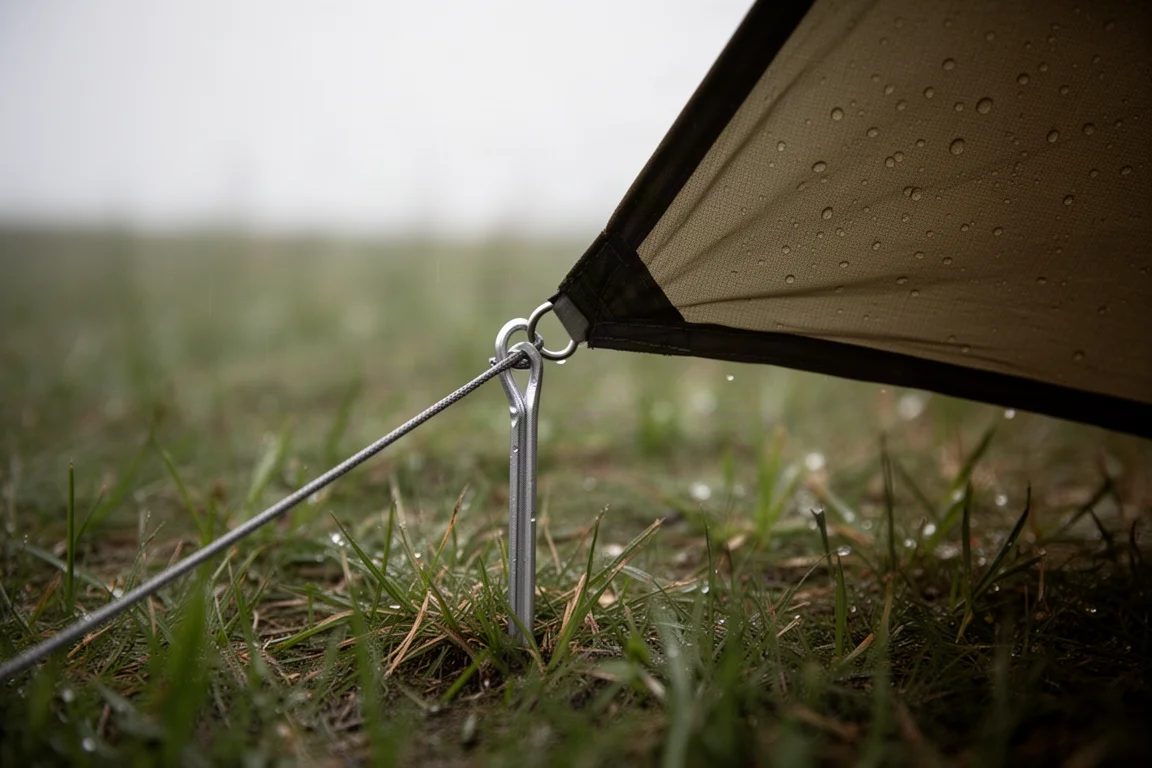
Testing so far has been limited to a single trip, so the shelter should be treated as still being evaluated rather than fully proven. A dedicated heavy-rain test is the natural next step, and the ratings and taped seams suggest the tent should handle it well.
Rain Performance and Weather Protection
On the trip completed so far, conditions were light rain on and off through the day and overnight, with a period of moderate rain heavy enough to soak the outside of the tent and the ground. The shelter did not leak, and the interior stayed dry.
That result lines up with the specifications on paper. The fly carries a 3,000 mm hydrostatic head rating, the floor carries a 5,000 mm rating, and the seams are taped throughout. Those numbers describe a shelter that should shed sustained rain rather than merely survive a shower.
Storm mode is the configuration to use when conditions deteriorate. Lower the awning side, fold in the extension panel, drop the pole, zip the panel closed, and the front seals up with storm flaps over the zippers. One tip for windy nights: stake the doors out so the fly is pulled away from the inner. That creates a gap for air to move underneath and helps control condensation even when the front is fully closed.
Buying Advice
At $110, the Solo Vent sits above the cheapest bivvy-style tents, which can be found for around $30, and the materials and construction point to a clear step up from that entry tier. For buyers comparing against basic awning bivvies, the difference is not just build quality but the extension panel itself, since other awning tents require the front to be sealed the moment rain starts.
If a low-profile solo shelter is what you are after, there is currently nothing on the market that behaves quite like this one, and the awning solution is both clever and practical. Buyers who want a shelter for warm-weather backpacking, bikepacking, kayaking, or stealth camping will get the most from it, provided they already own trekking poles and are comfortable with a pitch that uses plenty of stakes.
Buyers who need a freestanding tent, a winter shelter, or a space that holds two people should look elsewhere. And anyone planning regular wet-weather trips should budget for a footprint at the same time, since none is included.
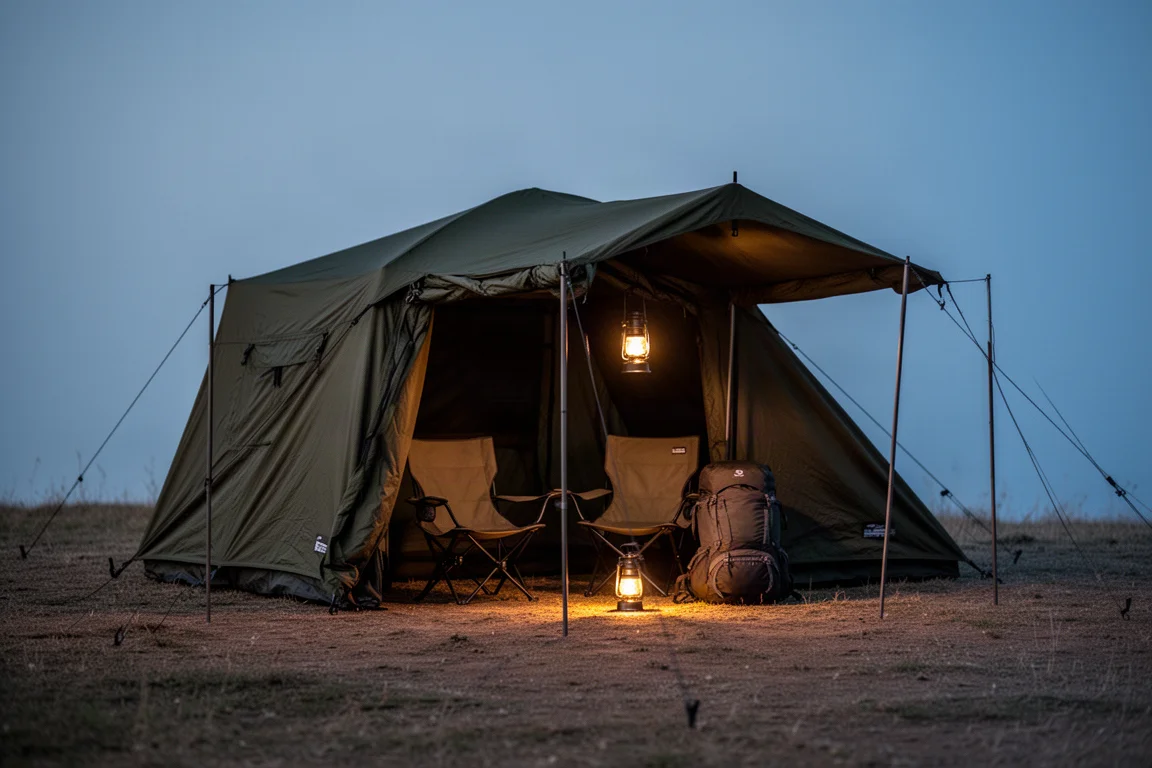
Availability is limited to one colour, OD Green, which suits the low-profile intent of the design. With poles and a footprint accounted for, the total cost lands above the tent price alone, so it is worth factoring those items into the decision before ordering.
Conclusion
The OneWind Solo Vent Bivvy Tent is a well-considered first take on a familiar format. The awning extension panel solves a real problem that other awning bivvies simply live with, the 2.3 lb packed weight and compact size make it easy to carry, and the ventilation keeps the interior dry in damp, mild conditions. The trade-offs are honest ones: no poles or footprint in the box, a stake-heavy pitch, silnylon that sags when wet, and an extension panel on only one side.
For a solo camper who wants a low-profile, three-season shelter with a genuinely usable covered porch, this is an easy option to feel good about. Add a footprint, bring trekking poles, and keep the guy lines tensioned.
Link do produto
Ver mais detalhes de OneWind Solo Vent Bivvy Tent
Este produto é mencionado nesta avaliação. Antes de comprar, confirme as especificações, opções e compatibilidade.
Ver mais detalhes de OneWind Solo Vent Bivvy TentLeituras recomendadas
Avaliações relacionadas
Camping Tents
Análise da Barraca Hyke and Byke Zion para 2 Pessoas: Desempenho na Chuva e Recomendações de Compra
Uma barraca iglu para duas pessoas com boa estabilidade ao vento e costuras do piso seladas com fita, mas limitada sob chuva forte por costuras do corpo sem fita e um piso tipo banheira baixo.
Camping Tents
Análise da Barraca Instantânea IDO GIN: Espaço Enorme, Montagem Instantânea, Concessões Reais
Uma barraca instantânea genuinamente grande, com toldo de dois estágios e uma análise honesta de sua capacidade realista para duas pessoas, qualidade das costuras e ferragens incluídas.
Camping Tents
Análise da Barraca Ido Jin Instant Popup: Abrigo Rápido com um Toldo Engenhoso
Uma barraca instantânea popup de orçamento com toldo integrado, forte ventilação em tela e limites honestos de capacidade e proteção contra intempéries.