Polski · Home Theater Speakers
Power Sound Audio MT-110-M Review: A Home Theater Speaker That Rewards Careful Setup
A sealed two-way home theater loudspeaker with a horn-loaded compression tweeter, high sensitivity, and a clear appetite for a subwoofer plus a couple of bands of equalization.
Introduction
The Power Sound Audio MT-110-M is a two-way, sealed loudspeaker built in Ohio and aimed squarely at home theater duty. The “-M” suffix refers to the matte cabinet finish. The standard MT-110 uses a different finish and is listed at $1,850, while the matte MT-110-M is listed at $1,350.
The driver complement is a 1 inch polyamide compression tweeter loaded into a cast aluminum exponential horn, paired with a 10 inch high-efficiency neodymium woofer. Nominal impedance is rated at 8 ohms. The cabinet is sealed rather than ported, which means you do not have to worry as much about wall proximity when space is tight.

Power Sound Audio publishes a sensitivity figure of 95 dB at 1 watt at 1 meter, and independent nearfield measurements land closer to 92.5 dB at 2.83 volts at 1 meter. That measured figure matters, because it sets realistic expectations about how much amplifier headroom the speaker actually needs once it is placed in a room.
Who This Speaker Is For
This is a speaker for home theater enthusiasts, not for two-channel music listening. If your priority is stereo playback, the design choices here will not line up with what you want.
Two requirements come with the speaker. First, a subwoofer is not optional. Second, some form of equalization is expected rather than optional. Buyers who plan for both from the start will get far more out of the MT-110-M than those who treat them as afterthoughts.
What Stands Out in Real Use
Dynamic range is the headline strength. The speaker stays composed and does not turn fatiguing or bright, which is a genuine achievement for a horn-loaded compression driver design. Plenty of waveguided and horn-based speakers lean bright in room, and that tendency is not caused by the horn itself. It comes from a response that is so consistent on axis that the direct and reflected high frequency energy stack up and make a constant directivity design sound harsh. This speaker avoids that flat in-room high frequency signature, and that is a good outcome, because a gently downward-tilted in-room response is what you actually want to hear.

Sensitivity is reasonably high, and the speaker is efficient enough to work with a broad range of amplifiers, though the equalization described below will trim the overall figure slightly.
Build and Internal Quality
The cabinet work is a genuine point in the speaker’s favor. The drivers are mounted with threaded inserts set into the wood rather than screws driven straight into the panel, which gives a cleaner, more serviceable finished product. The enclosure is lined generously with acoustical stuffing, and the crossover is a simple, tidy design without boutique components. The compression driver and the woofer both appear to come from an established pro-audio driver manufacturer, which is a sensible place to start. The sum of the parts is executed well, and that is what counts.
Where It Needs Care
Three tonal issues show up clearly in listening. The midrange sounds thick and overly full-bodied, the lower vocal region sounds thin, and some detail and presence are missing through the upper midrange. In listening notes those last two tend to land somewhere between 2 and 4 kHz, and the measurements explain why.
The fix is straightforward and does not require exotic tools. A parametric cut of about 2 dB centered around 600 to 700 Hz with a Q of roughly 3 addresses the thick midrange. A second cut of about 2 dB around 1.8 kHz with a Q of 2 to 3 lifts the sense of air and presence back into balance. Together, two to three bands of equalization do a great deal of good for this speaker, and they let the lower vocal and presence regions sit properly against the rest of the range.
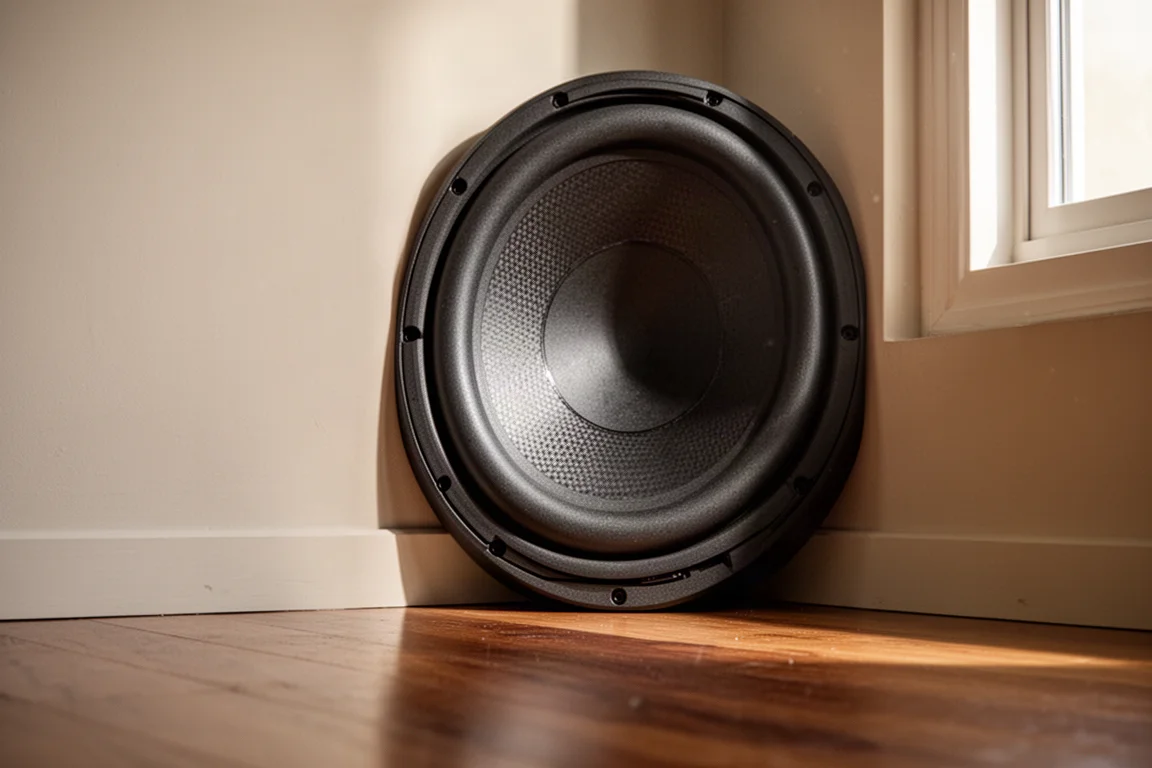
The bass situation is not something equalization can solve. This is a sealed 10 inch design that trades low frequency extension for output capability, and the trade is deliberate. In-room listening struggles to reach much below about 70 Hz with any authority, and a subwoofer is required to make the speaker work as intended. A crossover between 80 and 100 Hz is the sensible starting window, with roughly 80 to 90 Hz landing best in practice. Dropping below 80 Hz hands too little of the range to the subwoofer and loses impact.
Measured Behavior
The anechoic data backs up what the ears report. The F3 sits at about 113 Hz and the F10 at 68 Hz, which explains why in-room extension stops near 70 Hz. The estimated in-room response carries a midrange boost of roughly 2 to 3 dB above a standard trend line, along with the dip in the presence region, and actual in-room measurements track that estimate closely above roughly 500 Hz.
That presence dip has a physical cause. It comes from the center-to-center spacing between the tweeter and the woofer below it, which creates a vertical null above and below the tweeter axis. Horizontally, directivity stays fairly consistent, holding around plus or minus 40 to 50 degrees through the midrange and narrowing to roughly plus or minus 30 to 40 degrees at the top end. The radiation pattern is not especially wide, which is worth knowing if you like a lot of room involvement.
Distortion performance is strong. At 86 dB and again at 96 dB, distortion stays below 1 percent above the midrange and between 1 and 3 percent below it. Multi-tone testing shows rising distortion in the upper midrange, and the impedance sweep of the woofer shows irregularities above about 500 Hz, which lines up with that behavior. Compression is where the speaker shines brightest. Sweeping from 76 dB to 102 dB leaves the response almost unchanged, with deviations of only about half a dB at the highest output, which is entirely acceptable across a 26 dB swing.
Placement and Room Setup
Vertical placement matters more here than with many speakers, and it matters most in rooms with more than one row of seats. With a single row, set the tweeter at ear level and you are done. With multiple rows, remember that listeners behind the front row sit above the reference axis, where the response changes noticeably by around 15 degrees. Anyone seated behind you needs to stay within roughly a 10 to 15 degree window of the tweeter line, or their impression of the system will differ from yours.
There is a little room to play. Angling the front row about 5 degrees below the tweeter line can buy back some coverage for the rear row, though the usable margin is narrow. Because the cabinet is sealed, close wall placement is less of a concern than it would be with a ported design, which gives you some flexibility when the room is tight.
Buying Advice
Plan the purchase as a system rather than a pair of speakers. A subwoofer and a way to apply parametric EQ are part of the real cost of ownership, and both are what let the MT-110-M perform at its best. Two to three bands of correction are enough to smooth the midrange bump and restore balance to the lower vocal and presence regions, and the resulting sensitivity still lands around 90 to 91 dB, which remains high for a speaker of this type.
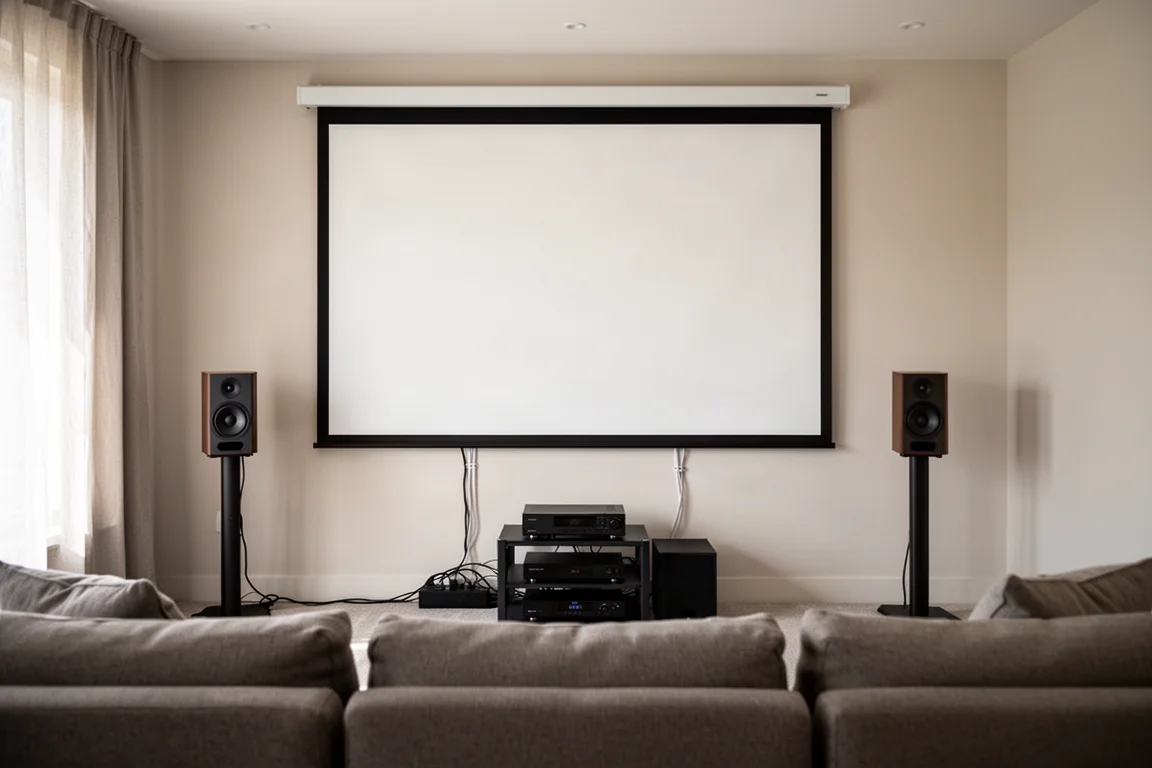
Approach it as a home theater solution with a clear plan for bass management and room correction, and the value proposition makes sense. Approach it as a standalone stereo speaker and the design trade-offs will fight you at every step. The MT-110-M rewards buyers who set it up deliberately.
Conclusion
The Power Sound Audio MT-110-M is a well-built, high-sensitivity sealed home theater speaker with excellent dynamic range, low distortion, and a treble presentation that stays comfortable over long sessions. It needs a subwoofer, it benefits enormously from a few bands of equalization, and it is at its best in a properly arranged multi-row room. For home theater use, that is a good speaker. For stereo use, it is not the tool for the job.
Link do produktu
Zobacz więcej szczegółów: Power Sound Audio MT-110-M
Ten produkt jest wymieniony w tej recenzji. Przed zakupem sprawdź specyfikację, dostępne warianty i kompatybilność.
Zobacz więcej szczegółów: Power Sound Audio MT-110-M