Polski · AV Receivers
Marantz Cinema 50 Review: A Nine-Channel AV Receiver Built to Last
The Marantz Cinema 50 pairs nine channels of Class AB amplification with full preamp outputs, modern HDMI 2.1 connectivity, and a refreshed design. Here is what to know before buying.
Introduction
The Marantz Cinema 50 arrives as the more capable of the company’s two new Cinema series AV receivers, and it makes a clear statement about where Marantz wants its home theater products to go. Nine channels of Class AB amplification, 110 watts per channel with two channels driven, and full preamp outputs on every channel put it in serious territory, while a design language borrowed from the Model 30 and 40n integrated amplifiers finally moves the brand’s receivers away from the styling of the past two decades.
At $2,500 it sits below the previous-generation flagship that many home theater enthusiasts have used as a reference, yet it covers the formats, inputs, and processing that most modern systems actually need.
Who This Receiver Is For
The Cinema 50 is aimed at listeners building a genuinely capable surround system without stepping into flagship money. Nine amplified channels support a 5.1.4 or 7.1.2 Dolby Atmos layout out of the box, and the four independent subwoofer outputs mean multi-subwoofer setups can be tuned properly rather than split from a single feed.
It also suits anyone who wants the option of turning the receiver into a processor later. Preamp-only mode disables the internal amplifiers, so the Cinema 50 can drive external amplification for up to 11 speakers and four subwoofers. That makes it an unusually flexible long-term hub for a system that may grow.
One practical caveat belongs here: there are no legacy composite or component video inputs, so owners of older sources will need a different solution for those devices.
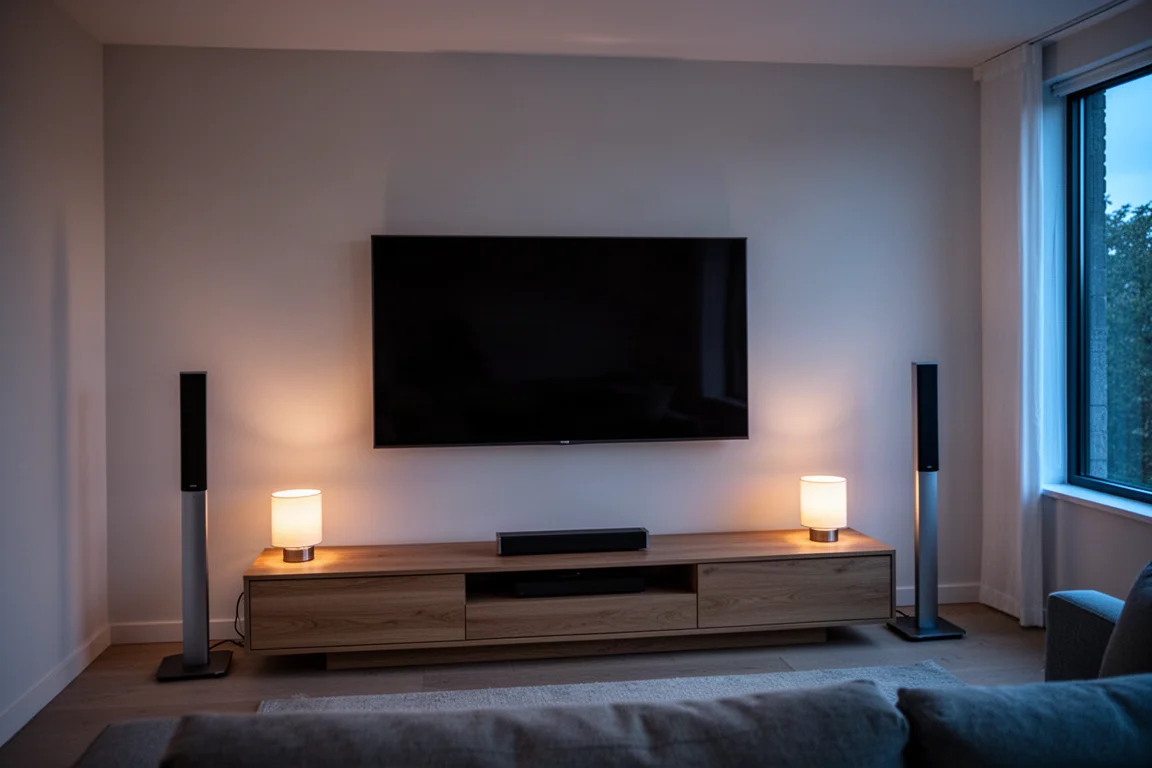
The updated on-screen interface is worth calling out for anyone who has wrestled with a receiver menu system in the past. It is far closer to what smart televisions have offered for years, and setup can also be handled through the Marantz app or a web browser over a network connection.
Main Strengths
The Cinema 50 gets the fundamentals right and then adds flexibility that is genuinely useful rather than decorative. The sections below cover where it stands out.
Power and Channel Flexibility
The nine-channel Class AB amplifier section is rated at 110 watts per channel with two channels driven, and Marantz applies a 70 percent guarantee, which means roughly 75 watts per channel should be available with all channels driven. In practice the receiver drove a wide range of speakers, including demanding tower models, to reference level without strain.
Full preamp outputs on every channel are the quieter headline here. They allow the receiver to anchor a system now and act as a pure processor later, which is a rare level of upgrade headroom at this price.
Connectivity and Format Support
Six HDMI inputs and three HDMI outputs all accept signals up to 8K60, and HD sources can be upscaled to 4K or 8K depending on preference. HDR support covers Dolby Vision, HDR10+, Dynamic HDR, and HLG, with eARC handling audio coming back from a television. Immersive audio formats include Dolby Atmos, DTS:X, and Auro-3D.
Gamers get ALLM and VRR when a compatible console is connected directly. A 4K 120Hz HDR signal from a PlayStation 5 passed through cleanly, and multi-channel gaming felt immediate with no input lag worth worrying about.
Room Correction and Setup
Audyssey MultEQ XT32 is included and works well, and the receiver stores two independent user presets. That means a full manual calibration can live in one preset while an automated Audyssey run sits in the other, and the two can be compared directly from the listening position. Manual settings still tend to sound fuller, since the automated curves lean slightly thin, but the correction itself is reliable and repeatable.

Dirac Live is the feature that has drawn the most attention, and it is promised through a firmware update rather than shipping on day one. Older Marantz receivers cannot be upgraded to it, so anyone who specifically wants Dirac will need to wait for the update to land before treating it as a deciding factor.
Sound Quality Across Movies, Music, and Games
Tonally the Cinema 50 carries the richness Marantz is known for, with warmth through the midrange and bass and dialogue that stays clear and intelligible. In a 7.1.2 configuration it handled dense film mixes with composure, and dialogue enhancement plus center channel trim can be adjusted from the app without leaving the seat.
Music is the surprise. Paired with high-quality standmount speakers in direct mode, the receiver gets close to the performance of a dedicated two-channel integrated amplifier, giving up only a little body and spatial separation by comparison. Against less expensive receivers it also sounds smoother in the treble. Very power-hungry speakers need a bit more volume before the sound opens up, so pairing it with speakers rated above roughly 88 dB sensitivity keeps it comfortably in its stride.
Things to Consider Before Buying
Dirac Live is not available at launch, and that is the biggest open question. The hardware supports it and the update is promised, but until it arrives the receiver relies on Audyssey alone.
Build quality is good rather than luxurious. The chassis is plastic, unlike the metal construction of the Model 40n integrated amplifier it visually resembles. The porthole display is attractive but limited in what it shows and not especially easy to read from more than about three feet away.
There is also no legacy video input, and HEOS streaming works but will not matter to most buyers. None of these points undermine the core performance, but they are worth knowing before committing.
Buying Advice
At $2,500 the Cinema 50 undercuts the previous-generation Marantz flagship while covering nearly everything a modern system needs. That older receiver offers more power and a few extra features, but for most rooms it is more than necessary.
Cheaper rivals exist, including the Denon X3800H at just under $1,700 and the Denon X1700H at $649, and the Onkyo RZ50 offers strong value with Dirac Live already on board. Those alternatives give up power, build quality, or features in exchange for the savings, and the Cinema 50 remains the more polished and better-sounding choice of the group. If a receiver is already in place and working well, there is little reason to change.
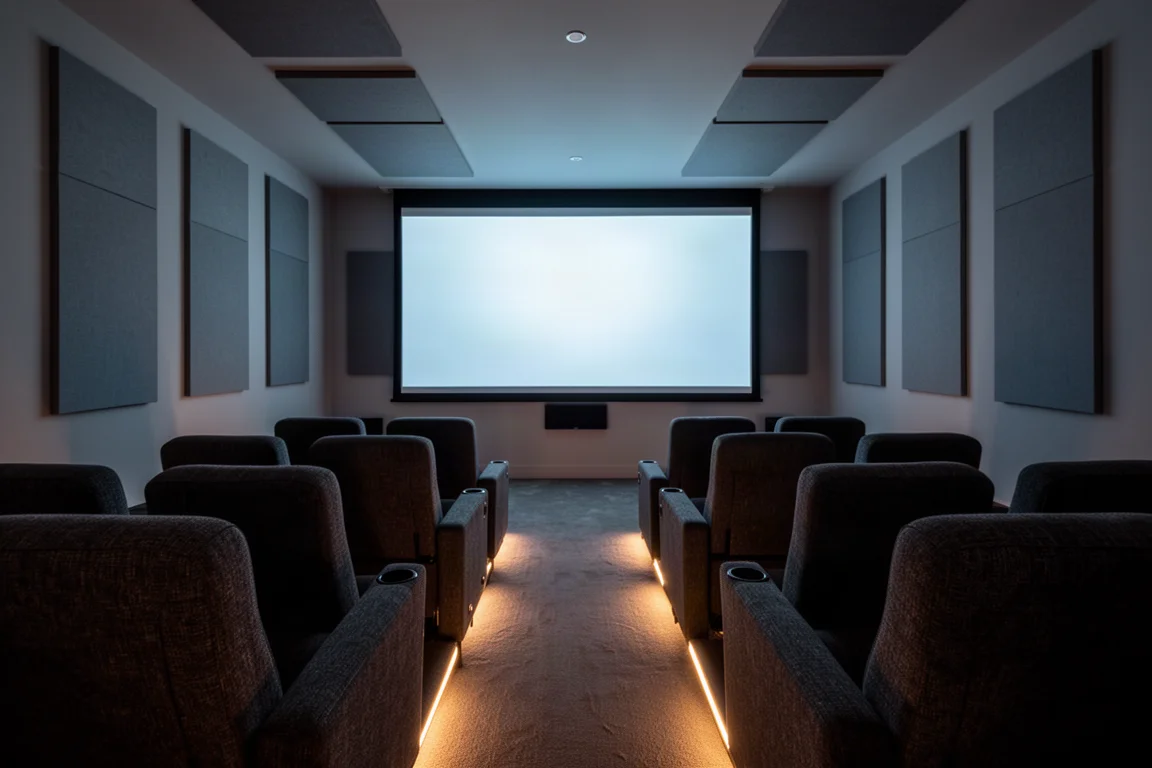
The sensible approach is to decide how many channels and subwoofers the room will realistically hold, then buy for that target. For most living rooms, nine channels of amplification and four subwoofer outputs leave plenty of room to grow.
Conclusion
The Cinema 50 is close to an ideal AV receiver for its price. It has the power, the channel count, the connectivity, and the processing that a serious home theater needs today, plus preamp flexibility that protects the investment later. The missing Dirac Live support at launch is a genuine frustration, and it is the one thing worth waiting on if room correction matters to you. For everyone else, this is one of the strongest values in Marantz’s current lineup.
Link do produktu
Zobacz więcej szczegółów: Marantz Cinema 50
Ten produkt jest wymieniony w tej recenzji. Przed zakupem sprawdź specyfikację, dostępne warianty i kompatybilność.
Zobacz więcej szczegółów: Marantz Cinema 50