Polski · Camping Coffee Makers
GSI Outdoors 8-cup Enamelware Percolator Review: Classic Looks, Tight Capacity
A close look at the GSI Outdoors 8-cup Enamelware Percolator, covering real usable capacity, brew times, build quality, and who it actually suits.
Wprowadzenie
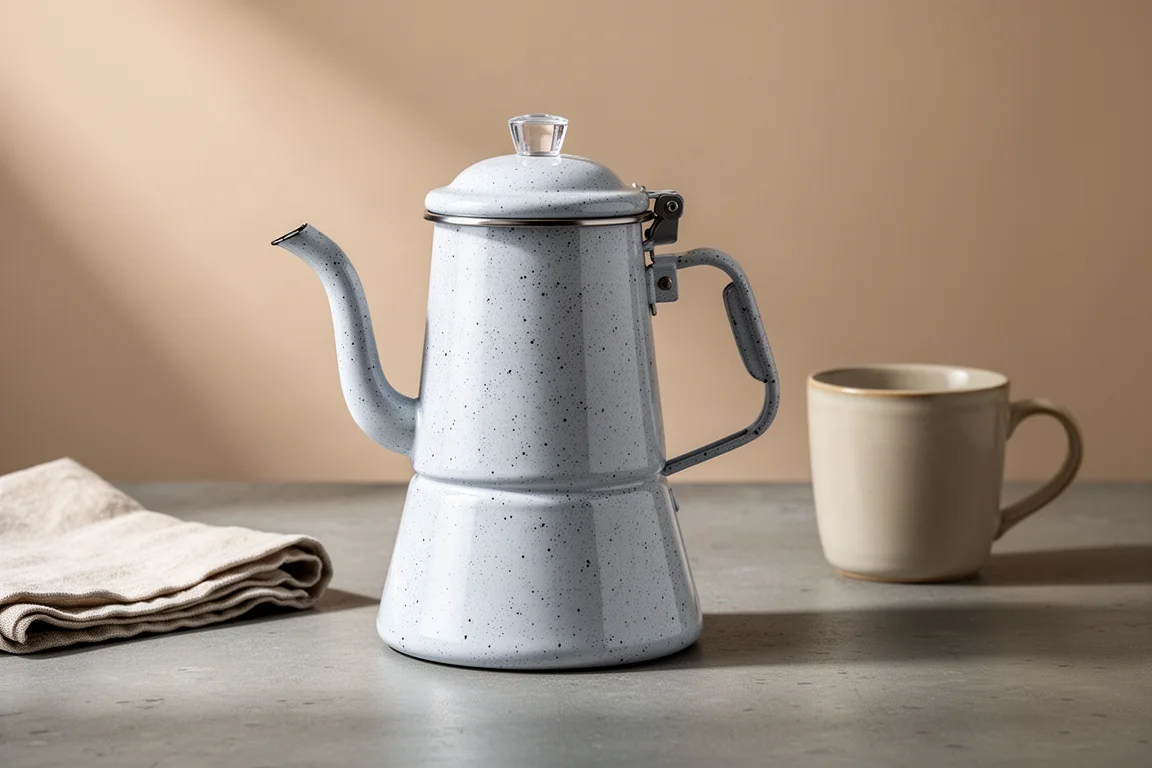
The GSI Outdoors 8-cup Enamelware Percolator is a stovetop camping coffee maker built around a traditional enamel finish and a familiar perking design. It is sold as an 8-cup pot, costs around US$25, and carries a lifetime warranty from GSI Outdoors against manufacturing defects. It is made in Mexico.
That combination looks appealing on paper for campers who want a simple, packable percolator with a classic look. In practice, the real usable capacity is much smaller than the name suggests, and the build raises questions that are worth understanding before you commit.
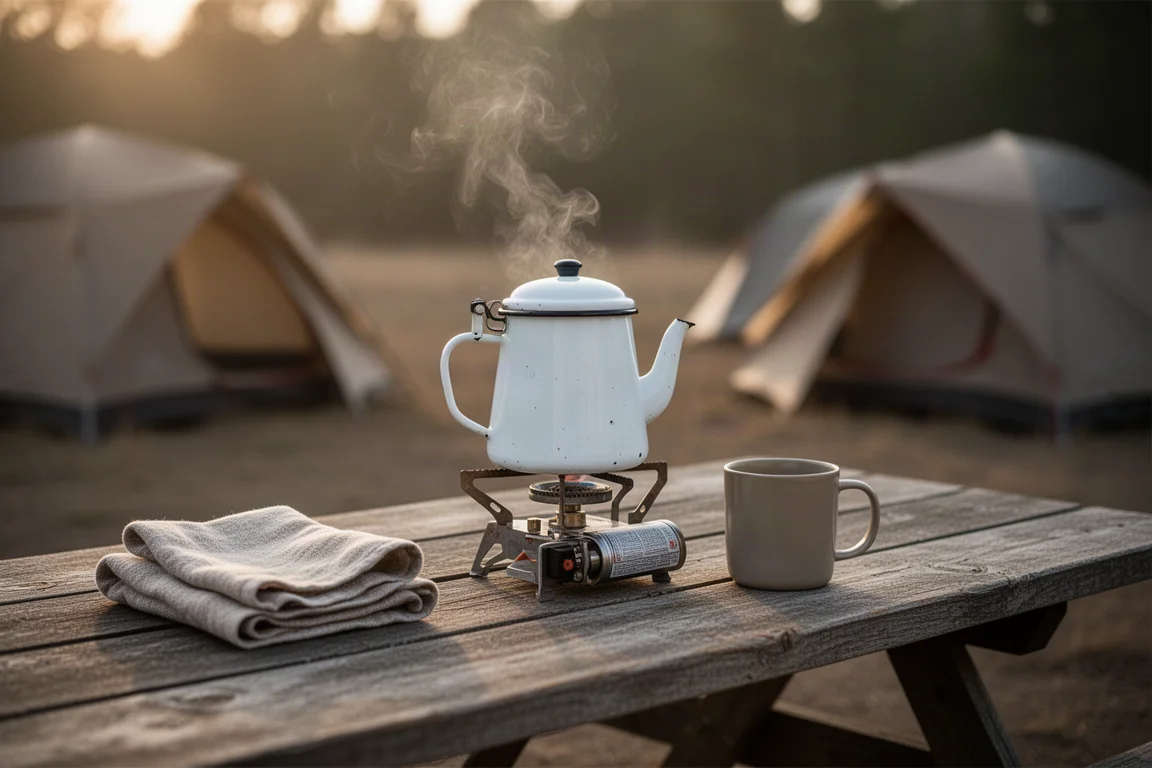
This review covers what comes in the box, how much coffee the pot can realistically brew, how it performs on a stove, and who it genuinely suits.
Dla kogo jest ten produkt
The percolator fits campers who brew for one or two people and want a stovetop pot with an old-fashioned appearance. Because the practical range sits at roughly 4 to 5 cups, with a cup measured at 6 oz, it suits small groups rather than a full campsite. Anyone brewing regularly for three or more people will find the capacity too tight, and a 12-cup version of the same enamel percolator exists for larger needs.
It also rewards a hands-on approach. Getting good coffee out of it means measuring water and grounds yourself, watching the transparent perking knob, and adjusting heat as you go rather than setting it and walking away.
Najważniejsze zalety
The clearest strength is the warranty. GSI Outdoors backs the percolator with a lifetime warranty against manufacturing defects, which is meaningful support at this price.
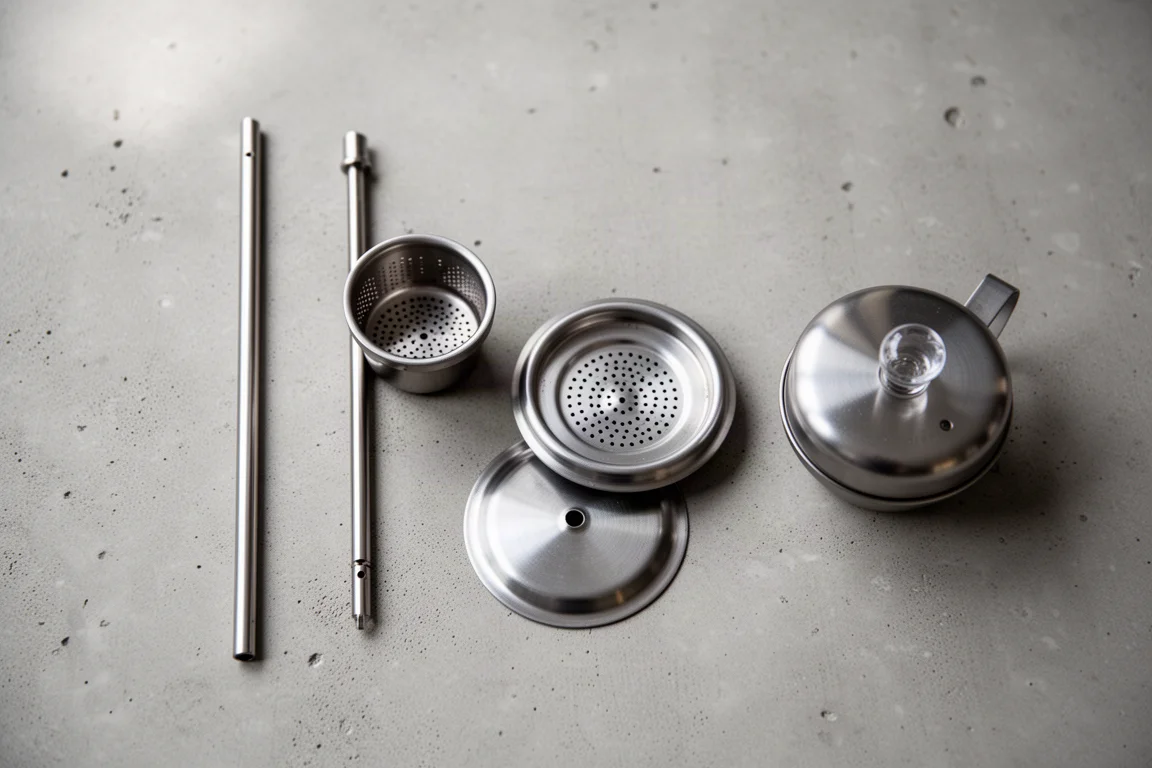
A few practical details work well too. The wide base keeps the pot stable on a stove. The transparent perking knob lets you see when the water starts boiling and observe the color of the coffee as it brews. The parts come apart easily, so cleanup is simple, and running percolating water through the components is effective at lifting coffee bean oils. With a coarse grind, only a minimal amount of grounds reached the final cup, and if grounds do show up, wetting the filter basket or lining it with filter paper helps.
The pot itself, including the handle, is made from heavy-gauge steel with an enamel finish, which is the source of its traditional appearance.
Wydajność parzenia i pojemność
Capacity is the central issue. The pot is marketed as an 8-cup percolator, but the filter basket sits very low on the stem and reaches deep into the pot, which reduces how much water can go in. The maximum fill is around 40 oz, and water must always stay below the filter basket.
Brewing at 5 cups, or 30 oz, worked well. At 6 cups, or 36 oz, the pot started boiling over after roughly four and a half minutes of percolation on medium-low heat. At 4 cups, or 24 oz, the coffee tasted weaker but was still acceptable. At 3 cups, or 18 oz, there was not enough water to travel up the stem and spread across the grounds, so the result looked and tasted more like tea, and the 32 grams of grounds were not fully used.
The realistic working range is therefore 4 to 5 cups, or about 24 to 30 oz. The filter basket holds up to 82 grams of coffee when packed to the brim, which is more than enough for a 5-cup brew.
Timing shifts with conditions. Bringing tap water at room temperature to a boil on medium heat took about 4 minutes 45 seconds at 18 oz, about 7 minutes at 30 oz, and about 8 minutes at 36 oz. GSI Outdoors recommends heating at the highest setting and perking for no more than 3 minutes, a fast approach that can leave the coffee tasting burnt.
Jakość wykonania i trwałość
This is where the percolator is weakest. The stem, filter basket, and spreader are made of aluminum and feel flimsy. The perking knob is resin. The aluminum hinge connecting the lid to the handle comes off easily, can be bent by hand, and does not suggest long-term durability.
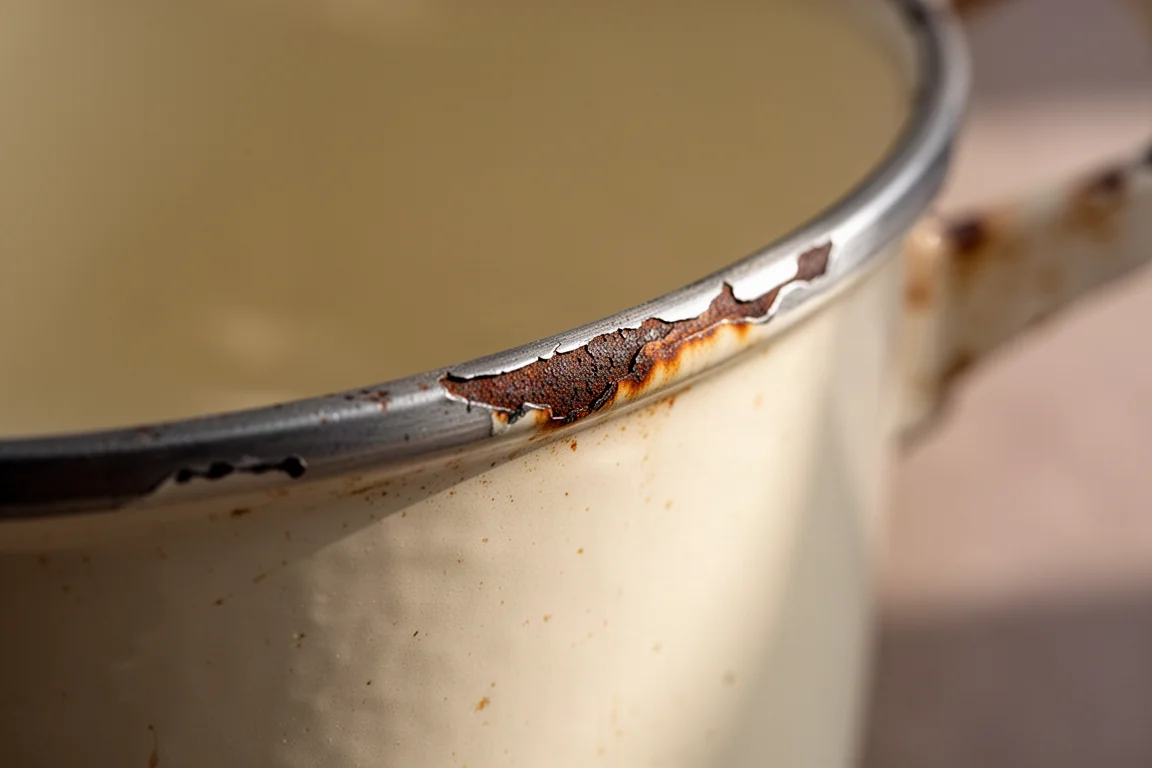
After light use, rust appeared on the rim of the lid and on the handle. Out of the box, some enamel had already chipped off. The knob is difficult to seat properly no matter how firmly it is screwed in, and the filter basket and stem do not sit firmly inside the pot, so the assembly rattles when shaken gently. The enameled steel body is the sturdy part; the fittings around it are not.
Na co zwrócić uwagę przed zakupem
There are no scale or cup level markings on the inside or outside of the pot, and the holes of the spout cannot be used as a gauge because the filter basket sits lower than the lowest hole. Since water cannot be filled above the basket, measuring has to be handled separately.
The handle is made from the same material as the pot, so it becomes very hot after percolation and needs a cloth or glove. The lid is loose enough that it has to be held while pouring.
Overall quality is disappointing relative to the asking price, even though that price is modest. The lifetime warranty covers manufacturing defects, which is worth remembering, but most of the day-to-day frustrations come from design and materials rather than a single failure.
Porady zakupowe
At around US$25, the GSI Outdoors 8-cup Enamelware Percolator is not expensive, but value depends on whether it matches how you brew. It makes sense for campers who brew 4 to 5 cups at a time, are comfortable measuring water and grounds by hand, and accept that the pot needs careful handling because of the hot handle and the loose lid. Those buyers get a stable, easy-to-clean enamel pot with a lifetime warranty behind it.

For anyone who needs genuine 8-cup capacity, wants built-in measuring marks, or expects a sturdier build, this pot will be frustrating. A 12-cup version of the same enamel percolator is available if capacity is the main concern, and GSI Outdoors also offers a stovetop camping percolator made of stainless steel rather than enamel, which avoids the enamel chipping and rust issues. Buyers who want the traditional enamel look for small-batch brewing may still enjoy it. Buyers who want predictable capacity and durable fittings should look further.
Podsumowanie
The GSI Outdoors 8-cup Enamelware Percolator has one clear advantage in its lifetime warranty, plus a handful of useful details: the transparent perking knob, the wide and stable base, and components that come apart easily for cleaning. Against that, usable capacity tops out at about 5 cups, there are no measuring marks, the handle gets very hot, the lid is loose, and the build shows chipping, rust, and a flimsy lid hinge.
For small-batch campers who value the enamel aesthetic and are willing to work around its quirks, it can still serve a purpose. For most buyers looking for a dependable camping percolator, the trade-offs are difficult to justify.
Link do produktu
Zobacz więcej szczegółów: GSI Outdoors 8-Cup Enamelware Percolator
Ten produkt jest wymieniony w tej recenzji. Przed zakupem sprawdź specyfikację, dostępne warianty i kompatybilność.
Zobacz więcej szczegółów: GSI Outdoors 8-Cup Enamelware PercolatorWięcej do przeczytania
Powiązane recenzje
Mountain Bike Tires
Najlepsze opony trailowe do roweru górskiego: siedem propozycji pod kątem przyczepności, szybkości i trwałości
Praktyczne zestawienie siedmiu opon trailowych — od modeli nastawionych na maksymalną przyczepność po szybko toczące się uniwersały — wraz z kompromisami, które warto sprawdzić przed zakupem.
Mountain Bike Upgrades
Najlepsze ulepszenia roweru górskiego 2026: 11 części, które poprawiają odczucie jazdy i kontrolę
Jedenaście ulepszeń roweru górskiego — od zawieszenia i hamulców po opony i ochronę przed błotem — wraz z mocnymi stronami i kompromisami, które warto rozważyć przed zakupem.
Mountain Bike Upgrades
Najlepsze ulepszenia roweru górskiego w rozsądnym budżecie: 9 części wartych zakupu w 2026
Dziewięć przyjaznych dla portfela ulepszeń roweru górskiego — od czterotłoczkowych hamulców i wygodnych gripów, przez krótką sztycę opuszczaną, po szybsze koła i błotnik pasujący do nowoczesnych amortyzatorów.