Polski · Fountain Pens
Asvine P36 Review: A Piston Filler with Titanium Accents that Outperforms Its Price
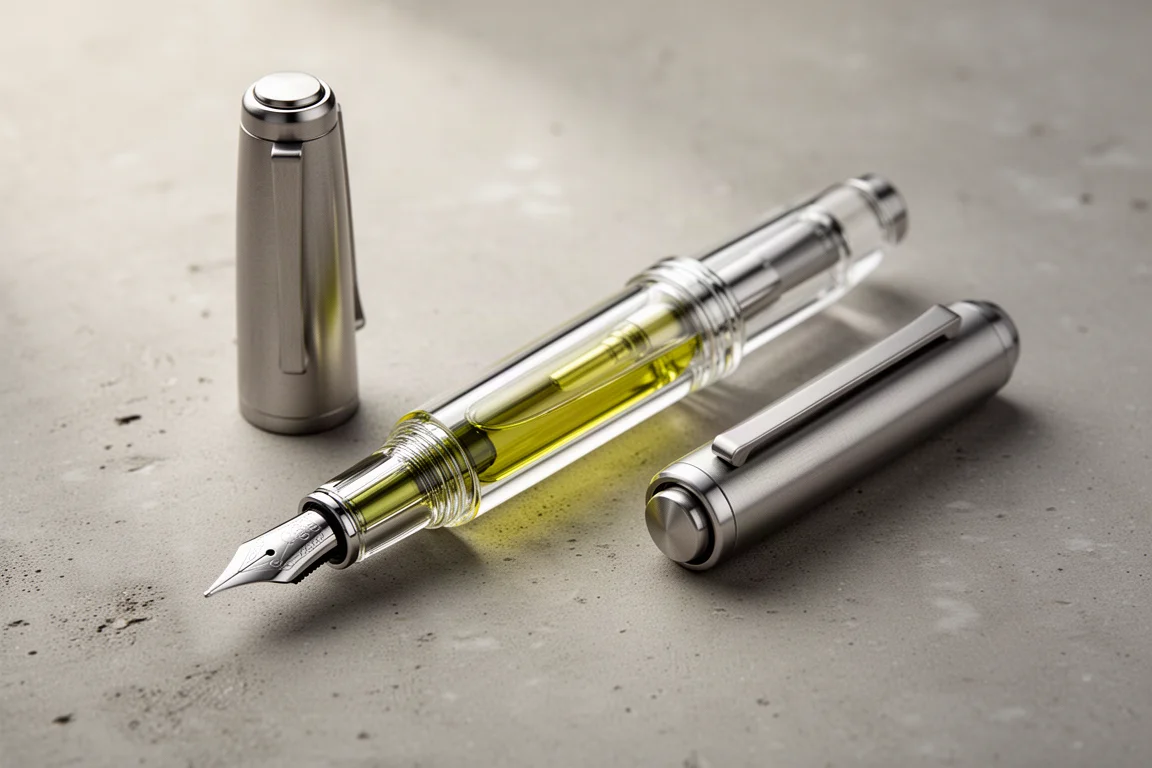
A piston-fill fountain pen made of clear acrylic and titanium, with a large ink capacity, an appealingly wet 1.1mm stub option, and acrylic polished like crystal.
Introduction
The Asvine P36 is a piston-fill fountain pen made of acrylic and titanium, and it feels more thoughtfully made than its price of around 60 Canadian dollars suggests. Clear demonstrators divide opinions, but this model executes the format with a truly impressive finish, a satisfying filling mechanism, and nib options, including a genuinely fun 1.1mm stub.
If you have ever admired the look of high-end piston-fill demonstrators but balked at their price, this pen deserves a closer look. Here is how it performs in daily use.
Design and Materials
The P36 pairs a crystal-clear acrylic barrel with titanium hardware: a shiny titanium finial on top, a springy brushed titanium clip, a titanium center band engraved with the brand and model name, and a titanium piston knob and grip section. This combination gives the pen good balance, with the metal adding welcome weight at both ends.
The acrylic itself is the star. Its level of polish is so high that every detail is visible through the barrel, and it truly looks like crystal. If you like demonstrators, this is one of the best-executed ones at any price, let alone this one.
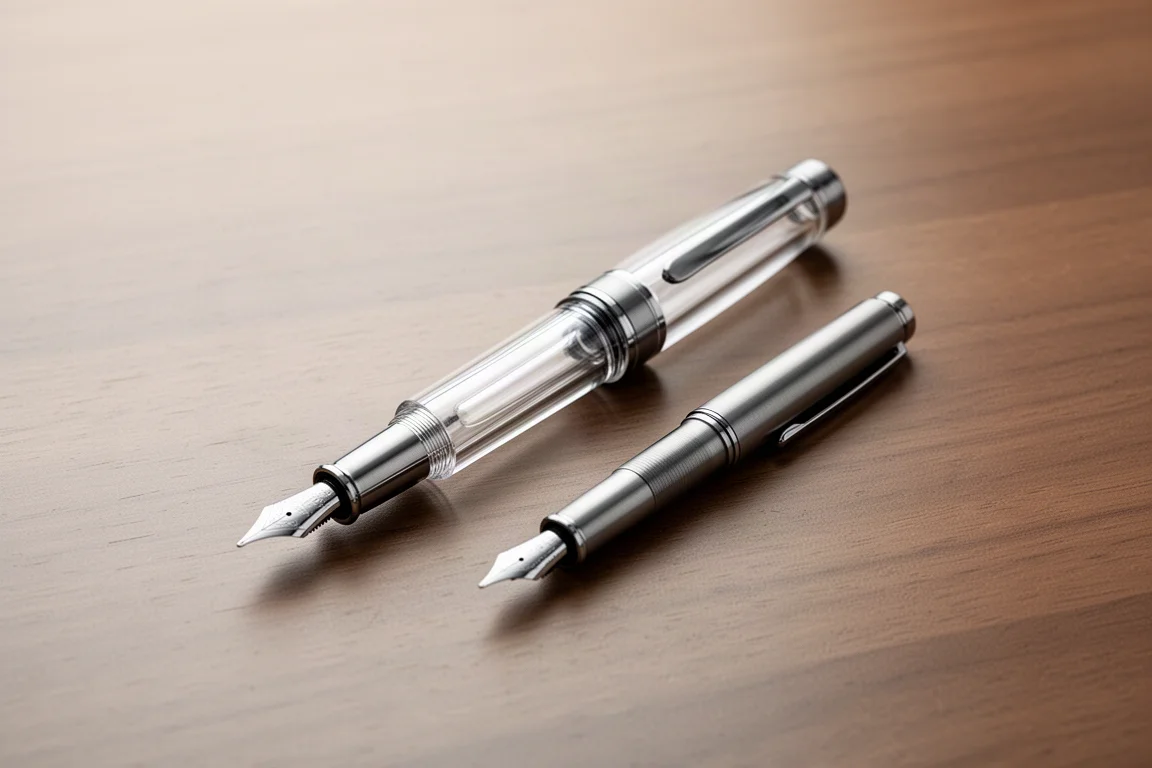
In terms of dimensions, it is not a large pen. It is a bit smaller and slimmer than a king-size Conid, and the hourglass-shaped grip section is very comfortable. The cap threads are slightly sharp if you press into them, but during normal writing they never caused discomfort. Posting is possible, but not deep — you then get a long, slightly top-heavy pen. Most people will prefer to write unposted.
Filling System and Ink Capacity
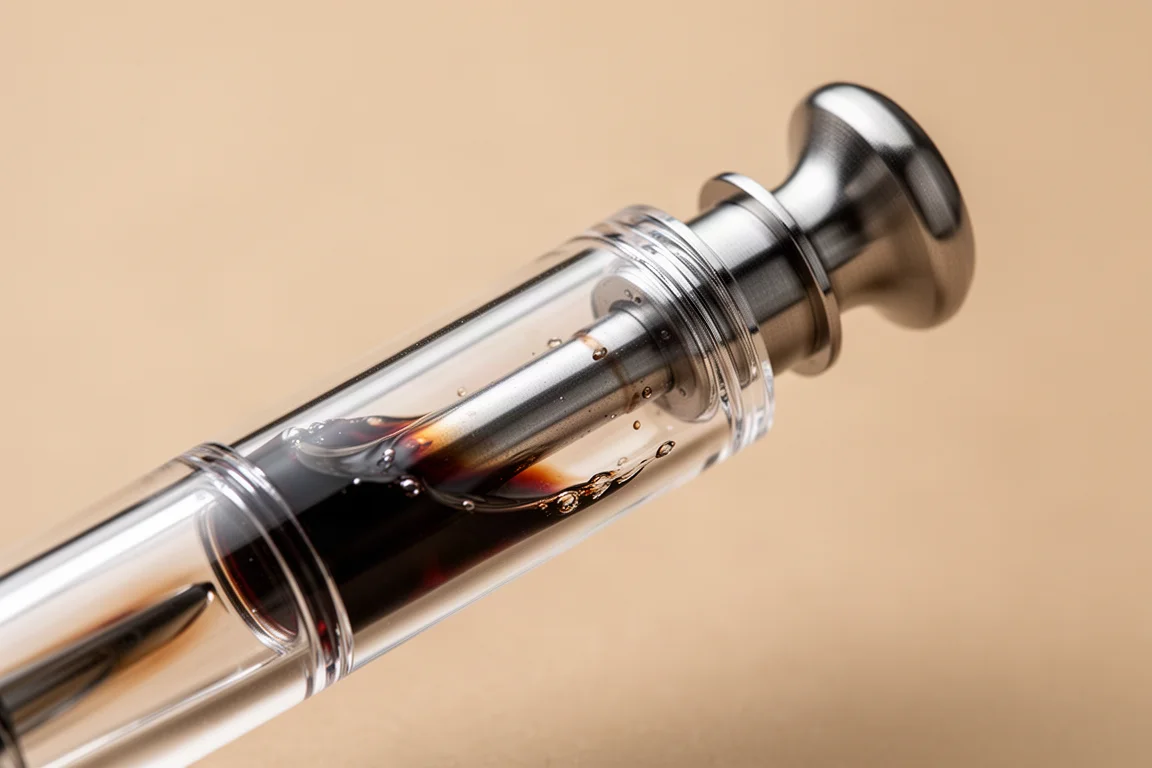
This is a true piston filler, not a Conid-type filling system, though the silhouette will look familiar to anyone who knows both pens. The resemblance is mostly visual; the mechanism is the simpler, well-proven kind. Turn the titanium knob one way and the piston drops down; turn it back while the nib is submerged in the bottle and you draw up ink.
In a marked sample vial, the capacity came out to about 1.5 to 1.6 milliliters, which is a significant step up from a typical converter with its roughly 0.9 ml. The piston action is smooth and easy to operate, and watching translucent ink fill the clear barrel is half the fun of owning such a demonstrator.
One small note: the cap has metal threads engaging with acrylic, which could theoretically wear out over time, but the cap feels solid and secure, and there is no sign of accidental loosening.
Writing Experience
The review unit came equipped with a 1.1mm stub — one of several nib options, alongside extra fine, fine, and medium. The size six steel nib has attractive ornaments and, notably, it is mechanically engraved, not laser engraved, which gives the markings a cleaner, more elegant look.
The nib glides beautifully across the paper. Broad stubs often write dry due to high ink consumption, but this one shows no such tendencies. It is a consistently wet writer with a well-inked feed, producing clear line width variation: wide downstrokes, narrow cross strokes — exactly as a stub should.
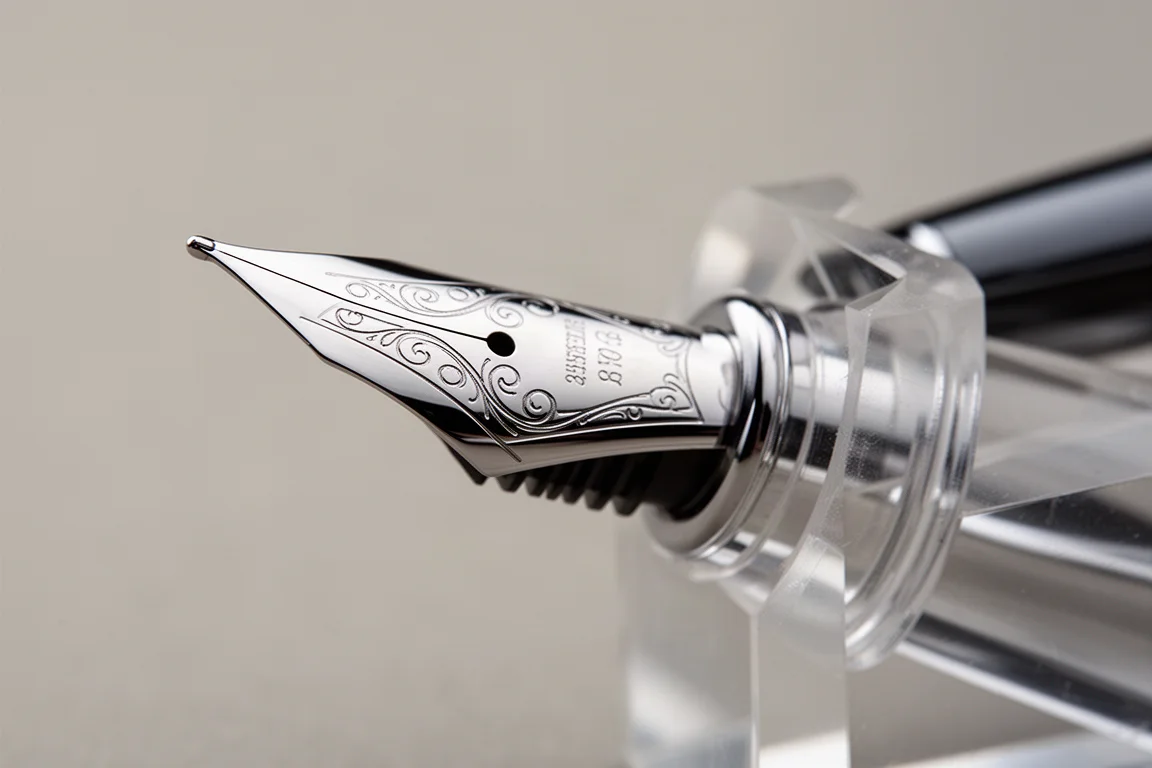
This variation means that a bit of casual calligraphy is possible even with a modest 1.1mm width. Fast writing requires a bit of attention, as every stub requires a consistent grip angle, and writing upside down is out of the question due to the lack of tipping material. But for normal and even moderately fast writing, it is pleasant and reliable.
Things to Consider Before Purchase
Clear pens divide opinions. Some find that demonstrators look cheap; others, like us, love watching the mechanism and ink move inside. If you belong to the second group, this pen will delight you. If you prefer opaque materials, look for something else.
The piston mechanism is simpler than more elaborate filling systems, with fewer parts that can fail, which is a practical advantage. Disassembling it for service is not something to do casually and may require a wrench, so keep that in mind if you like tinkering.
Buying Advice
The message is simple: if you want the look of a premium piston-fill demonstrator without the premium price, the P36 does a surprisingly good job. It is smaller and cheaper than the pens it resembles, and its piston filling system is easier to live with on a daily basis.
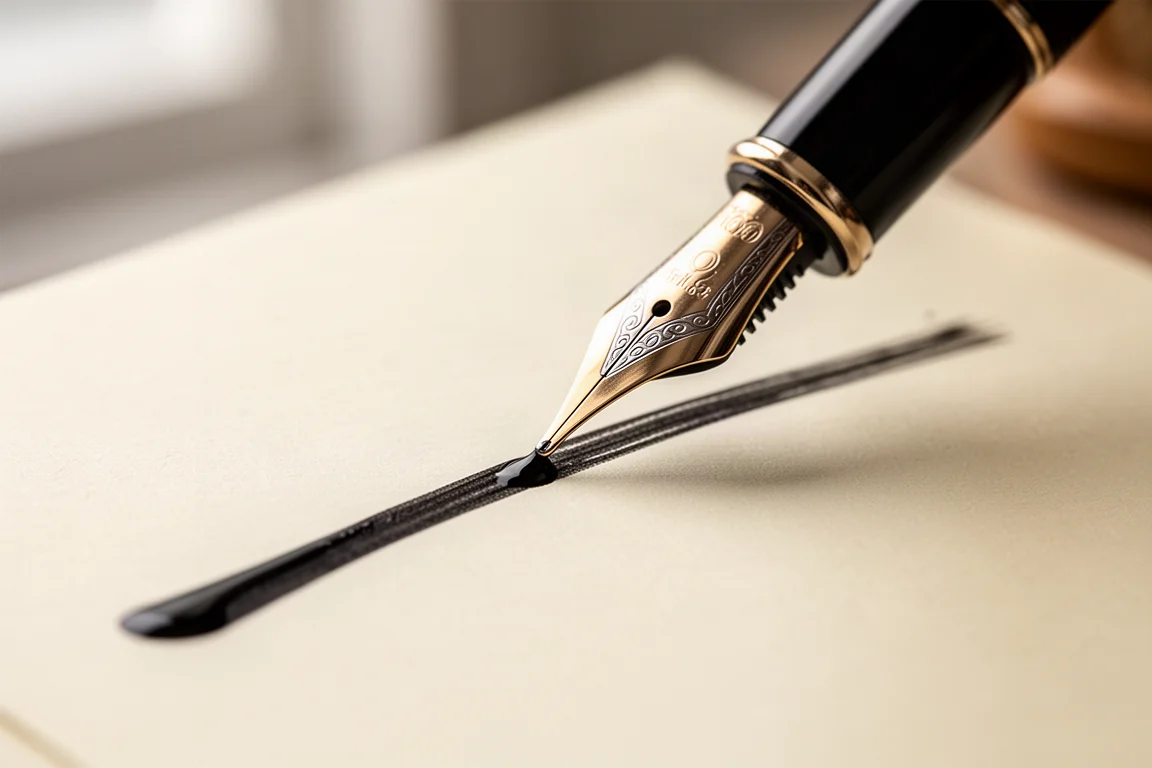
Choose your nib wisely. The extra fine and fine options work well for everyday note-taking, while the stub, where available, turns the pen into an expressive, wet writer that makes ordinary handwriting look better than it really is.
Conclusion
The Asvine P36 combines polished acrylic, titanium accents, a smooth piston filler with a capacity of about 1.5 ml, and a genuinely pleasant engraved nib. It is not without flaws, but at this price it offers an unusually complete package for anyone drawn to clear demonstrators.
Link do produktu
Zobacz więcej szczegółów: Asvine P36
Ten produkt jest wymieniony w tej recenzji. Przed zakupem sprawdź specyfikację, dostępne warianty i kompatybilność.
Zobacz więcej szczegółów: Asvine P36Więcej do przeczytania
Powiązane recenzje
Fountain Pens
5040 Titan Ultimum – recenzja: inżynierskie ultra pióro wieczne z Irlandii
Limitowane ultra pióro wieczne wykonane ze stali nierdzewnej i tytanu klasy piątej, z innowacyjnym systemem napełniania bulk-filler i dużą stalówką numer 8.
Fountain Pens
Recenzja 54T Titan Ultim: tytanowy flagowy fountain pen z pomysłowym systemem napełniania
Duży fountain pen z tytanu klasy 5, z systemem napełniania typu vacuum, stalówką numer 8 i industrialnym designem, który wynagradza ostrożne obchodzenie się.
Fountain Pens
Recenzja samonapełniającego się wiecznego pióra Abeat: napełnianie jednym naciśnięciem w budżetowej cenie
Wieczne pióro przezroczystym korpusem, unikalnym systemem samonapełniania, trójkątną sekcją w stylu Lamy i cienkim stalowym stalówką za około 25 dolarów.