Fountain Pens
Asvine P36 Review: A $45 Piston-Filler Demonstrator That Punches Above Its Price
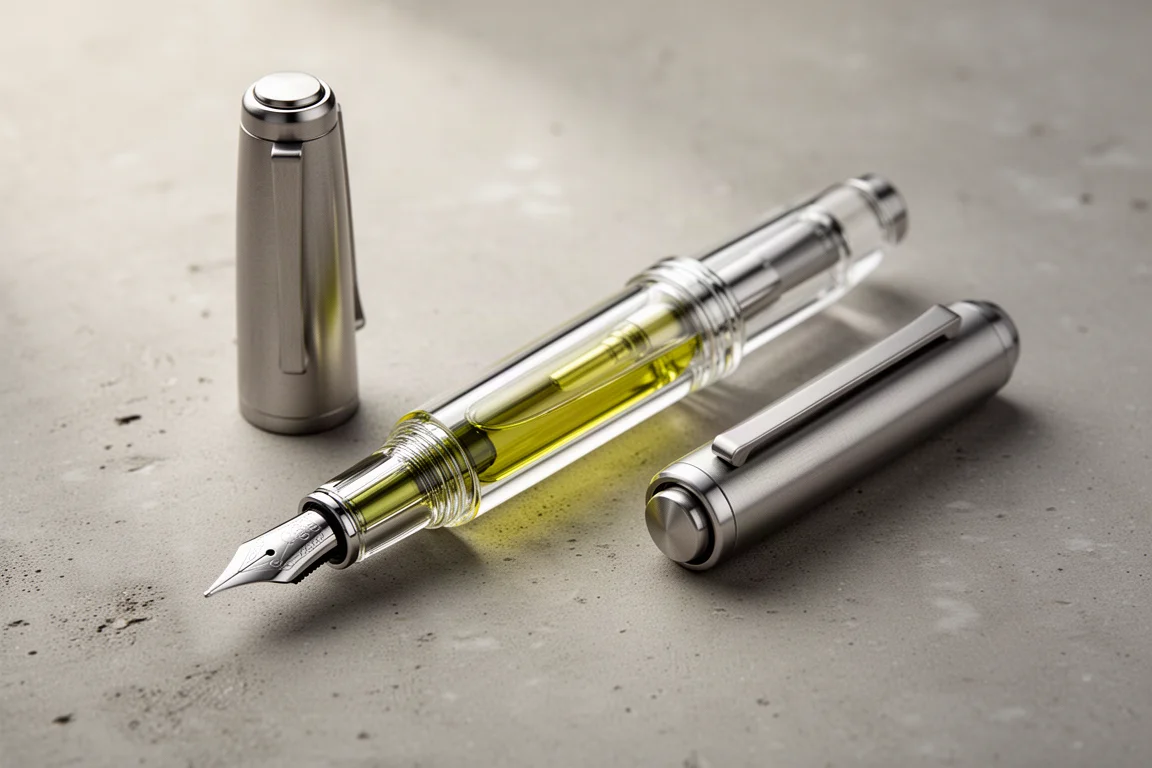
A transparent piston-filling fountain pen with titanium trim, a stainless steel number six nib, and a build quality that makes the budget demonstrator segment worth a second look.
Introduction
Inexpensive Chinese-made fountain pens have historically been a mixed corner of the hobby. Plenty of enthusiasts swear by them, and one of the pleasures of this hobby is that it can be enjoyed at virtually every price point, but for many experienced collectors the overall quality in this segment has not always delivered. That picture has changed noticeably over the last couple of years, and the Asvine P36 is a good example of why.
Asvine reached out with a couple of its recent releases, and the P36 is the first of the two under the spotlight here. It is a piston filler with transparent resin and titanium trim, and at $45 it raises an obvious question: how much pen do you actually get for the money?
Unboxing and First Impressions
The P36 arrives in a box with the company name on the outside. Inside is a translucent plastic case holding the pen nestled in foam, along with instructions that include a basic guide to using various fountain pen filling systems. It is simple packaging, but it does the job.
The pen itself is a transparent resin demonstrator with titanium trim and accents, and the combination genuinely looks sharp. The immediate comparison that comes to mind is the Conid Bulkfiller King Size, and the resemblance is hard to miss, particularly with the clip design. The Conid sells for close to $1,000 against the P36’s $45, so they are not really aimed at the same market, and there are enough subtle differences, including an entirely different filling system, that this feels like a pen inspired by another rather than a straight imitation.
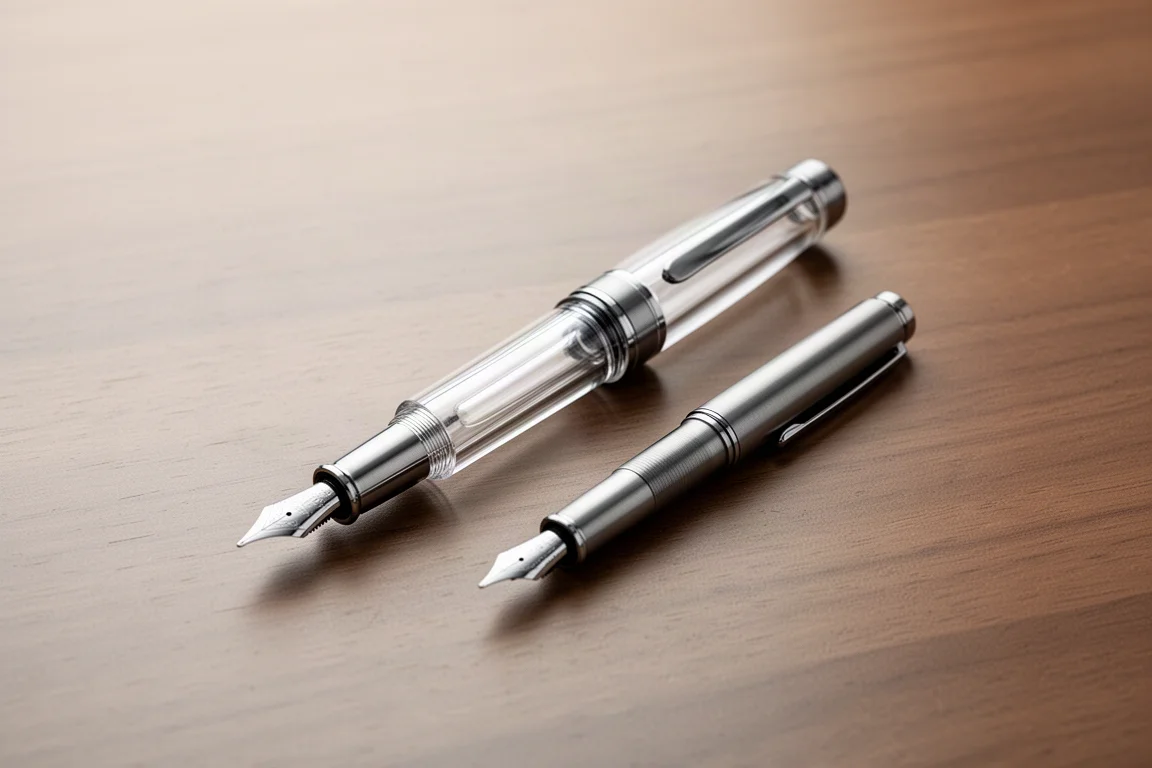
Asvine’s naming scheme is functional rather than inspired: pens prefixed with a P are piston fillers and those with a V are vacuum fillers. This being the P36, it is indeed a piston filler, and the mechanism runs fairly smoothly.
Design and Build Quality
The cap top is rounded, and the titanium trim has a matte finish with faint grooved tool marks that give it a slight texture rather than a mirror polish. The clip is a touch wide and on the stiffer side. A metal band at the end of the cap carries the company name on one side and the model number on the other.
One nitpick: the transparent cap lets you see the nib, but neither of the two thread entry points lands the nib directly facing up or down in relation to the clip. On an opaque cap this would not matter, but with a demonstrator the misalignment looks a little sloppy.
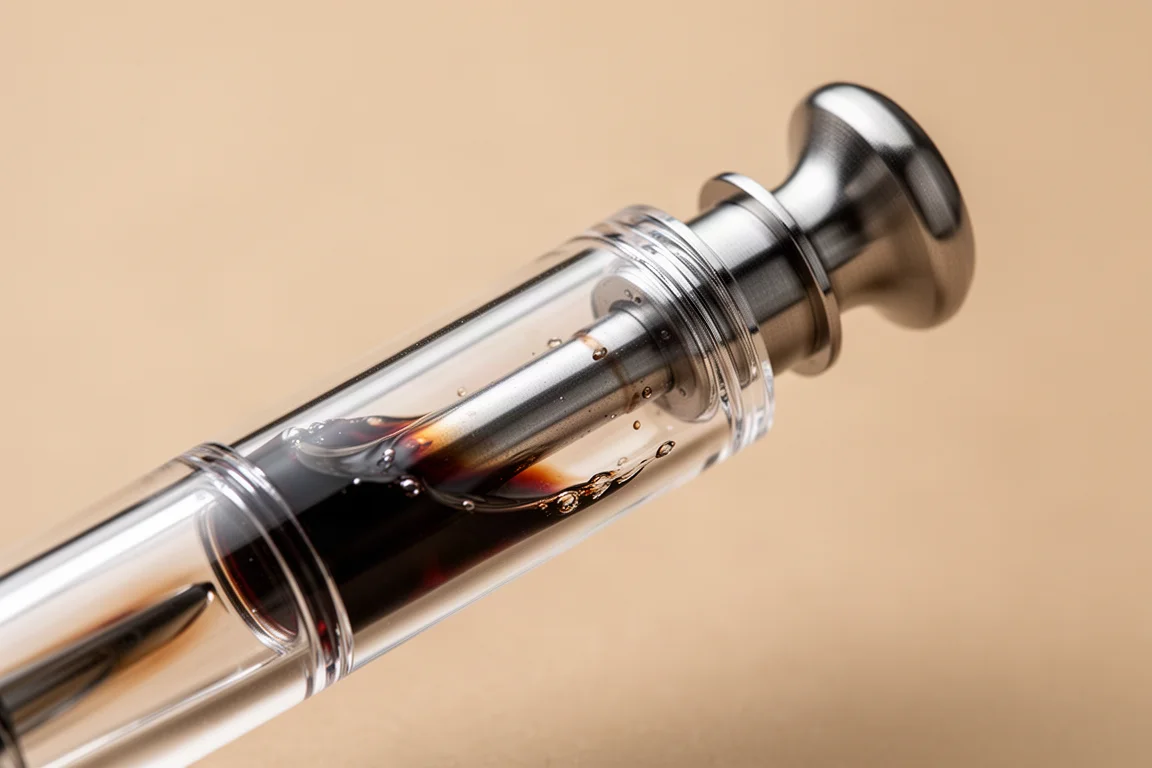
The rear portion of the cap creates an odd optical illusion where the section visible through the translucent resin almost looks like metal. There is a medium-sized step down from cap to barrel, and the barrel carries the slightest curve, angling up about half a millimeter before tapering to a rounded titanium piston knob. The large transparent ink chamber is one of the pen’s best features; this is a pen that would look right with just about any ink color, which opens up pairing possibilities considerably.
Nib and Writing Performance
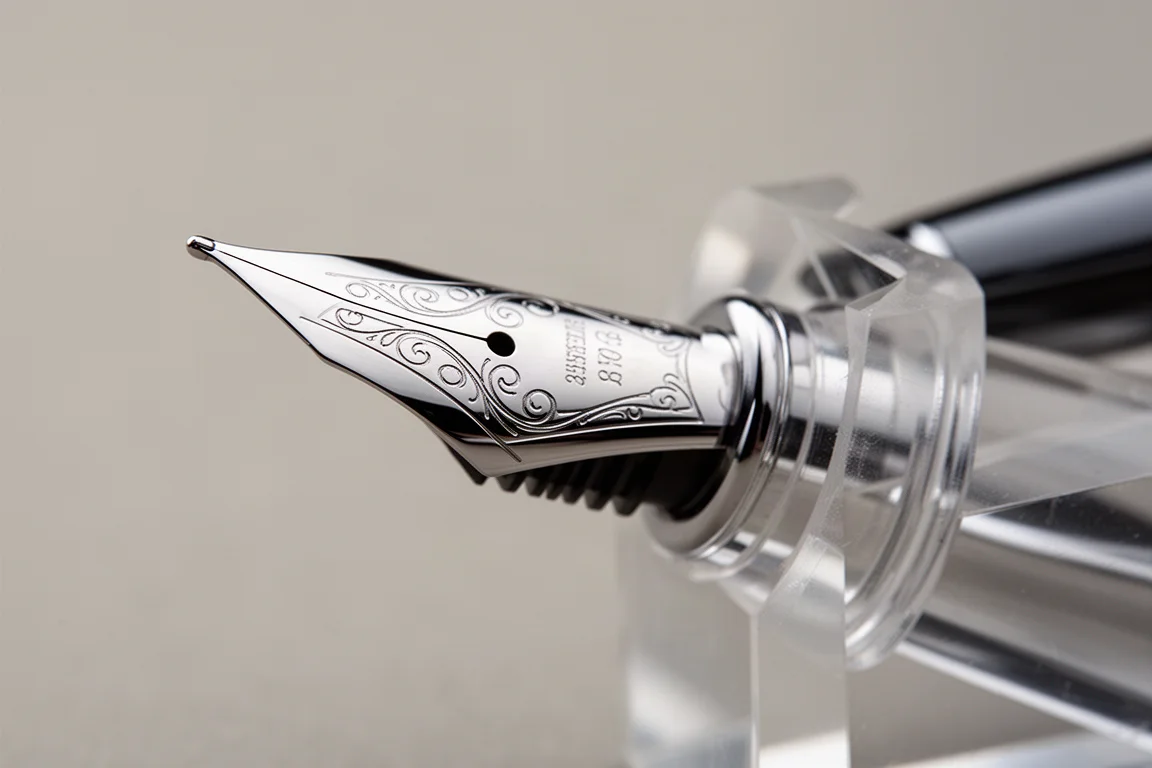
The cap twists off in just under two rotations to reveal a stainless steel number six nib, available in extra fine, fine, or medium, paired with a plastic feed. The section is metal and concave, and two design details help with grip: the concave shape itself, and the slight groove texture that keeps fingers from slipping on the otherwise smooth metal.
In use, the medium nib writes on the broad side of medium with decent ink flow. There is a little flexibility available when going from no pressure to more. Reverse writing is very smooth, and the feed keeps up well even during fast writing. It is a pleasant, capable nib that does nothing to embarrass the pen.
The pen technically posts, but it is not recommended: it does not post deeply, the fit is not secure, and it is metal-on-metal contact that risks scratching the piston knob over time. Fortunately the pen is long enough to use comfortably unposted.
Ink Pairing
This demonstrator flatters almost any ink, and a bright color shows the chamber off beautifully. For the sample, a vibrant violet from the Caran d’Ache-adjacent neon color space was used: an ink that leans a bit milky in tone but delivers a bold pop of color both in the barrel and on the page.
If you enjoy playing with ink colors, a large-capacity transparent piston filler like this is one of the most rewarding formats to own.
Size and Comparisons
Next to the Conid Bulkfiller King Size the P36 holds its own in overall presence, though the Conid in this comparison has flat ends while the Asvine has rounded ones. It also sits comfortably alongside other familiar pens, pairing well in scale with a Lamy Safari and a TWSBI VAC 700R, and coming in around the size of a Retro 51 Torpedo in the capped comparison.
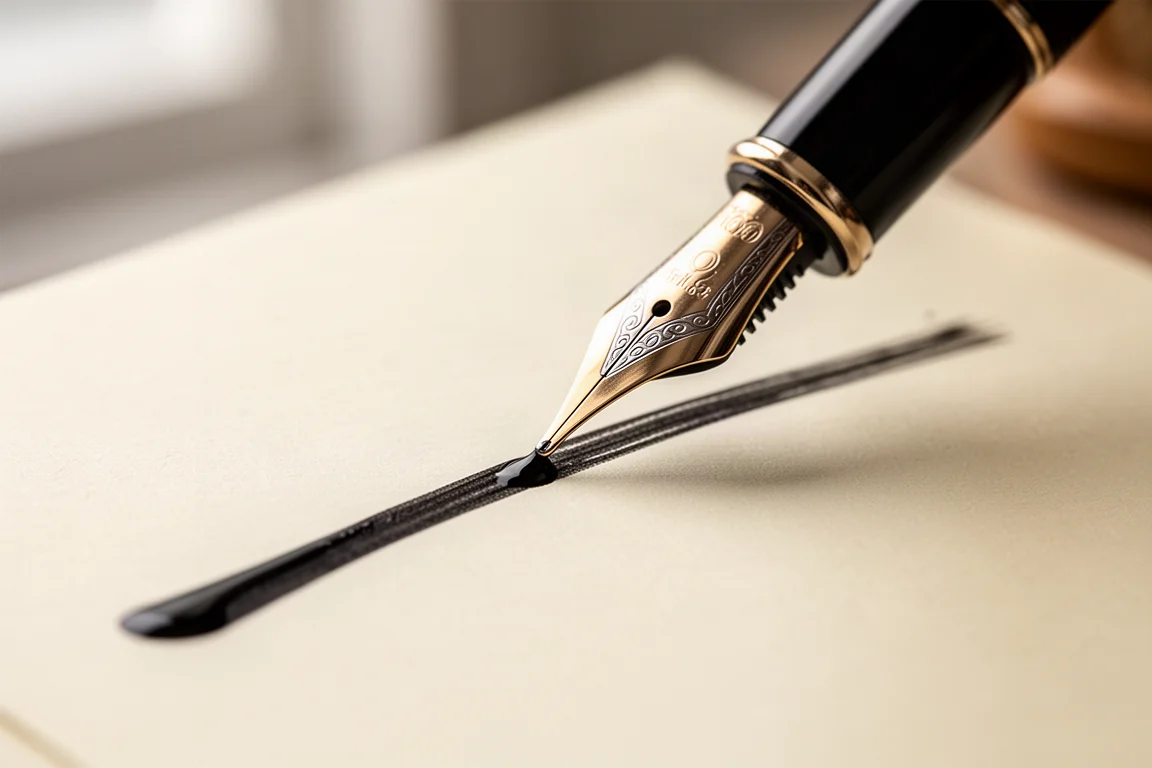
Uncapped, it is long enough for a comfortable grip without posting, which makes the weak posting mechanism a non-issue in practice.
Things to Consider Before Buying
The titanium trim and translucent resin look sharp, the build quality is genuinely strong for the price, and the piston mechanism is smooth. At $45, it will be hard to find another pen of higher quality, which makes the value proposition easy to defend.
The trade-offs are real but modest. The cap thread alignment niggle, the stiff wide clip, the dubious posting, and the close resemblance to a far more expensive pen are all worth knowing about up front. None of them ruin the package.
Buying Advice
Buy the P36 if you want a large-capacity piston-filling demonstrator that shows off your ink, writes reliably out of the box, and costs a fraction of what comparable build quality used to demand. It is mainly available directly from Asvine via Amazon at the $45 retail price. Skip it only if the Conid-inspired silhouette bothers you or if you insist on posting your pen.
Conclusion
The Asvine P36 is an interesting model for the price: well built, sharp looking, and pleasant to write with, with only a couple of nitpicky flaws. More importantly, it is evidence that quality in the affordable Chinese-made pen segment has improved significantly, and it makes browsing that corner of the hobby worthwhile again.
Product link
View more details for Asvine P36
This product is mentioned in the review. Check the specifications, options, and compatibility before buying.
View more details for Asvine P36Further reading
Related Reviews
Fountain Pens
Best Budget Fountain Pens Tested: 9 Pens, One Clear Winner
A hands-on comparison of nine affordable fountain pens for everyday writing, calligraphy, and sketching, with a clear standout for flexible nib fans.
Fountain Pens
Aurora Optima Review: An Italian Piston Filler That Punches Above Its Price
A 14k gold nib, ebonite feed, and a beautifully deep oraloid body make the Aurora Optima one of the most rewarding piston fillers around.
Fountain Pens
Cross Bailey Light Review: The Entry-Level Fountain Pen Worth Keeping at the Office
A plastic-bodied Cross with a metal clip, snap cap, and famously smooth extra fine steel nib. Around $15, available almost everywhere, and easy to recommend.