Polski · Camping Tarps
Aqua Quest Defender 20x13 Tarp Review: A Heavy-Duty Shelter Compared With the Safari
A close look at the Aqua Quest Defender 20x13 tarp, its 47 tie-out points and 20,000 mm rating, and how it compares with the lighter Safari 20x13.
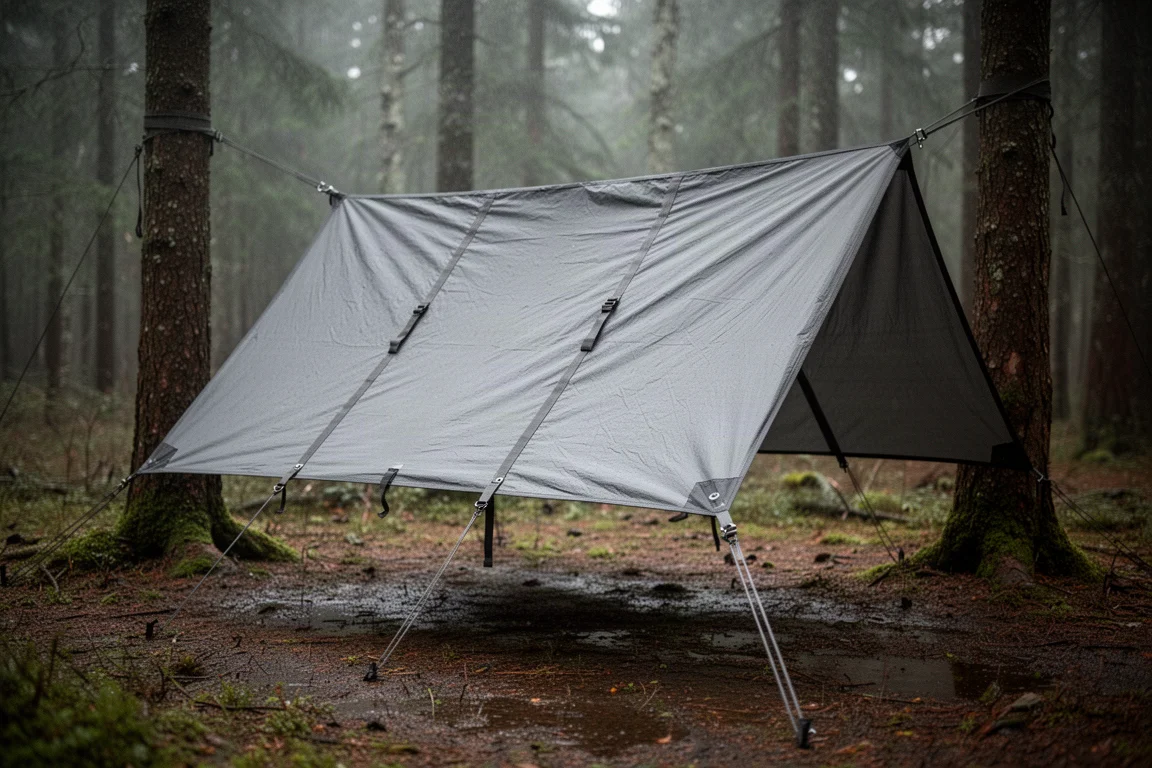
Introduction
Aqua Quest builds its tarps in clear strength tiers, and the 20 ft by 13 ft format sits at the top of the range. The Defender version of that size is the heavy-duty option: 9.2 lb of TPU-coated 70 denier ripstop nylon, 47 reinforced tie-out points, and a 20,000 mm hydrostatic head rating. The Safari version of the same size takes a lighter approach at 4.5 lb, 25 tie-out points, and a 5,000 mm rating.
This is an early assessment of the Defender based on its construction and the brand’s track record rather than long-term field results, and it sets that tarp directly against the Safari so you can judge which one matches the way you actually camp.
Aqua Quest Defender 20x13 Tarp: Size, Weight, and Materials
The Defender measures 20 ft by 13 ft, which works out to roughly 240 square feet of coverage. Pitched properly, that is enough room for eight people sleeping on cots underneath, with space to spare. The fabric is 70 denier ripstop nylon with a TPU coating, and the hydrostatic head rating of 20,000 mm is the highest figure in the range.
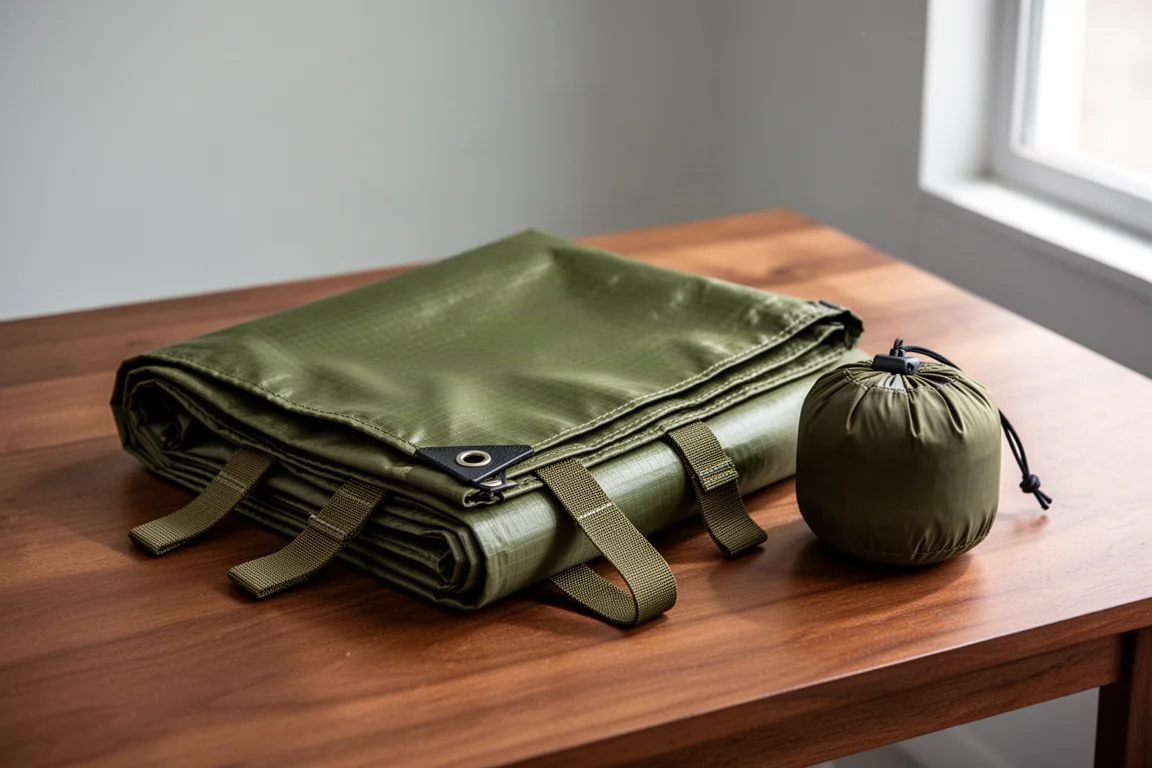
Reinforcement is the other headline. There are 47 tie-out points in total, running around the entire perimeter and across the body of the tarp in both directions. A reinforced strip runs down the centre, and three more reinforced strips cross the body. The whole package weighs 9.2 lb and packs into a storage bag measuring 16 in by 9 in by 5 in.
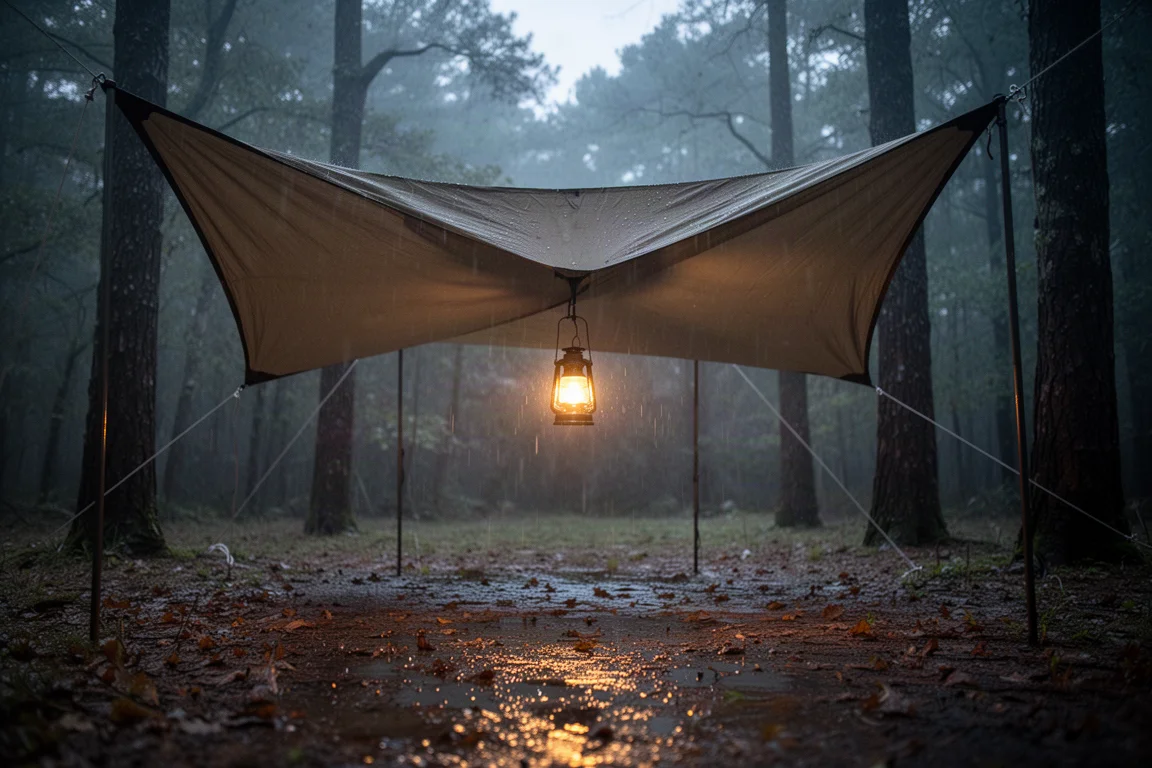
The Defender is sold in several sizes and shapes, including 10x7, 10x10, 13x10, 15x15 and the 20x13 version covered here, in both rectangular and square formats. Colour options include stealth gray, forest green, olive drab and woodland camo, among others. The 20x13 is priced at around $230.
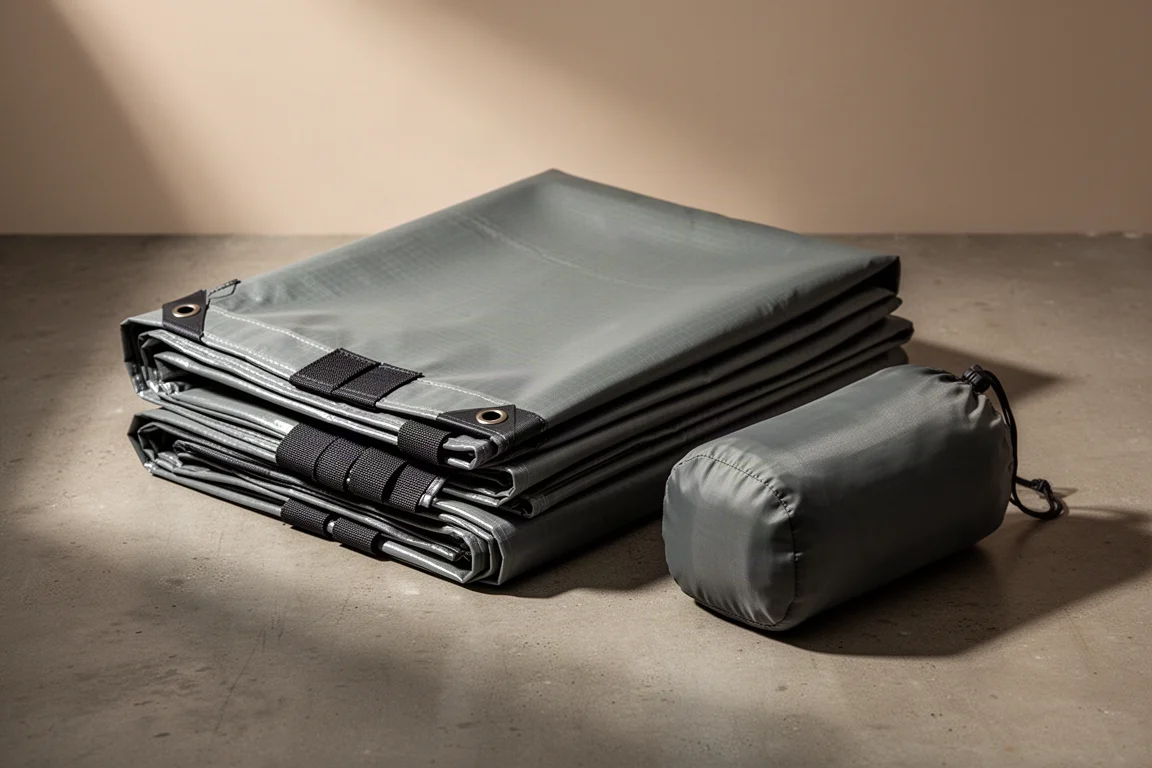
Build Quality, Setup, and Handling
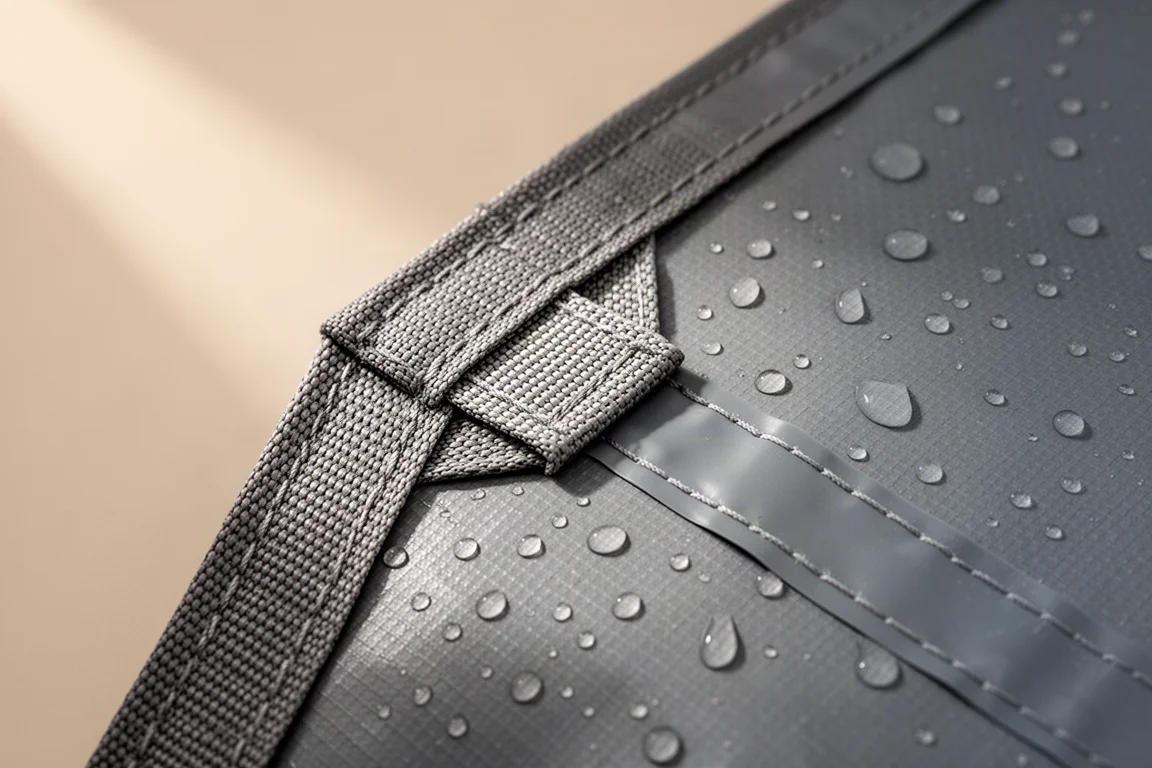
Construction quality on the Defender looks strong. The stitching is clean with no loose threads, and the seam tape is evenly applied across the panels. The coating feels noticeably thicker than on the lighter Safari, and there is considerably more webbing throughout the body and around the edges.
That extra material has a practical cost. Because the tarp is both large and heavy, pitching it is a chore rather than a quick task, and drying it out afterwards is a job in itself. A wet 20 ft by 13 ft tarp needs somewhere substantial to spread out, so a large yard or a big garage makes ownership far easier. If you do not have that space, plan for a slow drying step every time the tarp gets soaked.
Aqua Quest Safari 20x13 Tarp: The Lighter Option
The Safari takes the same 20 ft by 13 ft footprint and strips weight out of it. At 4.5 lb it is roughly half the weight of the Defender, and it carries 25 tie-out points and a 5,000 mm hydrostatic head rating. In the Aqua Quest line it sits as a hybrid: heavier and more waterproof than the entry-level Guide tarps, but lighter and less extreme than the Defender.
That balance is what makes it a practical backpacking shelter as well as an overlanding one. It is still a very large tarp with a lot of coverage, and it handles heavy rain, wind and snowstorms without trouble, but it stays light enough to carry on foot for trips where the Defender would be unreasonable.
For most campers, the Safari covers the same conditions at half the carry weight, which is why it remains the more sensible default for general trips.
Defender vs Safari: How the Two Tarps Compare
The differences are easy to summarise. The Defender doubles the weight at 9.2 lb versus 4.5 lb, nearly doubles the tie-out points at 47 versus 25, and raises the hydrostatic head rating from 5,000 mm to 20,000 mm. The Safari is the tarp you can still carry on your back; the Defender is the tarp you bring when a vehicle is doing the carrying.
Aqua Quest’s tier structure explains the gap. The Guide line is the lightest and least waterproof, the Safari line is the hybrid middle, and the Defender line is built for the most extreme conditions. Even the entry-level Guide tarps are described as very strong in their own right, having held up in 35 mph winds, thunderstorms and sideways rain. The Defender is a step or more above both.
Where the Defender Earns Its Place
Overlanding is where this tarp makes the most sense. A 20 ft by 13 ft sheet can be run from one side of a vehicle to the other, or from front to back, and pitched in a wide range of configurations depending on terrain and weather. The result is a dry, shaded living area beside the truck rather than a cramped shelter.
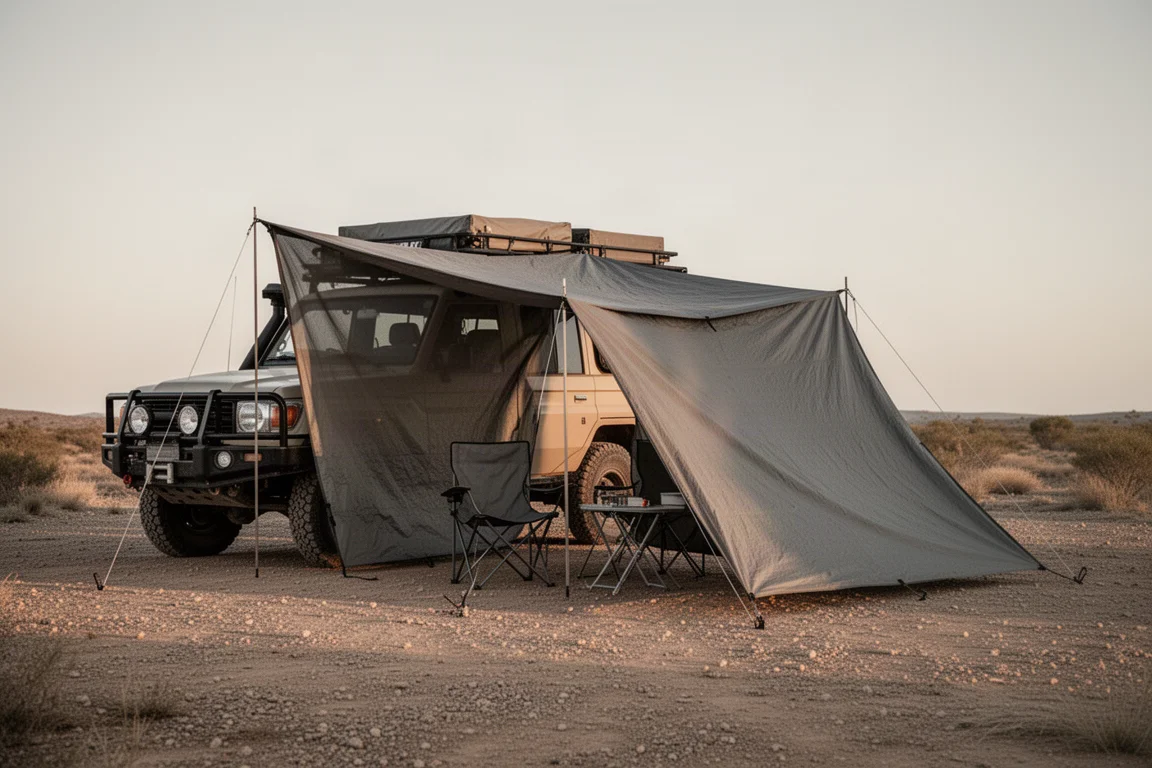
Group use is the other obvious fit. With room for eight people on cots, the Defender works as a communal shelter for guided trips, base camps and larger family gatherings where everyone needs to sit out a storm together. In that role the weight matters far less than the coverage, and the extra tie-out points give you more ways to pitch around obstacles.
Limitations to Weigh Before Buying
The main argument against the Defender is simple: it is heavy, and it is expensive. At 9.2 lb it is not a realistic backpacking shelter for most people, and $230 is a serious outlay for a tarp. Setup takes real effort, and drying it after a wet trip demands space that many households simply do not have.
There is also a supply-side point in its favour. Tarps at this size are genuinely hard to find, and the ones that do exist are often made from thin, weak polyester. Aqua Quest uses heavier coated fabrics instead, and every tarp in the range carries a lifetime warranty, which softens the price somewhat.
Buying Advice
Choose the Defender 20x13 if you are sheltering from a vehicle, running a base camp or guiding groups, and you want the most waterproof, most heavily reinforced option available in this size. The 47 tie-out points give you far more pitching options, and the 20,000 mm rating leaves plenty of margin in sustained rain.
Choose the Safari 20x13 if you want the same footprint at half the weight. It remains a very capable tarp in bad weather, and for average camping and family trips it is the more practical purchase.
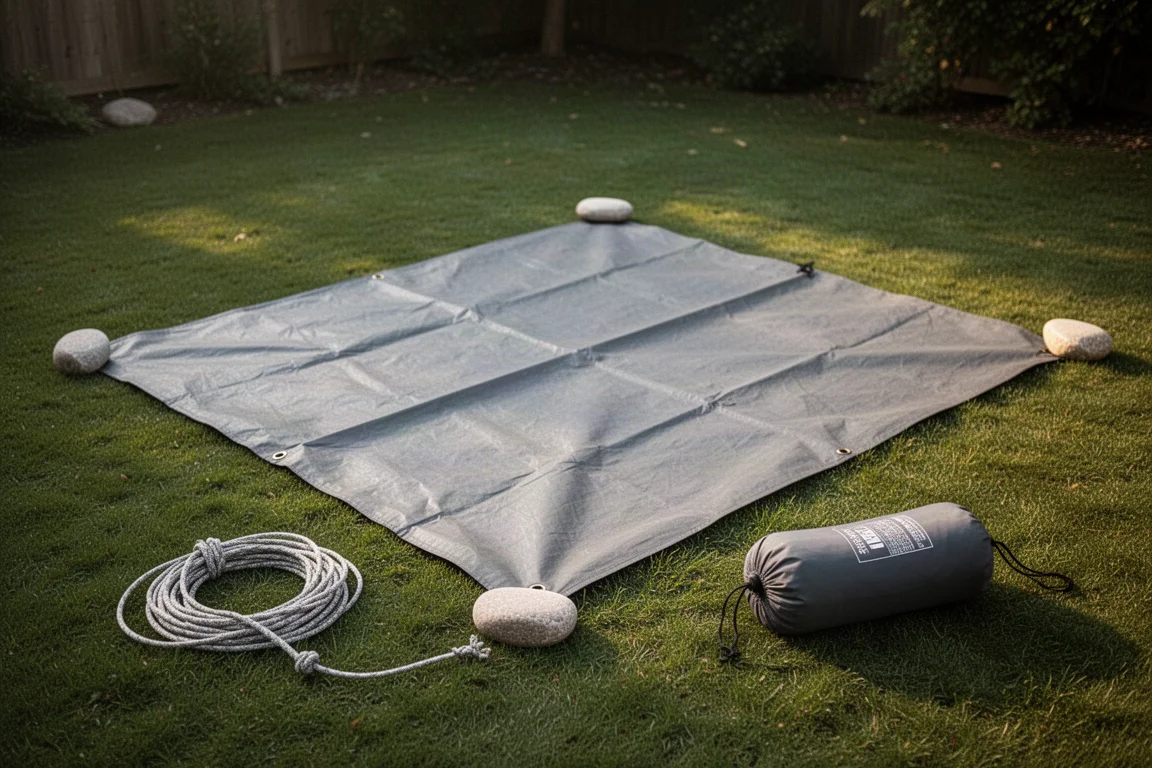
Whichever you pick, the practical questions are the same: how you will carry it, where you will dry it, and how much coverage you genuinely need. Answer those honestly and the choice becomes straightforward.
Conclusion
The Defender 20x13 is the most heavily built tarp in Aqua Quest’s 20 ft by 13 ft format, with nearly double the tie-out points and four times the hydrostatic head rating of the Safari, at twice the weight. It suits overlanding and group shelter work where coverage and weather resistance matter more than pack weight. The Safari remains the better all-round choice for anyone who has to carry their shelter. Both come with the brand’s lifetime warranty.
Więcej do przeczytania
Powiązane recenzje
Camping Tarps
Aqua Quest Defender vs Safari 20x13: Która duża plandeka pasuje do Twojego setupu?
Porównanie dwóch plandek Aqua Quest o wymiarach 20 ft na 13 ft: Defender o wadze 9,2 lb i wodoodporności 20 000 mm oraz Safari o wadze 4,5 lb i wodoodporności 5 000 mm, a także rozmiary, montaż i szczegóły gwarancji warte poznania.
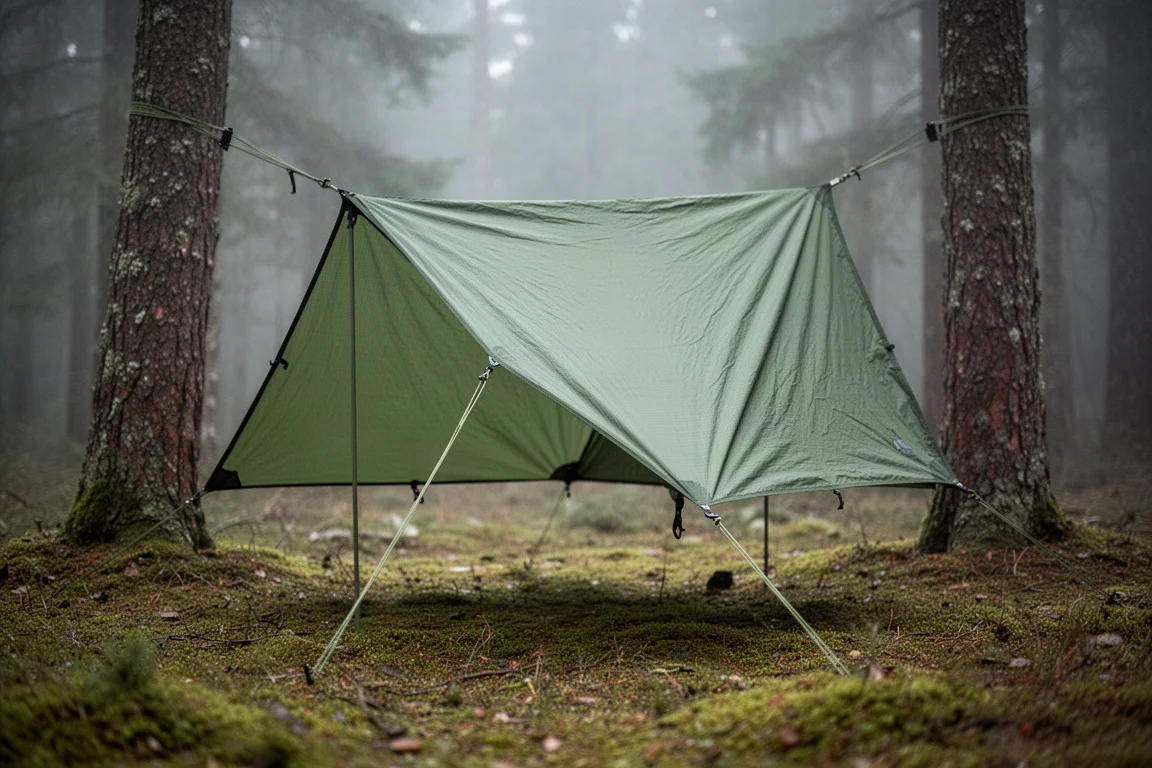
Camping Tarps
Aqua Quest Guide Tarp 10x10 Recenzja: Lekka, mocna i gotowa na sztorm
Lekka plandeka 10 x 10 z nylonu ripstop ze spawanymi szwami, 17 punktami mocowania i hydrostatyczną odpornością na wodę 5 000 mm, sprawdzona w ciągu roku trudnych warunków pogodowych.
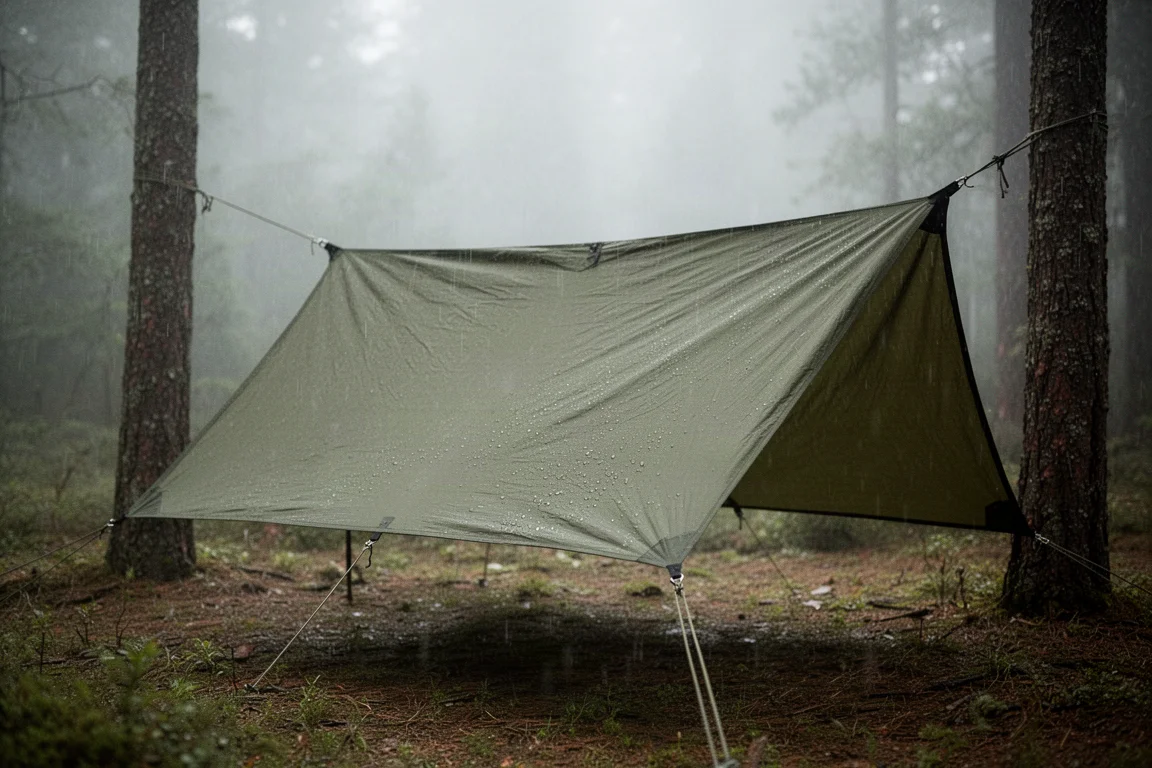
Camping Tarps
Aqua Quest Safari Hybrid 20x13 Tarp Review: Two Years Under Real Storms
A long-term look at the Aqua Quest Safari Hybrid 20 x 13 tarp, covering build quality, storm performance, real-world setup, and the size trade-offs to weigh before buying.