日本語 · Kitchen Knives
Yu Kurosaki Senko Desert Ironwood vs Hatsukoro Shira Sagi Yanagiba: two flagship Japanese knife lines side by side
A closer look at two impressive Japanese knife lines: the refined Yu Kurosaki Senko Desert Ironwood series and the high-value Hatsukoro Shira Sagi Yanagiba range.
Introduction
There are two Japanese knife lines that are particularly memorable right now for completely different reasons. They are the Yu Kurosaki Senko Desert Ironwood series, a stainless steel lineup with a polished finish and captivating handles, and the Hatsukoro Shira Sagi Yanagiba range, a new release specializing in slicing work. Both share excellent build quality and finish, but they are suited to very different users. Below is a comparison of the two.
Yu Kurosaki Senko Desert Ironwood Line
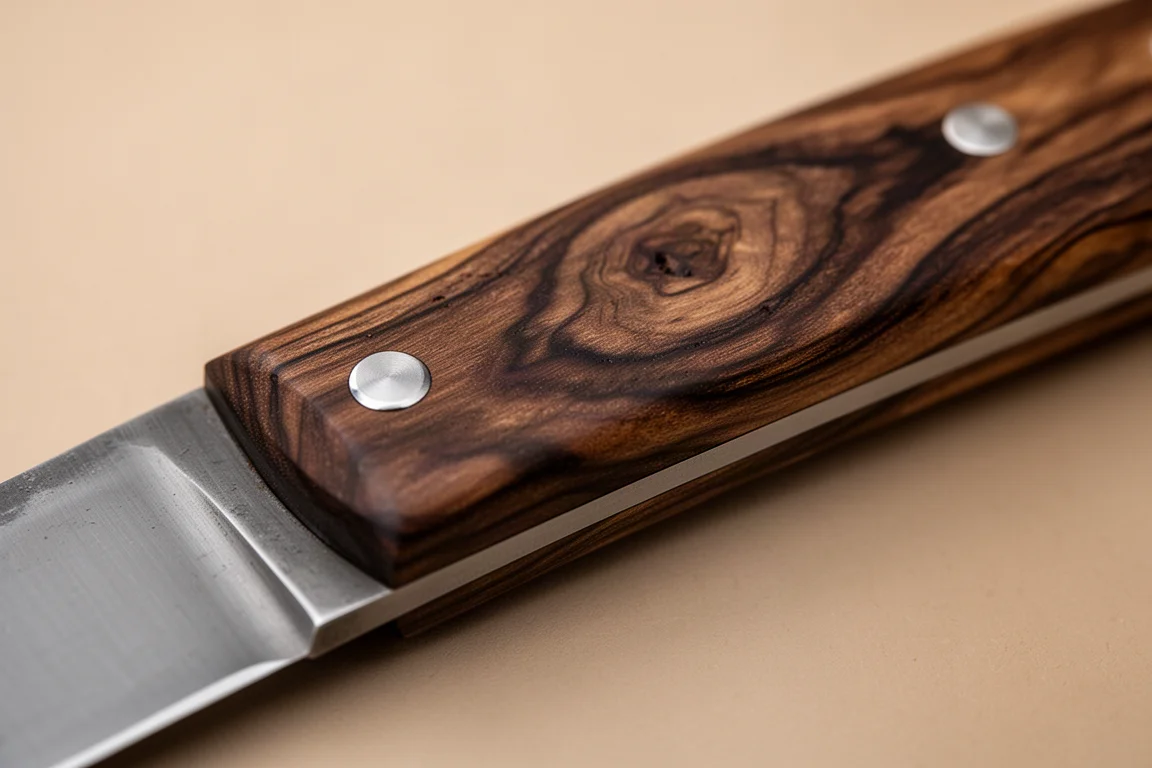
The Senko Desert Ironwood knives have been on sale in stores before, but this latest model feels noticeably better in the hand. The handles, which used to be a bit thin, now have more volume and fit comfortably in the hand. The grain of the ironwood is truly striking, a texture that rewards careful observation.
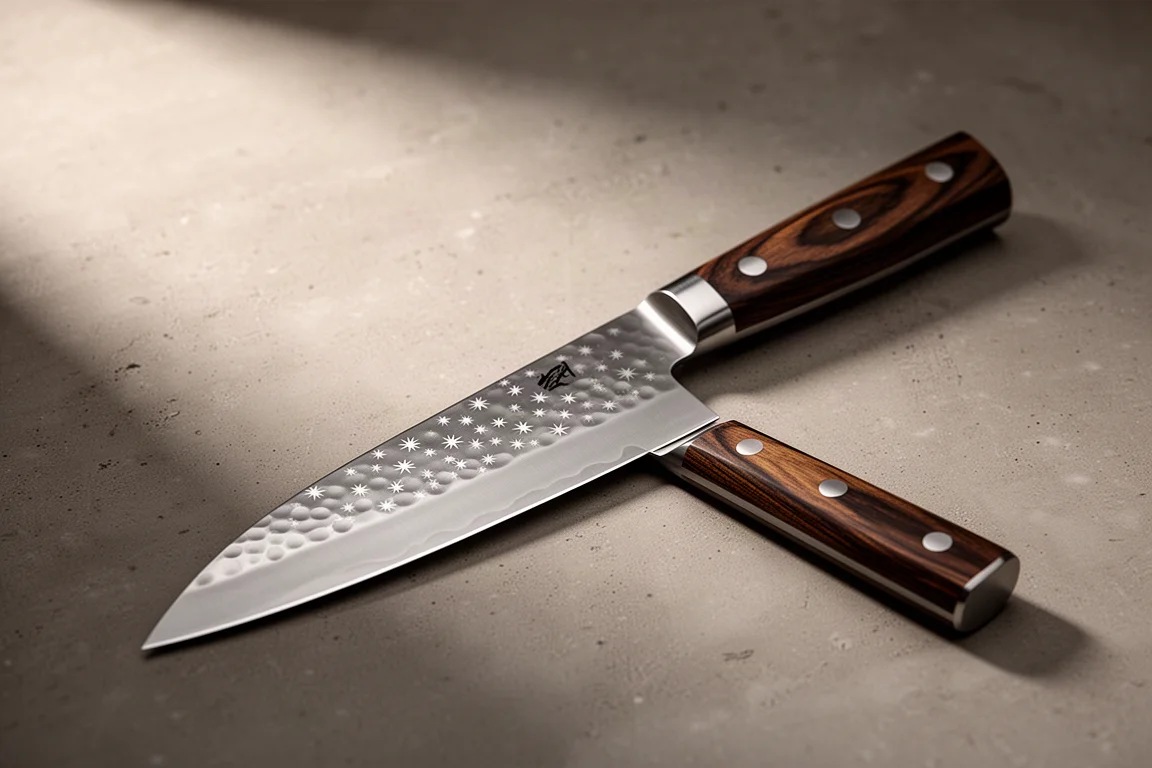
The available sizes are a 130mm petty, a 165mm Santoku (also listed as Bunka), 180mm and 210mm Gyuto, and a 270mm Sujihiki. All sizes come standard with a felt-lined plastic blade guard, with the only exception being the 270mm Sujihiki, which does not include one.
Blade Steel and Finish
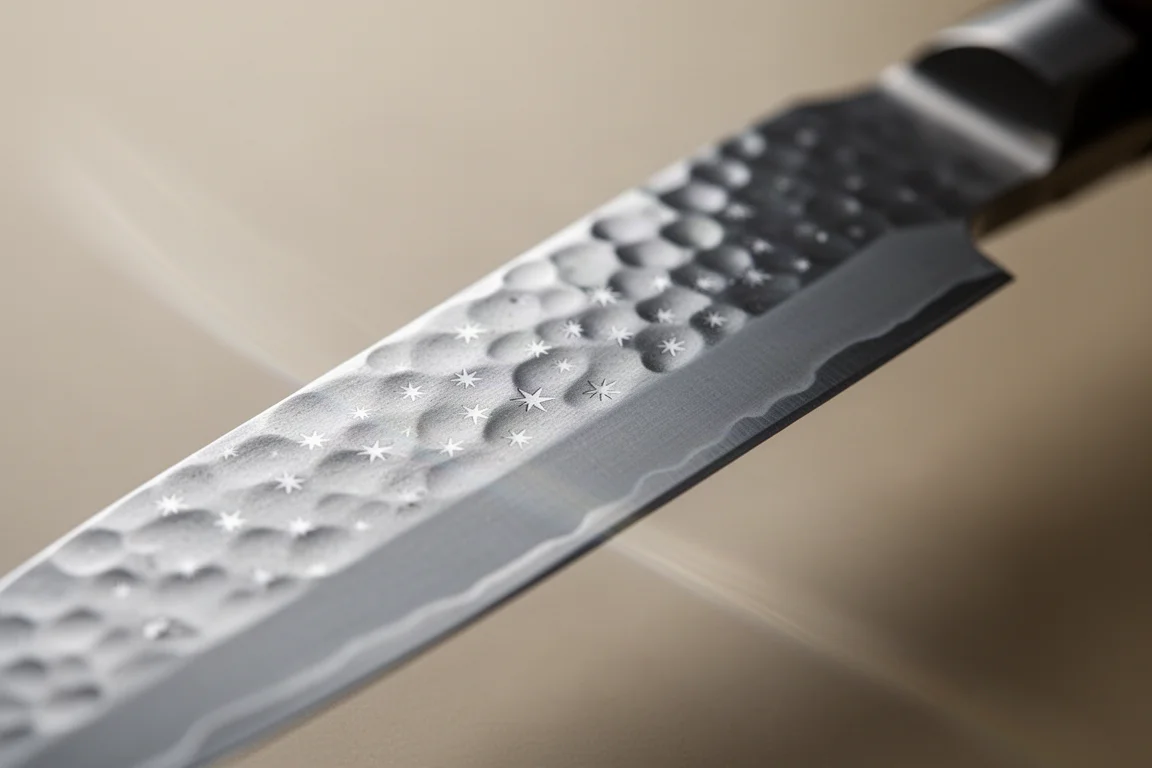
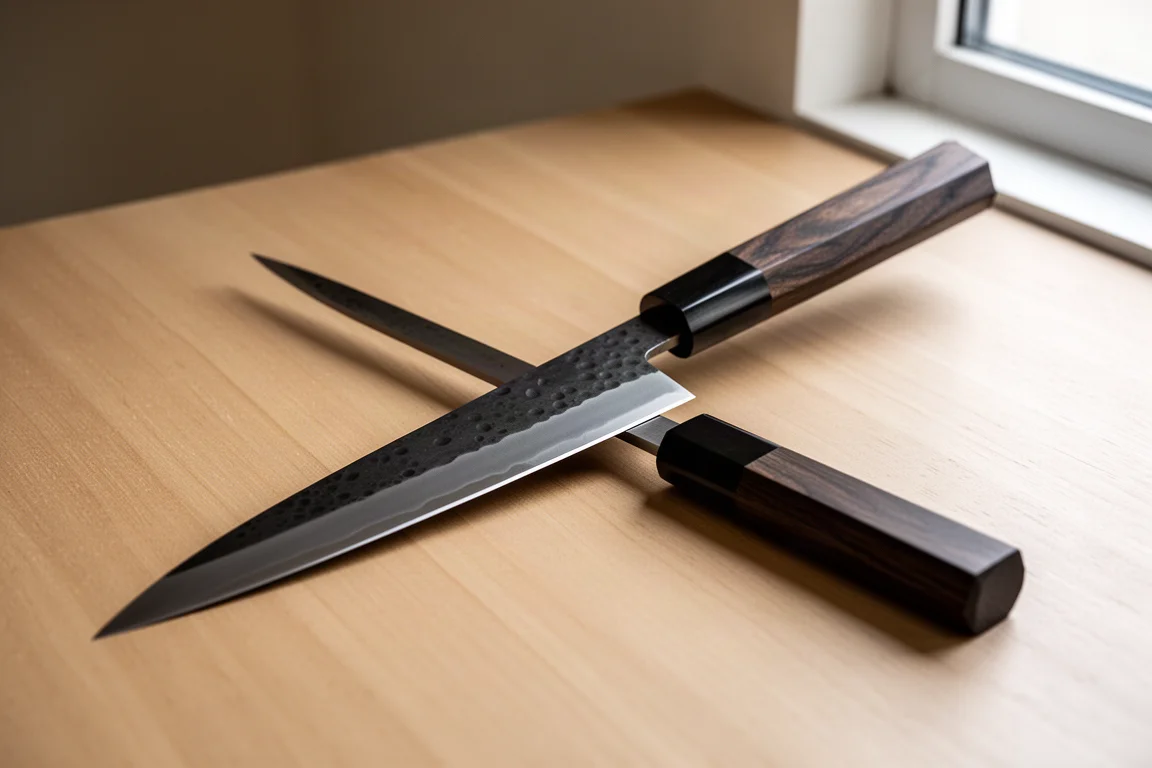
The Senko series uses R2 (also known as SG2) stainless steel. This steel is known for its excellent edge retention and ease of sharpening, especially on knives that are thin behind the edge, like this one. The blade features the series’ signature Tsuchime (hammer mark) pattern, a hammered finish resembling scattered stars.
The build quality and finish are the aspects where Kurosaki knives reliably earn their reputation. The Machi (choil) and spine are meticulously polished, the junction where the wooden handle meets the blade spine is clean, and there are no gaps, bumps, or uneven spots anywhere.
There is one honest point to note: these knives are somewhat delicate. If this is your first Japanese knife, this line is probably not the best choice. However, if you have been considering a Yu Kurosaki knife for a while, these are easy to recommend.
Hatsukoro Shira Sagi Yanagiba Line
The Shira Sagi series by Hatsukoro is a brand-new addition with a Kuruchi finish and Tsuchime, forged from Aogami No.2 steel with soft iron cladding. The forging is done by Tamura Toru and the sharpening by Miojin Tatsuo. This duo is highly renowned in Japan and frequently collaborates, and their consistent craftsmanship is evident in this series.
The blade work is impressive. The blades are perfectly straight, the bevels are beautifully finished, the Shinogi line runs consistently along each knife, and the Ura (the back side of a single-bevel blade) is also finished beautifully. Only a minor, barely noticeable low spot was found on one of the 330mm models, and it is nothing to worry about.
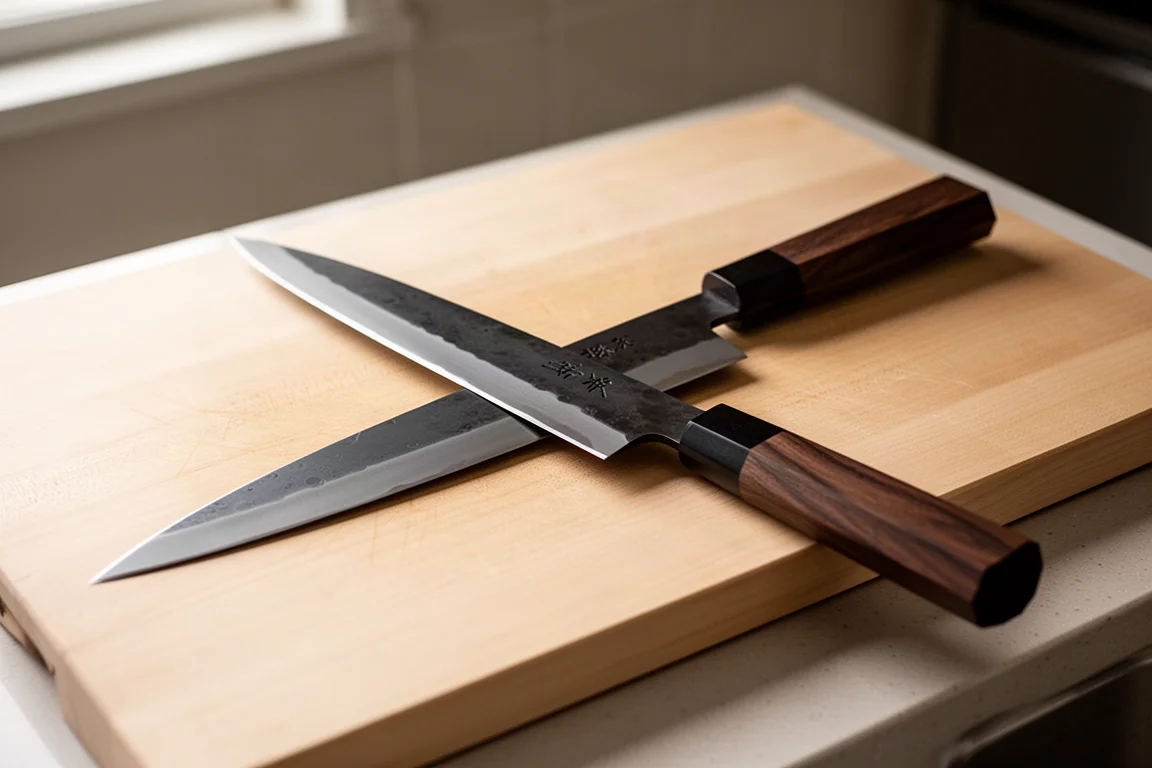
There is also a wide range of lengths and tip shapes. There are three classic styles of 270mm Yanagiba, a Kiri-tsuke style Yanagiba, a Sakimaru style Yanagiba, followed by a 300mm Yanagiba, and finally a 330mm Kiri-tsuke style Yanagiba, which has a truly sword-like presence. The handle is an octagonal Wenge with a water buffalo horn ferrule, finished without any bumps or gaps, and the tang and handle fit together beautifully.
Who is a Yanagiba for?
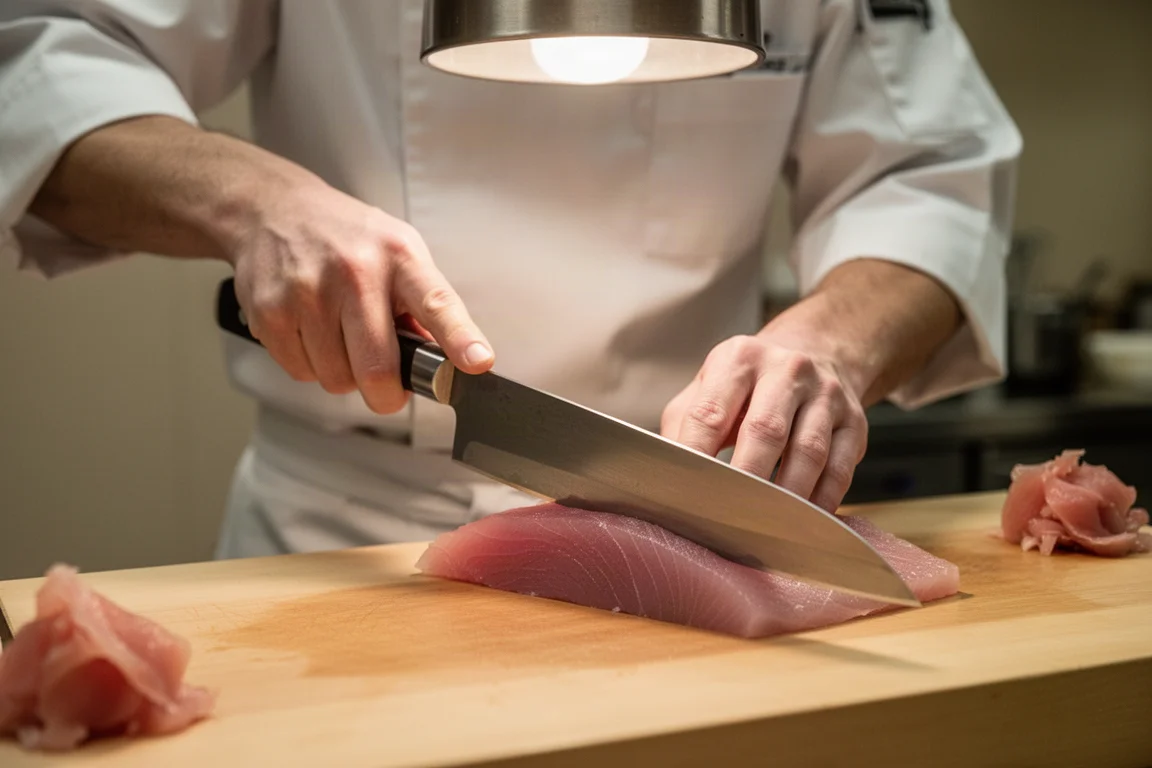
The Yanagiba is primarily a slicing knife, best known for its use in preparing sashimi in Japanese cuisine. However, it is a more versatile shape than many beginners imagine. One trained sushi chef reported that he was taught to use a Yanagiba for everything, from peeling and julienning daikon radish to slicing meat and fish.
That being said, the shape takes some getting used to, and these knives tend to steer slightly while cutting. Also, since all of these are right-handed (Migi-ba) single-bevel blades, left-handed users will need to look elsewhere. For those already accustomed to handling a Yanagiba, this series offers exceptional value for the money in its class. The price is not cheap, but the value is real for a hand-forged single-bevel knife.
Which line should you choose?
The deciding factor is your cooking style. If you want a beautiful, high-performance everyday knife for general cooking, and you already have some experience with Japanese knives, the Senko Desert Ironwood series is the easier and more versatile choice. On the other hand, if you mainly want to slice raw seafood, or if you are looking for a single-bevel knife with reliable craftsmanship, the Shira Sagi Yanagiba series offers exceptional quality for its class. For those new to Japanese knives, it is probably better to start with another line for either choice, as both require careful handling.
Summary
Both series are worthy of their reputation. The Yu Kurosaki Senko Desert Ironwood knives combine outstanding build quality and finish, newly redesigned comfortable handles, and excellent R2 steel. Meanwhile, the Hatsukoro Shira Sagi Yanagiba series offers hand-forged single-bevel craftsmanship at a very reasonable price for its class. Choose the knife that best suits your cutting style, and either will be a rewarding addition to your kitchen.
おすすめ記事
関連レビュー

Kitchen Knives
2026年版:人気のシェフナイフ27選を徹底比較・ランキング
18ドルから380ドルまでのシェフナイフ27本を徹底レビュー。ハンドルの握り心地、刃のバランス、実際の調理性能を正直に評価します。

Kitchen Knives
75ドル以下で買える最高のシェフナイフ:テスト済みの推奨モデル2選
切れ味、快適さ、耐久性のバランスに優れ、高価すぎない実用的な8インチのシェフナイフ2本をご紹介します。

Kitchen Knives
2026年版:最高のシェフナイフ27選を徹底比較・ランキング
18ドルから380ドルまでのシェフナイフ27本を徹底レビュー。ハンドルデザイン、バランス、刃の形状、そして実際の使用感について正直に評価します。