Español · Ski Boots
K2 Cortex 140 BOA Review: A Stiff, Damp Freeride Boot for Expert Skiers
The K2 Cortex 140 BOA pairs a thick polyurethane shell with a dual BOA closure and a 140 flex. Here is how it fits, how it skis, and who should consider it.
Introduction
The K2 Cortex 140 BOA is one of the more unusual alpine boots on the market right now. It pairs a low-volume shell with an exceptionally thick polyurethane construction, a 140 flex rating and a dual BOA closure, which means two rotary dials instead of the usual buckles. K2 also offers the same design in a 130 flex, where the biggest difference is the thickness of the lower shell rather than the cuff.
That combination puts the Cortex in rare company. At this flex rating, and in a low-volume fit, there is no other boot with two BOA dials. It also carries tech toe fittings, a race-style liner and a set of removable pieces that let owners tune the stance and the flex. The result is a boot built around a specific idea: that a skier moving fast through demanding terrain benefits from a shell that transmits movement directly to the snow and stays quiet underneath them.
This review covers how the Cortex 140 BOA is built, how it fits, how it performs on piste and off, and the trade-offs worth understanding before buying.
Who This Boot Is For
The Cortex 140 BOA is an expert-level boot. It rewards skiers who ski with speed and power, and it is happiest in freeride terrain, on big lines, and in snow where the plan is to point the skis downhill and drive through it. A race background or a long history of skiing stiff, supportive boots helps here, because the shell does not offer much low-speed forgiveness.
The fit is another filter. The last measures 96 mm in a 265, which is genuinely narrow and low volume, so it suits skiers with narrower feet or those who are prepared to work with a bootfitter to create room. K2 also makes a 130 version of the same boot, and for a lot of strong skiers that will be the more sensible choice, since the lower shell of the 130 is thinner and less demanding.

If your typical day involves a mix of groomer laps, slower technical skiing and short, quick turns, this is probably more boot than the terrain calls for. If your days involve long, fast descents, chop, spring snow and committing lines, the Cortex is built for exactly that.
Main Strengths
The Cortex 140 BOA stands out in four areas: the shell itself, the fit and hold it delivers, the dual BOA closure, and the way it behaves on snow at speed.
Shell Construction and Stiffness
The defining feature is a very thick TPU shell. The material is polyurethane, so it can be heat molded, and there is a softer TPU panel over the instep. That softer panel matters more than it sounds: without it, getting the boot on would be extremely difficult, and in practice it makes entry feel natural and intuitive compared with the more asymmetrical easy-entry systems on some other boots.
Around the shell there is a lot to tune. Two energy bolts sit at the rear, and removing the top one softens the flex. Two side rivets handle upper cuff adjustment. There is a removable power plate at the front, a built-in spoiler at the back that can be taken out for a more upright stance, and a second spoiler on the liner. The boot ships with both alpine and GripWalk soles, and the toe includes tech fittings, which are aimed at short sidecountry missions and hybrid binding setups rather than long touring days. Stance is set at a 2.5 degree ramp angle with 15 degrees of forward lean.
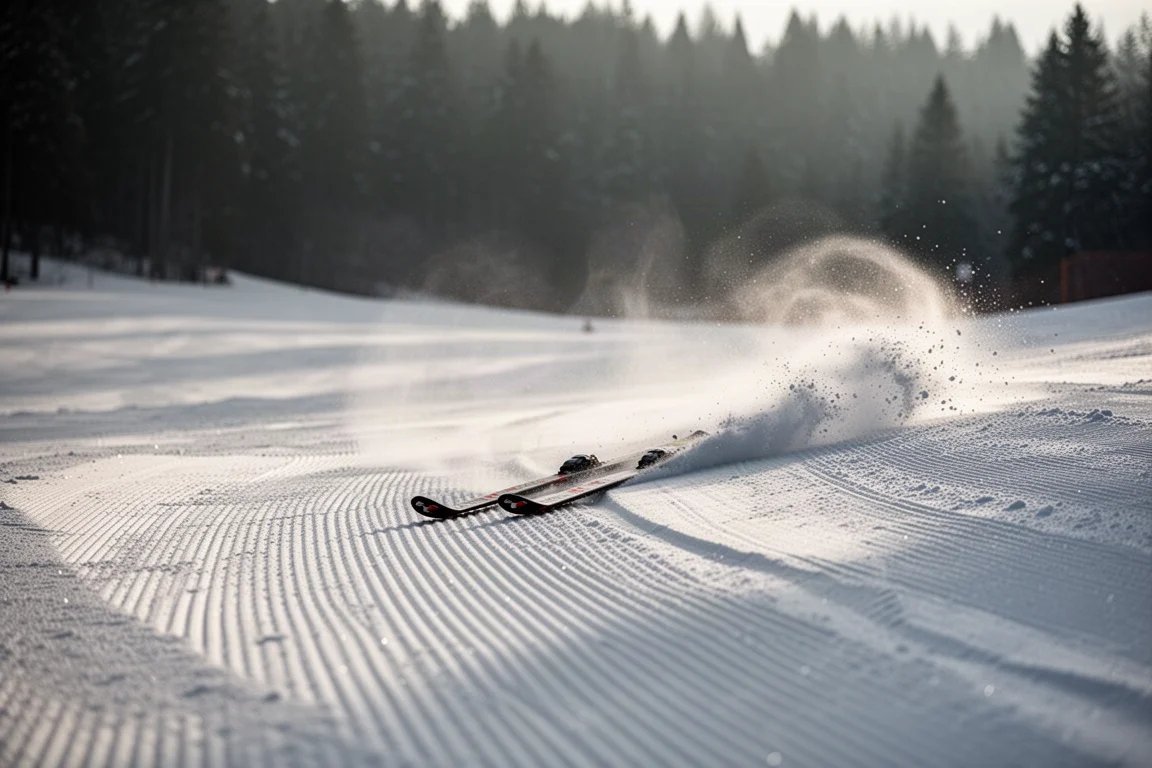
On snow, that thickness translates into damping. A boot is part of a ski’s vibration-damping system, and a shell this substantial makes most skis feel calmer than they are, while still transmitting movement from the foot to the edge almost instantly. Carving turns feel stable and direct, and the connection to the snow is unusually strong. K2 does not have a race department, so this is not a race boot by design, yet it carves with a level of stability and confidence that sits close to stiff race-derived boots.
Fit and Hold
Out of the box, the ankle and heel area is extraordinarily tight, and molding the liner before skiing is strongly advisable. Heat molding and stretching the shell also work well, and because the plastic is thick it can be ground out where needed, for example from the midfoot forward through the toes to create space over a wide forefoot or bunion.
Despite the 96 mm last, the instep area is fairly forgiving for a low-volume boot, and the tongue can be adjusted to change the fit over the instep. The liner itself is a minimal, race-style model, the K2 Elite Fit Pro, with almost all of its foam concentrated around the ankle pocket. K2 focused development on the shell in this first generation and treats the liner as a good starting point rather than a finished product, so an aftermarket liner is a reasonable consideration for anyone who wants a different feel.
The hold is the payoff. Through long spring days with warm, wet snow and fifteen or more runs, the ankle and heel stayed in the same place from the first run to the last, with no movement and no irritation.
Dual BOA and Customization
The two dials are not doing the same job. The lower dial is closer to a comfort feature, while the upper dial is the performance piece. During development, K2 built the boot with both an upper BOA and a traditional buckle and found that athletes preferred the BOA, describing a more progressive flex feel and a snugger wrap around the lower leg that translated into better performance.
The system also self-adjusts. With a foot in the boot, tension moves toward the area of least resistance, and the same thing happens while skiing and flexing, so the closure shifts with the leg rather than locking into one fixed position. It is visible even with the boot empty, when one zone tightens and the other does not.
Beyond the closure, the shell accepts small insertable plastic pieces on the sides that change how quickly the ski engages an edge, giving owners a way to fine-tune the feel without changing boots.
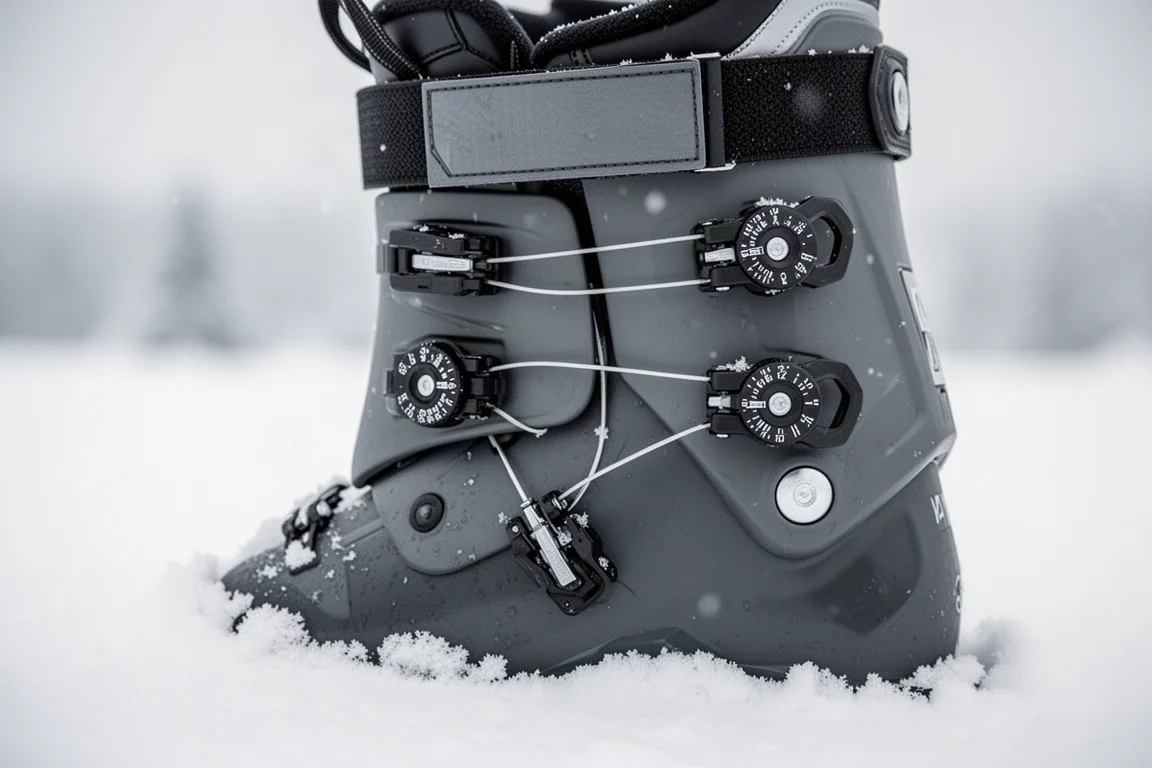
The practical cost of two dials is more adjusting. The upper BOA contributes to a smoother, more direct connection, but it also means more time spent fine-tuning during a ski day, especially for skiers who are used to setting a buckle once and leaving it alone.
Things to Consider Before Buying
The Cortex 140 BOA asks a fair amount of the person wearing it, and most of the caveats come back to the same theme: it is a very stiff, very low-volume boot.
Fit is the first one. The heel and ankle are extremely tight as delivered, and the boot is unlikely to feel right for most skiers without liner molding, shell molding or both. Getting the boot on and off can also be a challenge before the liner is molded, particularly in cold conditions. Budget for a bootfitter rather than expecting an out-of-the-box fit.
Adjustment is the second. Dual BOA is not a set-and-forget system for everyone. Skiers running a tight, low-volume fit may find themselves re-dialing every few runs to restore circulation and popping the dials and the power strap to let the feet recover. If that sounds like a nuisance, a buckle boot may suit you better.
The third is how the boot wants to be skied. It is at its best with speed and power. Short swing turns, slow technical sections and low-speed maneuvering feel less natural, and pairing the boot with a heavy ski at low speed can feel clunky. It also pushes skis toward gripping and holding rather than slarving, so anyone who likes a loose, drifty feel may find the Cortex too locked in.
Finally, there is the flex itself. A 140 is a serious number, and even strong skiers may find they do not need it. The 130 version of the same boot is expected to feel like a high-performance boot that a much wider range of skiers can handle. It is also worth being careful with the removable pieces: taking out too much material can make the throat of the boot feel too roomy, at which point the dials have to work harder to hold the foot.
Buying Advice
The Cortex 140 BOA makes the most sense for a skier who already knows they like stiff, supportive boots and who spends their time on fast, demanding terrain. If that is you, the boot’s combination of damping, precision and hold is hard to match, and the customization options mean a good bootfitter can shape it to a surprising range of feet.
Before buying, be honest about three things: how much volume your foot actually needs, how much fitting work you are willing to do, and whether you will genuinely use a 140 flex. If the answer to the last question is uncertain, the 130 version is the smarter starting point. It shares the shell design and the dual BOA layout, but with a thinner lower shell it should be easier to ski well.
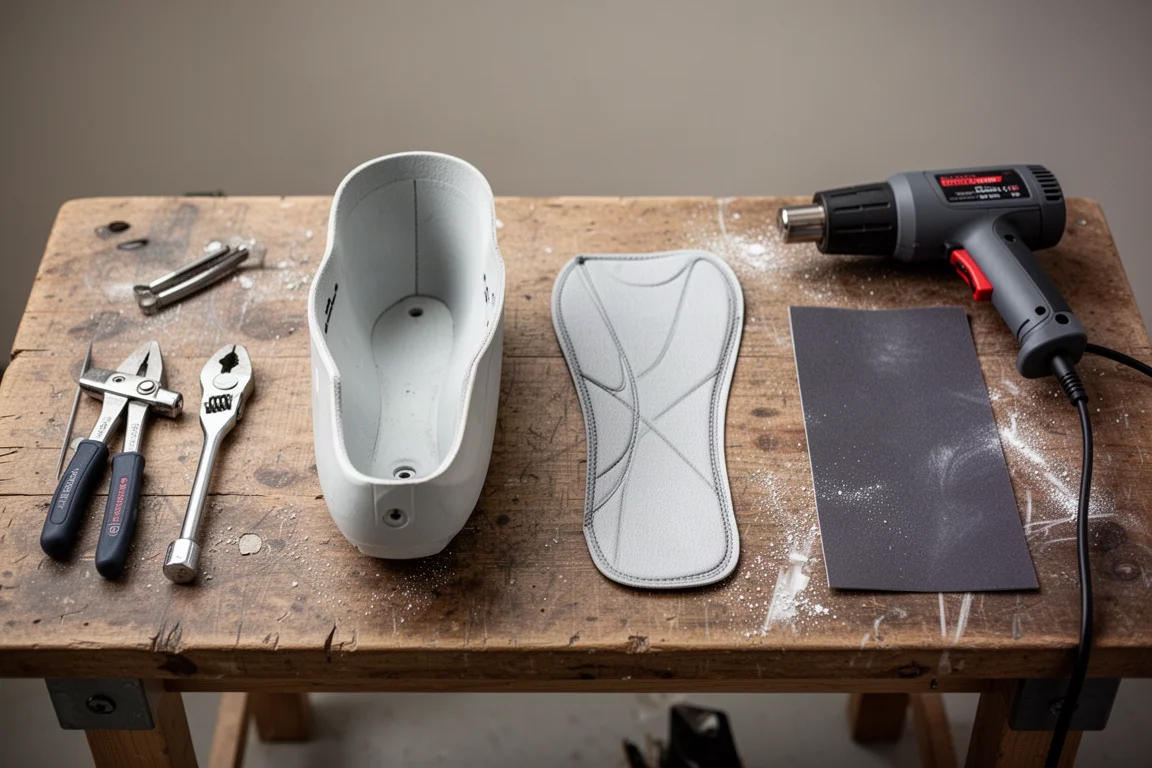
It is also worth treating the liner as a starting point. Because K2 concentrated this generation on the shell, an aftermarket liner is a legitimate upgrade path for skiers who want more room or a different flex feel. A bootfitter can advise on whether that, shell stretching or simple liner molding is the right first step.
Conclusion
The K2 Cortex 140 BOA is a rare product: a low-volume, 140 flex freeride boot with a thick polyurethane shell, tech toe fittings, a race-style liner and two BOA dials. It delivers remarkable damping, a glued-to-the-snow feel and consistent hold over long days, and it is clearly built for skiers who push hard and ski fast.
It is not a boot for everyone. The fit is tight and needs work, the dual BOA closure asks for more attention than a buckle, and the flex demands solid technique and a preference for speed. Skiers who match those traits will find a boot with few direct rivals, and anyone unsure should look closely at the 130 version before deciding.
Enlace de producto
Ver K2 Cortex 140 BOA con más detalle
Este producto aparece en la reseña. Antes de comprar, revisa las especificaciones, las opciones y la compatibilidad.
Ver K2 Cortex 140 BOA con más detalleMás lecturas
Reseñas relacionadas
Ski Boots
Resumen de botas de esquí 2027: seis botas de flex 130 que vale la pena conocer
Seis botas de esquí de flex 130 para 2027, más una mejora de forro de bajo volumen, comparadas por peso, ajuste, sensación de flexión y facilidad de uso.
Ski Boots
Análisis de la bota de esquí Armada AR One: un Cabrio de tres piezas que por fin lo hace bien
La primera bota de esquí de Armada combina el diseño Cabrio de tres piezas con ingeniería de Atomic, una carcasa termoformable y una horma de 100mm que calza mejor que cualquier Cabrio anterior.
Ski Boots
Análisis de las botas de esquí Armada AR1: un híbrido de cabrio y overlap para esquiadores de park y freeride
La primera bota de esquí de Armada combina una carcasa cabrio de tres piezas con hebillas estilo overlap y una hebilla tipo honda accionada por cable. Aquí te contamos dónde brilla y qué valorar antes de comprarla.