Light Sport Aircraft
Zlin Savage Norton: A Closer Look at Zlin's Latest Light Sport Stalwart
The Savage Norton combines an all-metal wing, retractable slats, big Filer flaps, and a turbocharged Rotax 915 into one of the most complete light sport aircraft to date.
Introduction
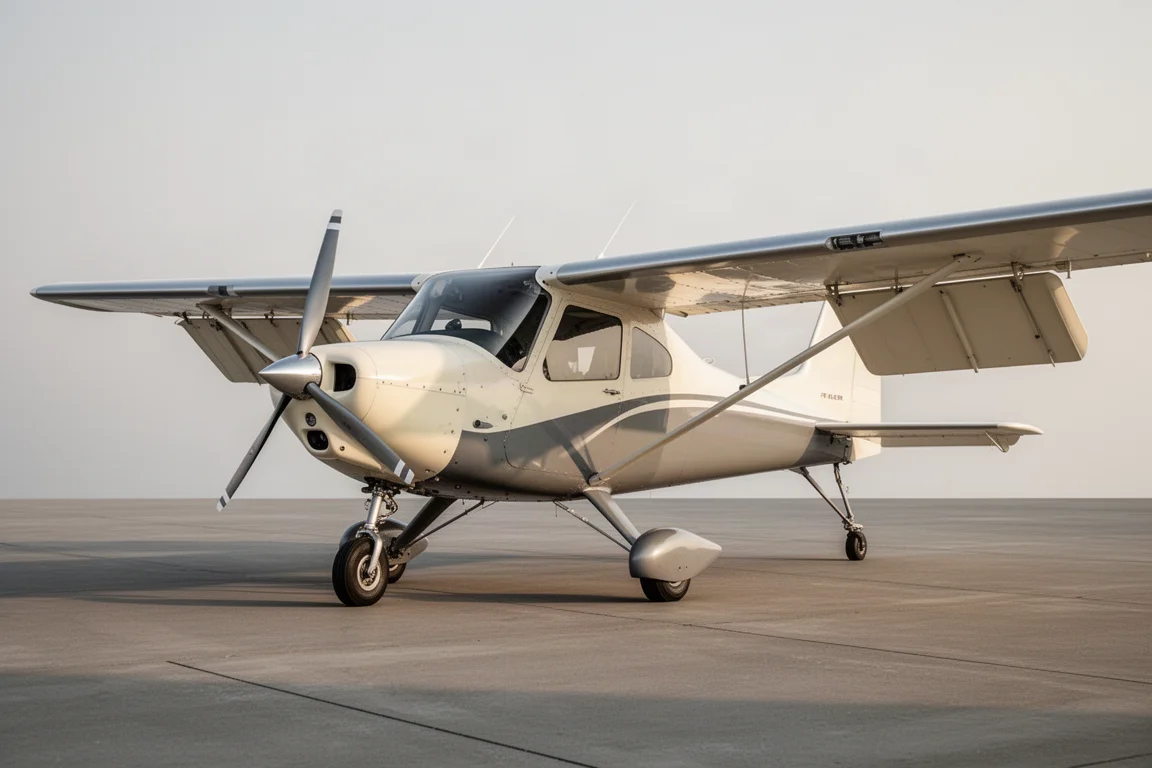
The Zlin Savage Norton has been teased for the better part of a year, and its debut marks the arrival of a new flagship for the Savage line in the United States. Distributed in the US by Sport Air USA, the Norton is described as the culmination of eight different Savage models rolled into one, with the goal of being the most cost-effective and best-performing aircraft in its class. After spending time with the aircraft and its US distributor Bill Connino, the pitch is easy to understand: a fully metal wing with retractable slats, large Filer flaps, a turbocharged Rotax 915 as standard, and a cabin designed around visibility and comfort.
Who This Aircraft Is For
The Norton is aimed at pilots who want a capable stol-style aircraft that is also genuinely pleasant to cruise in. Previous Savage models were excellent slow-speed aircraft but paid a drag penalty for their external slats, which pushed cruise fuel burn up sharply. The Norton resolves that tension, making it a strong fit for pilots who split their time between short or rough strips and longer cross-country legs, especially those operating at higher elevations in the western United States where the standard turbocharged engine earns its keep.
The Wing Story: Metal Construction, Retractable Slats
The headline feature is an all-metal wing. From an ownership perspective, that matters more than from a builder’s perspective: metal structure is easier to live with over the long term than fabric-covered surfaces.
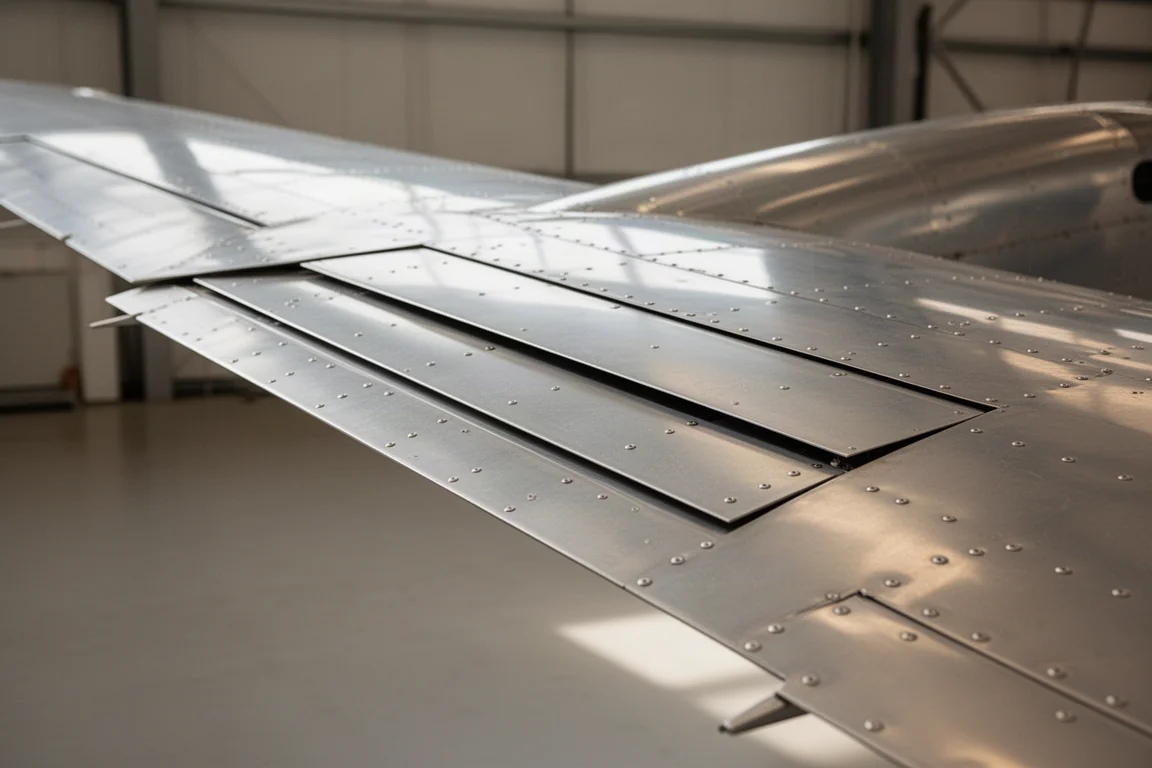
The clever part is how the slats work. Earlier Savage models used external slats that created enormous drag in cruise. On the Norton, the slats retract completely into the wing, leaving a clean wing form for cruising in any configuration. Paired with the large Filer flaps, the leading edge slats offset the nose-high pitch that efficient flaps create: extend the slats and the airplane levels off, stick pressure goes to zero, and the pilot looks straight ahead at the landing area at lower approach speeds.
The engineering behind them is reassuring. The slats were tested for 30,000 cycles, which the factory considers roughly ten years of use, with no failures. The wing was then set vertical and used to pick up two workers for an hour, with the slats showing no looseness. Both slats operate from a single motor drive on a common bar, so asymmetric deployment cannot happen, and the motor sits behind an accessible metal panel on the other side of the fuselage for replacement.
Performance and the Rotax 915
The Norton spans an airspeed envelope from 30 to 140 mph Vne. Typical cruise is around 115 mph, with 120 mph available if you are willing to burn roughly 6 gallons per hour. Every aircraft comes standard with the Rotax 915, a 141-horsepower turbocharged engine flat rated to 15,000 feet. At 4,500 feet, the factory points out that the engine delivers performance equivalent to a 180-horsepower Lycoming, and from there on it remains flat rated, while a non-turbocharged engine keeps losing power with altitude. That is why the 915 is standard: the US varies from below sea level to 7,000-foot elevations, and the turbocharged engine keeps plenty of power on tap regardless of where you fly.
Interior, Seating, and Utility
You fly the Norton from the front seat, and the cabin is genuinely spacious and wide, with a light interior color scheme that makes the space feel larger. Dual controls are standard for the stick, throttle, trim, brakes, and rudder.
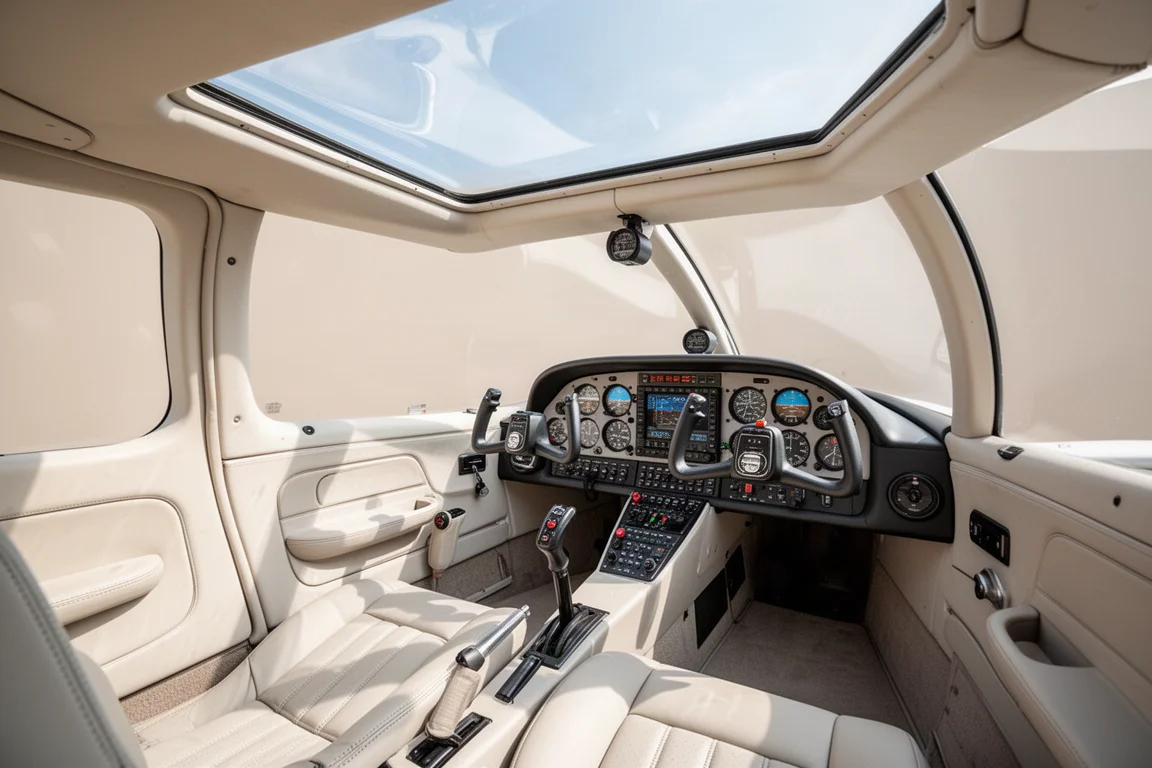
A full-length skylight extends far enough down that in a tight turn you can see over the top of it to check traffic, though as with any high wing you should still lift the wing before looking. Baggage allowance is a 45-pound limit right behind the passenger seat, and an optional carbon fiber floor package, seven feet one inch long, lets you remove the back seat and sleep in the aircraft.
Panel and Avionics
Designer Pavel Rous (described in the aircraft’s development as particular about the layout) insisted on a panel built for visibility: a compact pod mounted flexibly, fixed so it does not move in flight, with clear sightlines over the top and around the sides. That matters in stol flying, where spotting obstacles in unfamiliar landing areas is a priority.
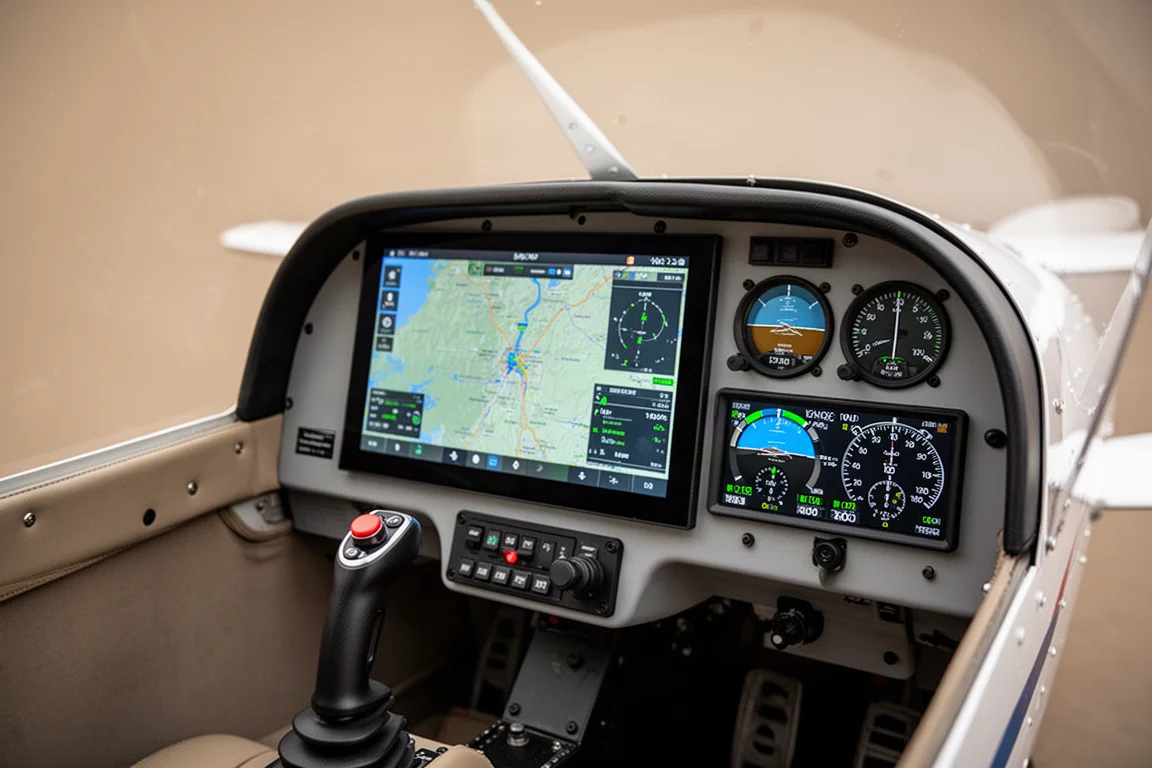
The standard panel includes a large Garmin 760 with touchpad for navigation, an engine monitoring system, dual engine-watching computers, and ADS-B in and out with a VHF radio with monitoring capability. A Garmin G3X option is available, but many customers find the standard setup covers most of the functions they need. The stick is designed specifically for the slats, with a large push button for extension and retraction plus trim up and down and radio controls built in.
Landing Gear, Tires, and Propeller
Suspension is traditional bungee gear as standard, with Acme shocks available as an option. The Norton ships on 22-inch tires, deliberately not full bush tires. The philosophy is sensible: learn to fly the aircraft on the smaller tires, which make you a more precise pilot, then upgrade to bush tires once you know the airplane. The tailwheel is a free-swiveling eight-inch unit, with Bushwheel and Baby Bushwheel options available in various sizes.
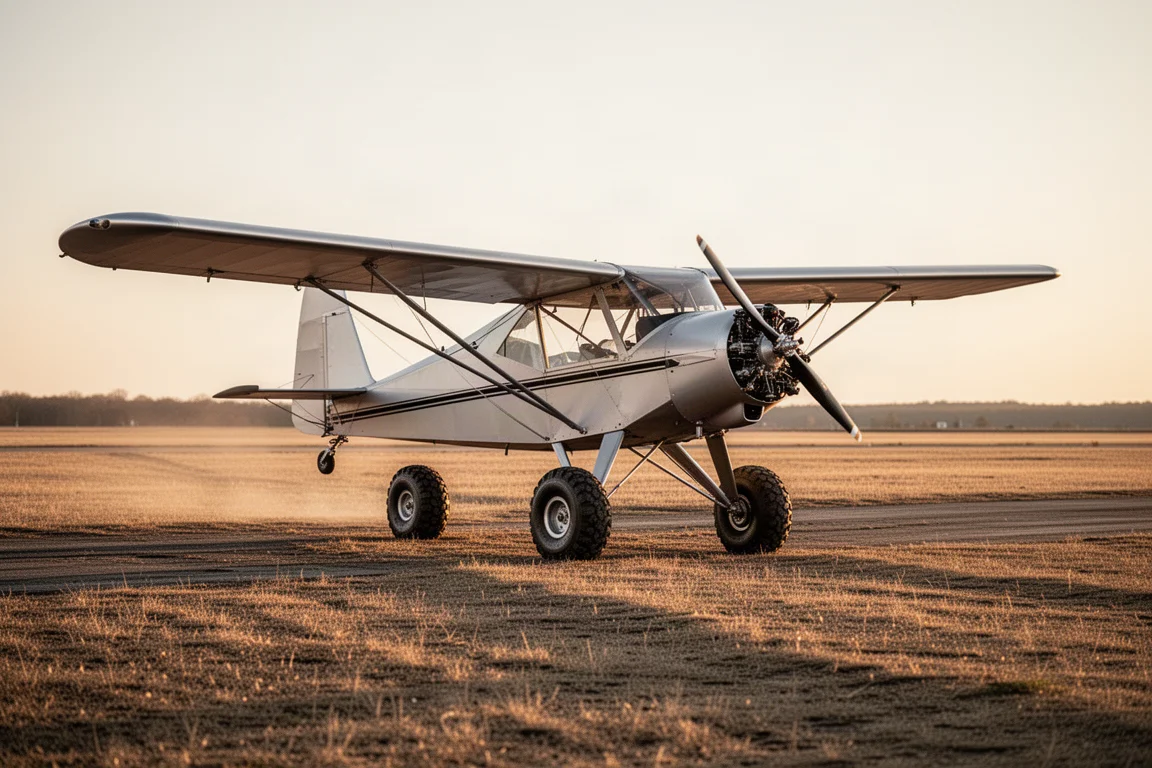
Up front, the four-blade “pencil thin mustache” propeller from E-Prop in France is a ground-adjustable unit with such a narrow chord that each blade is barely affected by the one ahead of it. The factory tested many propellers and found this the best fit. An air-adjustable two-position prop, limited to takeoff and cruise settings rather than infinite adjustment, is in development for flight testing.
One practical detail: the slats, flaps, door, and window all share a 75 mph airspeed limit for operation.
Ownership, Pricing, and Ordering
The Norton is available as an SLSA or ELSA, but not as a kit, at least for now. A kit version is planned, but only after the factory works through its current order book, which stands at roughly 70 aircraft. All aircraft are delivered ready to fly, with a current lead time of approximately six months, though that can shift week to week as parts availability fluctuates.
At AirVenture the aircraft was priced at $164,450 ready to fly, though the final figure in euros depends on the exchange rate at the time, and the distributor cautions that the rates you see online are not the rates you can actually transact at. Payments are staged in four 25% installments: at initial order, when production starts, at mid-production, and after completion. Interested buyers can find every option and price on the Sport Air USA website, with pricing listed in euros since the aircraft is purchased from the Czech factory.
Worth noting for the future: the airframe is designed as an 1,800-pound aircraft with a 1,000-pound useful load, currently held to light sport limits of 1,320 pounds (1,430 as a floatplane, and aluminum floats are available). If heavier weight allowances ever arrive, the Norton already has the structure to take advantage of them.
Buying Advice
The Savage Norton makes sense for pilots who want one aircraft that does both jobs well: a slow, visibility-forward stol performer for challenging strips and a clean, efficient cruiser for cross-country flying. The all-metal wing and thoroughly tested retractable slat system address the two biggest historical complaints about the Savage line, drag in cruise and fabric upkeep. If your flying is strictly low-and-slow on big tires, other Savage models may serve you, but if you want the most complete expression of the platform with the Rotax 915 standard, the Norton is the one to watch.
Conclusion
The Savage Norton lives up to a year of anticipation. It blends the best elements of eight prior Savage models into an aircraft that is easy to own, easy to see out of, and quick enough to cruise, all with a turbocharged engine standard and a well-considered list of options for pilots who want to grow into bush flying. With around six months of lead time and staged payments, it is one of the more thoughtfully developed light sport aircraft to reach American soil in recent years.
Product link
View more details for Zlin Savage Norton
This product is mentioned in the review. Check the specifications, options, and compatibility before buying.
View more details for Zlin Savage NortonFurther reading
Related Reviews
Light Sport Aircraft
ATH 321 Fetta NG Review: A Czech-Built Lowwing SLSA Now Available in the USA
A full carbon fiber lowwing light sport aircraft with a true 120-knot cruise, tilt-back canopy, and Garmin glass cockpit options. Here is what US buyers need to know.

Watches
Essential Pilot Watches: A Guide to the Most Iconic Aviation Timepieces
From the classic Flieger to the Moonwatch, these are the pilot watches that defined aviation history and remain essential today.
Aircraft
Icon A5 Amphibious Aircraft Review: Adventure Aviation Redefined
The Icon A5 combines sleek design, accessible controls, and water-landing capability in a three-hundred-thousand-dollar light sport aircraft built for explorers and adventure seekers.