Backpacking Tents
Zen Bivy Giblin 1 Review: A Sub-2 lb Trekking Pole Tent Built Around the View
The Zen Bivy Giblin 1 is a single wall trekking pole shelter that keeps the doorway open to the outdoors. Here is what it does well and what to weigh before buying.
Introduction
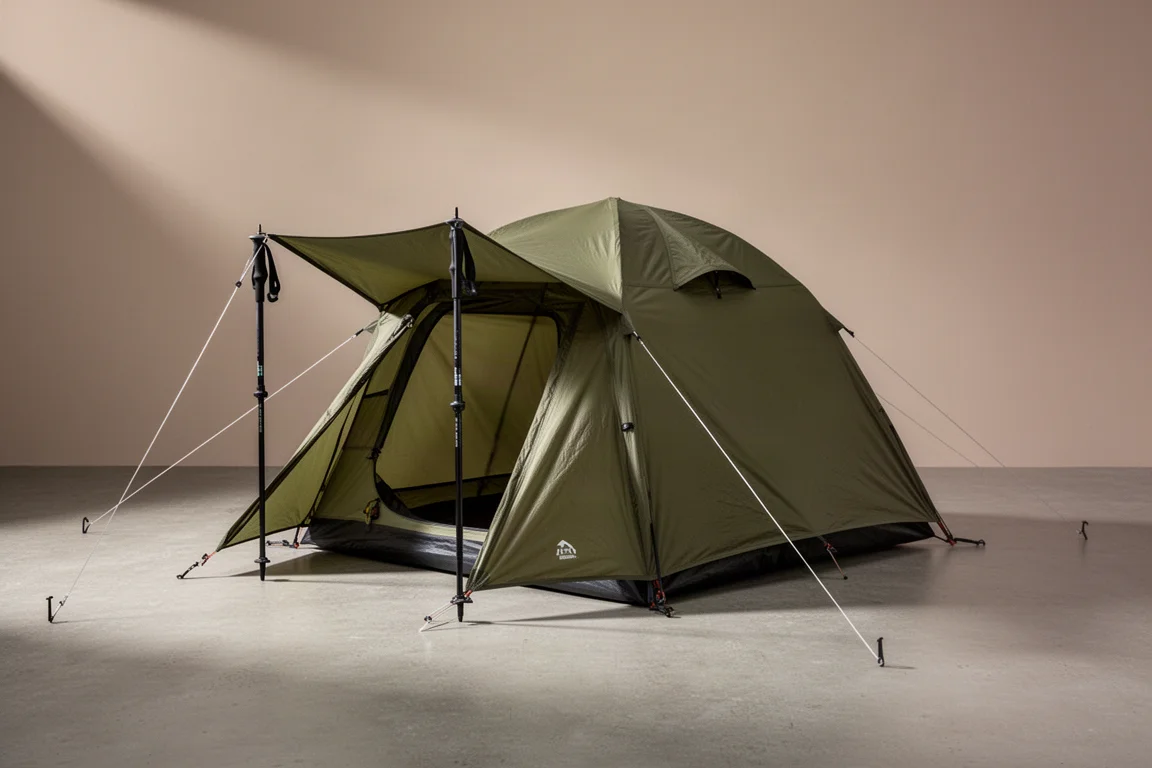
Zen Bivy has built its reputation on sleep systems, and the Giblin 1 is the company’s first tent. It is a trekking pole supported shelter that comes in at just under two pounds, and its defining feature is a front awning that keeps the doorway open to the view while still holding rain off. The design traces back to an avalanche shelter developed in the early 2000s, reworked here into a lean-to style backpacking tent.
That combination of very low weight and an open, connected feel is unusual. Most lightweight shelters deliberately close you off from the outdoors. This one is built around the opposite idea, and it shapes almost every decision in the design.
Who the Giblin 1 Is For
The Giblin 1 is aimed at solo backpackers who spend long hours in camp, not just sleepers who crawl in at dark. Because the front stays open, you can sit inside, watch the weather, cook, sort gear, and stay out of the rain without feeling shut in. That matters most on trips where rain keeps you tent bound for hours at a time.
It is officially a one person tent, but at 40 inches wide it comfortably fits one person plus a dog, and two people at a squeeze. The shape widens toward the back, which is where the shoulder room and the gear storage live.
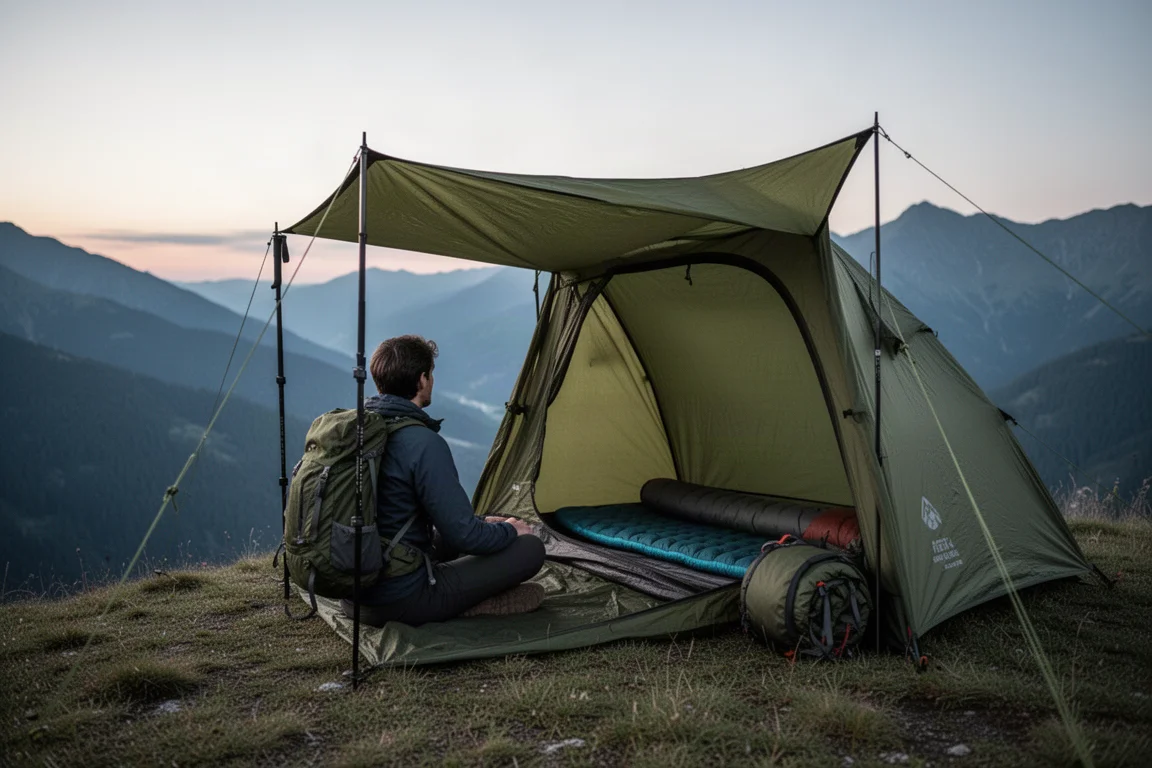
It also suits campers who set up away from crowds, in open terrain with room to spread out. The wide awning and long guy lines need space, so this is a shelter for dispersed camping and backcountry sites rather than a packed campground loop.
Main Strengths
The headline strength is the sense of connection to the outdoors. The front of the tent is effectively one large covered vent, so ventilation is rarely a problem and you always have a clear view out. When the weather turns, you can sit in the dry zone behind the drip line and watch the rain instead of staring at a wall of nylon.
Weight is the second strength. Just under two pounds is genuinely light for a shelter with this much usable sitting space, and the packed size stays small enough for a backpacking load.
The third is flexibility. The wind panel on the front door can be deployed for full protection or rolled away into its own pocket so it disappears entirely. The drop door behaves like a removable wall, and it can be trimmed up at the sides so you still have a view while splatter stays out.
Living Space and Ventilation
Inside, the layout is deliberate. A shallow strip along the back wall takes internal gear storage, with roughly eight inches of depth in the front. Long mattresses fit from the front of the tent, and the floor widens as it runs back, so a full length pad sits flat without fighting the walls.
Sitting height is enough to be comfortable while you manage gear, eat, or change. The single wall construction is offset by the sheer volume of airflow through the open front, which is covered rather than sealed. In practice, that means the tent breathes well in humid or rainy conditions where a closed single wall shelter would collect moisture.
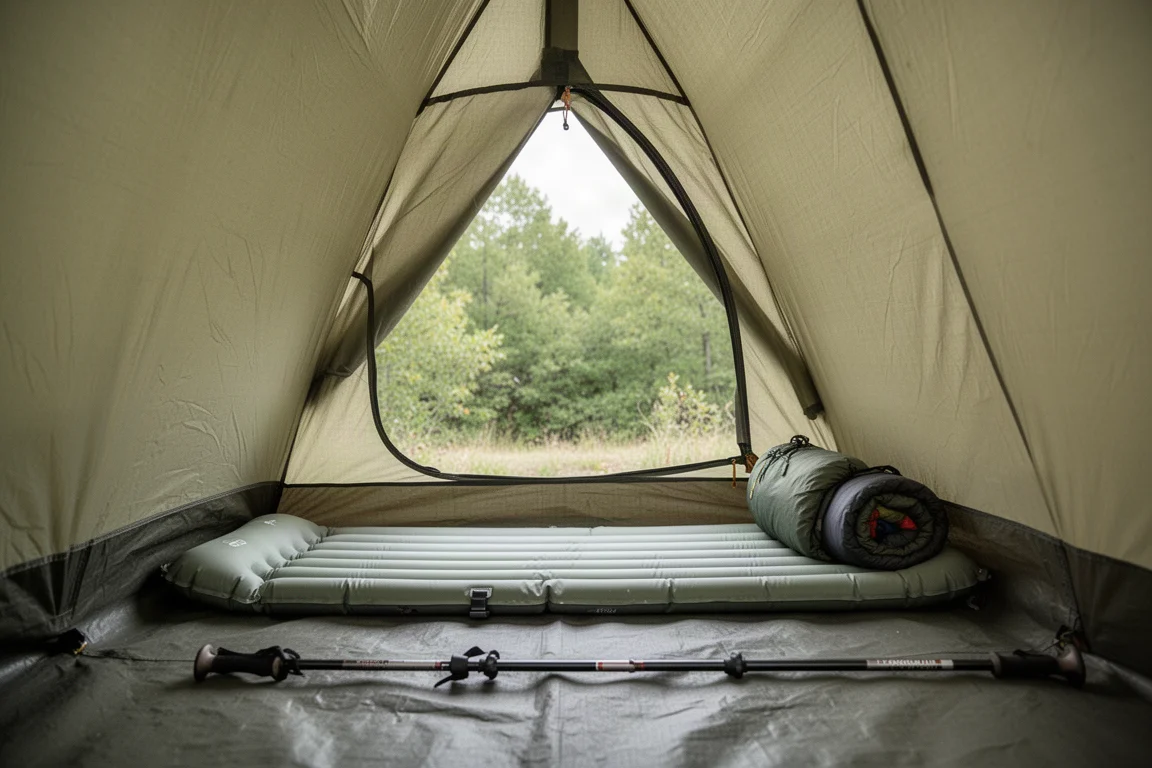
The drop door is the detail that makes the interior feel larger than it measures. Lying flat on the ground, it extends the usable floor area outward, and when wind picks up you can raise the sides to create a sheltered pocket while keeping your line of sight.
Weather Protection and Materials
The fabric is a 20D polyester. Polyester yarns do not absorb water the way some alternatives do, so the tent stays crisper and sags less when it gets wet, which is exactly what you want from a shelter that will spend long hours in the rain.
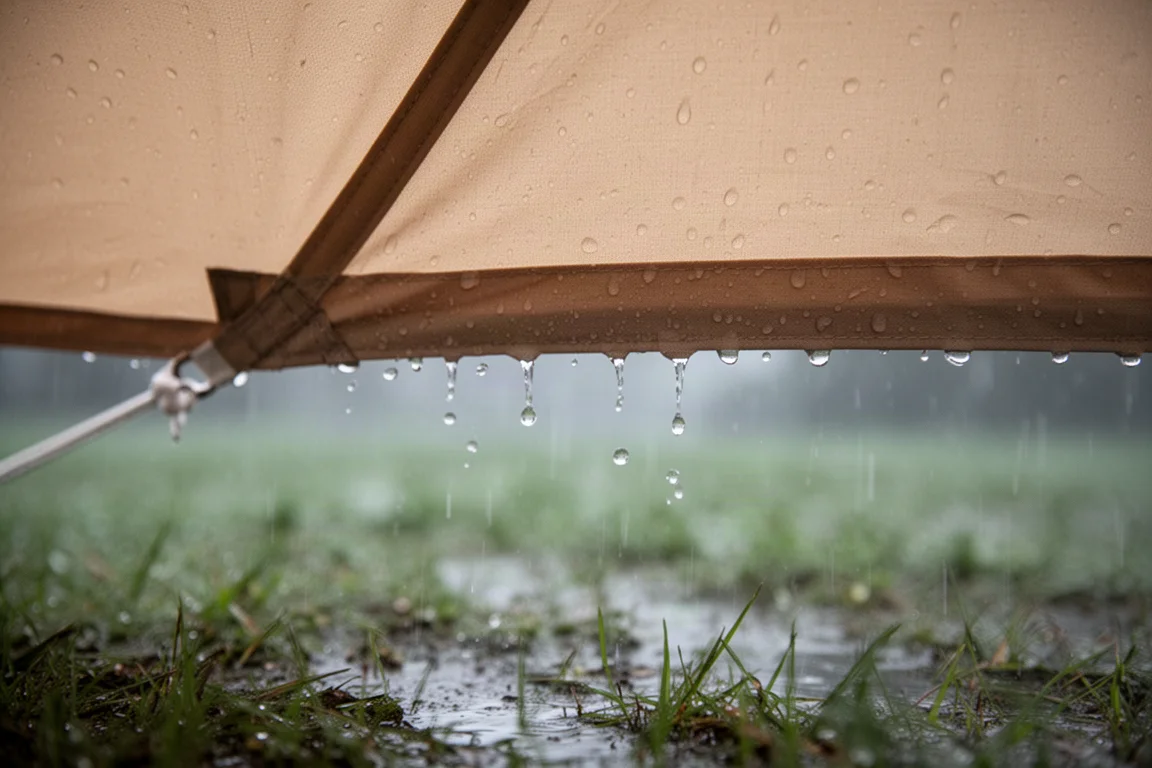
Protection is layered. The awning handles most angled rain, and the wind panel on the front door adds a second barrier when weather comes in low. The drip line sits well out in front of the sleeping area, so water runs off ahead of you rather than onto your pad. In hard, driving wind the panel will eventually wet through from the bottom up, which is the honest limit of the design.
Color choices lean stealthy rather than loud. The inner fabric is a darker green and the fly is a slightly lighter green, close enough in tone to feel understated in most terrain.
Setup, Staking, and Footprint
Setup follows a simple sequence: stake the four corners, insert the trekking poles tip down into the side pockets, then tension the structure with the guy lines. Making the poles tall keeps the main seam tight. The guying stage takes a little fiddling because you want to follow the seam line, but the process is different rather than difficult.
Eight stakes hold the tent as standard, and a ninth can be added at the back to gain extra shoulder room. All guy lines are reflective, which is a welcome detail for anyone moving around camp after dark.
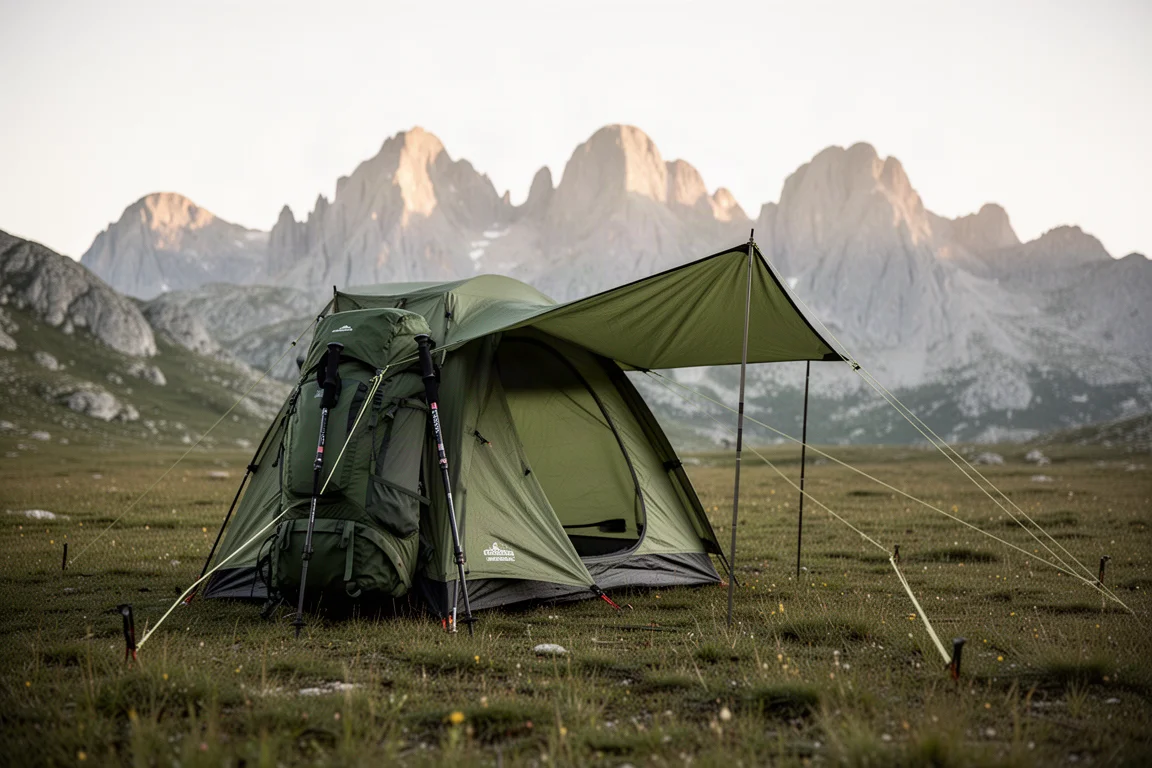
The footprint is the trade-off. Between the awning and the guy lines, the tent needs a generous, open patch of ground, and it performs best where there are few obstacles. The sleeping footprint itself is small, though, so you only need one clear rectangle for your mattress. The wind panel can also stand up on its own, which means a guy line can be wrapped around a tree or rock instead of staked when the ground will not cooperate.
Things to Consider Before Buying
This is a pre-production design. A short production run has been built, and further field testing is planned with the expectation of small changes before the final version ships. Anyone buying early should be comfortable with that reality, and with the fact that first-year tents in this category almost always receive refinements in year two.
A few details are still being settled. There is currently no headlamp loop at the top of the interior, and adding one is under consideration based on tester feedback. If a hanging point overhead matters to you, that is worth watching.
The footprint and guy line spread are the other consideration. In a busy campground with neighbors close by, the long lines and wide stance become a liability rather than an asset, and the tent’s value drops accordingly. It is designed for solitude and space.
Finally, pricing is not final. The expectation is somewhere in the range of 300 to 400, with 350 described as a likely landing point.
Buying Advice
At an expected 300 to 400, the Giblin 1 makes sense for a specific kind of camper: a solo backpacker who wants a very light shelter that doubles as a place to sit, cook, and watch the weather. If you have ever spent a full rainy day inside a closed tent, the open front here is the entire argument for buying it.
If your trips involve tight campsites, shared platforms, or quick pitches in the dark, a conventional double wall tent will serve you better. The Giblin 1 rewards people who camp in open terrain, who value a view over a sealed interior, and who are happy to trade a little setup fiddling for a shelter that feels far bigger than its weight suggests. Waiting for the final production version is a reasonable choice if you would rather not deal with first-run tweaks.
Conclusion
The Giblin 1 is a genuinely different take on the ultralight shelter. Just under two pounds, a 40 inch wide floor, a drop door, and a roll-away wind panel add up to a tent that keeps you protected without disconnecting you from the outdoors. The footprint and the pre-production status are the honest caveats. For the right camper in the right terrain, though, this is one of the more interesting backpacking tents to arrive in a while.
Product link
View more details for Zen Bivy Giblin 1
This product is mentioned in the review. Check the specifications, options, and compatibility before buying.
View more details for Zen Bivy Giblin 1Further reading
Related Reviews
Backpacking Tents
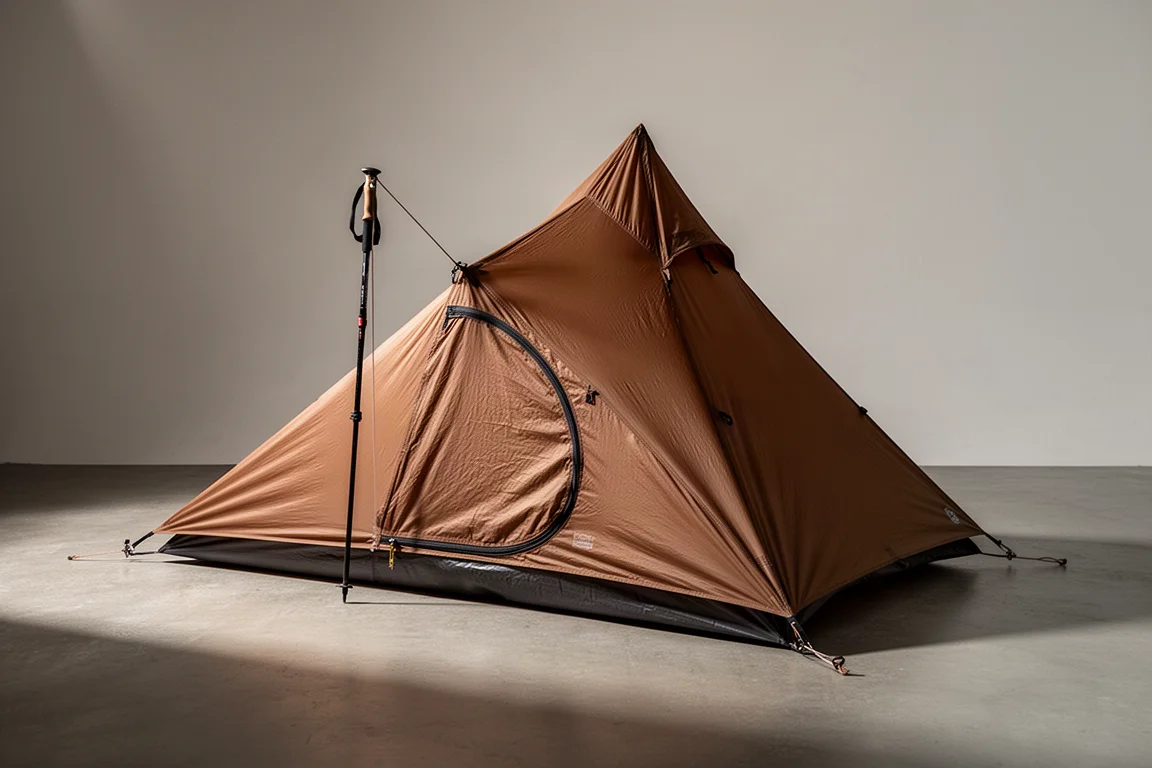
3F UL Lanchan Pro 1 Review: A 1 lb 8 oz Single-Wall Trekking Pole Tent
A practical look at the 3F UL Lanchan Pro 1, a single-wall trekking pole shelter with a 1 lb 8 oz weight, 20D silnylon fabrics, and a roomy 90 x 31 x 49 inch interior.
Backpacking Tents
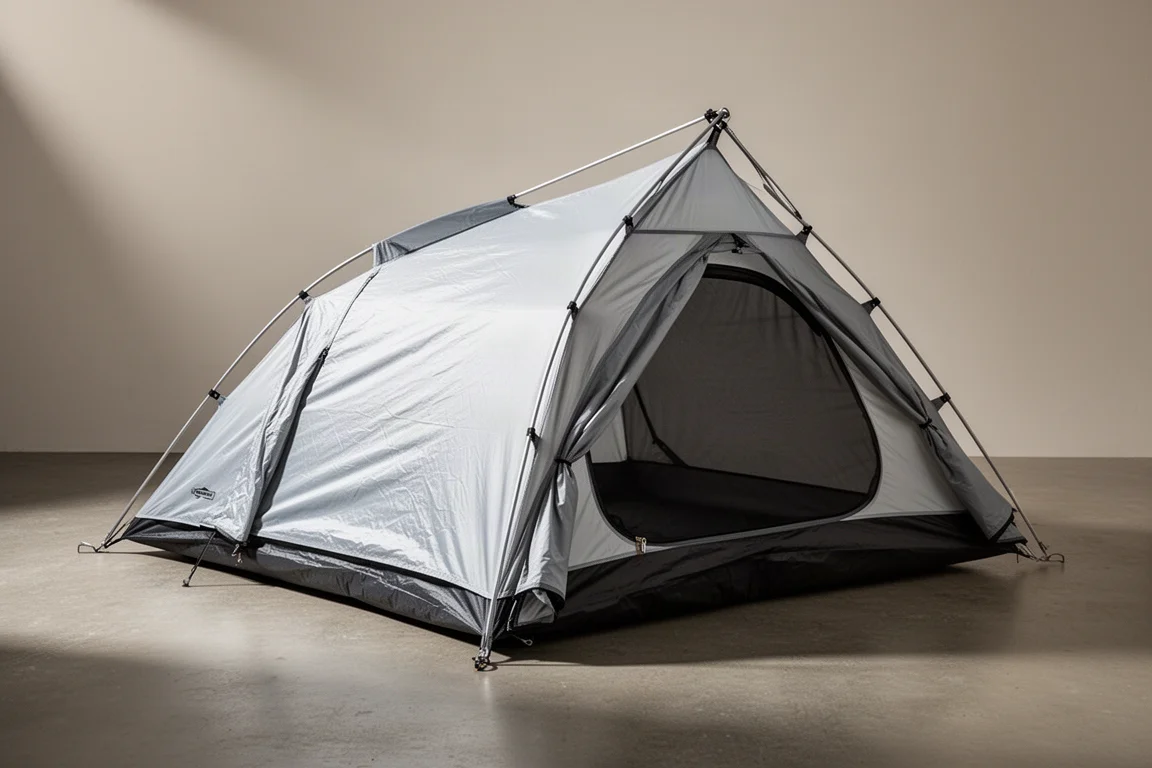
3F UL Taiji 2-Person Tent: A Convertible Backpacking Shelter Worth a Closer Look
A practical look at the 3F UL Taiji two-person tent, covering its materials, true two-person interior, fly-first pitching, and the seasonal inner swap that lets one shelter cover more of the year.
Backpacking Tents
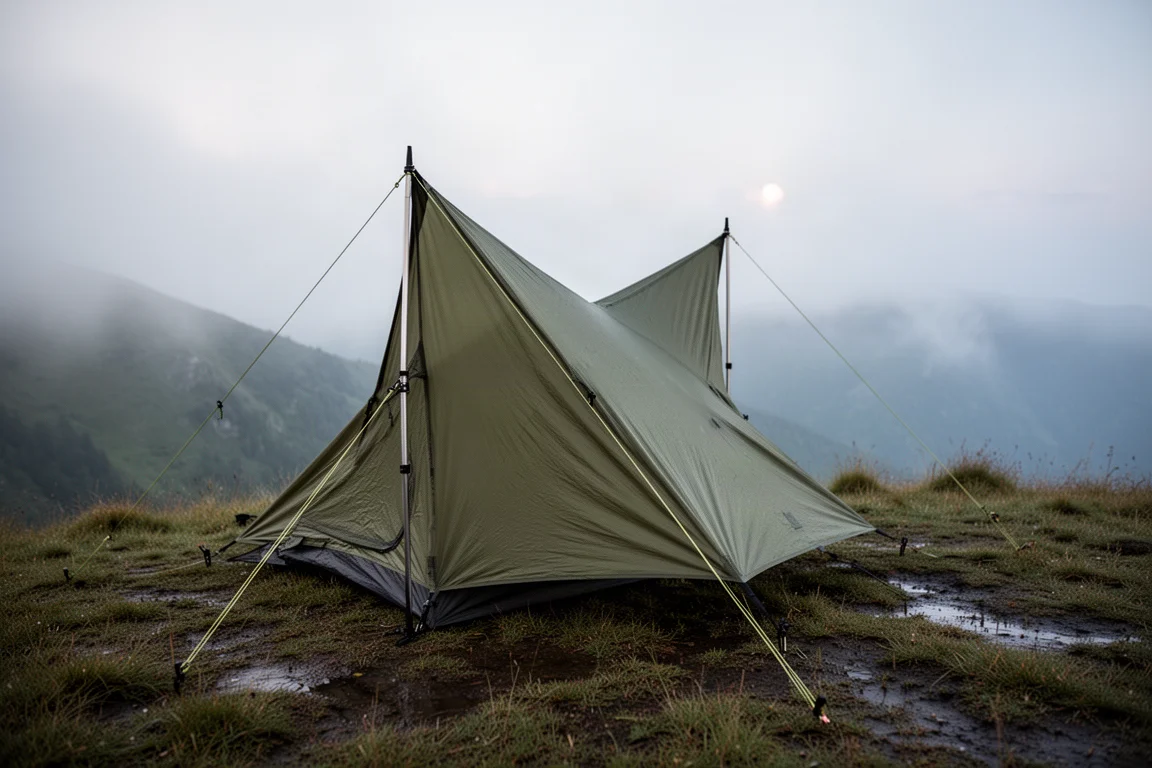
3FUL Lanshan Twoerson Pro Review: A Light Trekking Pole Shelter That Struggled in Rain
A two-person trekking pole shelter with a 2026 redesign, pitched with sticks and put through a night of steady rain. Here is what worked, what did not, and what to check before buying.