Snowboard Bindings
Yes Drive Binding Review: A Stiff, Damp Charger for Riders Who Go Hard
The Yes Drive binding keeps things simple with molded straps, a responsive highback, and a damp ride that soaks up chunder. Here's how it performed on a full day at Copper Mountain.
Introduction
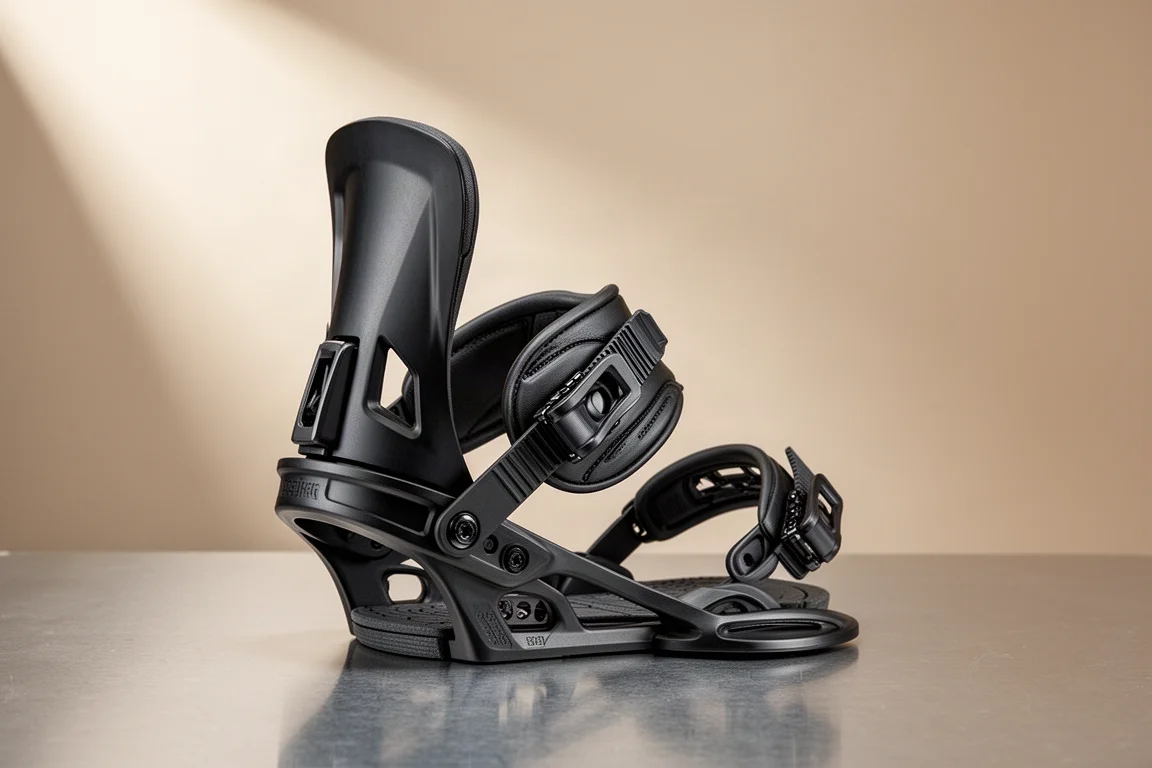
The Yes Drive binding promises a simple, no-nonsense approach: minimal adjustability, molded straps, and a damp, powerful ride aimed at riders who charge hard in every condition. I rode these bindings at Copper Mountain on a sunny day where clouds rolled in periodically, keeping the snow nice and fast. Toward the end of the day, as things warmed up near the base, the snow got pushy, bouncy, and sloppy, which turned out to be a great stress test. I paired the bindings with Ride Fuse boots and a Jones Aviator 2.0 board.
First Impressions on the Mountain
Right away, the Drive stands out for how little fiddling it demands. Adjustability is super simple. On the highback, the forward lean uses a flip tab: flip it down, push down, flip it back up. And one important note: don’t twist it. The straps adjust with another simple flip tab that you spin open, and while a screwdriver can help if a strap is really stuck, I never needed one.
Centering the binding on the board is handled by a large disc system that mounts vertically and slides back and forth. You can also swap the bushings out for softer or firmer ones to match your riding style, but beyond that, there really is not much to it.

Straps and Ratchets: Solid, with a Few Quirks
The first thing you notice about the straps is that they are molded, so the padding comes from your boot rather than the binding itself. Even so, they are very comfortable. I did not feel any pressure points from the ankle strap. The toe strap is another story: it is big and bulky, and you can run it over the toe or on top. On top felt better for me. It gripped my square toe box pretty well.
Both straps allow a little lateral play, likely due to the hinge system, but for the most part they stay responsive. On hard carves, they lock you in and you feel like you are one with the binding.
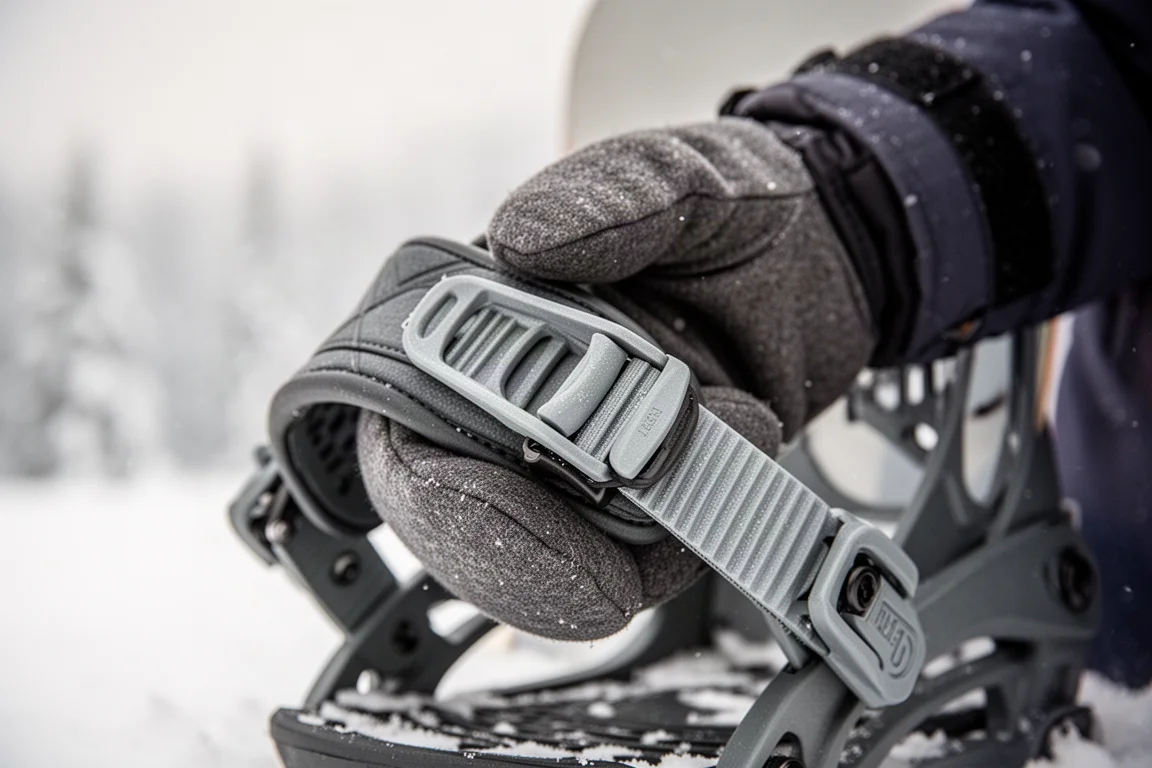
The ratchets are absolutely massive. On some binding brands, the Drive’s toe ratchet would be the size of their ankle ratchet. That size makes them easy to grip with mittens on, though there is a little side-to-side play in them. I never had problems with skipping or missing teeth. They are a solid ratchet, just one that maybe needs to get with the times a little.
Flex and Response: Rigid Down Low, Playful Up Top
The highback is responsive on heel-toe movements, and you definitely feel it working. There is a little padding on it, so it does not create pressure points, but you notice its presence. When you tweak grabs or throw your weight forward and backward, there is some lateral play in the highback. It is not a lot, and you notice it more in the air than while carving.
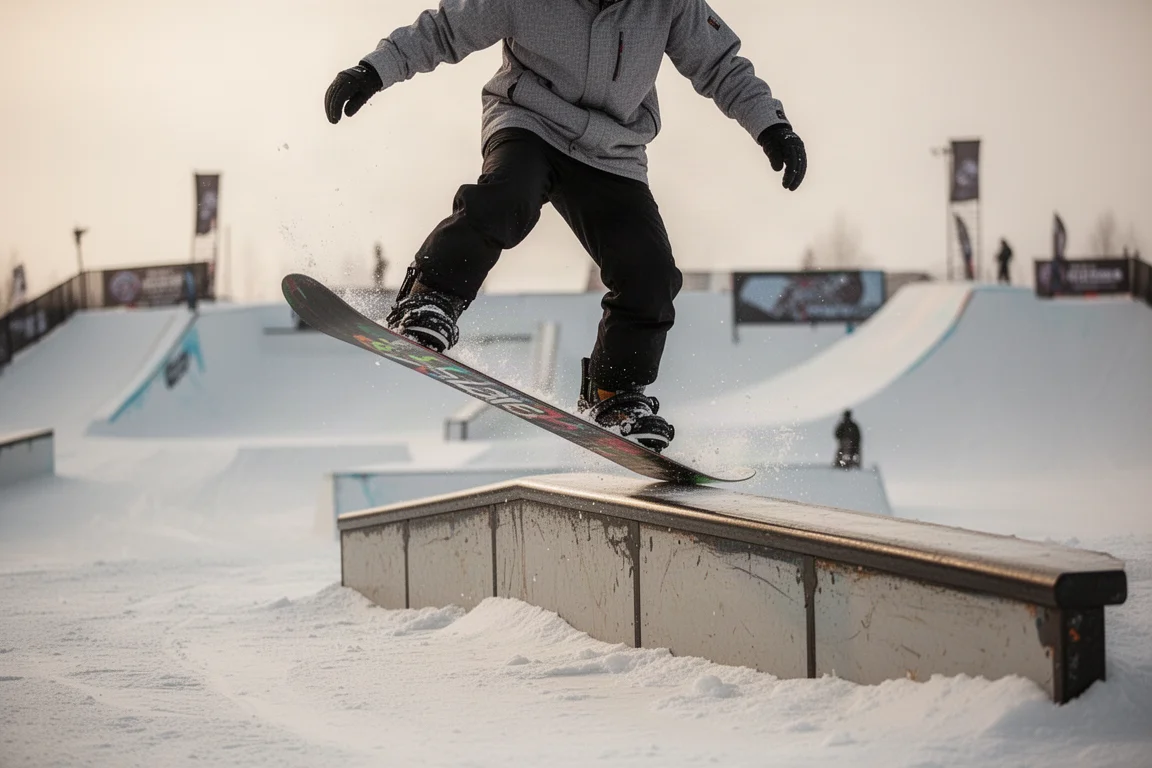
When you flex the binding back and forth, the chassis feels pretty rigid down low with very little lateral play. The straps and highback, however, allow a bit of movement up top at the ankle area. That combination really helps when you are loading up ollies, pressing into a rail, or buttering: the binding lets a little movement happen and then snaps back to its original form, which is extremely nice when you load up for a big ollie.
The Ride Feel: Damp but Not Dead
This binding definitely rides damp, but I would not call it dead. A huge foam footbed cuts down on vibrations really well without creating a dead spot under the board. You feel very locked in: the straps and the base tray together take all the energy you put into the board and transfer it straight back. When you load the binding up for an ollie, all that energy returns to the board.
Who This Binding Is For
The Drive is made for riders with big enough feet who want to charge hard in every condition. If the snow is super chunky, nasty, and chundery out there, this binding absorbs that chatter while making sure the power you put into the board goes straight into it without any loss. Late-day slush near the base? That is exactly where the damping earns its keep.

How It Compares
If you are cross-shopping, the closest competitors are the Jones Mercury, the Ride C-8, and the Union Atlas. Compared to my Jones Mercury, the Drive feels slightly stiffer, and most of that came down to the highback, which gripped a little more and had a little less lateral play.
Things to Consider Before Buying
The main thing I would change is the toe strap. Higher-end models in the line get better toe straps, and I think this one needs that upgrade. It is pretty bulky and big, and it kind of feels like a rubber turret. To be fair, I did not really notice it while riding, just when I was on the lift strapping in. Beyond that, this is a super solid binding. I genuinely enjoyed riding it.
Buying Advice
If you want a slightly stiffer, damper alternative to the Jones Mercury and you ride hard in all conditions, the Yes Drive is an easy recommendation. If you are still conflicted on which binding to get, it is worth reading up on the comparable options like the Mercury, Ride C-8, and Union Atlas before deciding.
Conclusion
The Yes Drive binding does a few things very well: it keeps adjustability dead simple, rides damp without feeling dead, and transfers energy directly into the board. The bulky toe strap is the one real knock, and it is minor. For riders who want to charge hard and absorb chatter without losing power, this is a super solid choice.
Check current price via the product panel below.
Product link
View more details for Yes Drive Binding
This product is mentioned in the review. Check the specifications, options, and compatibility before buying.
View more details for Yes Drive BindingFurther reading
Related Reviews

Snowboard Bindings
2024 Union Ultra Snowboard Bindings Review: A Cushy, Freestyle-Focused Favorite
Two seasons on the 2024 Union Ultra: a lightweight, tweakable freestyle binding with standout comfort, a damp molecular bushing, and thoughtful hardware fixes.

Snowboard Bindings
32 Team Phase Binding Review: A Fast Entry Binding Built for Freestyle Laps
The first binding from 32 uses the Phase chassis for quick step-in entry with a softer, freestyle-leaning flex. Here's how it performed on the snow.

Snowboard Bindings
Arbor Cypress Snowboard Binding Review: A Laid-Back Cruiser That Can Charge
A closer look at the Arbor Cypress binding's adjustability, strap feel, and that oddly tall highback before you decide to buy.