Robot Lawn Mowers
Yarbo vs MowRator 2026: Two Robot Lawn Mowers, One Year of Ownership
After a full year of running both, here is how the Yarbo and the MowRator 4WD compare on convenience, cutting power, and whether either can truly replace your mower.
Introduction
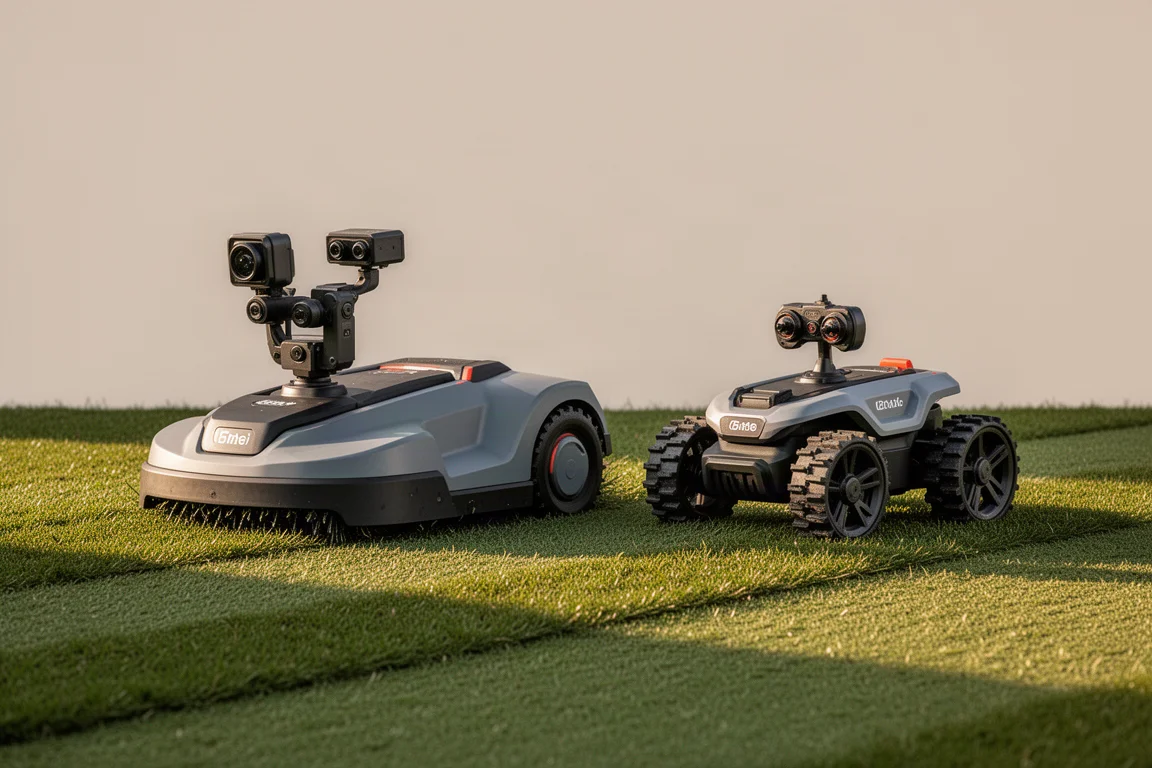
Robot lawn mowers are everywhere right now, and two of the most talked-about models on the market are the Yarbo and the MowRator 4WD. Neither is cheap, so the real question is not whether they look cool on social media. It is whether either one can actually replace the traditional mower you already own, whether that is a push mower, a self-propelled model, or a riding mower.
This comparison is based on a full year of continuous use with both machines, covering the good, the bad, and the details most ads leave out.
Yarbo Robot Lawn Mower: One Year Later
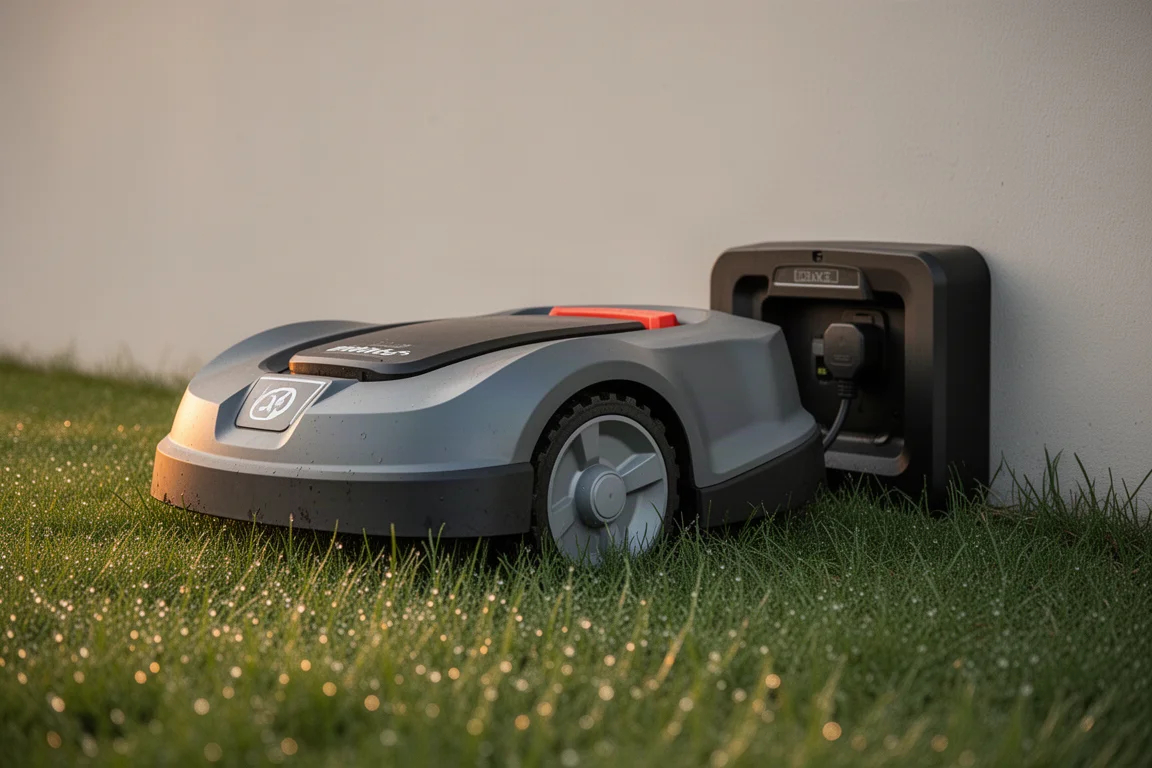
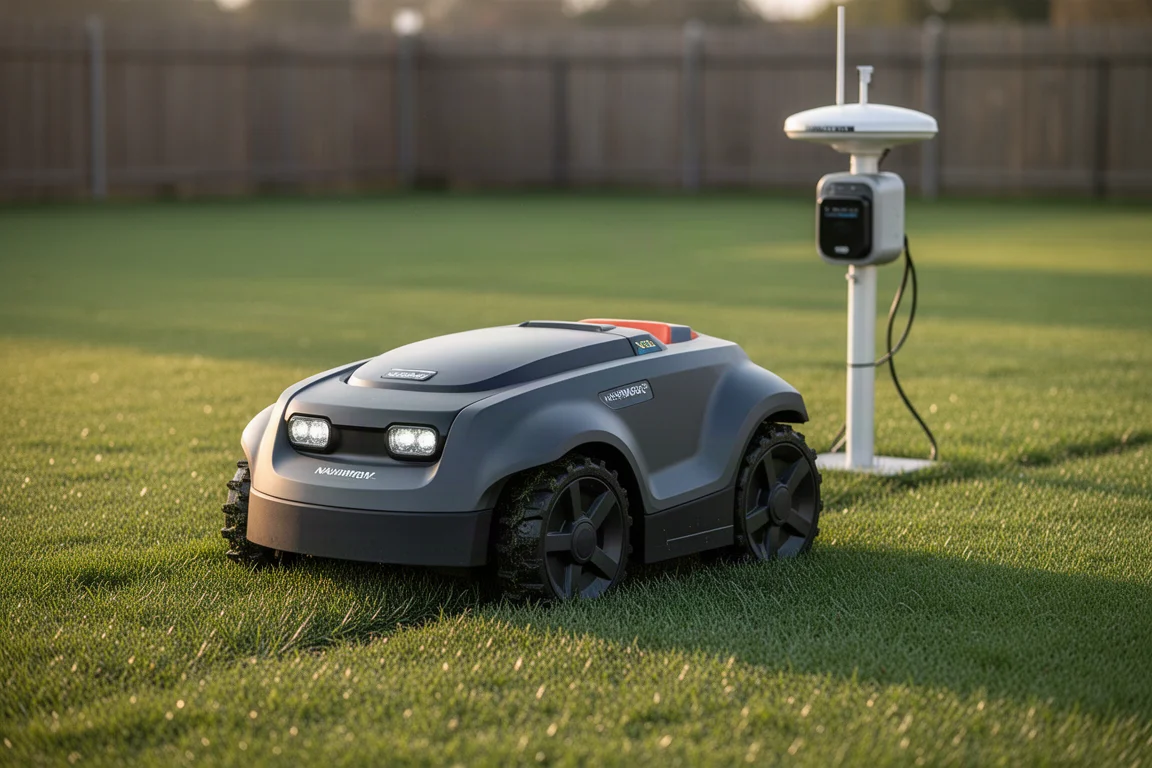
At its core, the Yarbo is a GPS-based, set-it-and-forget-it mower. You set it up, connect it to Wi-Fi, map your boundaries, define no-go zones, and from that point it largely runs itself. It can be scheduled to cut on a routine, returns to its dock when it rains, and recharges without any cords to drag around.
The cutting results are genuinely impressive once the lawn is dialed in. Overgrown grass can be stepped down gradually to a target height and then maintained. At a setting of around 2.7 inches, the stripes look professionally done, and multiple mowing styles and patterns can be configured. It is also surprisingly quiet: it can run at night without disturbing anyone, and it is barely audible from inside the house.
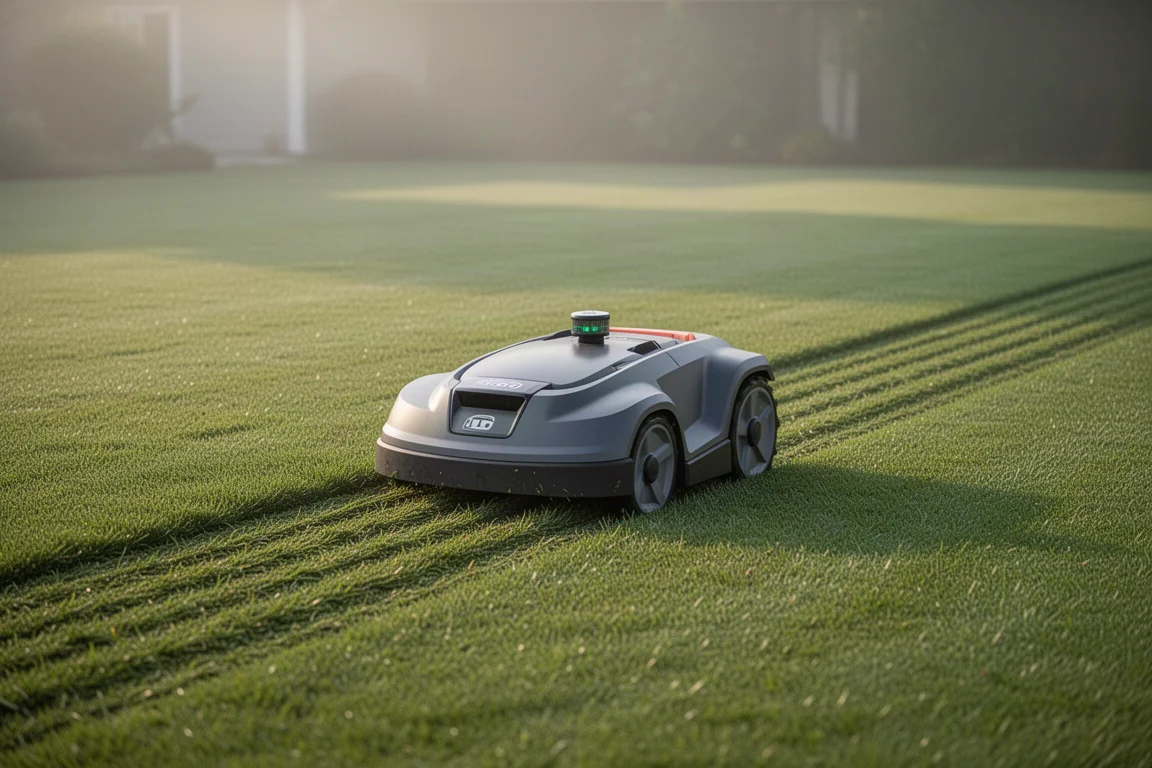
Technically it can cover up to about 5 acres, but not in one pass. It cuts, returns to charge, and heads back out. That is fine as long as you understand the rhythm before buying.
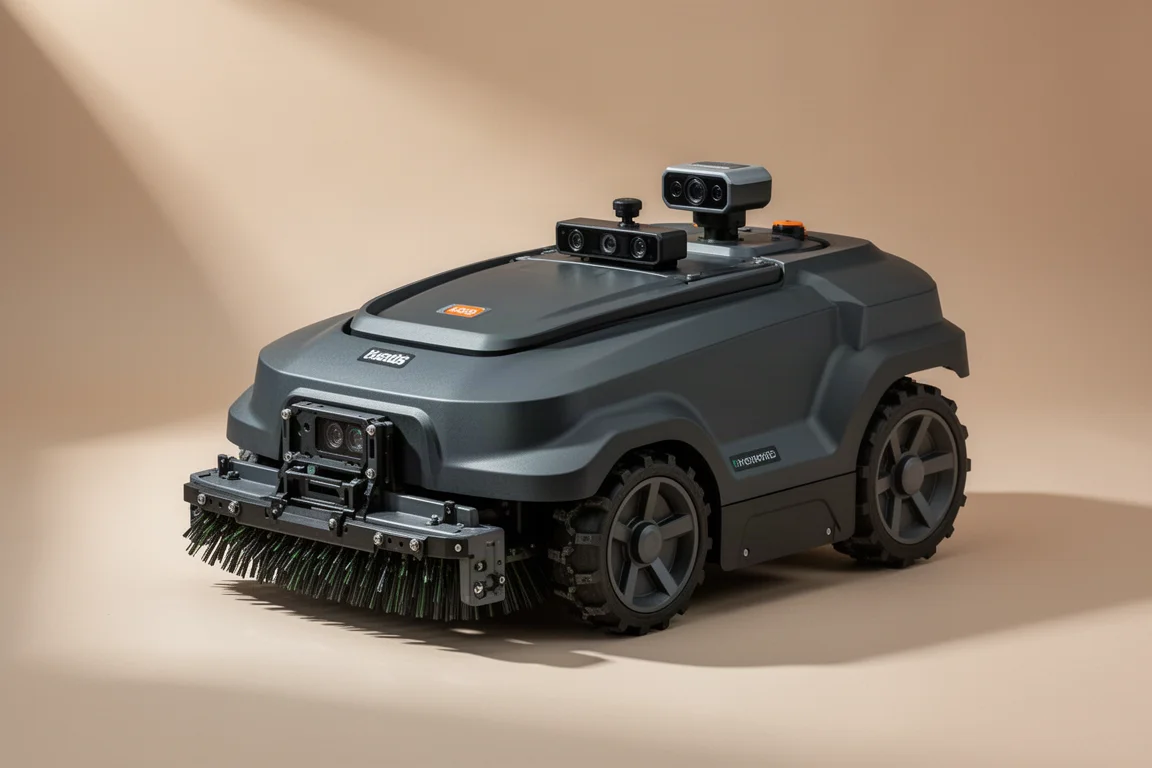
One of the most surprising aspects is how modular it is. It is closer to a Swiss Army knife of mowers, with swappable attachments including blowers, a snow blower head, and trimmers. There are tilt sensors, safety shutoffs, all-around cameras, live app viewing while it cuts, and even two-way audio that is clear enough to actually use.
The Trade-Offs Nobody Tells You About
The Yarbo is not flawless, and a year of ownership surfaces some real friction points. Setup takes time and some technical know-how. It is GPS-based, so there is wiring, Wi-Fi configuration, signal checks, and a data center antenna that has to be positioned on the yard or the house and repositioned if the signal is weak. This is not plug and play.
After a year, the unit can also drift a few inches outside its mapped boundaries. That sounds minor until it runs over landscaping. Adjustments can be made in the app, but remapping the entire yard is a chore.
The blade design matters too. The Yarbo uses razor-style blades rather than a full mower blade. They work, but they wear faster, cut slightly less cleanly at times, and are more sensitive to debris. Wet grass is the biggest headache: with dew or moisture, the underside clogs fast, meaning flipping the machine over, spraying it out, and detaching the head to clean it. Sticks, pine cones, and debris have to be cleared from the yard first, because more parts underneath means more places for things to jam or break.
Speed is another planning consideration. An acre can take up to a couple of hours, and if weather rolls in, cutting stops. Awareness still matters as well: sensors exist but are not perfect, and a trailer antenna positioned just a couple inches from its usual spot got ripped off. Parts are not cheap. Finally, in wet conditions the machine can tear up the yard slightly, with wear spots from turns and repeated paths that can be minimized but not fully avoided.
MowRator 4WD Robot Mower: A Hands-On Worker
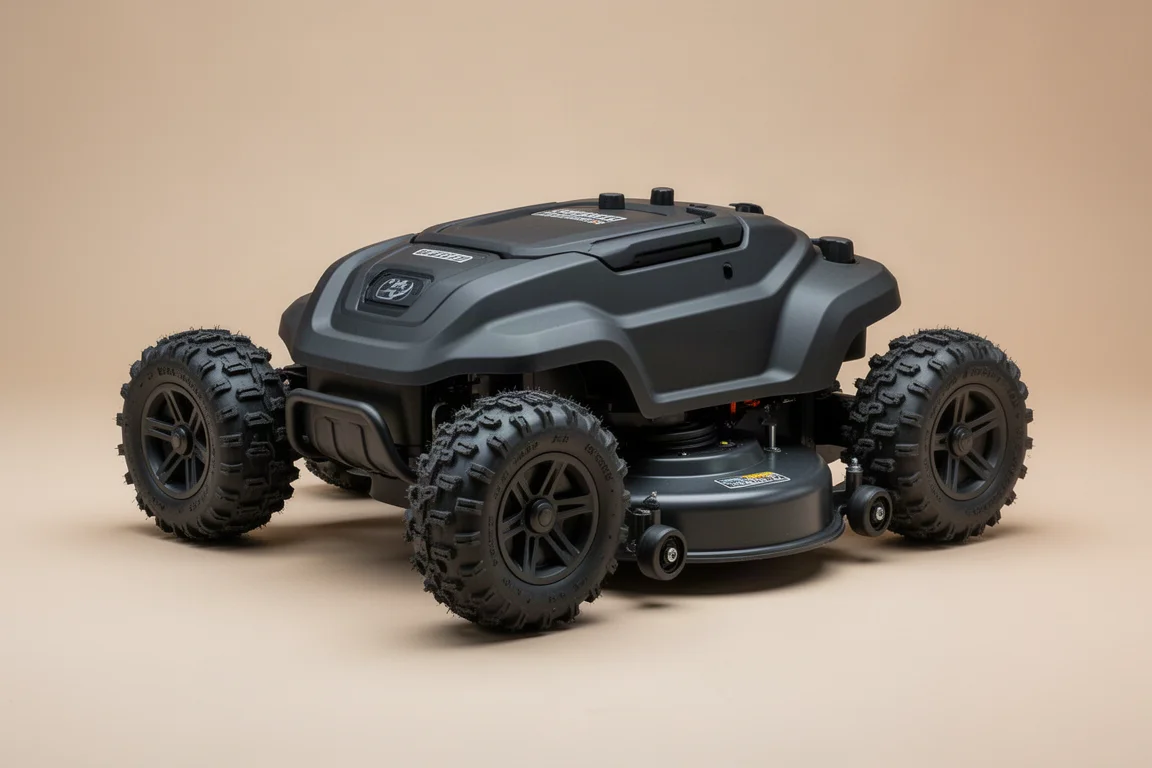
The MowRator 4WD takes a completely different approach. Rather than autonomy, it is a remote-controlled mower, best described as a Honey, I Shrunk the Kids mower with far more power and a battery instead of gas. There is also a two-wheel-drive version, but for yards with hills or uneven ground, the four-wheel-drive version is worth the extra cost. It handles noticeably better.
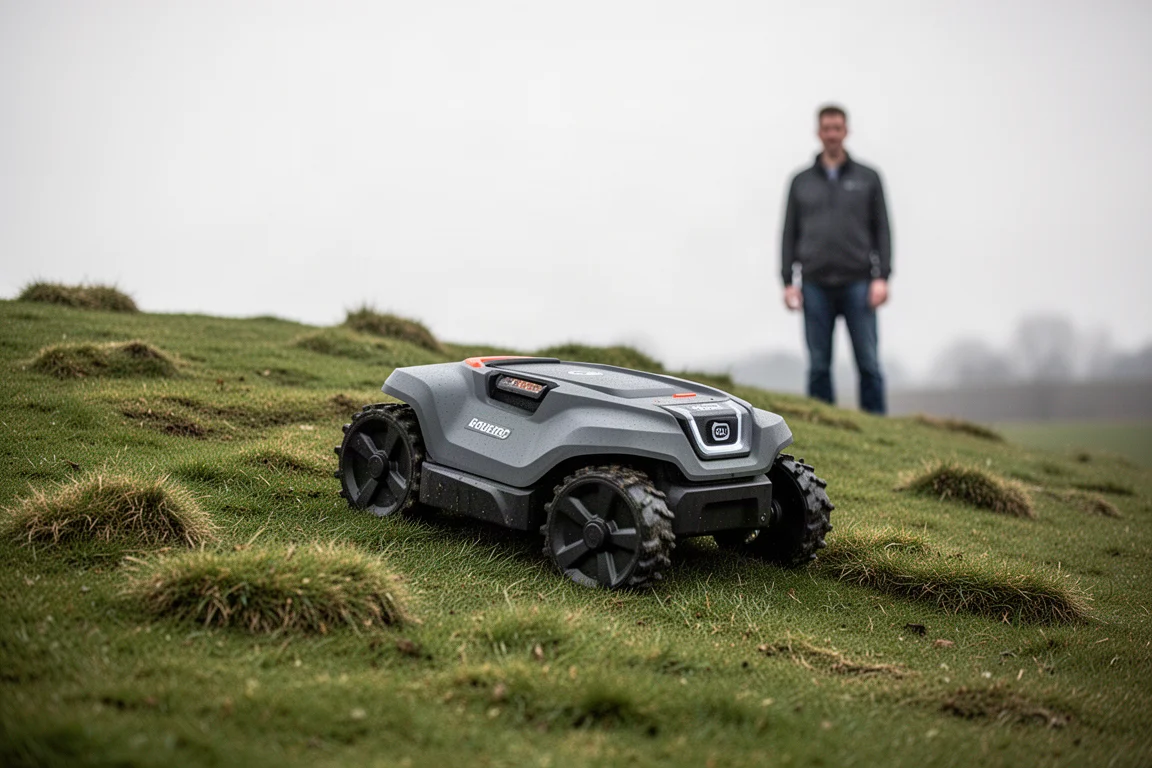
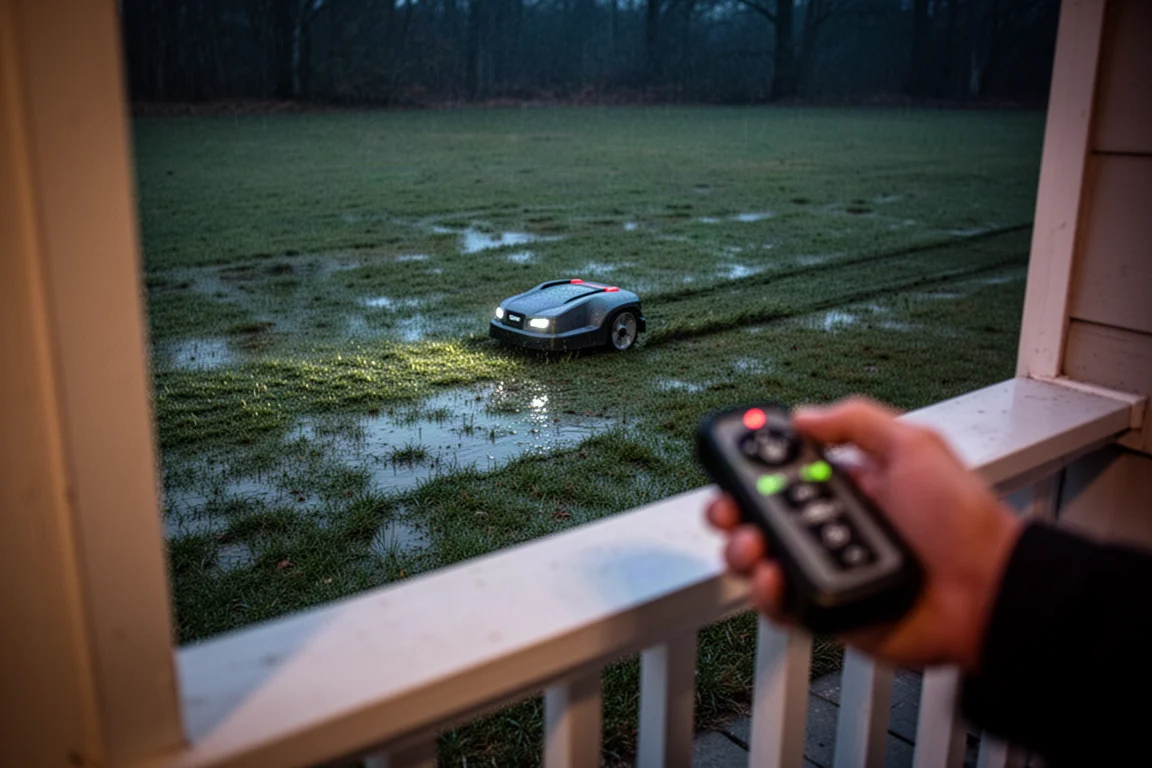
This is a hands-on machine, and that is part of its appeal. Remote control is super responsive and easy to use, with extensive built-in safety features that shut the mower down when it gets too close to something. Cutting power is where it wins. It can be operated from a porch or a distance, cutting areas you would not want to walk into yourself. And because it is lighter than a big mower, it goes into wet, nasty areas without sinking the way a riding mower would. It has only been stuck once, in near swamp-like conditions.
It is also closer to a true traditional mower in its hardware: a single, easy-to-sharpen, easy-to-replace blade instead of a pile of razor blades. It cuts through everything.
The downsides are real but manageable. Visibility on flat or downhill sections can be tricky since the cut lines are not always easy to see, and sometimes moving around, or even dragging a chair along, helps. Four-wheel drive can chew up soft ground a bit when moving fast, though slowing down in wet areas helps. The remote charges over USB-C, which is convenient, but slowly: the mower charges fast, the remote does not, so forgetting to charge it means waiting. And of course, it is not autonomous. You are still mowing, just not walking behind the machine.
Which One Should You Buy?
These two machines solve different problems, so the answer depends entirely on your yard and your climate.
The Yarbo is best for convenience. Set it, forget it, and let it maintain the yard, especially in dry conditions. In summer heat with dry grass, it is outstanding: consistent lines, changeable patterns, and firmware updates that keep adding features and improvements. It can absolutely replace a conventional mower in a dry climate. In wet, thick-grass regions, it is more of a supplement than a replacement.
The MowRator 4WD is a worker. It does not care about conditions as much, cutting confidently in spring moisture, wet grass, and unpredictable weather. In practice, a two-mower household uses both: the Yarbo for dry summer days, the MowRator for messy spring and fall conditions. In terms of capability, it is an absolute tank designed as a mower, and it can genuinely replace a traditional mower. You are still involved, but you are not physically doing the work.
Before spending thousands of dollars on either, consider how much wet weather your region gets, how much time you are willing to spend on setup and cleaning, and whether you want full autonomy or full control.
Conclusion
Both the Yarbo and the MowRator 4WD are among the coolest robotic mowers available right now, with completely different approaches, real strengths, and honest trade-offs. Choose the Yarbo if hands-off convenience in drier conditions is the goal. Choose the MowRator 4WD if you want cutting power and all-condition capability with remote control. Either way, a year of ownership shows these machines are no longer gimmicks, they are genuinely useful tools, as long as you buy the one that matches your yard.
Further reading
Related Reviews
Robot Lawn Mowers
Segway Navimow X430 Review: A Hands-Off Robot Mower for Large, Challenging Lawns
A real-world look at the Segway Navimow X430 robot lawn mower, covering setup, cutting quality, obstacle detection, heat tolerance, and daily automation.
Robot Lawn Mowers
Airseekers Tron SE DS Review: A Robot Mower That Mulches Like Nothing Else
Six blades, Flow Cut mulching, net RTK navigation and strong wet-grass performance make this compact robot mower an interesting pick for smaller lawns.
Robot Lawn Mowers
Antbot M9 Pro Review: A Compact Robot Mower That Cuts Where Others Give Up
The Antbot M9 Pro combines RTK, 360-degree lidar and dual cameras so it keeps mowing under trees and around obstacles. Here is how it performed in real-world testing.