EDC Flashlights
Wuben X3 Owl Retail Version: What Changed from the Kickstarter Release
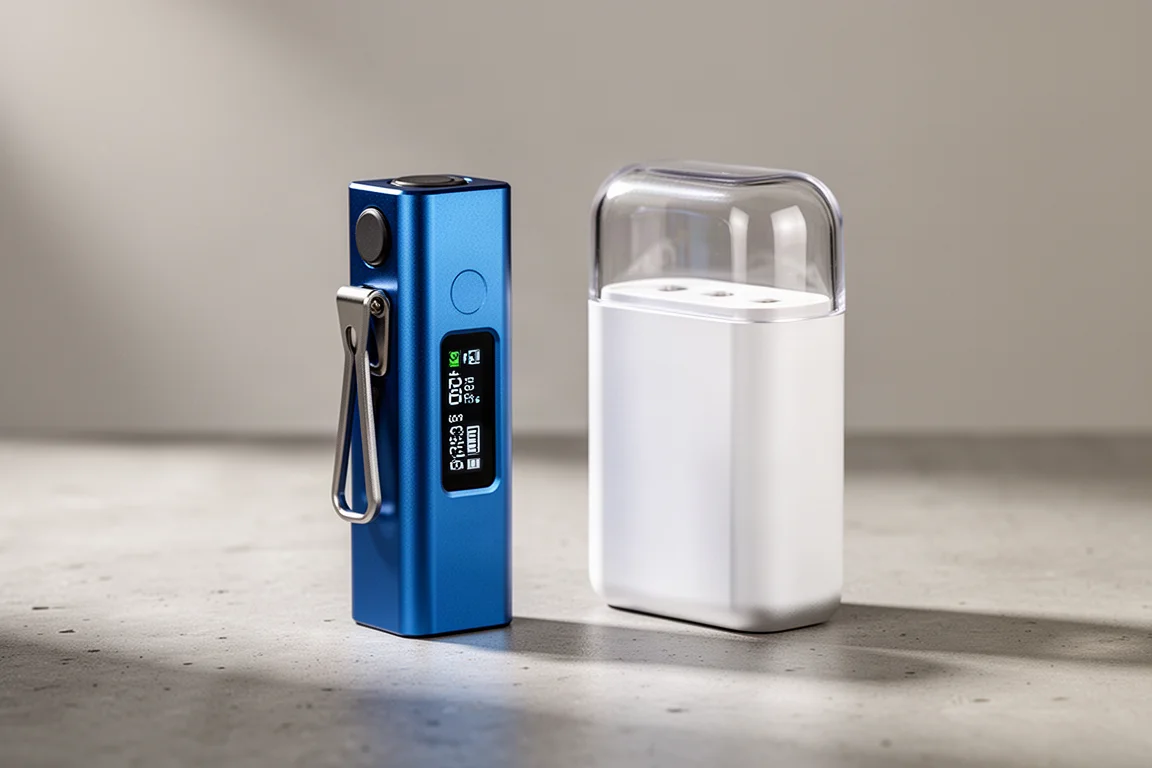
The retail Wuben X3 Owl keeps the same brightness and rotating head while upgrading to an aluminum charging case, terminal charging, and a streamlined red light mode.
Introduction
The Wuben X3 Owl moved from its crowdfunding run to a full retail release, and the retail version brings a handful of meaningful changes. The core formula stays the same: a compact EDC flashlight with a 180-degree rotating head, magnet mounting, a built-in display, and a charging case for extra power on the go. What has changed is how it charges, how the red light mode works, and how the charging case is built.
The retail version arrives in seven different combinations: the X3 Owl with an aluminum charging case in green-on-black, blue-on-white, black-on-black, and white-on-black, plus versions with just a charging base in white or black. A newer white-on-white combination rounds out the lineup.
What the Retail Version Keeps
The retail X3 Owl matches the crowdfunding version on output and brightness modes. You still get a maximum of 700 lumens, a 102-meter beam distance, and 2,590 candela, spread across four brightness levels in white light: low at 1 lumen, medium at 50 lumens, high at 150 lumens, and turbo at 700 lumens via double press.
The user interface is unchanged as well. One press turns the light on or off, a long press reaches the red light mode, and the small screen shows the active brightness level. Four quick presses lock the light out, and five quick presses toggle the internal blue indicator light, which is worth keeping off since it drains the battery quickly.
A Simpler Red Light Mode
The one functional trim is in the red light mode. The earlier version offered flashing red options in that mode, including strobe, alongside low and high. The retail version keeps just low and high and removes the flashing red modes entirely. The reasoning is that the flashing red options were not very useful in practice, and that is hard to argue with. Strobe and SOS remain available in white light mode via triple press, so nothing essential was lost.
Smarter Charging, Better Battery Life
The biggest upgrade sits on the bottom of the light. The earlier version had two small magnetic feet used purely for mounting to metal surfaces, and it charged wirelessly inside its case. That wireless setup was inefficient and only delivered about one and a half times the flashlight’s capacity in recharges.
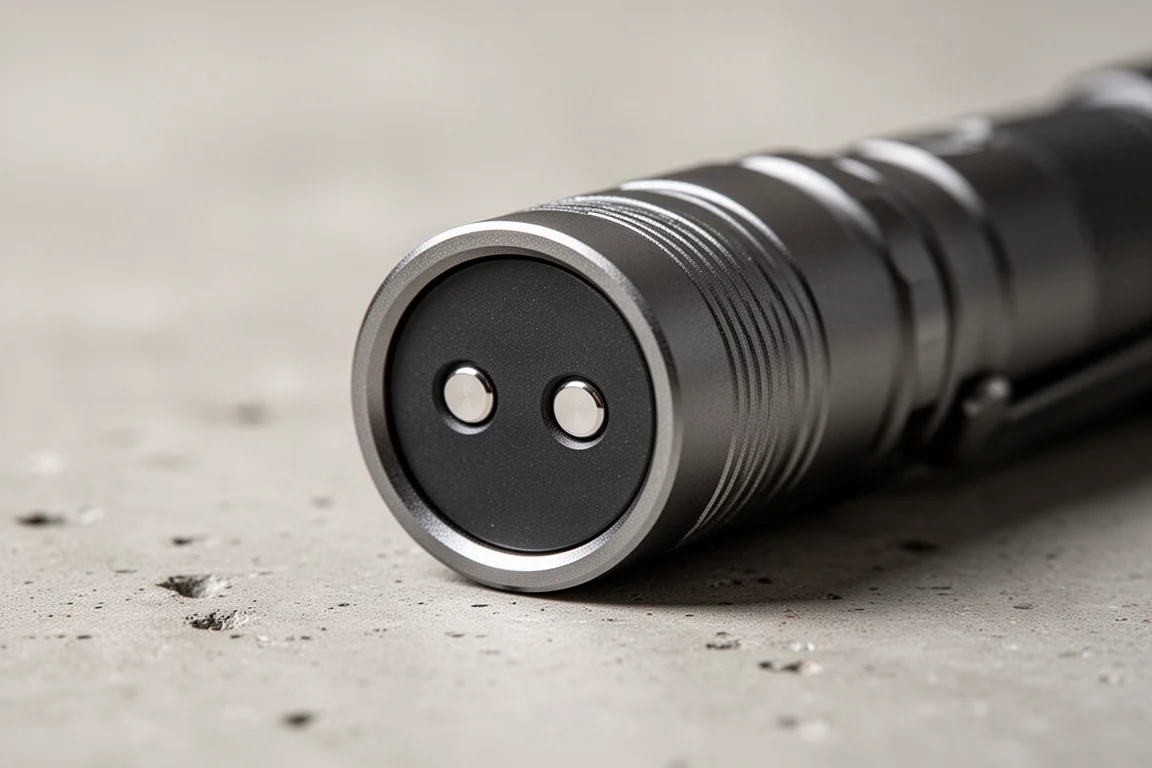
The retail version keeps the magnets but adds charging terminals, so it charges through contact points inside the case. Battery capacities are unchanged at 1,000 mAh in the flashlight and 3,000 mAh in the case, but terminal charging delivers roughly two and a half to three times the flashlight’s capacity per case charge. It is a small hardware change with a real payoff in usable runtime.
An Aluminum Case That Feels Properly Premium
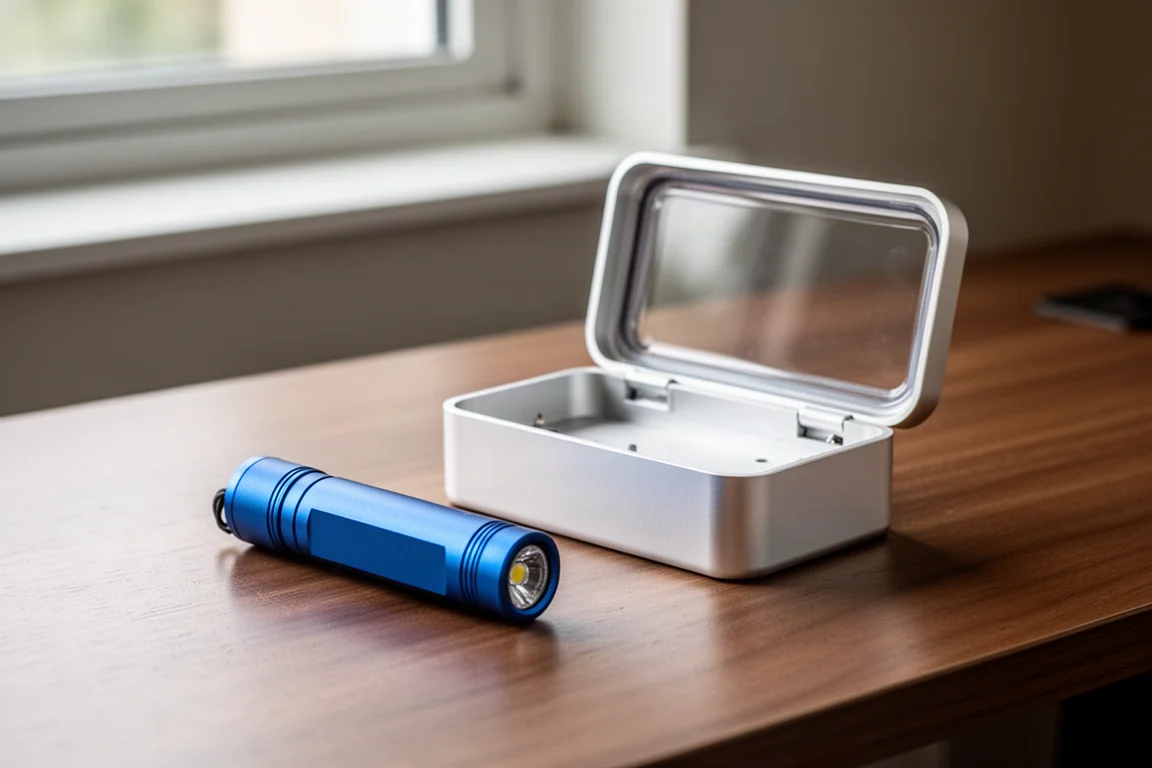
The charging case itself saw the most visible upgrades. The earlier case was plastic; the new one is aluminum, and the difference in feel is significant. The new case also drops the green charging LED and the charging symbol on the front, simplifying the design, and the transparent cover now spans the full top rather than half of it, with small grooves added to make it easier to open. The logo placement shifted slightly and the lanyard attachment changed a little, but these are minor details.
Why the 180-Degree Rotating Head Still Matters
The feature that made the X3 Owl stand out remains untouched, and that is good news. The head rotates 180 degrees, which turns a small flashlight into a remarkably versatile tool. Clip it to a shirt pocket with the LEDs facing out and you have a hands-free lamp on your chest. Rotate the head and hold the body naturally, with the power button falling right under your thumb.
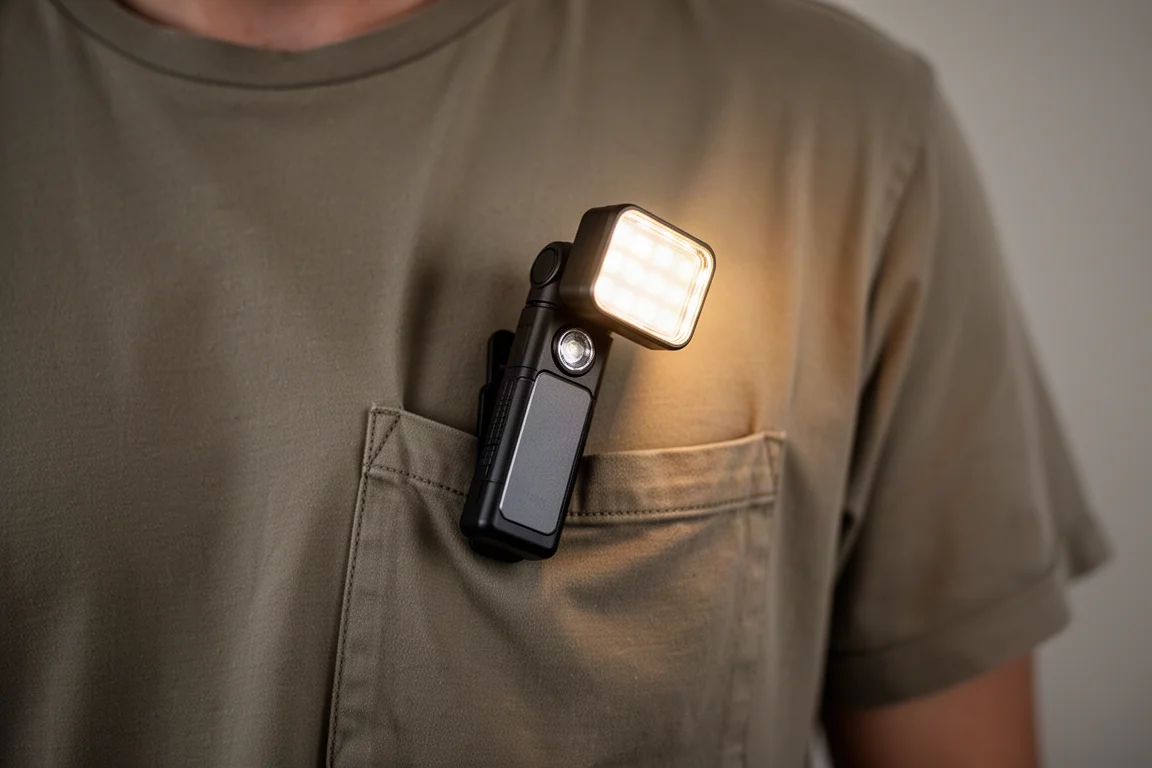
The magnets on the base are strong enough to hold the flashlight’s full weight on any metal surface, and if the angle is not quite right, you simply rotate the head. This combination of rotating head, pocket clip, and magnetic base is what makes the X3 Owl one of the more versatile EDC flashlights available.
Colors and Glow Details
The retail version comes in blue, black, green, and translucent white. The translucent white version has a unique trick: it glows after exposure to UV light. None of the other color options share this property, so if a glow-in-the-dark flashlight appeals to you, white is the one to pick.
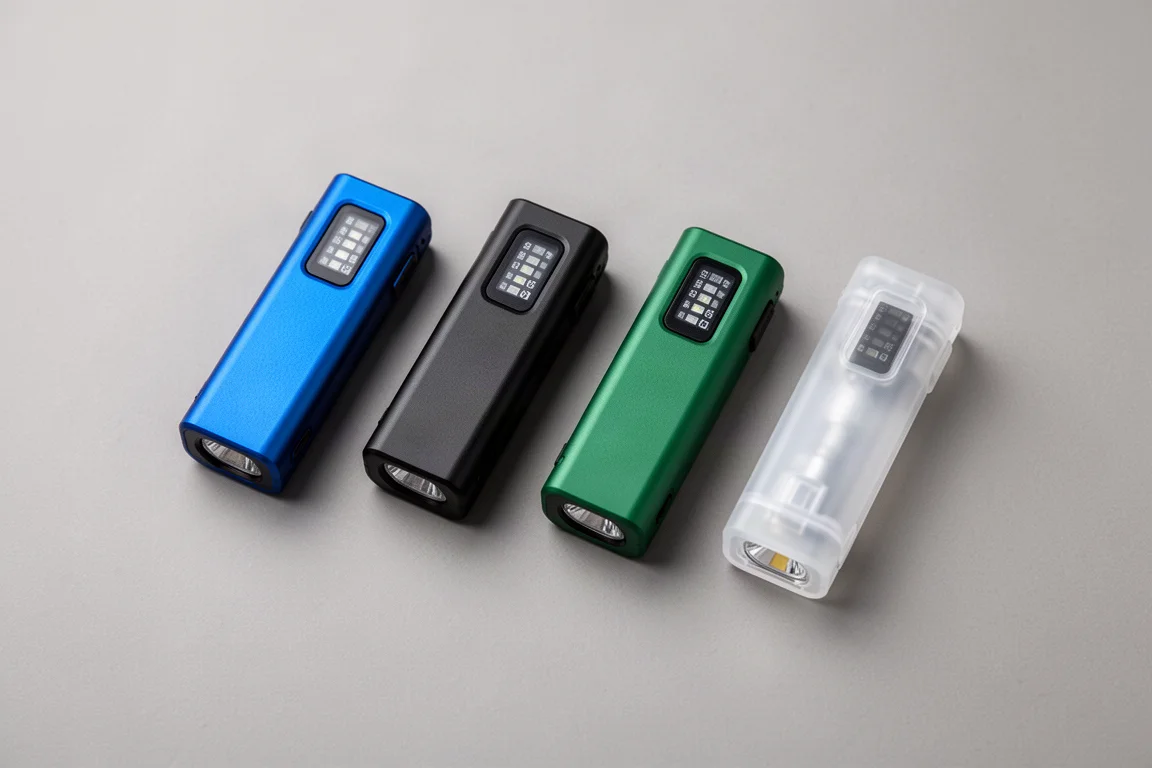
Among the colored versions, blue with the white charging case is the standout combination, with black and green close behind. The black-on-black pairing looks particularly sharp, and the translucent white, while fun, tends to rank last for most people’s tastes.
Buying Advice
Price depends on which configuration you choose. The X3 Owl with just the charging base costs $81.99, so going that route saves you some money if you do not need the full charging case. The version with the new aluminum charging case costs $119.99. If you plan to recharge the light away from home regularly, the aluminum case version is the more complete package, given the improved charging efficiency and the noticeably higher build quality of the case.
Conclusion
The retail Wuben X3 Owl is a case of a good product getting quietly better. The output, beam distance, rotating head, magnetic base, and screen all carry over unchanged, while terminal charging nearly doubles the effective recharge count from the case and the aluminum case construction makes the whole package feel far more refined. Losing the flashing red modes is a sensible simplification rather than a real loss. For anyone after a compact, versatile EDC flashlight with flexible mounting and charging options, the retail X3 Owl is an easy recommendation.
Product link
View more details for Wuben X3 Owl
This product is mentioned in the review. Check the specifications, options, and compatibility before buying.
View more details for Wuben X3 OwlFurther reading
Related Reviews

Wallets
Bellroy Card Sleeve 2 Review: A Slim Wallet That Refines a Classic
The Bellroy Card Sleeve 2 is a slim, leather wallet with quick-access slots and a refined build. Here is how it compares to the original.

Wallets
Double Oak Essentials Cloud Wallet Review: A Compact, Feature-Rich Everyday Carry
The Double Oak Essentials Cloud Wallet packs a magnetic closure, RFID protection, and a hidden card slot into a slim 33-gram package.

Everyday Carry
Everyday Gear That Deserved a Second Look
A roundup of solid everyday carry items: watches, pens, a pencil, a knife, and a smart ring that each earned a place on the table.