Knife Sharpening
Work Sharp Precision Adjust Review: Sharp Edges Without the Learning Curve
A guided sharpening system that puts a working edge on badly neglected knives, even if you have never touched a sharpening stone.
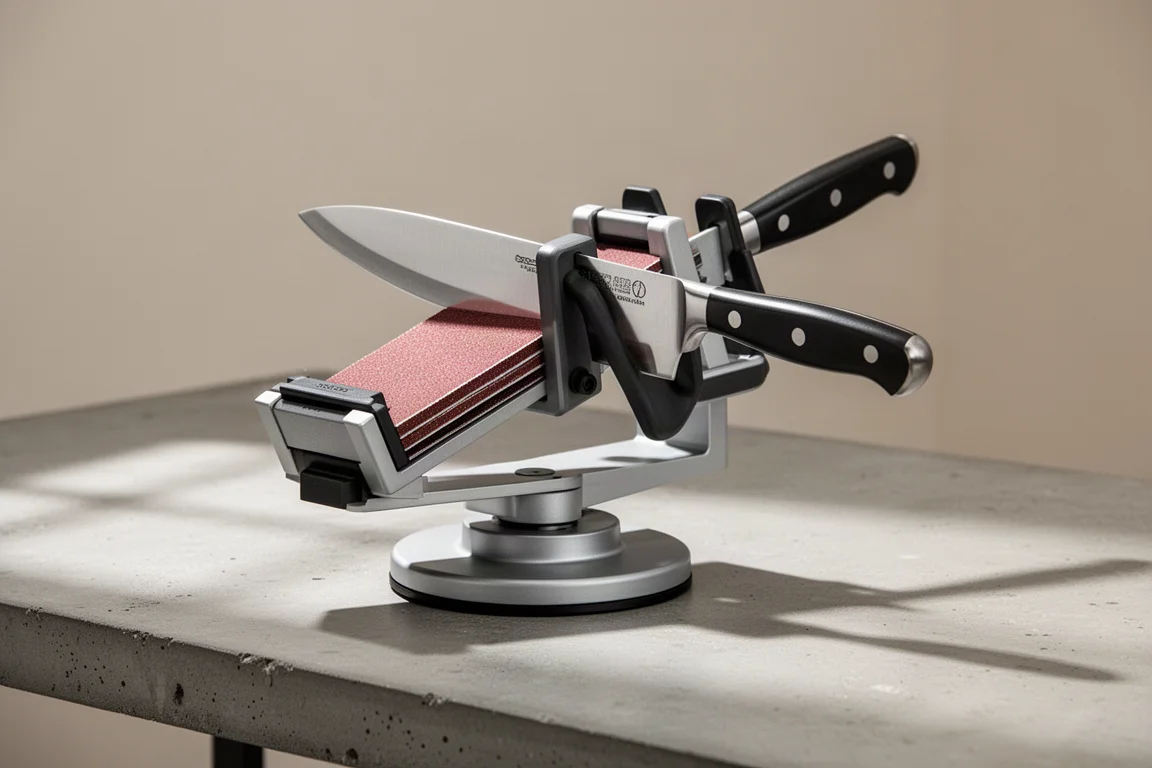
Introduction
Knife sharpening is one of those tasks many people quietly dread. Stones take patience, freehand technique takes practice, and most of us just want a sharp knife without a months-long apprenticeship. The Work Sharp Precision Adjust is built for exactly that kind of user: someone who either hates sharpening or simply is not good at it yet.
The appeal is simple. This is a guided system. The clamp holds the blade, the angle is set and repeatable, and the sharpening carriage does the rest. The result is an edge that looks like it came from someone who knows what they are doing, even if you have never touched a sharpening system in your life.
Who This Product Is For
This system is aimed squarely at beginners and sharpening-averse users. If you have tried and failed with whetstones, or you simply do not have the patience to learn freehand technique, the Precision Adjust removes almost all of the guesswork. It is also a practical option for restoring neglected knives rather than just maintaining well-kept ones.
Experienced sharpeners can certainly use it too, but its strongest audience is the person who wants consistent, repeatable results without building a new skill from scratch.
Putting a Beaten-Up Edge to the Test
The real test for any guided system is not a knife that just needs a touch-up. It is a blade that has been used hard and maintained badly. To see how far the system could go, two heavily abused chef’s knives were the starting point: more than a decade old, never sharpened on any real schedule, with surface rust, chip marks, dings and even a broken tip.
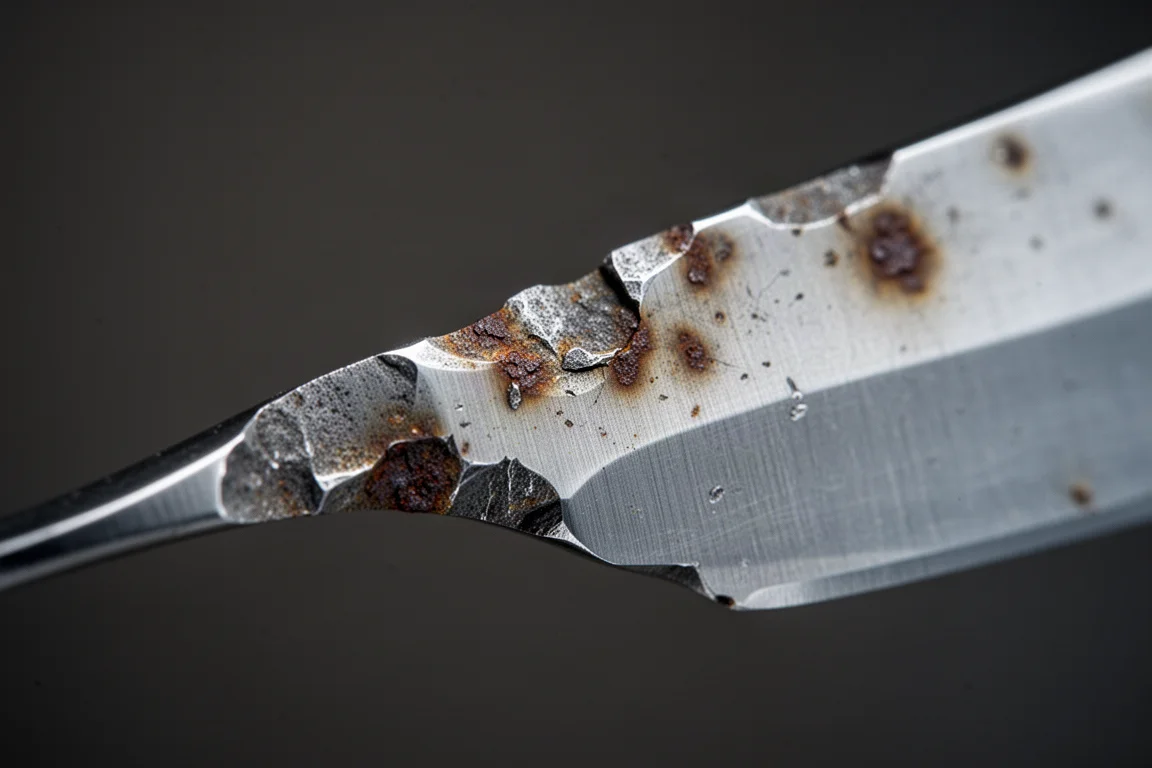
Under magnification the damage was dramatic, which is actually a useful scenario. If a guided system can put a genuinely improved edge on blades in this condition, a novice working with ordinary knives should have an easy time.
Getting Started the Right Way
One setup detail matters more than almost anything else. The system needs to be zeroed on the flat surface you are working from before setting your angle. Skip that step and you will end up with bad results and no idea what angle you actually have. The manual says this clearly, and it is worth reading the manual before your first session rather than after.
Once zeroed, the blade clamps into an open clamp positioned in the middle and tightens down. The pressure plates hold the blade very securely, a design touch that makes the whole setup feel solid and confidence-inspiring.
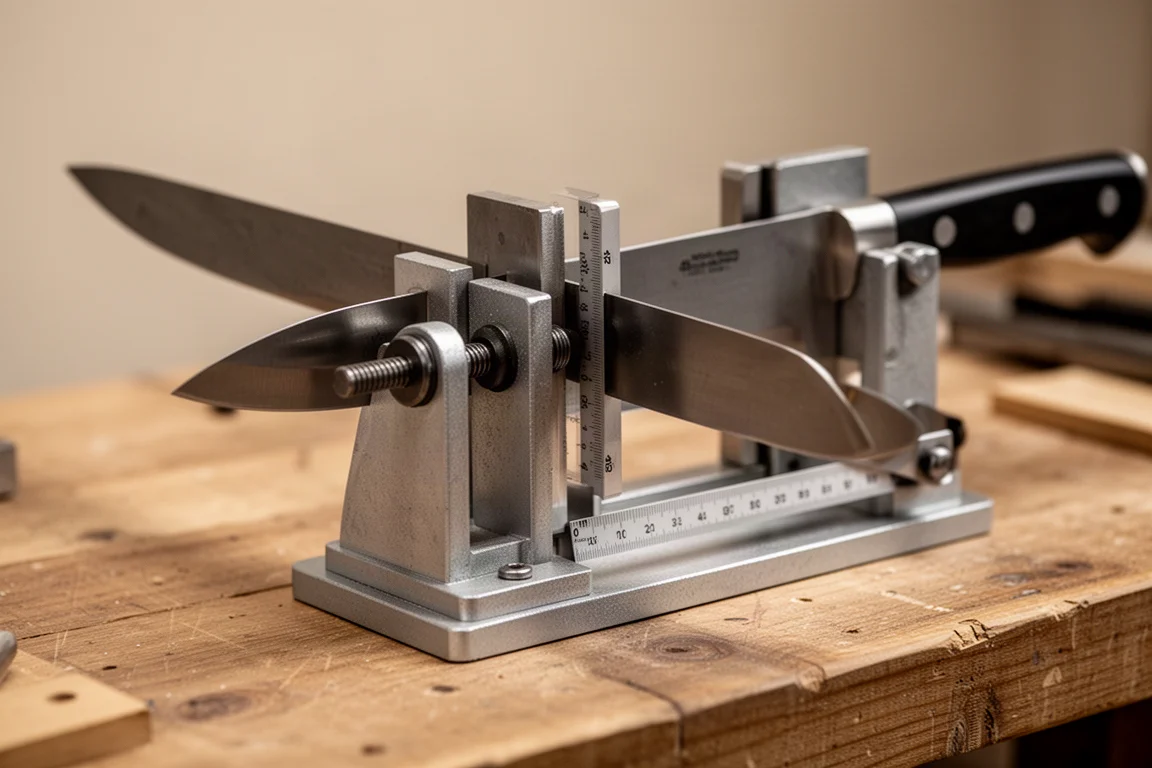
One thing to watch: the thickness or height of the blade affects the angle reading. A shorter blade may need a small adjustment to hit your target angle, and the built-in angle measurement makes that easy to check. Once locked in, the same angle can be reproduced every time.
Reprofiling a Severely Damaged Blade
For badly damaged edges, the work starts with the coarse 220 grit diamond plate. This is where patience matters: removing enough material to grind out deep chips takes many passes per side, far more than a normal sharpening session. It took roughly twenty passes per side on the worst blade, and even then a full reprofiling was still warranted.
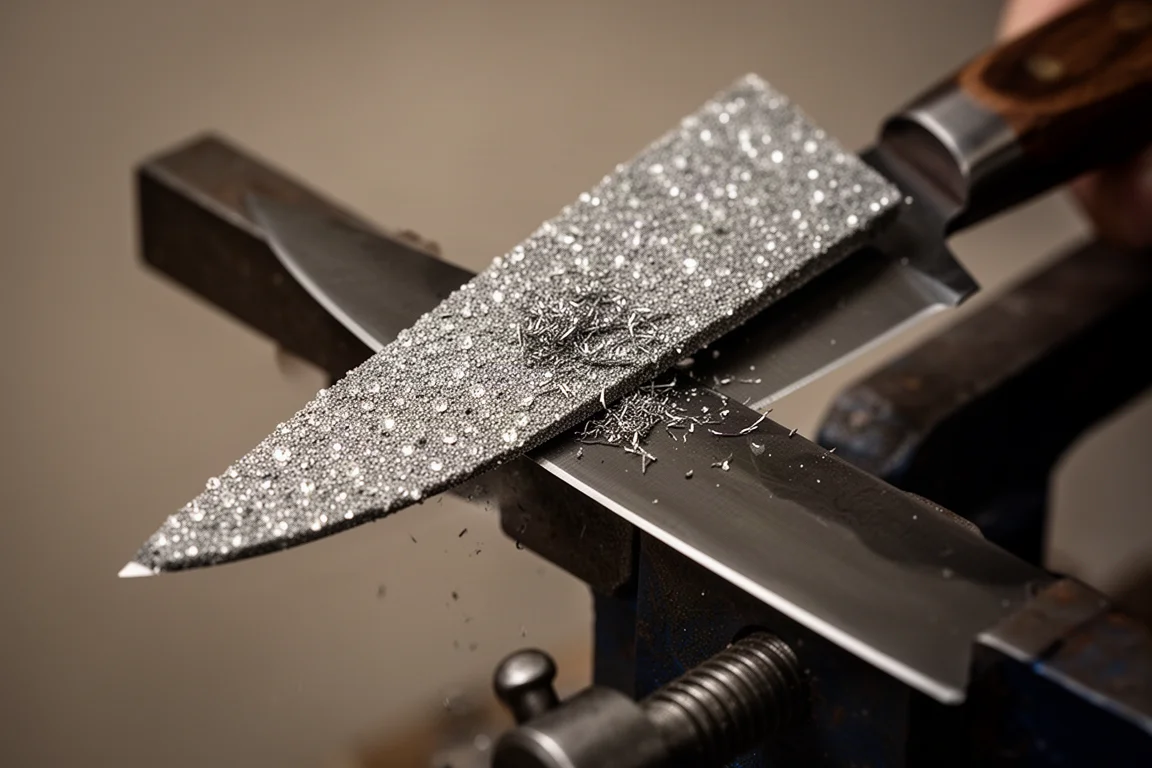
A reasonable workflow for a working edge is to jump from 220 to 600 grit, using a hone in between to clean up the edge on both sides. One honest wish for future revisions: an option for a coarser external sanding attachment, using the system’s magnetic attachment platform, would make heavy reprofiling of very damaged blades noticeably faster.
Finishing: Hone and Strop
The finishing stages are where the system feels genuinely refined. The hone cleans up the edge between grit jumps, and the strop knocks off the burr that you can feel along the edge after coarse work. The technique is simple: draw down across the edge only, lift at the end of the stroke, and never stroke back up the strop.
The stand deserves a mention too. The little rotating base is elegant and well designed, letting the whole unit pivot as you work, and it sits rock solid throughout. Small things like this make a repetitive task noticeably more pleasant.
What the Results Looked Like
For blades that started in terrible condition, the improvement was dramatic. Edges that were chipped, rusted and partially broken came out looking far better, with a proper tip restored and a toothy, working edge suitable for kitchen use. It was not a polished mirror edge, and that was deliberate: the instructions describe how to produce a quick, toothy edge, which suits anyone who prefers a bit more bite in the cut.
Could a complete novice get these results? Absolutely, provided they follow the instructions in the manual. The system makes success repeatable rather than dependent on technique.
Storing the Whole System
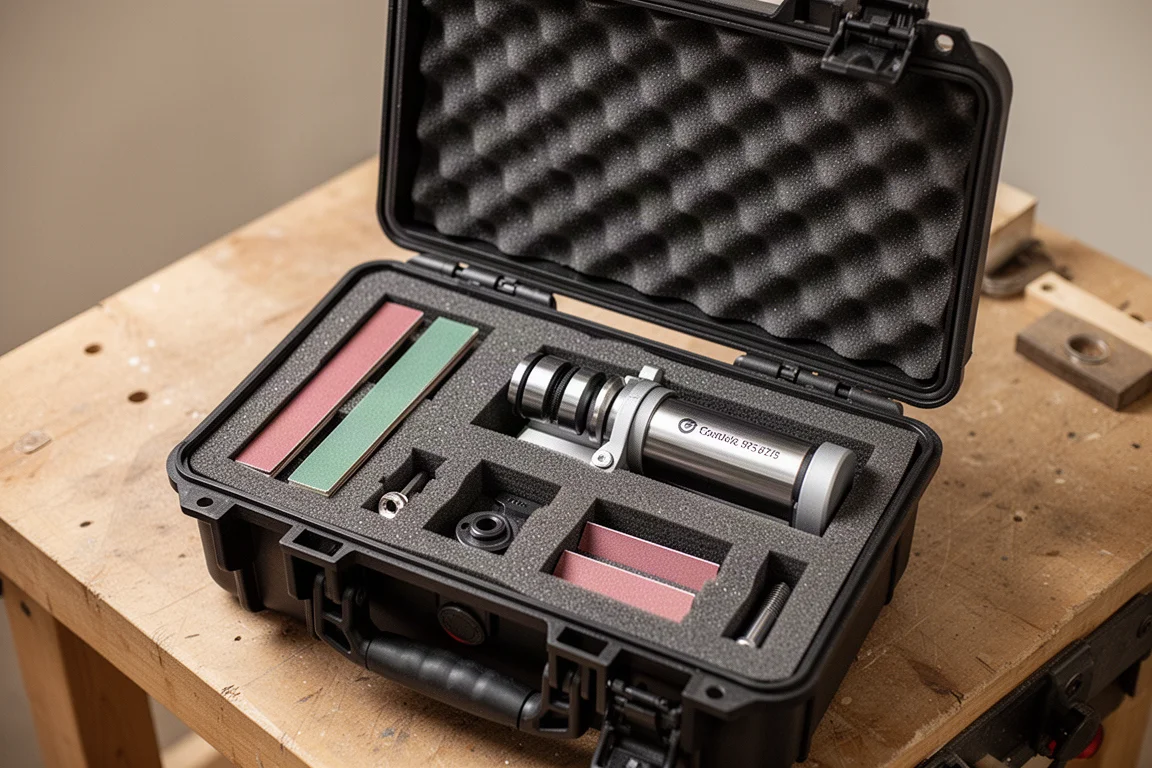
One practical bonus worth knowing about: the entire system fits neatly into an Apache 3800 hard case. With some simple foam cutting, removing a couple of 7x4 sections and a bottom piece, the sharpening unit, abrasive plates and accessories all pack in securely for a compact, protected storage solution.
Things to Consider Before Buying
- Severe damage takes real time. Heavily chipped or reprofiled blades need many passes, so set expectations accordingly.
- Zeroing on your work surface is mandatory. Skipping it is the most common setup mistake.
- Blade height affects the angle reading, so check with the angle gauge for each different knife.
- A coarser material-removal option would speed up the worst restoration jobs.
Buying Advice
If you dislike sharpening, are new to it, or want repeatable angles on a range of knives, the Work Sharp Precision Adjust is an easy recommendation. It turns a frustrating skill into a guided process, and it can rescue knives you might otherwise have written off. If you mostly maintain already-sharp knives and enjoy freehand stone work, a traditional setup may still suit you better.
Conclusion
The Precision Adjust does exactly what it promises: it makes sharpening accessible. On two badly neglected, badly damaged chef’s knives it delivered a usable, toothy working edge and a dramatically improved profile, all without any freehand skill. For beginners and sharpening-reluctant users, that is exactly the kind of result worth paying for.
Product link
View more details for Work Sharp Precision Adjust
This product is mentioned in the review. Check the specifications, options, and compatibility before buying.
View more details for Work Sharp Precision AdjustFurther reading
Related Reviews
Knife Sharpening
Work Sharp Professional Precision Adjust Elite: A Sharpening System for People Who Care About Edges
The Elite version of the Professional Precision Adjust adds a rugged case, fine resin-bonded diamond plates, and a strop for a true mirror finish.
Knife Sharpening
Work Sharp Precision Adjust: The Clamp-and-Jig Sharpener Worth Building Out
A fixed-angle knife sharpener with a rotating abrasive carriage, plus an upgrade kit that turns it into a genuinely complete sharpening setup.
Knife Sharpening
Work Sharp Precision Adjust Upgrade Kit Review: A Wider Grit Range for an Already Great Sharpener
The Upgrade Kit expands the Precision Adjust with extra abrasives, a built-in strop, and a proper carrying case. Here is what changes after months of use.