Fountain Pens
Wood Pen Craft Sui: A Handmade Wooden Fountain Pen That Plays by Its Own Rules
A limited prototype wooden fountain pen from Osaka-based Wood Pen Craft, built with an air-release cap, three screw types, and a fully removable barrel.
Introduction
Some fountain pens chase versatility. The Wood Pen Craft Sui (ウッドペンクラフト 水) chases something else entirely: a single, uncompromising idea of what a wooden fountain pen should be. It is a limited prototype released ahead of general sale to mark the opening of the brand’s wooden pen specialty store, and it was even given its own name, Sui, as a special one-off.
The honest conclusion up front: this pen is not for everyone. It divides opinion, particularly in how it writes. But for fountain pen enthusiasts who appreciate craftsmanship, it packs an almost obsessive level of attention to detail and artisan skill into one unique instrument. It is refined, straight-lined, clipless, and focused entirely on the simple pleasure of touching wood while you write.
About Wood Pen Craft
Wood Pen Craft is a handmade wooden pen brand launched by Wood Road, an Osaka-based company that runs a range of wood-related businesses. The company operates a serious woodworking school attended by more than 100 people every week, and it has opened a dedicated handmade wooden pen shop where visitors can browse pens and try hands-on crafting sessions. It is a popular Osaka brand with a genuine workshop culture behind it.
Sui was released in a limited advance run to commemorate the opening of that wooden pen specialty store. It arrives in a wooden box that doubles as a pen tray when the lid is flipped over. The box can be used on its own or with a riser, and as an optional add-on when buying a pen it costs 880 yen, which is excellent value. The shipping box also included a handwritten letter and an instruction sheet.
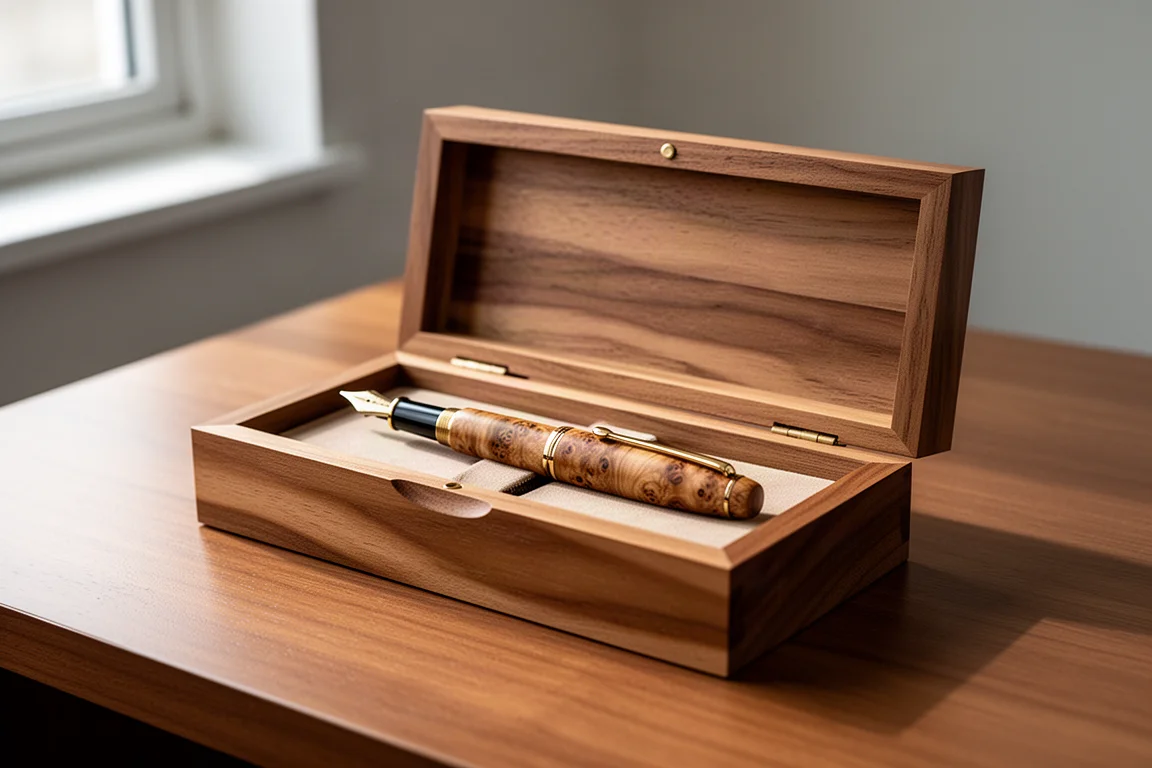
Inside, the pen is wrapped in a black pen sleeve, and the package includes a converter and an ink suction pipe. European-standard cartridges can also be used.
Design and Specs
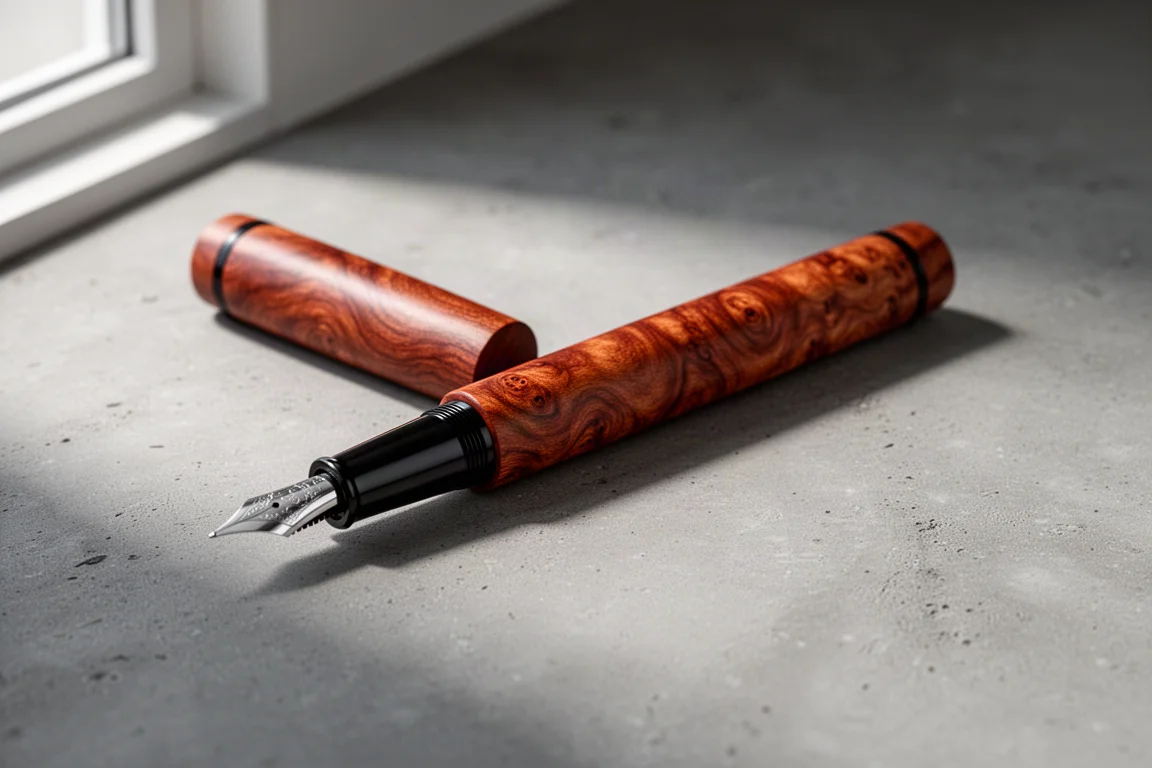
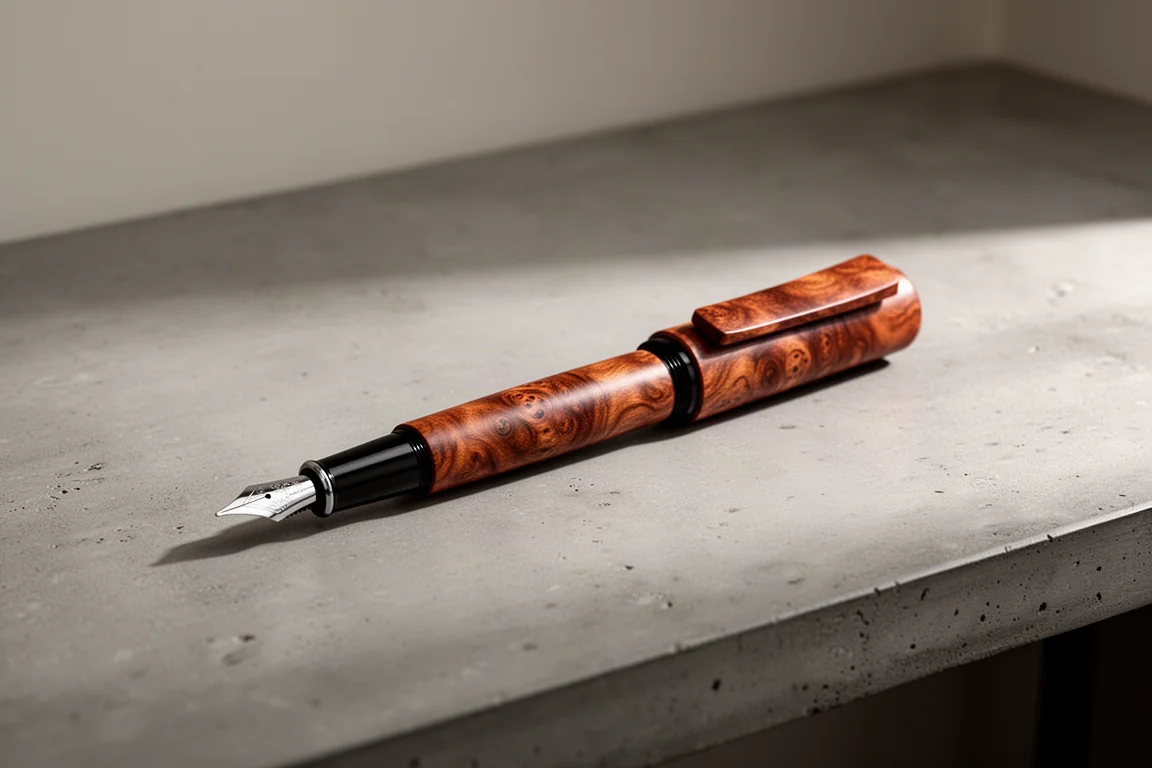
The Sui is defined by its seamless, straight silhouette. There are no steps between sections, no clip, and no visual interruptions. It is the kind of pen that invites comparison to a finely finished Japanese sword: simple at first glance, but the product of enormous skill.
Key specifications:
- Total length: 137 mm
- Weight: 17 g
- Barrel diameter: 13.5 mm
- Center of gravity: low, both with the cap posted and unposted
At 17 grams it is lighter than it looks, and the low balance makes the untextured grip section surprisingly easy to hold despite its smooth finish.
Original Wooden Barrel Craftsmanship
Original wooden fountain pens are genuinely rare, and that is the first standout point of the Sui. Wood does not feel cold in the hand, and at this length and diameter the warmth of the material comes through fully. The barrel wood used here is knot-burl rosewood (花梨瘤木), a classic and popular wood species for turned pens.
Achieving a straight body with no steps and no misalignment between cap and posted position is difficult even for experienced artisans. Pieces frequently cracked during turning and had to be reworked, which is why only a limited number made it through. The grain on this particular unit is remarkably individual, with a pattern in the center that resembles a mountain. That kind of one-of-a-kind character is exactly the appeal of wooden pens. The surface feels silky smooth, and the edges are beautifully rounded, with more wood species promised as general sales begin.
An Air-Release Cap That Keeps Ink Ready
The second highlight is the cap. The grip section and the black trim ring are made from ebonite, a synthetic resin based on rubber, and the interior of the cap is also a tube carved from solid ebonite. Ebonite has very high airtightness on its own, but the real trick is a small vertical groove cut into the threads.
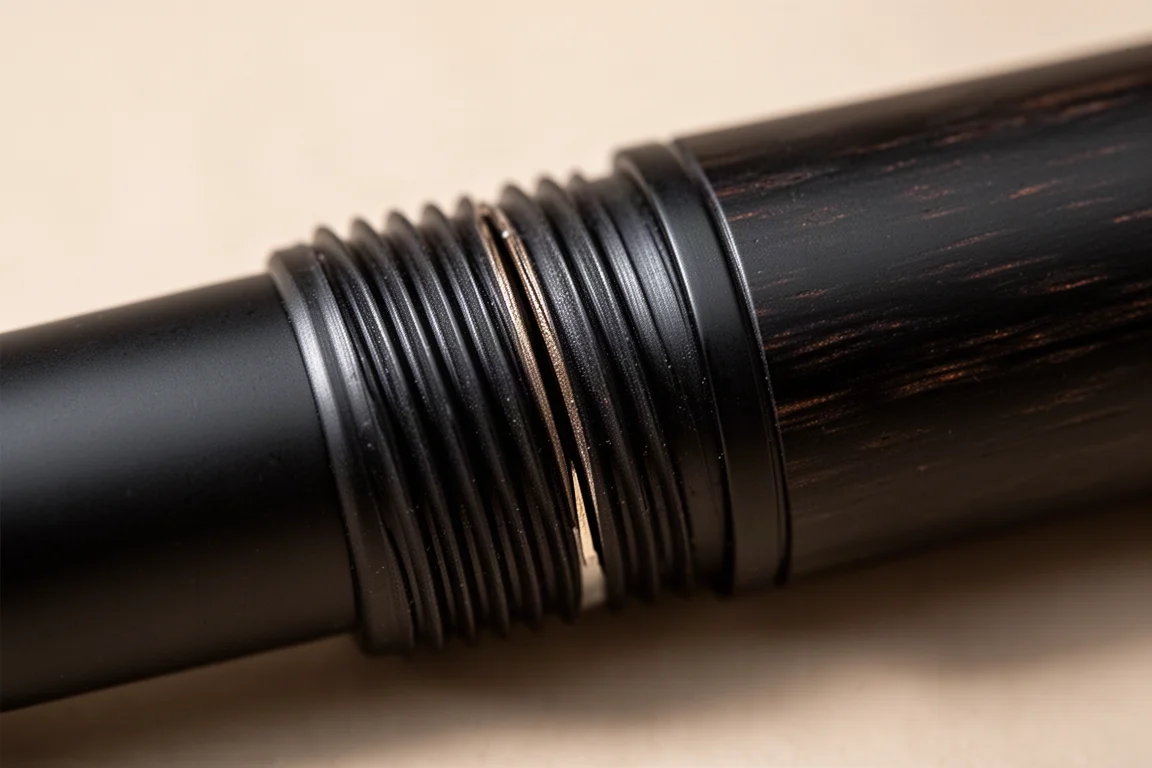
That groove lets internal air escape as the cap closes, and prevents outside air from entering once it is sealed. It is a tiny detail with a big payoff: the ink dries out far less slowly, and the pen starts readily when you return to writing.
Three Types of Screws, Each With a Reason
A single pen using three different thread types sounds excessive until you hear the reasoning.
The cap and grip section use a four-start thread that opens and closes in about half a turn, so the cap comes off quickly when it is time to write, and posting is just as fast.
The barrel uses a reverse thread. Because the Sui is designed to be held directly on the wooden barrel rather than on a separate grip section, you cannot grip a metal section to unscrew it the way you would with a mainstream fountain pen. A conventional same-direction thread would simply tighten further over repeated cap removal, eventually locking the barrel shut. The reverse thread solves that.
Finally, the grip section and barrel join with a standard thread where ebonite meets ebonite. Ebonite grips firmly and does not loosen once mated, so the connection stays secure without any adhesive.
Nib Options
The Sui uses Bock nibs, from a German OEM manufacturer known for consistent quality and a stable writing feel. Two options are available: a steel nib and a 14k gold nib. Both come in EF, F, and M sizes. The reviewed unit carries a steel F.
Ink Filling Without Messing the Wood
Because the barrel is wood, an ink stain would be permanent. The Sui addresses this with a fully removable wooden barrel, so the ink mechanism can be handled entirely without the wood ever coming into contact with ink. An included suction pipe makes filling even safer. It is a thoughtful solution to the one problem wooden pens face that resin pens never worry about.
Writing Performance
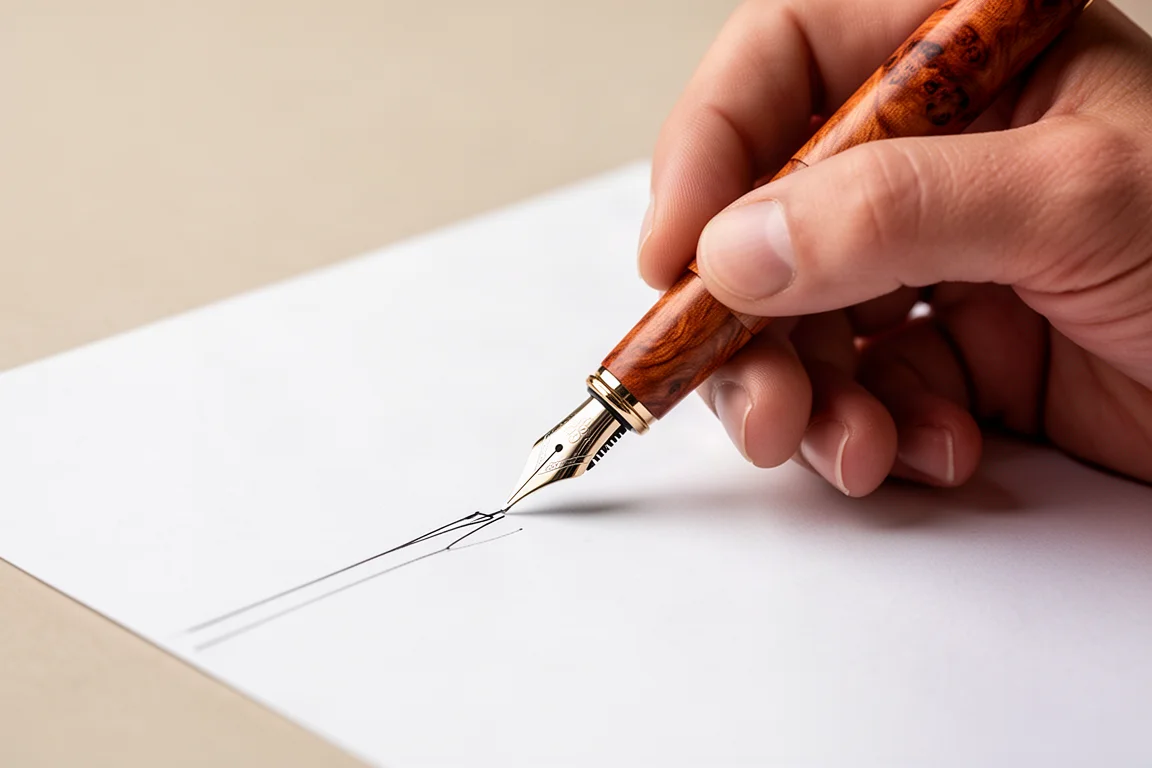
Filling with Sailor’s Haikara Ink in Antique Black, a slightly faded black, went smoothly. The writing experience, however, is where opinions will split.
The nib is on the firm side and ink flow is restrained. It is not as smooth as a Pilot Custom 823, not as scratchy as a Platinum 3776 Century, and not as silky as a Sailor Profit 21. The best description is “sarisari”: a dry, textured glide much like writing with an HB pencil. For writers who usually avoid nib pressure, the Sui is one of the rare pens where applying a little pressure actually feels good.
Where it shines is line quality. Even with the steel F nib, the line is nicely thin. Many F nibs run closer to M width, but the stable ink flow here makes the Sui well suited to small, precise handwriting.
Strengths
- Striking looks. The straight, snag-free, silky body in beautiful burl wood has a one-of-a-kind elegance.
- Wonderful feel. A smooth, stress-free surface you want to keep touching, with real wood warmth.
- Distinctive writing feel. Pencil-like feedback that rewards a bit of pressure and suits focused, deliberate writing.
- Excellent balance. Lighter than expected, with a moderate low center of gravity and an easy-to-hold grip despite the smooth finish.
- Clean small handwriting. Stable, restrained ink flow produces fine, tidy lines.
- Remarkable overall completeness. The level of obsessive detail makes it hard to believe this is a prototype. It is the crystallization of artisan experience that large manufacturers cannot easily replicate.
Things to Consider Before Buying
The main caveat is the missing clip. For this reviewer it is the pen’s defining character, but it does make carrying inconvenient: there is nowhere to hook it, and once it starts rolling on a desk, nothing stops it. The Sui demands careful handling.
Pricing depends on the nib material: the 14k gold nib version was priced at 61,600 yen including tax, and the steel nib at 38,500 yen including tax. Keep in mind that this is a prototype, so general sale models may differ in finish and price.
Buying Advice
If you want a pen that does everything smoothly and anonymously, mainstream resin fountain pens will serve you better. But if you want an instrument with warmth, individuality, and craftsmanship behind every design decision, the Sui is difficult to match. It suits fountain pen enthusiasts who value the tactile pleasure of wood, collectors drawn to limited handmade runs, and writers who enjoy dry, textured feedback. Follow Wood Pen Craft’s official announcements for general sale timing and the expanded lineup of wood species.
Conclusion
The Wood Pen Craft Sui is a rare thing: an original wooden fountain pen with genuinely clever engineering, from its air-release cap to its three-screw architecture and ink-safe barrel design. It is picky about its owner and unapologetic about its dry writing feel, but the completeness of the execution is beyond criticism. For anyone who has ever wanted a wooden fountain pen that treats the material with total respect, this is one worth watching closely.
Product link
View more details for Wood Pen Craft Sui Fountain Pen
This product is mentioned in the review. Check the specifications, options, and compatibility before buying.
View more details for Wood Pen Craft Sui Fountain PenFurther reading
Related Reviews
Fountain Pens
Best Budget Fountain Pens Tested: 9 Pens, One Clear Winner
A hands-on comparison of nine affordable fountain pens for everyday writing, calligraphy, and sketching, with a clear standout for flexible nib fans.
Fountain Pens
Aurora Optima Review: An Italian Piston Filler That Punches Above Its Price
A 14k gold nib, ebonite feed, and a beautifully deep oraloid body make the Aurora Optima one of the most rewarding piston fillers around.
Fountain Pens
Cross Bailey Light Review: The Entry-Level Fountain Pen Worth Keeping at the Office
A plastic-bodied Cross with a metal clip, snap cap, and famously smooth extra fine steel nib. Around $15, available almost everywhere, and easy to recommend.