Camping Gear
Winter Camping Sleep System: Four Pieces That Keep You Warm in Deep Cold
A layered winter sleep system built from four proven pieces, with the ratings, materials, and trade-offs worth weighing before you buy.
Introduction
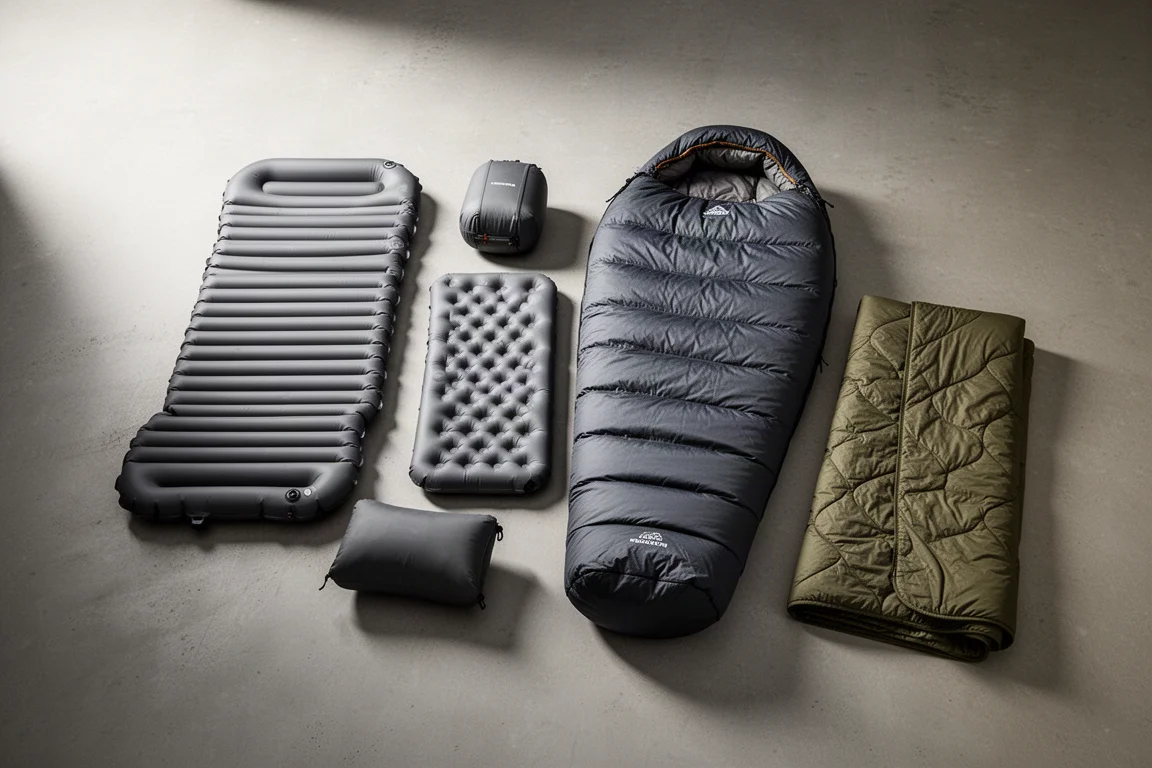
Sleeping warm in real winter cold is not about one miracle product. It is about stacking a handful of pieces so that each one handles a different part of the problem, from the snow under your tent floor to the air around your face at 3 a.m.
This guide walks through four pieces that form the core of a winter sleep system, ordered from the ground up. Each one earns its place for a specific reason, and each one has a trade-off worth understanding before you spend.
How a Winter Sleep System Fits Together
The foundation of the whole setup is a thin reflective mat, and it is not strictly necessary for warmth. It helps in two ways. A small amount of foam inside the mat reduces conductive heat loss, and the reflective surface reduces convective heat loss, but only when there is air sitting above the reflective film. Press another material flat against it and that reflective benefit largely disappears. A mat that is wider than the rest of the sleep system also gives you a dry strip of ground for boots, gloves, and other gear that would otherwise sit in the snow.
From there, the order is deliberate: reflective layer, closed-cell foam pad, inflatable air pad, pillow, sleeping bag, over quilt. Each layer adds insulation, and the foam pad adds something the air pad cannot, which is redundancy. If the inflatable pad develops a puncture overnight, the foam underneath still provides insulation. A small inflatable pillow with a foam top and a strap that locks it to the pad is a modest addition that makes a noticeable difference to comfort.
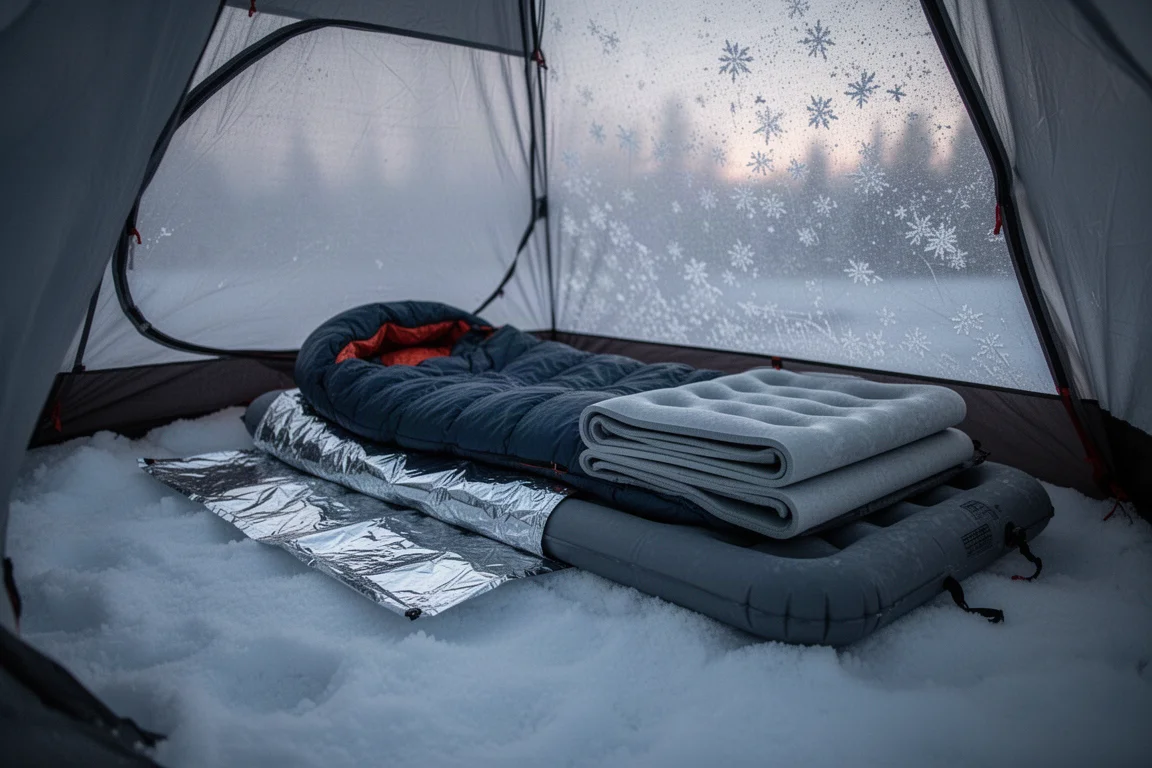
That layering logic is what makes a system capable of handling temperatures far below freezing. No single piece needs to be extreme on its own when the layers compound.
NEMO Switchback: The Foam Base Layer
The NEMO Switchback is an accordion-style closed-cell foam mat, which means it folds rather than rolls. That sounds like a small detail until you are packing up in the cold, where a pad that deploys and stows in seconds is genuinely easier to live with.
It adds a meaningful insulation boost under an air pad, and on the coldest nights that extra R-value is exactly what you want. It also pulls double duty around camp as a sit pad for cooking and chores, keeping you off the snow while you work.
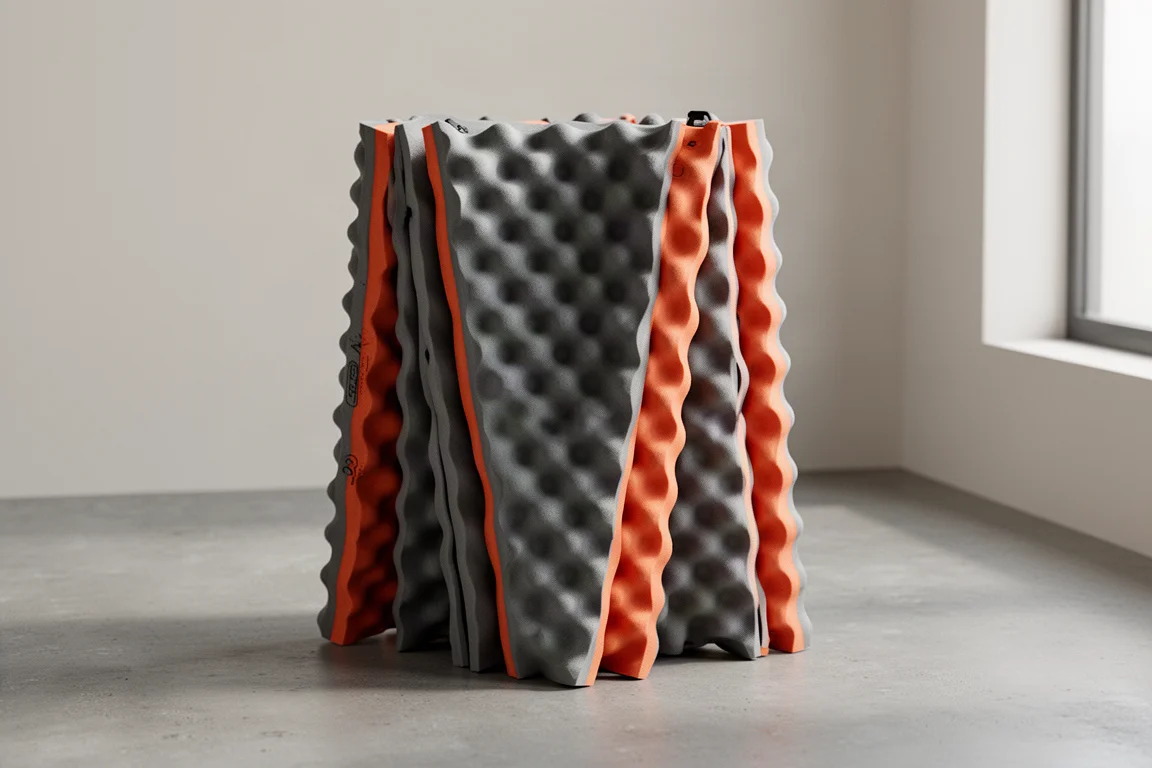
The bigger argument for carrying it is redundancy. Because it has its own R-value, a failed air pad no longer means sleeping directly on snow. In winter conditions, that backup can matter more than any comfort feature.
Therm-a-Rest XTherm: The Core Insulation
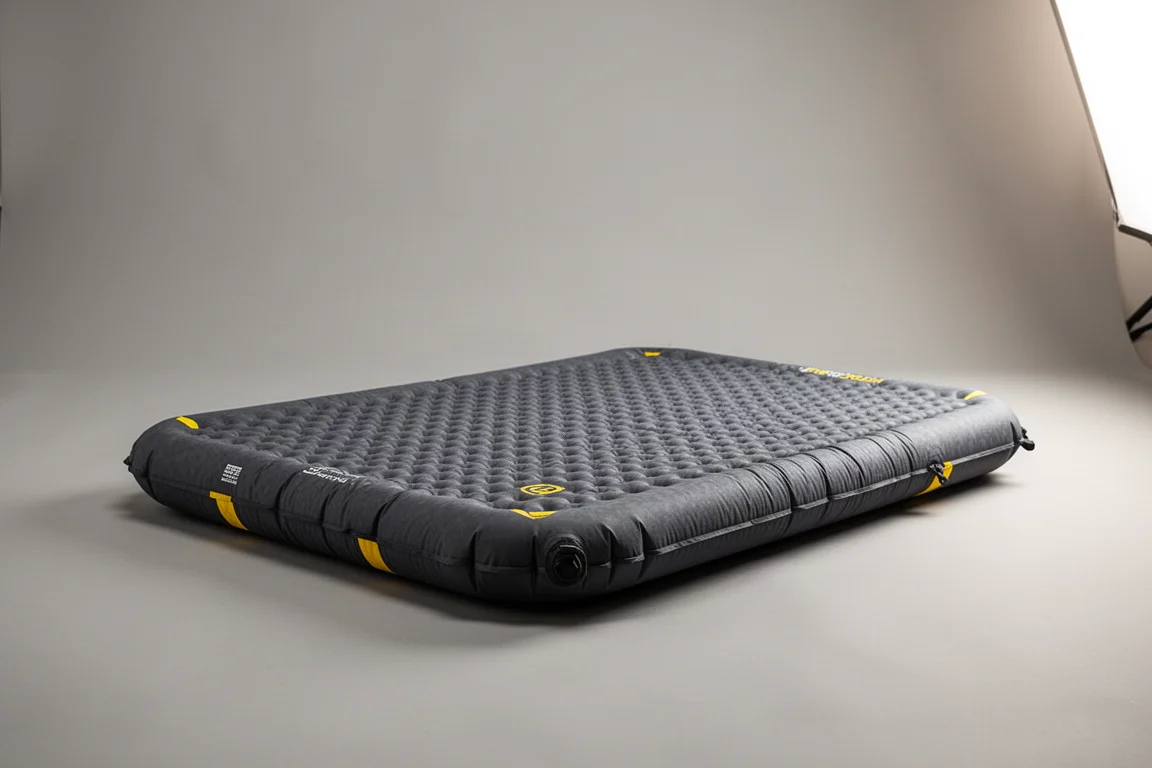
The XTherm is the primary insulation between you and the ground. It carries an R-value of 6.9, which is enough to handle roughly minus 20 degrees Celsius on its own and even minus 30 degrees Celsius, while staying light for a pad this warm. Two technologies get it there: ThermaCapture, a thin mylar-like reflective film suspended through the pad, and the Triangular Core Matrix, a baffle system that limits air movement inside the pad so heat is not lost through internal circulation.
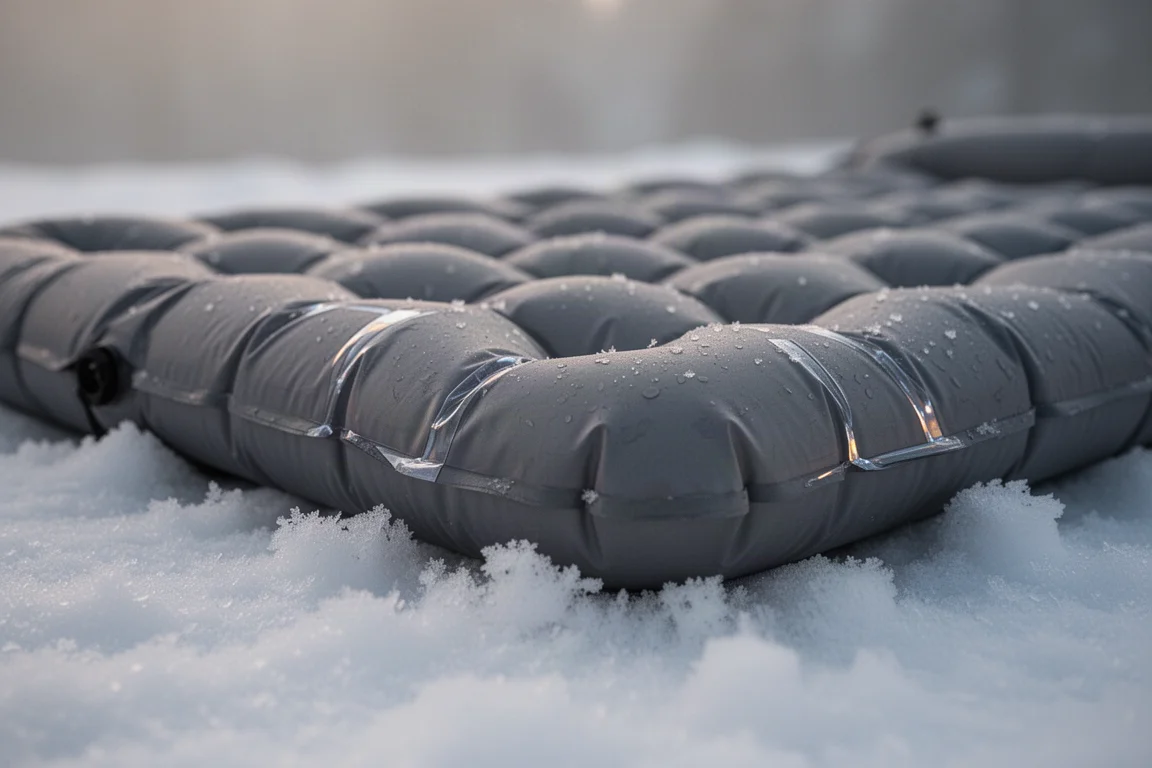
Durability is part of the design as well. The underside uses a heavier denier fabric with a 30-denier fabric on top, which is the right priority for winter use. A pad that fails in the middle of the night is a serious problem, and this one is built to avoid that.
Pair it with the reflective mat and the foam pad below, and the combined stack reaches temperatures far beyond what the pad achieves alone.
Therm-a-Rest Polar Ranger: The Sleeping Bag
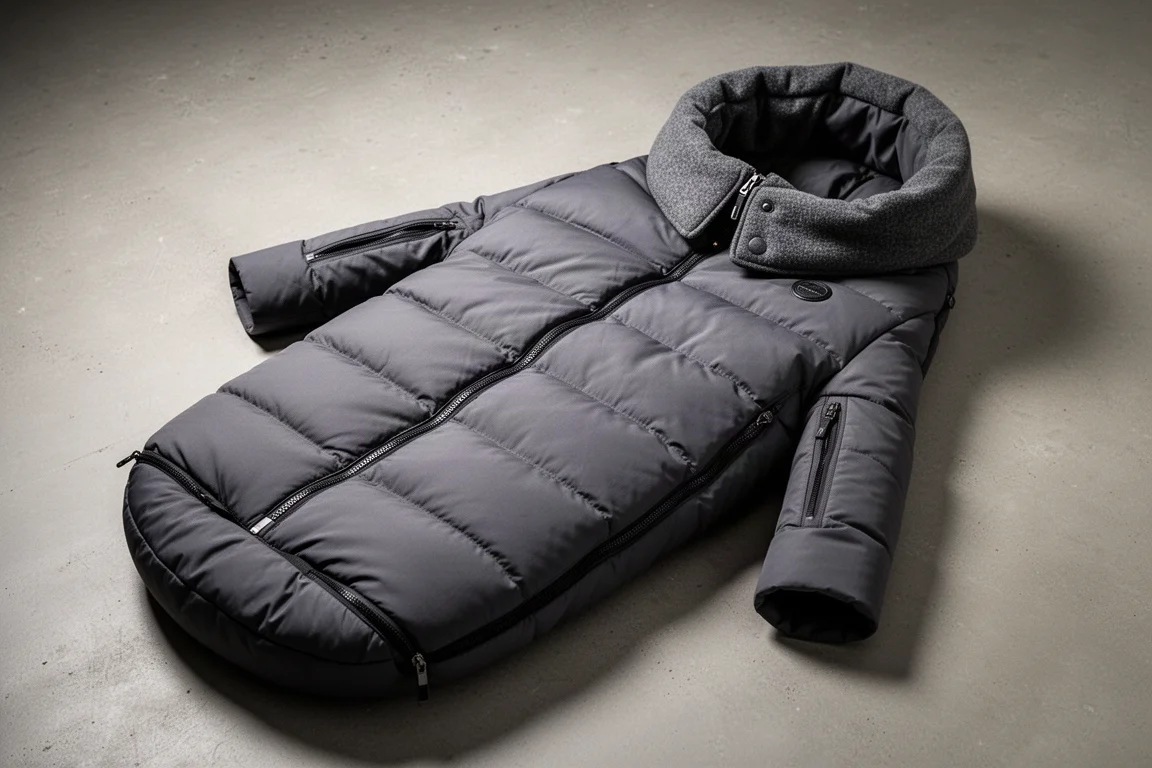
The Polar Ranger is rated to a comfort limit of minus 20 degrees Celsius with a lower limit of minus 30 degrees Celsius, and in practice that rating holds up, if anything erring slightly on the conservative side. The warmth comes from 950 grams of 800 fill-power down that is RDS certified and treated with a hydrophobic finish, so it absorbs less moisture in humid conditions. For a bag this warm, 1.47 kilograms in the Regular size is a reasonable carry.
The feature set is what makes it work in extreme cold. A protruding snorkel hood rises above your face and traps a pocket of warm air around it, and the opening is made from a synthetic material that does not hold onto the moisture in your breath. Side vents double as armholes, letting you dump heat without opening the main zipper, which widens the usable temperature range considerably. They also let you read or handle camp tasks inside the tent without climbing out of the bag and losing all your warmth.
Enlightened Equipment Revelation Apex: The Over Quilt
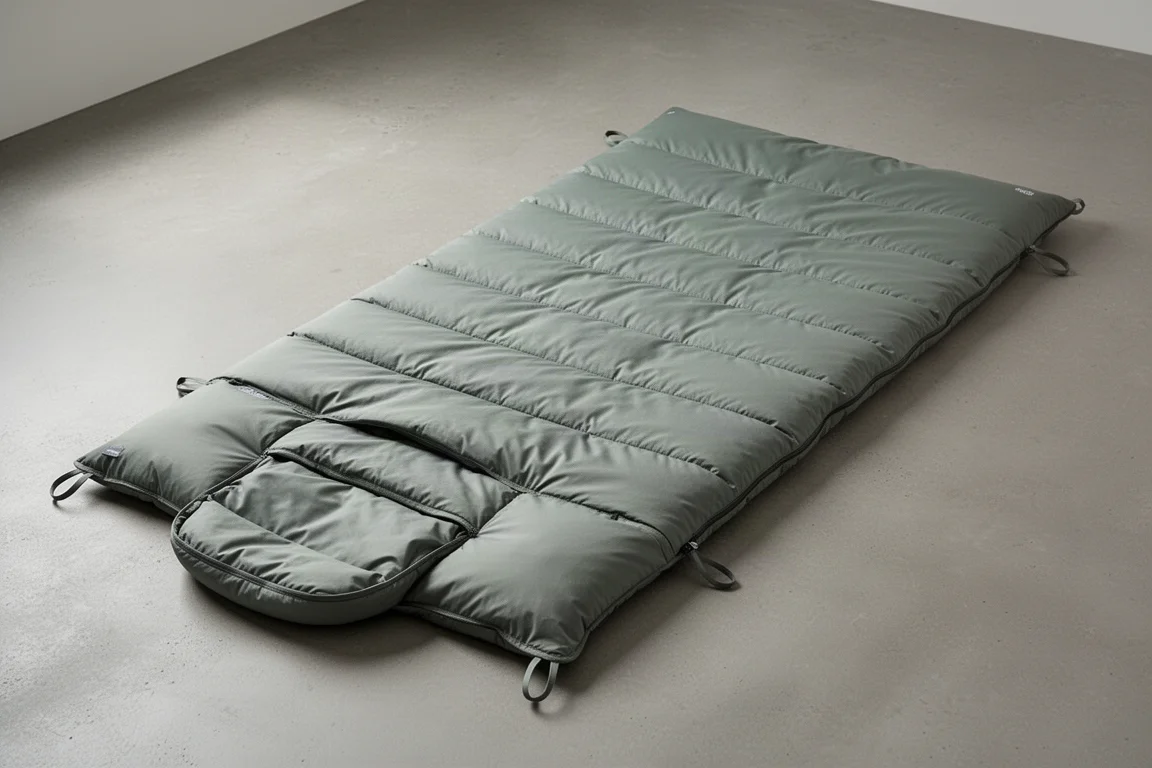
The final layer is a synthetic over quilt, and its value goes beyond raw warmth. This one is rated to 50 degrees Fahrenheit and adds roughly 20 degrees Fahrenheit to the whole system, but the moisture management is arguably the more interesting benefit.
You will produce condensation inside a sleeping bag no matter what you do, and that moisture wants to move outward into colder air. A synthetic quilt shifts the dew point so condensation turns to liquid outside the down bag, in the layer that handles moisture better and dries faster. Even in milder conditions, that alone justifies bringing it.
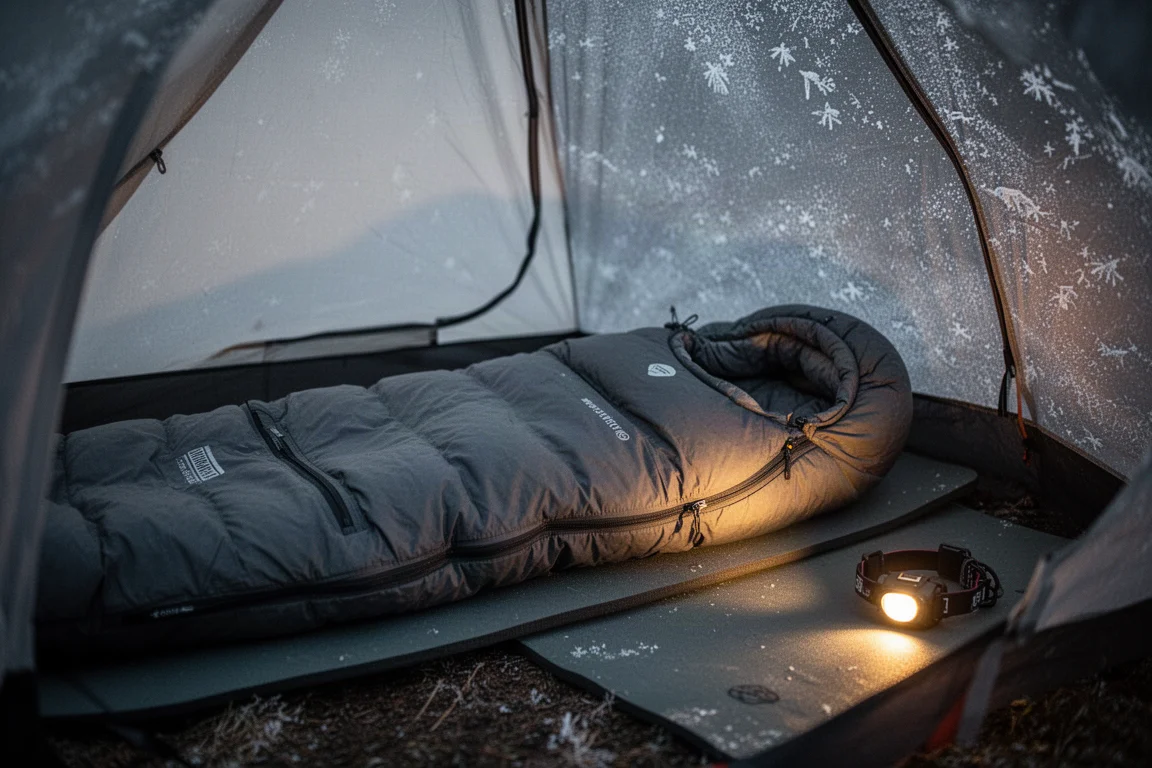
A wide cut lets the quilt wrap all the way around the sleeping bag to the edges of the pad, and pad straps lock it in place so drafts cannot sneak in at the sides. A snap at the neck seals in warm air when temperatures drop.
Matching the System to Your Conditions
This setup has been used down to minus 30 degrees Celsius with merino wool base layers, fleece pants, a fleece jacket, a toque, and a buff. The layered clothing matters as much as the gear, because the sleep system is designed to work with what you are wearing rather than replace it.
With that combination, the system should comfortably reach around minus 40 degrees Celsius. The takeaway is not that any single item is extreme, but that the layers stack predictably. If you run colder, add insulation. If you run warmer, use the vents and armholes instead of leaving gear at home.
Buying Advice
The right place to start depends on what you already own. If you have an inflatable pad you trust, adding the foam layer first is the cheapest way to raise the warmth of your setup and gain a safety margin. If you are building from scratch, the air pad is the piece that determines how cold you can comfortably go, so it is worth getting right before anything else.
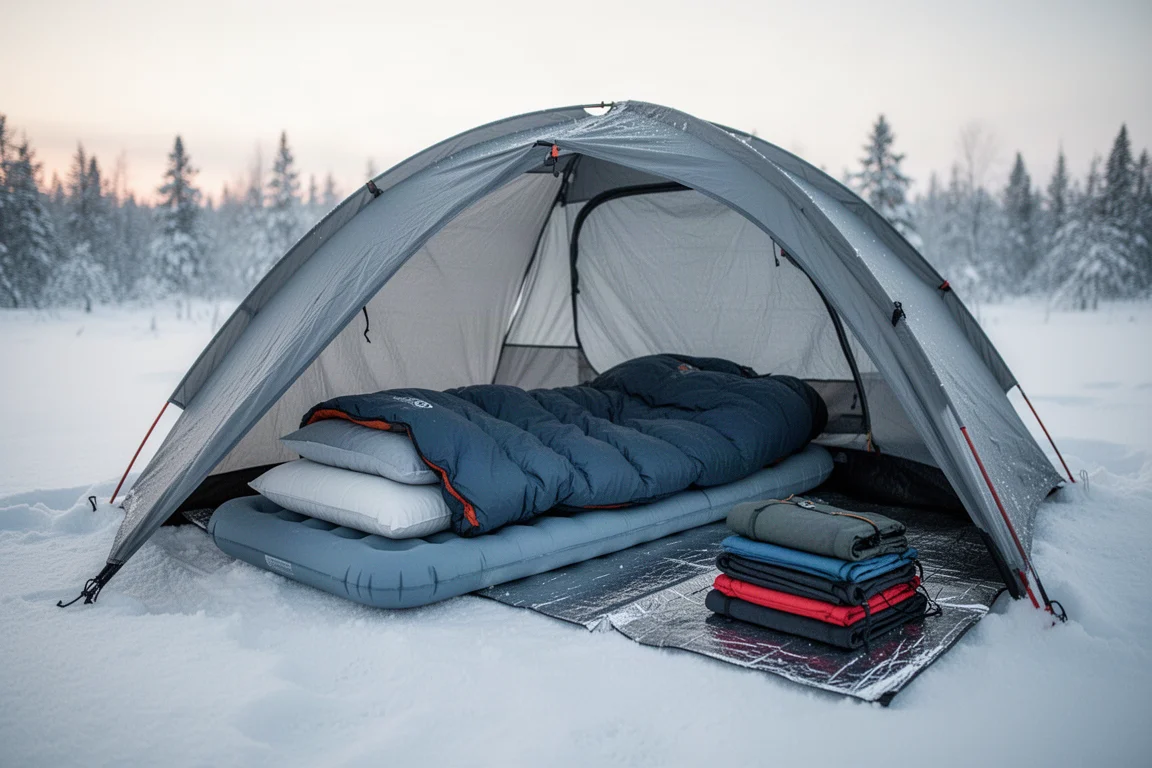
Work outward from there. The sleeping bag sets your baseline comfort, and the over quilt is the piece that gives you flexibility, both by adding warmth and by handling the moisture that inevitably builds up over a cold night.
Buy the layers you will actually use rather than the most extreme version of everything. A system that you can tune up or down is more useful across a season than one that only works on the single coldest night of the year.
Conclusion
A winter sleep system is a stack, not a single purchase. The reflective mat and foam pad build the foundation and provide redundancy, the air pad does the heavy insulation work, the sleeping bag defines your comfort range, and the over quilt adds warmth while managing moisture.
Get the order and the ratings right, and temperatures that once seemed impossible become an ordinary night out.
Further reading
Related Reviews
Camping Gear
3FUL Ultralight Ground Sheet Review: A Two-Person Footprint Worth Packing
A 6.7 oz two-person ground sheet in ripstop silnylon, priced around $30. Here is what it protects, what it does not do, and who should pack it.
Camping Gear
Backcountry Light Dual-Function Tarp and Floor Review: A Footprint First
A dual-purpose tent floor and tarp that keeps falling rain off you, but cannot block wind. Here is where it works and where it does not.
Camping Gear
Best 2-Person Camping Mattresses for Couples: 10 Options Compared
A practical comparison of ten two-person camping mattresses, covering self-inflating pads, air pads and air mattresses for couples.