Camping Gear
Best 2-Person Camping Mattresses for Couples: 10 Options Compared
A practical comparison of ten two-person camping mattresses, covering self-inflating pads, air pads and air mattresses for couples.
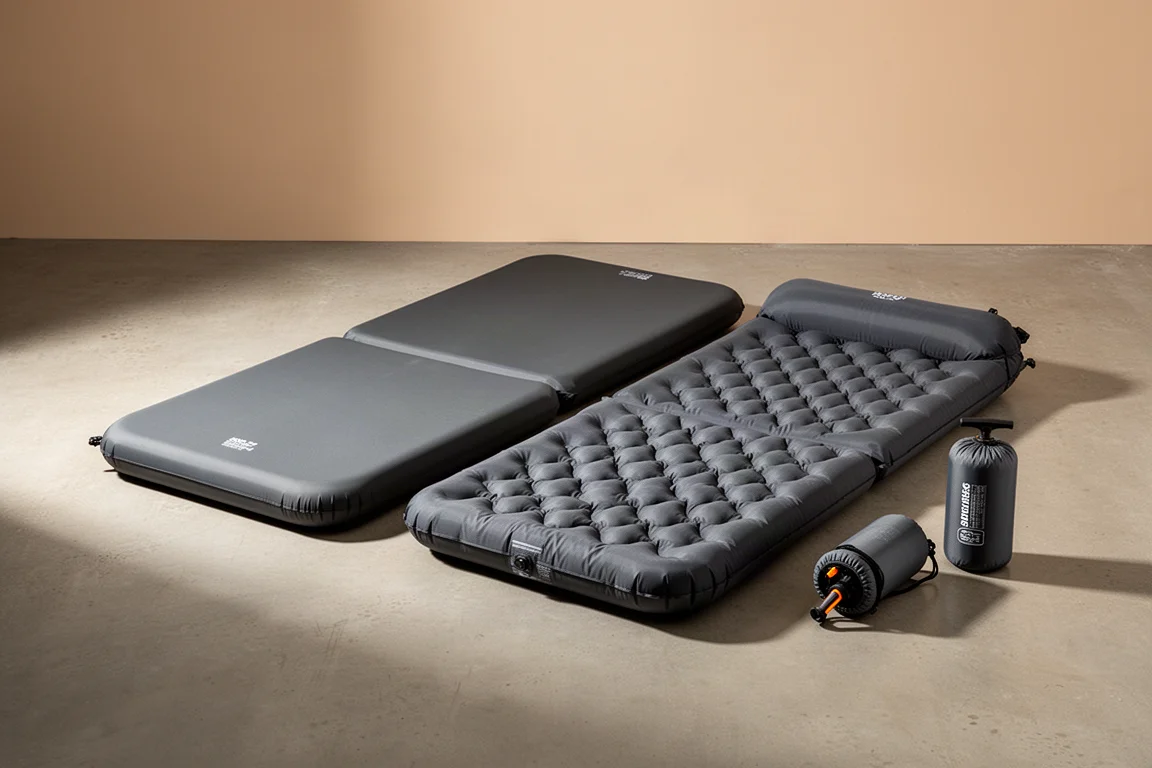
Introduction
A two-person camping mattress is one of the few pieces of gear that can make or break a trip for a couple. Get it right and the tent feels like a small bedroom. Get it wrong and every night becomes a negotiation about who sleeps on the lumpy side.
This guide covers ten two-person mattresses compared side by side over a six-month testing period, with more than $1,100 spent across the group. The set spans three very different designs: self-inflating foam pads, standard air mattresses, and low-profile air pads. Each one was scored across five categories: comfort, ease of use, portability, versatility, and build quality.
How These Mattresses Were Evaluated
Comfort was judged on thickness, mattress type, bounciness, noise, and the feel of the sleeping surface. Ease of use covered inflation time, how simple it was to adjust firmness while lying down, and how quickly each mattress deflated and packed away. Portability looked at weight and packed size. Versatility covered insulation, backpacking potential, how well each mattress fit different tents, and how flexible the pump was. Quality covered materials, valves, stuff sacks, pumps, and air retention overnight with two people on board.
Dimensions were deliberately left out of the scoring. Most brands sell each mattress in several sizes, and the sizes compared here were not identical, so a length and width ranking would have been misleading.
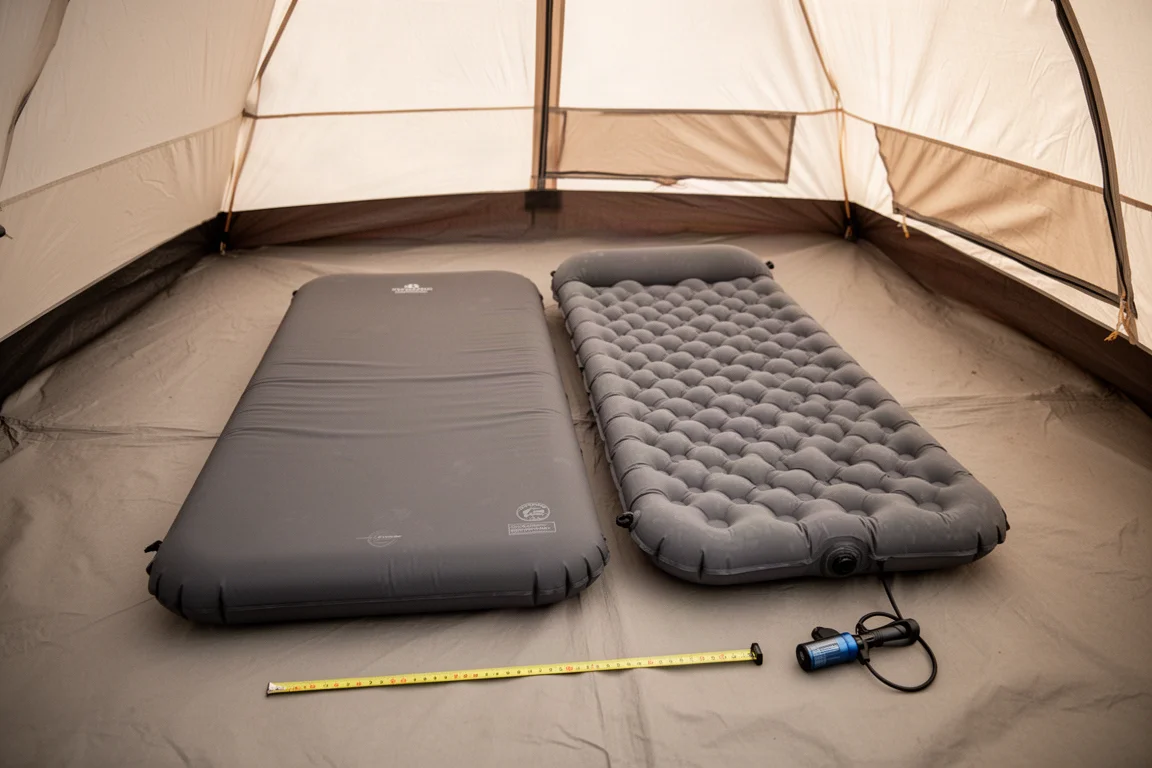
On thickness, the two self-inflating pads led the group, followed by air mattresses ranging from 6 to 9 inches. The air pads came last at around 2.5 inches, and they are the one design where the ground could occasionally be felt when moving around. On every other mattress in the set, the body stayed clear of the ground in back, stomach, and side sleeping positions, even when leaning on an elbow or sitting up.
Best Overall: Exped MegaMat Duo
The Exped MegaMat Duo is a self-inflating pad, and it finished first for comfort. The foam inside contours to the shape of the body and provides plenty of support, and the sleeping surface is the softest and most plush of the ten. Because the surface is flat, there are no dips or contours pressing into the back or hips, and it feels closer to a regular bed than anything else in the group. The fabric is quiet, bounce is minimal, and it is the warmest mattress here with an R-value of 8.1, which makes it suitable for winter camping.
It also scored highest for quality, versatility, and ease of use. Inflation is straightforward: roughly 10 minutes of self-inflation followed by about a minute of pumping in the medium size, and under three minutes of work to deflate and pack away. The separate FlatValves for inflation and deflation sit flush with the surface and feel rugged, and the stuff sack and hand pump are the best in the group, with no batteries or charging required. The medium size is close to the footprint of two regular sleeping pads, so it fits narrow two-person tents, and two of them fit side by side in a four-person tent.
The trade-offs are weight and price. It is the heaviest and bulkiest mattress here, so it is not a backpacking option, and it is the most expensive mattress in the comparison. The foam also means deflation and packing take slightly longer than with an air mattress. Storing it unrolled with the valves open keeps self-inflation quick. Stored compressed, it can take 30 minutes to an hour to inflate, plus up to five minutes of pumping.
Runner-Up: REI Dreamer Double
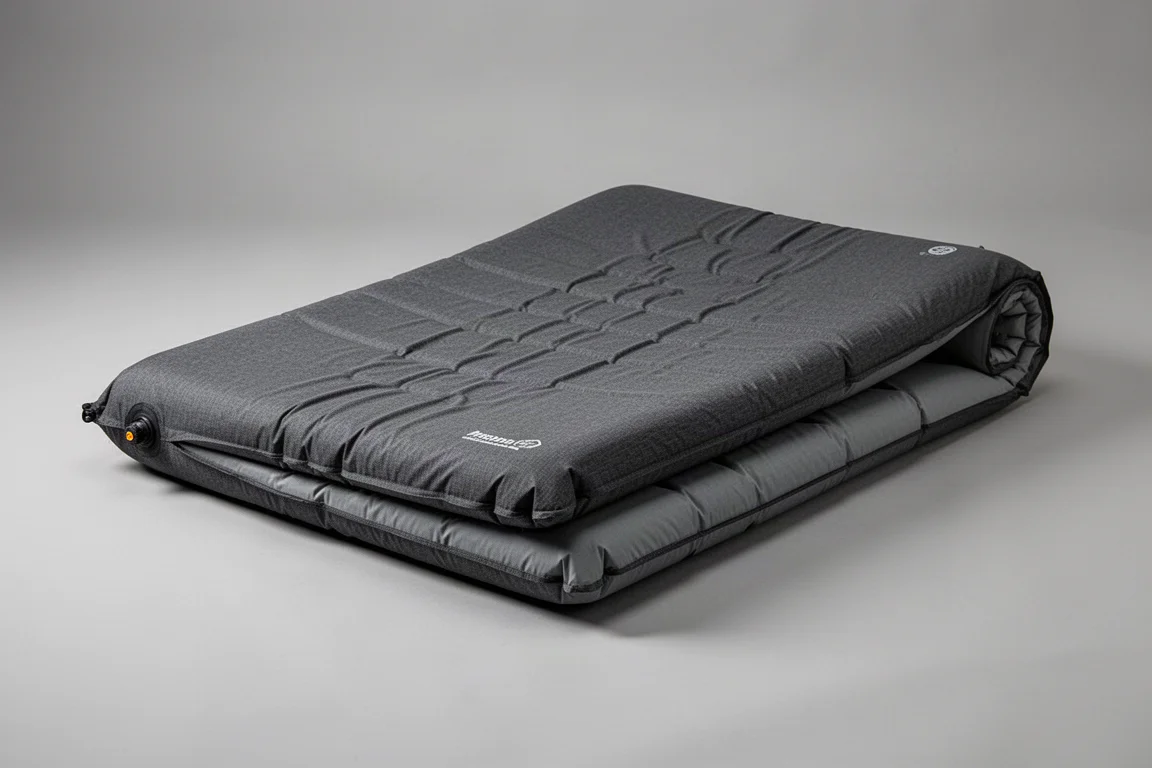
The REI Dreamer Double is also self-inflating and finished a close second for comfort. It is about a quarter of an inch thinner than the Exped, but the foam still contours well and the surface stays plush and flat. It is quieter than any air mattress, has minimal bounce, and ranks alongside the Exped as the most insulated mattress in the group, so winter use is realistic. Adjustments are easy: unscrew the cap on one valve and push it in slightly to release air.
On the practical side, it self-inflates in around 10 minutes on average plus about a minute of pumping, and the stuff sack and pump are among the best here. The downside is bulk. It is 8 inches longer and 12 inches wider than the Exped MegaMat Duo medium, and that size is the main reason it scored poorly for portability. It also takes a little longer to deflate and pack because of the foam, and it is slightly less thick, less warm, and marginally less plush than the top pick.
Value is where it stands out. When it goes on sale, it can cost more than $100 less than the Exped, and the extra surface area means a lot of sleeping room for the money.
Most Portable: Klymit Double V Insulated
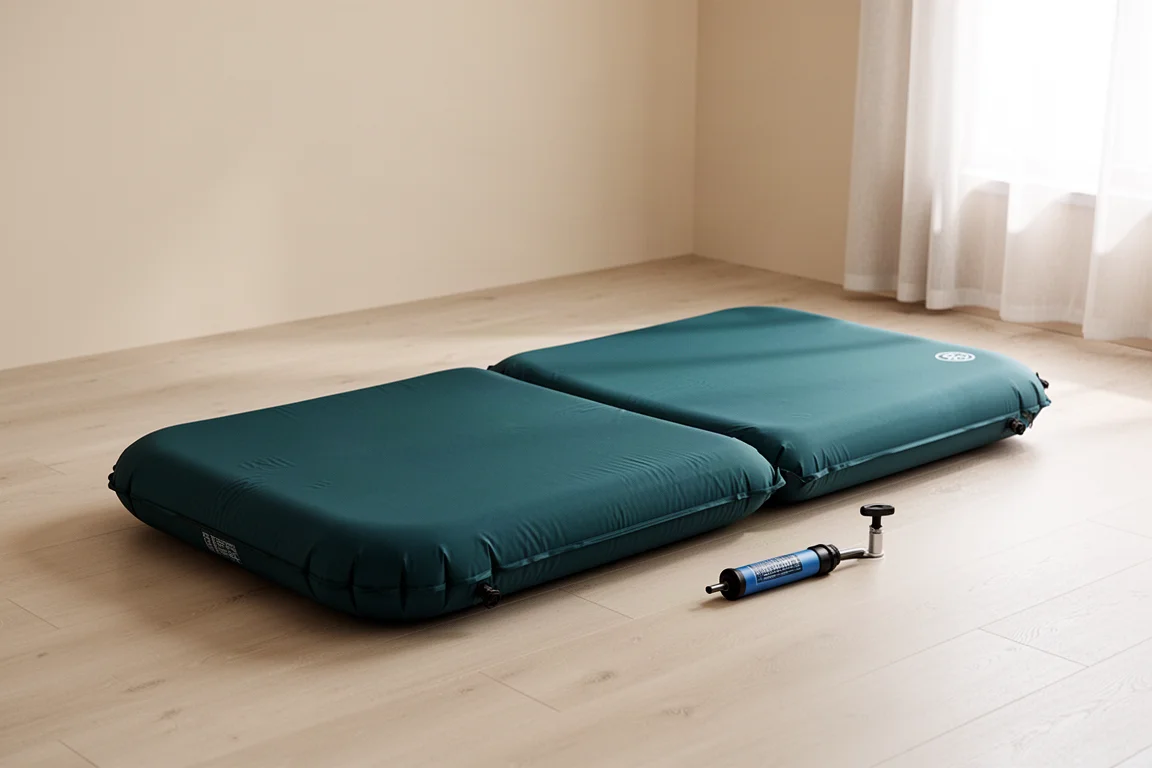
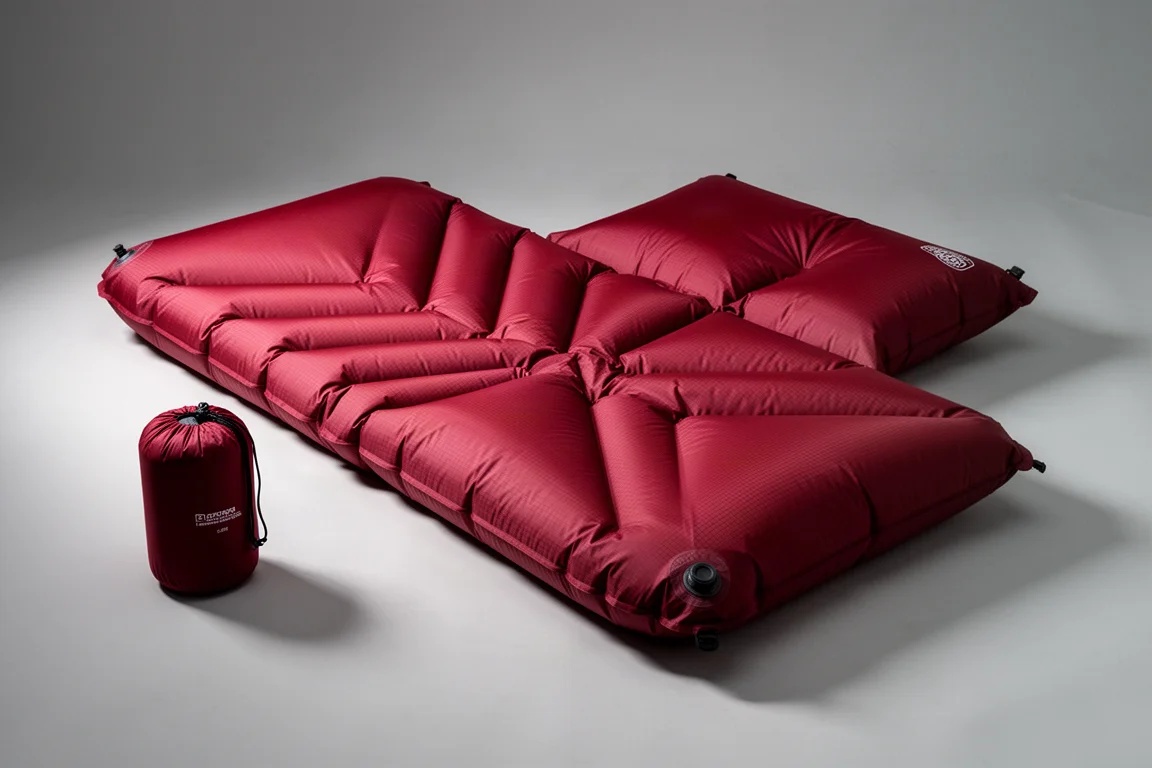
The Klymit Double V Insulated is an air pad rather than a full air mattress, and it is the most portable option in this comparison by a wide margin. Both the top and the bottom are made from 75D polyester, and the pad is only about 2.5 inches thick, which keeps it low enough to fit narrow two-person tents with low peak heights. Two of them fit side by side in a four-person tent.
Inflation uses the stuff sack as a pump, so there is nothing to charge and nothing to blow into. With moving airflow it takes around 11 to 12 bags of air and averages about a minute and a half. Without airflow it takes 13 to 14 bags. The separate FlatValves for inflation and deflation sit flush with the surface and feel rugged, and pressing the built-in flap releases air for a softer feel while lying down.
Comfort is the compromise. It was the least comfortable mattress in the group, and the ground can sometimes be felt when tossing and turning. It is also the loudest option here, with a slight crinkly sound. The roll-top stuff sack is tight, so packing takes about a minute and a half longer than the uninsulated version, and the insulated pad weighs almost a pound more with a 60% larger packed size. The insulation makes it warm enough for three-season camping, but not for winter.
Lighter and Cheaper Air Pad: Klymit Double V Uninsulated
The uninsulated Klymit Double V shares the same shell, valves, and pump design as the insulated version, but it drops the extra insulation. That makes it the lighter and smaller of the two, and the better choice for anyone who does not camp in cold conditions. It takes around 14 to 17 bags of air to fill depending on airflow, with an average inflation time of about two minutes.
Like its insulated sibling, it is a summer pad with little insulation, so it is not a winter option. The same comfort caveats apply. At about 2.5 inches thick it is the least plush design in the group, the ground can occasionally be felt when moving around, and the surface makes a slight crinkly sound. It is also not an ultralight pad, though it is light enough to be realistic for shorter backpacking trips.
What you get in return is the smallest packed size and lowest weight of any mattress here, along with high-quality 75D polyester, flush-mounted FlatValves, and a stuff sack that doubles as a pump without batteries.
Best Budget PVC-Free Pick: Sierra Designs 2-Person Camping Air Mattress
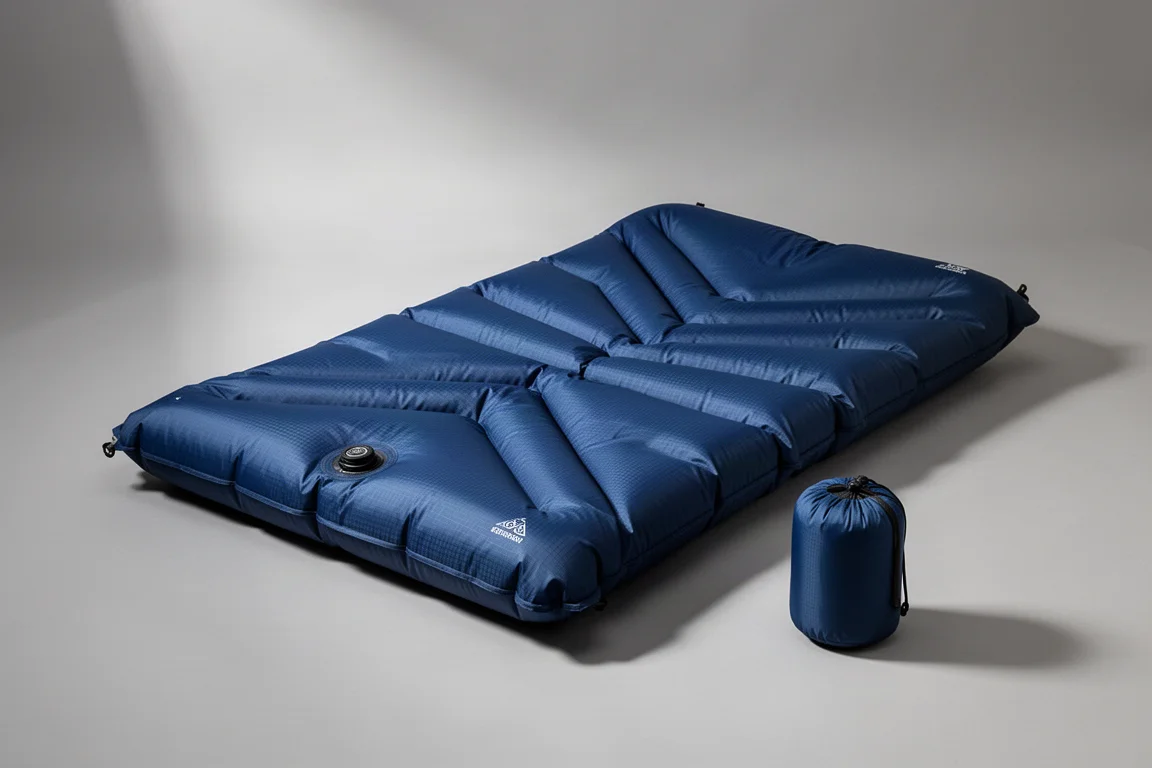
The Sierra Designs 2-Person Camping Air Mattress is one of the least expensive mattresses in the group, and once the PVC models are set aside it is the cheapest PVC-free option here. It uses a TPU coating and a user-friendly Boston valve, and despite the divots running along the surface it turned out to be surprisingly comfortable. It is also the only mattress in the comparison with a comfortable built-in pillow at one end.
The baffling gives it gentle contours rather than the pronounced ridges that cause problems on some budget air mattresses, and letting air out while lying down is simple: unscrew the two-way valve slightly and listen for the escaping air. It also held its air overnight with two people on it.
The weak point is the included pump. It is low powered, and it stopped working after a few months of light use. The stuff sack is also on the oversized side, though that does make packing easier. For the price, the mattress itself is well made and is the pick for budget-conscious buyers who still want to avoid PVC.
Best Budget Air Mattress: Intex Classic Downy Airbed
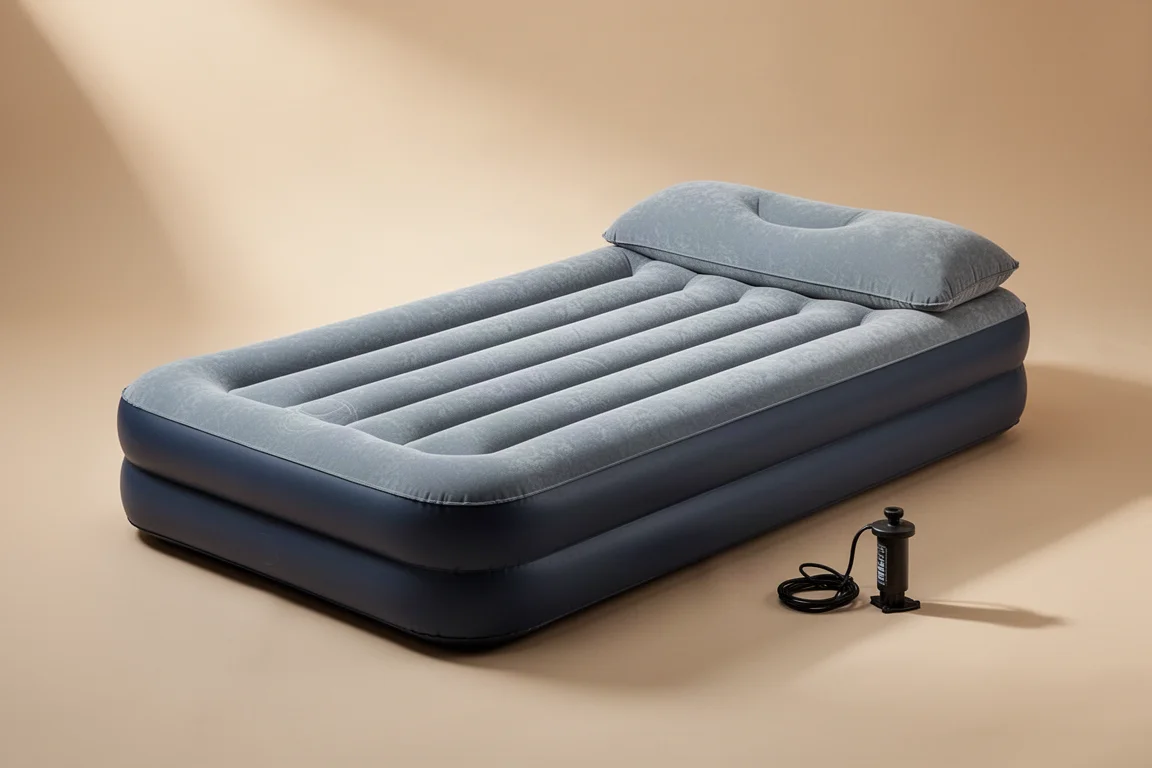
The Intex Classic Downy Airbed is the budget pick, and it wins on more than price. It is cheaper than the Coleman Quickbed and outperforms it in most respects. The valve is a two-in-one screw-on design, which is far easier to live with than the plug-type opening on the Coleman, and the baffling is gentler and more comfortable as well.
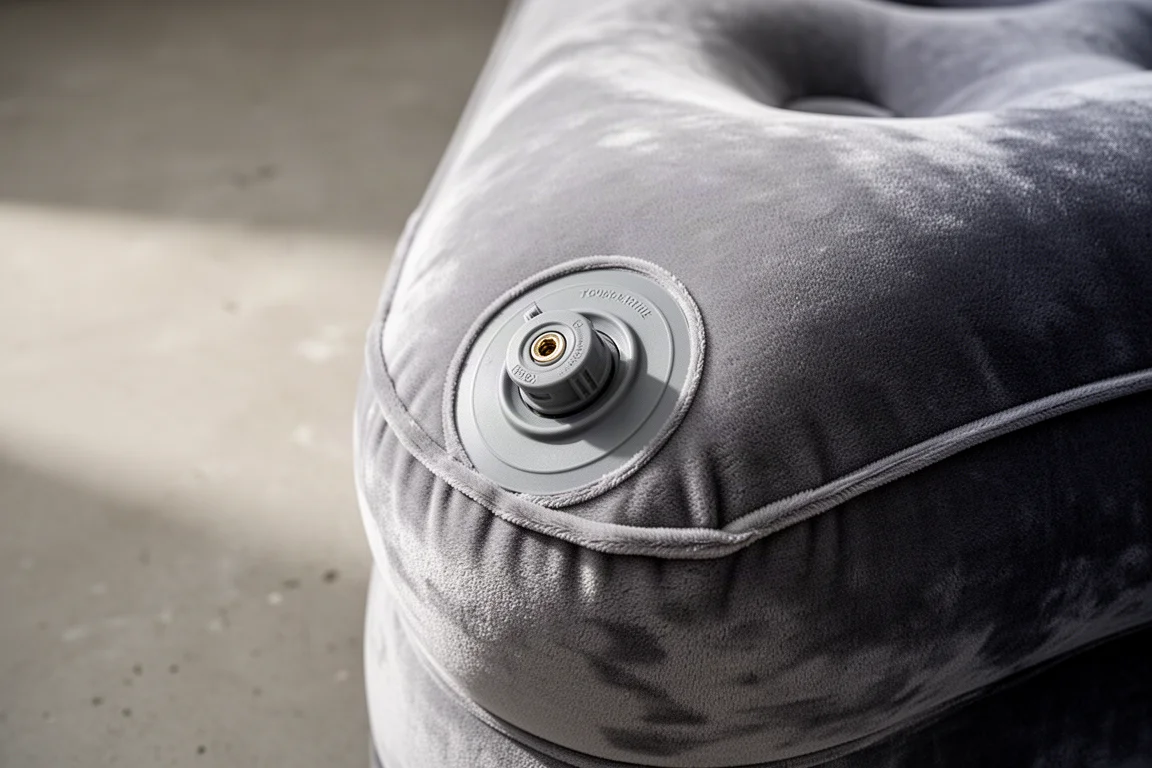
Its flocked top keeps it quieter than an air pad, and the surface stays reasonably comfortable even though the baffling is deeper than on the Alps Vertex or the Lightspeed and takes a night or two to get used to. Adjustment is done by unscrewing the two-way valve slightly.
The compromises are real. It is the bounciest mattress in the group by a wide margin, it lost a little air overnight and needed topping off each night, and it took the longest of all ten to inflate. It ships without a stuff sack or a pump, and with little insulation it is a summer-only mattress. Even so, it never left anyone sleeping on the ground, and for the money it is the most sensible entry-level choice.
Best All-Around Air Mattress: Alps Mountaineering Vertex Airbed
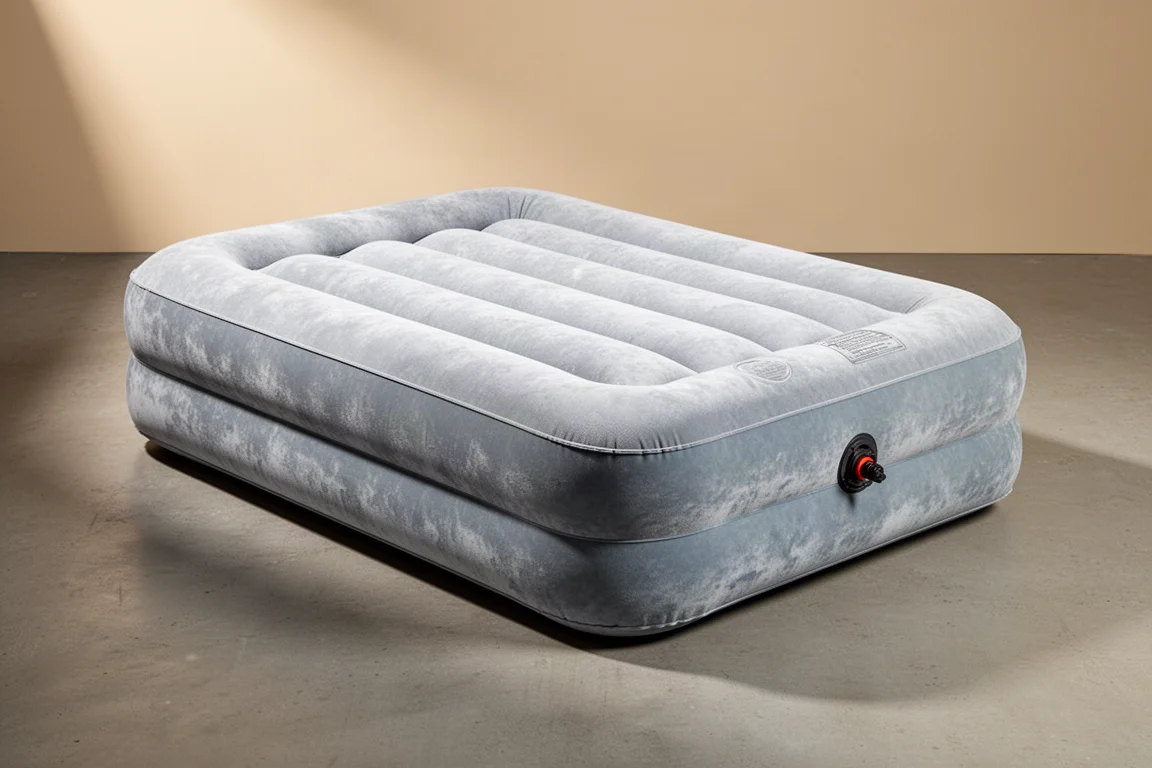
The Alps Mountaineering Vertex Airbed was the strongest air mattress in the group, edging out the Lightspeed by a few decimal places in the overall scores. It is the complete package: the mattress, a stuff sack, a pump with three detachable nozzles, a DC vehicle charger, an AC charger, and a repair kit.
The shell is TPU-coated nylon and PVC-free, and the Boston valve is high quality. The rechargeable pump is the standout feature. It inflates the mattress in about a minute and a half, offers multiple charging options, and can even be used while it is charging. On the sleeping surface, the gentle baffling and divots are comfortable, and the segmented air chambers keep bounce lower than on the Sierra Designs or the Coleman.
Two things hold it back. It is the most expensive air mattress in the comparison, and the electric pump holds its charge less well over time, lasting a couple of years rather than many. Insulation is minimal, so it is a summer mattress rather than a three-season one.
A Lighter Air Mattress Option: Lightspeed Outdoors Camping Air Mattress
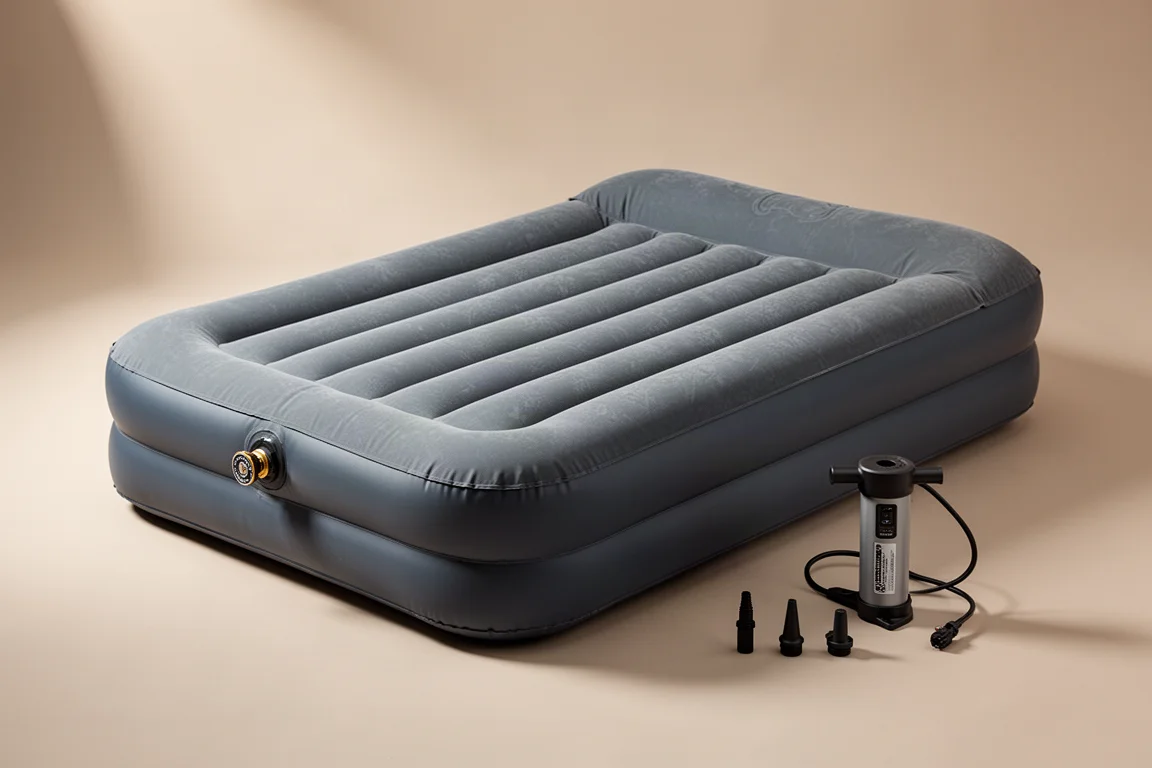
The Lightspeed Outdoors Camping Air Mattress follows almost the same design as the Vertex Airbed, with one important difference: the valve. Instead of a Boston valve it uses a screw-on valve with a simple inner flap. Pressing that flap is how you release air for a softer surface, and it works, but the hardware feels less refined than the Vertex.
The bigger issue is the pump. It is much lower powered and less efficient, and inflating the mattress with it was a struggle. It also stopped working after a few months of light use. There is no repair kit in the box either.
On the plus side, it is cheaper than the Vertex, the baffling is gentle and comfortable, and the segmented chambers keep bounce in check. If you are comparing the two and want the better long-term package, the Vertex is the safer buy. If price is the deciding factor, this one still delivers a comfortable sleeping surface.
A True Queen-Size Air Mattress: Etekcity Upgraded Camping Mattress
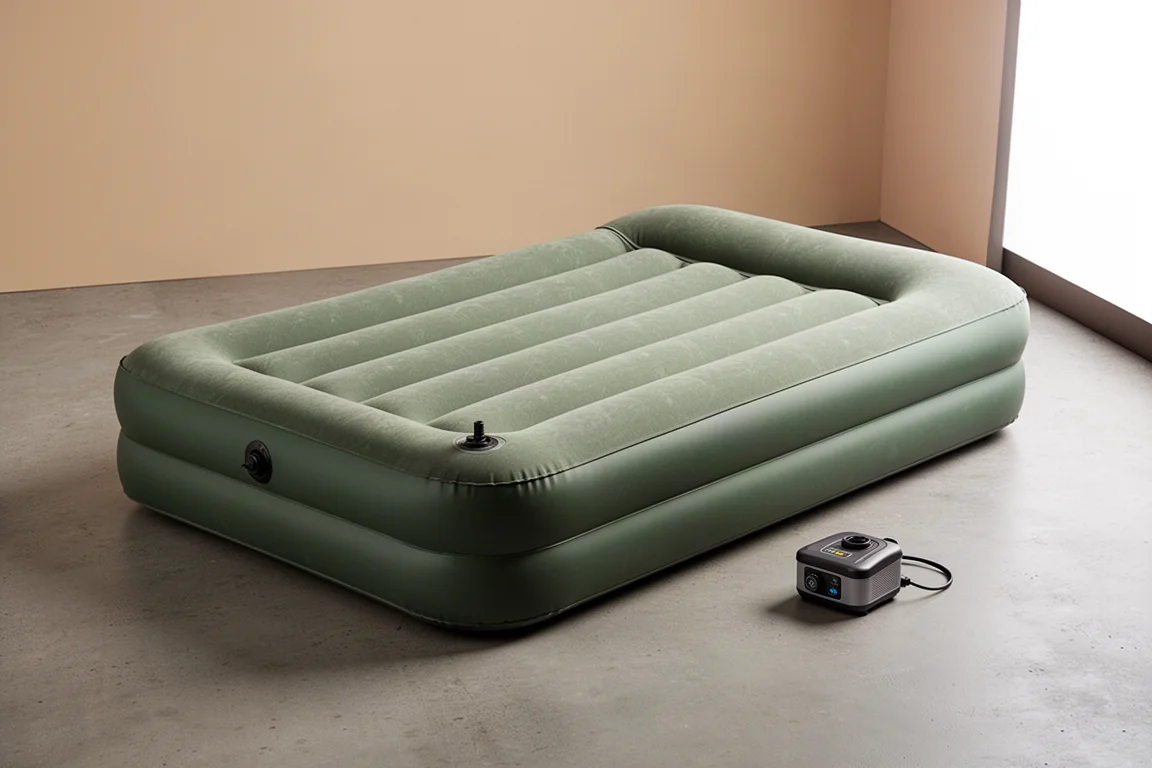
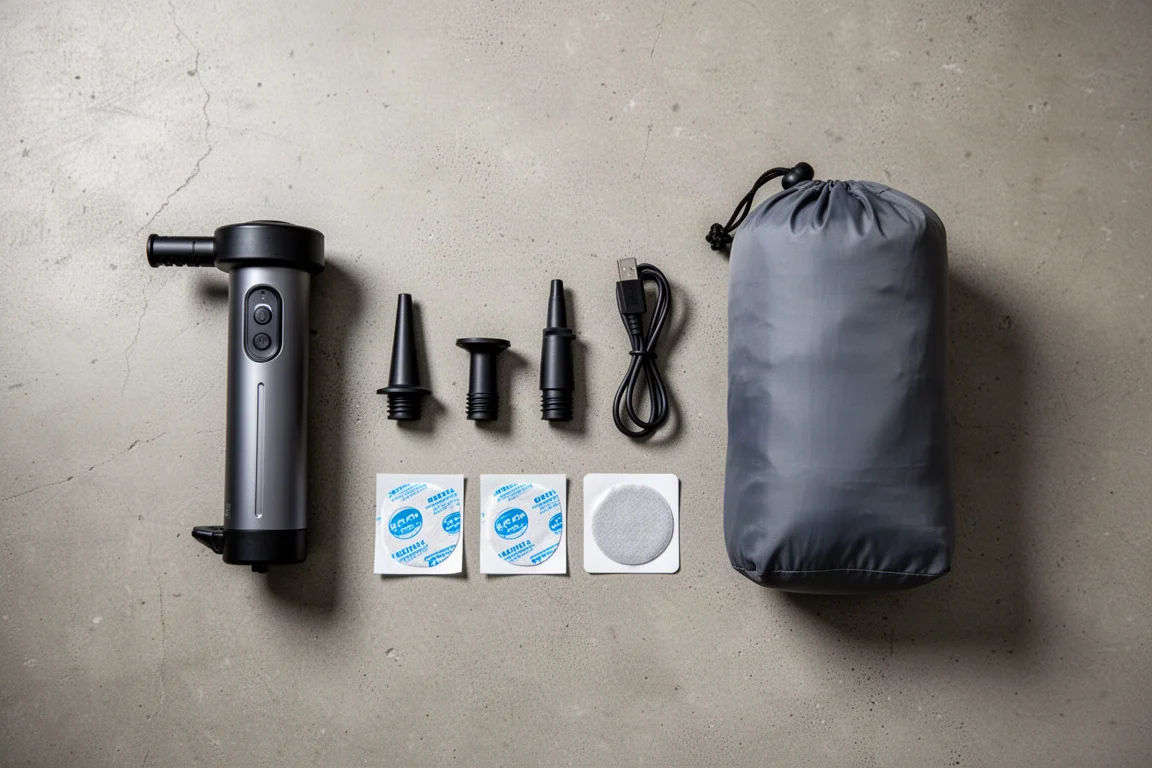
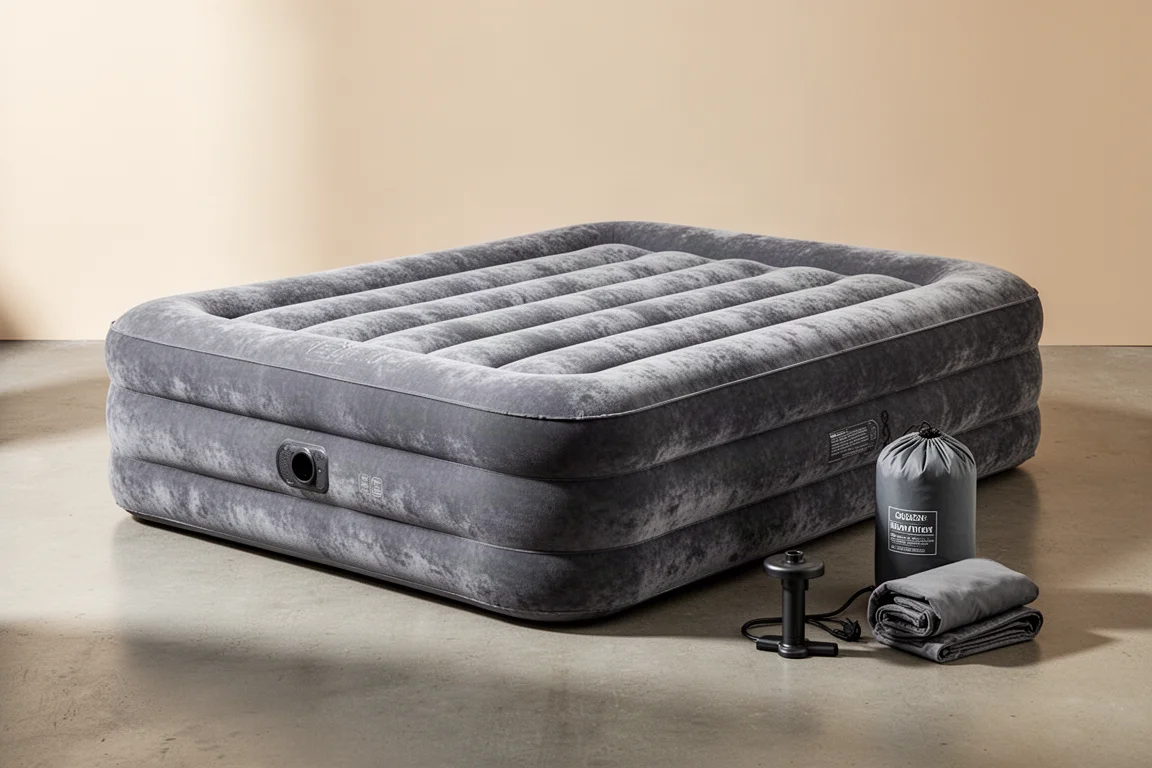
The Etekcity Upgraded Camping Mattress is a popular option, and it is not hard to see why. It arrives as a full kit with the mattress, a stuff sack, a pump, nozzles, chargers, and two repair patches. It is a true Queen size, with the largest dimensions and the highest profile of every mattress in this comparison, and for an air mattress it has minimal bounce.
Its flocked top keeps it quieter than an air pad, and the high-powered electric pump inflates it quickly. Those are genuine advantages for anyone who wants a large, bed-like surface in a car-camping setup.
The drawbacks are weight, bulk, and the valve. The PVC shell is extremely heavy and bulky, and it packs to roughly the same size as the self-inflating Exped MegaMat Duo. PVC also carries a smell that fades over a few days but never fully disappears. The plug-type valve releases too much air at once, and when the mattress is fully inflated the baffling becomes pronounced enough to poke into the body. The pump also holds less charge as it ages, and the stuff sack is the cheapest-feeling of the group.
Where the Coleman Quickbed Falls Short
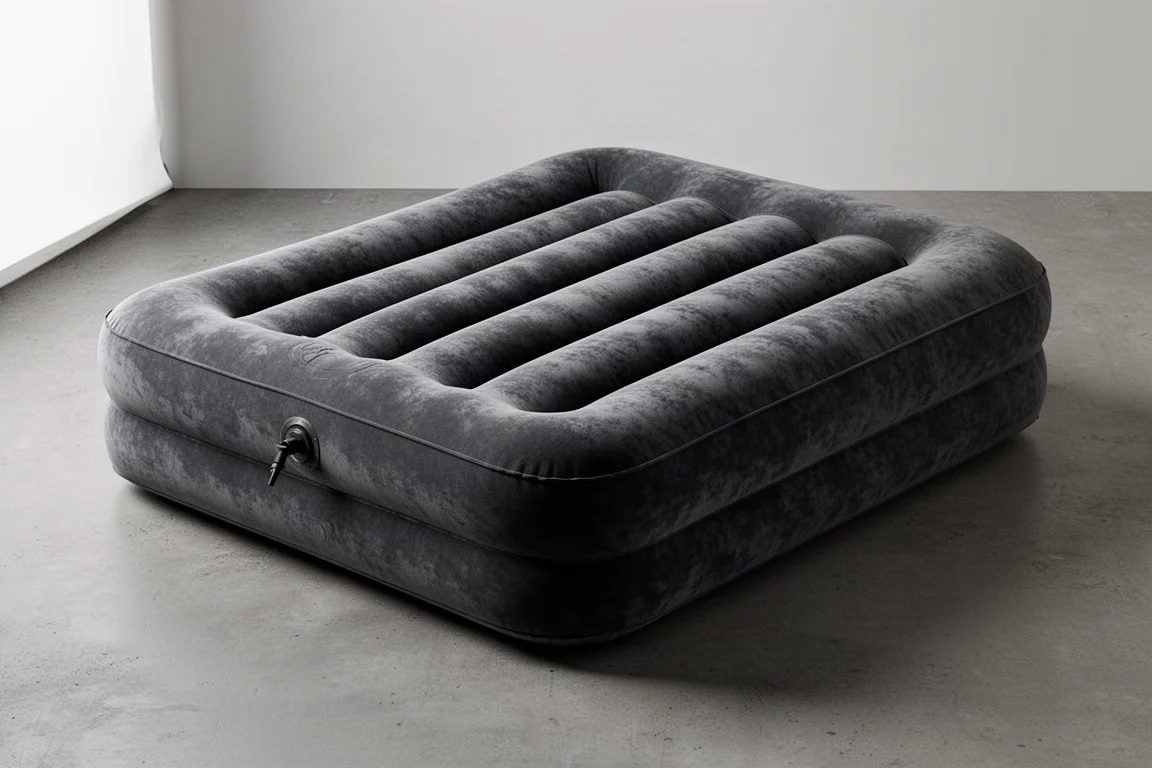
The Coleman Quickbed is one of the least expensive mattresses in the group, but it lost a direct comparison with the Intex Classic Downy Airbed. The clearest difference is the valve. The Coleman uses a two-way plug opening with no one-way valve at all, which makes it the least user-friendly valve in the comparison and the only one that lets out too much air in a single push.
The baffling is the second problem. When the mattress is fully inflated, the ridges become pronounced and press into the body, and finding a comfortable sleeping position is difficult. The chamber layout also produces more bounce than the Alps Vertex, the Lightspeed, or the Sierra Designs.
It is not without merits. It is cheap, its flocked top keeps it reasonably quiet, and it is slightly less bouncy than the Intex. It also held up overnight without anyone waking on the ground, though it did need topping off with air every night. There is no stuff sack and no pump in the box.
Overall Buying Advice
Start with how you camp. If you drive to the site and want the closest thing to a real bed, a self-inflating pad is the answer. The Exped MegaMat Duo leads on comfort, warmth, and build, while the REI Dreamer Double gets you most of the way there for less money when it is discounted. Both are heavy and bulky, and both need to be stored unrolled if you want self-inflation to stay quick.
If weight and packed size matter, an air pad is the better route. The Klymit Double V Insulated covers three-season trips, and the uninsulated version is lighter and smaller for summer use. Neither is a plush mattress, and both are a little noisy, but nothing else here comes close on portability.
For a large, inexpensive sleeping surface, air mattresses remain the value play. The Alps Vertex Airbed is the best built and best equipped of them, the Sierra Designs is the strongest PVC-free budget pick, and the Intex Classic Downy Airbed is the cheapest mattress that still performs well. Watch the details that separate them: a screw-on valve or a Boston valve is far easier to live with than a plug valve, PVC shells are heavy and slow to lose their smell, and low-powered pumps are the most common failure point in the group, with two of them dying within months.
Insulation matters more than many buyers expect. Only the Exped and the REI Dreamer are warm enough for winter, the Klymit Insulated Double V is a three-season pad, and everything else is best kept for summer. If you sleep cold or camp in the shoulder seasons, that single specification should drive the decision.
Conclusion
There is no single best two-person camping mattress, only the best match for how you travel. The Exped MegaMat Duo is the most comfortable, warmest, and best-made mattress in this comparison, and it is the one to choose if you can accept the weight and the price. The REI Dreamer Double is the value alternative for self-inflating comfort, the Klymit Double V pads are the only realistic options for anyone carrying their gear, and the Sierra Designs, Intex, and Alps Vertex cover the budget and air mattress end of the market with clear strengths of their own.
Match the mattress to the trip, check the valve and the pump before you commit, and the extra sleep you get at camp will be worth the research.
Further reading
Related Reviews
Camping Gear
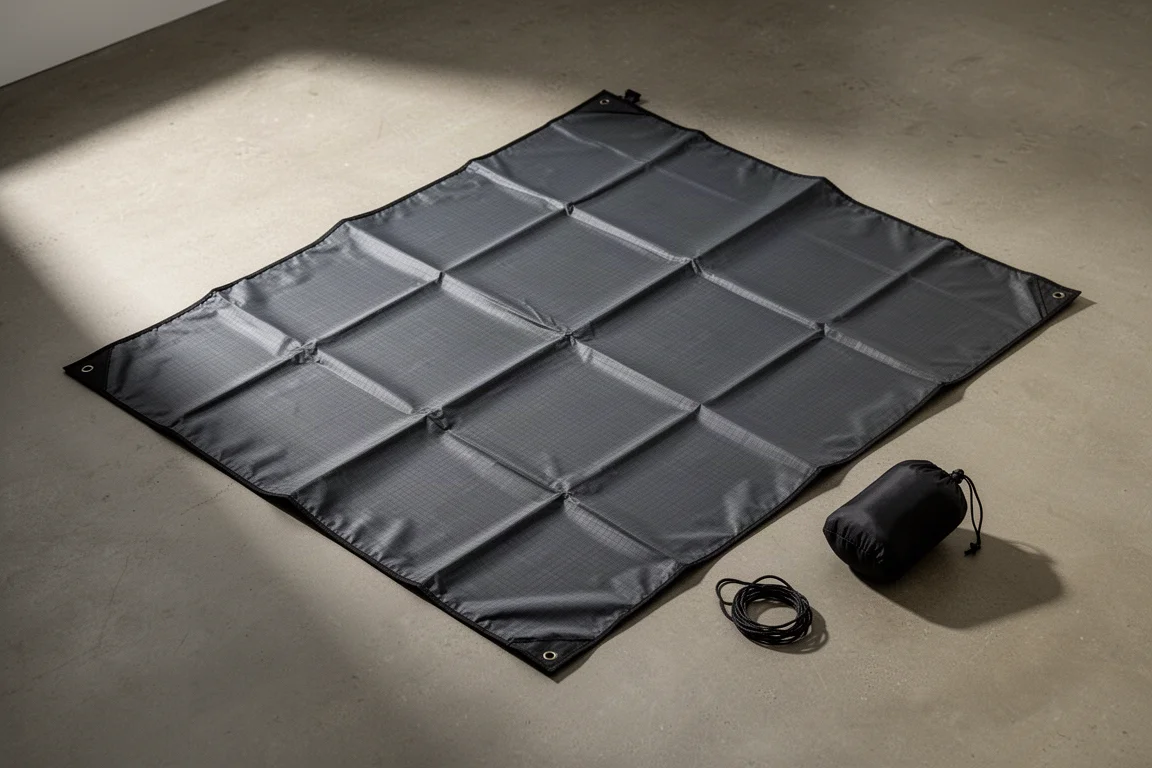
3FUL Ultralight Ground Sheet Review: A Two-Person Footprint Worth Packing
A 6.7 oz two-person ground sheet in ripstop silnylon, priced around $30. Here is what it protects, what it does not do, and who should pack it.
Camping Gear
Backcountry Light Dual-Function Tarp and Floor Review: A Footprint First
A dual-purpose tent floor and tarp that keeps falling rain off you, but cannot block wind. Here is where it works and where it does not.
Camping Gear
Best Bivvy Bags for Camping: Five Options from Budget to Premium
A practical guide to five bivvy bags tested in real conditions, from lightweight emergency shelter to high-performance alpine protection.