Camping Gear
Wild Camping Gear List For Sub-Zero Nights: 8 Pieces Worth Packing
Eight pieces of camping gear chosen for a sub-zero night in the Peak District, with the strengths and trade-offs worth knowing before you buy.
Introduction
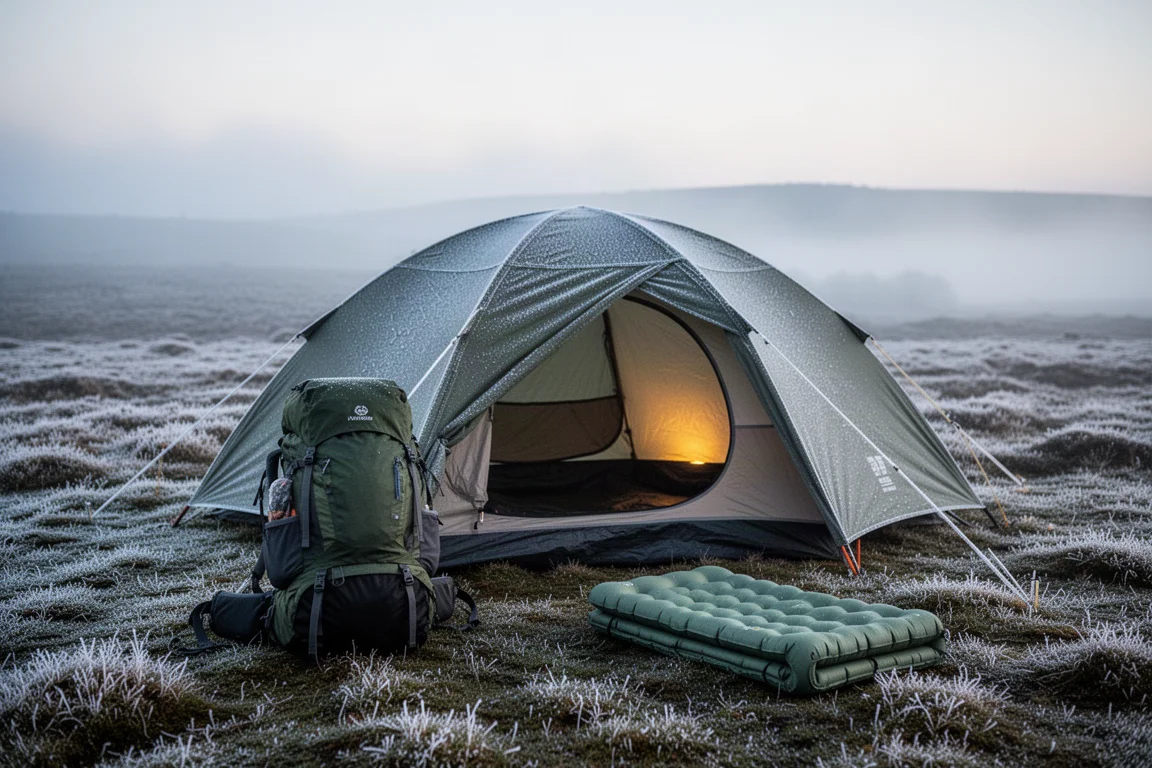
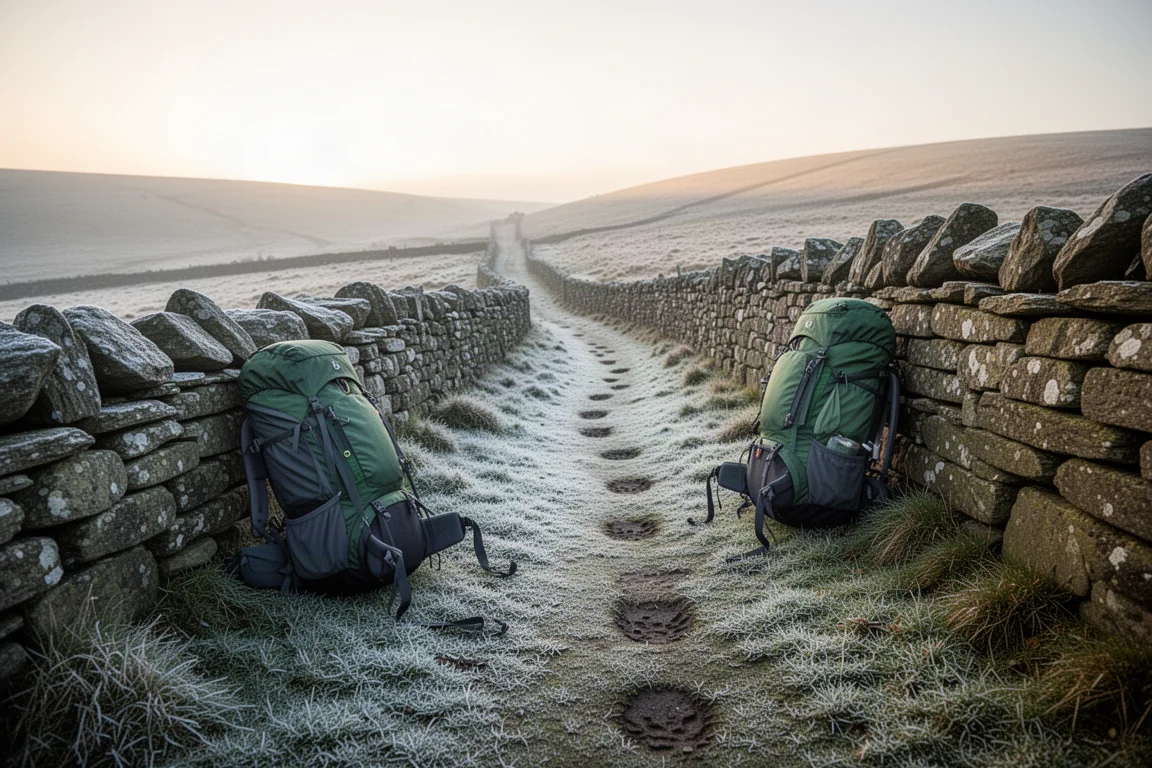
Cold camping rewards gear that keeps working when the temperature drops. On a trip in the Peak District with overnight temperatures settling around minus three, and a heavy frost forming on the flysheets before midnight, the packing list was built around a single question: what still performs when everything is frozen?
That meant a shelter rated for four seasons, a sleep system warm enough for ground frost, a stove that lights without fuss in the cold, and clothing that manages moisture instead of trapping it. The eight pieces below are the items that did the real work.
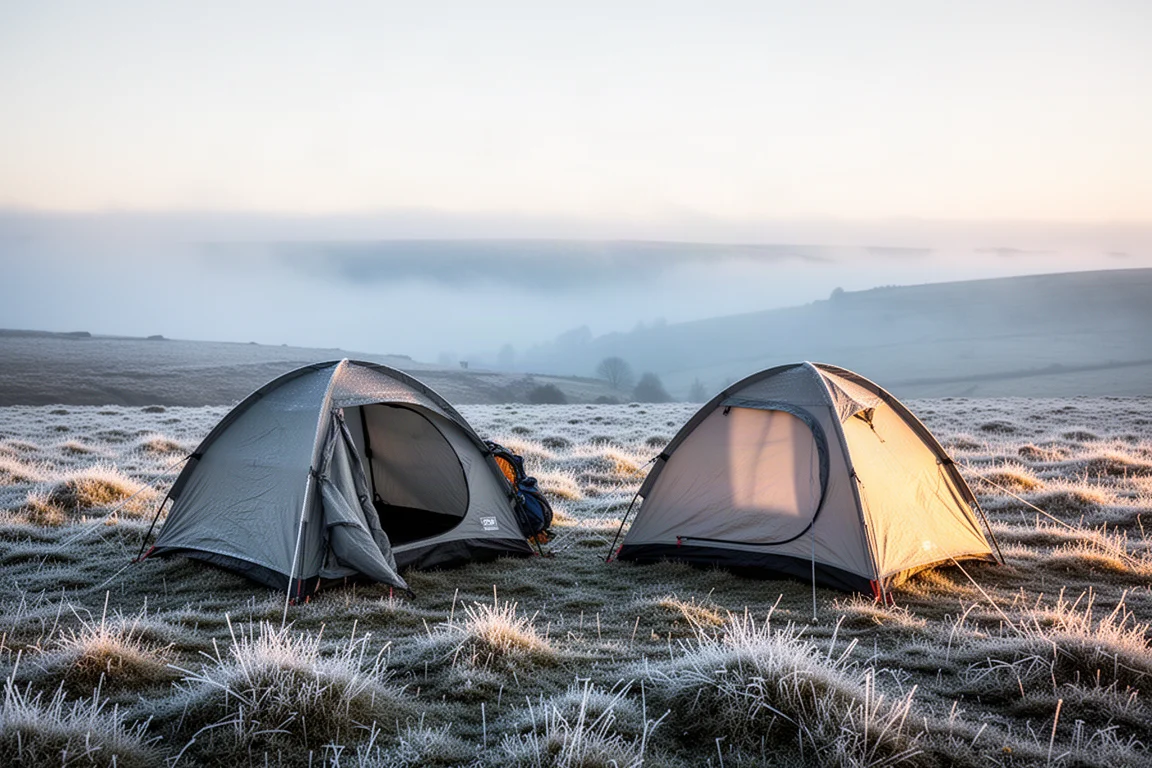
This is not a theoretical kit list. Each item was chosen for a specific job on a sub-zero night, and each comes with a trade-off worth understanding before you spend money on it.
What Matters For Sub-Zero Camping
Three things decide whether a cold camp is comfortable or miserable.
Warmth from the ground up comes first. A sleeping pad that insulates against frozen ground changes the entire night, and the comfort rating of a quilt or sleeping bag needs margin below the forecast low rather than a perfect match.
Moisture comes second. Cold air holds less water, so condensation inside the tent and sweat inside clothing both become bigger problems. Gear that moves moisture away, or that can be vented quickly, is worth more than gear that is simply thick.
Simplicity comes third. A stove that lights first time, a shelter that pitches quickly with cold hands, and clothing that does not need constant adjusting all make a long winter night easier to manage.
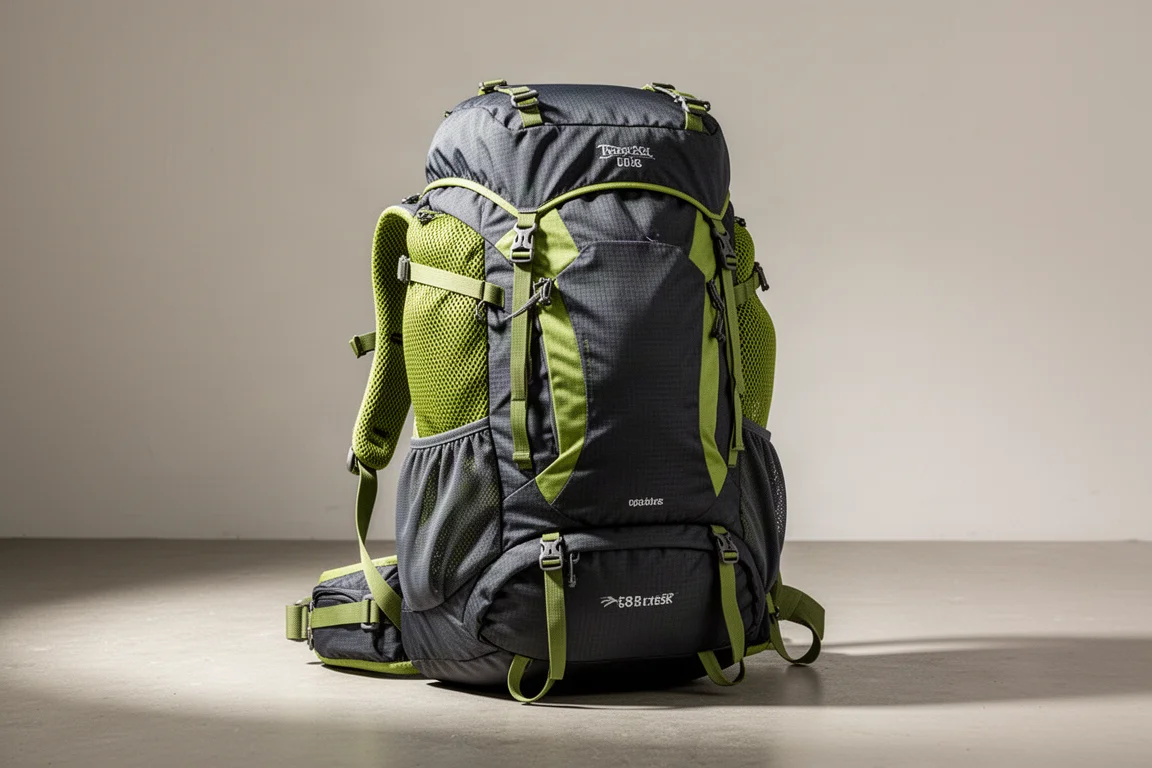
Gregory Paragon 58L Backpack
Winter kit is bulky. The Gregory Paragon 58L was chosen for exactly that reason, because the extra capacity swallows a thicker sleep system, a larger down jacket and the spare layers a sub-zero trip demands without the pack becoming awkward to carry. It rides as comfortably as the lighter Osprey Exos pack used on warmer trips, which makes the extra volume easy to justify.
If you already own a 40 to 50 litre pack and your winter load fits, there is no need to change. If you find yourself strapping items to the outside of a smaller pack, the 58 litre size is the more sensible answer.
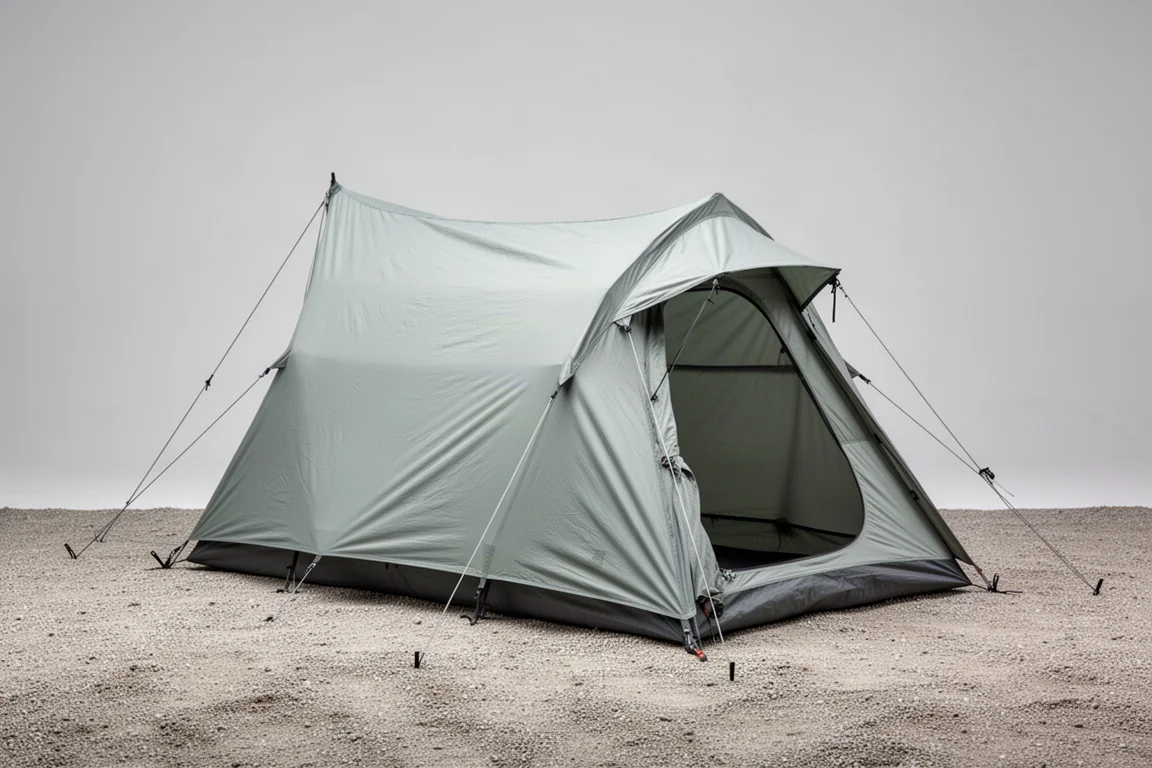
Scarp 1 Four-Season Tent
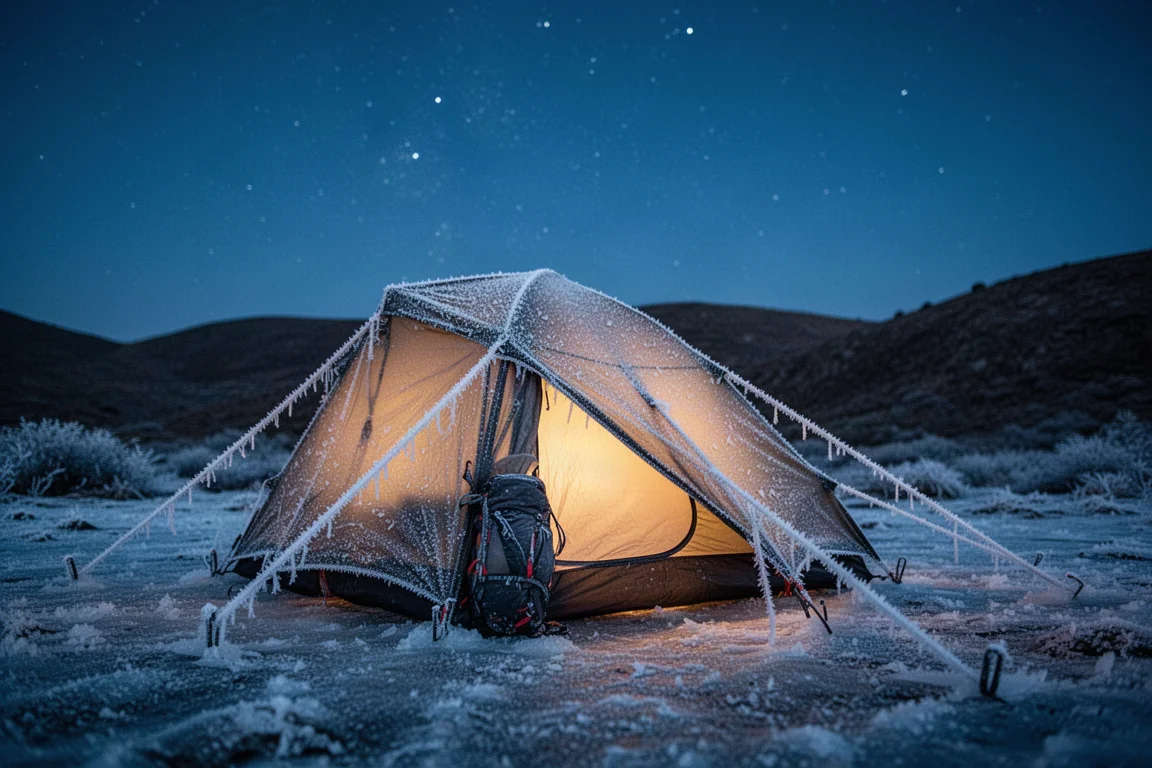
The Scarp 1 was the shelter of choice, and its four-season rating is the reason. With the forecast sitting at around minus three, it offers the kind of protection a lighter summer tent is not designed to provide.
Pitching is flexible. The cross poles were left off because strong wind was not expected, and a short guy line tensioned over a trekking pole lifted the roof for extra headroom. Inside, the space is generous for a solo shelter, and the vestibule can be opened out to create room for storage and for cooking. That matters when you are inside for long hours of darkness.
The same camp showed how much difference shelter design makes to condensation, with a larger mid-style shelter coping particularly well in the cold. For solo trips, though, the Scarp 1 keeps the weight and the footprint sensible.
Therm-a-Rest XTherm Sleeping Pad
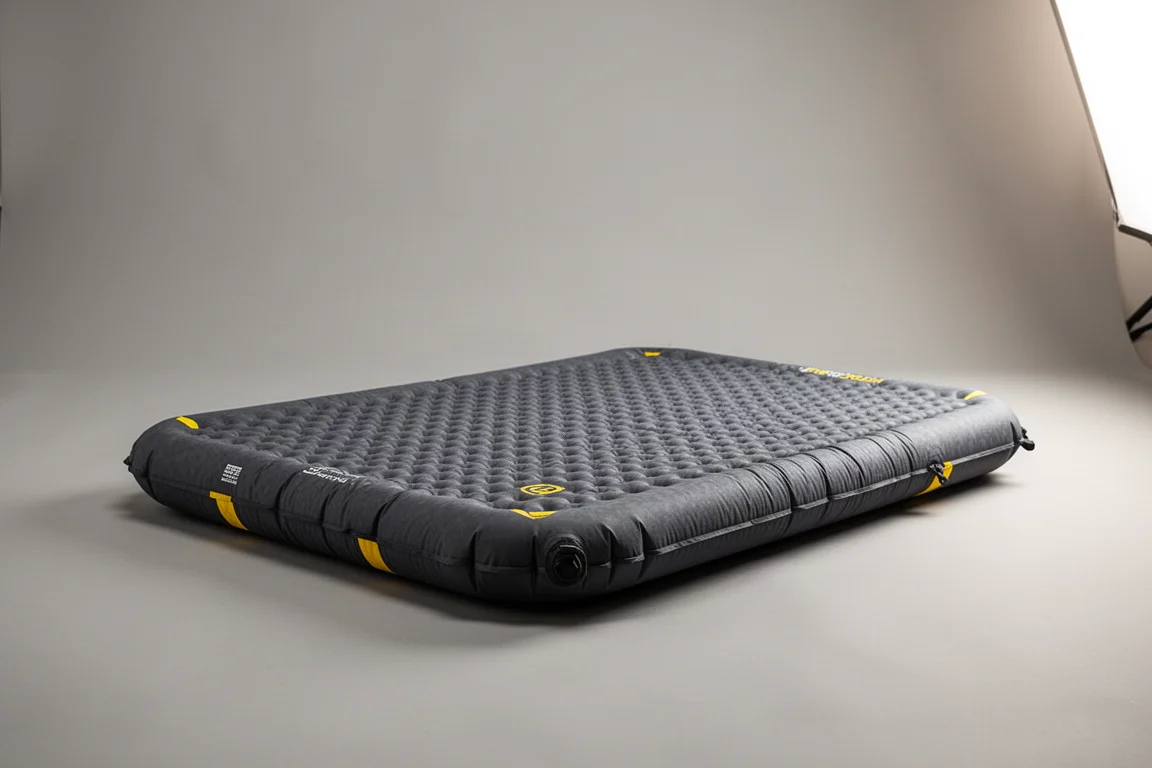
Ground frost is the fastest way to lose heat at night, so the Therm-a-Rest XTherm has become the default pad for cold trips. It is exceptionally warm for its class, and with a heavy frost forming on the grass outside there was no cold coming through from below.
The large version adds extra width, and that makes a noticeable difference to comfort across a long night. It is a straightforward choice for anyone who camps through the colder months.
UGQ Bandit Quilt
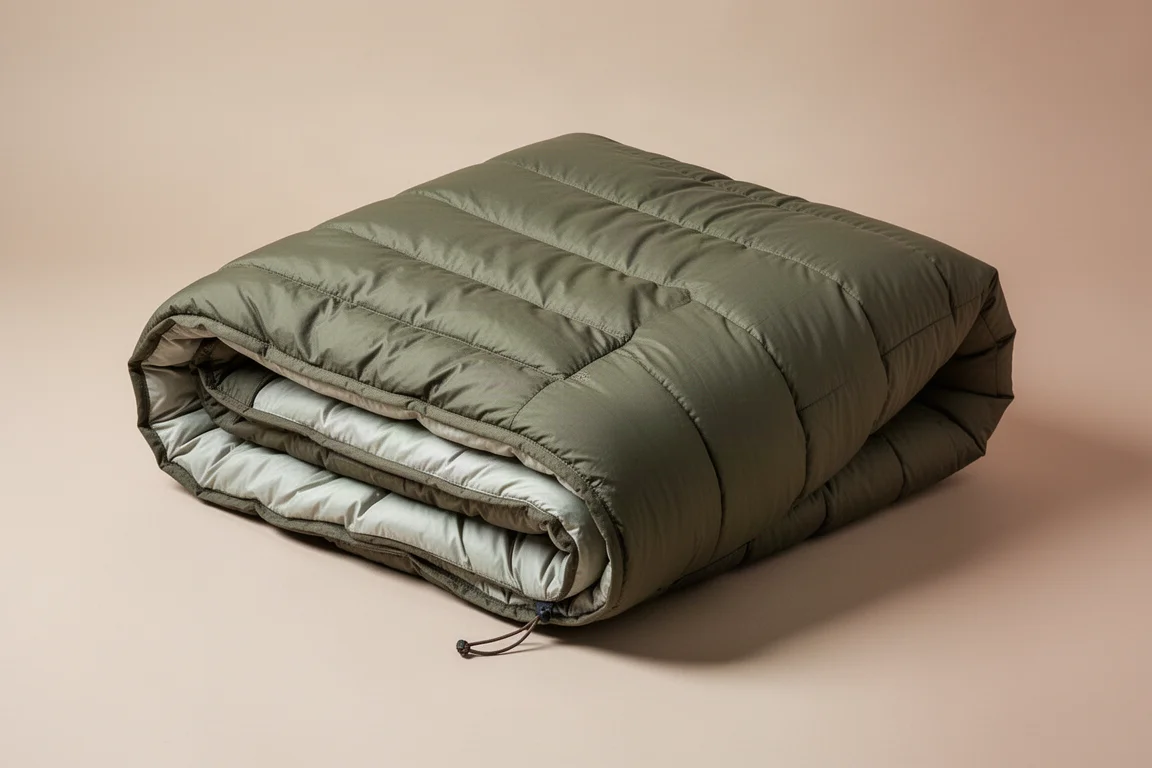
The UGQ Bandit quilt carries a comfort rating of minus 12, which leaves useful margin below a minus three forecast. Quilts suit restless sleepers: there is no hood or fixed shape to fight against, so it is easy to turn over without dragging the whole system with you. After a long run of use it remains one of the most valued pieces of kit in the pack.
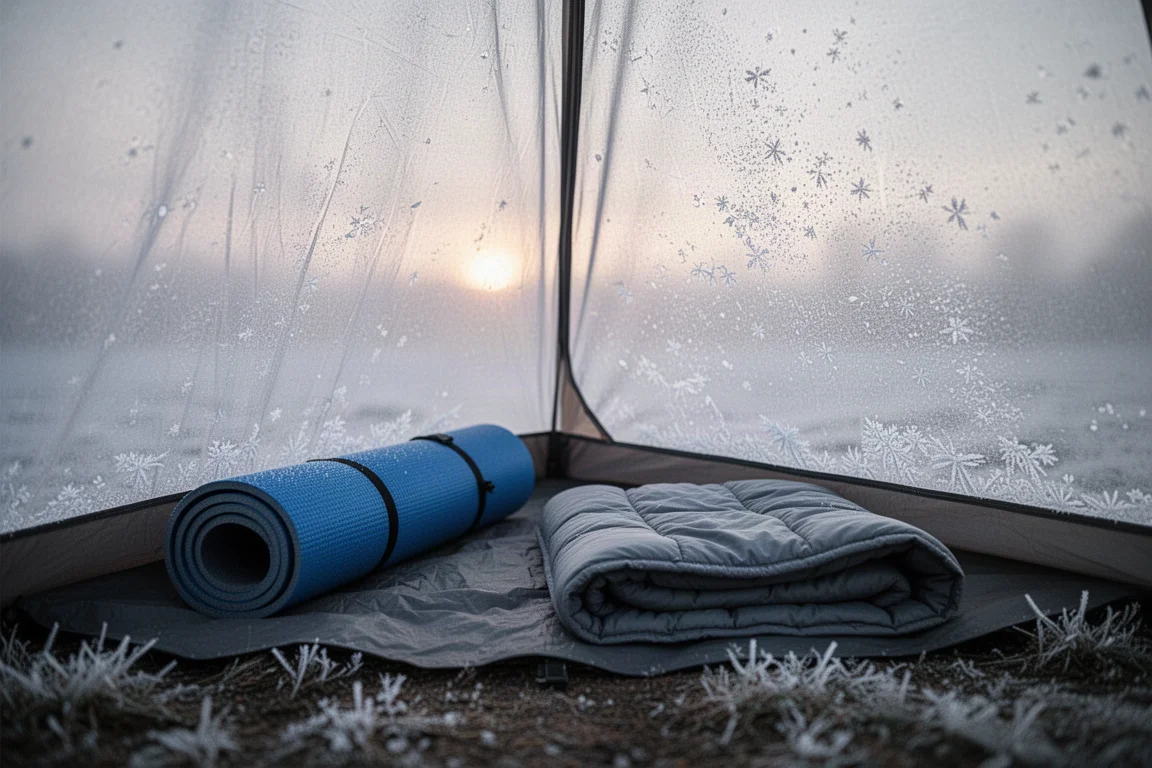
Quilt versus sleeping bag is a personal preference rather than a rule. Sleepers who stay still may prefer a bag, while anyone who moves around through the night will likely find a quilt easier to live with.
Stormin’ Norman Cone Stove
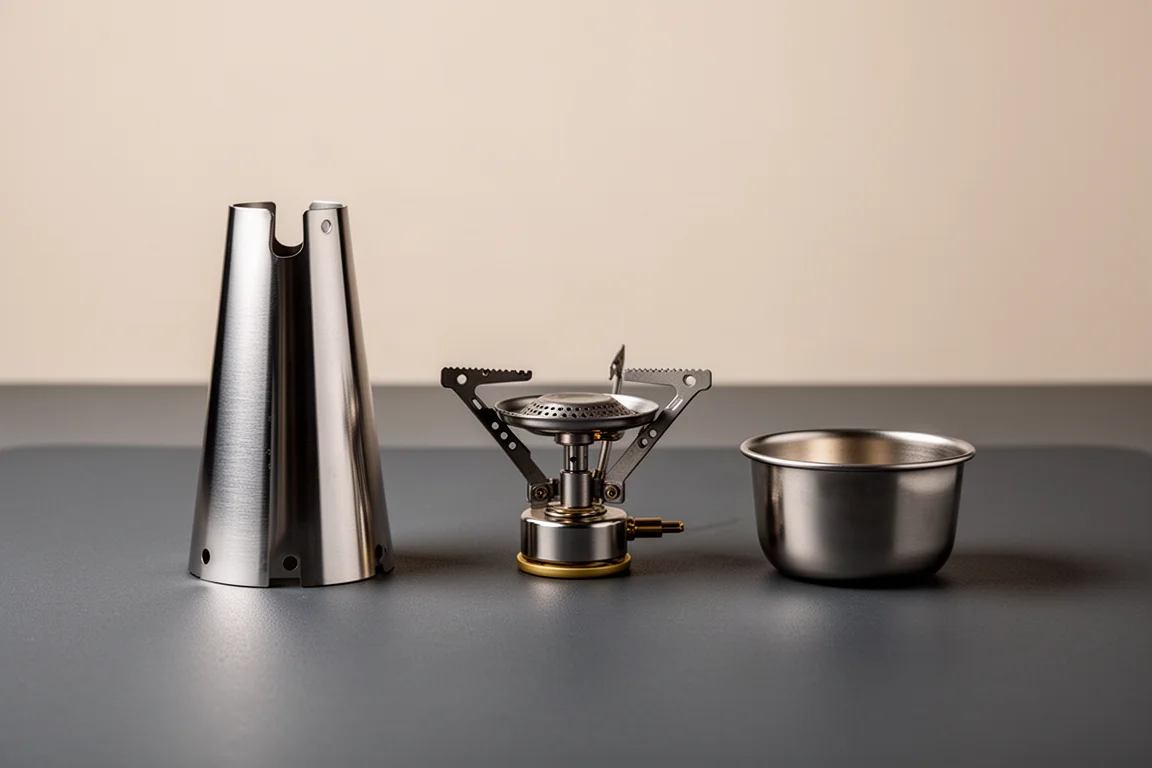
The Stormin’ Norman cone stove is the simple option that keeps working. Alcohol stoves can be awkward to light in freezing conditions, so the method here is a small piece of rolled tissue paper as a primer, with the windshield dropped over the top once it catches. From there it is a straight boil for dehydrated meals, nothing more complicated.
It is lightweight, packs down small, and the burner is non-spill, which makes it safer than a fuel-filled burner that can tip over. The trade-off is time: in sub-zero air a boil takes a while, so it suits trips where nobody is in a hurry.
Decathlon Forclaz Down Jacket
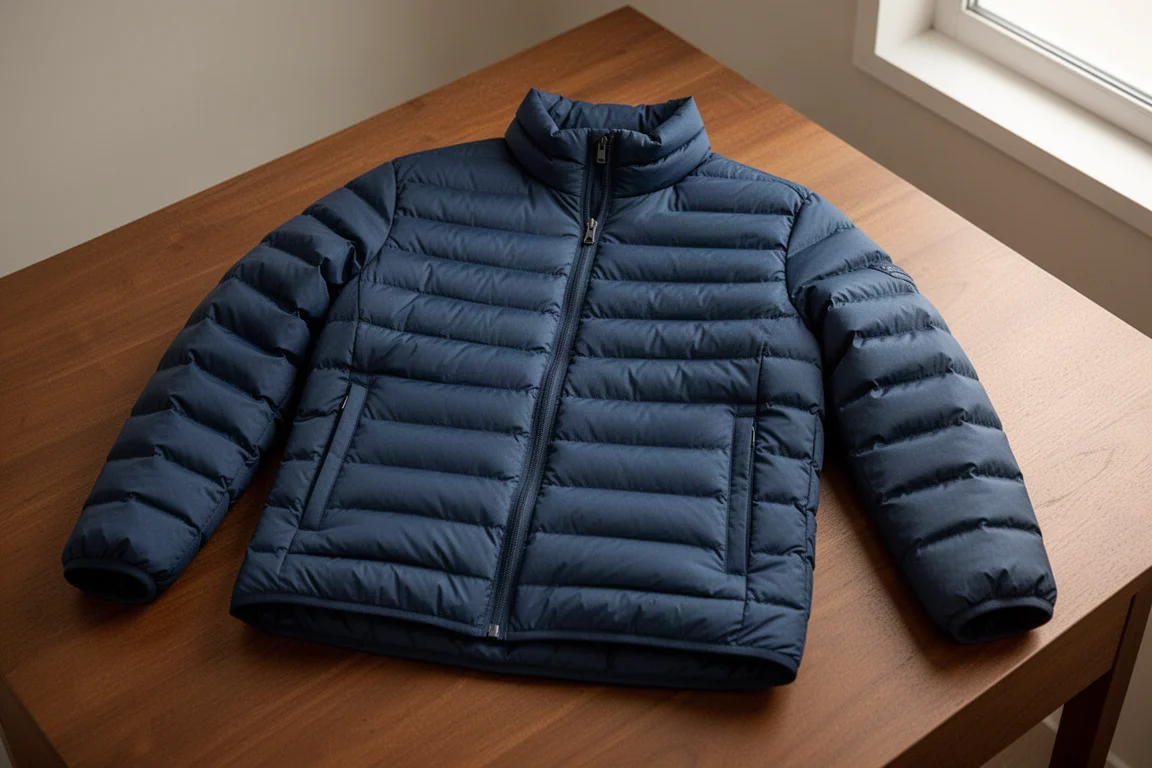
Down jackets are for camp rather than for walking, and the larger Decathlon Forclaz is the one to bring when the temperature is going to sit below freezing. It was around £99 at the time of writing, though it is frequently discounted, and it does the job of keeping you warm while you are stationary.
The smaller Forclaz 500 packs down very small and has been in use for years, still working well apart from a couple of small holes. Both versions are easy to recommend for cold-weather camp use.
Buffalo Mountain Shirt
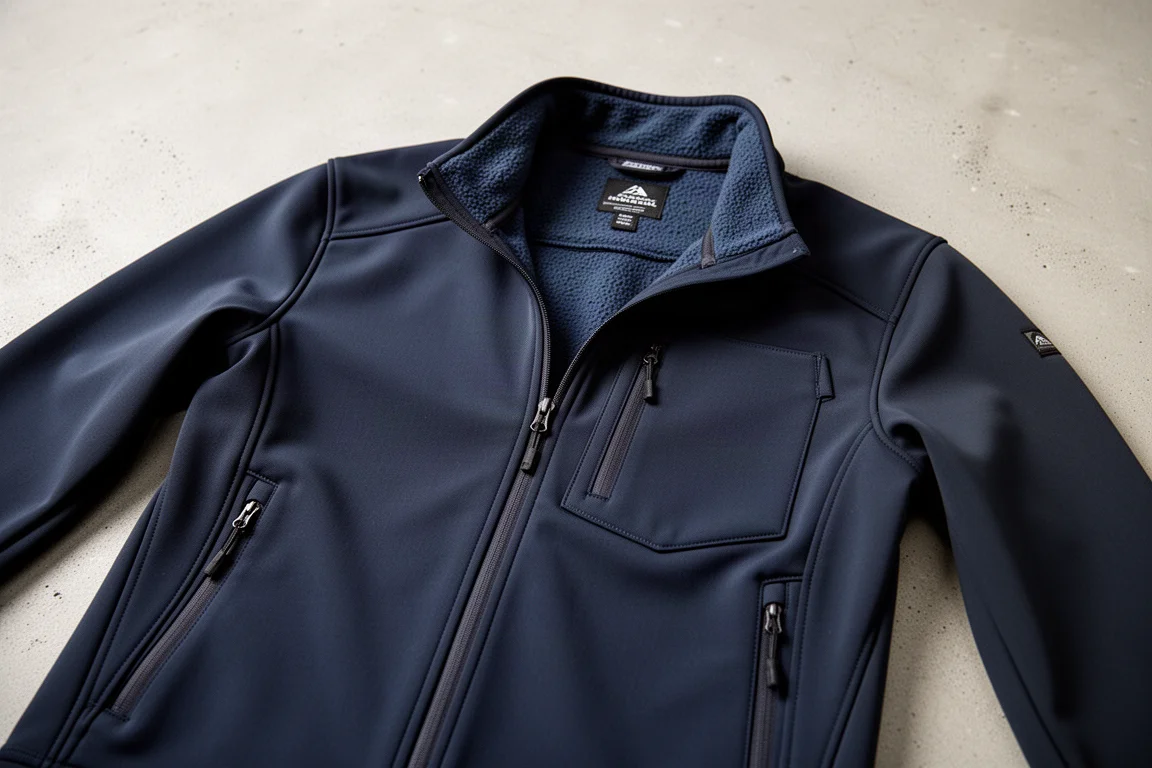
This is the piece that changes how the rest of the layering works. The Buffalo Mountain Shirt uses a synthetic pile lining and is designed to be worn directly against the skin, with a very thin base layer underneath. Moisture from sweat is pulled away rather than trapped, so you stay warm while moving and do not arrive at camp soaked from the inside.
It is not fully waterproof, and the system has a clear upper limit: above roughly five degrees it runs too warm. Side zips let you dump heat quickly when you need to. The traditional alternative, a base layer, fleece and shell worn in sequence, means stopping to add or remove layers as your effort changes, which is the cycle this shirt avoids.
The Special 6 is a similar shirt with a longer cut, which does not suit shorter wearers. A lighter Active Light version using the same approach is the sensible option for warmer conditions.
Sea to Summit Aeros Premium Pillow
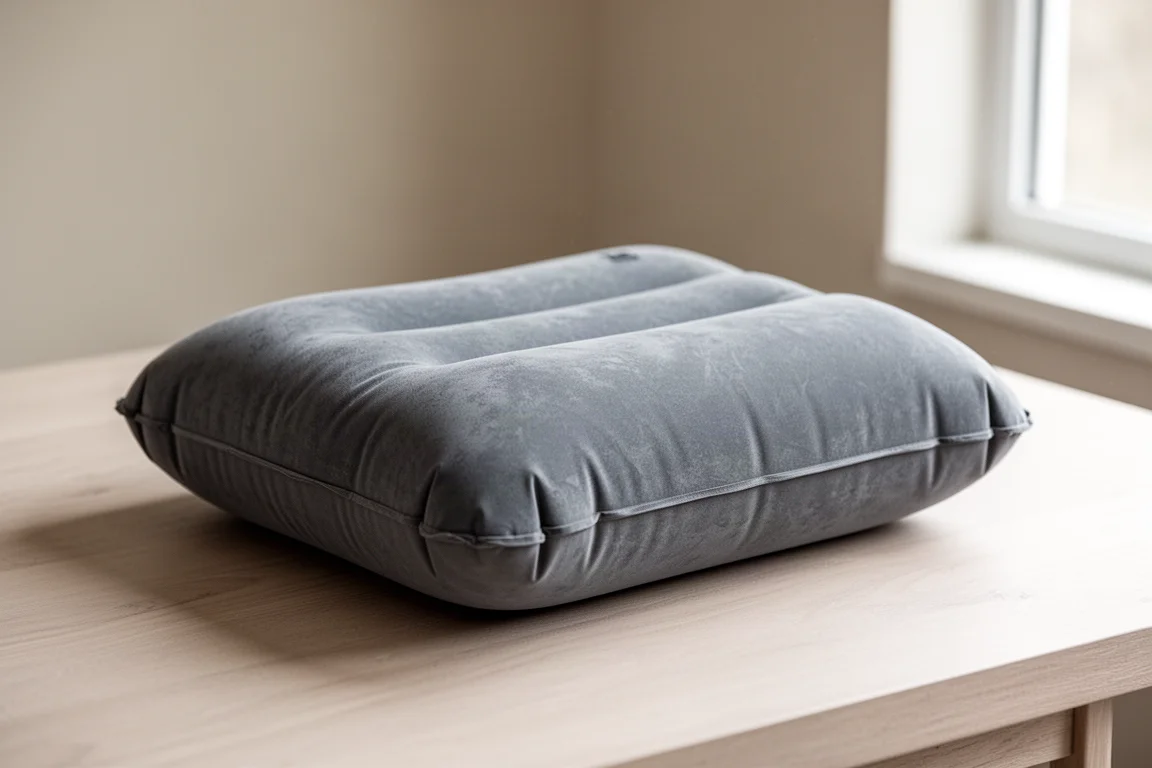
The last piece of the sleep kit is the Sea to Summit Aeros Premium pillow. It pairs well with the Sea to Summit Ether Light pad, and it is comfortable enough to make a real difference on a cold night when you are spending a long time in the tent.
A proper pillow is one of those small items that is easy to dismiss and hard to give up once you have used one. For cold-weather camping, where nights are long, it earns its place in the pack.
Buying Advice
Cold-weather camping gear is not about buying everything at once. Start with the sleep system, because warmth from the ground up decides whether the night works, then look at shelter, then at the smaller items that make camp life easier.
A few practical notes from a sub-zero trip: leave a little margin between the forecast low and the comfort rating of your quilt or bag, take a stove you can light reliably with cold hands, and prioritise clothing that manages moisture over clothing that is simply heavy. Waterproof overtrousers and Gore-Tex gaiters are also worth having, since they keep mud and wet off your trousers on the walk in.
Prices vary widely across this list, and the down jacket in particular is often available well below its list price. Buy for the conditions you actually camp in rather than the coldest night you can imagine.
Conclusion
Eight pieces, one cold night in the Peak District, and a straightforward conclusion: warmth from below, a shelter rated for the season, a stove that lights when it matters, and clothing that moves moisture instead of holding it. Get those four things right and a sub-zero camp becomes something to look forward to rather than something to endure.
Further reading
Related Reviews
Camping Gear
3FUL Ultralight Ground Sheet Review: A Two-Person Footprint Worth Packing
A 6.7 oz two-person ground sheet in ripstop silnylon, priced around $30. Here is what it protects, what it does not do, and who should pack it.
Camping Gear
Backcountry Light Dual-Function Tarp and Floor Review: A Footprint First
A dual-purpose tent floor and tarp that keeps falling rain off you, but cannot block wind. Here is where it works and where it does not.
Camping Gear
Best 2-Person Camping Mattresses for Couples: 10 Options Compared
A practical comparison of ten two-person camping mattresses, covering self-inflating pads, air pads and air mattresses for couples.