Knife Sharpening
Whetstone Sentimi Review: Synthetic Stones with a Natural-Feel Twist
First impressions of the Whetstone Sentimi sharpening stones by Rocky Tsujio, tested across a stainless R2 gyuto and a carbon steel white #2 blade.
Introduction
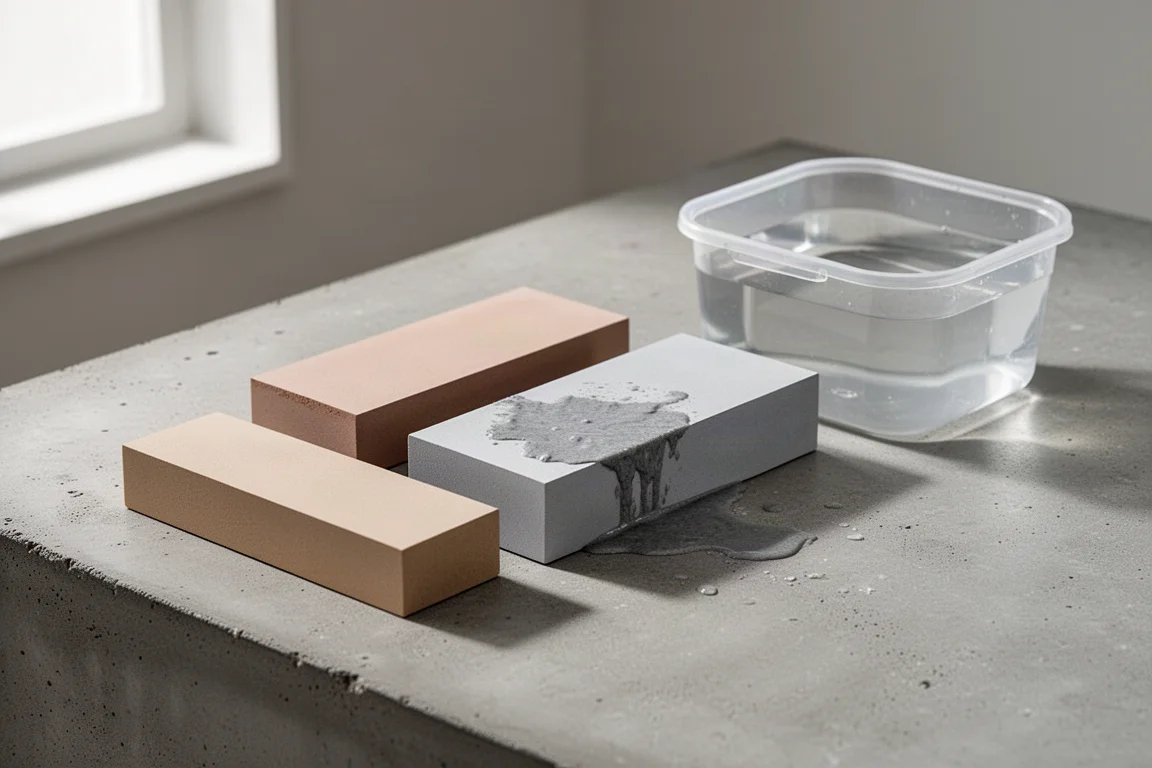
Whetstone Sentimi by Rocky Tsujio, from H and K LLC, is a set of sharpening stones from Japan built around an unusual idea: synthetic stones designed to feel like sharpening on Japanese natural stones. The maker describes them as largely synthetic, blended with other materials including Japanese natural stone powder to evoke that natural-stone feel, with some stones said to include Mikawa nagura powder to make the mud richer.
This review focuses on first impressions rather than an exhaustive sharpening tutorial. Stones can be used in countless ways across different steels and progressions, so the goal here is to describe how these stones felt to use, how they compared to other stones on hand, and who they might suit.
About the Stones
The exact material composition is not published beyond the claim that the stones are synthetic with added materials such as Japanese natural stone powder. The stones arrive in attractive speckled boxes with a granite-like look, and all stones were soaked for about fifteen minutes before use.
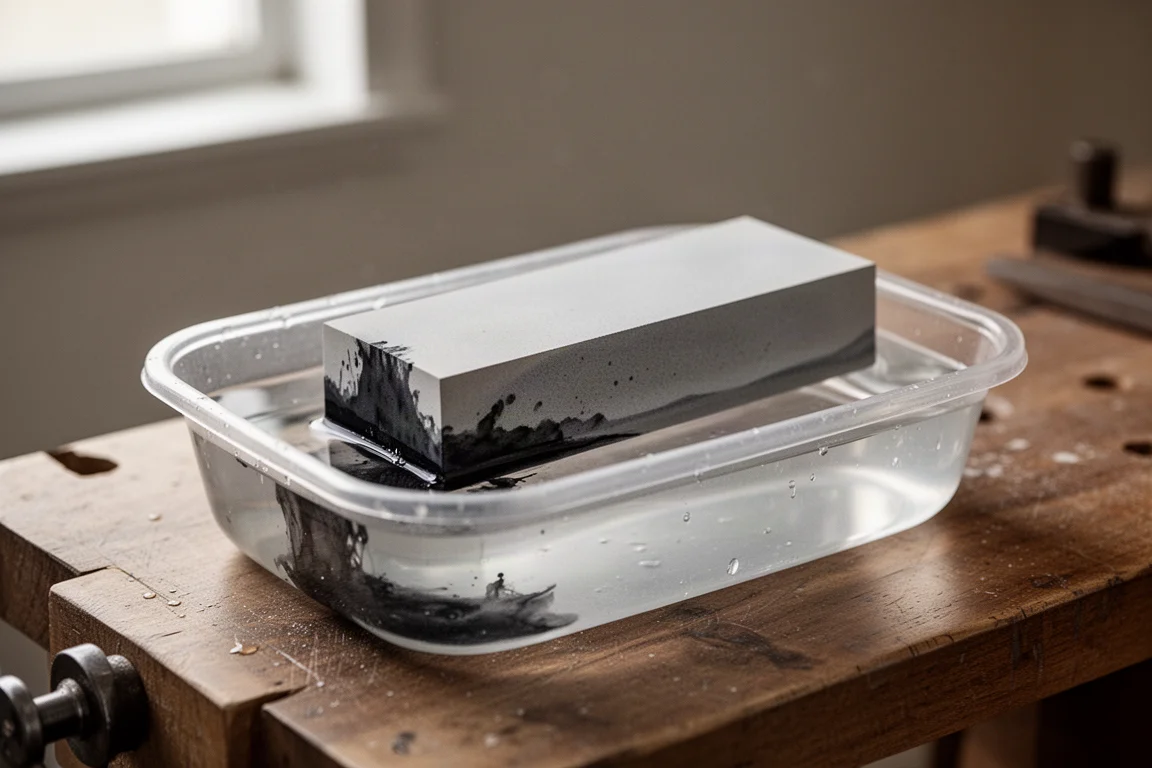
One immediately noticeable detail: the 1,000-grit stone is impressively thick, which matters because it is a softer stone than most 1,000-grit options. The softness was apparent before the first stroke, as the ink marking on the stone was already running off in the soaking container.
Testing Approach
The stones were tested on two very different knives: a Takamura R2 stainless 240mm gyuto, taken no further than the 3,000-grit stone, and a Baldwin Blades 214mm carbon steel blade in spicy white #2 steel, taken all the way to the 6,000-grit stone. The previous main sharpening kit consisted of Shapton Glass stones at 500, 1,000 and 3,000, plus a J-nat and uchigumori finger stones, so there was a solid baseline for comparison.
The 1,000-Grit Stone
On the Takamura, the 1,000-grit stone felt noticeably softer than the 1,000-grit Shapton Glass and other 1,000-grit stones tried in the past. Slurry built a little slowly at first, but once it developed it was clearly present and doing its job. This is an extremely fast-cutting stone, possibly even faster than the Shapton Glass 1,000, which is saying something given that stone’s reputation.
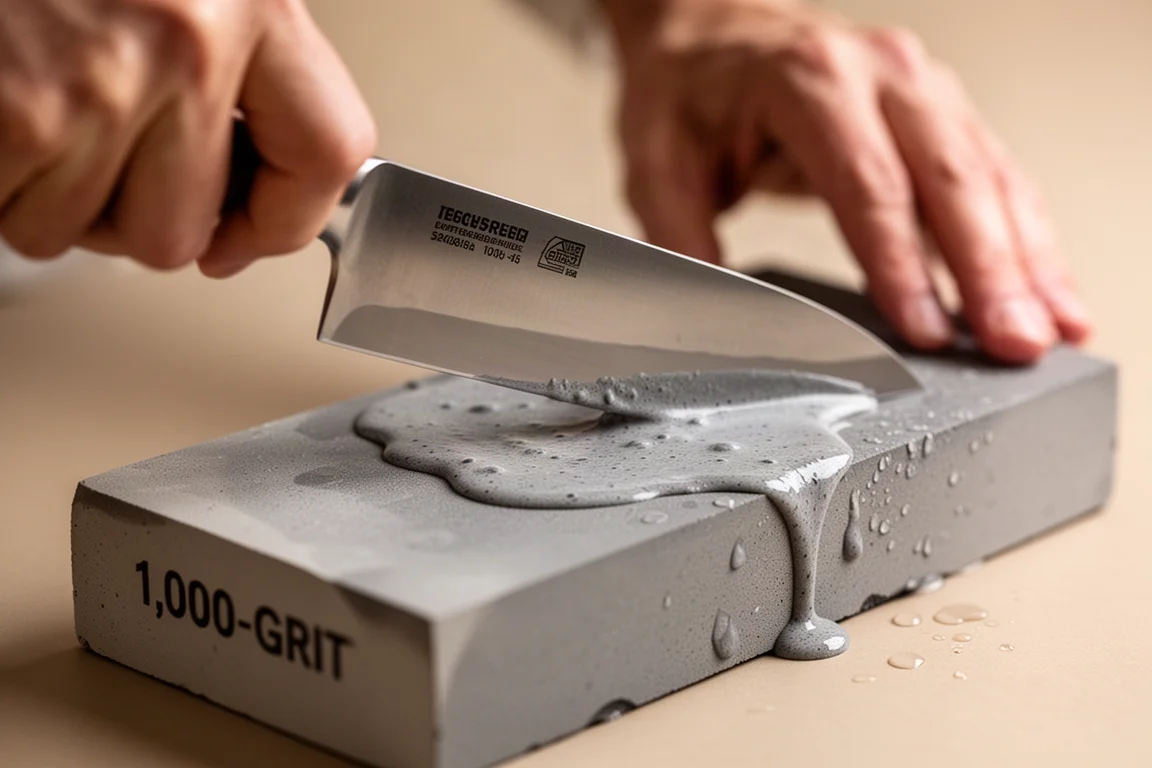
The trade-off is maintenance: because the stone is soft, it needs frequent flattening to prevent valleys that could damage either the edge or your sharpening angle. The sound is what you would expect from a synthetic rather than a natural stone. Even after under three minutes of use, the polish on the edge was appealing, with fine micro abrasions forming pleasant-looking scratch patterns. The cherry tomato test on the 1,000-grit edge was excellent, with plenty of bite even without stropping.
The 3,000-Grit Stone
This was the standout of the set. The 3,000-grit clogs very quickly, and it needs a nagura to clear the particulates, which are otherwise nearly immovable. But the cutting performance and feedback more than make up for it. Once working, the stone stops feeling like a synthetic under the fingers. It is remarkably quiet, almost silent, and pleasing to both the ears and the hands.
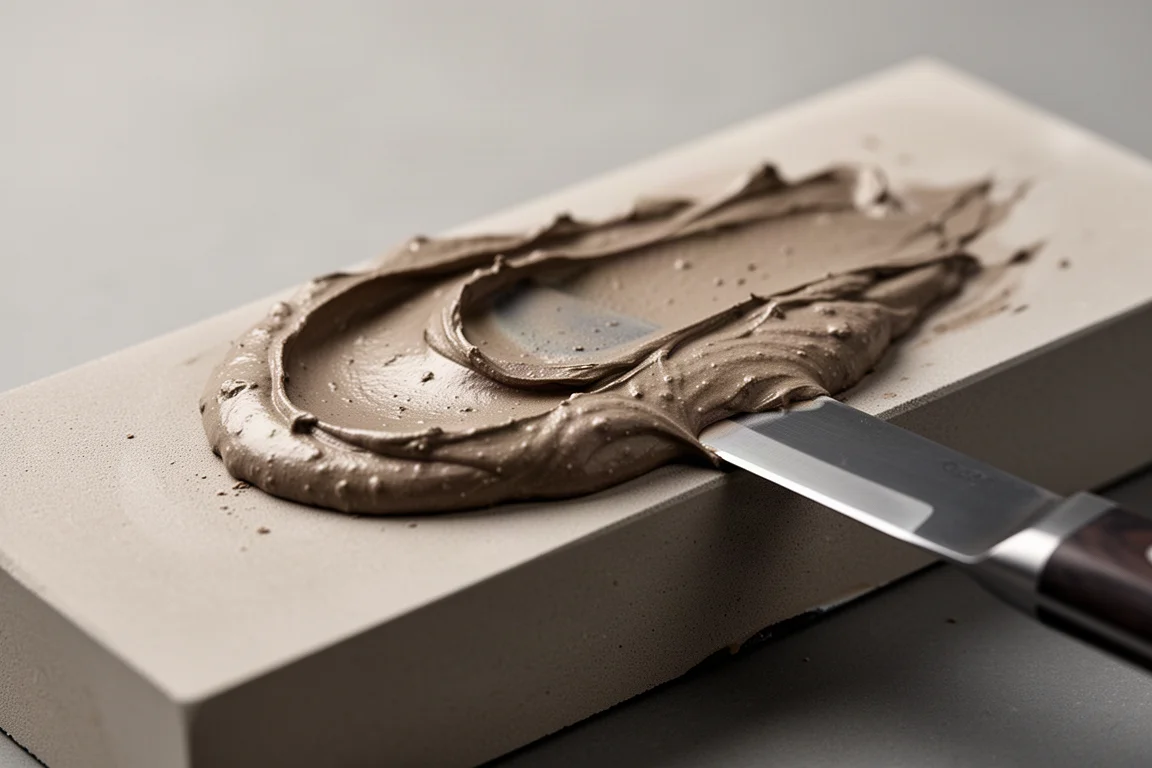
It polishes well, removing the micro scratches left by the 1,000-grit stone and leaving a satin, cloudy finish. Compared directly to a Shapton Glass 3,000, this stone is the clear preference, and it has become the new go-to. On the carbon steel Baldwin blade, the 3,000-grit experience was equally excellent: super muddy, silky slurry and a nice satin-esque finish, though the stainless Takamura still delivered the more enjoyable session.
The 6,000-Grit Stone
The 6,000-grit stone gave great feedback and nice slurry on the carbon steel blade. As the progression moved higher, the feedback took on more of a natural-stone character, whether from the finer grit or a higher proportion of natural stone powder in the finishing stones. It clogs as expected, but less than the 3,000, and cleaning is simple: a quick swipe across the surface and it is ready to go again, with no nagura needed as often.
The finish is almost too smooth at times, with little feedback on carbon steel, but a nice edge was still achieved and the polished result was satisfying. On carbon steel in particular, the 1,000-grit stone did not produce as fine and cute an edge as it did on the stainless Takamura, where even burr creation and general toothiness were better.
Buying Advice
Across two knives and three grits, these stones proved fast on both stainless and carbon steel, easy to clean, and quick to dry. The 3,000-grit is the favourite of the set and will see regular duty on stainless knives, while the 6,000-grit delivers a pleasing, natural-feeling finish and the 1,000-grit offers speed and toothiness with more frequent flattening required.
One caveat worth flagging: these stones are sometimes recommended for beginners, but that advice deserves skepticism. Fast cutting means faster results, but the softness of the 1,000-grit stone means flattening becomes part of the routine. A beginner still learning angle control and burr removal may be better served by a harder stone that does not valley as quickly, leaving mental bandwidth free for the fundamentals.
Conclusion
The Whetstone Sentimi stones are genuinely pleasant to use with great results on both stainless and carbon steel. The 3,000-grit is the clear winner for its feel and speed, the 6,000-grit brings a natural-stone-like finishing experience, and the 1,000-grit is a fast cutter that rewards attentive maintenance. For intermediate sharpeners who enjoy the process as much as the result, this set is easy to recommend.
Product link
View more details for Whetstone Sentimi
This product is mentioned in the review. Check the specifications, options, and compatibility before buying.
View more details for Whetstone SentimiFurther reading
Related Reviews
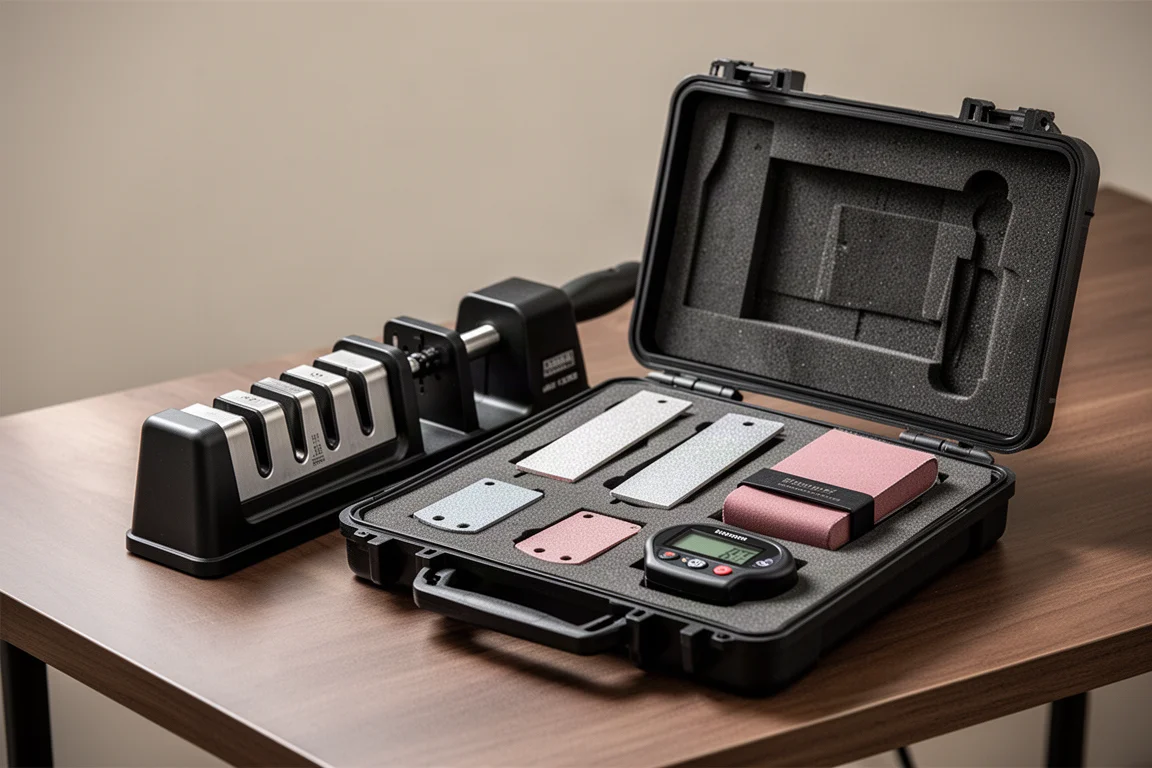
Knife Sharpening
Work Sharp Professional Precision Adjust Elite: A Sharpening System for People Who Care About Edges
The Elite version of the Professional Precision Adjust adds a rugged case, fine resin-bonded diamond plates, and a strop for a true mirror finish.
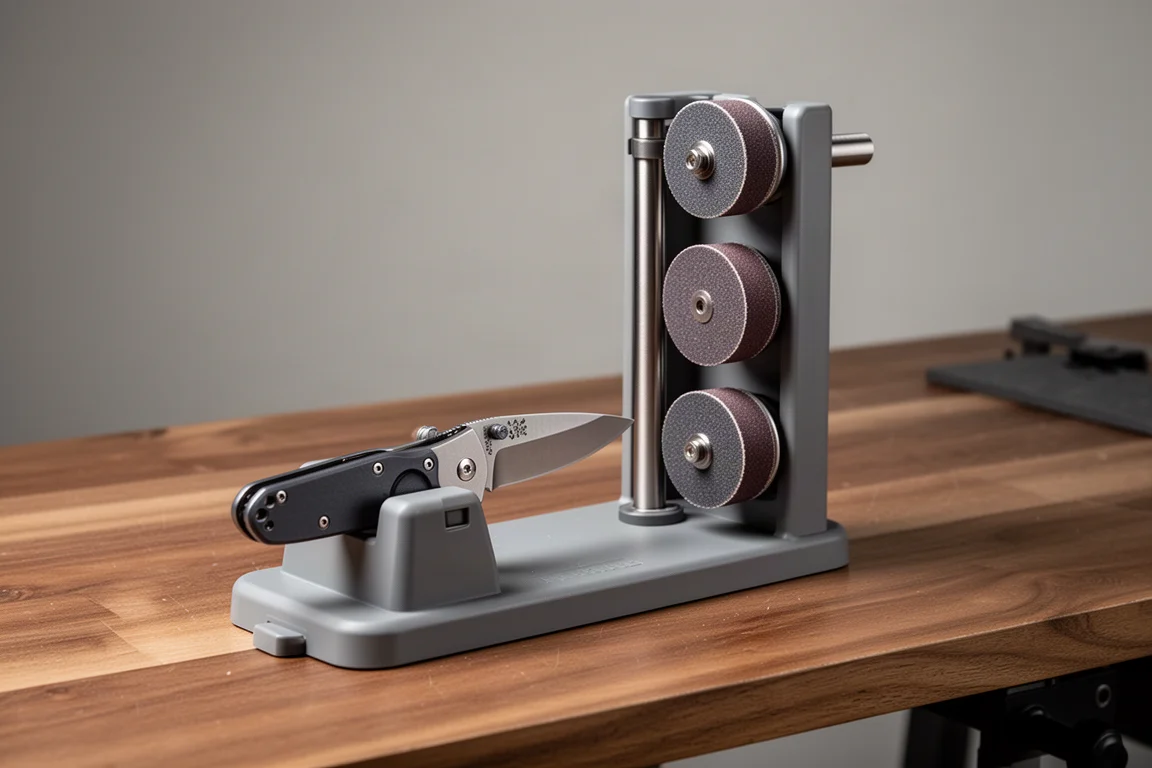
Knife Sharpening
Work Sharp Precision Adjust: The Clamp-and-Jig Sharpener Worth Building Out
A fixed-angle knife sharpener with a rotating abrasive carriage, plus an upgrade kit that turns it into a genuinely complete sharpening setup.
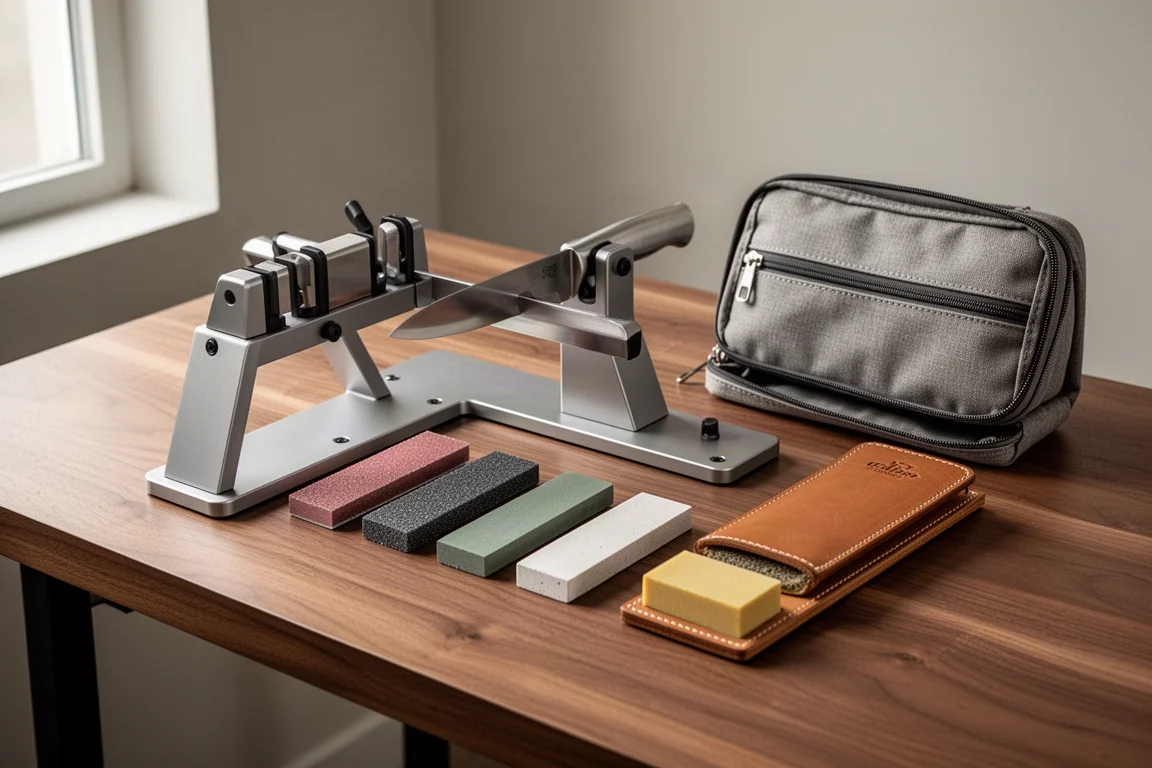
Knife Sharpening
Work Sharp Precision Adjust Upgrade Kit Review: A Wider Grit Range for an Already Great Sharpener
The Upgrade Kit expands the Precision Adjust with extra abrasives, a built-in strop, and a proper carrying case. Here is what changes after months of use.