Outdoor Gear
Wet-Weather Backpacking Gear: 18 Pieces That Keep You Dry and Warm in Constant Rain
A field-tested wet-weather backpacking kit covering rain shells, fast-drying footwear, water treatment, camp comfort, shelter, and sleep insulation for multi-day rain.
Introduction
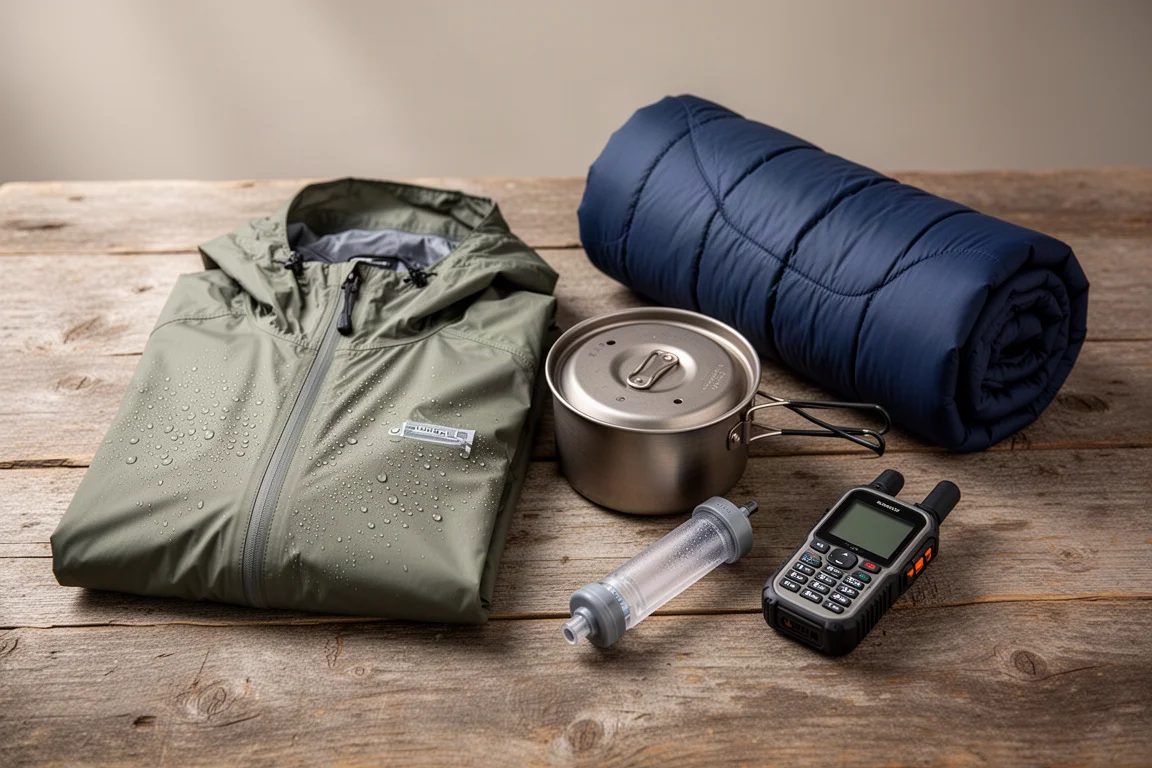
Four days of continuous rain and downpours will find every weak point in a backpacking setup. The kit below was chosen for exactly that scenario: long days on wet trail, humid nights, and no real chance to dry anything out.
The thinking behind the selection was simple. Where breathability struggles in high humidity, mechanical ventilation helps. Where insulation gets soaked, synthetic fills and treated down hold their warmth longer. Where feet are going to get wet anyway, footwear that dries quickly beats footwear that stays heavy for days.
What follows is the full wet-weather kit, from the rain shell and pants worn on trail through to the shelter, sleep system, and the small comfort items that make a rainy trip manageable.
What Matters Most in Wet Weather Gear
In sustained rain, the most useful feature on a rain shell is a mechanical vent. A jacket can be breathable on paper and still trap moisture once humidity climbs, so armpit zips let you dump heat on a climb and seal up again on an exposed ridge.
Insulation choice matters just as much. Down loses loft and warming ability quickly once it gets wet, while synthetic fills keep more of their warmth in humid conditions. Down carrying a hydrophobic treatment absorbs less water and holds its loft longer, which makes it a reasonable option for wet trips when it is paired with a pack liner or waterproof stuff sack.
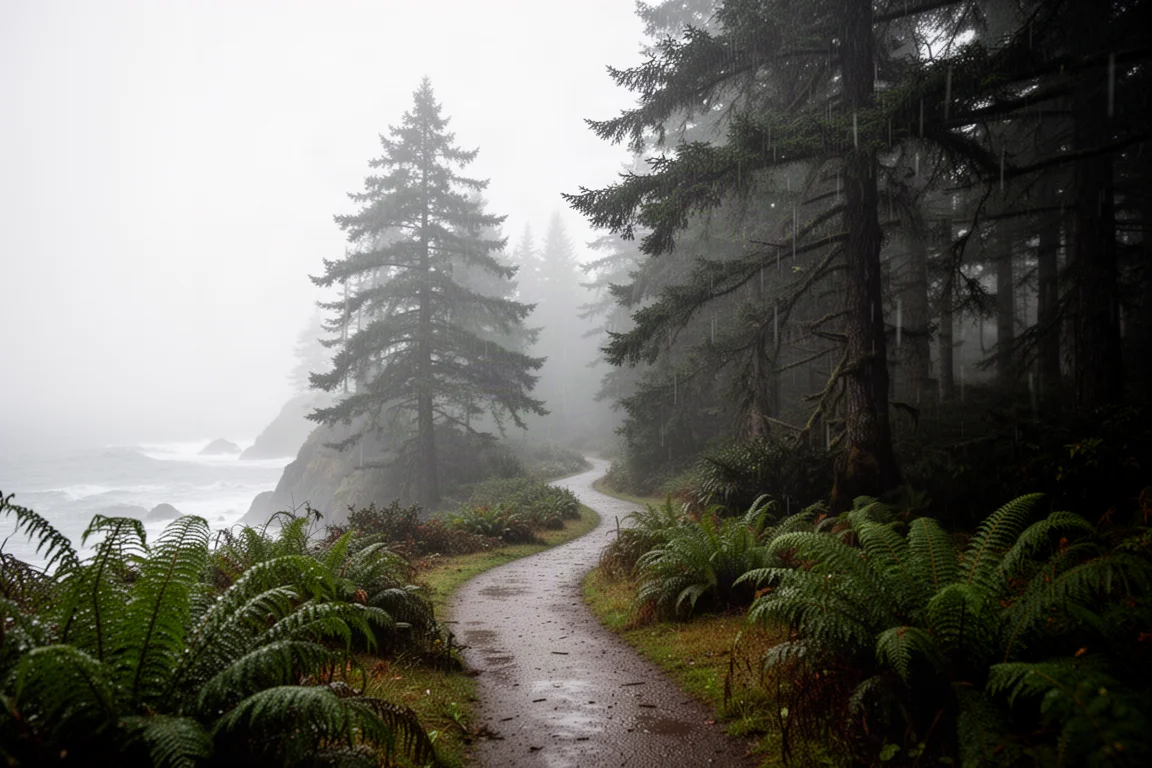
Footwear is the other big decision. On muddy, saturated ground feet get wet either way, so trail runners have a real advantage: they dry out when the sun appears, where boots can stay damp for days. Trail runners also feel more nimble on ladders, rock scrambles, and rough terrain.
Keeping the inside of a pack dry is a separate problem from keeping the outside dry. A contractor bag or pack liner, twisted shut and tucked down the side of the pack, is enough to protect the items that must stay dry: sleep system, spare clothing, and electronics.
Rain Protection That Works in Sustained Downpours
A rain kit for a wet trip has three jobs: keep wind and rain off, let heat escape when you are working hard, and stay usable once everything is already damp.
Enlightened Equipment Visp Rain Jacket
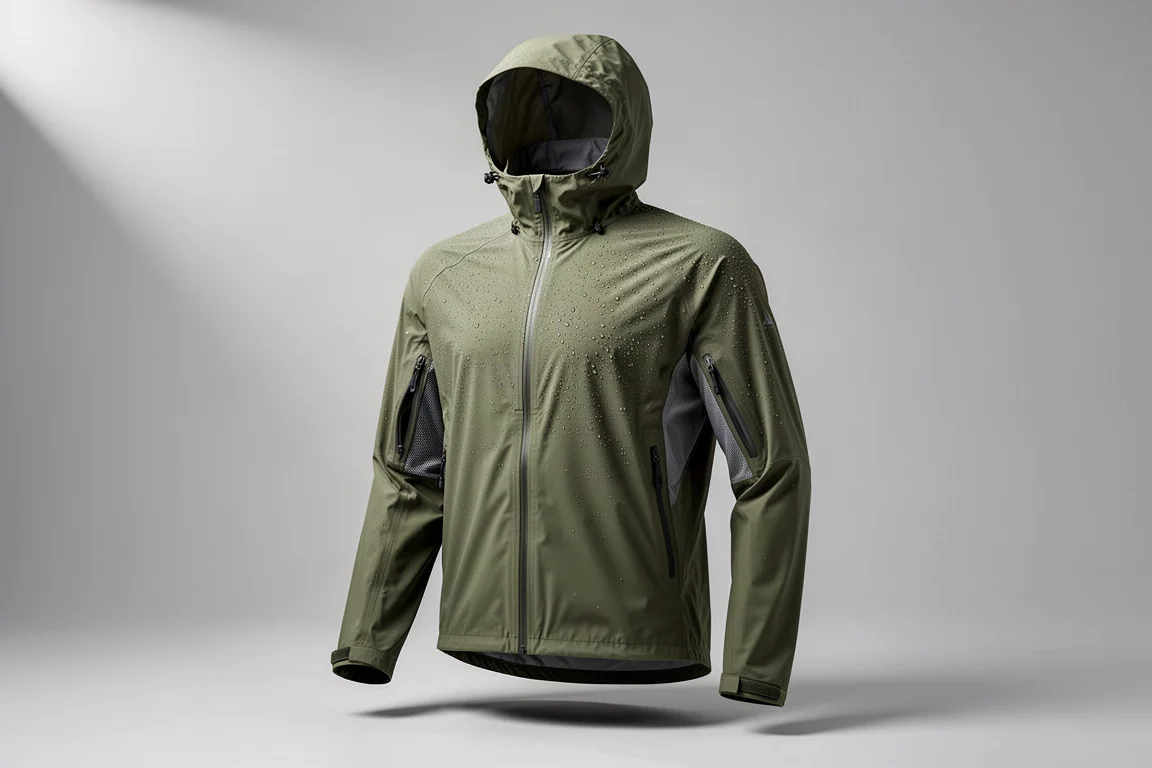
The Visp rain jacket is the outer layer worn through the worst of it. Two things stand out: it is lightweight and durable at the same time, which is a difficult combination to find in a rain shell, and it has armpit zips for mechanical ventilation.
That ventilation matters more than the fabric’s breathability in humid conditions. Opening the pit zips on a climb and closing them again on an exposed section gives direct control over how much heat and moisture stays inside the jacket.
Outdoor Research Helium Rain Pants
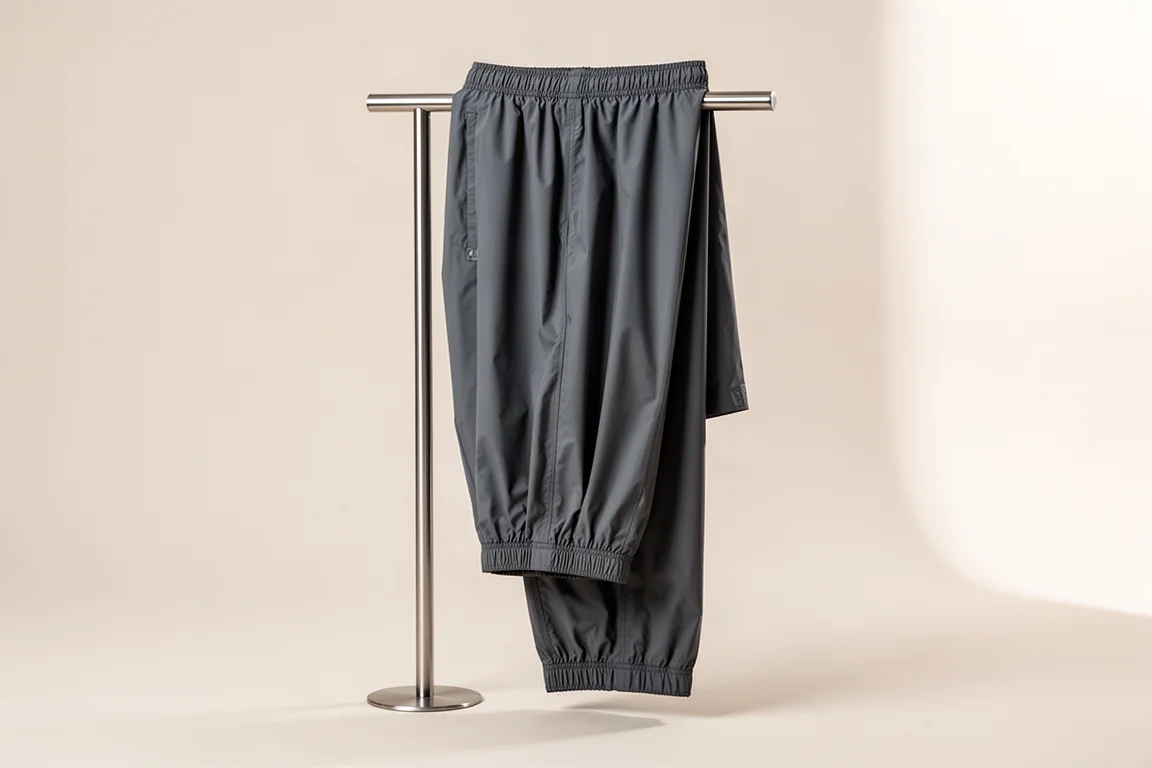
The Helium rain pants cover the lower half of the same system. They are the practical choice when the preferred matching rain pants are unavailable, and they work as part of a lightweight rain layering setup rather than as a heavy-duty shell.
On a trip where rain is constant, having a dedicated rain pant rather than relying on quick-drying hiking trousers keeps the legs shielded from wind-driven rain and from the chill that comes with wet fabric against the skin.
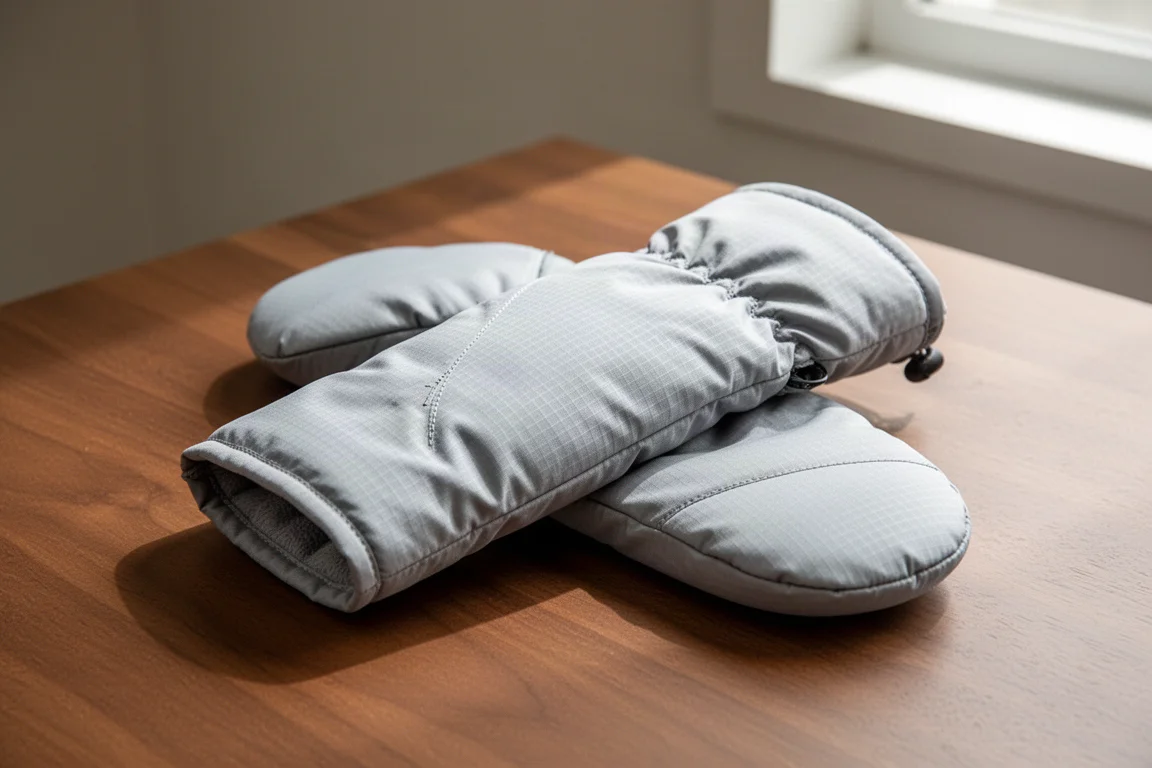
Outdoor Research Helium Rain Mitts
The Helium rain mitts are not waterproof, and they are not meant to be. Their role is warmth: when hands start to get cold, they add a layer that takes the edge off without adding much weight.
The bigger design win is where they live. They stash in the small pocket at the base of the pack’s side water bottle sleeves, so they can be pulled out and put away without stopping or opening the main compartment. That pocket is flexible enough for other small items too, including a very packable rain jacket.
Footwear for Mud, Rock, and Ladders
Wet trails put footwear in a difficult position. Waterproofing keeps water out until it comes in over the top, and after that the same membrane keeps water in.
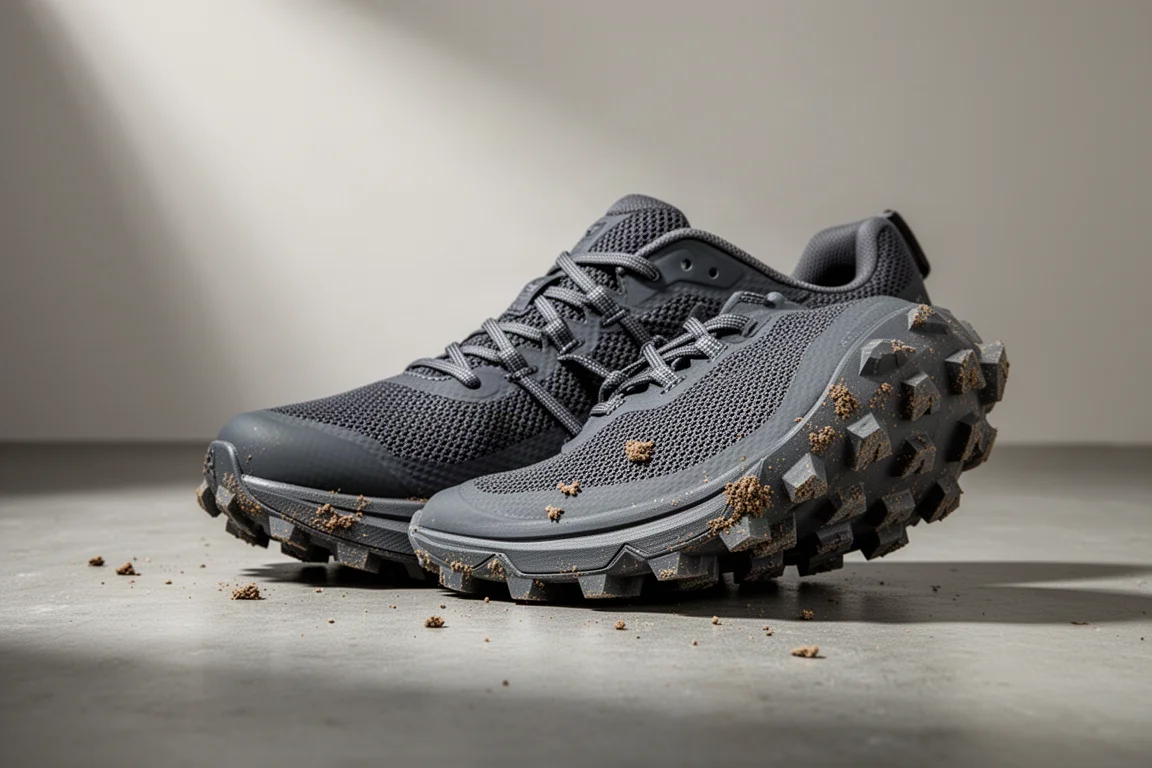
Hoka Speedgoat Trail Running Shoes
The Speedgoat trail runners were the choice for terrain that was muddy, wet, and soaking feet within minutes. Trail runners feel noticeably more nimble than boots, which helps on ladders, rock scrambles, and the rougher sections of a coastal route.
The drying argument is just as practical. Feet end up wet regardless in these conditions, but trail runners can dry out in a bit of sun, while boots tend to stay wet for days. On a multi-day route with no chance to dry out fully, that difference compounds.
Packs, Water Treatment, and Safety
With rain falling for days, the pack itself will get soaked. What matters is that the contents do not.
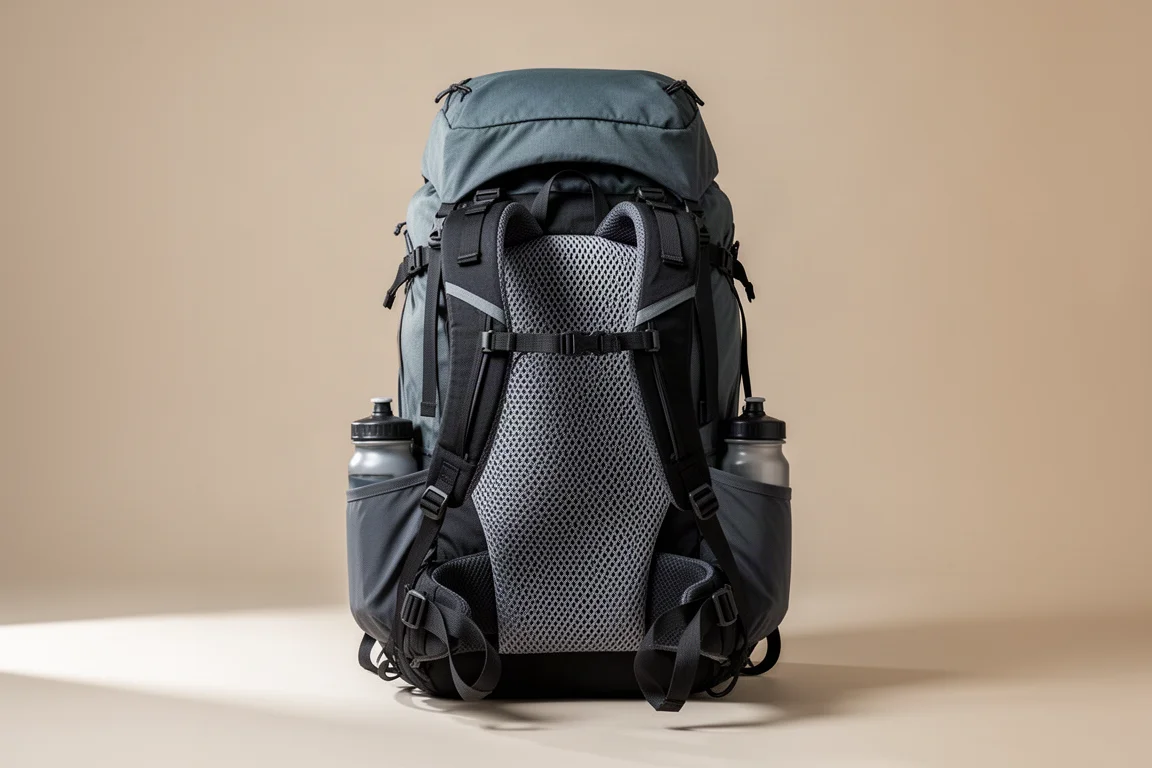
Gregory Focal 58 Pack
The Focal 58 is not a waterproof pack, and in continuous rain it gets soaked like any other. Its value on a wet trip comes from two features.
The first is the trampoline back panel. In hot weather it keeps your back ventilated and reduces sweat, and in rain it does something more important: it holds the pack away from your back, so a foam panel is not pressing moisture through your rain jacket and leaving your back soaked. The second is the water bottle pockets, which are easy to reach without stopping. Pull a bottle out through the bottom, drink, and push it back in.
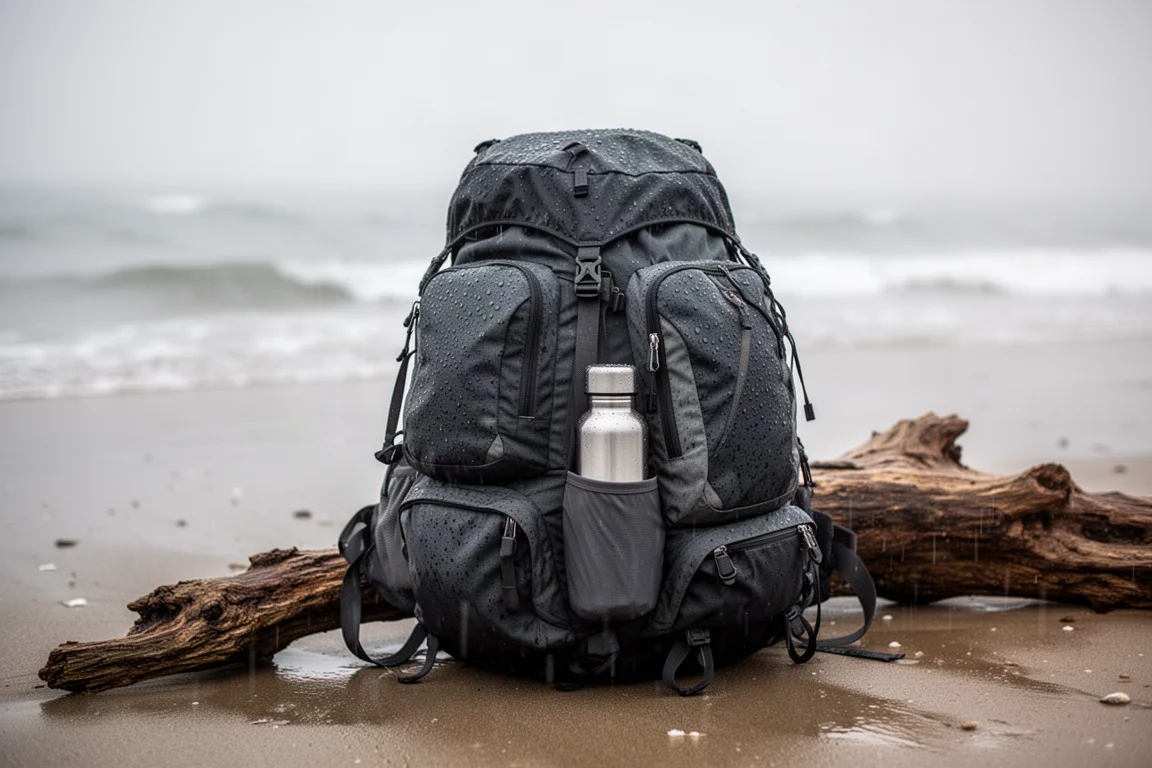
Those pockets also have a small sub-pocket at the base, which is ideal for rain mitts or other small items you want to reach quickly. Everything that must stay dry goes inside a contractor bag or pack liner, twisted shut and tucked down the side of the pack. That includes the sleep system and spare clothing, the two categories a wet trip punishes hardest.
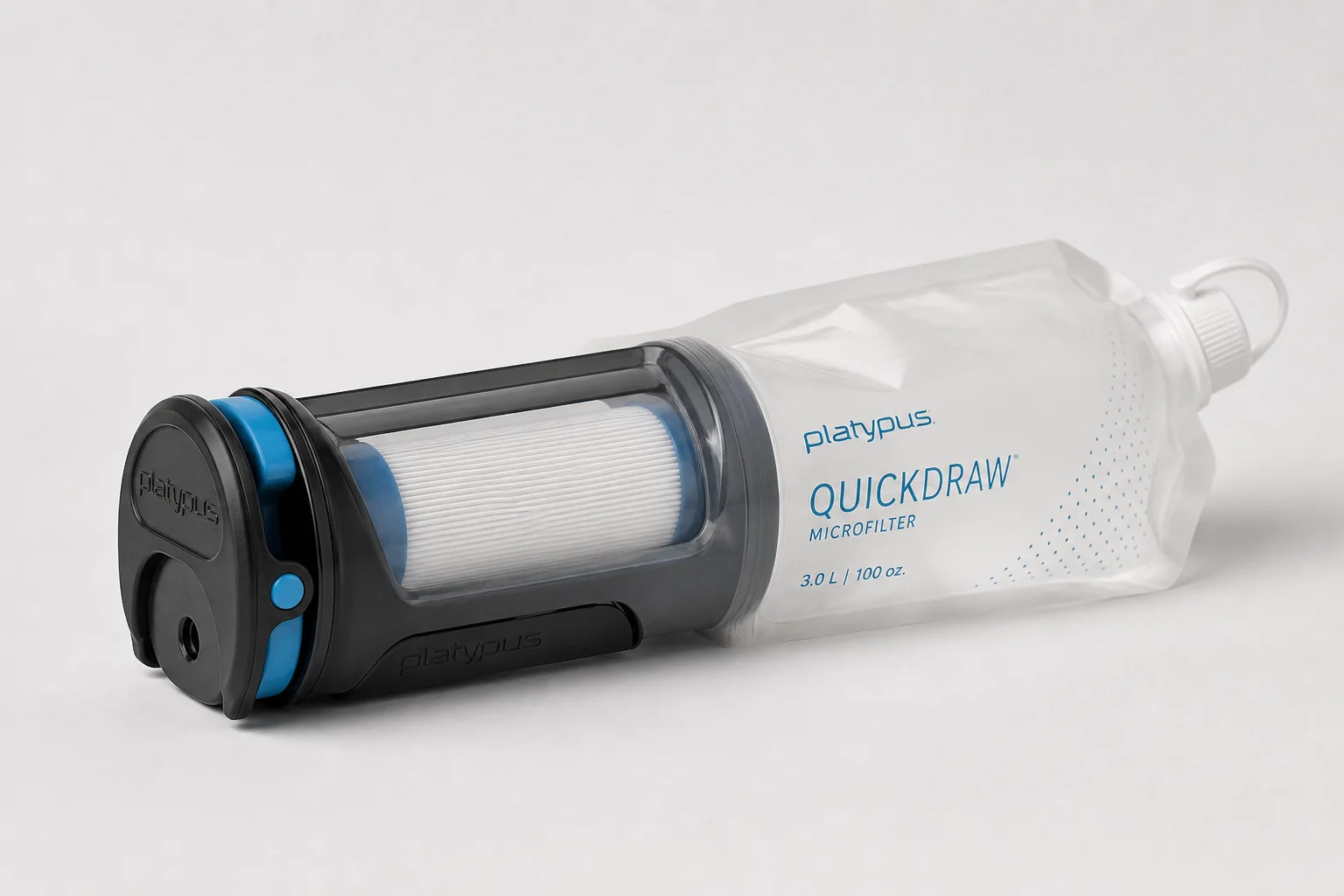
Platypus QuickDraw Filter
Water treatment is easy to overlook when weather is the main problem, but a filter that is slow or awkward gets skipped, and that is a genuine risk on a long, wet day.
The QuickDraw is the filter to choose here. It is the preferred option among the filters carried, and it is the one worth picking up if you are buying a filter for a wet-weather kit. It lives in the pack’s front pouch, which keeps it accessible when rain gear is stored in the same place.
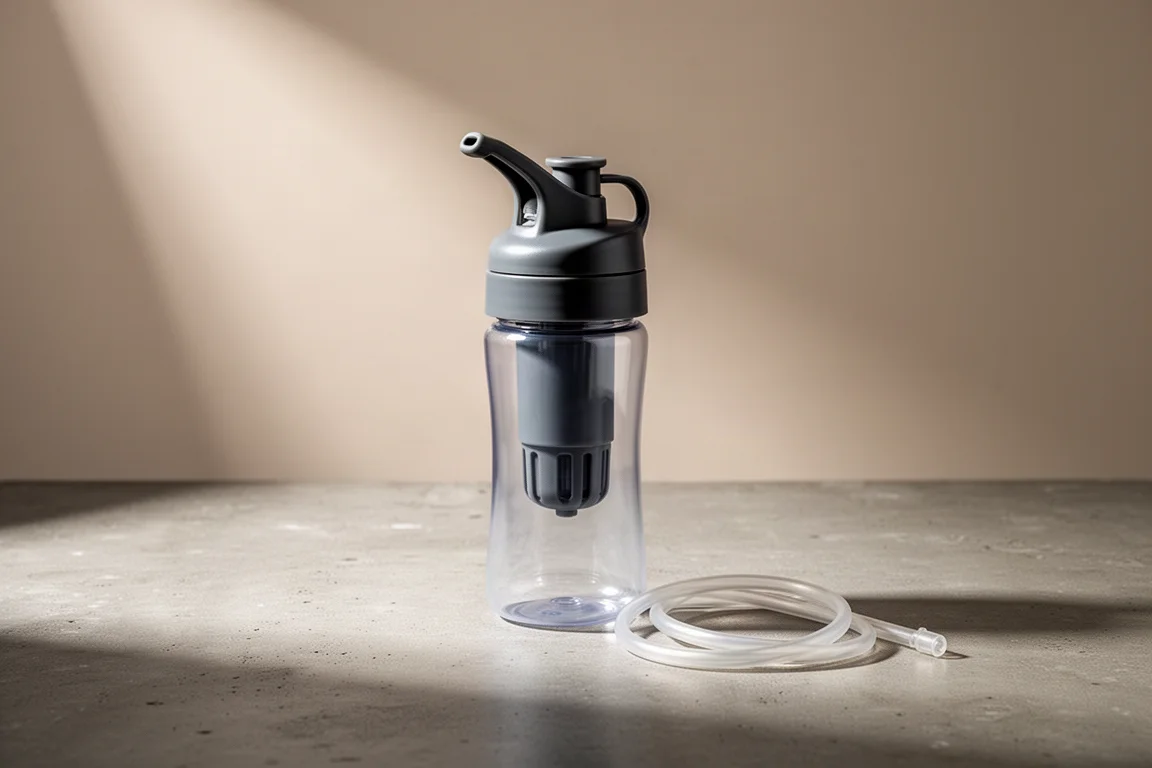
LifeStraw Flex Filter
The Flex filter was carried as a test, and it did not impress. At this point it is not a recommendation, and the QuickDraw remains the better choice for anyone assembling a water treatment setup.
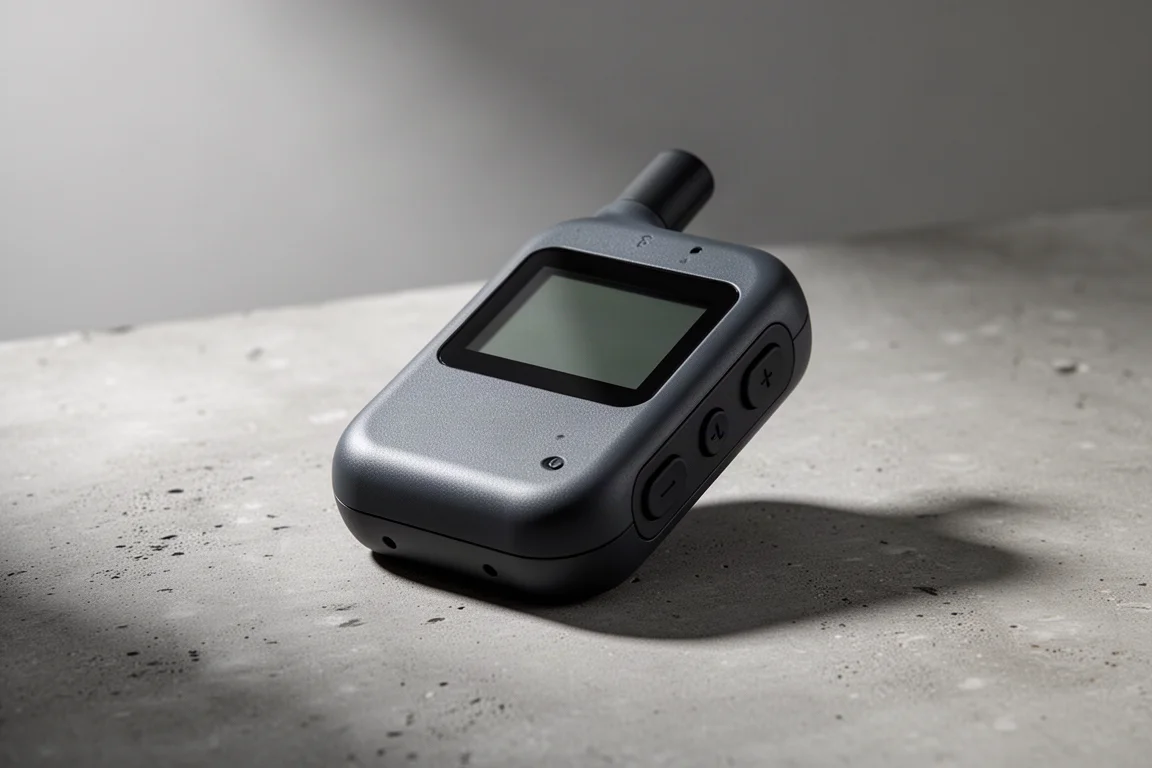
Garmin inReach Mini 2
On a trail with mud, slippery sections, and ladders, a satellite communicator is a safety item rather than a gadget. The inReach Mini 2 was carried for exactly that reason, and it lives in the pack’s lid pocket alongside the first aid kit and other small essentials.
Camp Comfort and Cooking in the Rain
Rain changes camp. A tarp over the sitting and cooking area, a real seat, and a stove that copes with wind turn a miserable evening into a workable one.
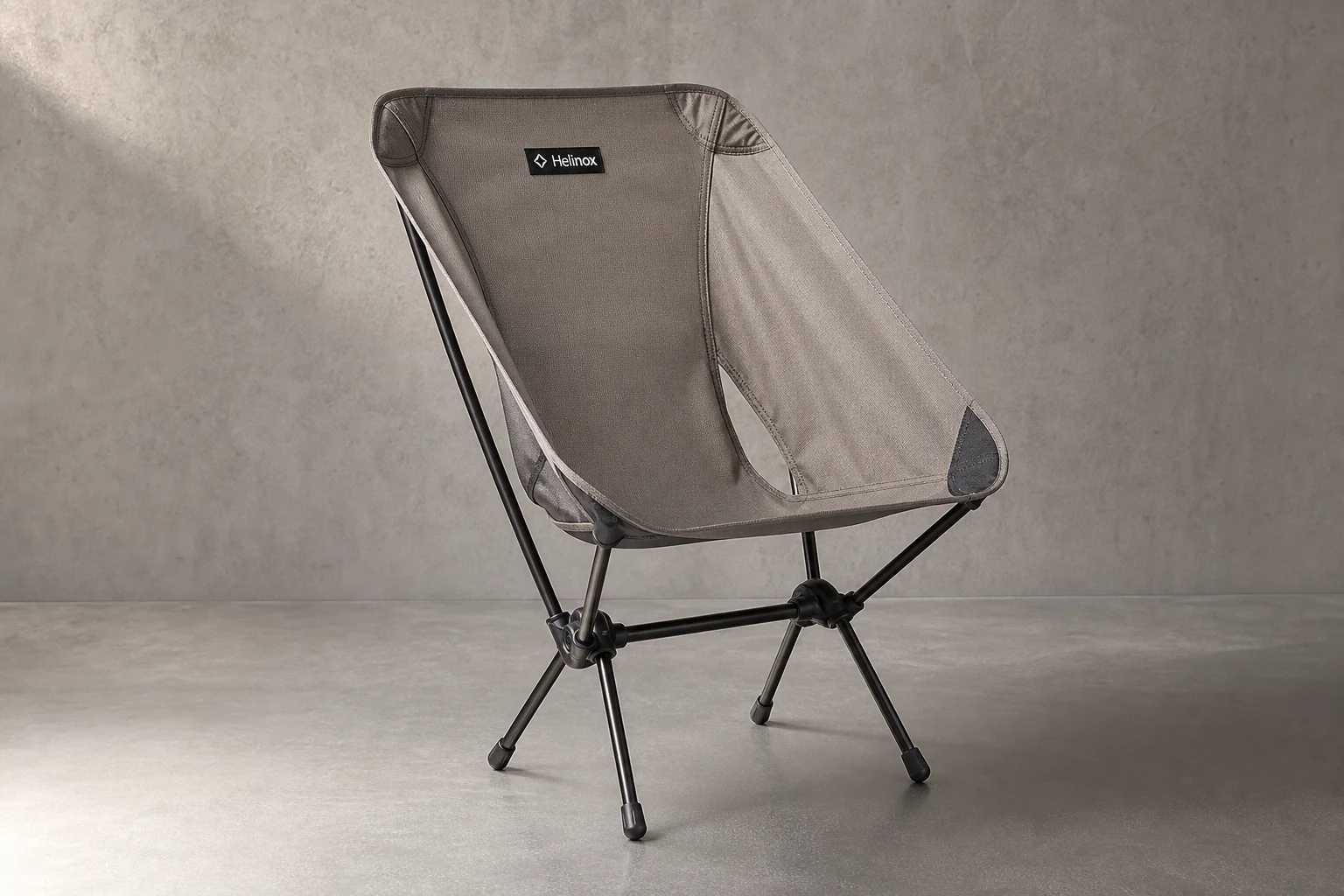
Helinox Chair Zero
The Chair Zero is a comfort item rather than a necessity, and it earns its place anyway. Under a tarp, with rain falling, having a proper seat instead of a damp log makes the evening far more bearable.
It travels in a waterproof stuff sack to keep it from soaking through, which matters because a wet chair stays wet for the rest of the trip. The rest of the camp setup, including food bags, is stored the same way.
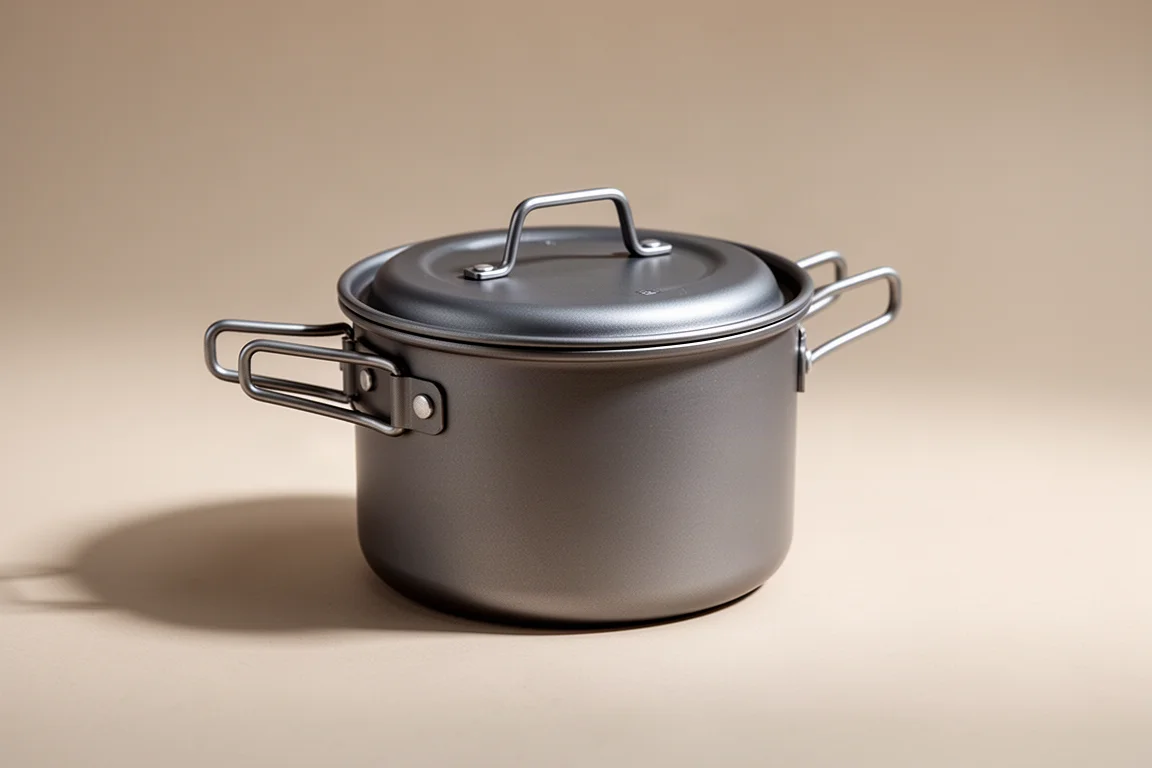
Toaks Titanium Pot
The titanium pot is the core of the cook system: small, light, and sized for a solo setup. Titanium keeps the weight down, which counts for a lot when the rest of the kit is carrying wet-weather protection.
The rest of the cook kit is deliberately minimal. A titanium spoon and a stove complete it, and dinners and snacks go into durable, dishwasher-safe reusable zip bags that take boiling water, which cuts waste on trail.
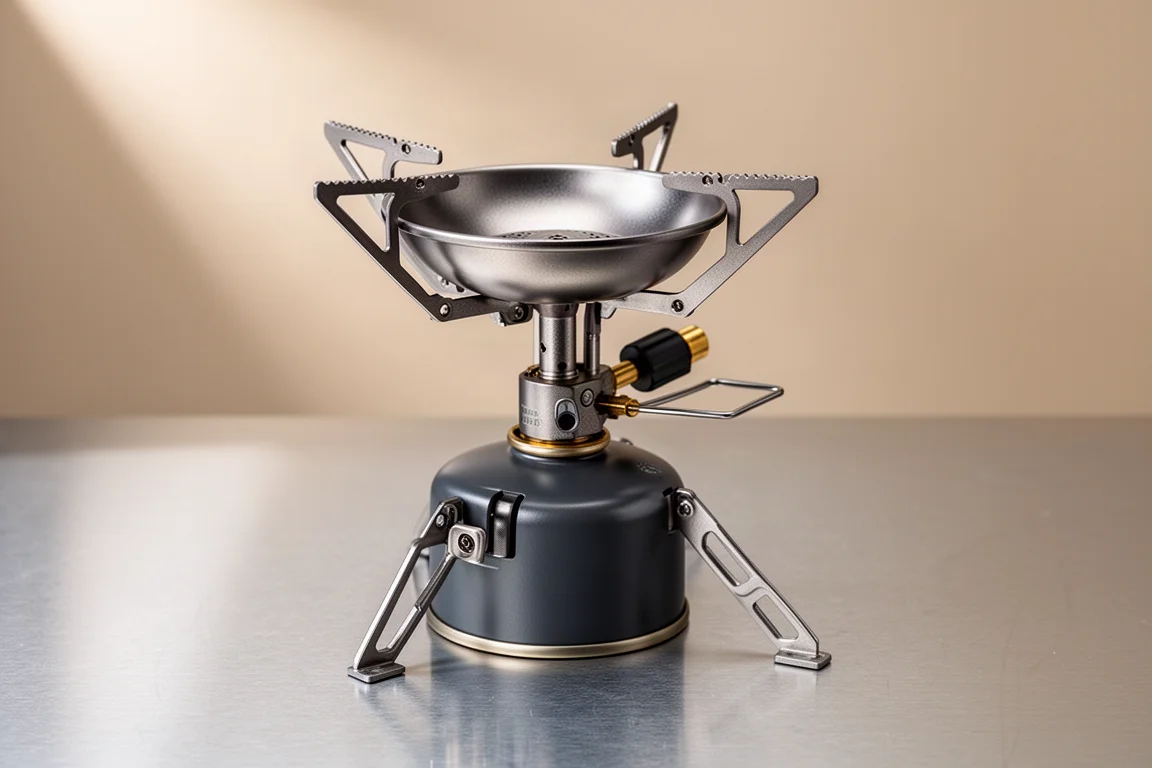
Soto WindMaster Stove
Wind is the enemy of a stove on an exposed coastal campsite, and it disrupts cooking more than most people expect. The WindMaster performs very well in wind, which is the whole reason it belongs in a wet-weather kit.
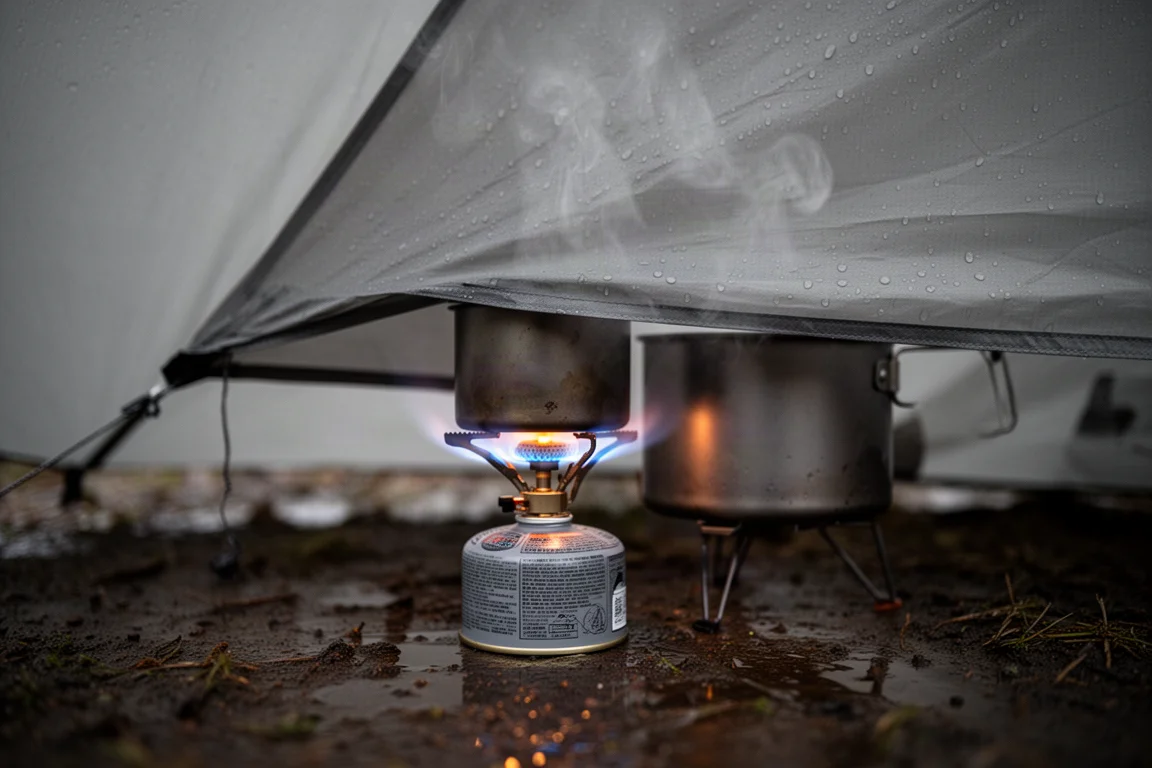
Cooking under a tarp helps, but the stove’s wind performance is what makes a hot meal dependable when the wind is constant off the water. A complete cook setup for this kind of trip stays small on purpose: pot, spoon, stove, and fuel.
Clothing That Dries Fast and Stays Warm
In humid, wet conditions the body loses heat faster, and wet clothing stops doing its job. Everything worn or carried for the evening is chosen with that in mind.
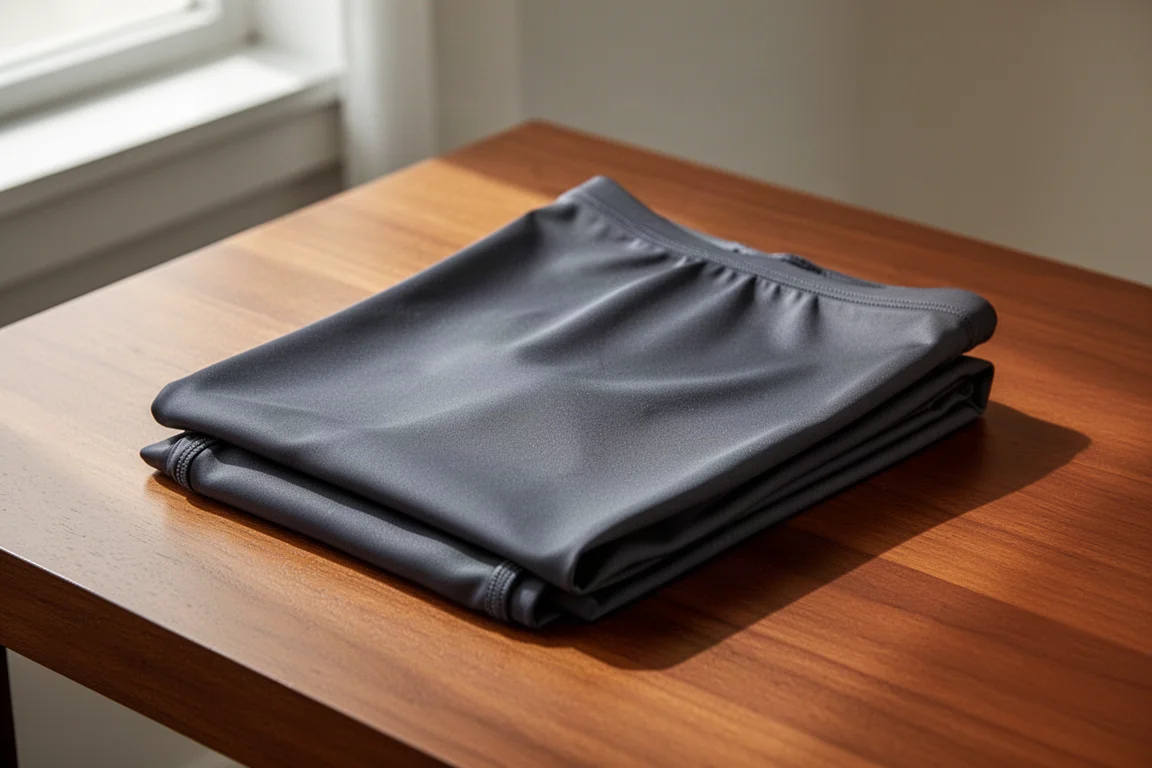
Stanfield’s Nylon Underwear
Nylon underwear dries quickly, which is the main requirement for a spare pair on a wet trip. When the sun does appear, nylon is dry again soon after.
Keeping a spare set inside a pack liner alongside the other dry goods is what makes it useful. A dry change of underwear at the end of a soaking day is one of the cheapest comfort upgrades available.
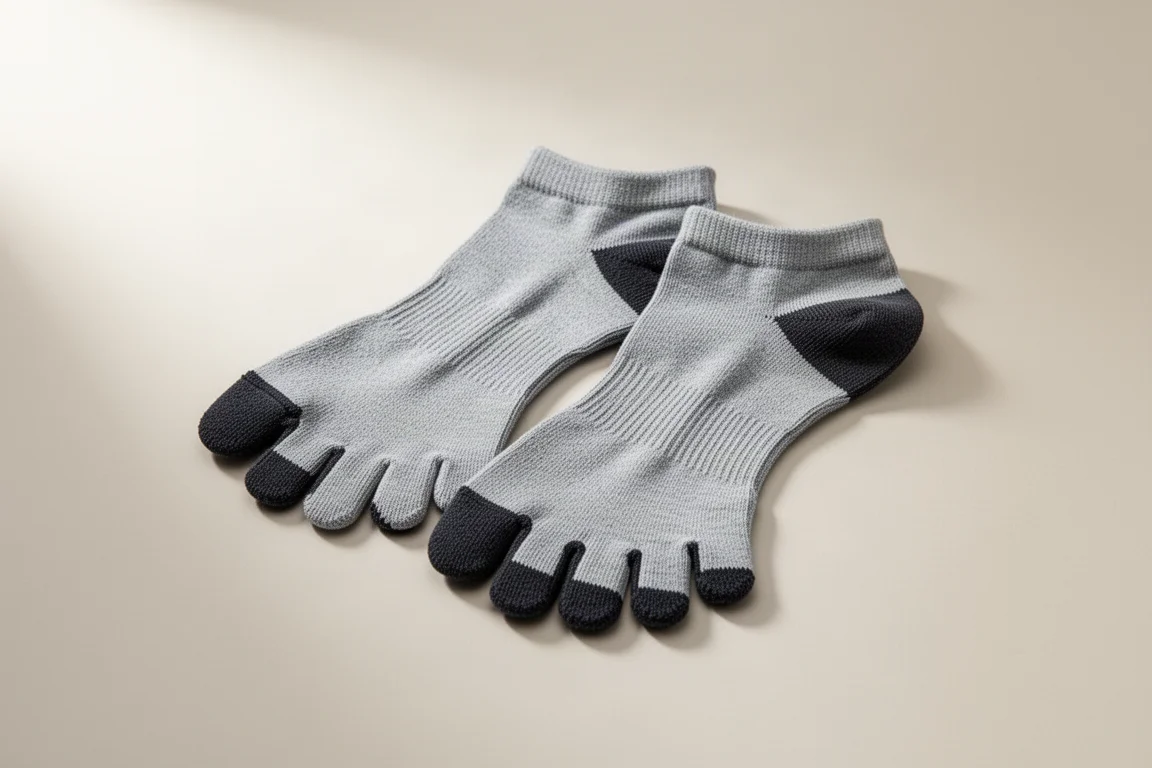
Injinji Run Light Toe Socks
The Run Light toe socks are thin, lightweight, and made from a synthetic material that does not hold much water, so they dry quickly. The thinner version is the one that works here: less material, faster drying, and fewer blisters on feet that are wet for days.
The toe-sock design separates each toe, which is part of why they stay comfortable over long wet days compared with thicker socks that hold more moisture.
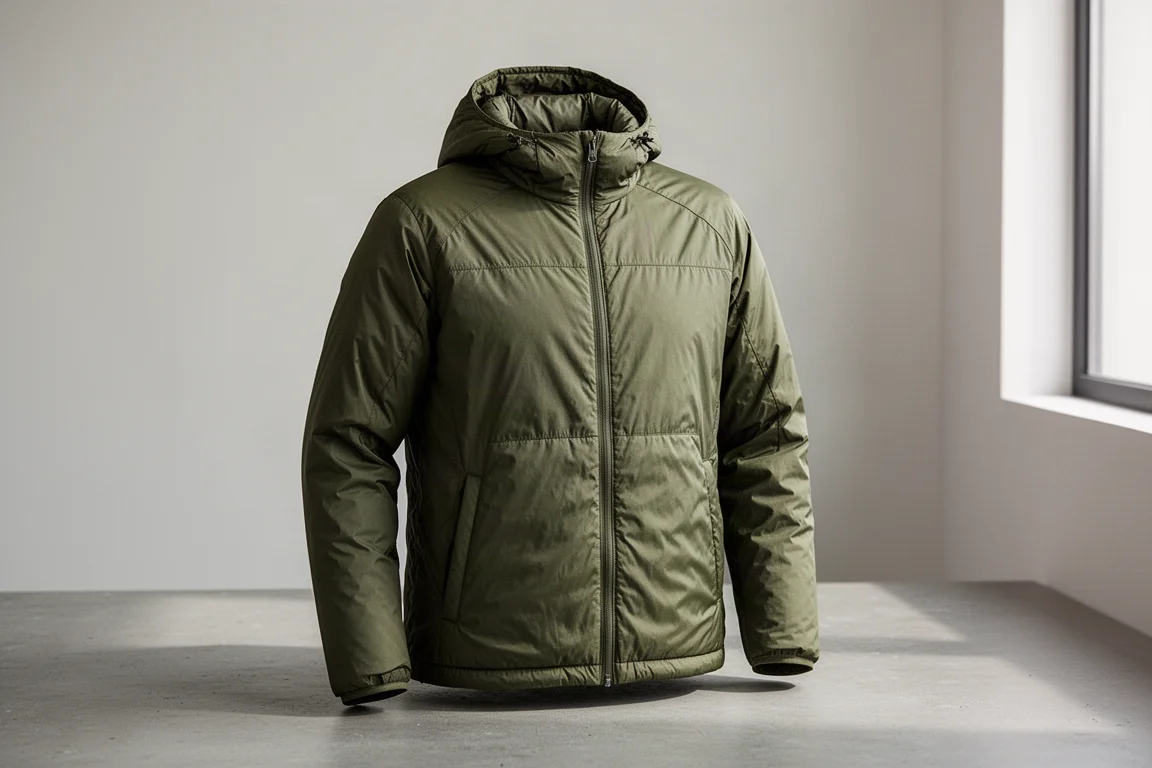
Enlightened Equipment Torrid Apex Jacket
The Torrid Apex is a synthetic insulated jacket, and synthetic fill is the right call for wet, humid conditions. Down loses its loft and most of its warming ability once it gets wet, while synthetic insulation holds on to its warmth for longer.
That makes the Torrid Apex the layer to bring for damp camp evenings, where a down jacket would be a liability if it got soaked. It pairs with a merino wool long-sleeve base layer for sleeping, lightweight fleece pants, a merino wool hat, and merino socks, all of which dry quickly.
Shelter and Sleep System
Shelter and sleep are where a wet trip is won or lost. If the sleeping setup gets damp, cold sets in fast, because heat is pulled out of you in humid conditions and wet insulation stops insulating.
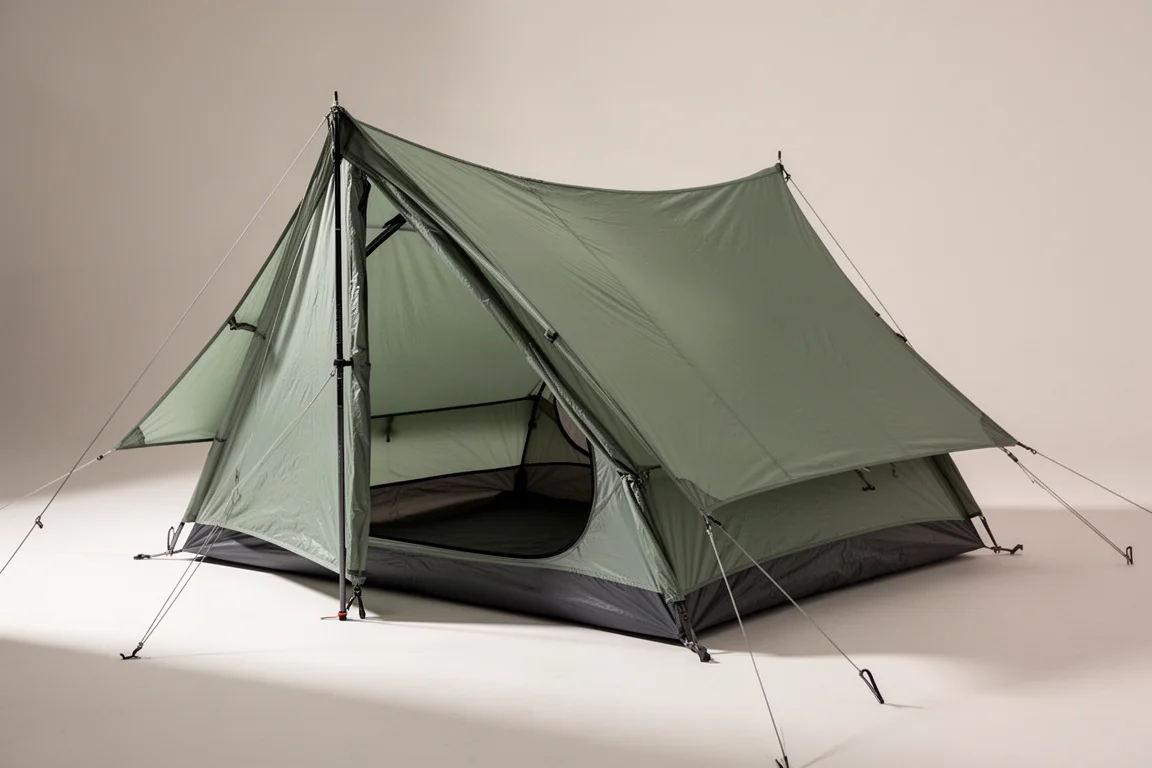
Durston X-Mid 2P Tent
The X-Mid 2P handles rain and wind well. It was pitched through a torrential downpour and some of the strongest wind encountered on a coastal trip, on sand, and it stayed dry. One peg pulled up and the tent still held.
Two design details make the difference. The first is the silpoly fabric: silpoly absorbs much less moisture than silnylon, so the tent dries faster and stays drier when it rains. The second is the double-wall construction. A double-wall tent does not stop condensation from forming, but the inner wall gives a physical barrier between you and your gear and the wet outer wall.
The two-person version adds livable space, which is worth a great deal on a rainy trip even when sleeping solo: room to sit up, change, and keep gear away from the walls.
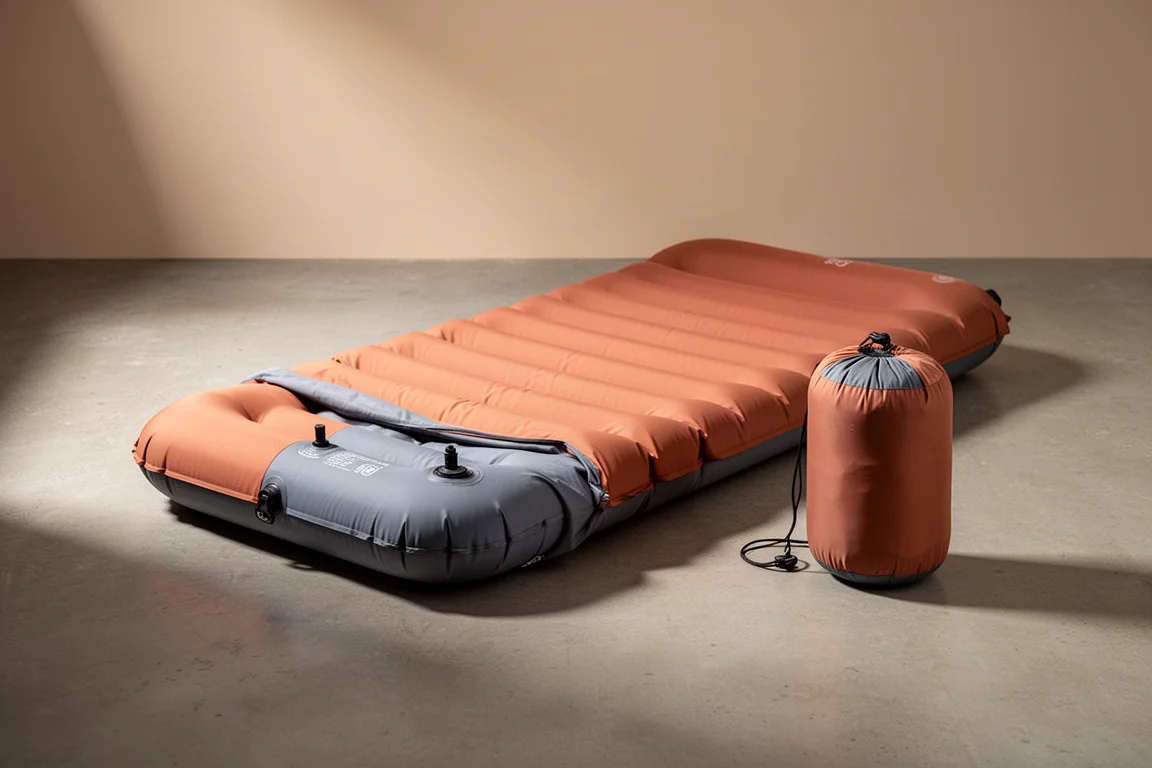
Nemo Tensor Sleeping Pad
The 2022 Tensor sleeping pad has an R-value of 4.2, a solid warmth rating for the ground under a quilt. On a wet, humid trip the pad does two jobs: it insulates against cold ground and it keeps sleeping insulation off the damp floor of the tent.
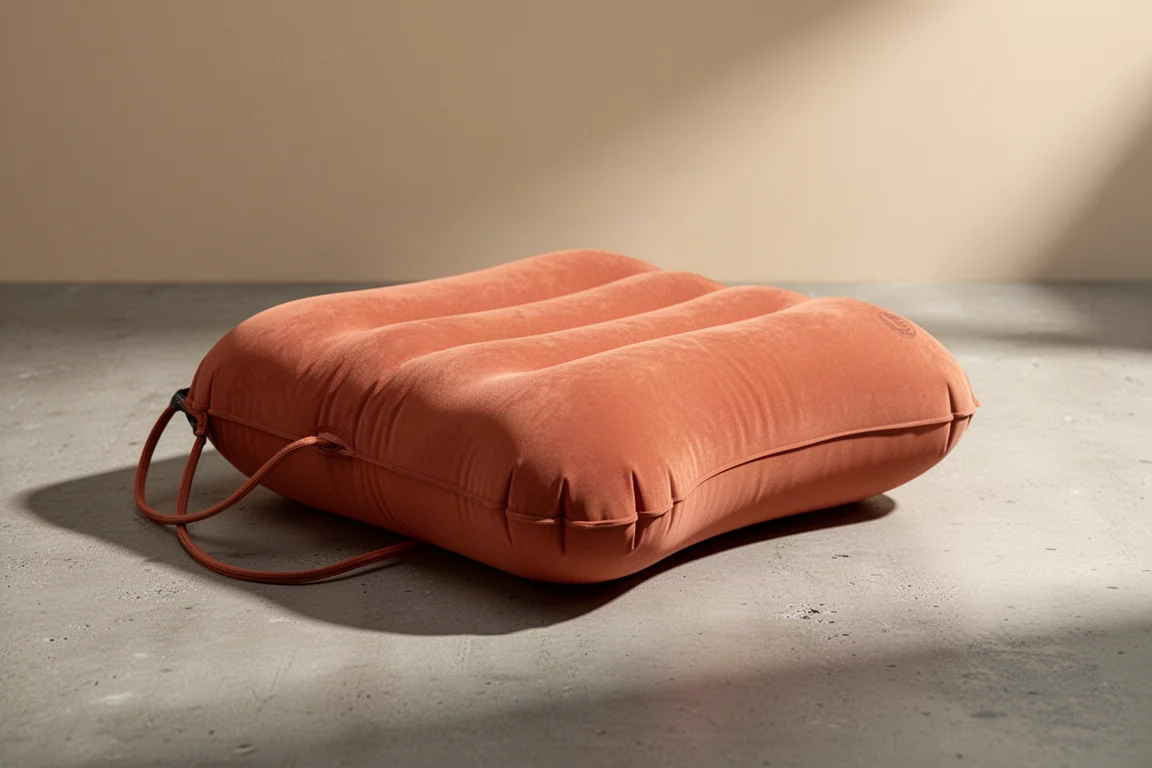
Trekology 2.0 Pillow
The Trekology 2.0 is a go-to pillow, mostly because of one detail: a strap that attaches it to the sleeping pad. That keeps it in place through the night instead of sliding away and having to be chased around the tent in the dark.
Katabatic Flex 22 Quilt
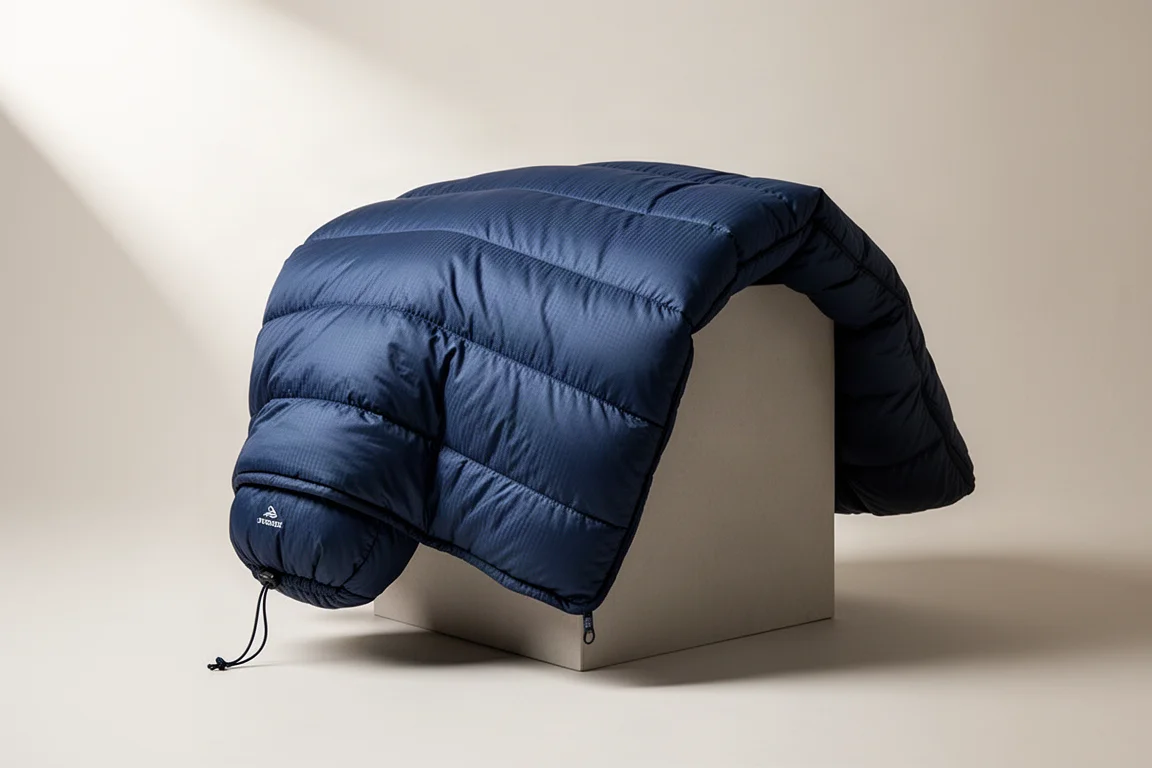
The Flex 22 quilt is lightweight and very warm, with a comfort rating well below freezing. That margin matters more than it looks on a wet trip, because in a humid, moist environment heat is pulled out of you faster, and as gear gets damp it loses some of its ability to keep you warm.
The down in the quilt carries a hydrophobic treatment, so it absorbs less water and holds its loft better in humid conditions. Combined with the sleeping pad and the pillow, the system stayed warm through several wet, humid nights.
Overall Buying Advice
If you are rebuilding a kit for wet weather, spend first on the items that fail worst when they get soaked: sleeping insulation, shelter, and the rain shell. A quilt with treated down and a shelter that sheds rain and wind are what keep a trip from turning into a cold, sleepless one.
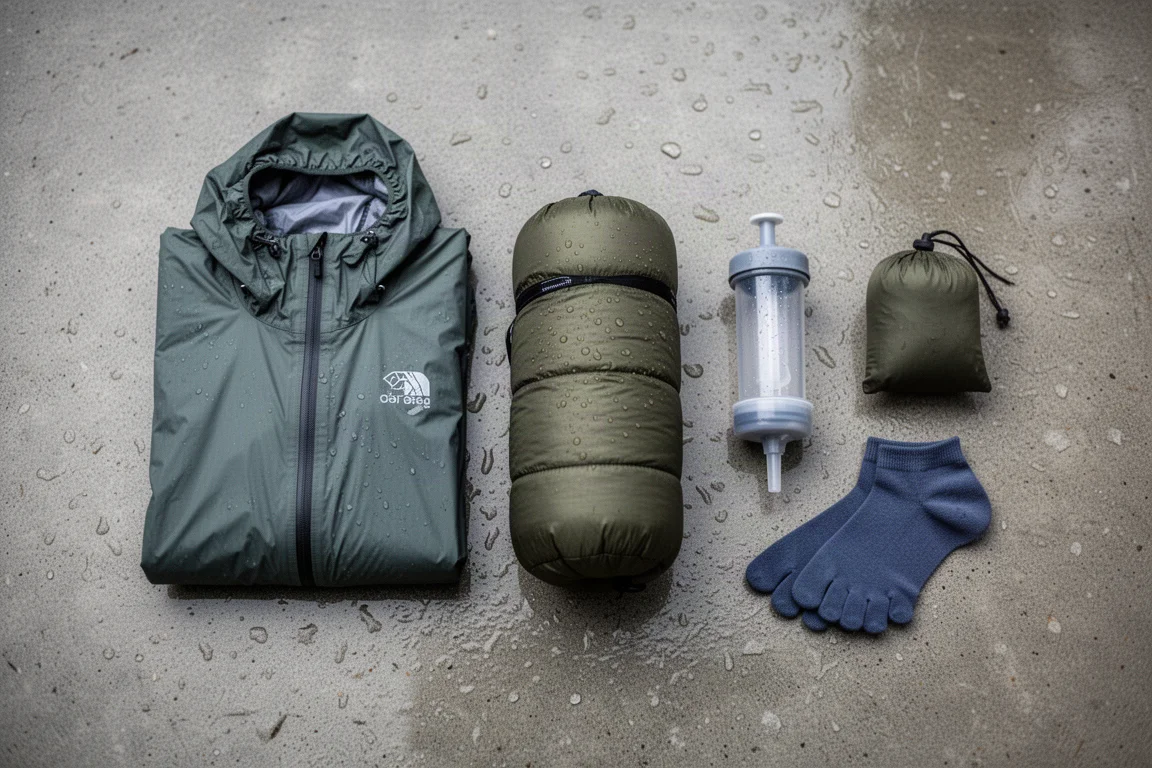
After that, the inexpensive wins add up. Fast-drying nylon underwear, thin synthetic toe socks, a pillow that stays on the pad, and a pack liner are small purchases that make a wet trip noticeably more comfortable.
Two items are worth treating as safety rather than comfort. The first is a satellite communicator, which matters on remote terrain where mud and slippery routes make an accident more likely. The second is a water filter you actually enjoy using, because a filter that is slow or awkward gets skipped on exactly the days you need it most.
Where you can save weight and money: the camp chair is a comfort item and can be left behind, and the cook kit can be as simple as a pot, spoon, stove, and fuel. Where not to compromise: rain shell ventilation, shelter fabric, and sleep insulation.
Conclusion
The pattern across this kit is consistent. Gear that keeps working when damp, dries quickly when the sun appears, and is easy to handle with cold, wet hands is worth far more on a rainy trip than gear that only performs in ideal conditions.
Rain protection with mechanical vents, footwear that dries rather than staying heavy, a shelter that sheds water, and insulation that holds its loft cover the essentials. The small items, from the pillow strap to the fast-drying socks, fill in the comfort.
A few honest notes belong alongside the recommendations. The rain mitts add warmth but are not waterproof, the rain pants were a substitute when the preferred pair was out of stock, and one of the filters carried did not perform well enough to recommend. Matching each piece to the conditions you actually expect is what makes a wet-weather kit work.
Further reading
Related Reviews
Outdoor Gear
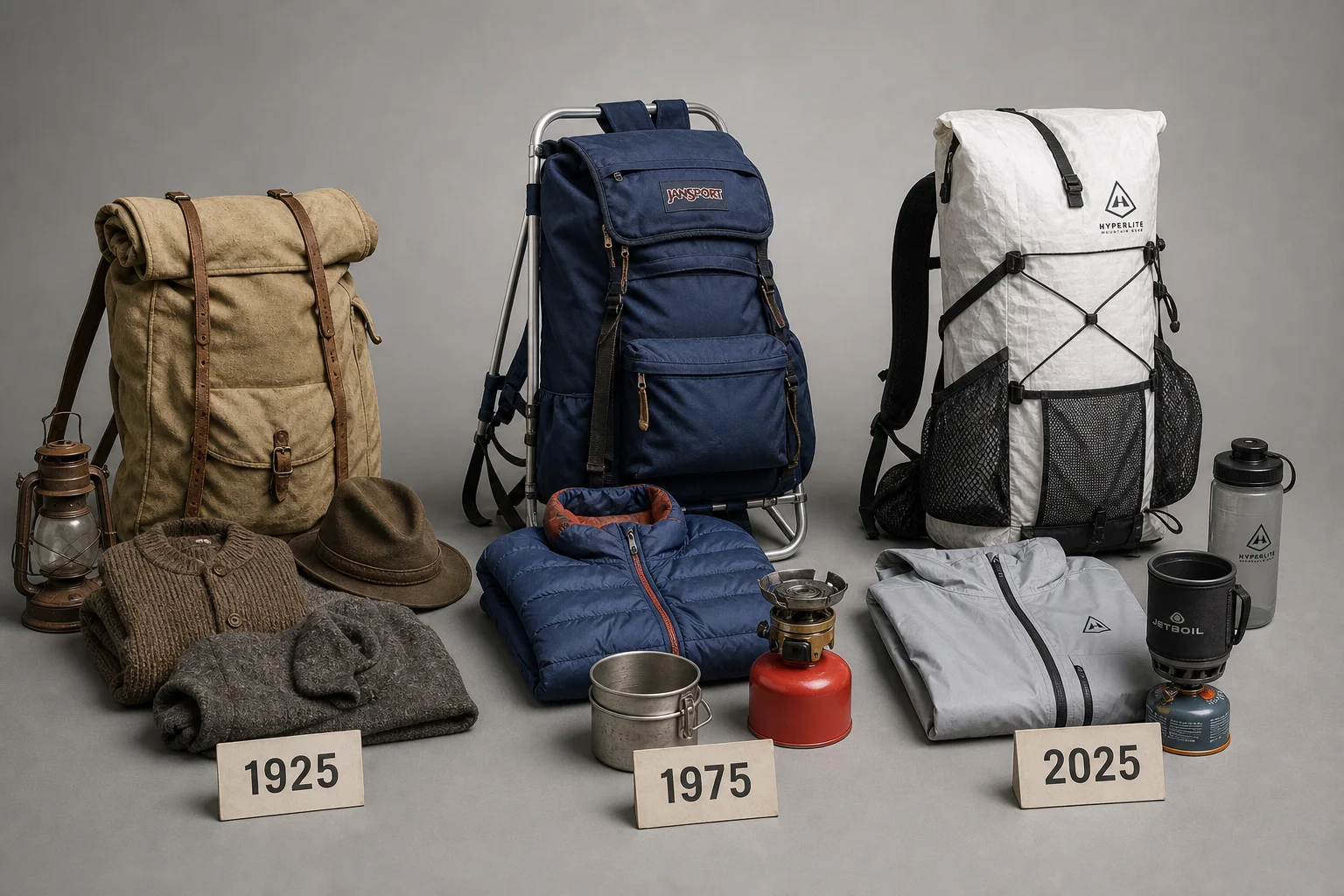
Backpacking Gear Evolution: 100 Years of Technology Compared
We tested backpacking gear from 1925, 1975, and 2025 across a three-day hike in Yosemite. Here's how technology has transformed comfort, weight, and the outdoor experience.
Outdoor Gear
Best Affordable Hiking Watches: Five Rugged Options for Outdoor Adventures
Five durable hiking watches that balance ruggedness, functionality, and value for outdoor enthusiasts who need reliable GPS tracking and weather resistance.
Outdoor Gear
Best Backpack Coolers 2026: Five Practical Options for Outdoor Adventures
Five backpack coolers with distinct cooling capabilities, storage features, and design trade-offs to help you choose the right one for your outdoor needs.