Running Shoes
The Weirdest Running Shoes on the Market: Four Wild Designs Explored
From dual carbon plates to zero heel stack, four running shoes that take design risk to the extreme, with honest notes on who they might actually suit.
Introduction
Running shoe design has entered an era where brands seem willing to try almost anything. Dual carbon plates, forefoot angles that look like ski jumps, heels that have effectively disappeared. Some of these ideas come from the same technology pipelines as mainstream super shoes, but the execution is far stranger. Here are four of the weirdest running shoes currently on the market, what makes each one unusual, and whether any of them are worth a gamble.
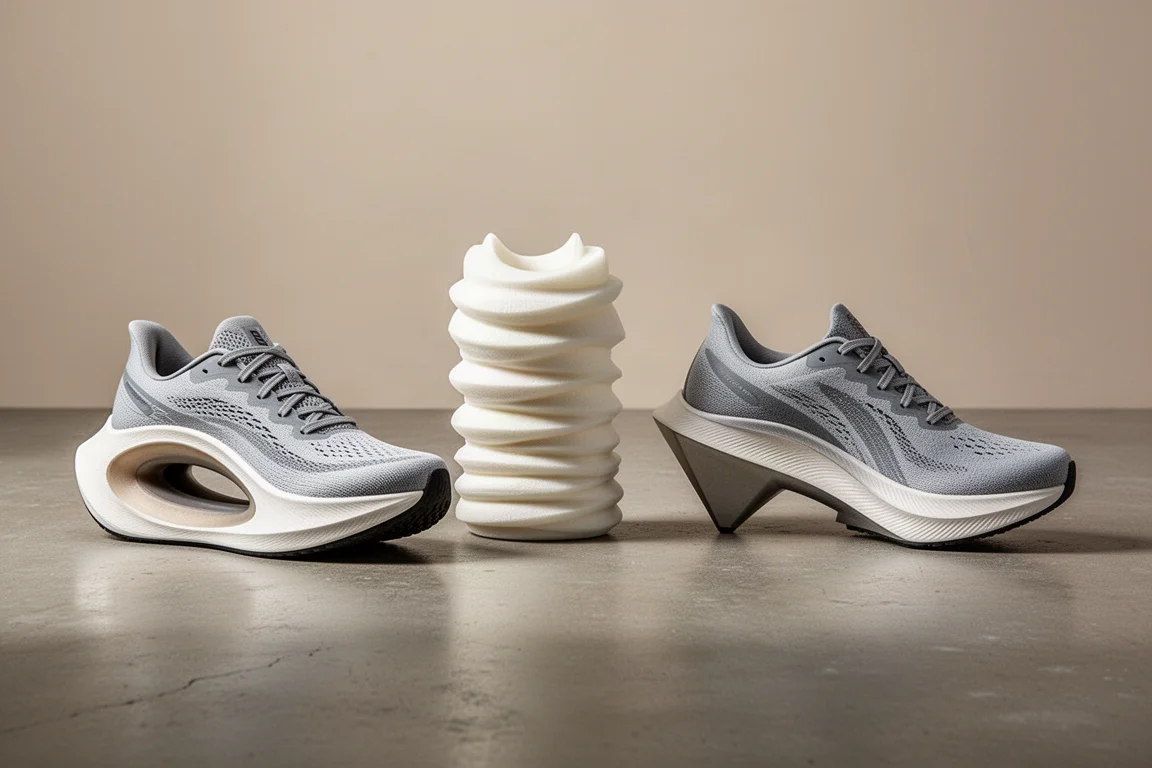
Li-Ning Feidian Shadow: Two Carbon Plates and an Oval Void
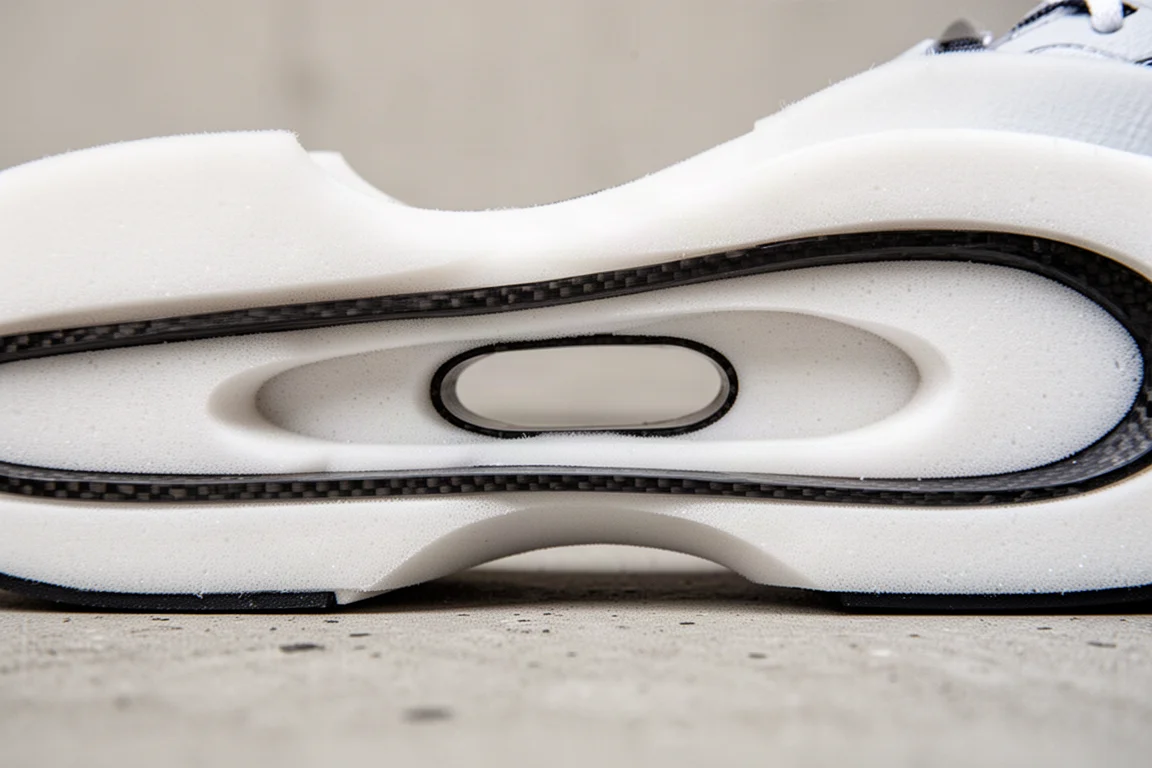
The Feidian Shadow is a Pebax-based racing shoe with around 40mm of heel stack in the sample size and, unusually, a 10mm drop. That drop alone is a novelty when most modern racers sit at 6 to 8mm. The real talking point is the midsole: two carbon plates create an oval void in the center, a layout few brands have attempted. It invites comparisons to the Adidas Prime X 2 Strung and its contained energy section, and even to the Jordan 35 basketball shoe with its midsole gap.
The claimed weight is around 240g for a US size 9, roughly 8.4 oz. One caveat: the dual-plate design means this shoe is reportedly not approved for elite competition. Availability is also a hurdle, with stock scattered across Europe rather than through dedicated local dealers, and pricing seen around 250 euros for the harder-to-find sizes. That makes it a tough purchase to recommend blindly, but the design itself is genuinely intriguing.
Puma Fastroid: A Maximalist Fashion Take on the Super Shoe
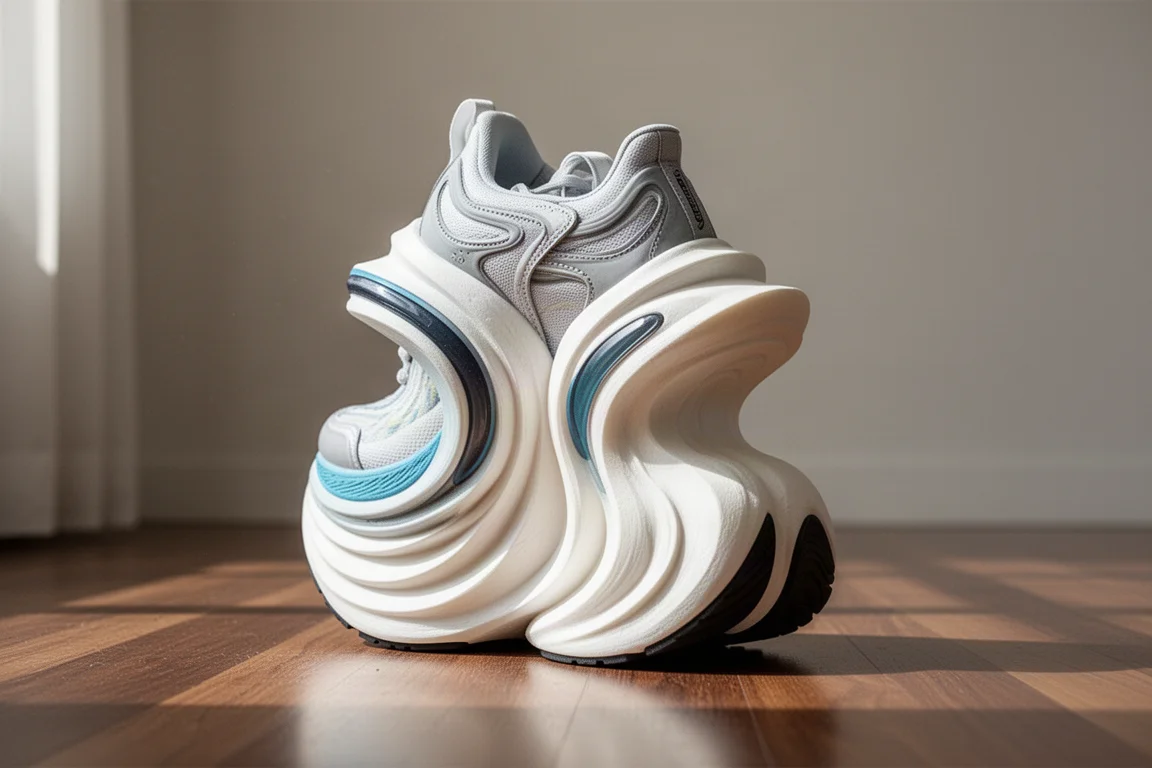
Puma has been very clear that the Fastroid is a fashion-first, casual shoe, but it borrows heavily from the Fast-R Nitro Elite platform. The stack looks to be around 50mm or more in the heel, well above the Fast-R’s sub-40mm figure, and Nitro Elite foam appears to run throughout the shoe. Adding that much height required changes to the plate position and shape, and even the outsole and box design have been adjusted to cope with the geometry.
The retail price of £315 is a lot to spend on a shoe you may not even want to run in, though discounted pairs around £150 have been spotted. Puma positions it as a maximalist high-fashion interpretation of the running shoe look, so treat it as a statement piece with racing DNA rather than a training tool.
Puma FastForward Nitro Elite: The Most Aggressive Forefoot Angle Yet
Aimed at 5K and 10K racing at higher paces, the FastForward Nitro Elite features what may be the most aggressive forefoot geometry on any running shoe: a straight-line slope through the forefoot and an extreme bevel in the heel. The idea is to encourage rapid toe-off and a quicker cadence, a bit like standing on the edge of a cliff with every stride.
The counterintuitive part is how people describe the ride. It looks like it could be uncomfortable, but feedback is that it runs surprisingly smooth, and the geometry seems to nudge you toward midfoot landing, where most of the cushioning sits. Forefoot strikers get very little padding up front, so this is a shoe with a very specific stride in mind.

Mizuno Wave Duel Pro: No Heel Stack At All
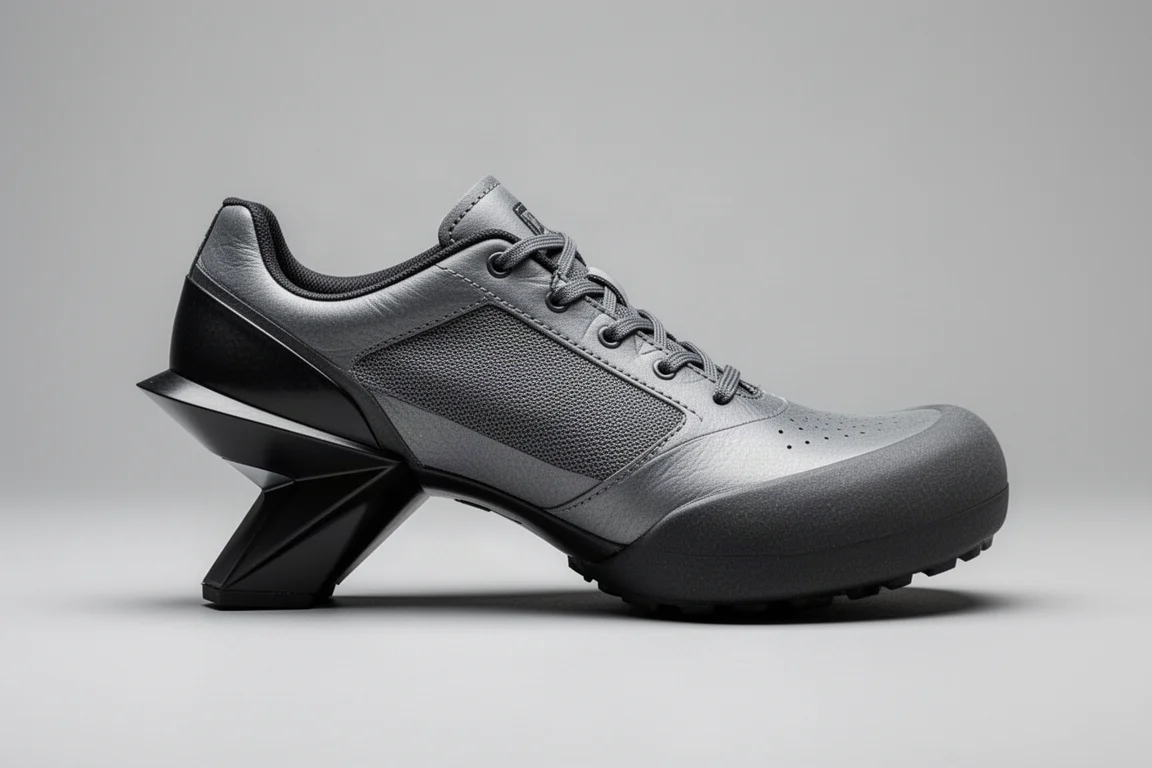
The Wave Duel Pro takes the crown for sheer weirdness. There is effectively no heel to land on; the outsole tapers to a narrow, almost stiletto-style structure at the rear, forcing a midfoot strike and a forward roll. The foam and carbon plate are very close to the excellent Wave Rebellion Pro, and the overall profile reads like a maximized track spike.
It weighs around 180g in the sample size, which translates to perhaps 210 to 220g in a UK 11. That is a modest saving over something like a Vaporfly 3 or Takumi Sen 10, both of which are far more versatile for everyday running. Big discounts have appeared on the Wave Duel Pro, but the concept may simply be too radical for most runners to take a chance on. The world, arguably, is not quite ready for it.
Should You Buy Any of These?
The common thread here is risk. The Feidian Shadow packs genuinely advanced dual-plate tech but is hard to find and expensive, with limited availability in common sizes. The Fastroid and FastForward Nitro Elite showcase Puma’s willingness to distort the racing formula, one toward fashion, the other toward pure speed geometry. The Mizuno is the boldest concept of all and only makes sense if you naturally land midfoot and want a very specific race-day tool.
For most runners, the safer play is still a proven all-rounder. But if you are curious about the outer limits of shoe design and can accept the availability and fit uncertainties that come with it, any of these four delivers an experience you will not find in a conventional trainer.
Conclusion
Weird does not mean worthless. Each of these shoes takes real engineering ideas and pushes them past the point of convention, and that experimentation is often how tomorrow’s mainstream racers get made. If one of them matches your stride and your tolerance for a gamble, it could be the most interesting thing in your rotation.
Product link
View more details for Li-Ning Feidian Shadow
This product is mentioned in the review. Check the specifications, options, and compatibility before buying.
View more details for Li-Ning Feidian ShadowFurther reading
Related Reviews

Running Shoes
Best Road-to-Trail Running Shoes: Three Versatile Options for Mixed Terrain
A practical guide to three road-to-trail running shoes that handle both pavement and mild trails, with clear strengths and trade-offs for different runner types.

Running Shoes
Best Running Shoes for Achilles Tendonitis: Three Options Explained
Three running shoes with different heel drops and support features designed to help reduce Achilles tendon pain during walking and running.

Running Shoes
Best Running Shoes for Women: Five Top Choices Ranked
A ranked guide to five women's running shoes, from versatile daily trainers to high-performance racing options, with real strengths and trade-offs for each.