Laser Engraving
WeCreat Lumos Flex Review: A Compact Dual-Laser Engraver for Versatile Marking
The WeCreat Lumos Flex combines a diode laser and a 15 W fiber laser in one compact, enclosed unit. We tested it across metals, wood, slate, and more to see where it shines and where it falls short.
Introduction
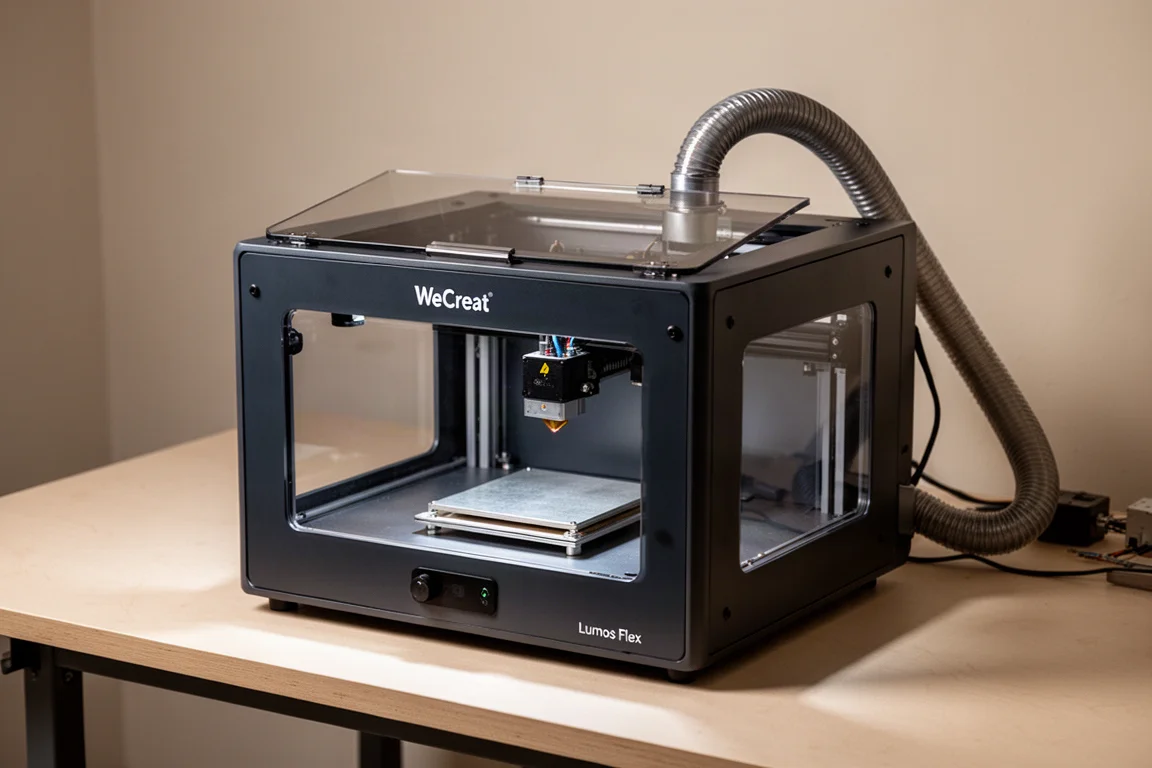
Laser engravers have come a long way in a short time. The WeCreat Lumos Flex is a compact, enclosed unit that packs two laser sources into a single package: a diode laser and a 15 W fiber laser. That combination is the headline feature, because it lets you mark metals directly while still handling wood, cork, leather, and other organic materials that a fiber laser alone cannot touch.
This review covers how the Lumos Flex performs across a range of materials, what the built-in software is like, and where the limitations show up. If you are weighing a first laser engraver or an upgrade from a single-source unit, this should help you decide whether the dual-laser approach is worth it.
Design and Build Quality
The Lumos Flex is a self-contained unit. Both laser sources and the galvanometer sit inside the compact housing, which keeps the footprint small and the setup tidy. The enclosure has a built-in fume extraction fan and comes with a hose so you can vent fumes outside. The lid closes to contain stray laser light, which makes it safer to run in a shared shop without worrying as much about protective eyewear for bystanders.
A few details stand out. The lens cap has a tag attached to remind you to remove it before starting, a small touch that prevents a costly mistake. The Z axis is motorized, and the work-area light is notably bright, which makes framing and checking your work much easier. You can move the Z axis manually and align the focus dots, or press the auto focus button. The integrated camera takes a snapshot of the center dot and moves the head to the correct position automatically. That feature worked well and removes a lot of guesswork from the focusing process.
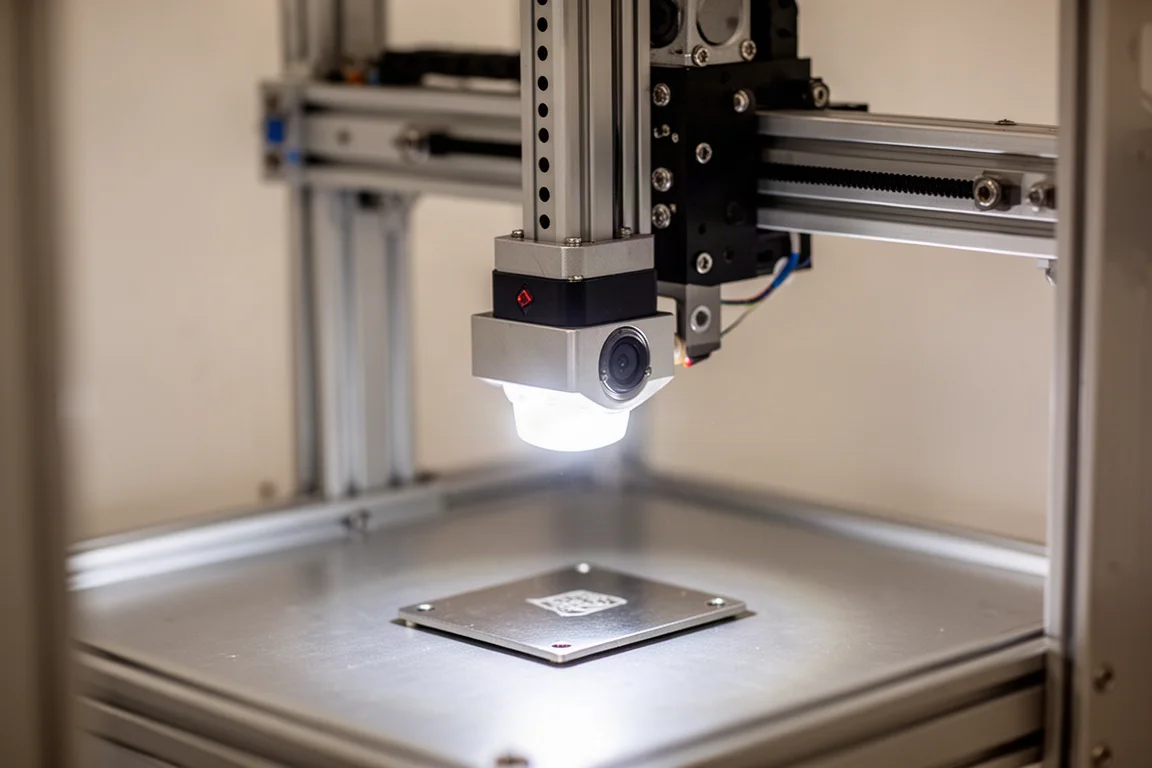
The overall construction feels well thought out. The unit is portable enough to take to a craft fair or a customization job, and the enclosure adds a layer of safety that open-frame lasers do not offer.
Two Lasers in One: Why It Matters
The core idea behind the Lumos Flex is that different lasers interact with materials in completely different ways. A diode laser will engrave wood cleanly, but it will not mark stainless steel. A fiber laser marks metals directly, but it will not touch wood. Having both sources in one unit means you can switch between them without buying a second machine.
That is a real cost saving. Instead of maintaining two separate engravers, you get one compact package that covers both material families. The switch between sources is straightforward, and the value of that flexibility becomes obvious the first time you move from a steel part to a wooden sign without changing machines.
Fiber Laser Performance on Metals
The 15 W fiber laser is the more specialized of the two sources, and it delivers clean results on a range of metals. Stainless steel marks with a nice, even dark finish in a single pass. Carbon steel is equally straightforward, which makes it a practical choice for functional part markings. Aluminum also engraves cleanly and easily with one pass.
The fiber laser also handles deep engraving on brass, though it takes some work to get there. The software has no preset settings for this, which is a weak point. With manual tuning, it is possible to get a dark engrave with real depth, and you can fine-tune the result by adjusting how long the laser runs. The spectrum of colors you can achieve on brass is a nice bonus.
Relief engraving is possible too, working layer by layer like a 3D printer. The recommended settings were provided separately rather than built into the software, and the process took eight full hours for a detailed piece. That is fine for a one-off project, but if you plan to run relief engraving at higher production volumes, a more powerful laser like the Lumos Ultra would be a better fit.
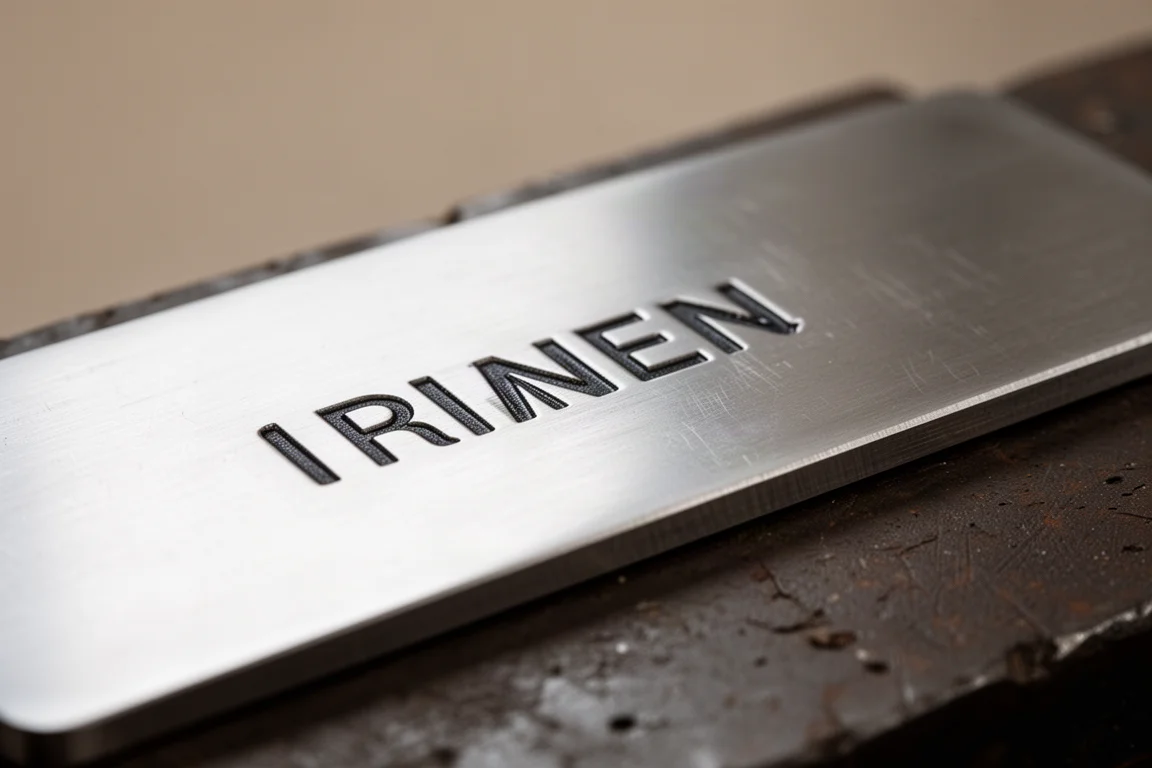
Slate is another strong performer. A single pass with the fiber laser produces a clean mark with noticeable depth, and relief engraving on slate also comes out well. The fiber laser also handles coated cards with impressive detail, modulating power precisely enough to reproduce fine image quality.
Because this is a relatively low-power fiber laser, the package stays compact and the cost stays down. For most marking tasks, it is completely sufficient.
Diode Laser Performance on Wood and Other Materials
Switching to the diode laser opens up organic materials. On wood, the default software parameters ran a little light, so reducing the speed and running a second pass produced a darker, deeper result. The final engraving looked good with visible depth.
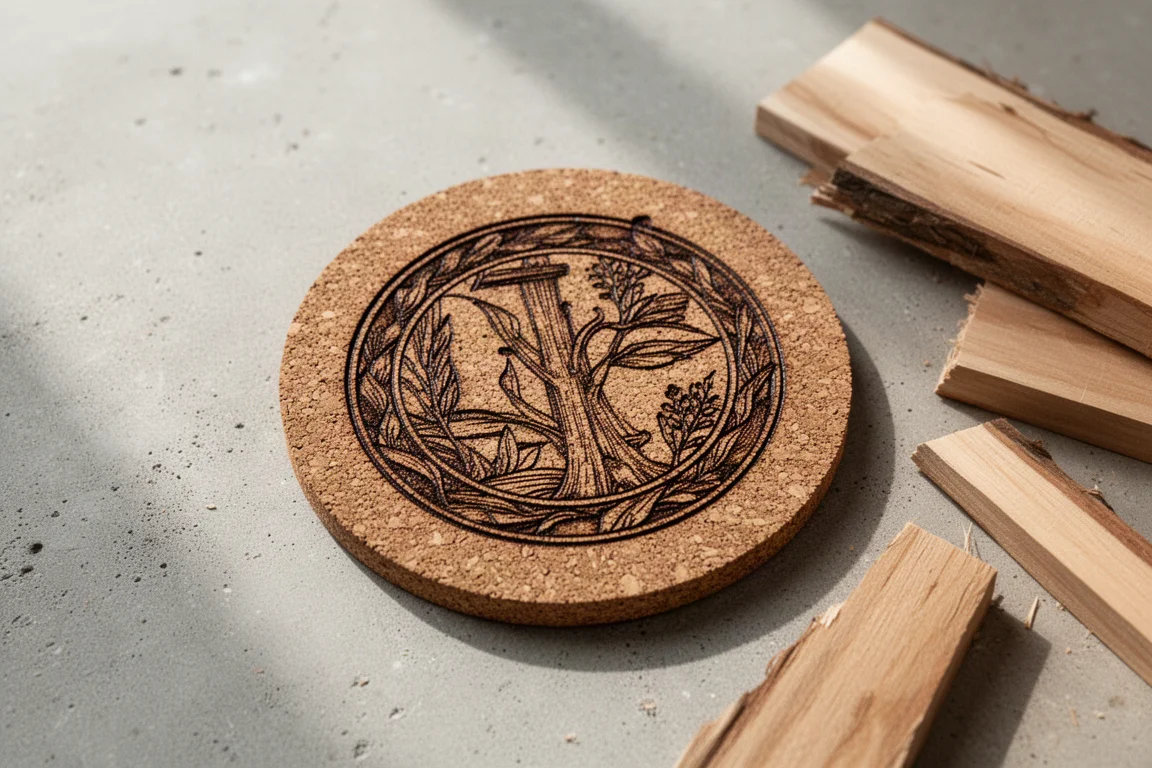
Cork coaster blanks are a different story. They come out great with a single pass at higher speed, with no issues at all. Synthetic leather also engraves well, making the diode laser a versatile option for craft and customization work.
The main limitation here is power. Compared to a higher-power CO2 laser, the Lumos Flex needs slower speeds and extra passes on wood to reach similar detail. For most marking and engraving jobs, that is an acceptable trade-off given the price and the compact form factor.
Software and User Experience
The software is the biggest weak point of the Lumos Flex. The material library is limited to just a few entries, so you will often need to tweak settings manually. There are no built-in presets for deep engraving on brass or relief engraving, which means a steeper learning curve for those advanced techniques.
That said, the camera-based alignment feature is genuinely well done. When you press the refresh button, the included camera takes several images of the part and stitches them together. You can then align your design to that image, which makes positioning accurate and intuitive. This works in every mode where an image is shown, and it proved reliable throughout testing.
The wireless connection is another highlight. Plugging the unit into USB and connecting it to Wi-Fi was easy, and running everything wirelessly was seamless. Sending a design to the machine and pressing the button to start is straightforward.
Accessories and Expandability
The Lumos Flex comes with a few accessories that expand what it can do. The slider is especially impressive. A small galvo laser is typically limited to a small working area, around 4.5 inches square. The slider changes that by handling the slow axis of motion while the galvanometer continues to raster back and forth at speed. The result is a much larger effective working area without losing the speed of a galvo laser.
The rotary attachment works well for cylindrical objects. During testing, a water bottle rotated away from the operator, which made it hard to see the engraving in person. But the software showed a live image of where the engraving would land, so alignment and flipping the design were easy. The camera-based preview saved the day.
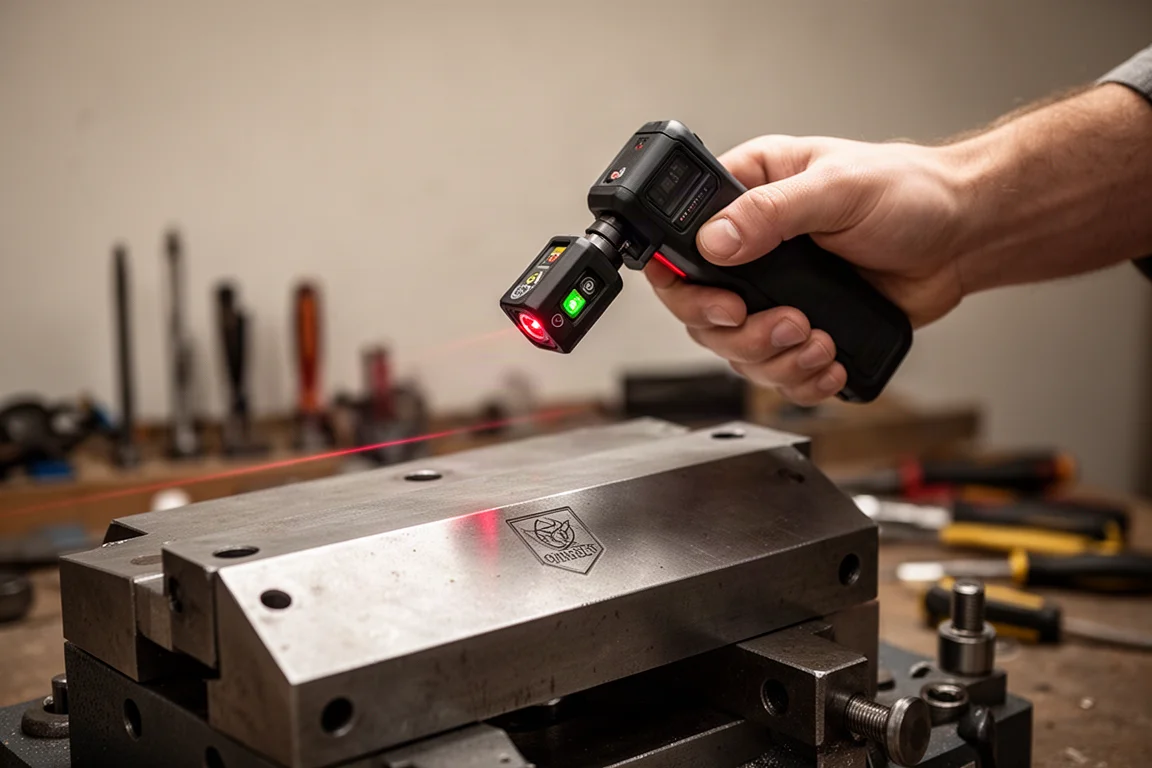
There is also a handheld accessory. A single screw releases the laser unit from the enclosure, and it attaches to a handheld guide with magnets that hold it securely. It connects via USB-C or wirelessly, and both methods worked without issues. This turns the Lumos Flex into a portable engraver for larger objects that would not fit in the enclosure. Engraving a logo onto a large metal press worked cleanly.
Buying Advice
The WeCreat Lumos Flex is a strong choice if you need both metal marking and organic material engraving in a single, portable unit. The dual-laser design saves you the cost of buying two separate machines, and the enclosed package with built-in fume extraction makes it safer and easier to use in a shared space.
It is less ideal if your primary work is deep engraving or high-volume production. The 15 W fiber laser is low-power by design, and the software limitations mean you will spend time manually tuning settings. For most marking tasks, though, the capability is more than sufficient.
If you are a hobbyist, small business owner, or maker who wants one machine that can handle a wide variety of materials, the Lumos Flex delivers a lot of capability for the money.
Conclusion
The WeCreat Lumos Flex is a surprisingly capable little engraver. It produces clean marks on a variety of metals, handles wood, cork, leather, and slate with the diode laser, and packs everything into a compact, enclosed unit with good build quality. The auto focus, motorized Z axis, camera alignment, and wireless connectivity all work well.
The limitations are real but manageable. The software needs more development, particularly around the material library and presets, and the low power means slower speeds on wood. For most marking and engraving jobs, the Lumos Flex is a versatile, cost-effective tool that earns its place in the shop.
Product link
View more details for WeCreat Lumos Flex
This product is mentioned in the review. Check the specifications, options, and compatibility before buying.
View more details for WeCreat Lumos FlexFurther reading
Related Reviews

Laser Engraving
Accel Laser Pro and Ultra: A First Look at Hybrid Motion Control
A closer look at the Accel Laser Pro and Ultra, two machines that combine galvo and gantry motion for large-format laser engraving.

Laser Engraving
Excel Laser HD1 Pro and Ultra: A First Look at the Dual-Source Hybrid
A practical look at the Excel Laser HD1 Pro and Ultra, two dual-source laser machines that combine diode and fiber capabilities in one system.

Laser Engraving
Gweike G2 Pro Fiber Laser Review: A Compact 30W Upgrade for Small Shops
The Gweike G2 Pro brings a more rigid stand, extended height, quieter fans, and LightBurn compatibility to a compact 30W fiber laser.