Fountain Pens
Wancher Shizuku Glass Nib Earth Fountain Pen Review
A fountain pen with a handmade glass nib, anodized duralumin body, and a presentation that feels genuinely special. Here is what works and what to watch out for.
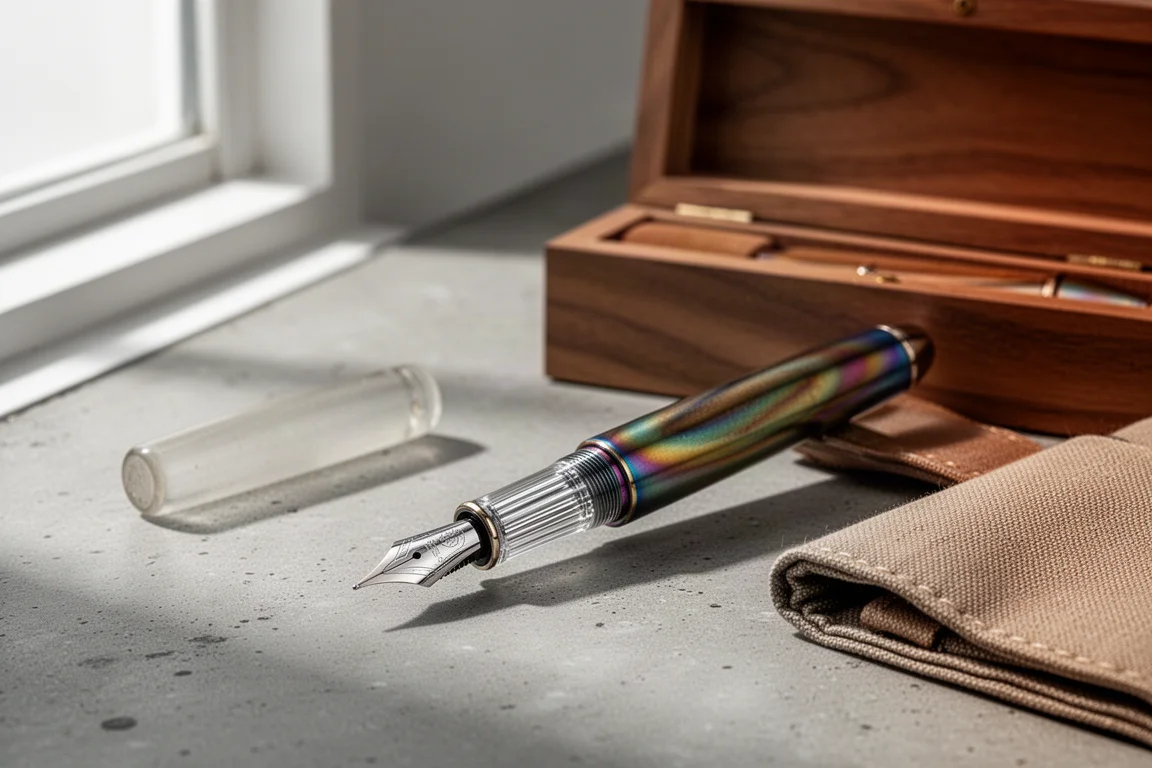
Introduction
Some fountain pens aim to be the smoothest, the cheapest, or the best everyday writer. The Wancher Shizuku Glass Nib Earth aims to be something different: a fountain pen with a handmade glass nib, a format that almost disappeared from everyday use nearly a century ago. After spending real writing time with it, this feels like a pen for people who want a writing experience they cannot get anywhere else.
Unboxing and Presentation
The Shizuku arrives in a nice wooden box, and the presentation goes well beyond the pen itself. It comes with a fabric pen kimono with genuinely impressive stitching detail, a warranty certificate, an instruction manual, and a certificate of authenticity that arrives rolled up like a small scroll.
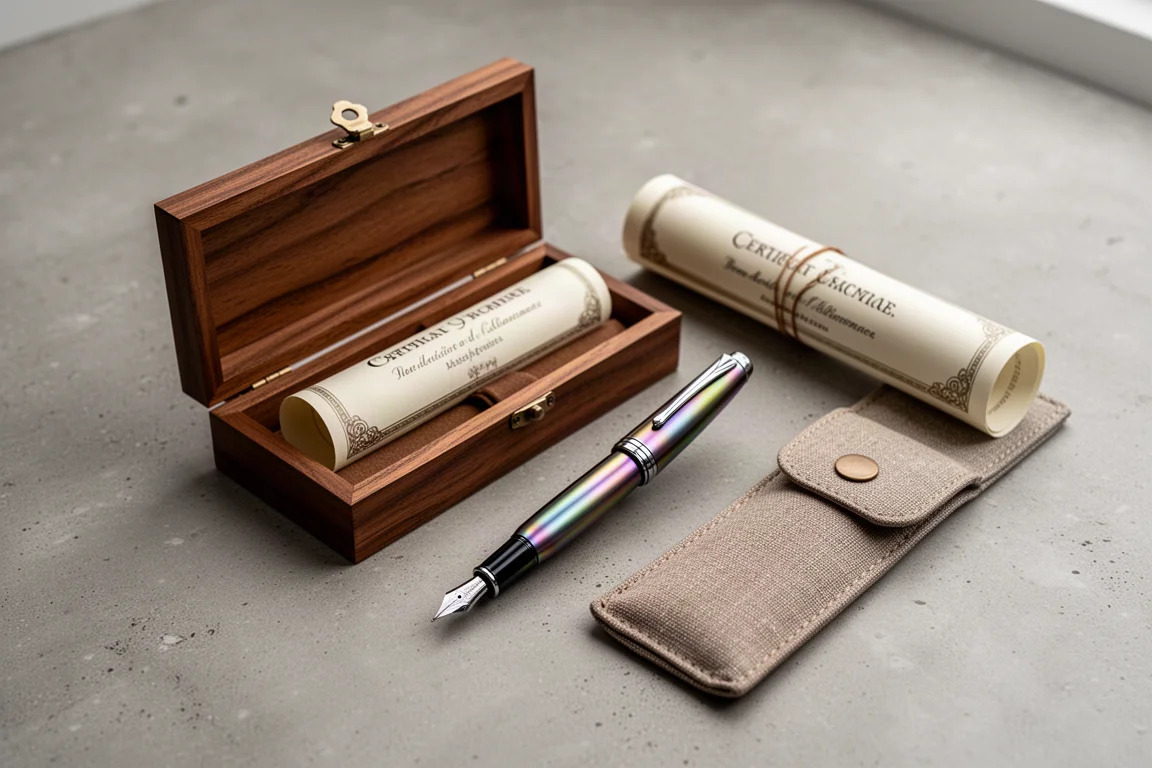
It is clear Wancher treats this as a special product rather than just another pen in a catalog. In terms of size, the pen is almost exactly the same length as a Pilot Metropolitan, so it is not a large pen, though it never felt uncomfortably small in use.
The Glass Nib
Glass pens have been used in Japan since the Meiji period, but traditionally only as dip pens. Because glass could not store ink, the format fell into disuse. The Shizuku solves that by pairing a handmade glass nib with a cartridge-converter filling system, so the ink lives inside the pen and there is no dipping required.
The nib itself is beautiful to look at, with fine grooves that in a dip pen would catch and channel ink down toward the tip. According to Wancher, each glass nib takes about one month to make. The pen body is made of duralumin, an aluminum alloy used in aircraft and spacecraft, and it is anodized to produce a colorful, shimmering finish that looks even better in person than in photos.
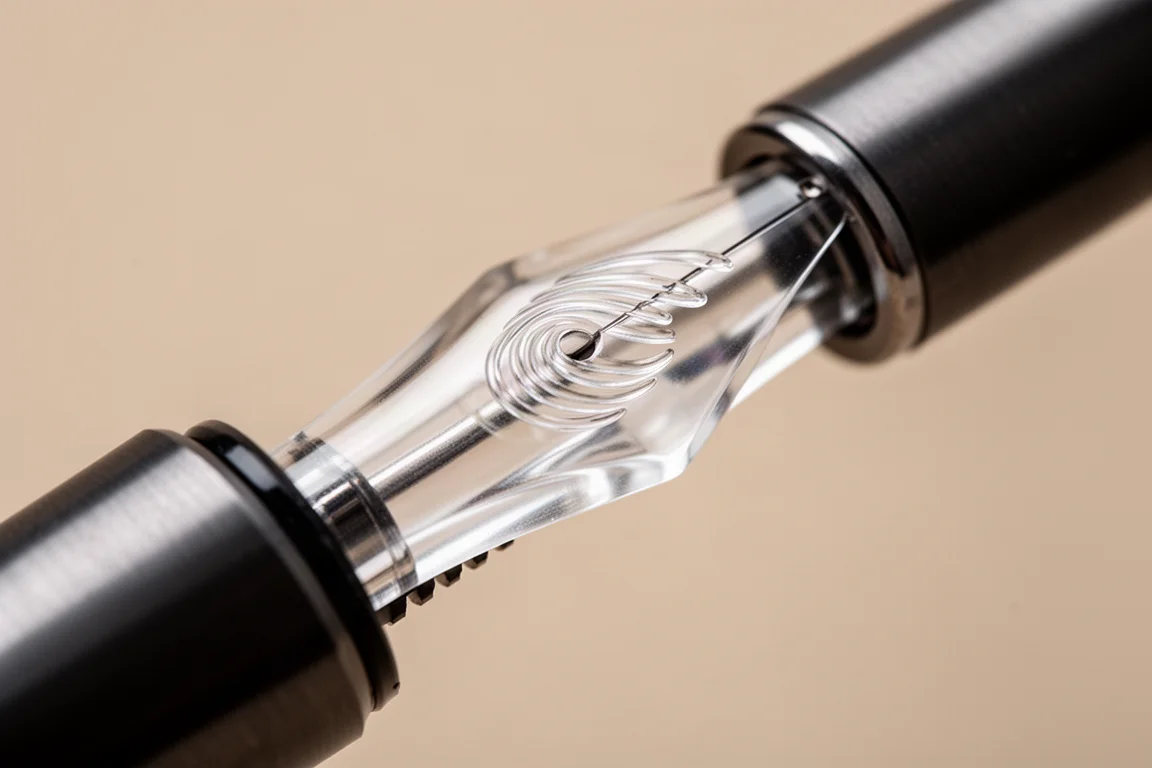
The cap unscrews to reveal the nib, and the taper at the end of the barrel may look like a posting feature, but the cap does not post. Do treat the nib with care: it is glass, and it is fragile, so be gentle when inking it.
How It Writes
If you have never written with a glass nib, you might assume glass means glass-smooth. In practice, this nib has quite a bit of natural feedback. There is a definite sweet spot: hit the page at the right angle and it writes well, but from other angles it becomes noticeably more feedback-heavy.
The ink flow with Irish green ink was balanced, not too wet and not too dry. As long as you do not rotate the pen, the line width stays very consistent, which is a real advantage for artists. By turning the nib slightly, you can shift the line a bit finer or a bit broader, since the polished glass tip changes character with the angle.
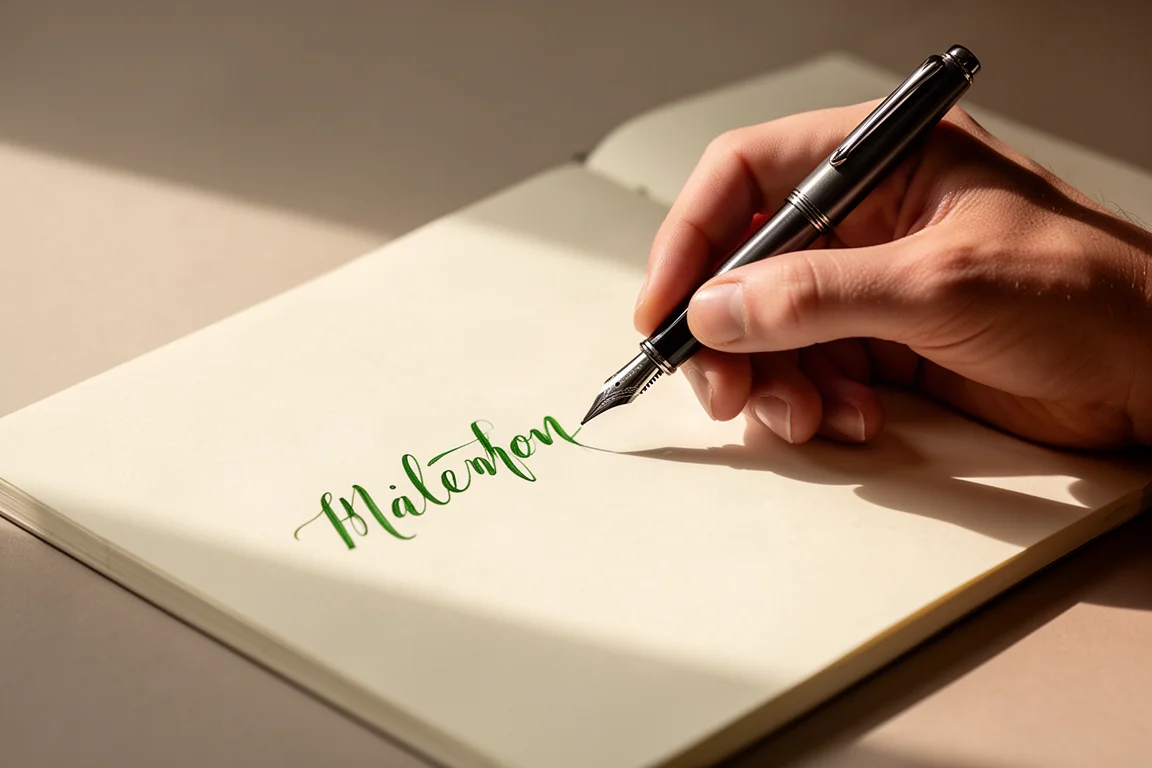
One thing this pen absolutely does not do is flex. There is no line variation from pressure, so if you are looking for a flex writing experience, this is not it. The writing feel is simply different from any metal-nibbed fountain pen, and that difference is the whole point.
Things to Consider Before Buying
At around $300 US, this is not a cheap pen. You are paying for something genuinely uncommon: a handmade glass nib, a cartridge-converter system that is easier to maintain than the old sac-based fillers, a wooden box, a pen kimono, and documentation that makes the purchase feel like an event. Production appears to have been limited, and most of these pens are now sold out.
It is worth knowing that Wancher did not invent the glass-nib fountain pen; a Japanese company called Trio made one back in the 1930s. But those pens are rare collector items today, and the Shizuku makes the concept accessible in a way the originals are not.
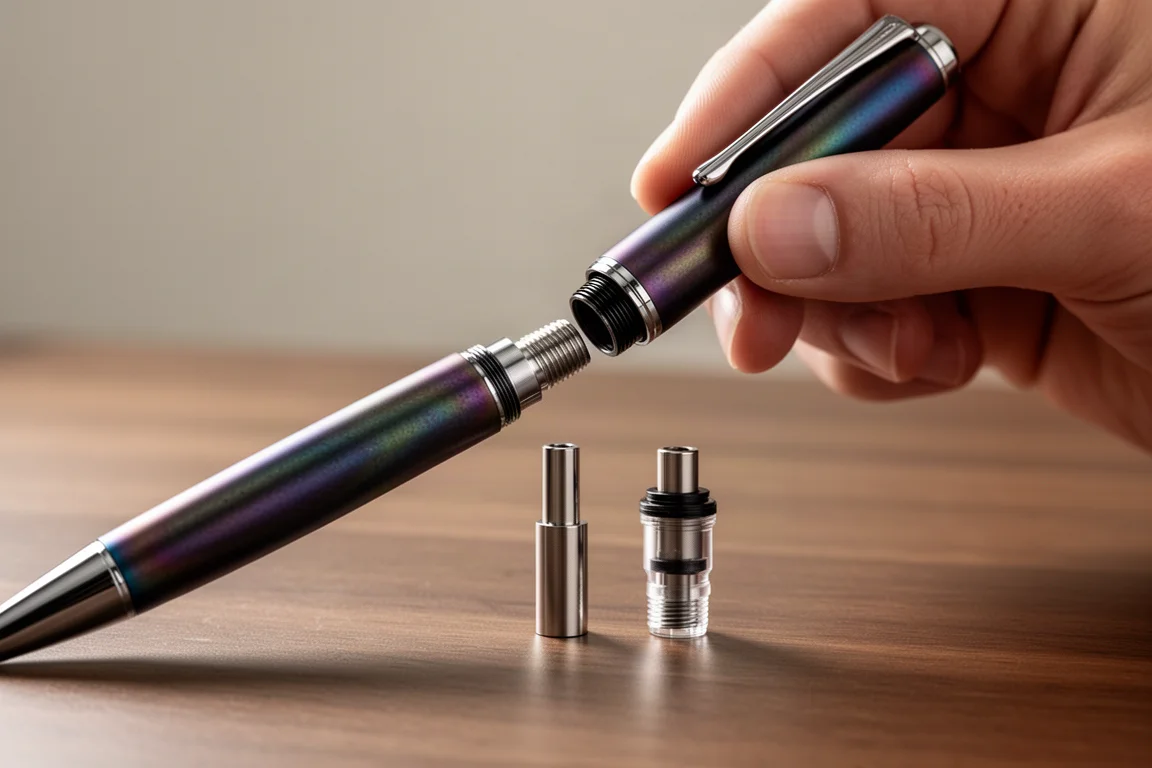
There is one small design quirk to know about: the cap and barrel share a single set of threads. If you over-tighten the cap, the whole barrel can unscrew along with it. Just tighten the cap until it shuts and stop there, and the issue never appears.
Who This Pen Is For
This pen makes the most sense for two groups. The first is artists, who will appreciate the very consistent line width and the ability to fine-tune it by rotating the nib slightly. The second is anyone who enjoys owning something a little special and a little different from the run-of-the-mill fountain pen. If you just want an efficient daily writer, a $300 glass-nib pen may not be worth it, and that is a fair assessment.
Conclusion
The Wancher Shizuku Glass Nib Earth is not trying to be the best value in fountain pens. It is trying to be memorable, and it succeeds. The anodized duralumin body looks great, the presentation is excellent, and the glass nib delivers a writing experience you cannot find in a conventional pen. If that idea appeals to you, this is a pen worth seeking out while it is still available.
Product link
View more details for Wancher Shizuku Glass Nib Earth Fountain Pen
This product is mentioned in the review. Check the specifications, options, and compatibility before buying.
View more details for Wancher Shizuku Glass Nib Earth Fountain PenFurther reading
Related Reviews
Fountain Pens
Best Budget Fountain Pens Tested: 9 Pens, One Clear Winner
A hands-on comparison of nine affordable fountain pens for everyday writing, calligraphy, and sketching, with a clear standout for flexible nib fans.
Fountain Pens
Aurora Optima Review: An Italian Piston Filler That Punches Above Its Price
A 14k gold nib, ebonite feed, and a beautifully deep oraloid body make the Aurora Optima one of the most rewarding piston fillers around.
Fountain Pens
Cross Bailey Light Review: The Entry-Level Fountain Pen Worth Keeping at the Office
A plastic-bodied Cross with a metal clip, snap cap, and famously smooth extra fine steel nib. Around $15, available almost everywhere, and easy to recommend.