Fountain Pens
Wancher Kyoto Celluloid Fountain Pen Review: Koi-Inspired Celluloid Done Right
A closer look at the Wancher Kyoto Celluloid, a Kickstarter fountain pen with striking koi-like patterning, metal threads, and a smooth number six steel nib.
Introduction
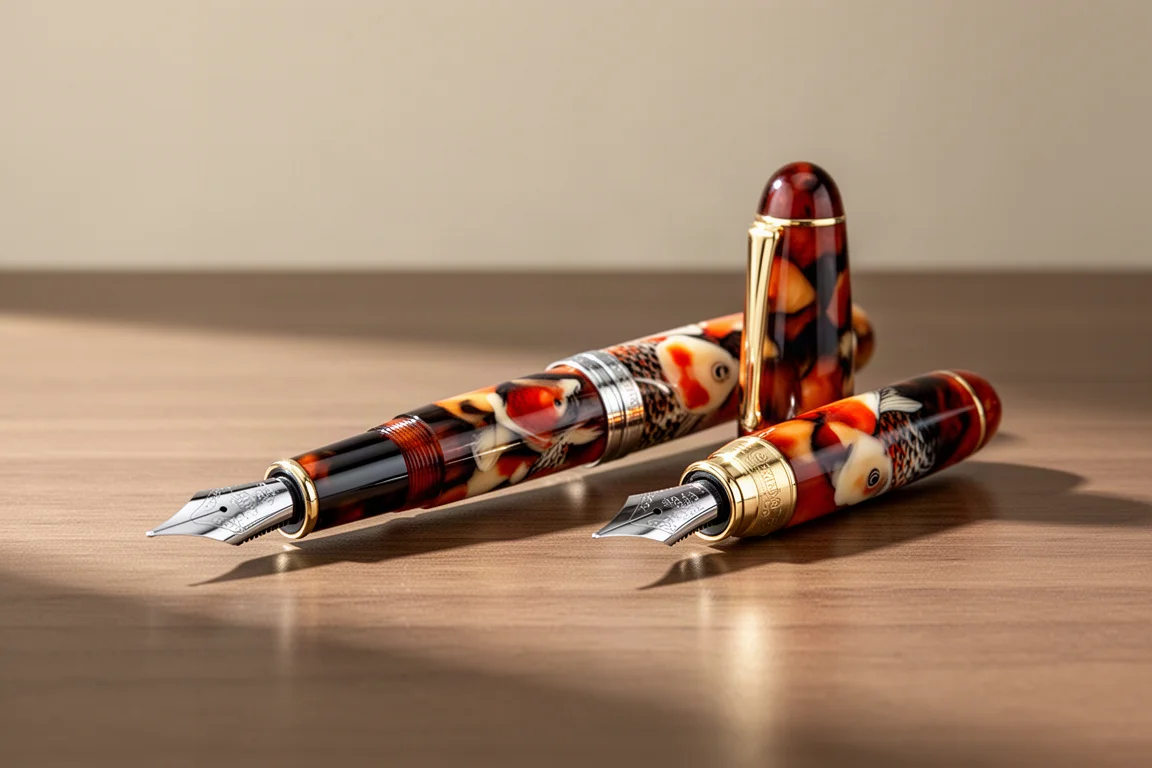
Wancher has built a reputation for releasing pens that look and feel different from the usual resin offerings, and the Kyoto Celluloid is their latest launch, introduced through a Kickstarter campaign. The reviewed model is the Keno, a celluloid whose patterning immediately brings to mind a koi or goldfish, and that resemblance is clearly intentional, mirrored on the packaging as well.
The pen was examined in detail: parts and features, measurements and size comparisons, and a full writing sample. This review covers what works, what to think about before backing, and who the pen suits best.
First Impressions and Materials
The Kyoto Celluloid arrives in a standard Wancher box with a use and care guide, and a small kimono fabric pouch holding the pen itself. Unboxing is simple but pleasant, and the pouch is a nice touch that gives the pen a bit of ceremony.
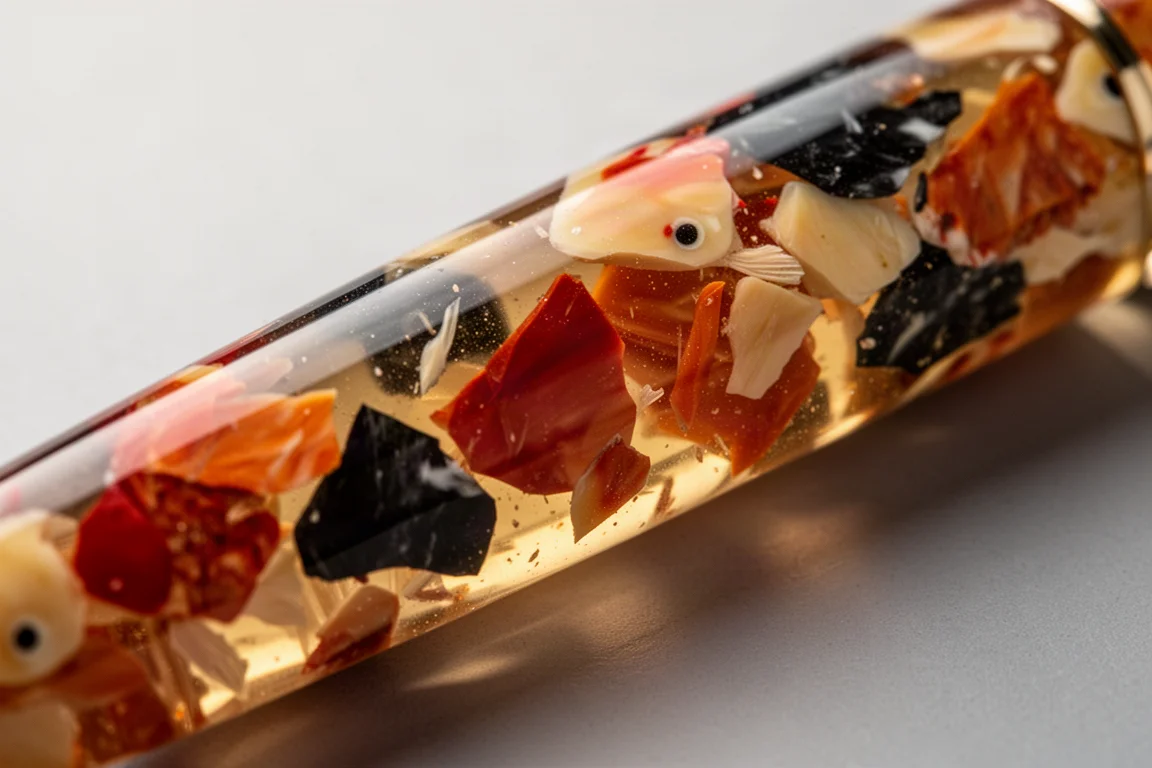
The material is the main event. Many patterned resins have what could be called a crushed-ice look, with small scattered flakes. The Kyoto Celluloid instead uses larger pieces in the celluloid, which gives it a distinctly different character and, in the Keno version, a convincing resemblance to koi markings. It is genuinely one of the more interesting pen materials in recent memory.
Parts and Features
The barrel end is rounded and angles up gently before straightening out, tapering down at an even rate to a rounded finial. The cap carries a gold-plated silver band, marked with the Wancher name, 925 to indicate sterling silver, and Kyoto Celluloid. The transition at the band is fairly smooth, only slightly raised.
The cap twists off in about two and a half turns, revealing a number six stainless steel nib engraved with the Wancher logo. The pen will be offered in a range of nib sizes, including Wancher’s specialty nib, an architect-style grind. The feed is plastic, and the section is straight and slightly narrow, with a fairly large step up to the barrel. That step is noticeable but not obtrusive, and the section remains comfortable with the thumb resting near it.
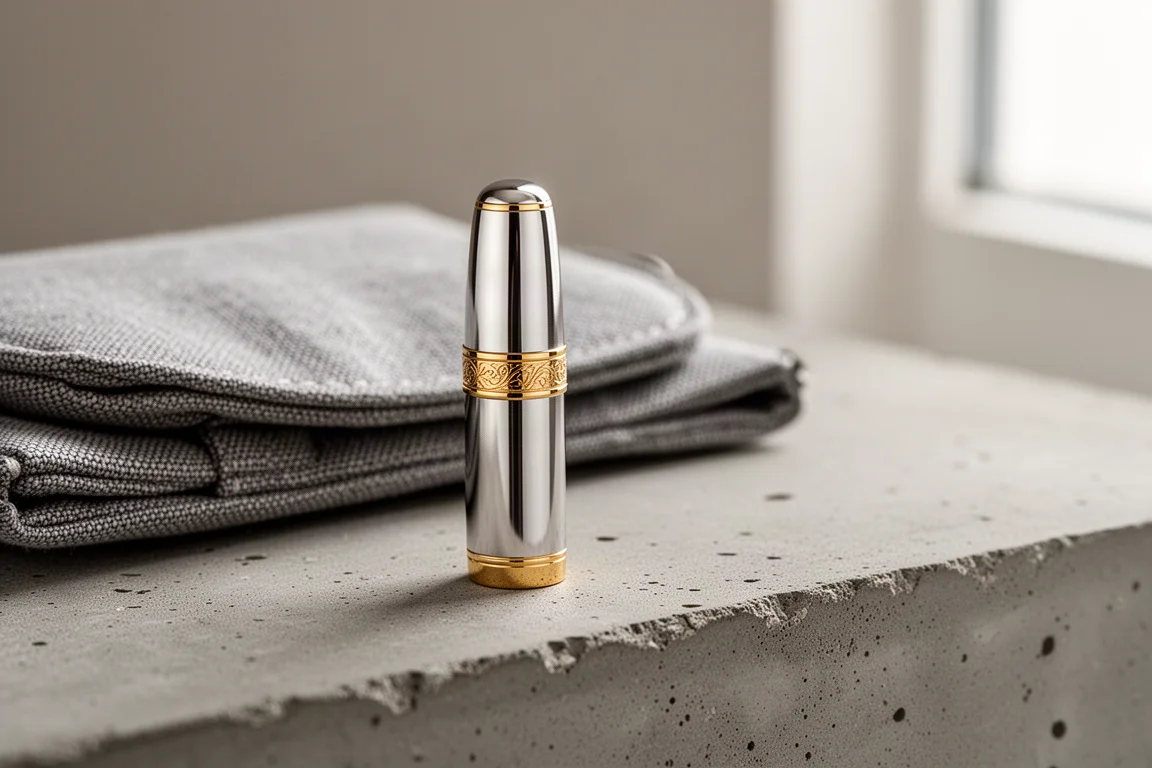
Metal threads appear on both the section and inside the cap, as well as on the cartridge-converter housing. The pen accepts standard international cartridges, and a converter is included. One practical consequence of the metal-on-metal construction: eyedropper conversion is not recommended for this pen. A spring-loaded inner cap helps create a seal and keep the nib from drying out, though the spring tension is mild.
Size, Handling, and Posting
In the hand, the Kyoto Celluloid is comfortable and has a pleasant, not excessive, weight. It is a medium-to-smaller pen: not a pocket pen, but not a large one either. It is long enough to use unposted with no issues.
The cap does not really post, and given the metal threads against celluloid, posting would not be advisable anyway. Fortunately, the pen does not pretend to post, and it is plenty long enough unposted. The metal-on-metal threading gives an unusual, slightly different feel than most pens of this type, which some will find novel and others may need a moment to adjust to.
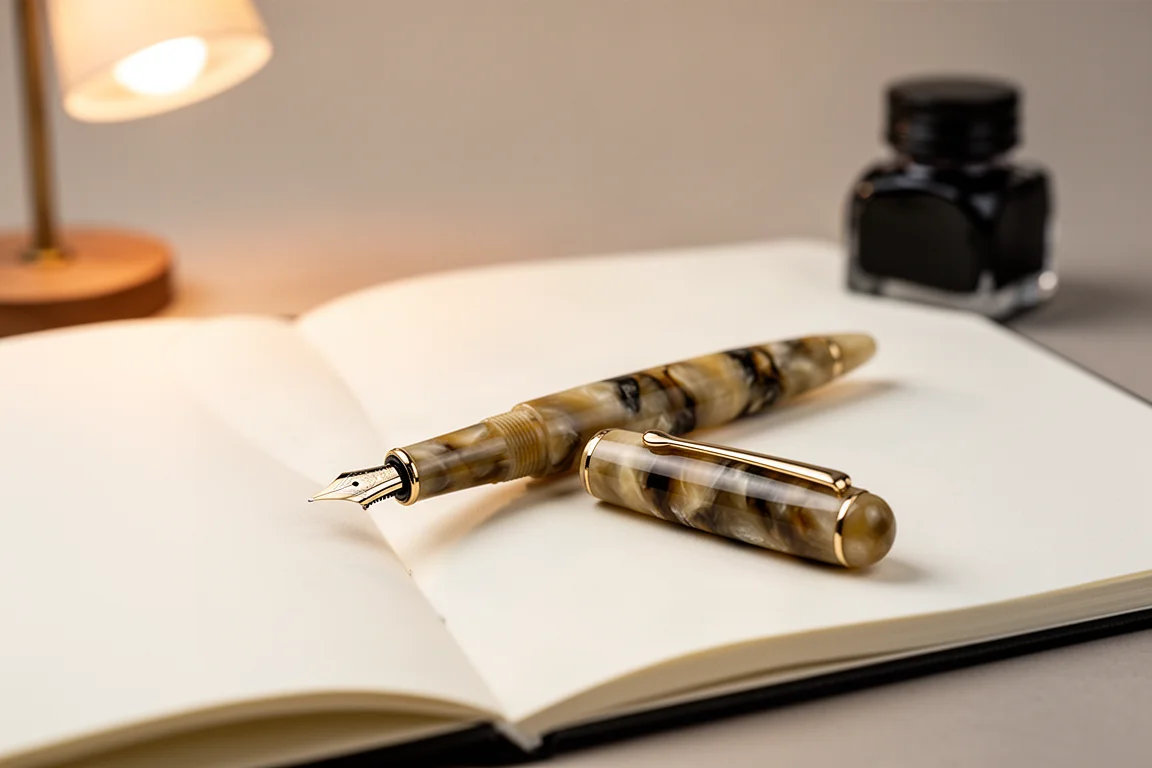
For context on size, it sits alongside pens like the Pilot Custom 823 and Leonardo Momento Zero, reading as a medium pen rather than an oversized one.
Pricing and Kickstarter Tiers
As with most Kickstarter projects, there will be different price tiers. The lowest tiers include a silver-band version at around $190 and a gold-plated silver band version at around $195. Later tiers will be priced slightly higher, and prices are expected to rise further once the pen reaches retail.
The campaign is expected to run for approximately 30 days. For this price range, and especially at the lower early tiers, the pen presents a worthwhile proposition for anyone drawn to the material.
Writing Performance
The reviewed pen carries a broad stainless steel nib, tested with vibrant red inks including Diamine Poppy Red, Monteverde Strawberry Shortcake, and Birmingham Pen Co Fred Rogers Cardigan Red, all of which complement the red tones in the celluloid.
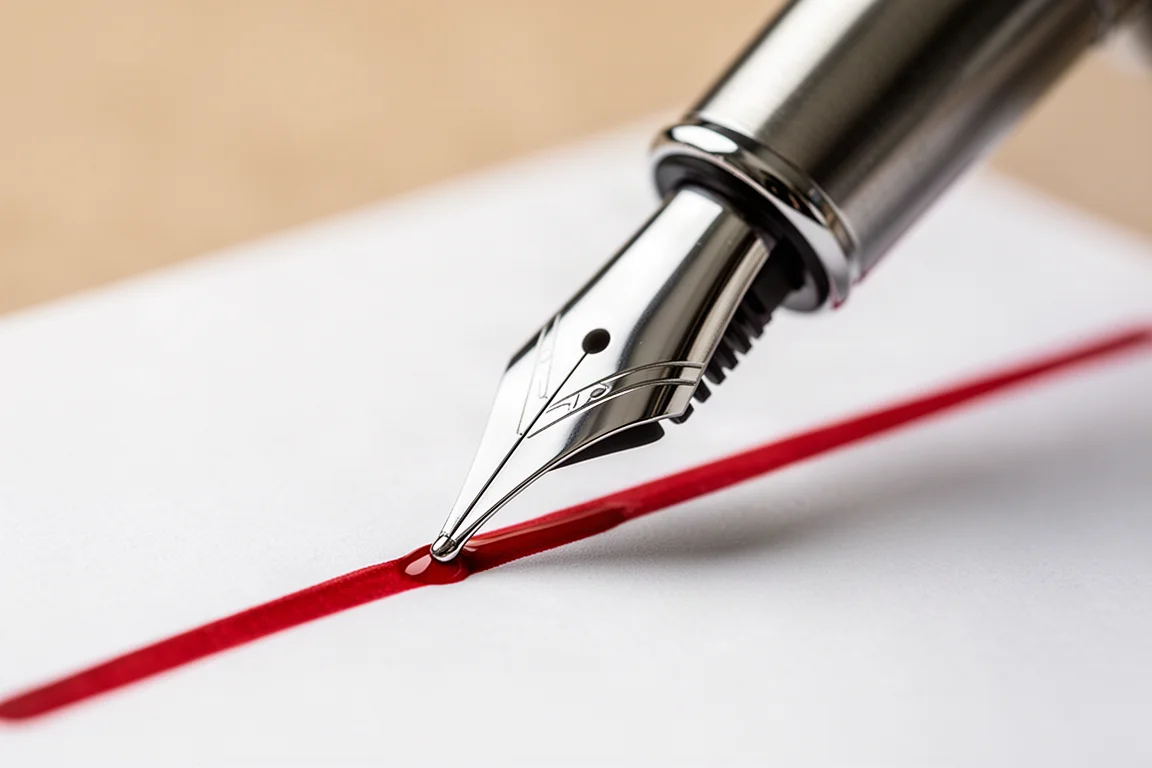
The broad nib is very smooth, glossy, and low in feedback, though it offers little line variation. Ink flow runs a bit on the high side. Reverse writing is slightly scratchy but lays down a nice fine line. In fast writing, the feed keeps up very well. Overall, this is a genuinely good broad nib, which matters because broader nibs vary more from unit to unit than mediums do.
Buying Advice
If the koi-style celluloid appeals to you, the Kickstarter is the smart way to buy: the lowest tiers sit around $190 to $195, and retail pricing is expected to be higher. Choose the silver band to save a small amount, or the gold-plated silver band if you prefer the warmer trim. Pick your nib size carefully, since a range of sizes plus the architect-style specialty nib will be available. Skip any thought of eyedropper conversion given the metal internals.
Conclusion
The Wancher Kyoto Celluloid is an interesting offering at its Kickstarter pricing: distinctive larger-flake celluloid with real koi character, comfortable handling, quality silver trim, and a smooth broad steel nib with healthy flow. The main caveats are practical rather than serious: no posting, no eyedropper option, and a large-ish section step. For pen lovers who want a material that stands apart, it is easy to recommend.
Product link
View more details for Wancher Kyoto Celluloid
This product is mentioned in the review. Check the specifications, options, and compatibility before buying.
View more details for Wancher Kyoto CelluloidFurther reading
Related Reviews
Fountain Pens
Best Budget Fountain Pens Tested: 9 Pens, One Clear Winner
A hands-on comparison of nine affordable fountain pens for everyday writing, calligraphy, and sketching, with a clear standout for flexible nib fans.
Fountain Pens
Aurora Optima Review: An Italian Piston Filler That Punches Above Its Price
A 14k gold nib, ebonite feed, and a beautifully deep oraloid body make the Aurora Optima one of the most rewarding piston fillers around.
Fountain Pens
Cross Bailey Light Review: The Entry-Level Fountain Pen Worth Keeping at the Office
A plastic-bodied Cross with a metal clip, snap cap, and famously smooth extra fine steel nib. Around $15, available almost everywhere, and easy to recommend.