Fountain Pens
Wancher Flux Azour Review: A Fountain Pen with an Adjustable Nib
The Wancher Flux Azour combines a cotton-fiber resin body, a katana-inspired profile, and an adjustable nib system at a surprisingly reasonable price.
Introduction
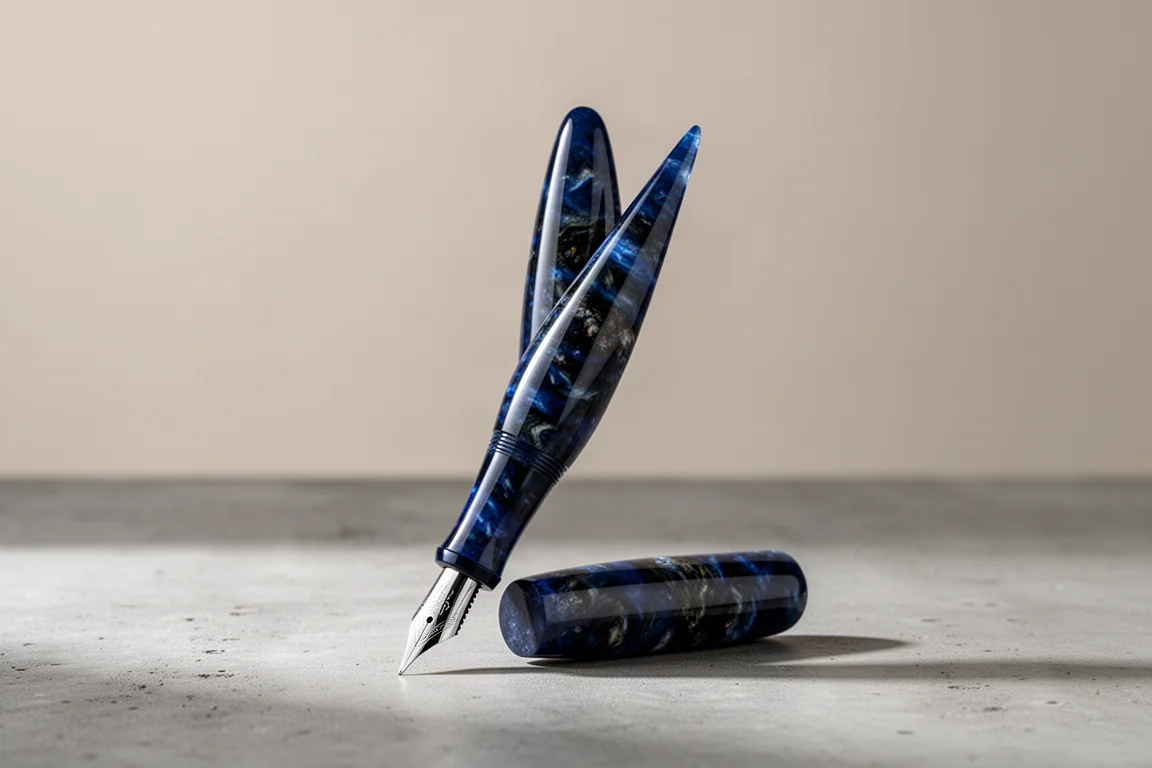
The Wancher Flux Azour is the latest release from Wancher, a Japanese brand that has built a reputation over the years for trying new things rather than iterating on safe designs. The Flux is exactly that kind of pen: a brand-new silhouette, an unusual cotton-fiber resin, and a feature we have genuinely not seen before on a fountain pen. At $125 for the stainless steel nib version, it also positions itself as an accessible way to own something this distinctive.
Design and Materials
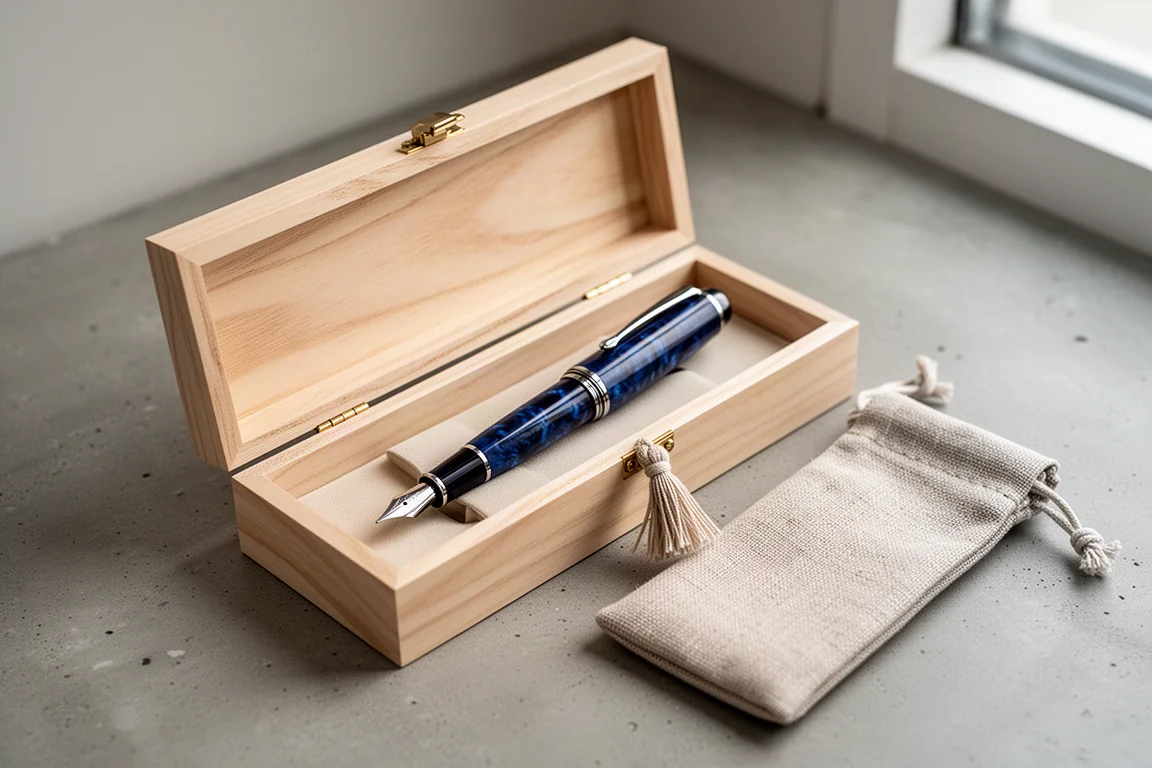
The pen arrives in a softwood presentation box with a small tassel, accompanied by a fabric pen pouch and three standard international short cartridges. The body itself is a cotton-based resin, meaning cotton fibers are added to the resin for additional strength. Interestingly, when used in this application, those cotton fibers are called “flox”, which is where the pen takes its name.
The colorway is a deeper blue with plenty of personality: variations of blue, hints of black, and even some white. It is not a flat, solid color, and it has a warmth to it that many resins lack. It never feels cold or lifeless in the hand.
The profile has an almost Japanese, sword-like quality, evocative of a katana. The cap end is rounded with a rounded triangular cross-section, tapering down to the narrowest point at the transition between cap and barrel, then widening again along the barrel toward a flat rear end. That flat end is not just decorative: the pen can genuinely stand upright on its own, which few fountain pens can do without toppling over at the slightest breeze.
Standout Feature: The Adjustable Nib
Here is the feature that sets this pen apart. Because the barrel has a triangular shape, different grips prefer different orientations of that flat face. Some writers would want the flat side aligned one way; a left-handed writer might want it entirely another way. Rather than forcing one compromise orientation, Wancher made the nib adjustable: you can twist the nib unit independently of the section and rotate it to whatever position feels most comfortable for your grip.
It is a clever solution to a problem most triangular pens simply ignore, and it is the kind of feature we have never encountered on another pen. Combined with a single thread entry point that always brings the cap back into perfect alignment every time you post it, the thoughtful touches add up.
Grip, Section, and Nib Choices
The section is metal and angles up only slightly, which helps keep your grip secure. However, there is a rather significant step up from the section to the barrel, which is the pen’s main ergonomic weakness. A slightly thicker section would have given fingers more of a head start over that step. The metal threads are also a touch on the sharp side.
The cap twists off with about three and a half rotations, which is on the high side. The pen does not post, and with a metal interior housing and metal in the barrel, it would not be recommended for eyedropping.
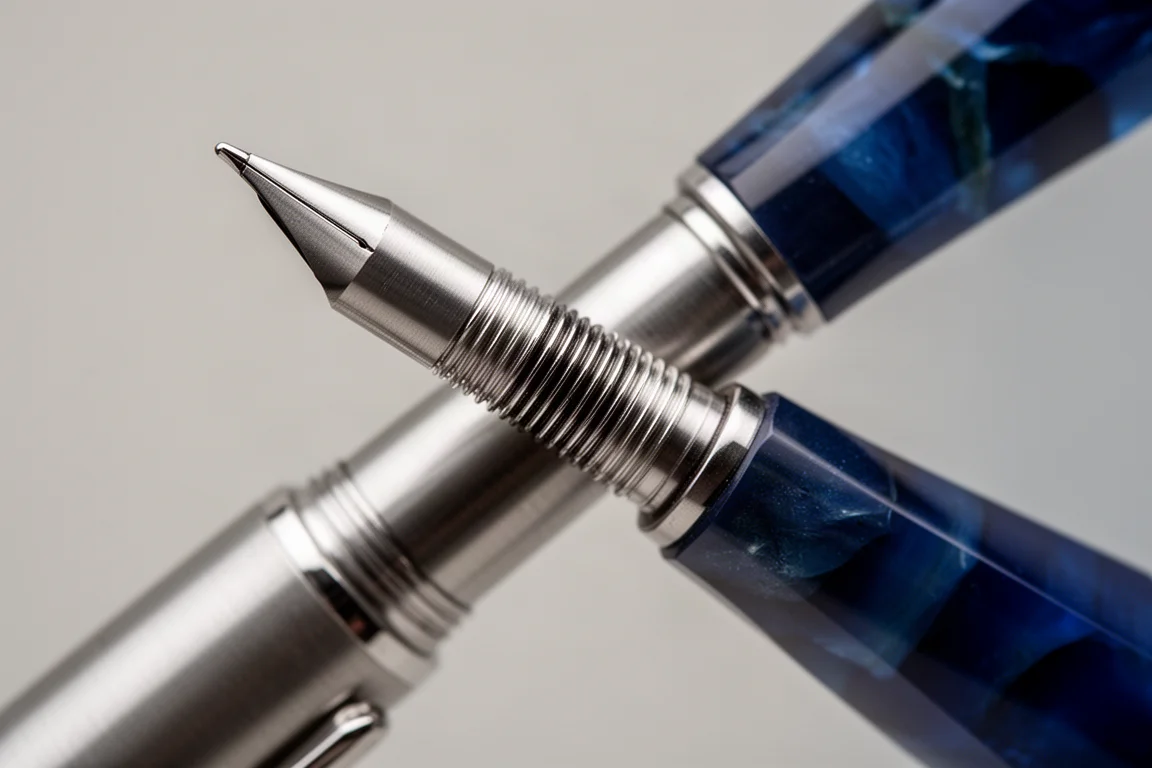
The supplied nib is a number six stainless steel unit, and Wancher offers a wide variety of sizes and choices, including gold nibs and custom grinds. Feed options include a standard plastic feed, a black ebonite feed, and a red and black ebonite feed. It is a cartridge-converter pen, and a converter is provided alongside the cartridges.
Writing Performance
Our review sample came with the Kru stainless steel nib, Wancher’s take on an architect grind. Downstrokes come out narrower, around a medium, while sidestrokes are wider, closer to a broad. Press harder and it lays down something more like a bold line. Line variation is modest by design; that is not what this nib is for.
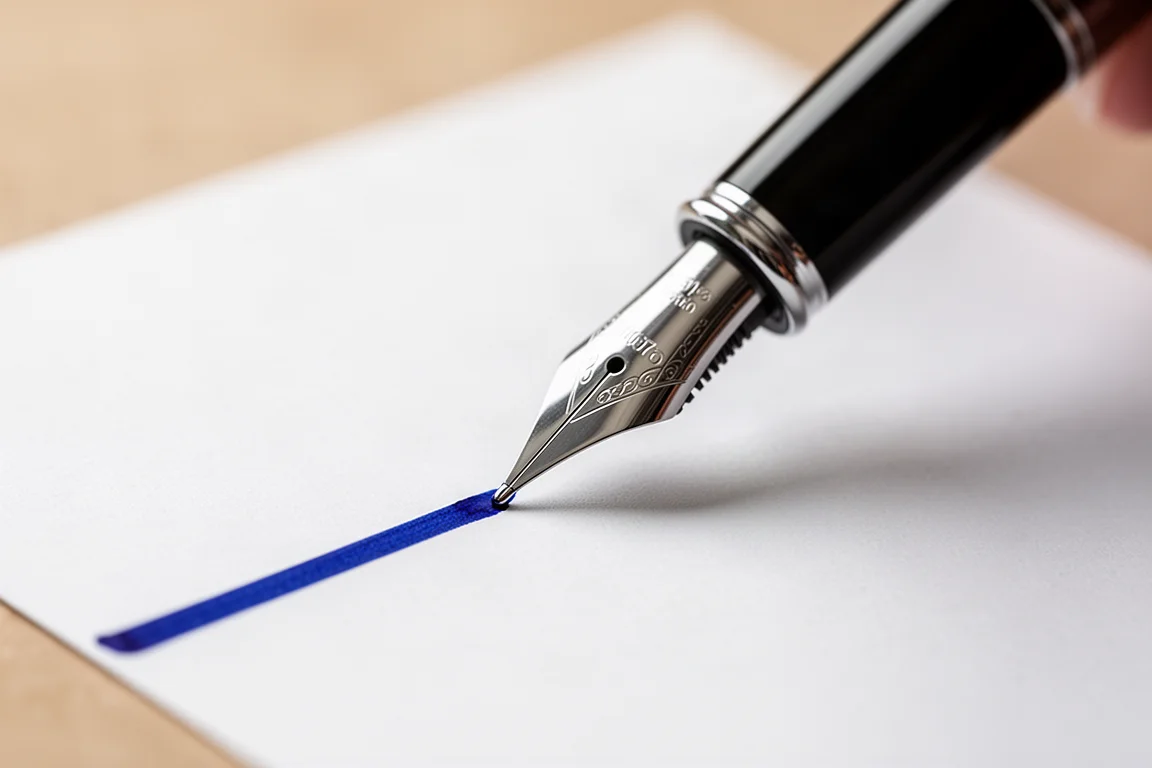
Ink flow is generous, on the medium side. The feed keeps up very well during fast writing, though reverse writing is a little scratchy, which is unsurprising for an architect-style grind. Paired with KWZ Sapphire Blue, the nib produced a pleasing line with vibrant blue and darker undertones.
Size Comparisons and Value
The teardrop silhouette draws natural comparisons to the Nakaya Dorsal Fin 2, which shares a similar swooping aesthetic, though the Flux is its own design rather than an imitation. Alongside the Leonardo Folor Grande and a Pilot Vanishing Point, it holds its own visually. Compared with other Wancher favorites like the Kaga Urushi, the Sailor Japan Blue collaboration, and the Saki Saguru urushi, the Flux feels like a fitting addition to a lineup known for distinctive materials.
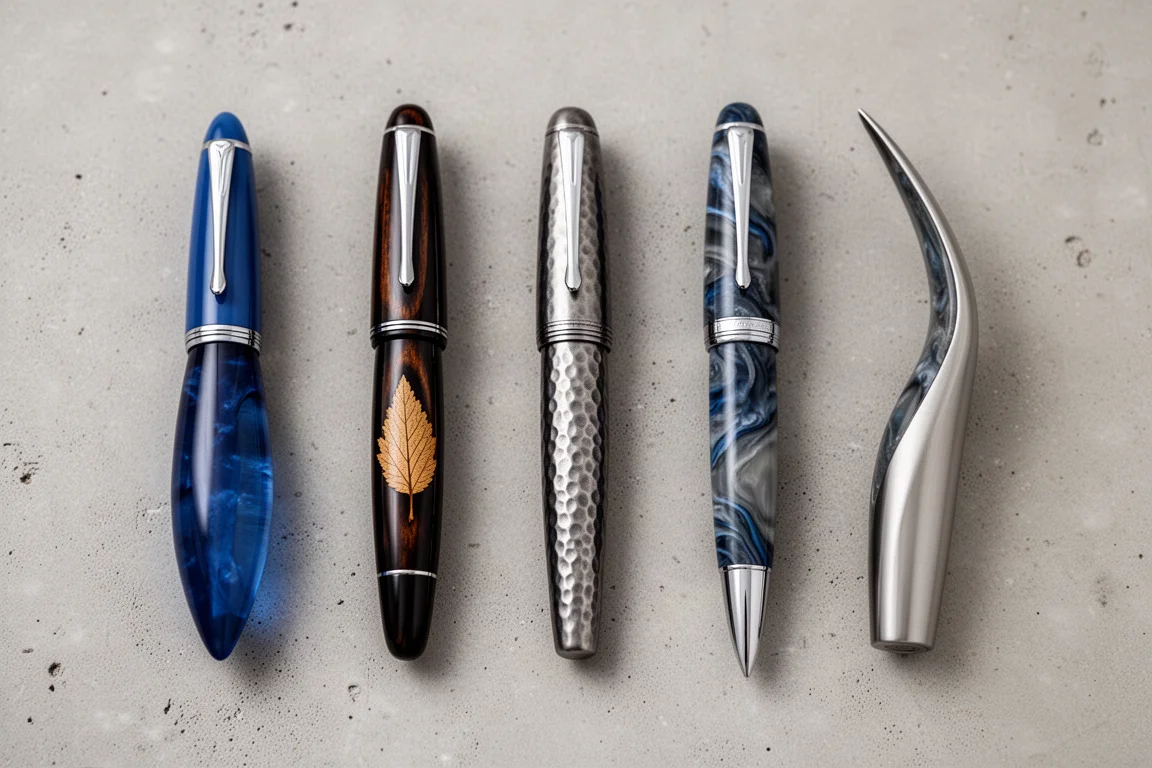
At $125 with a stainless steel nib, the price is the strongest argument in its favor. For a pen this unique in design and material, something in the range of $225 to $250 would not have been surprising. Gold nibs and custom grinds will add to the cost, but the base model represents a very reasonable ask. A 5% discount code (FIGBOOTFLUX) is available on the Wancher website for those interested.
Buying Advice
The Flux Azour suits writers who want a distinctive, conversation-starting pen at a mid-tier price, and who appreciate the ability to fine-tune the nib orientation to their own grip. If a steep section-to-barrel step or a non-posting cap is a dealbreaker, test carefully first. Otherwise, this is one of the more interesting fountain pens released recently, and it earns its originality rather than just charging for it.
Conclusion
The Wancher Flux Azour delivers a genuinely novel adjustable nib system, a characterful cotton-fiber resin, and an upright-standing katana silhouette for $125. It has minor ergonomic compromises, but it offers a level of design originality that usually costs far more.
Product link
View more details for Wancher Flux Azour
This product is mentioned in the review. Check the specifications, options, and compatibility before buying.
View more details for Wancher Flux AzourFurther reading
Related Reviews
Fountain Pens
Best Budget Fountain Pens Tested: 9 Pens, One Clear Winner
A hands-on comparison of nine affordable fountain pens for everyday writing, calligraphy, and sketching, with a clear standout for flexible nib fans.
Fountain Pens
Aurora Optima Review: An Italian Piston Filler That Punches Above Its Price
A 14k gold nib, ebonite feed, and a beautifully deep oraloid body make the Aurora Optima one of the most rewarding piston fillers around.
Fountain Pens
Cross Bailey Light Review: The Entry-Level Fountain Pen Worth Keeping at the Office
A plastic-bodied Cross with a metal clip, snap cap, and famously smooth extra fine steel nib. Around $15, available almost everywhere, and easy to recommend.