Ski Gear
Volkl Peregrine 80 and Peregrine 82 Review: Two New Frontside Skis Compared
A close look at Volkl's two new Peregrine frontside skis, how they differ in construction and flex, and which one suits your snow and your skiing style.
Introduction
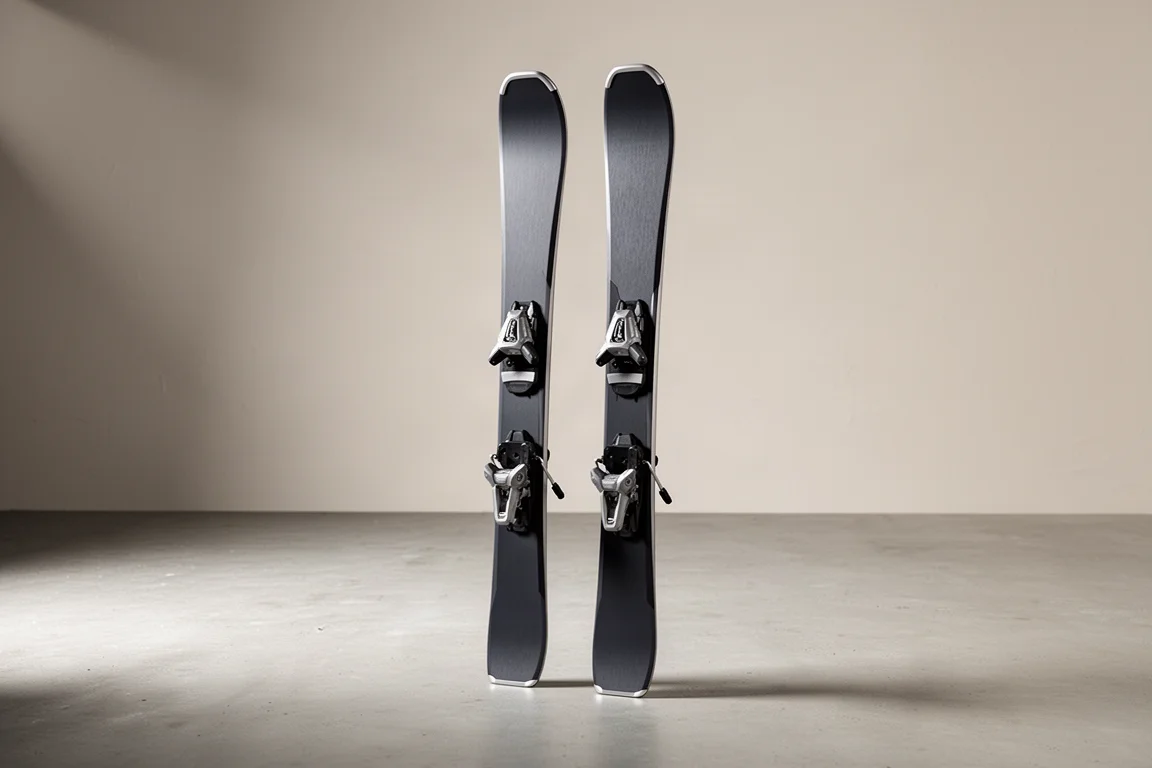
Volkl has introduced a new name to its frontside lineup for the 2025 season. The Peregrine collection brings two completely new skis, the Peregrine 80 and the Peregrine 82, both aimed at skiers who spend most of their day on groomed runs. One clarification is worth making early, because it will come up in every shop conversation: the narrower Deacon skis carry over structurally under the new Peregrine name, with fresh graphics but the same build. The Peregrine 80 and Peregrine 82 are the only genuinely new constructions in the collection, and they replace the Deacon 80 and the Deacon 84.
Because the two new skis sit only two millimetres apart in waist width, the interesting question is not which one is better but which one suits your snow and your style. The answer has less to do with ability level than with the surface underfoot and the shape of turn you enjoy.
What Is New in the Peregrine Collection
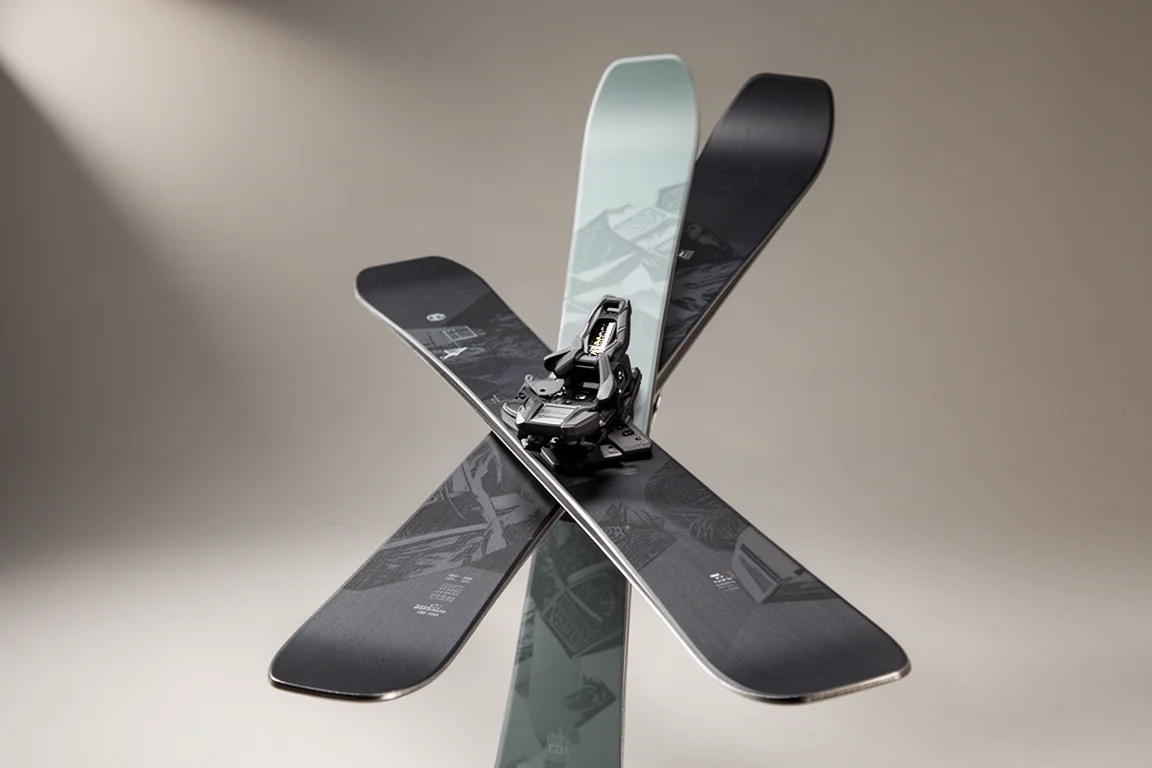
Volkl has long packed a great deal of engineering into its skis, and the Peregrine is no exception. The foundation is a multi-layer wood core that blends poplar and beech. On top of that sits a 3D fiberglass layer that curves up toward the sidewalls; putting glass into a three-dimensional shape raises the stiffness of the ski, and that stiffness is carried forward into the Peregrine.
From there, the build adds a layer of metal and a tailored Titanal frame. The frame is split into three pieces, one toward the front, one toward the back, and one edge to edge underfoot, and its width is adjusted along the length of the ski. Longer lengths get longer and wider sections of frame, shorter lengths get shorter ones, so the reinforcement is tailored to the size of the ski and, in practice, to the size of the skier. Tailored carbon tips then place carbon stringers in the front of the ski, distributing energy so that turn initiation feels lighter, quicker, and more precise.
The LowRide binding system completes the picture. Rather than a plate drilled onto the ski with a binding sliding along it, this system is integrated into the core, with an added layer of wood on top. That extra material gives the interface a more three-dimensional, more centralized connection to the ski.
One philosophical point matters here. Volkl does not rely on tall positive camber to generate energy. The camber underfoot is low and the tip rocker is long and gradual, with very little splay. The energy comes from the construction rather than from the profile, which is a different approach from several skis in this width class.
Volkl Peregrine 82: Smooth Precision With a Metal Core
The Peregrine 82 is the more metal-heavy of the two. It uses the tailored Titanal frame, and the result on snow is a ski that feels smoother and more supple than the Deacon 84 it replaces, with a slightly rounder flex pattern and a softer tail. That is a meaningful change, because the Deacon 84 was known for a firm, precise feel that rewarded strong technical skiers and asked for commitment in return.
The Peregrine 82 keeps the precision but delivers it with more smoothness. The flex is more progressive through the turn, the ski engages more easily, and it is more amenable to input from the skier. It still feels like a technical, responsive frontside ski, just one that is less abrupt at the entry and exit of a turn.
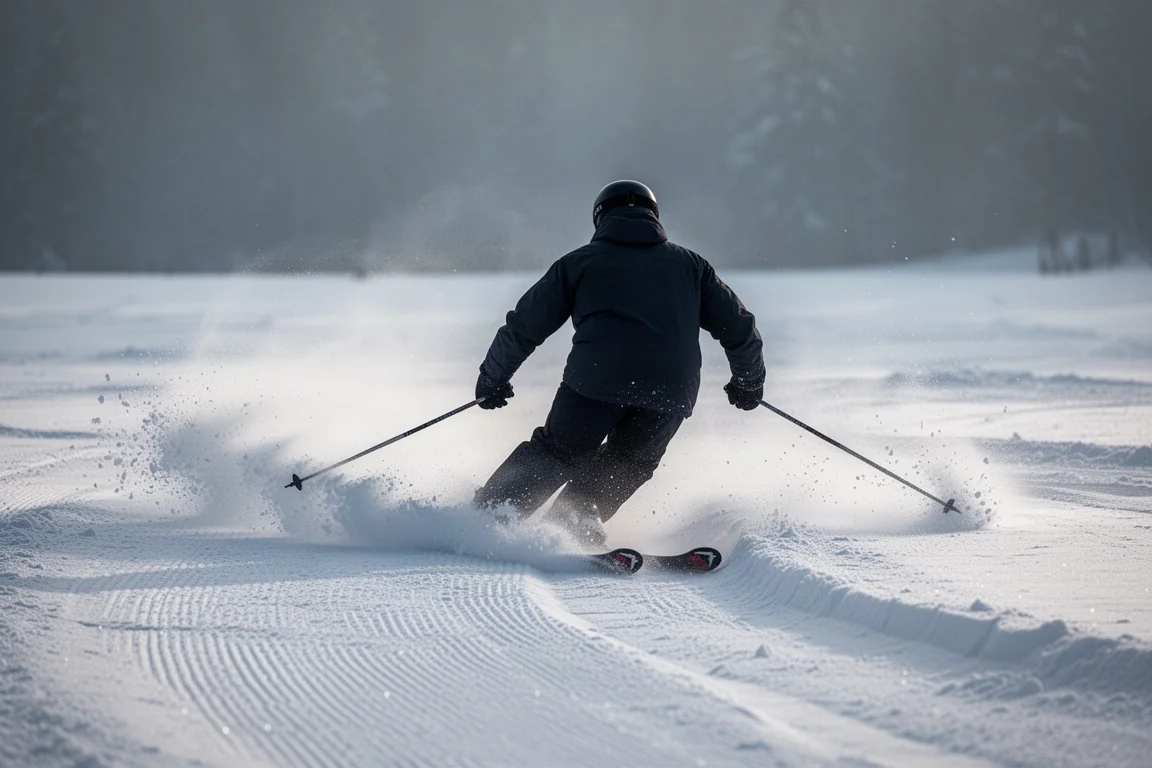
Its shape supports that character. The 82 measures 128-82-111 with a 3D radius of 27/15/23, so the tips and tails carry a longer radius than the outgoing Deacon 84 at 132-84-115. Combined with a more straight-cut tip that sits a little higher off the snow, the ski engages cleanly in transitions. On groomers and firm packed powder it holds an edge well and can be opened up into longer arcs, and it breaks free into skidded turns without much argument. It remains a carving-oriented ski rather than a deep-snow tool, and in soft, deeper conditions it will not float the way a wider all-mountain model does.
Volkl Peregrine 80: Poppy, Quick, and Agile
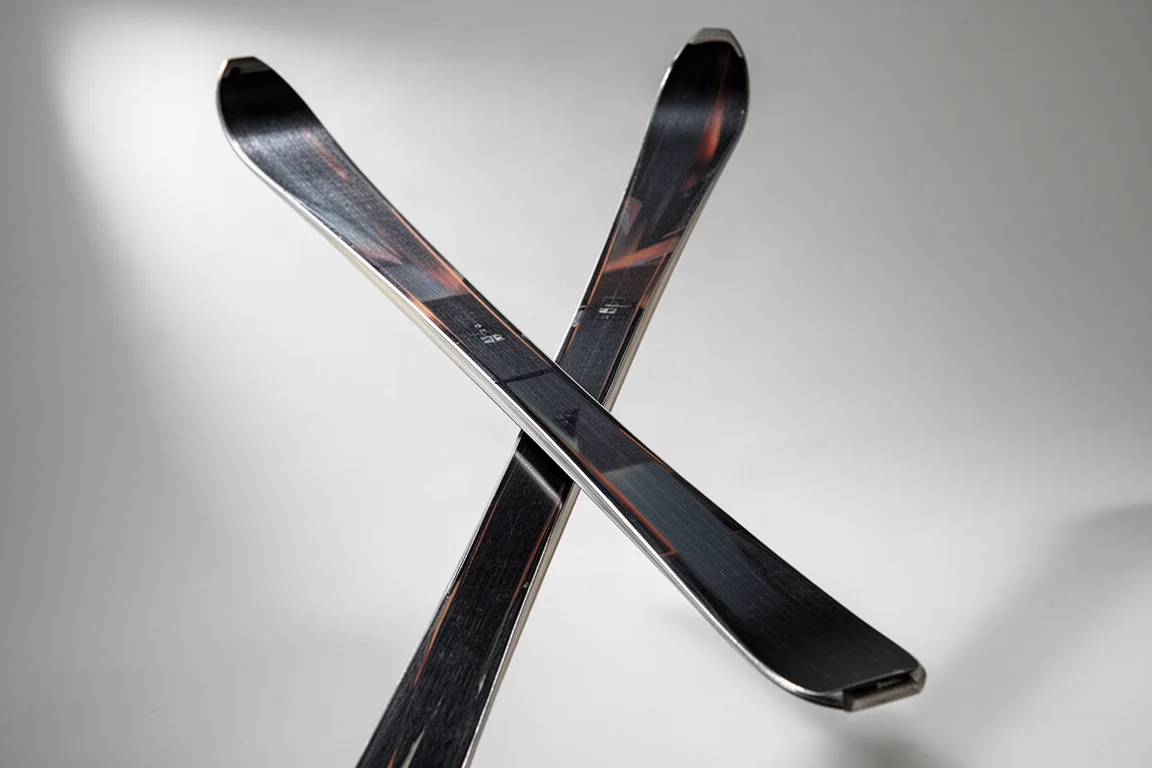
The Peregrine 80 shares almost everything with its wider sibling, with one important substitution. Instead of the tailored Titanal frame, it uses a tailored glass frame, paired with a titanal band that runs as a central cord from tip to tail. In plain terms, there is more fiberglass and less metal in the build, and you feel it immediately.
The 80 is the poppier, more energetic ski of the pair. It feels quick and agile, and it is happiest making shorter turns, working the edge of the trail, and picking a line through bumps and packed-out trees. Its flex is softer than the 82’s, which makes it easy to bend and easy to engage, and it handles moguls more comfortably than the wider model.
That softness has a trade-off. On ice and very firm, grippy snow, the metal in the 82 earns its keep, adding damping and grip that the 80 cannot match. The 80 is at its most rewarding on packed powder and softer groomed surfaces, where the snow itself provides some of the forgiveness the construction does not. It is also the narrower ski, so it gives up ground in deeper, softer snow.
Dimensions are 126-80-109 with the same 27/15/23 3D radius as the 82. The narrower tips and tails and the longer radius in the extremities are the main shape changes relative to the older Deacon 80 at 128-80-111.
Peregrine 80 vs Peregrine 82: Which Should You Choose
Because the two skis share a rocker and camber profile and differ mainly in construction and flex, the deciding factor is usually the snow you ski most often and the turns you like to make.
If your home mountain serves up cold, grippy, hard-packed snow and you like to ski fast with long, arcing carved turns, the Peregrine 82 is the more rewarding choice. Its metal-backed build adds damping and edge grip that hold up when the surface gets firm, and the longer radius in the tips and tails supports bigger arcs.
If your days are mostly packed powder and softer groomed runs, and you prefer shorter turns, quick edge-to-edge transitions, and time in the bumps, the Peregrine 80 is likely to feel more fun. It is a touch more versatile in mixed frontside conditions than its width alone suggests, which is a genuinely counterintuitive result: the narrower ski turns out to be the more flexible tool for everyday resort skiing.
How They Compare With Other Frontside Skis
This is a crowded part of the market, and the Peregrine pair stands out for a specific combination rather than raw power.
The Stöckli Montero AR at 84 millimetres underfoot uses a more traditional, race-inspired construction. It feels smoother and more powerful at higher speeds, while the Peregrine asks for a little less and changes turn shape more easily. The Rossignol Arcade 84 is built around a roughly 15-metre turn radius and wants to live there, whereas the Peregrine 82 is more willing to open up into longer arcs. The Anomaly 84 feels stronger for pure fall-line speed and offers more vibration damping, but it does not match the Peregrine’s feedback and responsiveness.
The Spitfire 80 is undeniably stronger than the Peregrine 80, but it is also less versatile. The Head Titan and Rally both carry more race-like constructions and feel stronger again. What separates the Peregrine skis from that group is a blend of precision and smoothness, with a thin sidewall profile that still behaves like a sturdy, engaging ski underfoot.
Price, Sizing, and Availability
Both skis moved up in price relative to the models they replace. The Peregrine 80 is $999 including a binding, up from $899 for the Deacon 80, and the Peregrine 82 is $1,099, up from $999 for the Deacon 84. That puts $100 between the two new models, a modest gap for a difference in construction that you can feel on snow.
On sizing, the 177 centimetre length is plenty for this build, and 172 centimetres is also available. Sizing up is not necessary for either model; if anything, going shorter is worth considering if you prefer a quicker, more engaging turn style. Early availability looks limited, with a narrow initial size run expected at launch, so it is worth confirming stock before you commit to a length.
Conclusion
The Peregrine 80 and Peregrine 82 are two genuinely new skis wearing a new collection name, and they sit close enough in width that the choice between them comes down to snow and style rather than skill. The 82 brings the metal, the damping, and the edge grip for firm, fast, carved days. The 80 brings the pop and the agility for softer groomers, shorter turns, and moguls. Neither is a deep-snow ski, and both are priced a step above the Deacons they replace. If your skiing lives on the frontside, that is a reasonable trade.
Further reading
Related Reviews

Ski Gear
2023 Blizzard Hustle vs Rustler: Six Freeride Skis Compared
Blizzard's 2023 Hustle collection rebuilds the Rustler shape with a lighter core and no metal. Here is how all six skis differ, and which one suits your riding.

Ski Gear
2023 Skis of the Year: Atomic Maverick 88 TI, Salomon QST 106, and Look SPX 12 Pro
Three standout ski picks for all-mountain carving, powder days, and reliable binding performance, with practical buying notes for 2023 models.

Ski Gear
2025 Nordica Enforcer 104 Review: A Directional Charger Replaces the 104 Free
The 2025 Nordica Enforcer 104 drops the Free name and the twin-tip personality, gaining weight, stiffness and composure in rough snow. Here is what changed and who it suits.