Ski Gear
Volkl Peregrine 76 Review: A Race-Inspired Frontside Carver for 2027
The Volkl Peregrine 76 returns structurally unchanged for 2027. A closer look at its race-adjacent build, 17.6 m turn radius, and who it actually suits.
Introduction
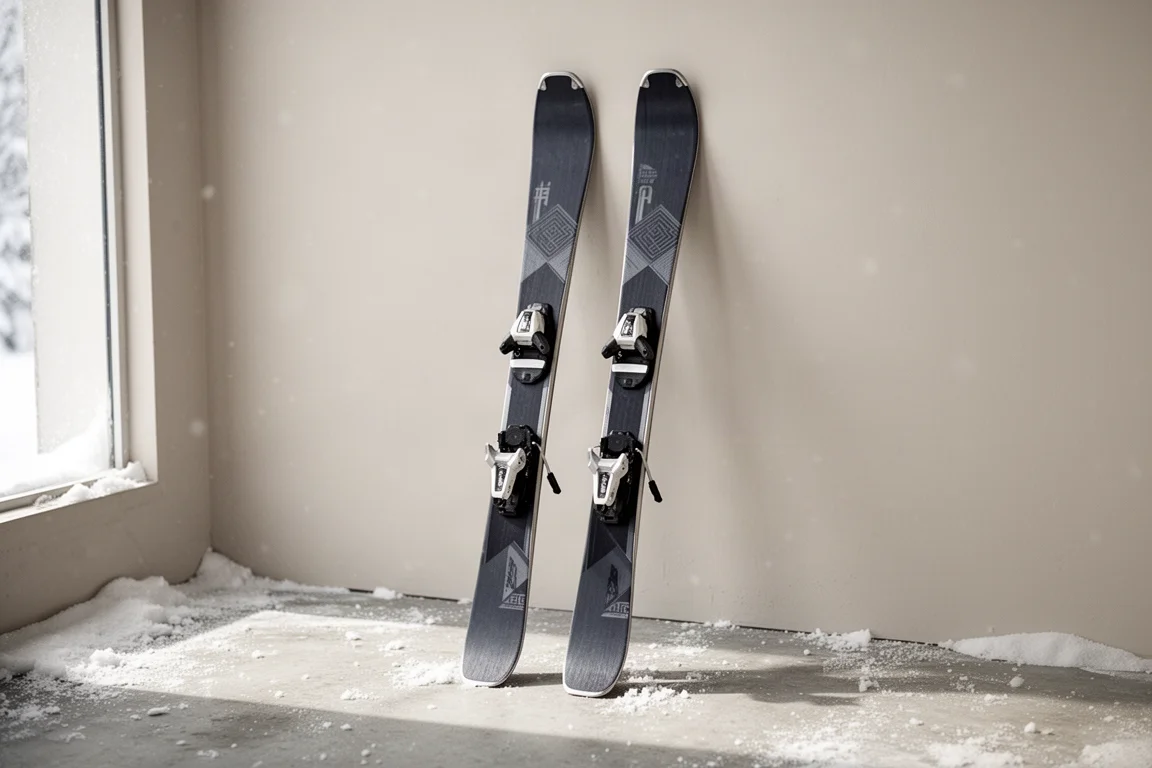
The Volkl Peregrine 76 returns for 2027 with the same construction, shape, and profile as the previous season, and the only visible change is a new graphic. That continuity matters for buyers: the ski has not been softened or reworked, so its character stays what it has been, a sturdy frontside carver with a build that leans toward race-room thinking.
At 76 mm underfoot it sits in the wider-bodied frontside category, which is a useful place to be for skiers who spend most of their time on groomed terrain but do not want a ski that only works on perfect corduroy.
Who the Peregrine 76 Is For
This is a ski for confident, technically solid skiers who want a strong, race-like feel underfoot without committing to a dedicated race carver. The platform rewards an active pilot: it likes to carve, it can be skidded, and with the right skills it will handle short turns and bumps.
It is not a first ski for someone still learning to hold an edge, and it is not aimed at skiers looking for a soft, forgiving flex.
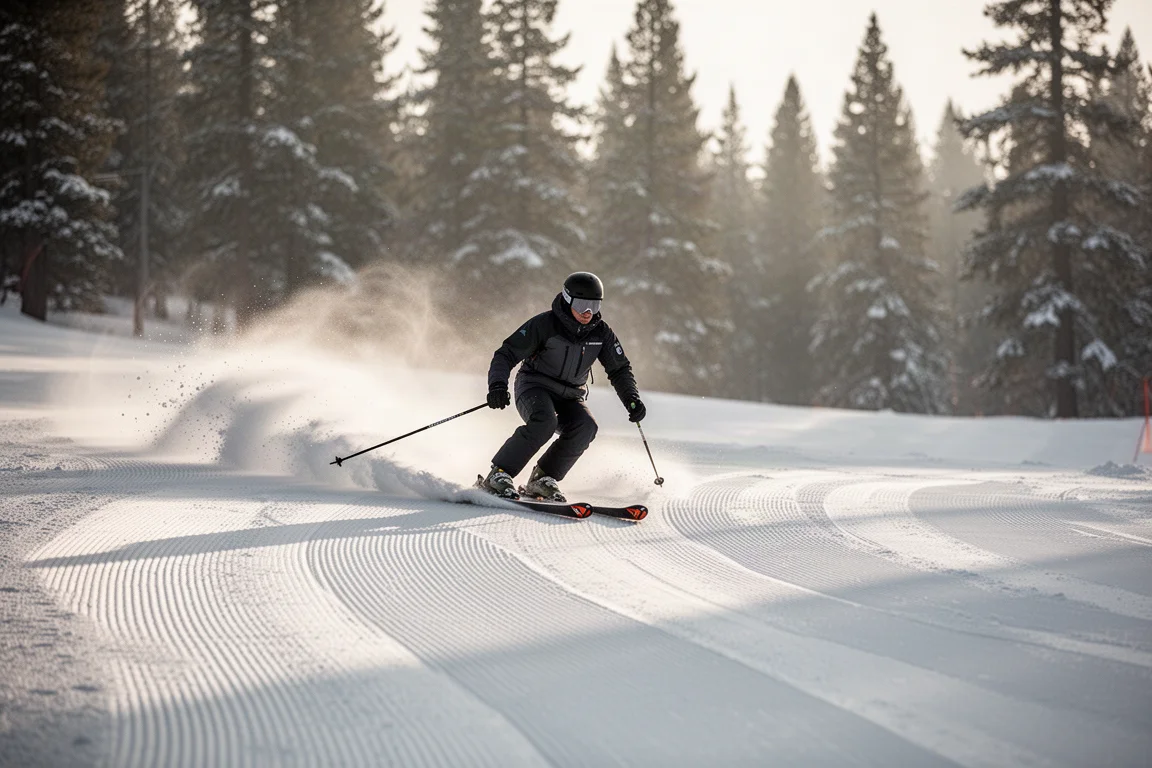
Skiers who divide their day between fast groomer laps and whatever the mountain offers after the fresh snow is tracked out will get the most out of it.
Construction and Build Quality
The core is a multi-layer wood build using poplar and beech, and the ski carries two full sheets of metal with narrower stringers. That combination gives it a rugged, race-adjacent construction rather than the lighter build found elsewhere in the Peregrine range.
It ships with an R Motion system binding. On the scale, a 176 cm pair comes in at 3,330 g. For context, the Peregrine 82 measured about 3,100 g, so the 76 carries roughly 200 g more per pair, a direct result of the denser wood core and the additional metal.
Carving Character and Turn Shape
Stiffness is high, but not absolute. There is enough give in the flex that skiers can work through the full arc of a turn rather than fighting a rigid plank, and that is a large part of what makes the ski enjoyable on groomed runs.
The turn radius is 17.6 m, which is longer than the 15 to 16 m figure common among comparable skis in this category. The result is an emphasis on larger, more GS-style arcs, so the Peregrine 76 suits skiers who like to let a turn run rather than snap off tight, quick shapes all day.
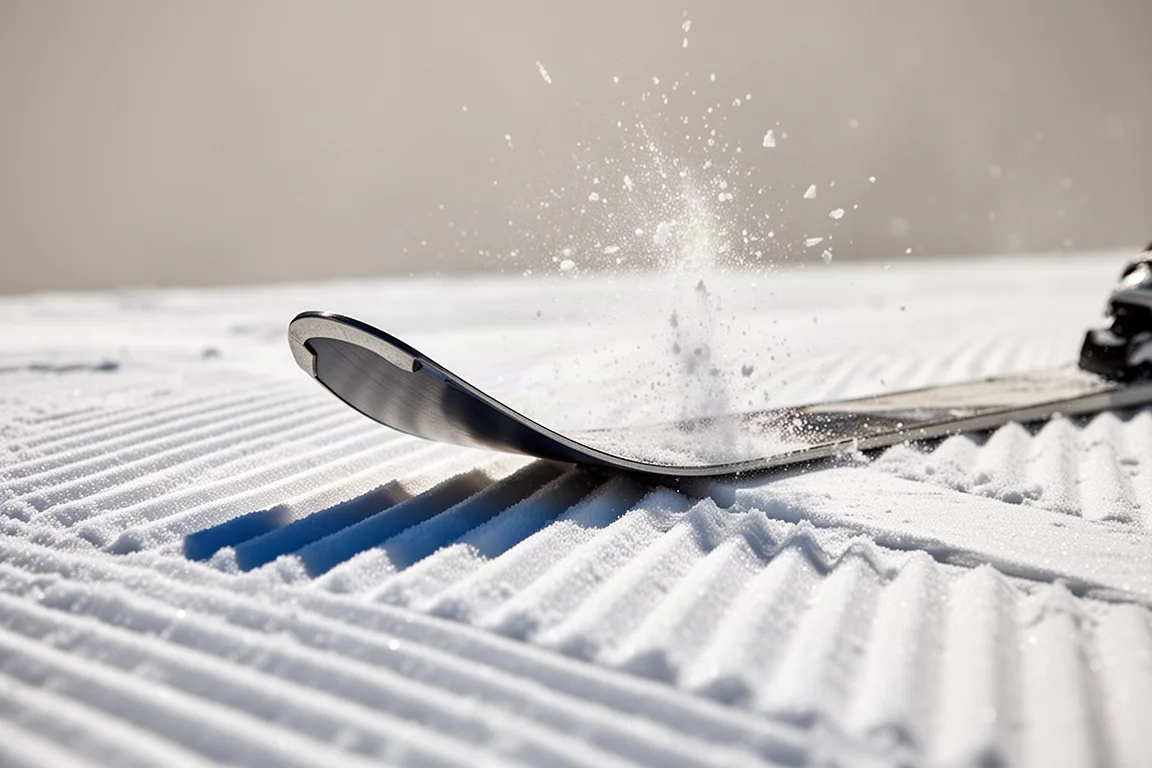
Skiers arriving from a shorter-radius carver will need a few runs to adjust to the longer arc, but the payoff is stability at speed and a smoother transition between turns.
Handling Broken Snow and Variable Terrain
Camber underfoot is modest, since Volkl builds its skis a little flatter overall. There is a slight tip rocker to help with initiation, and only a couple of millimetres of rocker in the tail to ease the finish of the turn. Neither is dramatic, but together they change how the ski behaves.
That flatter profile is what separates the Peregrine 76 from a fully dedicated frontside carver. It stays composed in broken snow and in anything that is not rock solid, and it can be drifted or thrown sideways when the terrain calls for it.
Where It Fits in the Peregrine Line
Within the Peregrine family, the 76 and the 72 stand apart. Their construction sits closer to a race-room build, with two sheets of metal and narrower stringers, while models such as the 80, 82, and V-Werks follow a different recipe.
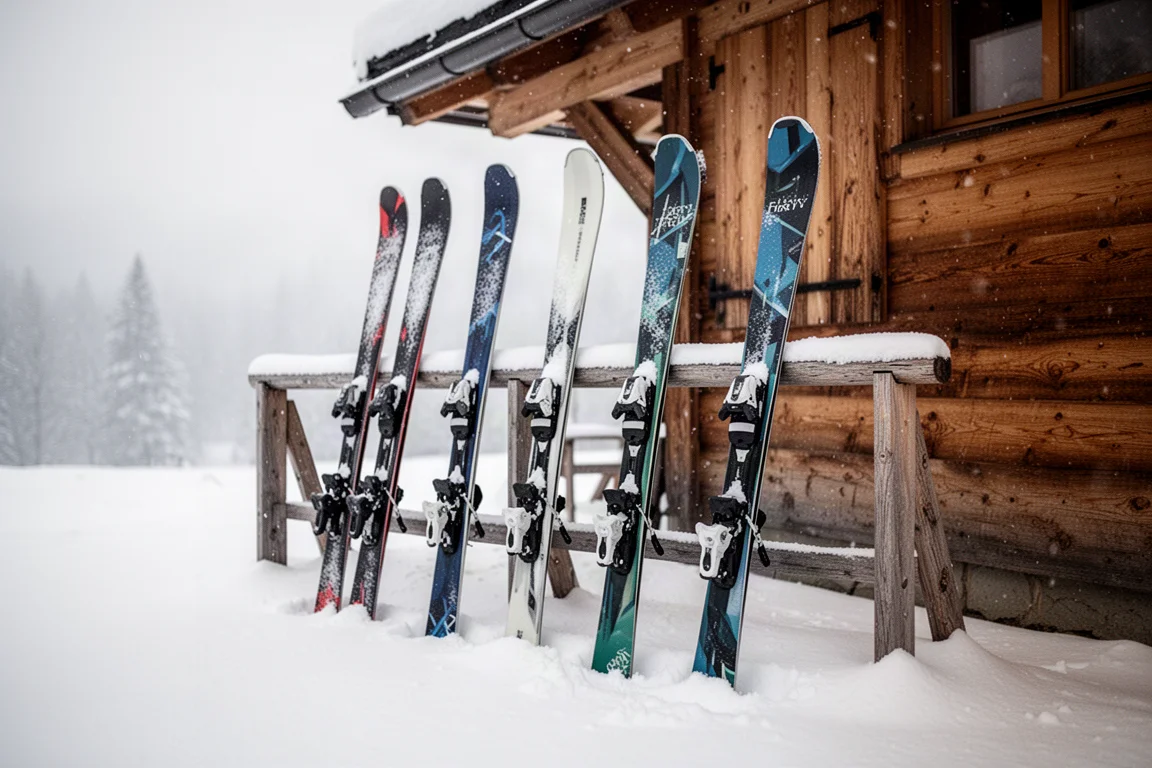
In feel, the ski lands close to burly frontside carvers such as the Stöckli Laser SC or the Blizzard HRC: strong, carving-oriented, and capable of short turns, skids, and bumps when the pilot has the skill to ask for them.
Things to Consider Before Buying
The extra weight relative to the Peregrine 82 is worth knowing about before you commit. That 200 g difference is a fair amount for a ski that will mostly live on groomed runs, and lighter skiers may notice it when manoeuvring at slow speed.
The stiffness and the longer radius are also deliberate choices. If your priority is tight, high-frequency short turns, or if you want a soft flex that flatters tired legs at the end of the day, this is not the shape or the build for you. It also asks for solid technique: the flatter profile is versatile, but it will not create performance the skier does not bring.
Buying Advice
Buy the Peregrine 76 if you want one ski that delivers a solid, race-like feel on groomed terrain and still allows you to slide the tail, drift through variable snow, and take on bumps without changing skis. It is a strong option for the skier who wants a burly frontside carver with a bit more range than a pure race model.
Consider a different model in the range if weight or a shorter turn radius matters more to you, or if you are still building the skills this platform expects. Match it to your ability and to the terrain you actually ski, and it will be a rewarding choice for groomer-focused days.
Conclusion
The Volkl Peregrine 76 for 2027 is unchanged where it counts. A poplar and beech core, two sheets of metal, a 17.6 m radius, and a relatively flat profile add up to a stiff, capable frontside ski that carves with authority but is not locked into perfect conditions.
For skiers with the technique to use it, that balance is exactly the appeal.
Product link
View more details for Volkl Peregrine 76
This product is mentioned in the review. Check the specifications, options, and compatibility before buying.
View more details for Volkl Peregrine 76Further reading
Related Reviews

Ski Gear
2023 Blizzard Hustle vs Rustler: Six Freeride Skis Compared
Blizzard's 2023 Hustle collection rebuilds the Rustler shape with a lighter core and no metal. Here is how all six skis differ, and which one suits your riding.

Ski Gear
2023 Skis of the Year: Atomic Maverick 88 TI, Salomon QST 106, and Look SPX 12 Pro
Three standout ski picks for all-mountain carving, powder days, and reliable binding performance, with practical buying notes for 2023 models.

Ski Gear
2025 Nordica Enforcer 104 Review: A Directional Charger Replaces the 104 Free
The 2025 Nordica Enforcer 104 drops the Free name and the twin-tip personality, gaining weight, stiffness and composure in rough snow. Here is what changed and who it suits.