All-Mountain Skis
Volkl M7 Mantra Review: A Refined All-Mountain Ski for 2025
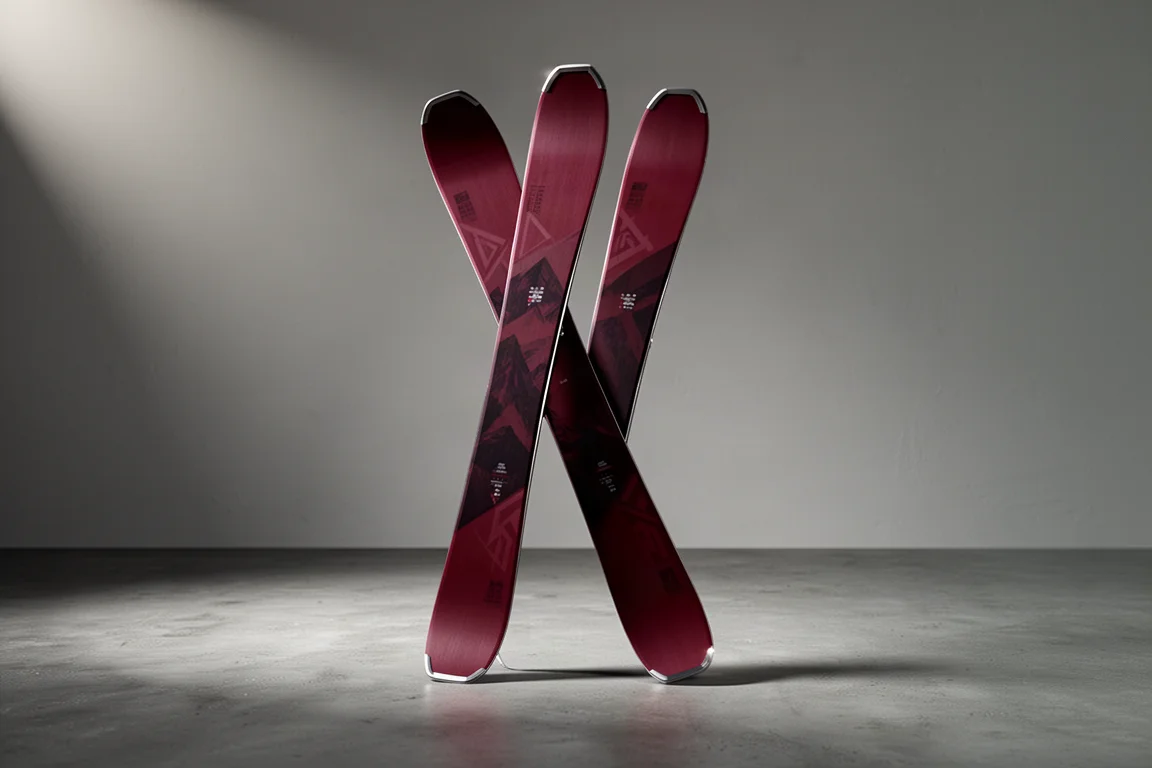
The M7 Mantra keeps the stiff, precise character of the Mantra line while adding a four-radius sidecut, a wider shovel, and small construction refinements.
Introduction
The Volkl Mantra has been one of the defining all-mountain skis of the past decade, and the M7 Mantra arrives as a refinement rather than a redesign. The 96 mm waist stays, the poplar and beech core stays, and the intent stays: a strong, precise ski that rewards a skilled driver on groomers and still holds up when the snow softens.
What changes is the turn shape, the shovel width, and a handful of construction details that address a known durability niggle from the previous M6 generation. The result is a ski that feels familiar from the first turn, but sharper at the top of the turn and more supportive underfoot.
Skiers who already like the Mantra will find the character intact. Skiers who wanted a livelier tip and more grip will notice the difference immediately.
What Changed for 2025
Construction changes are small. The multi-layer wood core still combines poplar with beech, and Volkl continues to place the denser beech along the edges and through the underfoot zone, mirroring where the metal sits rather than centralizing the stiffer wood in the middle of the ski. Underfoot there is a full sheet of metal, with a tailored titanal frame above it.
The frame carries wider metal in the forebody than the M6 did, with slightly shorter metal toward the top of the ski. The ends of the metal are also less pointy and angle inward where they meet the topsheet, which reduces the chance of the tip and tail catching and delaminating, an issue some M6 skiers ran into at the tail.
The tailored carbon tips get minor tweaks as well. The carbon stringers finish lower than before, and there are two additional lateral stringers, bringing the count to eight, tuned to match the new turn shape and sharpen initiation at the tip.
Weight barely moves. The M7 Mantra comes in around 2,081 grams against roughly 2,040 grams for the M6, a difference of about 30 to 40 grams. Flex feels effectively unchanged: still stiff and responsive, but with a round, cohesive bend rather than a punishing one.
The more visible change is the turn shape, which Volkl calls four radius drive. The previous 3D radius used a 30 m shovel, 18 m underfoot, and 24 m tail. The new ski runs 25 m at the tip, 40 m through the forebody, 17 m underfoot, and 22 m in the tail. Sidecut dimensions grow slightly to 139/96/121 from 135/96/119, adding width through the shovel. The overall profile is flatter, with less tail rocker and a slightly more abrupt finish at the tip.
On-Piste Performance
On groomers, the shorter tip radius is the first thing that registers. Turn initiation is crisp and precise, and the tail delivers more rebound than the M6, which was already a benchmark in its category for torsional stiffness and responsiveness. Underfoot edge grip is stronger too.
The four-radius sidecut works two ways. A skier can manage tip pressure and edge angle to feel each radius through the turn, or simply ski and let the shape do the work. It feels natural either way, and the ski gives back more than the input suggests.
Short turns improve as well. The livelier tip starts the turn cleanly, and the longer radius through the middle keeps the ski from feeling catchy. That said, the Mantra still lives in medium to long radii, where its stability and power are most obvious.
The important point is that nothing appears to have gotten worse. The M7 is more engaging on piste without giving up the qualities that made the M6 a reference point.
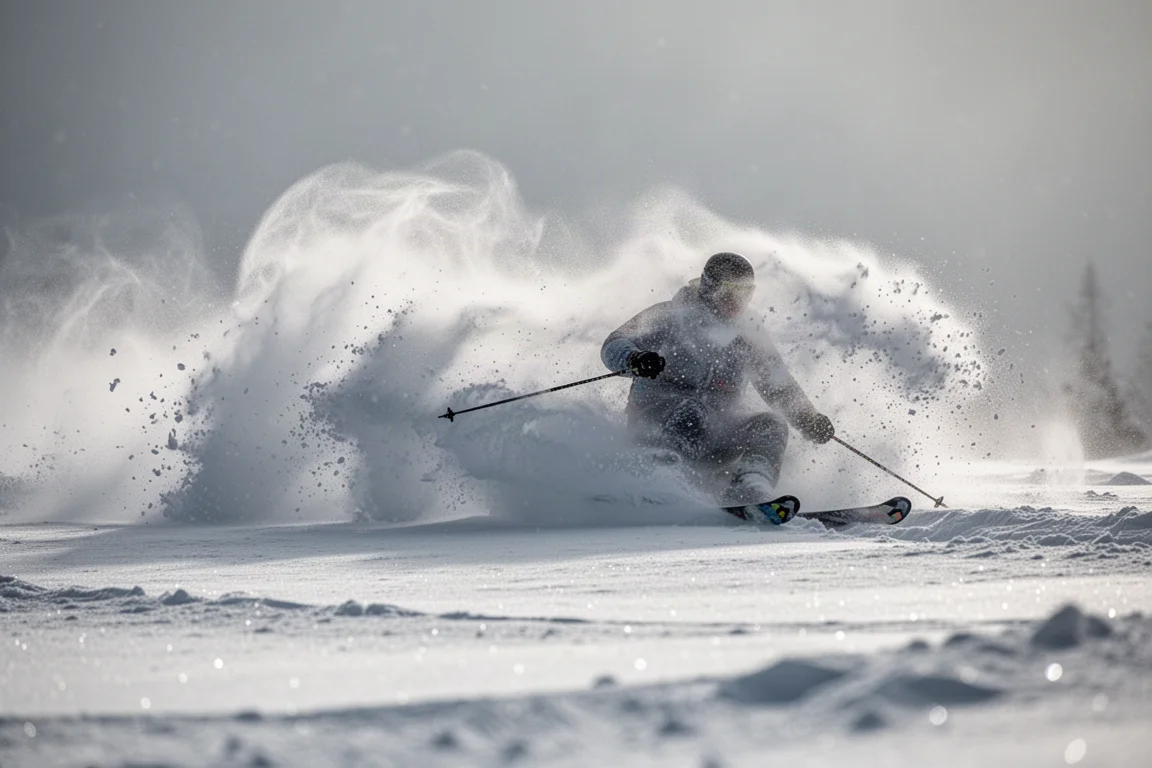
Skiers stepping onto the M7 from another all-mountain ski will notice how much stability is packed into a relatively short length. The 177 cm carries speed smoothly, and sizing up is not required to get that composure.
Soft Snow and Off-Piste Behavior
The extra width in the shovel earns its keep once the snow softens. It keeps the tip from diving and lets the ski plane on top of a few inches of soft spring snow, where the M6 had a tendency to auger in when a skier got too far forward.
The flatter profile and the straighter 40 m section through the forebody help in tighter, more technical terrain. The ski can be swiveled and skidded rather than forced, which is unusual for a ski in this performance bracket.
Moguls are a different story. The M7 is not a forgiving ski in firm, tight, angular bumps, and it asks for solid technique and light feet. Spring moguls are more workable, and narrower skis in the same family, such as the Mantra 88, are easier in that environment. In trees, quick feet and readiness for the next turn matter.
Where the M7 excels is wide, open terrain with a surface that is at least somewhat smooth: crud, chop, wind-affected snow, and days-old groomers. Softer, more playful skis such as the Blaze 94 and 104 are far easier in moguls and trees, but the Mantra holds its stability and power better on groomers and in soft spring snow, and it never wallows.
Who This Product Is For
The M7 Mantra suits advanced and expert skiers who spend most of their time on groomers, keep their feet on the ground, and want precision and responsiveness rather than raw power. That profile covers a large share of the skiing population, which explains the Mantra’s popularity.
Within the same width range, the Enforcer 94 and the Anomaly 94 lean toward raw power, while the Rustler 9 is more playful and sits further away in feel. The Anomaly 94 and Rustler 9 bracket the Mantra in width. The M7 remains relatively demanding and asks for a competent pilot, but it gives back a more precise, more rewarding ride than the power-first alternatives.
It also makes sense for skiers in Colorado or Utah who mostly stay on groomers but want a ski that still performs when a soft morning arrives.
If your days are split evenly between bumps, trees, and groomers, a more playful ski will likely serve you better. If the groomer is home base and you want a ski that rewards good technique, this is the target audience.
Things to Consider Before Buying
The M7 is an enhancement, not a reinvention. Skiers who could not tell the M6 and M7 apart with the topsheets covered would not be a small group, so owners of a healthy M6 have little reason to rush.
It is also not a forgiving ski. In firm moguls and tight trees, it exposes technique gaps, and it requires more work than narrower or softer alternatives.
Length is worth thinking about. The 177 cm made the strongest case, and there is no need to upsize to get smoothness at speed. Skiers who spend their time in big Western terrain may prefer the 184 cm, but the shorter option is not a compromise for most.
Two naming notes for the rest of the lineup. The Kendo is now the Mantra 88 and the women’s counterpart is now the Secret 88, though neither ski receives the M7 updates. The Mantra 102 also does not get these changes yet. The Secret 96, the women’s counterpart to the M7, shares the same construction, shape, and profile, differing only in graphics and length options.
Buying Advice
The M7 Mantra is available now, and the previous M6 generation is still being sold while stock lasts, with pricing on the older model tending to drop later in the season. Buyers who want the latest turn shape and the small construction refinements should go with the M7. Buyers who want the same core character for less should look at the M6 while it is still around.
For sizing, 177 cm covers most skiers in this category. Choose 184 cm if you ski big, open terrain at speed and want the extra platform.
Either way, budget for a ski that expects a skilled driver. The M7 Mantra is not a beginner-friendly all-mountain ski, and that is precisely why it performs the way it does on groomers.
Conclusion
The M7 Mantra is a careful, well-judged update: a sharper tip, more rebound, more edge grip, and a wider shovel that helps in soft snow, all without giving up the stability that defines the line. It remains a demanding ski that rewards good technique, and for the right skier, that trade is exactly the point.
Product link
View more details for Völkl M7 Mantra
This product is mentioned in the review. Check the specifications, options, and compatibility before buying.
View more details for Völkl M7 MantraFurther reading
Related Reviews
All-Mountain Skis
100mm All-Mountain Skis Compared: 23 Versatile Models Worth Knowing
A practical walkthrough of 23 all-mountain skis around 100mm underfoot, covering weight, rocker, metal construction, and the rider each model suits best.
All-Mountain Skis
2026 Black Crows Camox Review: A More Stable, More Versatile All-Mountain Twin Tip
The 2026 Black Crows Camox adds an ash layer underfoot, wider tips and tails, and a revised rocker profile. Here is what those changes mean on snow.
All-Mountain Skis
Armada Antimatter 88 Review: A Light, Lively All-Mountain Ski That Rewards Any Style
The Antimatter 88 pairs a poplar core with carbon stringers for a surprisingly energetic ride that suits intermediates and experts alike.