All-Mountain Skis
100mm All-Mountain Skis Compared: 23 Versatile Models Worth Knowing
A practical walkthrough of 23 all-mountain skis around 100mm underfoot, covering weight, rocker, metal construction, and the rider each model suits best.
Introduction
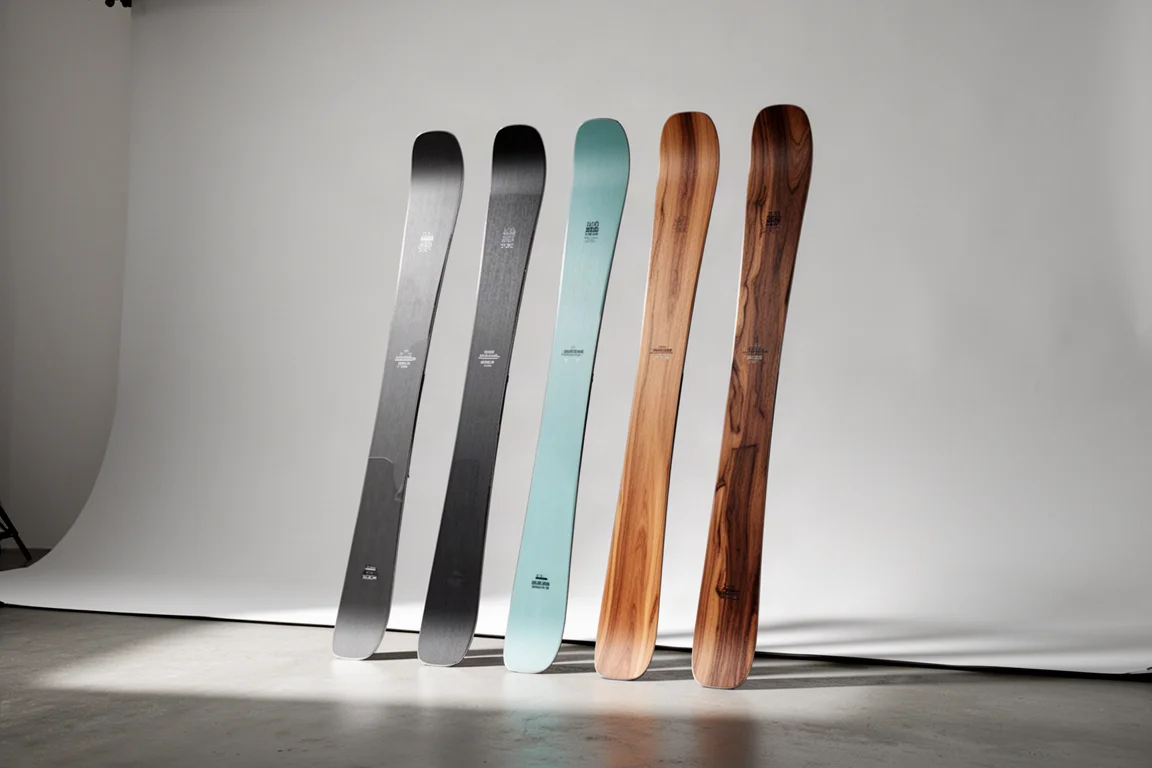
A ski around 100mm underfoot sits in the most versatile part of the market. It is wide enough to stay on top of soft snow, narrow enough to hold an edge on firm groomers, and balanced enough to be the one pair many riders reach for most days of the season.
The 23 models below all live in that space, yet they feel remarkably different from one another. Some are built around metal laminates and long turn radii for high-speed carving. Others use carbon, vertical metal struts, or lighter wood cores to chase float, agility, and playfulness in trees and soft snow. This comparison walks through what separates them, listed alphabetically.
How to Read This Comparison
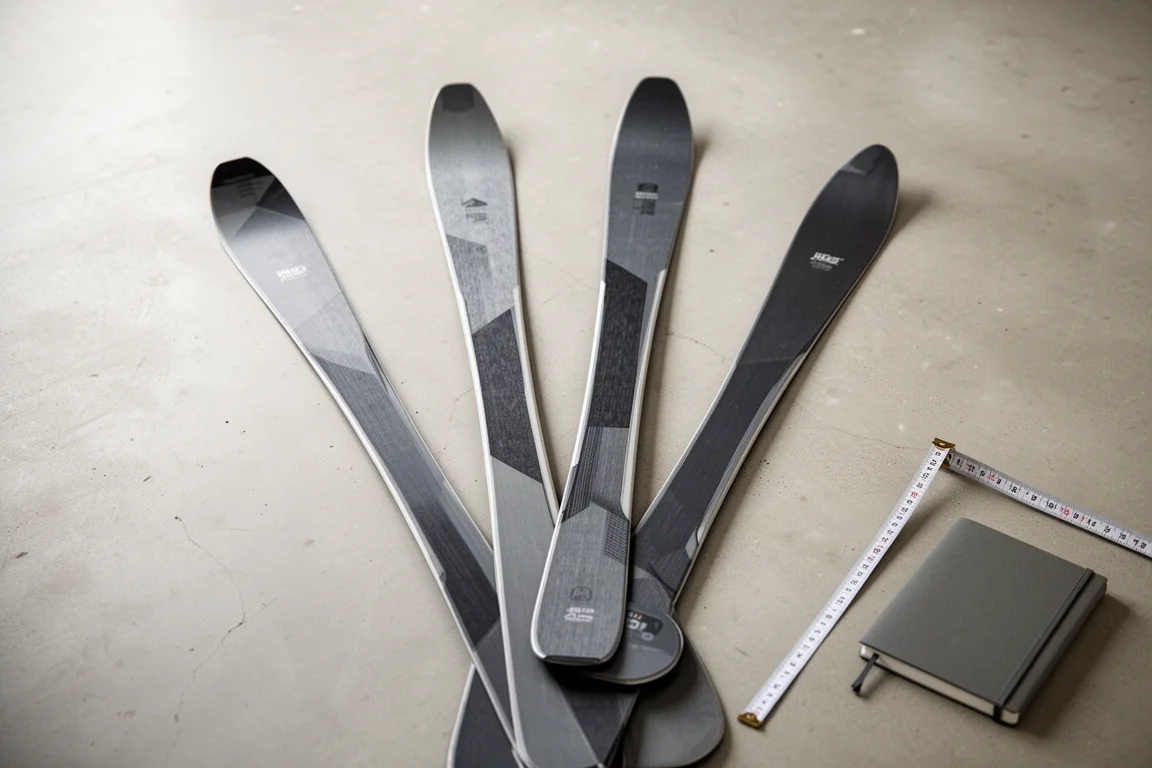
Four attributes do most of the work in this category, and understanding them makes the differences between these skis far easier to predict.
Weight comes first. Skis here range from roughly 1,700g up to well over 2,200g. Lighter skis are quicker to move around, easier to bend, and less tiring over a long day, but they deflect more in chop and tracked-out snow. Heavier skis track better and feel more planted, at the cost of fatigue.
Turn radius and rocker profile come next. A shorter radius with generous tip and tail rocker produces a loose, surfy, pivot-friendly ski. A longer radius with a flatter tail produces a ski that wants to run and finish a carve.
Construction ties it together. Full metal laminates add dampness and edge grip. Partial sheets, vertical metal struts, and metal top sheets aim for similar composure with less mass. Carbon adds energy and stiffness at low weight.
Finally, consider whether the ski is directional or twin-tipped. That single decision narrows the field faster than any spec sheet.
Armada Declivity 102 Ti
The Declivity 102 Ti returns unchanged apart from a new top sheet graphic, which makes it a dependable reference point for the category. A wood core is paired with the brand’s articulated titanal banding, adding strength, stability, and vibration damping without making the ski feel heavy.
There is a healthy amount of rocker, and the result is an unusually even mix of characteristics. Edge grip is strong and the ride is quiet at speed, yet the ski stays agile and carries a freeride-influenced surfiness. At around 1,930g it lands squarely in the medium weight bracket, and the tapered tail has a pronounced kick that launches you into the next turn.
Atomic Bent 100
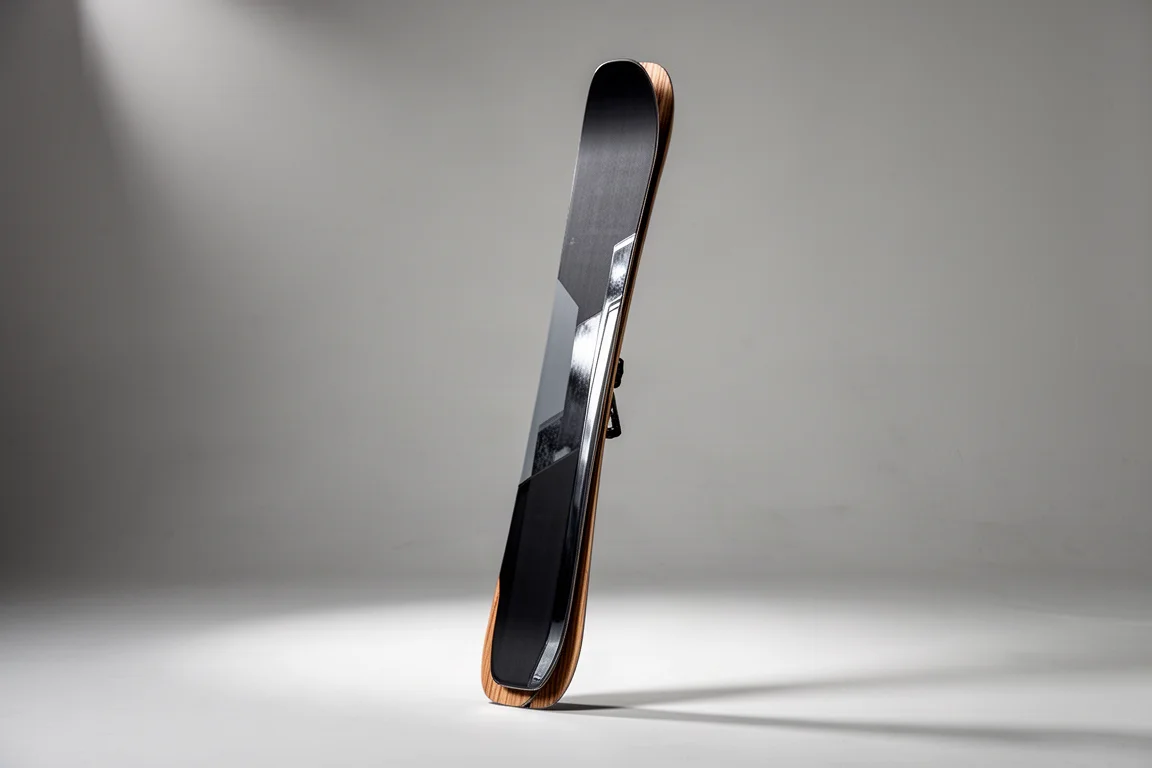
The 90, 100, and 110 widths now go by Bent, while the 120 keeps the full Bent Chetler name. Nothing changed structurally, and the updated top sheet gives the graphic real depth when you see it in person.
Underfoot it is a 100mm freestyle twin tip with a wood core, camber underfoot for snap, and rocker in the tips and tails. Horizon Tech in the tips and tails helps it plane like a boat hull. It sits firmly on the playful side of the spectrum, and it is one of the best tree skis around when the snow is fresh.
View more details for Atomic Bent 100
Atomic Maverick 100
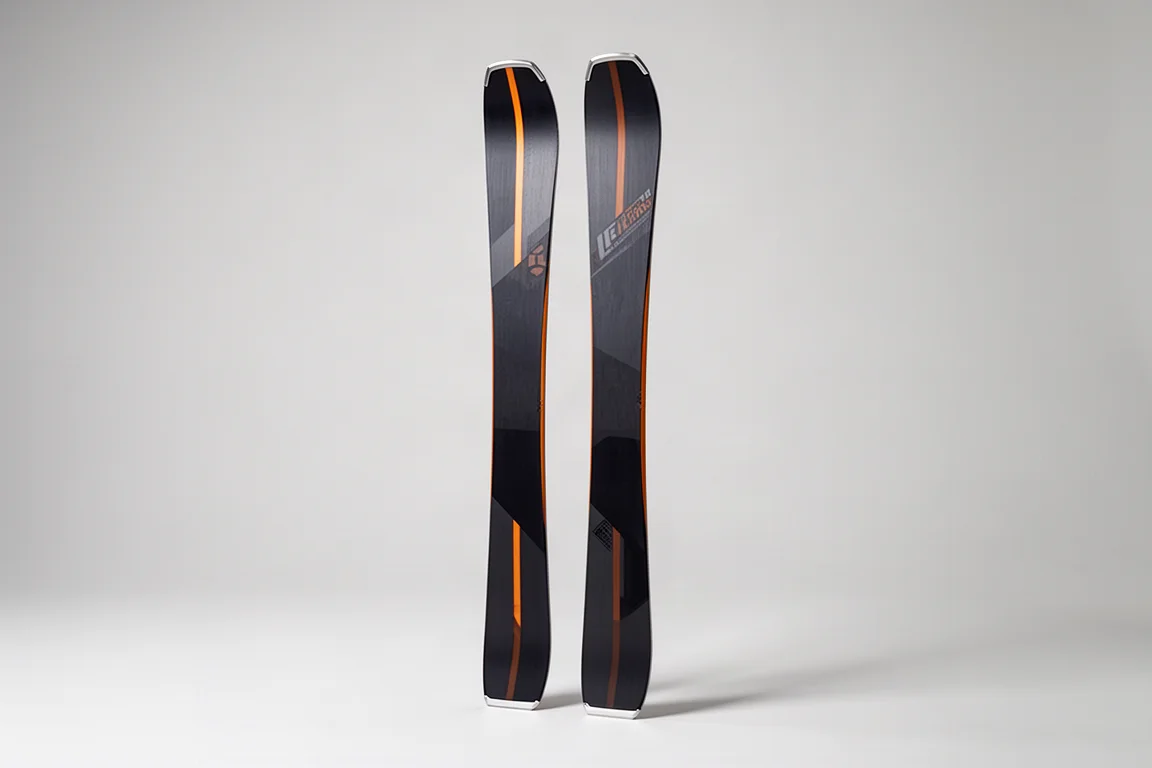
The Maverick 100 is a striking piece of engineering: it weighs less than the Bent 100 despite carrying sheets of metal. That combination of power, vibration damping, and low weight is one of the more impressive developments in the category.
The tail is stiffer, stronger, and flatter than the Bent’s, so it prefers to complete a carved turn with authority instead of washing out early. It remains agile and quick, and it rewards a rider with solid technique and distinct movements. It will deflect more than heavier options in chopped-up snow, but those heavier skis are far more tiring in the trees.
Black Crows Justice
The Justice carries over its shape and construction, and the version here wears the previous season’s graphic. Around 100mm underfoot, it pairs metal underfoot and H-shaped plates running along the sides of the forebody and tail with a pronounced tail rocker.
That combination produces precise edge-to-snow contact and a playful, freeride personality at the same time. It stays tracked and true when snow switches from firm to soft and back again, and it releases the tail without losing stability underfoot. The jump from the 183 to the 189 is substantial.
Blizzard Bonafide 97
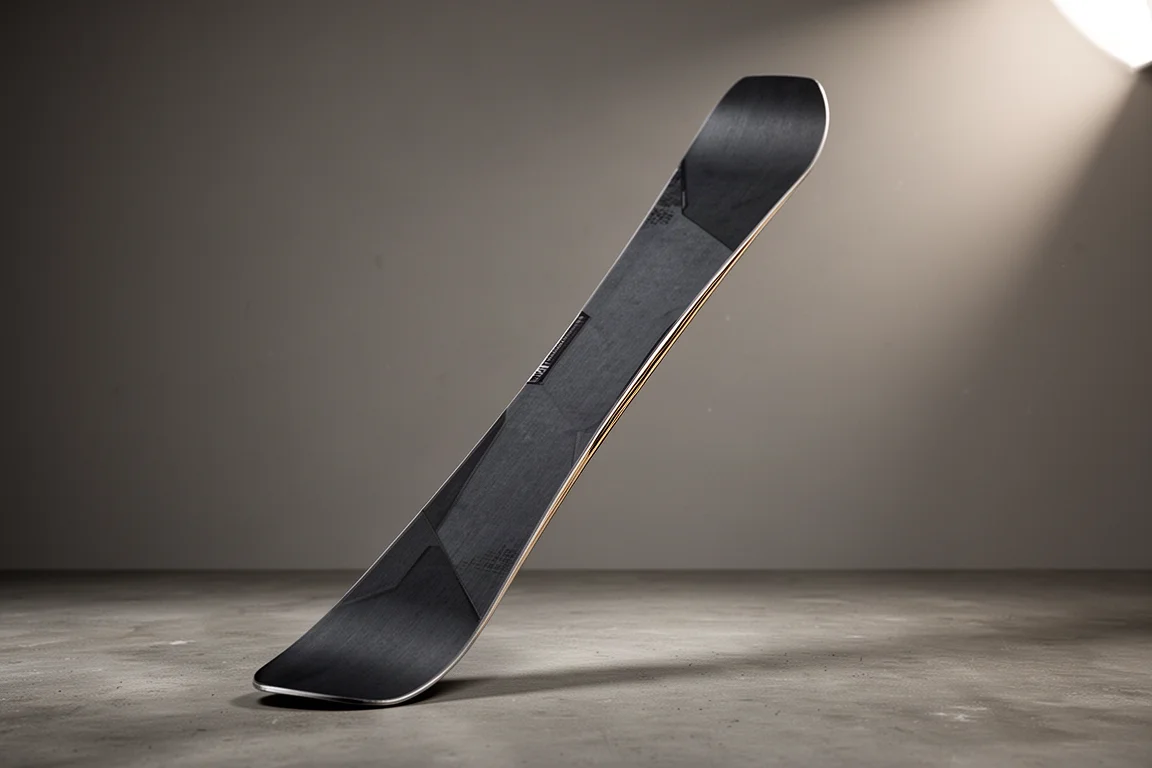
The Bonafide 97 is the narrowest ski in this group and the strongest, stiffest, most powerful, and most responsive of the bunch. It carries two and a half sheets of metal, more than anything else here, and tips the scales above 2,200g in the 183.
If you want endless stability and tremendous edge grip, little else in this width delivers the same. It is not a ski for an intermediate still working on carved turns, and it is fatiguing in trees, but its on-trail performance is undeniable. Most riders are better served by the 177 than a longer length.
DPS Pagoda 100
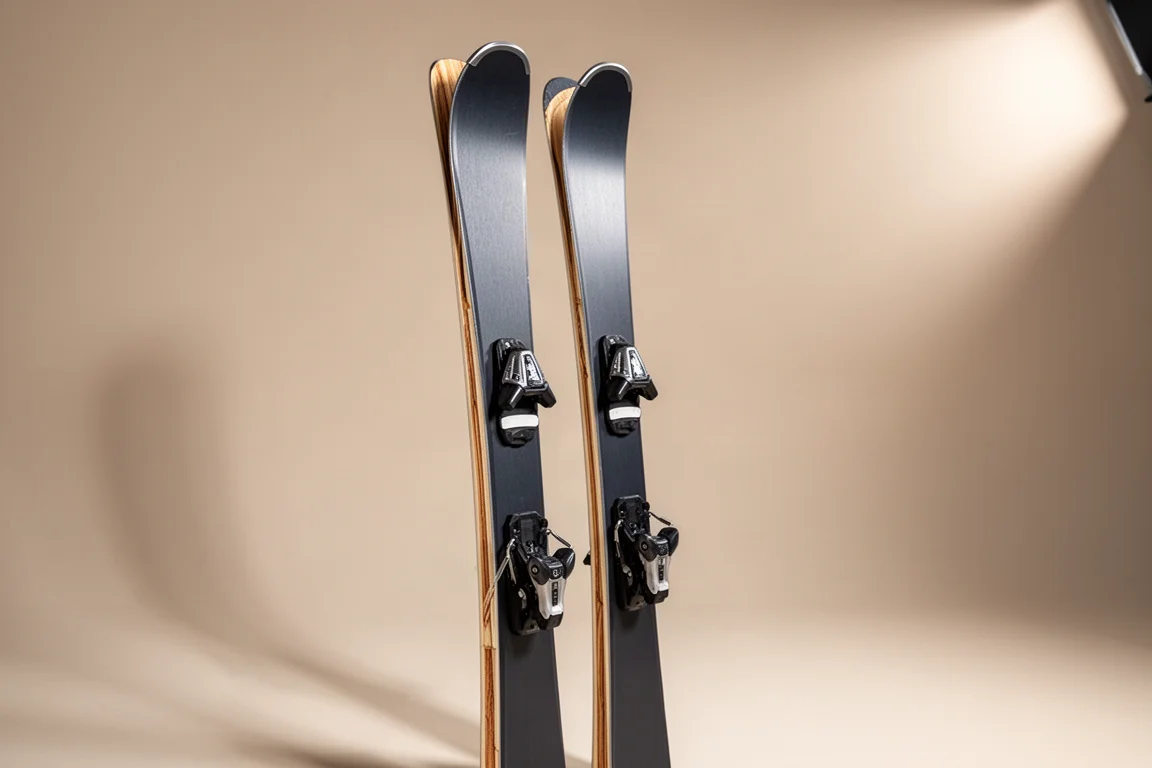
The Pagoda 100 uses two sheets of carbon for energy, but its defining feature is the RP shaping built around a 15-meter turn radius. Taper and rocker are adjusted to hit that radius, and the profile becomes more dramatic as the ski gets longer, which is why the shorter lengths look unusual.
It is directional, stiff, and energetic in the tail, and it rewards a centered stance. On firm snow it carves nicely at moderate speeds in medium and shorter arcs thanks to the short effective edge, though it is not built for running flat out down the fall line.
Dynastar M3 99
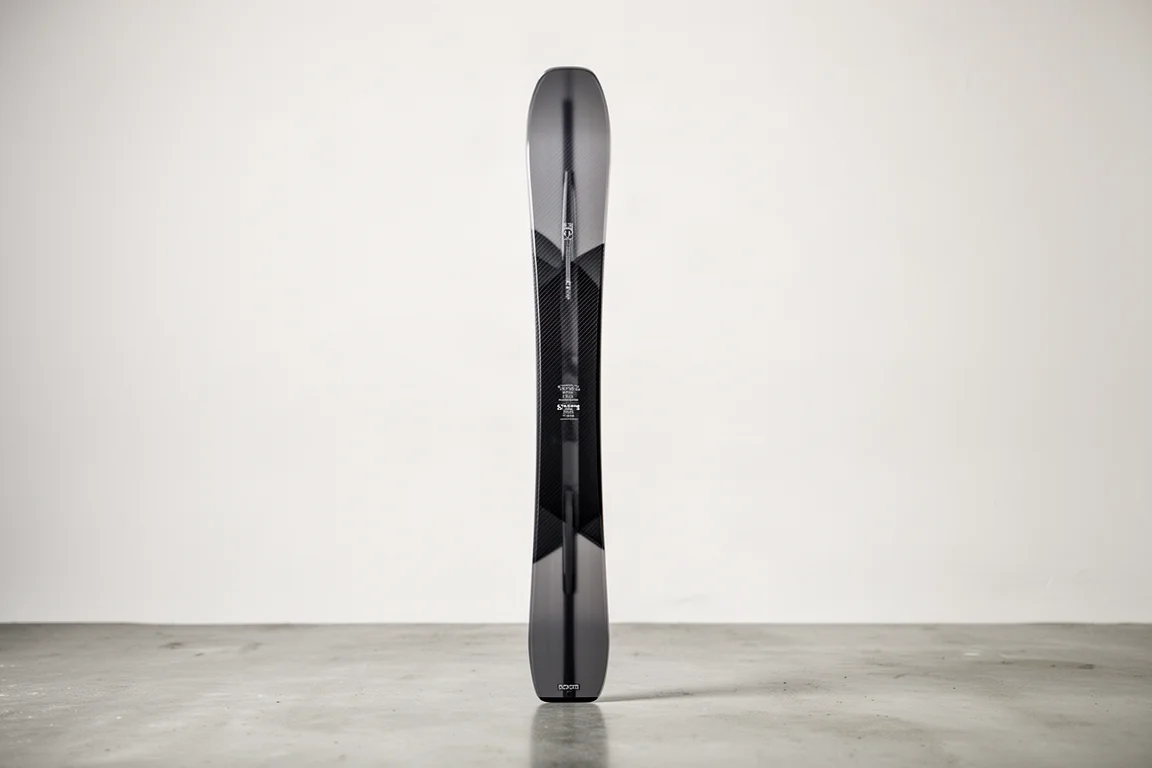
The M3 99 is agile, playful, supple, and smeary, with a clear freestyle influence in its shape. A hybrid core with polyurethane delivers an impressive blend of maneuverability and vibration damping, and the forgiving flex pattern means it rarely feels locked into a turn.
That makes it one of the most forgiving skis here and a genuinely excellent tree ski, essentially a narrow powder ski borrowing the profile of its wider sibling. At around 2,000g in the 185 it has real substance, but it is not a ski you drive from the tip. Lighter riders get the most out of it.
Dynastar M-Pro 99
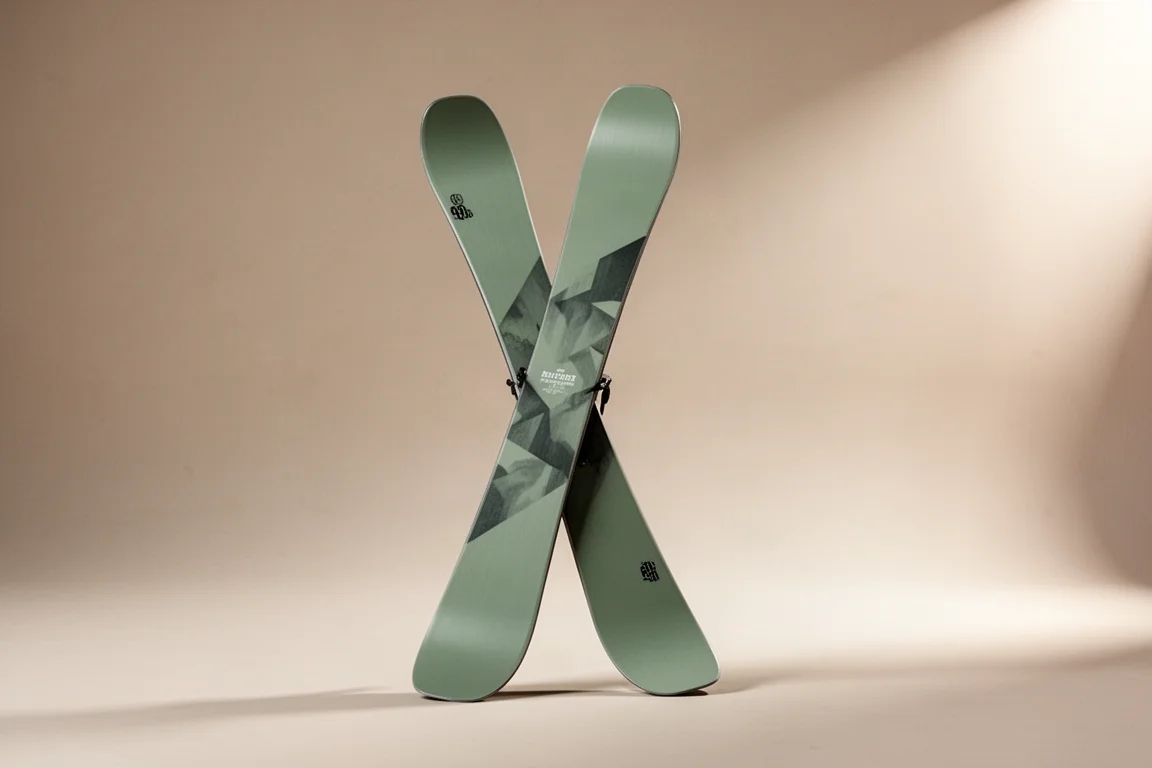
Same width as the M3 99, completely different character. The M-Pro 99 adds metal and a much flatter tail, with generous splay in the tip and a businesslike rear half. The metal ends exactly where the rocker begins, lining up power with power and playfulness with playfulness.
There is a lot of camber underfoot, so grip and snap are excellent, and the hybrid core brings polyurethane damping to the mix. At 1,850g in the 178 it carries a 20-meter turn radius, and the 186 runs closer to 23 or 24 meters. It is a ski that wants to be told what to do.
Riders who have been shopping the Bonafide, Enforcer, or Mantra family should give this one a closer look. It satisfies many of the same demands while feeling distinctly its own thing.
Fischer Ranger 102
This is the successor to the Ranger 102 FR, and the changes are well judged. It remains extremely well-rounded, playful, and genuinely strong, but it is quieter and smoother at speed, addressing the one real complaint about the previous version.
Soft tips and tails make turn initiation easy, which lighter riders will appreciate, and it is easier to ski than an Enforcer 100 without surrendering much stability or edge grip. At roughly 2,050 to 2,100g in the 183 there is real heft, and the difference between the 183 and the 176 is noticeable, so sizing matters.
Head Kore 99
The headline change is a proper top sheet. Previously the laminate was left exposed, which saved weight but drew complaints about chipping. The top sheet adds durability and another layer of quietness, making the ski noticeably smoother than earlier versions.
At 1,724g it is the lightest ski here per centimeter of length, and also the stiffest. That combination delivers lightweight performance, agility, grip, and power in one package. It is highly technical and reacts instantly to every input, which makes it superb in trees and unforgiving for riders with questionable technique. The 177 is a sweet spot.
View more details for Head Kore 99
K2 Mindbender 99Ti
The Mindbender 99Ti keeps its core concepts and refines them. It sits right in the middle of the road for both performance and weight at roughly 2,000g, which makes it easy to grab without thinking about conditions.
Longer tail rocker than before nudges it closer to skis like the Justice and the Stance 102, adding freeride influence and making it easier to pivot and slash. Metal positioned through the forebody along the edge and a strong flex pattern keep it precise, so you can still lay into it and get a powerful response. It is friendlier and more drifty than the outgoing model.
View more details for K2 Mindbender 99Ti
Kastle MX98
The MX98 is a precision instrument, and it takes real work to reach its ceiling. It uses a central core of denser wood with less dense stringers on the outside, plus two sheets of metal, and a squared-off tail that speaks to its on-trail intentions.
The construction change this year is a shift from individually laminated fiberglass to a pre-preg laminate, which makes it slightly stiffer. The difference is subtle on snow. With only a slight tip rocker and effectively a flat tail, it behaves like a wide carving ski: heavy, demanding, and happiest at high speed on firmer snow. It is priced like the high-end tool it is.
Kastle ZX100
Where the MX98 is a wide carver, the ZX100 is a narrow powder ski, borrowing the profile of the ZX108 and slimming it down. The tip is wide, Hollow Tech keeps mass low, and there is very little tail rocker, making it a truly directional soft-snow ski.
It is among the best floaters in this group, rivalled mainly by the Salomon QST 98. There is no metal, so it gives up vibration damping and edge hold compared to the MX98, but it is extremely quick, floaty, and agile. Technical riders will get the most from it, and for many quivers it is wide enough to serve as the dedicated powder ski.
Liberty Evolve 100
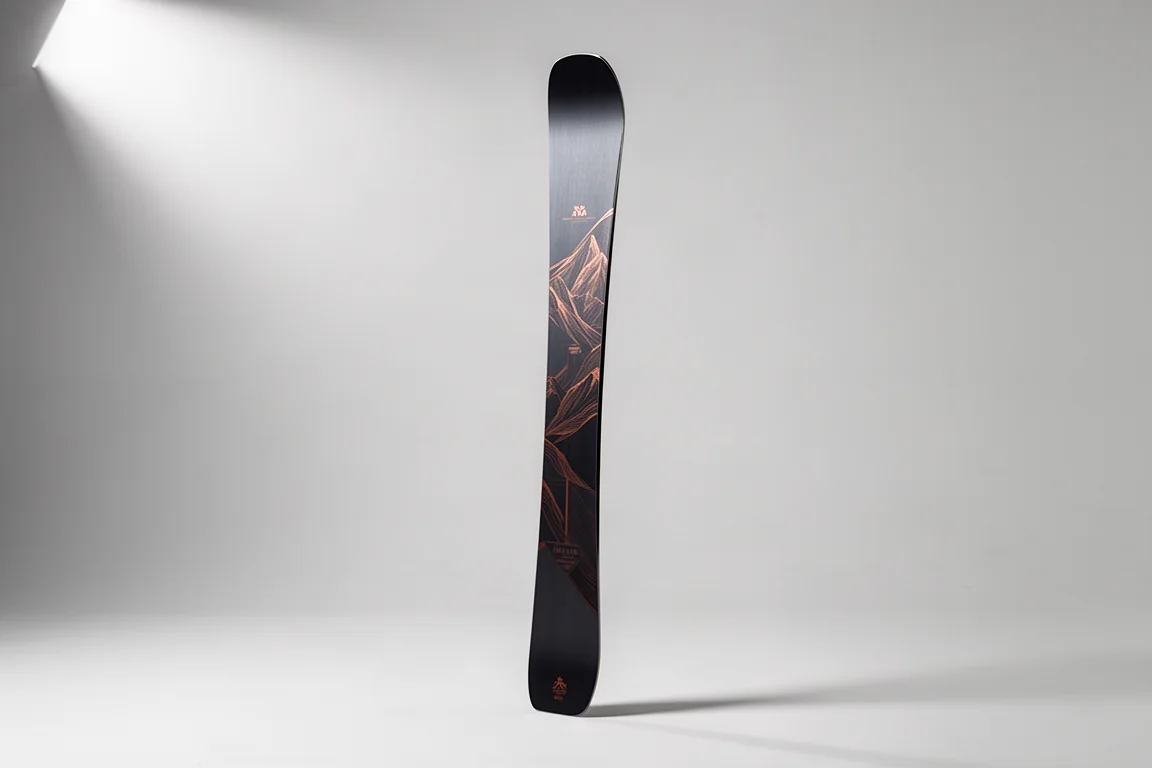
The Evolve 100 is a wide carving ski with a frontside personality, occupying the same territory as the MX98 but arriving there differently. Bamboo and aspen form the core, supported by three vertical metal struts and carbon stringers.
A notably thick sidewall profile puts more distance between your foot and the snow, and the vertical metal acts like a tuning fork, filtering out vibration. At 1,915g it is lighter than a Bonafide or an MX98. A low-profile tip, minimal splay, no taper, a long effective edge, minimal tail rocker, and camber underfoot add up to a very smooth, very quiet ride.
View more details for Liberty Evolve 100
Liberty Origin 101
The Origin 101 blurs directional freeride and freestyle. It is not quite a twin tip, but it has twin tip characteristics and a rounded tail. Tip rocker is among the most generous here, with plenty of tail rocker as well, producing a surfy, agile feel and an easy tail release.
Just under 2,000g, it carries a single VMT 1.0 vertical metal strip for stability without much metal by mass. It is also by far the most flexible ski in this comparison, with a thin maple macroblock core and razor-thin tips and tails. Think of it as a wide jibbing ski that is happiest at lower speeds and in soft snow.
Nordica Enforcer 100
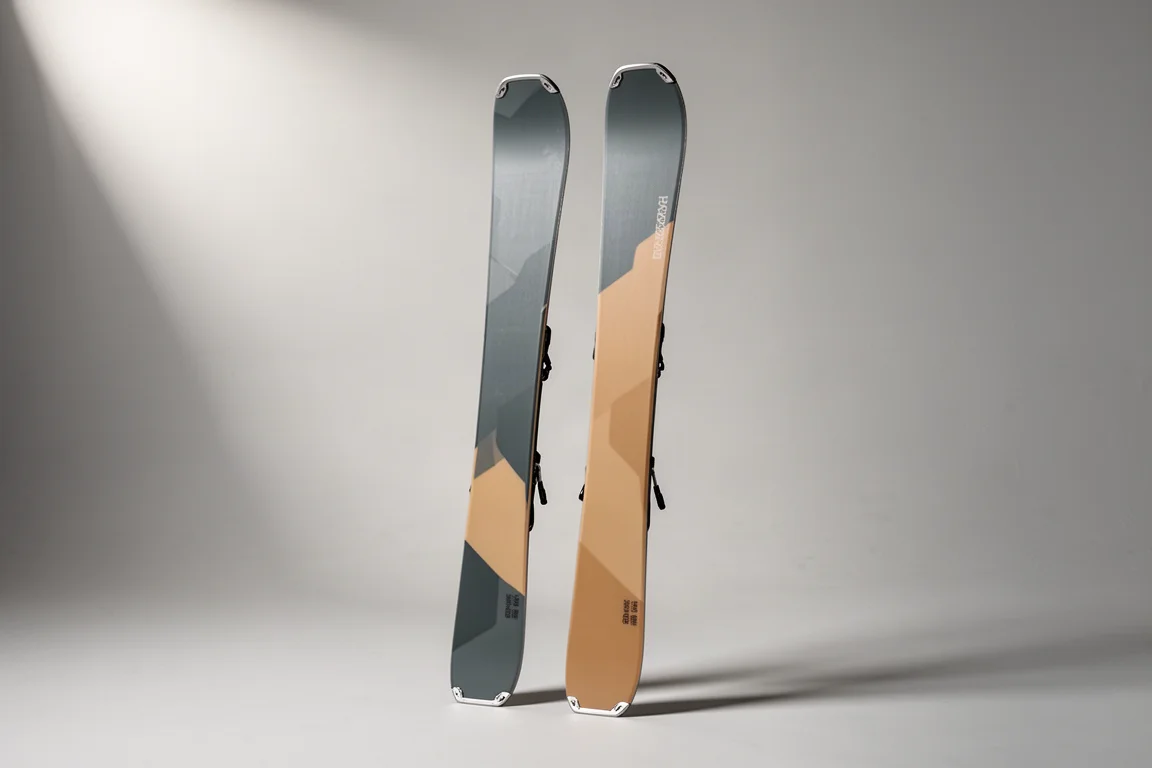
If one ski defines this category, it is the Enforcer 100. Two thin sheets of metal and a denser wood core produce a powerful, smooth, and remarkably intuitive ride, and its longevity speaks for itself.
Its turn radius is shorter than most skis carrying this much metal, which makes it more approachable and less work to bring across the fall line than something like the MX98. The trade-off is weight: over 2,100g in the 179 and heavier above that. It is not as demanding as some skis here, but it is tiring, especially when you are maneuvering through trees. It also floats far better than its weight suggests.
That blend of maneuverability, off-trail capability, and strong on-trail performance is what made this shape so influential, and it remains one of the most versatile options on this list.
Nordica Unleashed 98
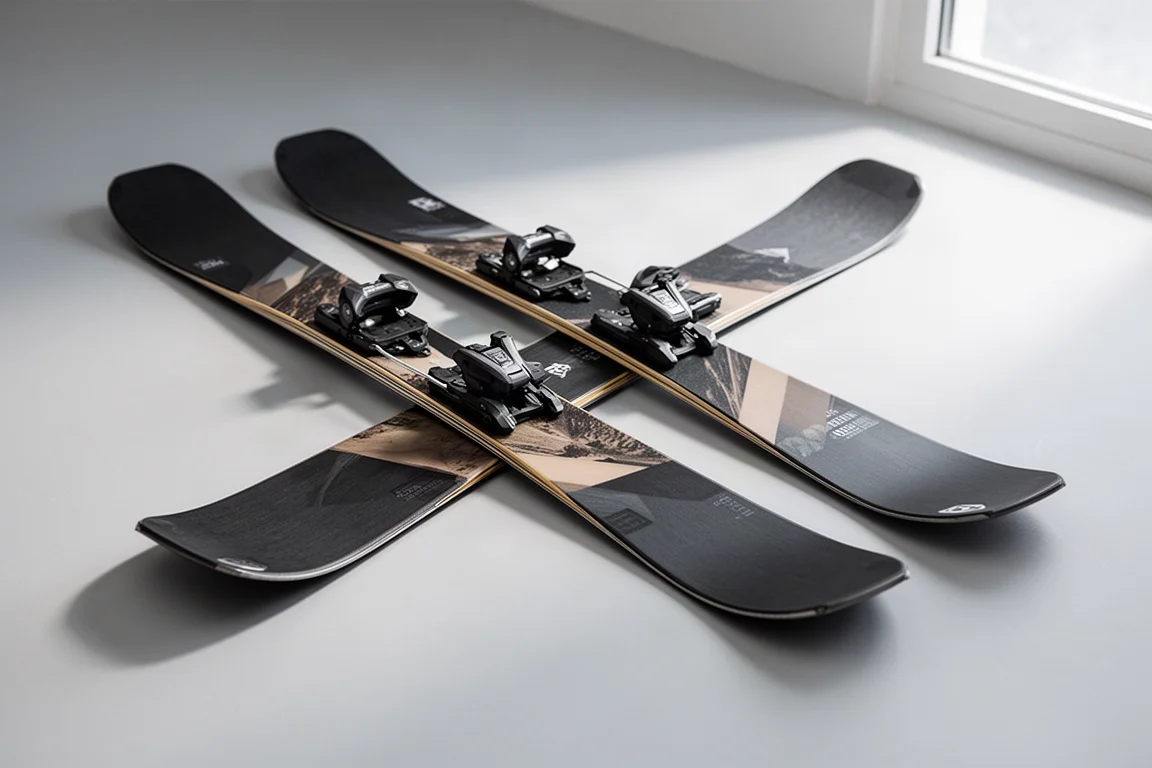
New this year, the Unleashed 98 takes over the slot the Soul Rider 97 held. It borrows the construction of the Santa Ana: a lighter wood core with a sheet of terrain-specific metal that is left open along the sides, producing a twin tip with metal.
There is more camber than the Enforcer, a more splayed tip, and a longer effective edge, which together generate a serious amount of energy. At around 1,800g it stays manageable. Twin tips with real construction are a growing category, and this is a strong example of why that matters.
Rossignol Black Ops 98
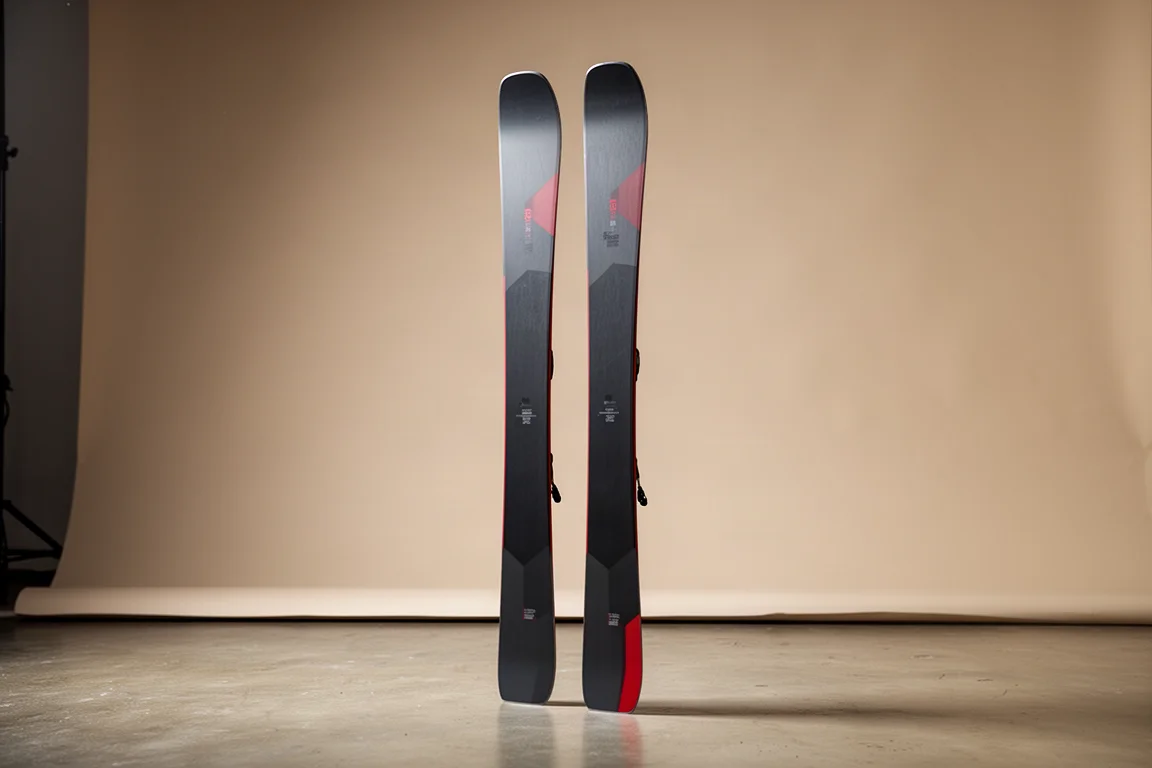
The Black Ops 98 shares a concept and a general shape with the Unleashed 98, but it leans on camber underfoot rather than metal. Fiberglass laminates, epoxy, and rubber in the tips and tails create a very damp, quiet ride.
At over 2,000g it is roughly 100g heavier than the Unleashed, which can translate into more stability for a directional skier. The name has changed over the years while the ski itself has stayed consistent, and it has impressed a long line of powerful, freestyle-influenced riders. It feels like a freeride ski where the Unleashed feels like a twin tip.
Salomon Stance 102
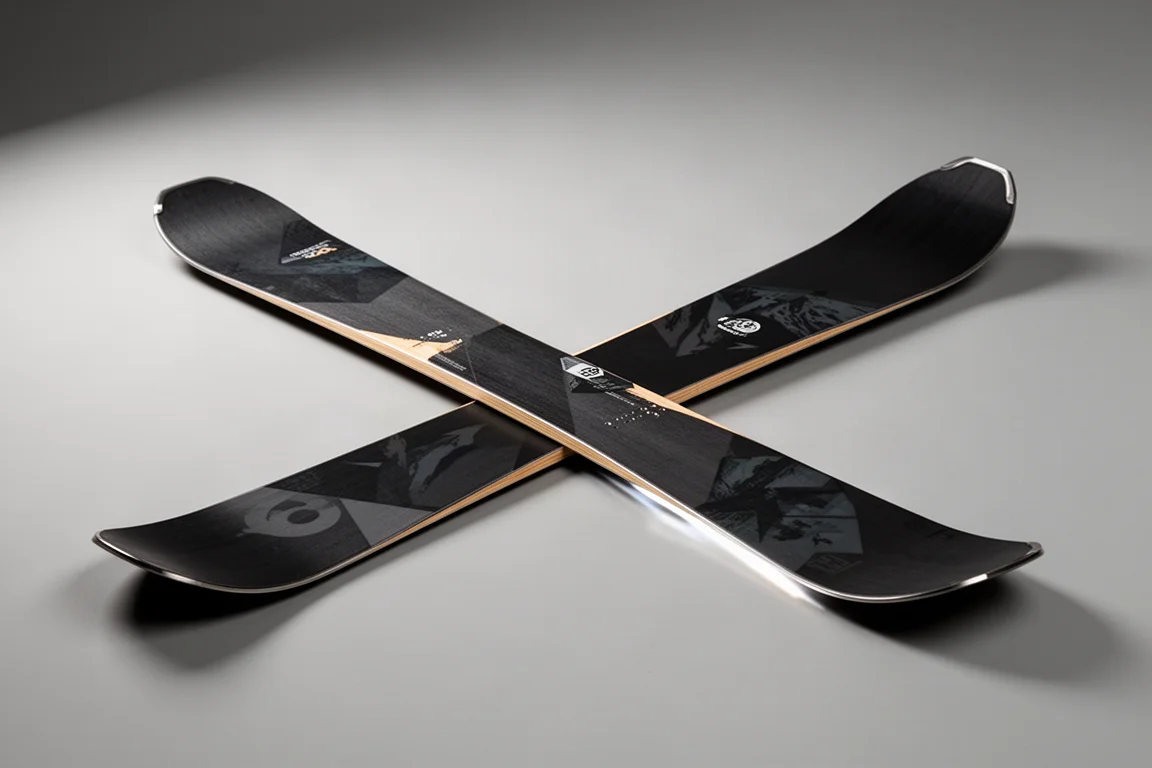
The Stance 102 is a straight-cut ski with a long turn radius, around 22.5 meters in the 176 and longer in bigger sizes. Two sheets of metal with cutouts, plus carbon and flax, keep the weight in check while adding energy.
The payoff is stability and smoothness, and this is arguably the best ski here for crud, chop, and manky snow. Tail rocker in the spirit of the Justice gives good directional stability while still allowing the ski to be thrown sideways. It is happiest at speed, since you need velocity to bend it into a carve, and it carries over its graphic from the previous season.
View more details for Salomon Stance 102
Salomon QST 98
A 17-meter turn radius in the 183 gives the QST 98 a short effective edge, and it pairs that with generous tip rocker, the most tail rocker in this comparison, and early taper in the tips and tails. The result is an extremely agile, playful ski and one of the best tree skis here.
A double sidewall feature keeps a surprising amount of strength underfoot, along with good vibration damping, so it is more than just a soft-snow toy. It is nearly a twin tip and can be skied switch, and it is forgiving enough for a very wide range of riders. It is also one of the best floating 98s on the market, and the 189 length suits taller or more aggressive skiers.
Scott Pure Mission 98
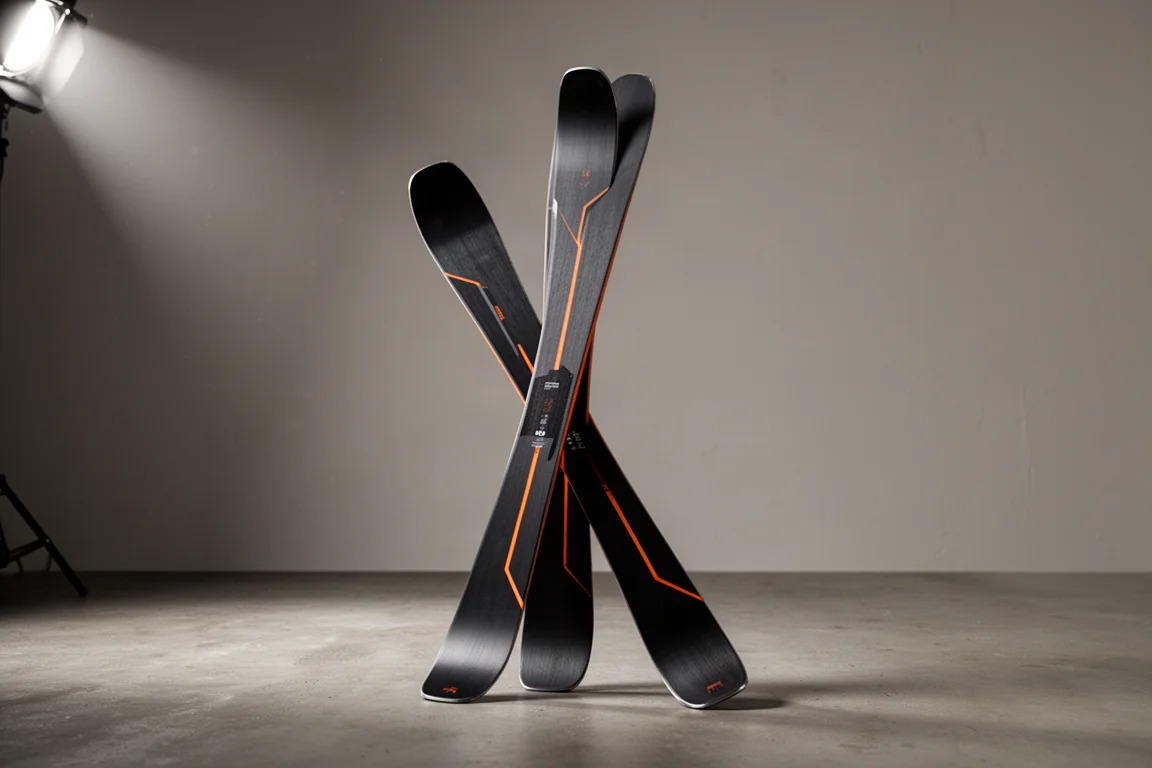
New to this comparison, the Pure Mission 98 is built for versatility and all-mountain use at around 1,800g, placing it on the lighter end of the spectrum. A structural metal plate underfoot, rather than a full laminate, is combined with carbon stringers running tip to tail.
That makes the ski pretty stiff with good energy and a bouncy, poppy feel from edge to edge, and it stays grippy and energetic on groomers. Rocker is moderate and the shape is directional. A thicker core profile and sidewalls add heft and stability. Wider and narrower versions exist, and this one was well liked across a wide range of riders and conditions.
Stöckli Storm Rider 102
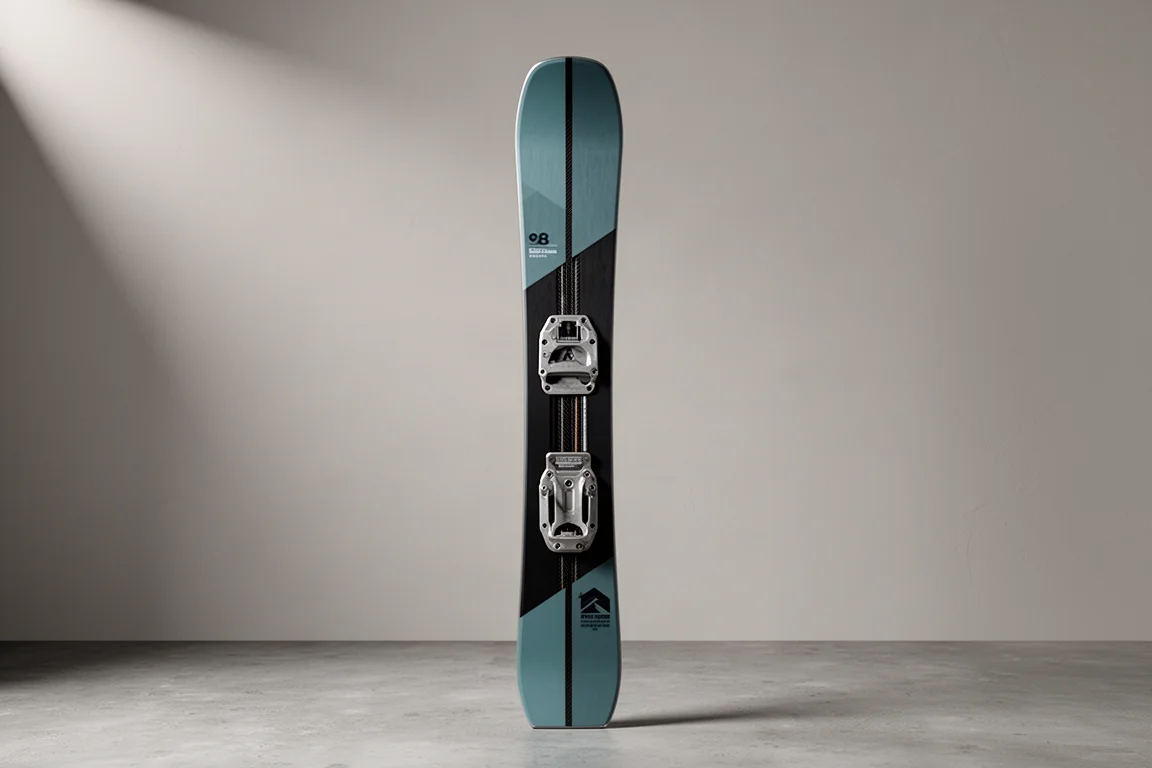
The Storm Rider 102 is the widest ski Stöckli makes, and one of the most enjoyable directional options in this group. Around 1,950g, it has a squared-off tail and a metal top sheet.
It is noticeably softer longitudinally than its reputation suggests while remaining very torsionally stiff, so it holds an edge well and still bends easily into shorter radius turns. Vibration damping is excellent, and the softer flex makes it forgiving and less tiring without feeling vague. The tips and tails have some give, which helps in trees and soft snow. Precision and edge quickness are clearly the priorities.
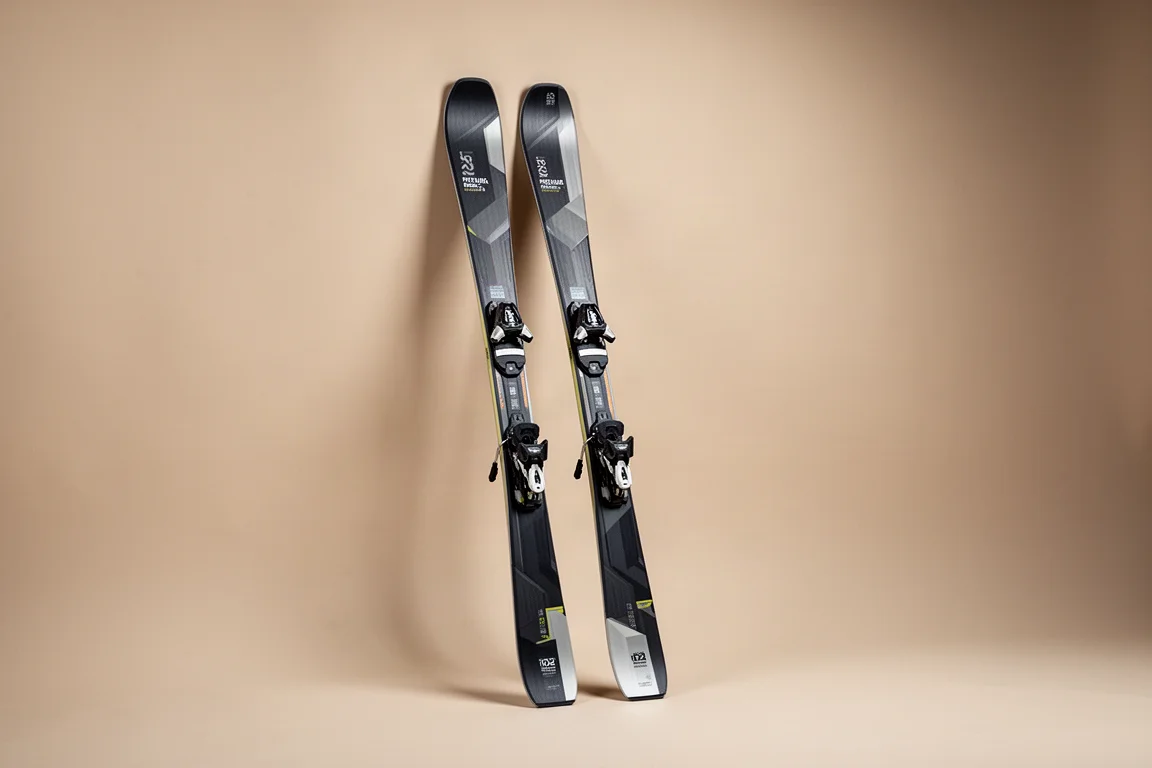
Volkl Mantra 102
The Mantra 102 gets tailored carbon tips, a titanal frame, and a tightened side cut that shortens the turn radius by roughly a meter. The metal along the frame edges provides precision and power, while loosening the middle section of metal and adding carbon increases torsional stiffness in the tip so it hooks into a turn.
The wider gap between the frames allows a more even, natural flex and a larger sweet spot, which makes the ski feel more alive than the previous version. At 2,158g in the 177 and heavier above that, it remains one of the best skis here for tracking through chopped-up snow. Athletic advanced skiers and former racers tend to love it.
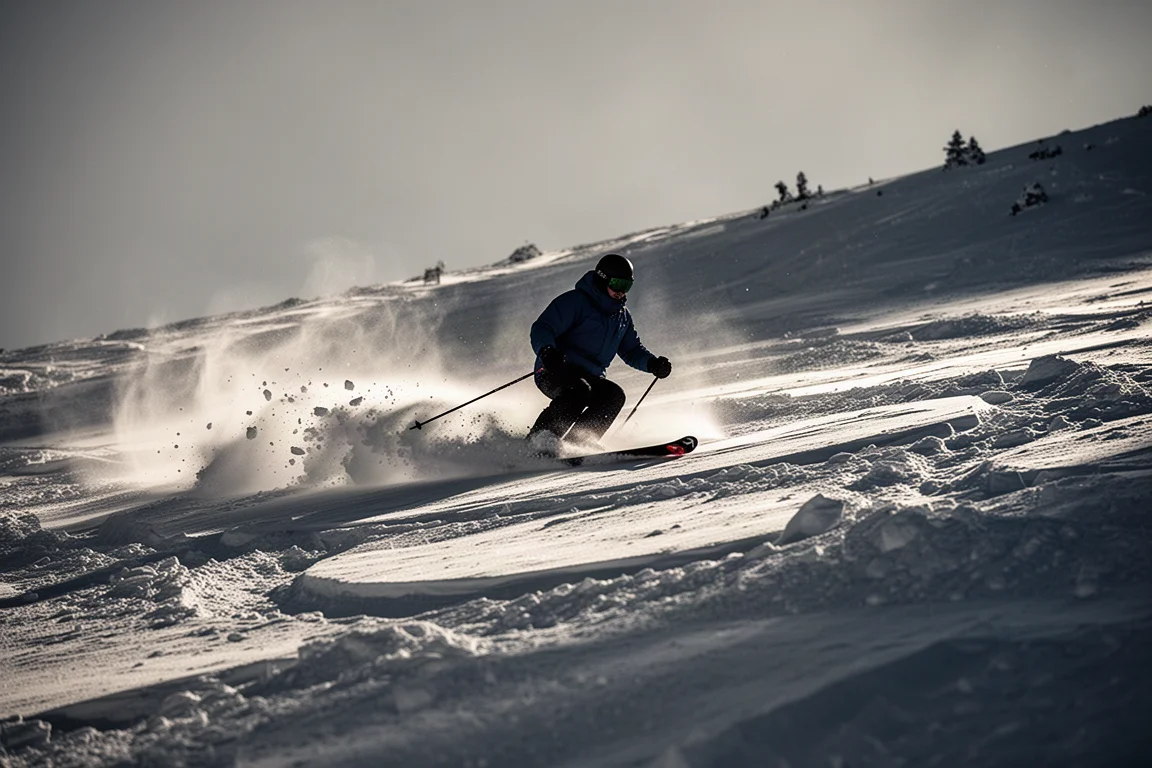
The result is a ski that still rewards a strong, precise rider but no longer feels planky or tank-like the way the older build could.
Buying Advice
The right choice depends far more on where and how you ski than on which ski is objectively strongest.
If you spend most of your time on firm groomers and want a ski that carves hard and holds an edge, look at the Blizzard Bonafide 97, Kastle MX98, Liberty Evolve 100, Salomon Stance 102, and Volkl Mantra 102. These reward skill and input, and they are happiest at speed.
If you chase soft snow, trees, and natural features, the Liberty Origin 101, Salomon QST 98, Dynastar M3 99, Atomic Bent 100, and Kastle ZX100 are the more natural fits. They are quicker, looser, and easier to pivot.
For a single ski that handles almost anything without much thought, the Nordica Enforcer 100, Fischer Ranger 102, Armada Declivity 102 Ti, K2 Mindbender 99Ti, Atomic Maverick 100, and Scott Pure Mission 98 all sit in that well-rounded middle ground.
Weight is the other decision worth making deliberately. If you are strong, ski fast, and value stability, the heavier skis here will serve you well. If you are lighter, ski tighter terrain, or simply want to finish the day with energy left, the lighter options in this group will be far more enjoyable.
Conclusion
Around 100mm underfoot remains the most versatile width in skiing, and this group shows how much variety that single number can contain. Directional carvers, surfy twin tips, lightweight technical tools, and planted high-speed chargers all coexist here.
Match the ski to your terrain, your style, and your tolerance for weight, and almost any model on this list will serve you well for years. The differences between them are real, but so is the fact that there is genuinely something here for nearly every rider.
Further reading
Related Reviews
All-Mountain Skis
2026 Black Crows Camox Review: A More Stable, More Versatile All-Mountain Twin Tip
The 2026 Black Crows Camox adds an ash layer underfoot, wider tips and tails, and a revised rocker profile. Here is what those changes mean on snow.
All-Mountain Skis
Armada Antimatter 88 Review: A Light, Lively All-Mountain Ski That Rewards Any Style
The Antimatter 88 pairs a poplar core with carbon stringers for a surprisingly energetic ride that suits intermediates and experts alike.
All-Mountain Skis
Armada Antimatter 92 Review: A Predictable All-Mountain Ski for the 50/50 Skier
The Armada Antimatter 92 carries over the Declivity 92 shape with a revised metal layout, delivering a smoother, more consistent ride for skiers who split their days between groomers and soft snow.