Yard & Garden Trailers
Vivor HV Off-Road Series Trailer vs Gorilla Cart: Which Dump Trailer Makes More Sense?
A heavy-duty steel off-road trailer with big cargo capacity goes up against a lighter hybrid cart, wheelbarrow, and trailer. Here is how they compare.
Introduction
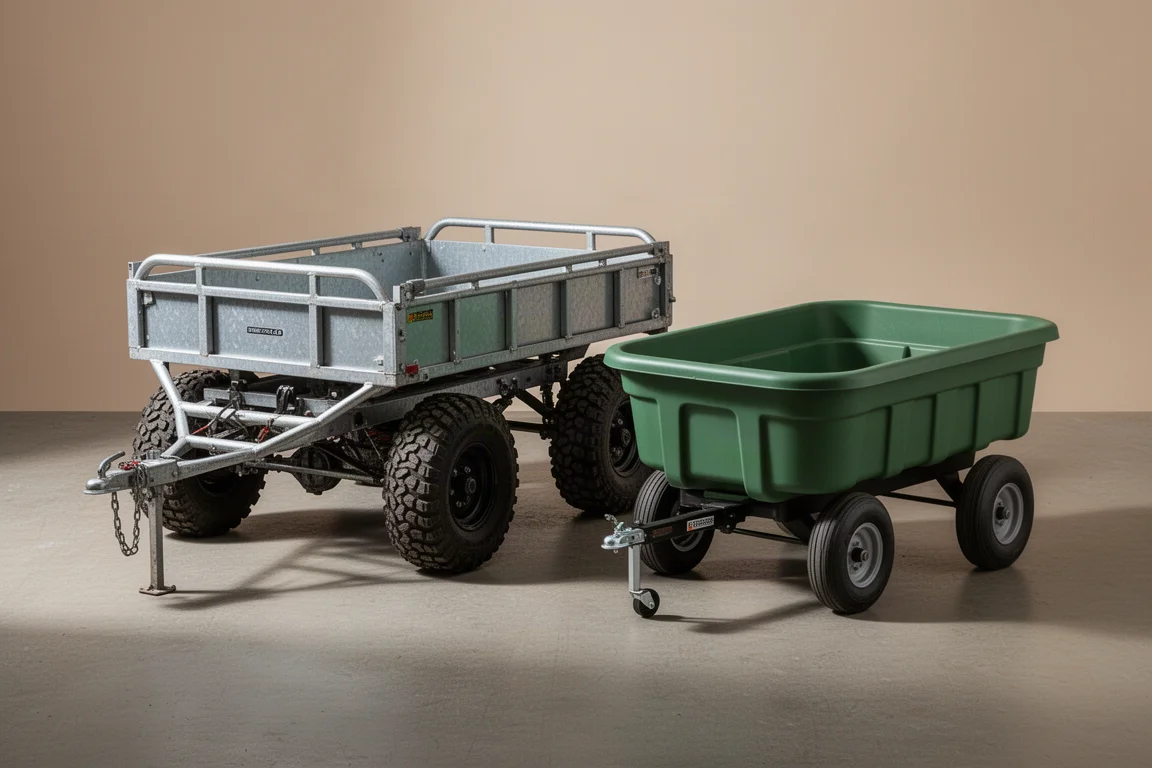
Heavy-duty yard trailers have quietly become one of the most useful upgrades for anyone with acreage, a large garden, or an ongoing stream of trash and debris to move. Two options worth comparing are the Vivor HV Off-Road Series trailer, a steel off-road design with a claimed 1,200 lb cargo capacity and 15 cubic feet of space, and the Gorilla Cart, a well-known hybrid that sits somewhere between a cart, a wheelbarrow, and a small trailer.
Both share a useful dump feature and both can be towed, but they are built for different jobs. The Vivor is the heavy-duty, off-road-first option, while the Gorilla Cart trades some toughness for lighter weight and easier everyday handling. This comparison breaks down where each one excels and where you should think twice before buying.
Vivor HV Off-Road Series Trailer: Serious Heavy-Duty Construction
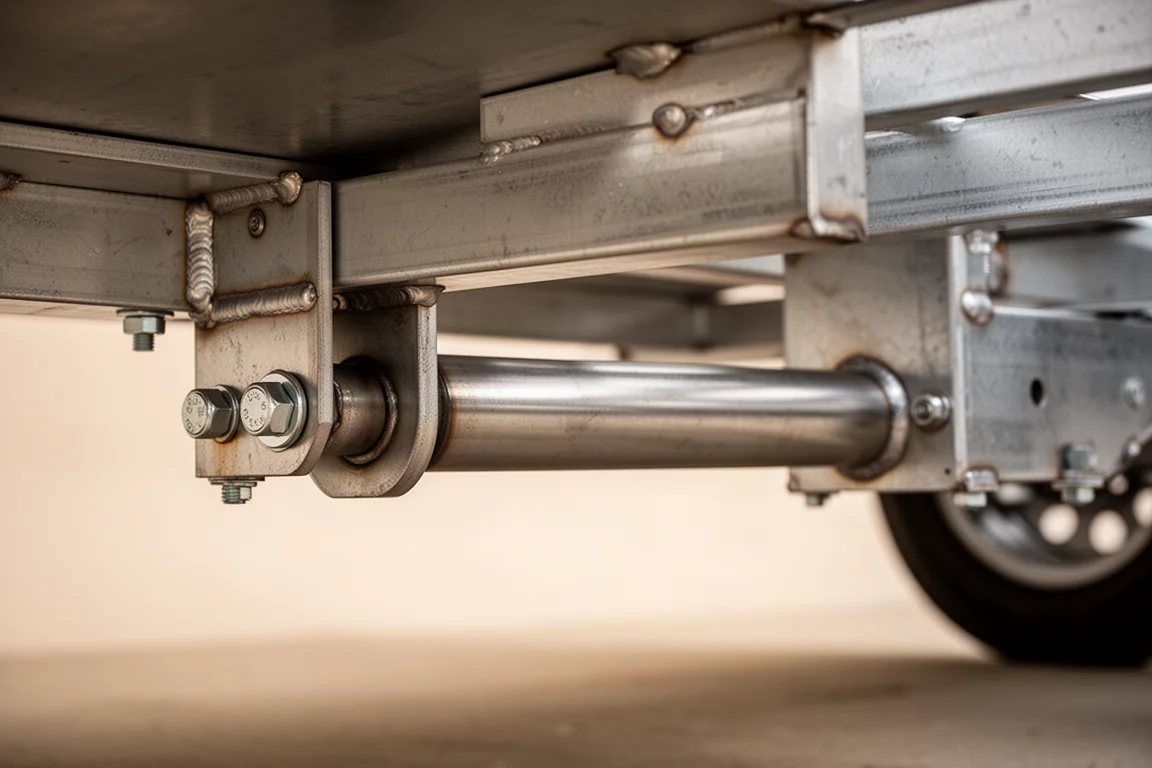
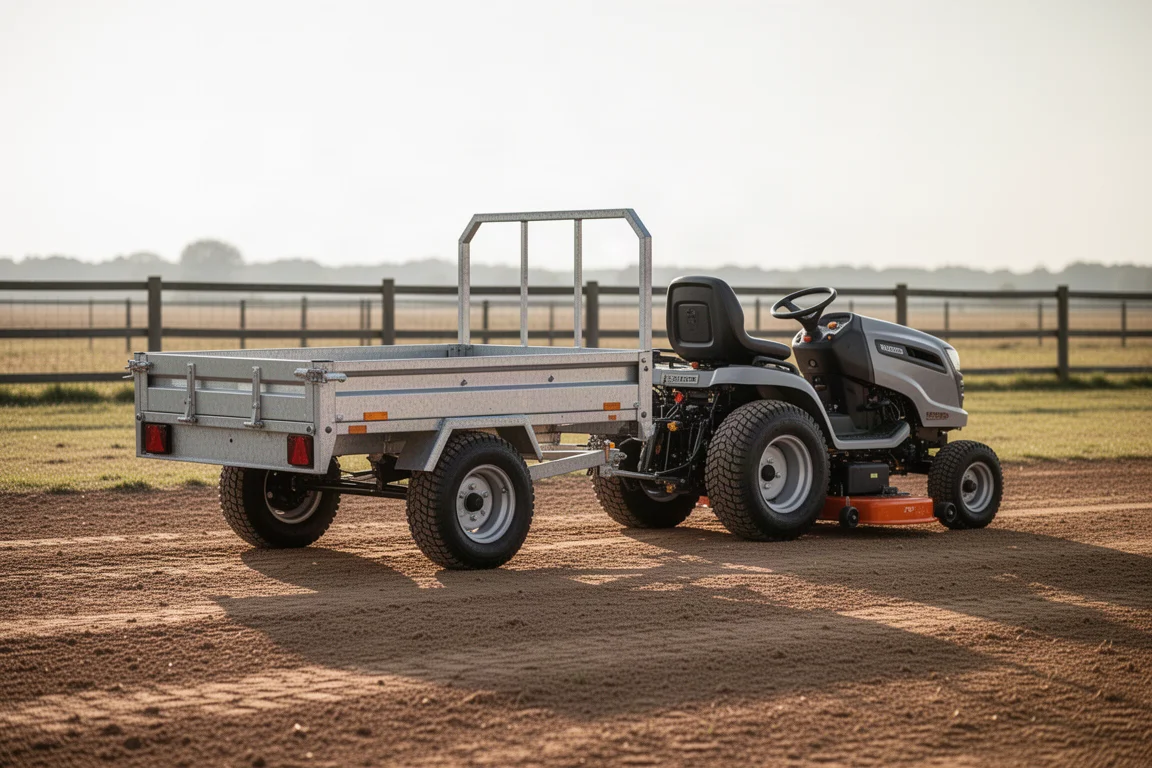
The Vivor HV Off-Road Series trailer is built around a claimed 1,200 lb cargo capacity and 15 cubic feet of cargo space, and in practice the construction backs up the ambition. Nearly everything from front to back is solid metal, the axle underneath is genuinely heavy, and the hardware includes quality grade bolts. It tips the scales at roughly 80 to 90 pounds dry, which is heavier than most people expect and a clear sign of the design priorities here.
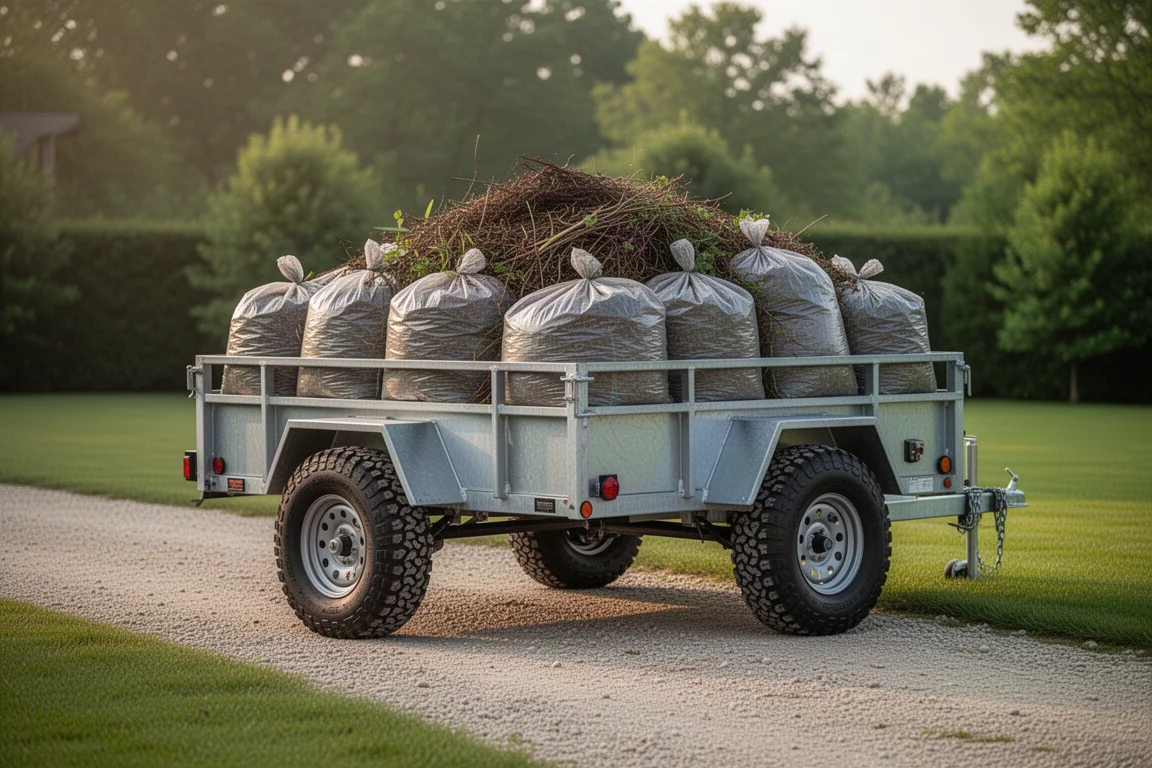
The heavy-duty off-road tires are a real highlight, with quality bearings that roll well under load. The overall build quality is strong enough that it would not be a surprise to see this trailer hold up for years, especially if it is kept out of the elements. If anything, it feels sturdily built compared with many lighter trailers you might find in a big-box store parking lot.
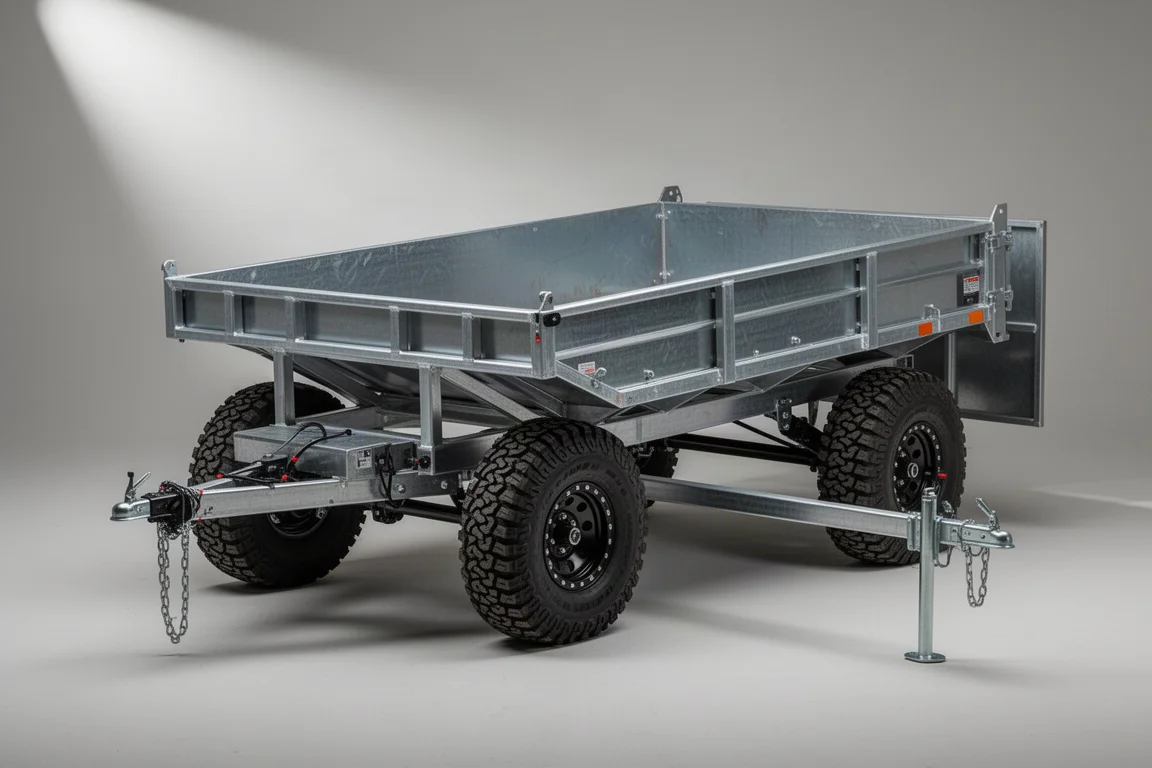
The dump feature is simple and effective: the bed flips up and over to empty its contents, then clips back down easily. On the rear there is also a removable grate that lets you pull off the entire back panel, making it easier to dump loose material out the rear.
The drawbacks are worth knowing before you order. Assembly is difficult, definitely a two-person job given how heavy even the axle is. The removable sides are the bigger issue: the holes are there but the sides do not slide in far enough to accept a pin, and no pin is included, so the sides can work loose and fall out while driving. Taller aftermarket or DIY sides would also help, since the stock sides are not especially tall for hauling loose loads.
Gorilla Cart: A Hybrid Cart, Wheelbarrow, and Trailer in One
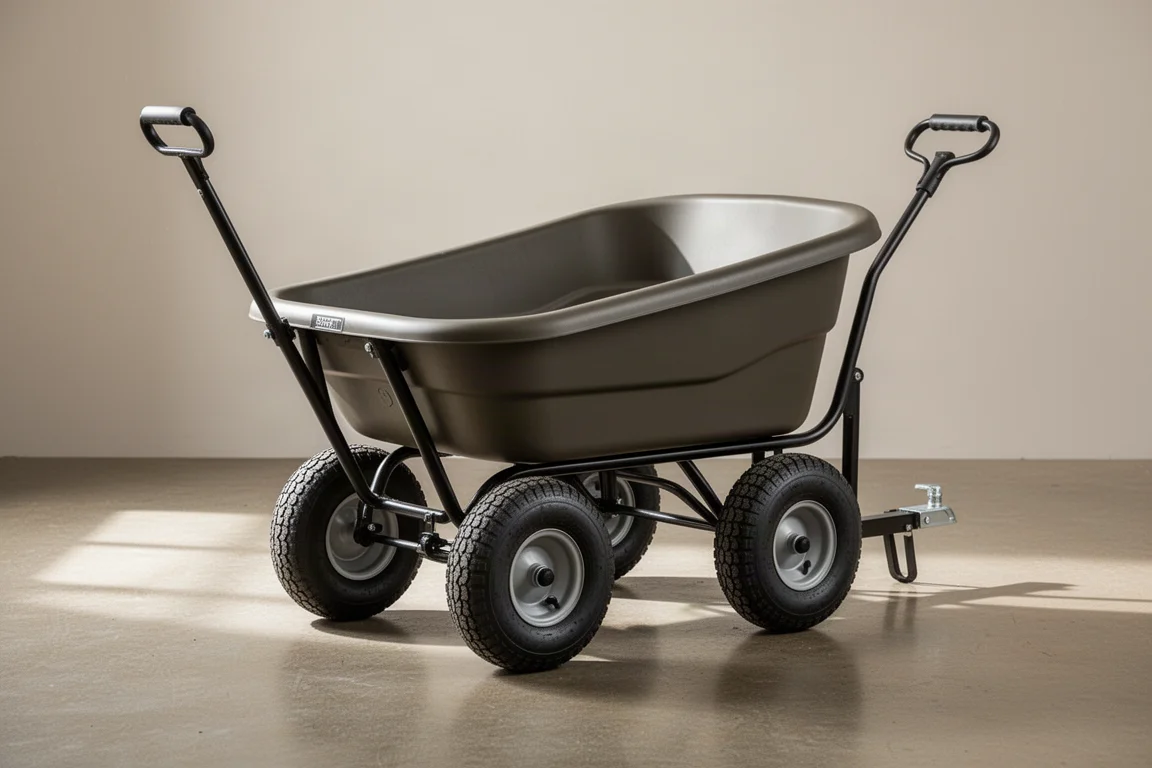
The Gorilla Cart takes a different approach. It is designed as a hybrid: part cart, part wheelbarrow, part trailer, with a built-in trailer hitch that lets you tow it as well as pull it by hand. That flexibility is its main selling point for smaller properties and lighter loads.
The trade-off is construction. The Gorilla Cart relies more on plastic, which means fewer worries about rusting out, but plastic panels can become brittle over time, especially if the cart is left outside year-round. Its dump feature works well too, but the overall build is not in the same weight class as the Vivor. It is simply not intended for the same punishing off-road or tractor-towing duty.
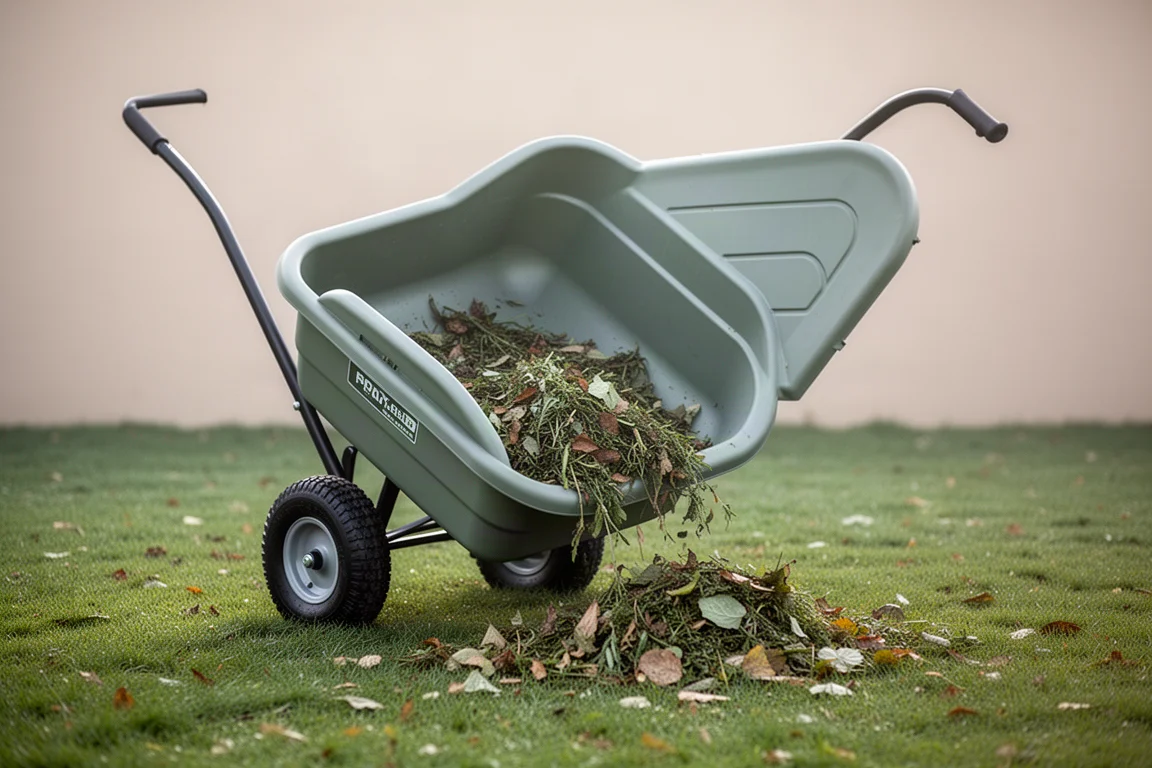
For anyone moving moderate loads by hand or towing short distances on reasonably smooth ground, the Gorilla Cart remains a practical, versatile pick. Just be aware that its longevity depends more on the plastic holding up than on steel resilience.
Towing and Hitch Considerations
The Vivor’s heavy hitch is clearly its strong suit. Attached to a golf cart, the trailer levels out nicely, and it also works well behind a mower or small tractor. Because it has limited ground clearance and rides fairly high, it does not pair as well with taller vehicles such as a small truck, and towing it behind an e-bike or bicycle is impractical given the trailer’s 80 to 90 pound dry weight. It is best matched with low, sturdy tow vehicles.
The Gorilla Cart’s built-in hitch makes it a good in-between option, but for repeated heavy towing behind a tractor, the Vivor’s more durable hitch and frame are the safer long-term bet.
Buying Advice: Which One Fits Your Property?
Choose the Vivor HV Off-Road Series trailer if you regularly haul heavy loads, tow behind a mower, golf cart, or small tractor, and want a steel trailer built to survive years of rough use. Accept the difficult assembly and plan a fix for the loose sides, such as adding your own taller, more secure side panels.
Choose the Gorilla Cart if you need a lighter, hand-haulable cart that still offers towing and dumping convenience, and you want to avoid rust issues entirely. It is the better fit for smaller yards and lighter, more frequent trips.
Conclusion
Both trailers do their job well, but they target different buyers. The Vivor HV Off-Road Series trailer is the clear heavy-duty choice with excellent build quality, strong tires and bearings, a claimed 1,200 lb capacity, and a useful removable rear panel, hampered only by tough assembly and insecure side panels. The Gorilla Cart is the flexible everyday option that handles towing, hauling, and dumping in a lighter plastic-bodied package. Match the trailer to your towing setup and load weight, and either one can be a genuinely useful addition to your property.
Further reading
Related Reviews
Outdoor Gear
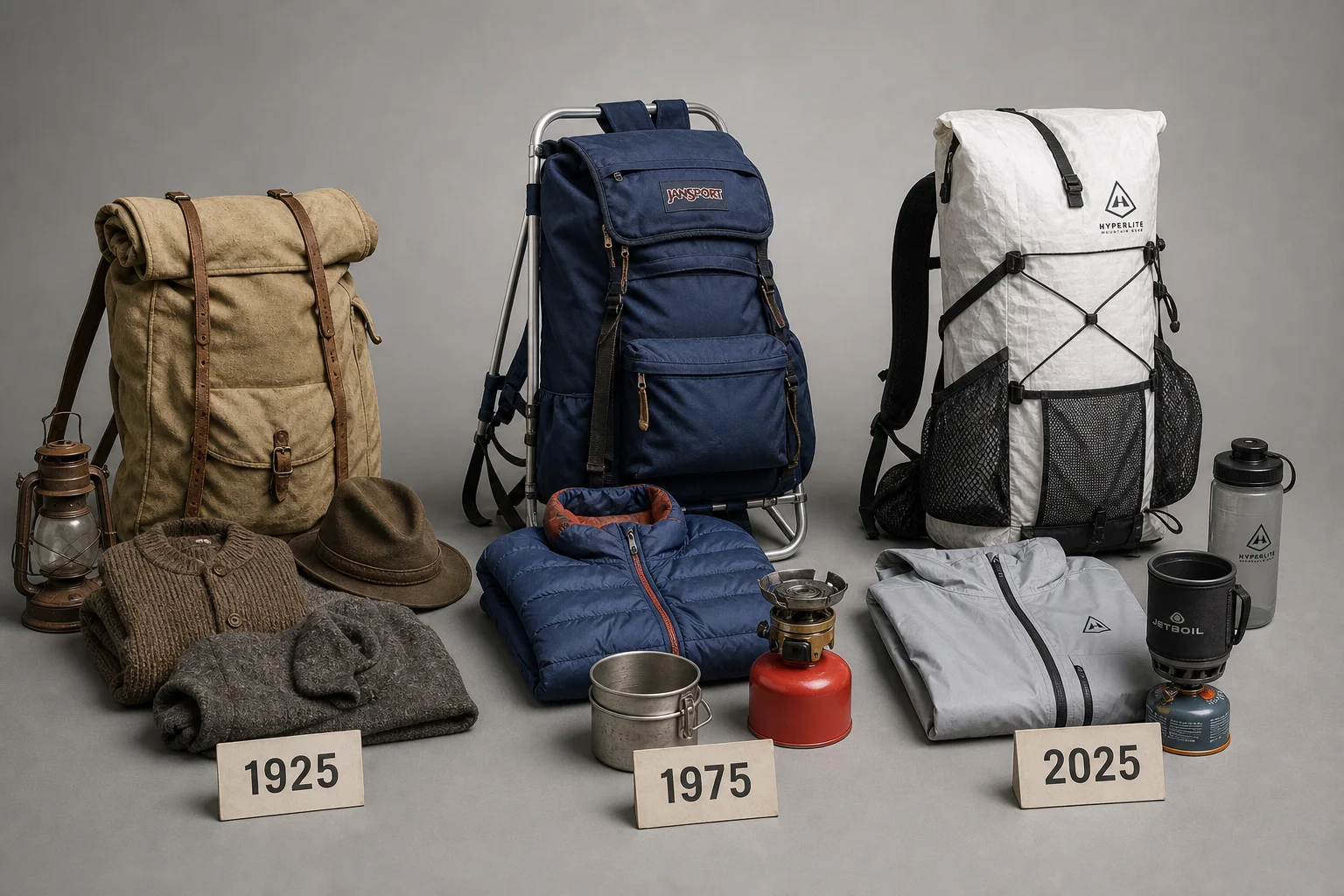
Backpacking Gear Evolution: 100 Years of Technology Compared
We tested backpacking gear from 1925, 1975, and 2025 across a three-day hike in Yosemite. Here's how technology has transformed comfort, weight, and the outdoor experience.
Hiking and Backpacking
Best Gifts for Hikers and Backpackers: 50+ Ideas Across Every Budget
Thoughtful gift ideas for outdoor enthusiasts, from ultralight stoves under $25 to premium tents and bear-proof storage, with practical advice for navigating gear preferences.
Outdoor Gear
Best Headlamps 2026: Four Practical Options for Different Needs
Four headlamps tested in the field, each suited to a specific use case: camping, budget-conscious buyers, rechargeable preference, and ultralight backpacking.