Grow Lights
Viper Spectra KS 3000 Review: A Large-Footprint LED Built for 3x3 Tents
A 32x32-inch bar light with Samsung LM301H diodes, strong uniformity, and an easy build. Here is how it performs and where the KS 5000 fits in.
Introduction
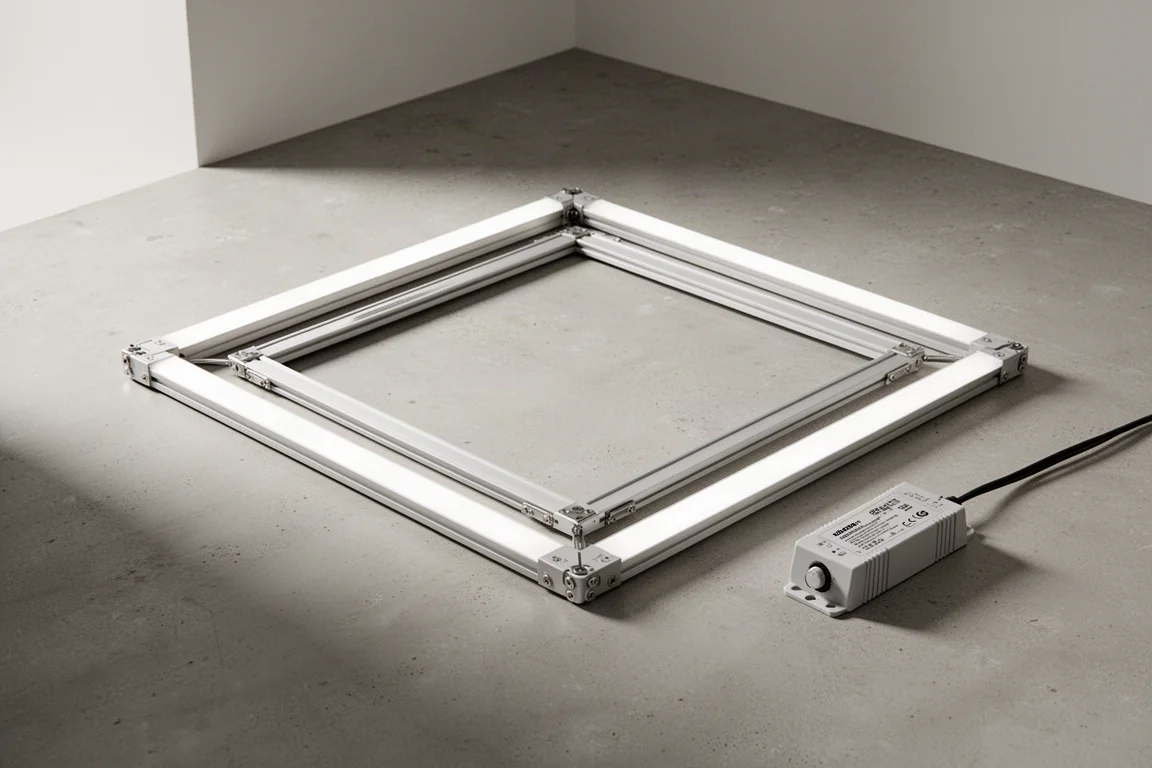
Viper Spectra has moved into large-footprint bar lights with its KS lineup, which consists of the KS 5000, KS 3000, and KS 2500. The KS 5000 is the 4x4 flagship of the series, and the KS 3000 and KS 2500 follow the same formula as scaled-down versions. Both of the smaller models are rated to flower a 3x3 space, but the KS 3000 is significantly larger and uses a more powerful driver, which makes it the more interesting option for serious 3x3 growers.
Unboxing and Build
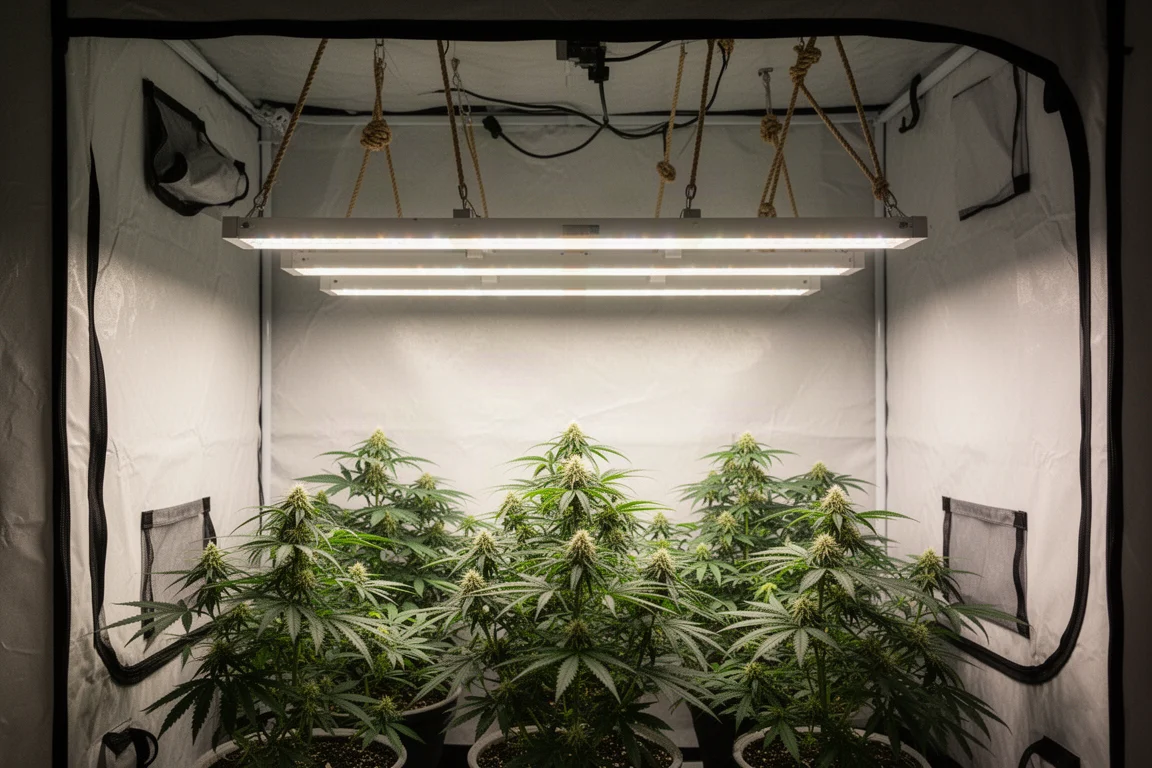
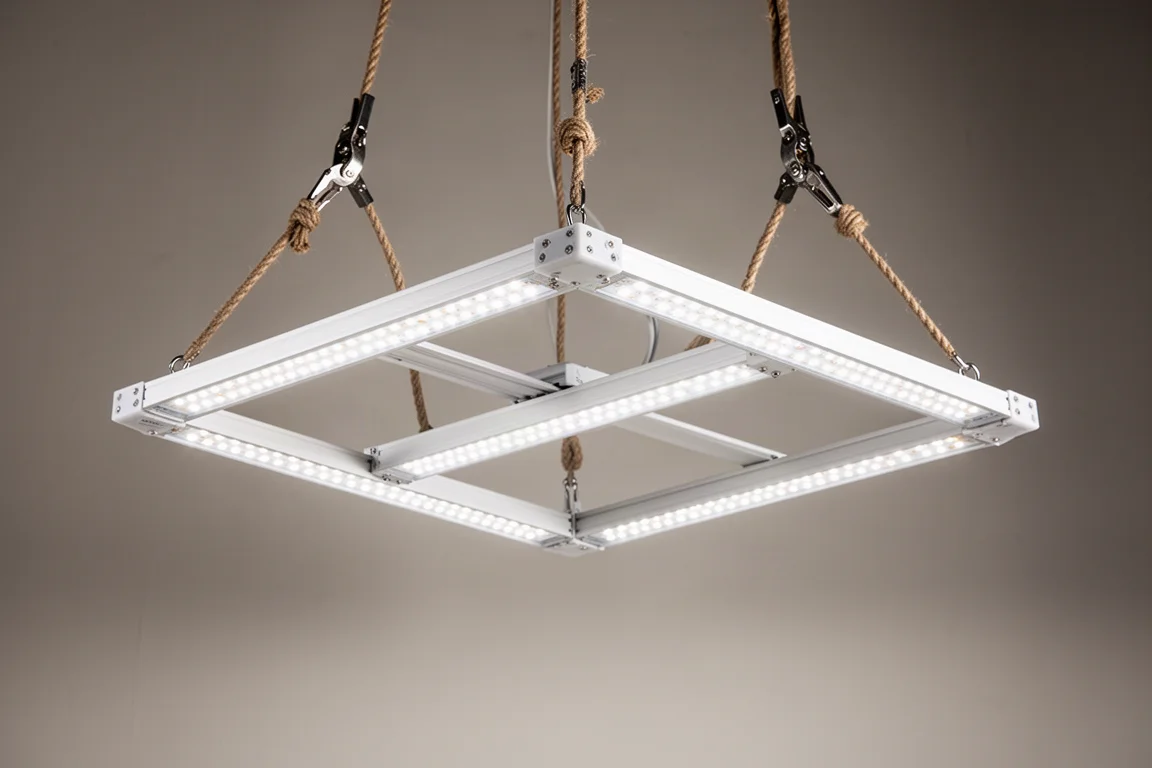
The box includes stickers, an instruction manual, a set of ratcheting rope hangers, an alternate AC plug, and three hanger kits: two for the light and one for the driver if you choose to hang it. The AC power cable and driver are packed separately.
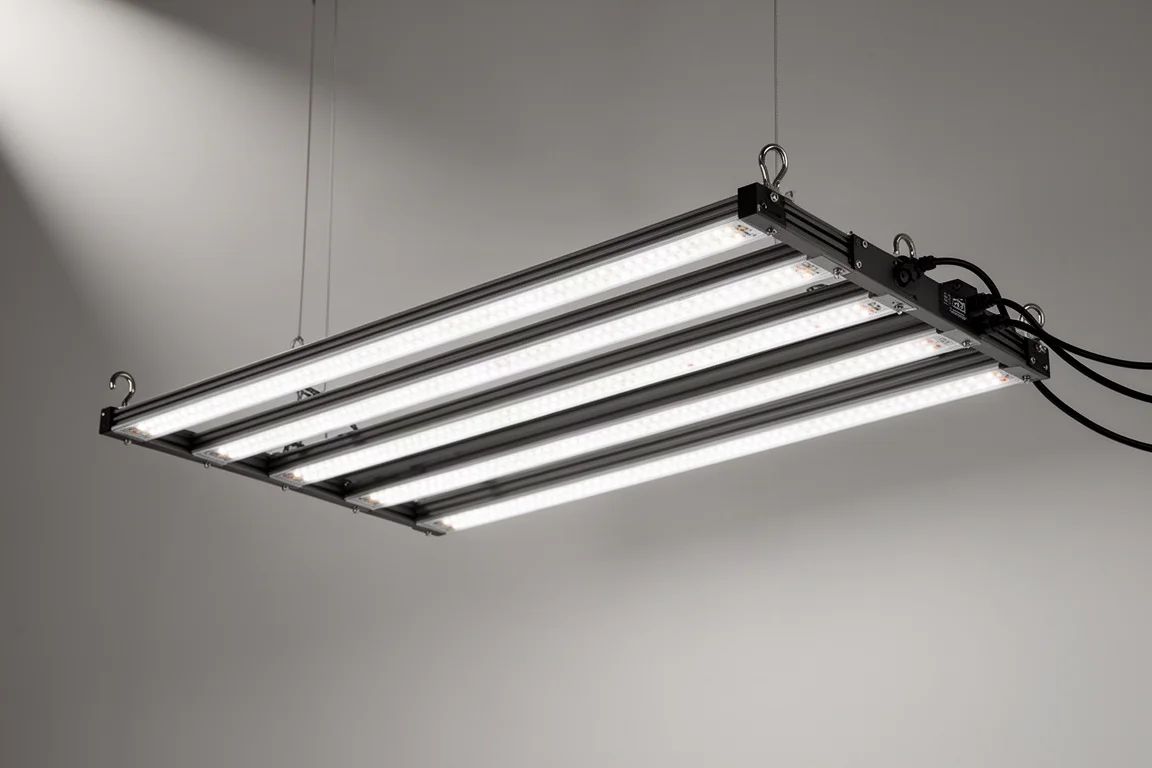
The frame uses a hinged design and is very light. Because the bars are part of the frame, assembly takes roughly five to ten minutes, and even calling it assembly is generous. All that is required is clipping on the hangers and connecting the driver. You can remote mount the driver outside the tent, or suspend it from the tent roof using the included hanger kit.
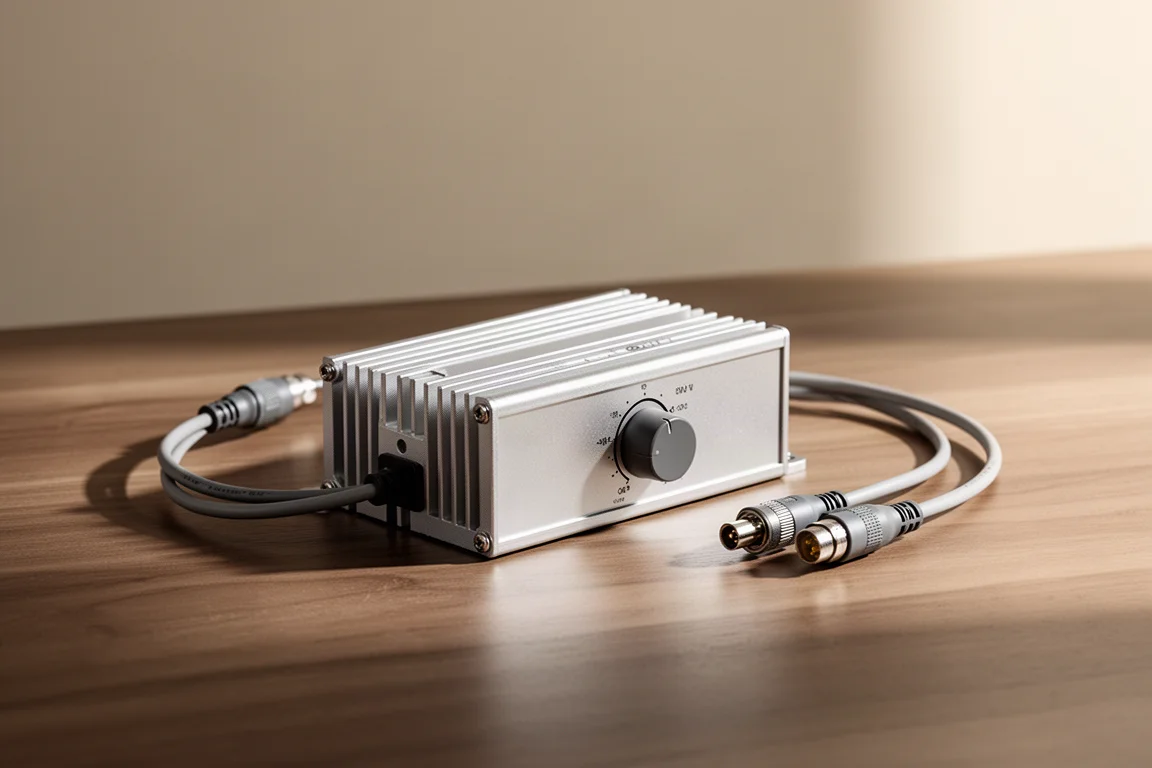
One detail worth appreciating: the driver has short input and output cables with connectors, so you can attach a longer AC cable if the supplied one does not reach an outlet. That is a small but practical advantage over the KS 5000, whose driver cable has a fixed plug and is fairly short.
Footprint: Why Bigger Helps Here
The KS 3000 measures 32 by 32 inches, which nearly fills an entire 3x3 tent and gives excellent light distribution from the center of the space out to the corners and edges. Competing lights in this class typically max out at 24 by 24 inches, meaning the KS 3000 is 33 percent longer in each dimension. In this case, bigger genuinely is better: a larger footprint spreads photons more evenly and reduces hot spots directly under the fixture.
Diodes and Light Bar Layout
The light uses Samsung LM301H white diodes, which are built specifically for horticulture applications and are rated at 3.1 micromoles per joule, compared with the 2.9 rating of the LM301B diodes many competing lights use. Given the same power, the LM301H diodes produce more photosynthetically active photons.
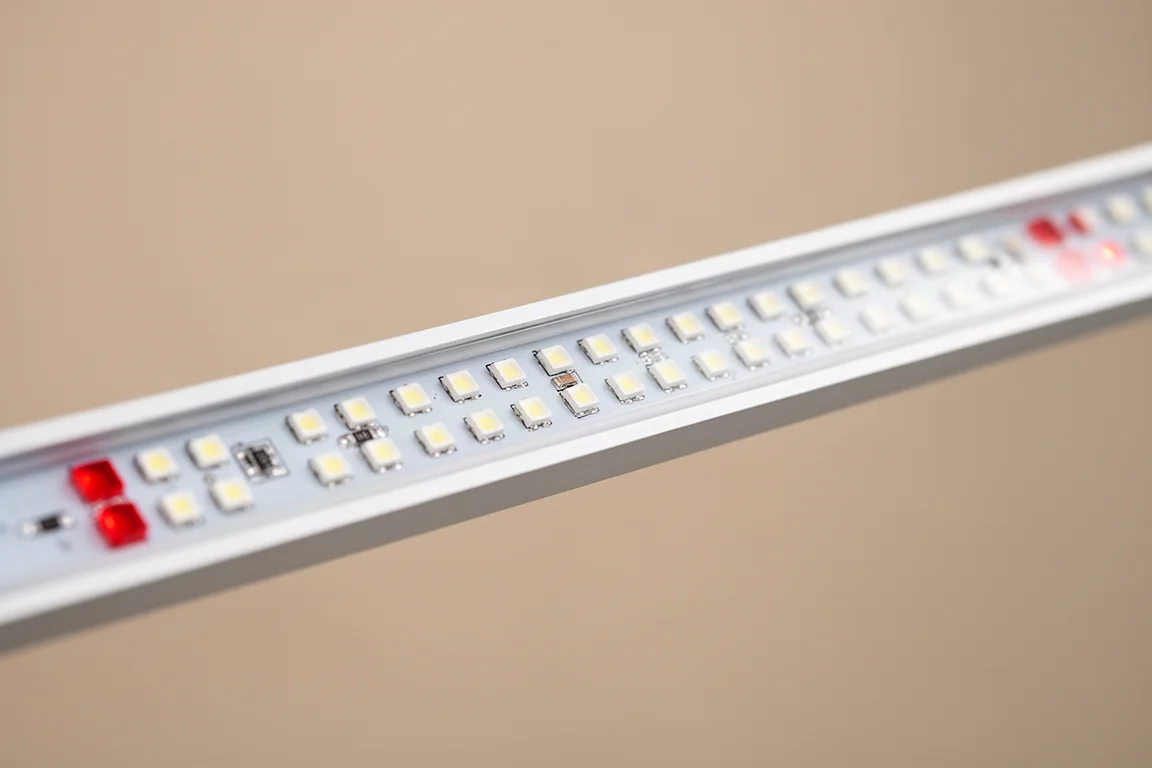
Each bar carries 204 LM301H white diodes and six Osram 660 nanometer red diodes. With four bars, that totals 816 white and 24 red diodes. The white diodes are spread out and concentrated more toward the ends of each bar, and the bars are spaced nearly equally with a slightly larger gap in the center. The driver has a built-in dimming knob with 0, 25, 50, 75, and 100 positions.
Power Draw and Heat
At full power after a 30-minute warm-up, the driver pulled 300 watts from the wall, which works out to 33 watts per square foot in a 3x3 space. The 75 percent setting measured 222 watts, 50 percent came in at 149 watts, and 25 percent at 73 watts.
The frame and driver run relatively cool. The bars measured around 40 degrees Celsius in the warmest spots, and the driver case ran slightly warmer. You can comfortably hold your hand on either.
PPFD Performance and Coverage
Automated PPFD testing covered hang heights from 6 to 36 inches in 2-inch increments, with 289 measurements collected per height at full power. Readings scale roughly with the dimmer: a center reading of 800 at full power works out to a touch over 400 at 50 percent or just over 600 at 75 percent.
At the lowest 6-inch hang height there are hot spots, with the highest reading exceeding 1200 micromoles per square meter per second, though even the corners held in the mid 500s. At 8 inches, no reading falls below 500 and over 85 percent of readings were above 700. For flowering, a hang height of 12 to 16 inches is the sweet spot. At 16 inches, uniformity, which is the lowest reading divided by the highest, sits at 79 percent. Everything measures over 500 PPFD, 91 percent of the space reads over 700, no measurements break 1000, and the average of all readings is 778. That translates to a DLI of about 34 on a 12/12 lighting schedule, and even the corners come in at the mid to high 600s.
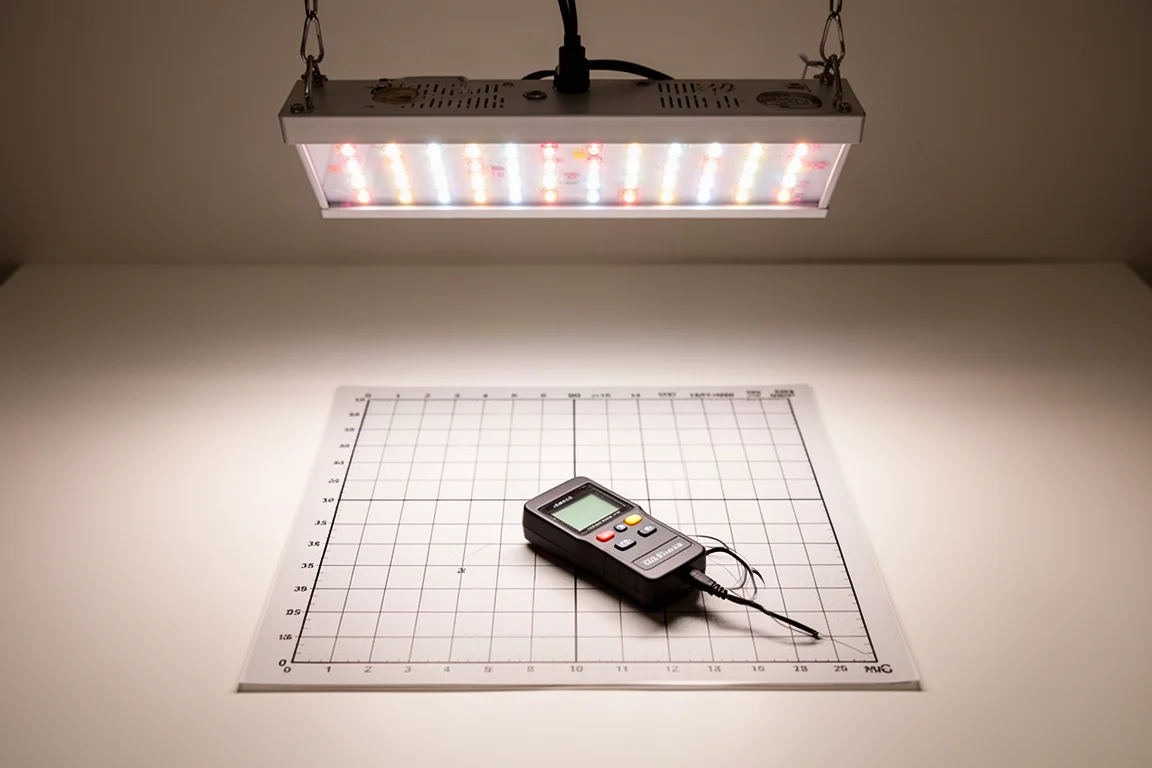
For veg, a hang height of 24 inches at 75 percent power is a sensible starting point, and you can back the light off if that proves too intense.
How It Compares to the KS 5000
The KS 5000 remains the largest light in the lineup, built for 4x4 spaces, with the same hinged frame design, best-in-class Samsung diodes, and light, portable construction. The KS 3000 is essentially the same formula scaled down to a 3x3 footprint. Beyond size, the most meaningful difference is the driver wiring: the KS 3000’s driver uses short connectorized cables that let you swap in a longer AC cord, while the KS 5000’s driver has a shorter fixed-plug cable that may require an extension cord for more reach.
Buying Advice
For a 3x3 tent, the KS 3000 fits the build about as well as a light can: it nearly fills the footprint, looks sharp, is light and compact, and is easy to build and hang. The main limitation is the driver, which cannot be externally dimmed or daisy chained, which matters mostly for automation-focused growers or larger operations. Most home growers will not miss those features. On raw numbers, strong output with excellent uniformity is exactly what you want from a flowering light, and the mid-to-high 600s corner readings at 16 inches show the wide footprint doing its job.
Conclusion
The KS 3000 delivers on the promise of the KS series: a big footprint, quality Samsung and Osram diodes, gentle heat, and measured performance that holds up across the entire canopy. If you are after a new 3x3 light, it is an easy pick, and growers covering a 4x4 space should look at the KS 5000 instead.
Further reading
Related Reviews
Grow Lights
AC Infinity Ion Frame A7 Review: The Grow Light That Beats Its Own Spec Sheet
A high-output grow light for 2x4 tents that hits target PPFD at low dimmer levels, with strong efficiency and thoughtful mounting details.
Grow Lights
AC Infinity ION Frame Evo 3 Review: A New Bar-Style LED Grow Light for 2x4 Spaces
Samsung LM301H EVO diodes, app scheduling, and a magnetic frame make the ION Frame Evo 3 a serious option for 2x4 grow spaces.
Grow Lights
AC Infinity ION Grid T24 Review: A Full Spectrum LED Grow Light for 2x4 Spaces
A 260W full spectrum LED grow light with Samsung LM301H diodes, a programmable digital controller, and a complete hanging kit out of the box.