Grow Lights
AC Infinity Ion Frame A7 Review: The Grow Light That Beats Its Own Spec Sheet
A high-output grow light for 2x4 tents that hits target PPFD at low dimmer levels, with strong efficiency and thoughtful mounting details.
Introduction
The golden age of grow lights has passed, and most lights marketed for a 4 by 2 tent seriously lack the coverage and intensity needed to maximize fruit production. Many current lights are weaker and carry fewer diodes than their previous-generation counterparts, and if you want to use all the space in your tent, you often need two of them.
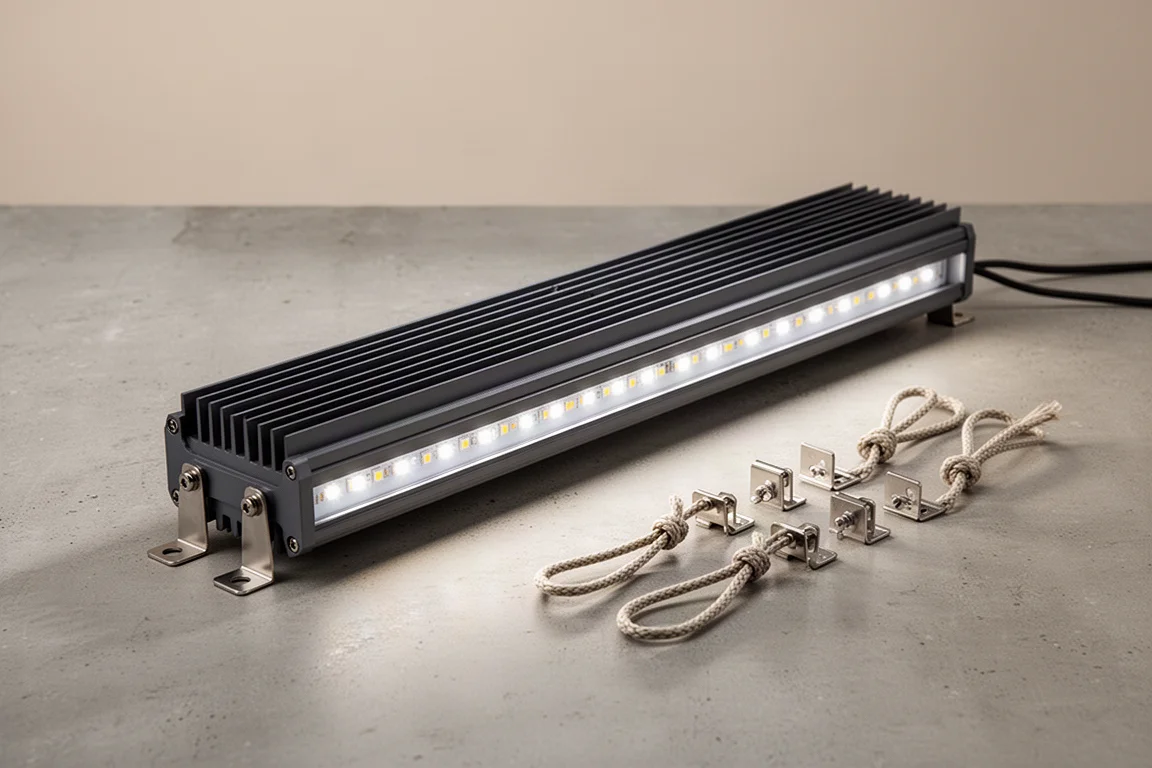
The AC Infinity Ion Frame A7 is the counterargument. It is priced accordingly, but after testing it, the specs justify the position. From the moment it comes out of the box, it looks nothing like the typical panel or bar light. The entire top surface is a finned heat sink, clearly designed to dissipate heat, and the numbers it delivers are exceptional.
Design and Mounting
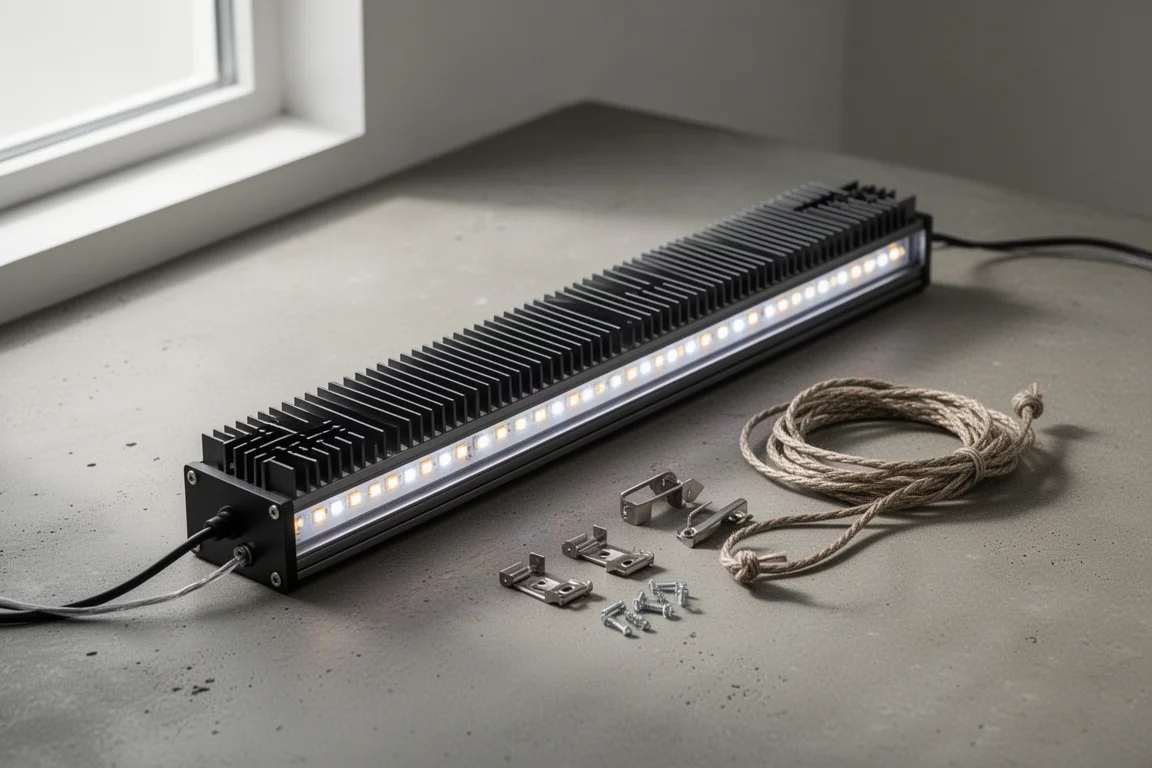
The form factor defies easy categorization: not quite a panel light, not quite a bar light. The standout physical detail is the full-length heat sink across the top of the unit, which is clearly engineered for thermal management.
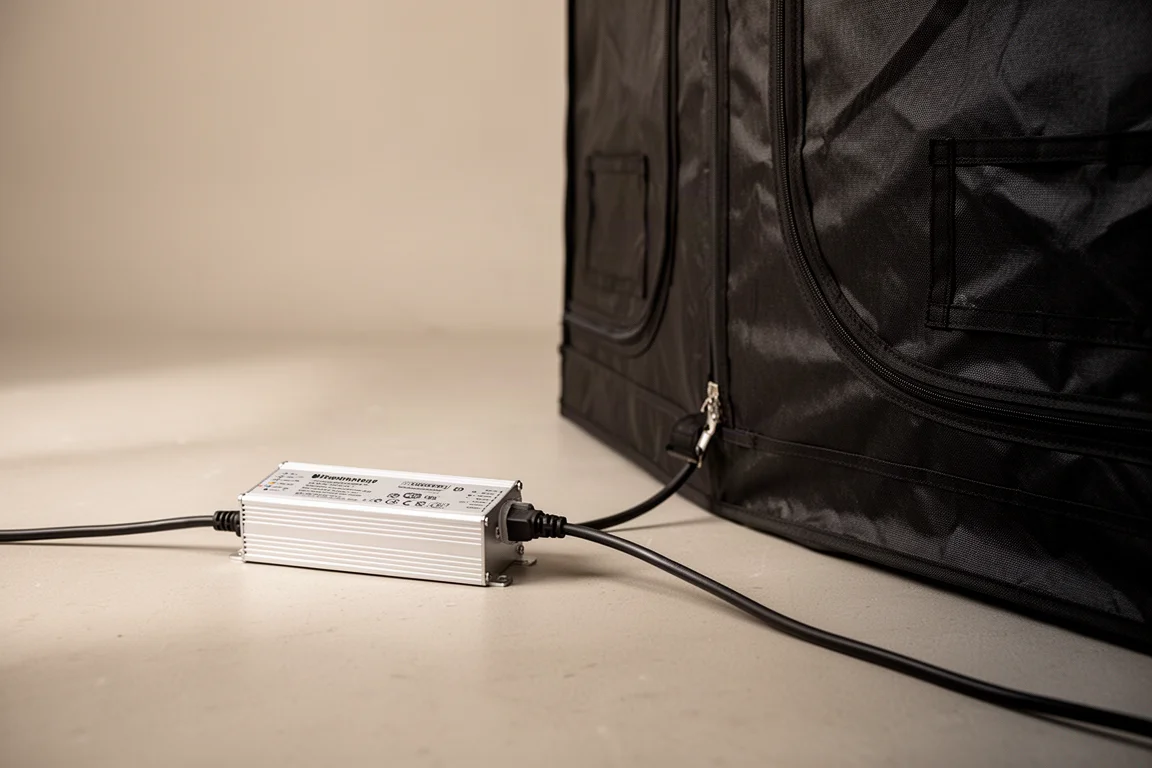
Mounting is a little different too. You squeeze metal clips that expand into slots along the frame, then attach your rope clip hangers to those points. The driver is detachable, and unlike most lights, the included cable is long enough to comfortably place the driver outside your tent. That is worth doing, because the driver gets hot.
Test Conditions and Measured Performance
All measurements were taken in a 2 by 4 AC Infinity tent with a 6-inch inline fan running at a constant level two. Temperatures were recorded with the AC Infinity AI controller, and the light was left on for an hour so heat could stabilize before readings. The tent held at 24 degrees, which is significant but manageable.
The PPFD readings are where things get interesting: around 2,200 near the center. There is no practical need for that level of intensity, even with CO2 supplementation. Even half of it is still overkill, which tells you how much headroom this light has.
Real-World Settings Worth Knowing
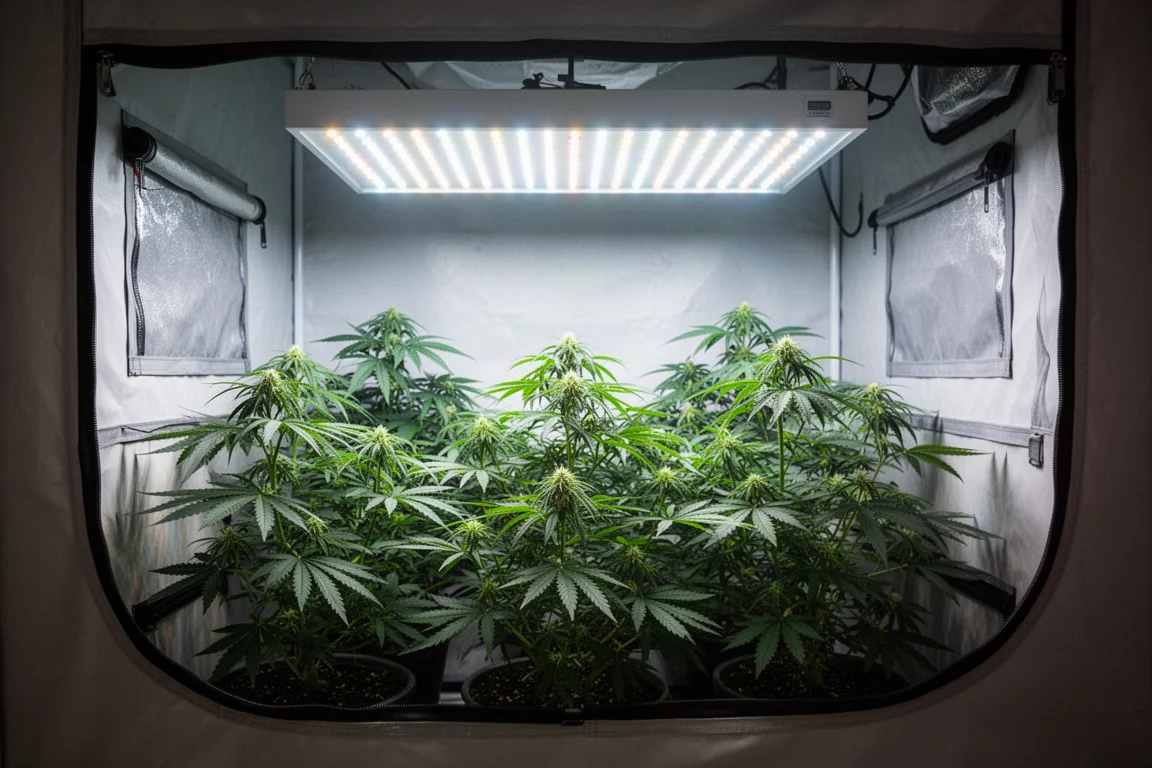
Here is the practical takeaway. At level three, only 30% power, the light hits an average of around 700 PPFD, which is what you need if you are not supplementing with CO2, and it draws just 251 W.
If you do not have a light meter and want to start seedlings, level one at 38 inches away gets you to about 250 PPFD. From there you can gradually increase intensity as plants move from seedling all the way to bloom.
Spectrum and Seedling Starting Tips
The spectral data shows a spike around 700nm, which is great for bloom. Combined with the wide dimming range, that makes the light flexible across the full crop cycle: low intensity and generous hanging distance for seedlings, then progressively higher levels as flowering approaches.
Efficiency and Long-Term LED Health
The efficiency story is the strongest argument for this light. You never need to go above level three, which is only about 250 W, yet the PPFD matches lights running at 100% at 310 W. That difference translates into significant energy savings over time.
There is also a longevity point worth taking seriously: grow light LEDs were never intended to run at 100%. Doing so greatly reduces their lifespan, and companies that tell you to run at full power seem not to care whether the light breaks. Running the Ion Frame A7 comfortably inside its output range protects your investment.
Buying Advice
This light is pricey given the specs, but the value case is strong if you fit its profile. It suits growers running a 2x4 tent who want full coverage from a single fixture, plan to grow fruiting plants that demand real intensity, and care about running costs and LED lifespan. If you only grow a couple of low-light herbs, you are paying for headroom you will never use.
Conclusion
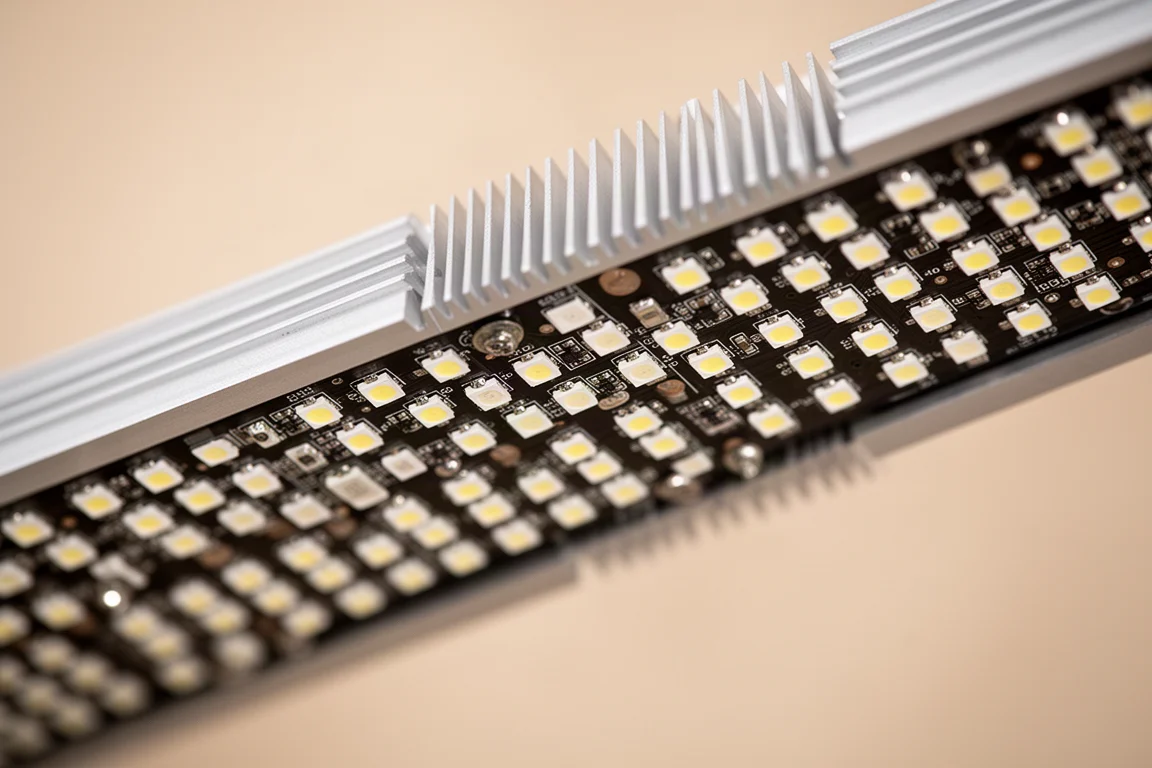
The AC Infinity Ion Frame A7 stands out in a market full of underpowered 4x2 lights. With 1,808 LEDs including 128 infrared, massive PPFD headroom, an efficient heat-sink design, and a detachable driver you can keep outside the tent, it delivers more than most growers will ever need at levels that keep energy bills and LED wear low. If you want one light to carry a tent from seedling to bloom without compromise, it earns its price.
Product link
View more details for AC Infinity Ion Frame A7
This product is mentioned in the review. Check the specifications, options, and compatibility before buying.
View more details for AC Infinity Ion Frame A7Further reading
Related Reviews
Grow Lights
AC Infinity ION Frame Evo 3 Review: A New Bar-Style LED Grow Light for 2x4 Spaces
Samsung LM301H EVO diodes, app scheduling, and a magnetic frame make the ION Frame Evo 3 a serious option for 2x4 grow spaces.
Grow Lights
AC Infinity ION Grid T24 Review: A Full Spectrum LED Grow Light for 2x4 Spaces
A 260W full spectrum LED grow light with Samsung LM301H diodes, a programmable digital controller, and a complete hanging kit out of the box.
Grow Lights
Barrina TXL63 Review: A Compact 3-ft Full Spectrum Grow Light That Earns Its Place
A hands-on look at the Barrina TXL63, a 3-ft full spectrum LED grow light tested on microgreens and recovering tomato transplants.