Coffee Equipment
Velox Minibar Electric Espresso Maker Review: A Vintage Curiosity That Brews Poorly
A 1970s Italian electric moka pot with striking retro design and historical appeal, but the brewing results disappoint. Best appreciated as a display piece rather than a daily driver.
Introduction
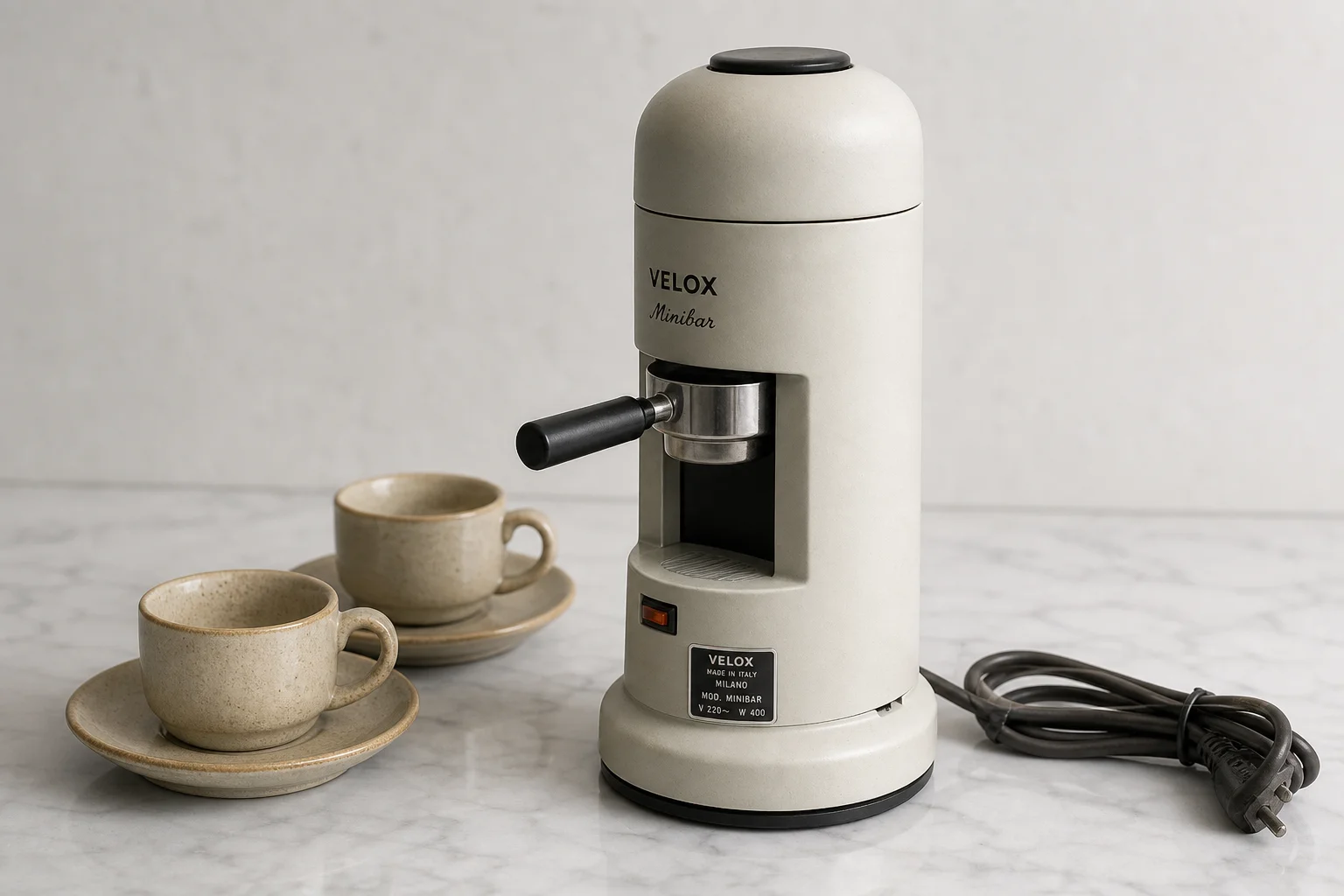
The Velox Minibar is a 1970s Italian electric espresso maker that arrived as part of a historical auction lot. Its compact form, retro aesthetic, and original packaging make it visually compelling. However, the brewing results reveal why this machine has remained largely forgotten for decades. This is a device best appreciated as a curiosity and display piece rather than a functional coffee tool.
Design and Build Quality
The Minibar presents itself as a premium object from an era when industrial design prioritized form alongside function. The machine measures compactly, with a rounded top cap and a cream or light grey finish typical of 1970s Italian appliances. The packaging is tasteful and period-appropriate, with instructions printed in Italian and charming vintage illustrations.
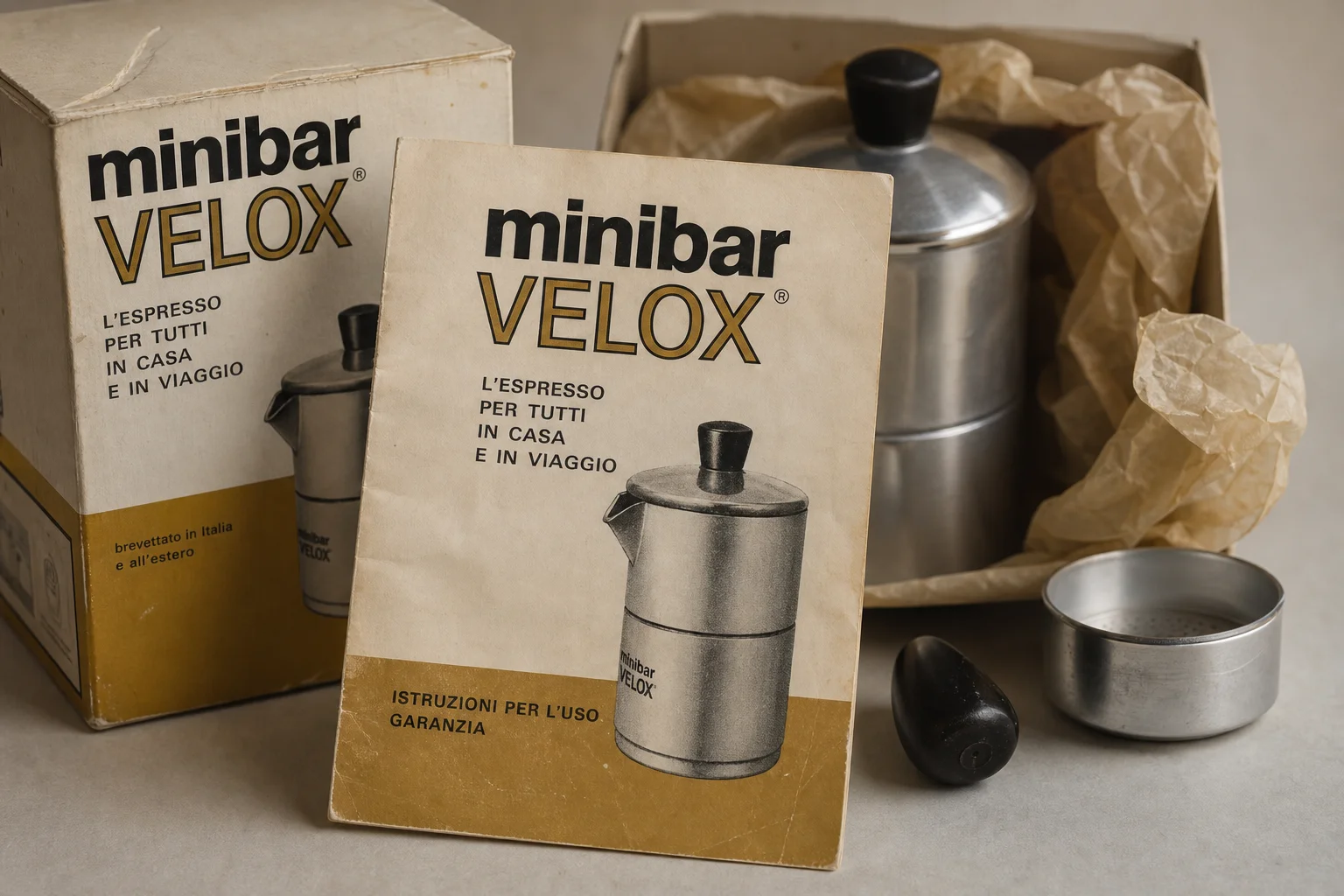
The included accessories are genuine period pieces: two ceramic cups with saucers, a small spoon, and a power cord with a step-down transformer requirement. The machine carries a patent mark from Ferrara, Italy, suggesting it was a considered design rather than a throwaway product. The overall construction feels solid, with metal and Bakelite-era plastics that have survived decades without degradation.
However, the design reveals practical compromises. The filter basket sits loose at the bottom of the top cap and falls out easily when tapped, creating a frustrating cleaning experience. There is no on-off switch; the machine activates only when plugged into power, requiring a converter for non-European electrical systems.
How It Works
The Minibar operates as an electric moka pot, a hybrid between traditional stovetop moka pots and electric brewing. Water fills the lower chamber, ground coffee sits in a filter basket, and the upper chamber collects the brewed liquid. When powered on, an internal heating element boils the water, creating steam pressure that forces hot water up through the coffee grounds and into the collection chamber above.
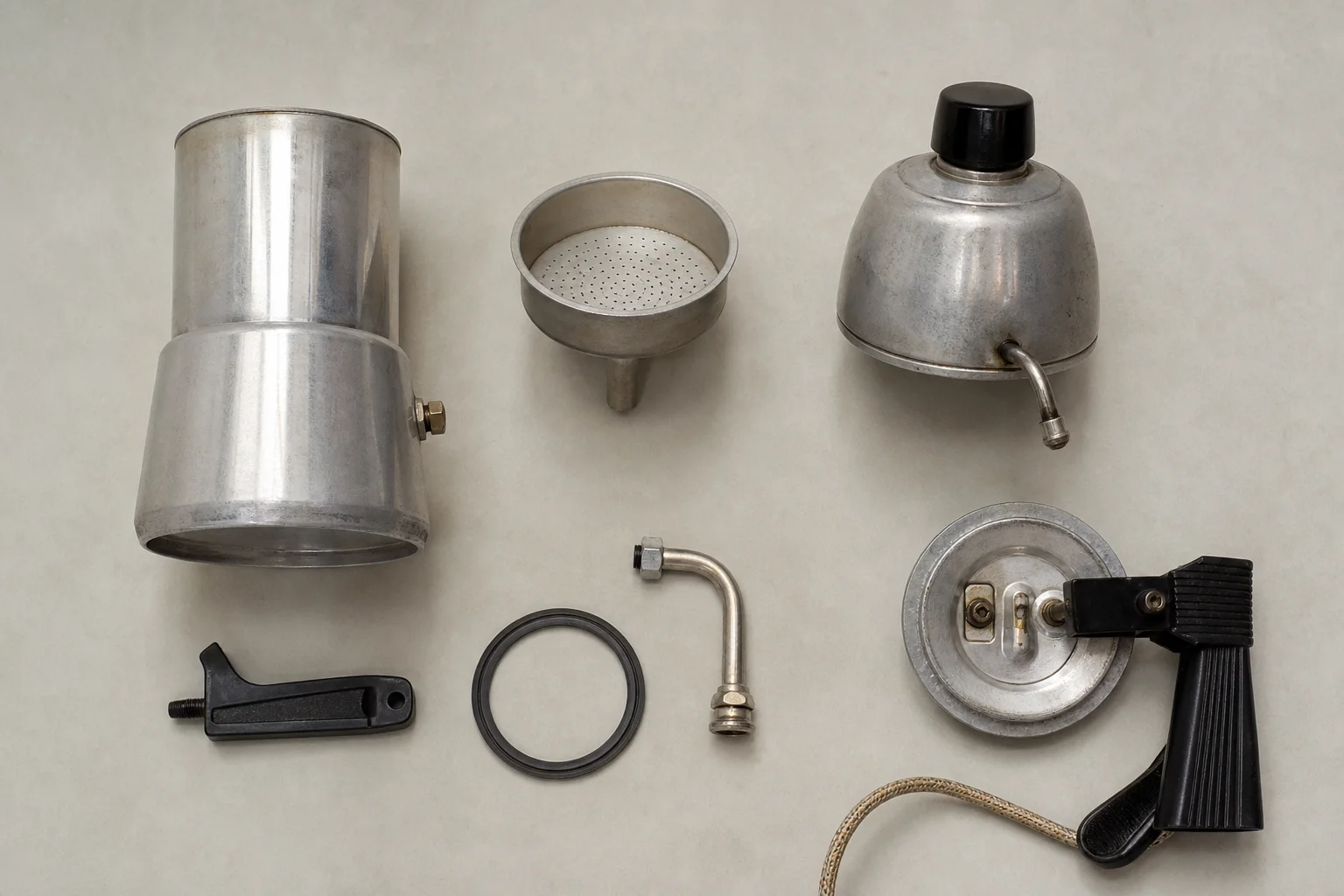
The machine is designed to brew approximately 30 millilitres of coffee across two small cups, making it a genuinely compact brewer. The heating element appears to be a jacketed coil that surrounds the water chamber, ensuring rapid heating. The thermostat mentioned in the original documentation is present but its exact operating temperature remains unclear.
Assembly is straightforward: fill the lower chamber with water, insert the filter basket with ground coffee, screw on the top cap, position the two cups beneath the spout, and plug in. The machine requires no manual intervention during brewing beyond monitoring for completion.
Brewing Performance and Results
The Minibar’s brewing results are disappointing. The machine prioritizes speed over temperature control, boiling water aggressively rather than maintaining the gentler heat profile that produces balanced espresso-style coffee. This aggressive heating pulls harsh, bitter flavours from the grounds, resulting in a cup that tastes over-extracted and unpleasantly sharp.
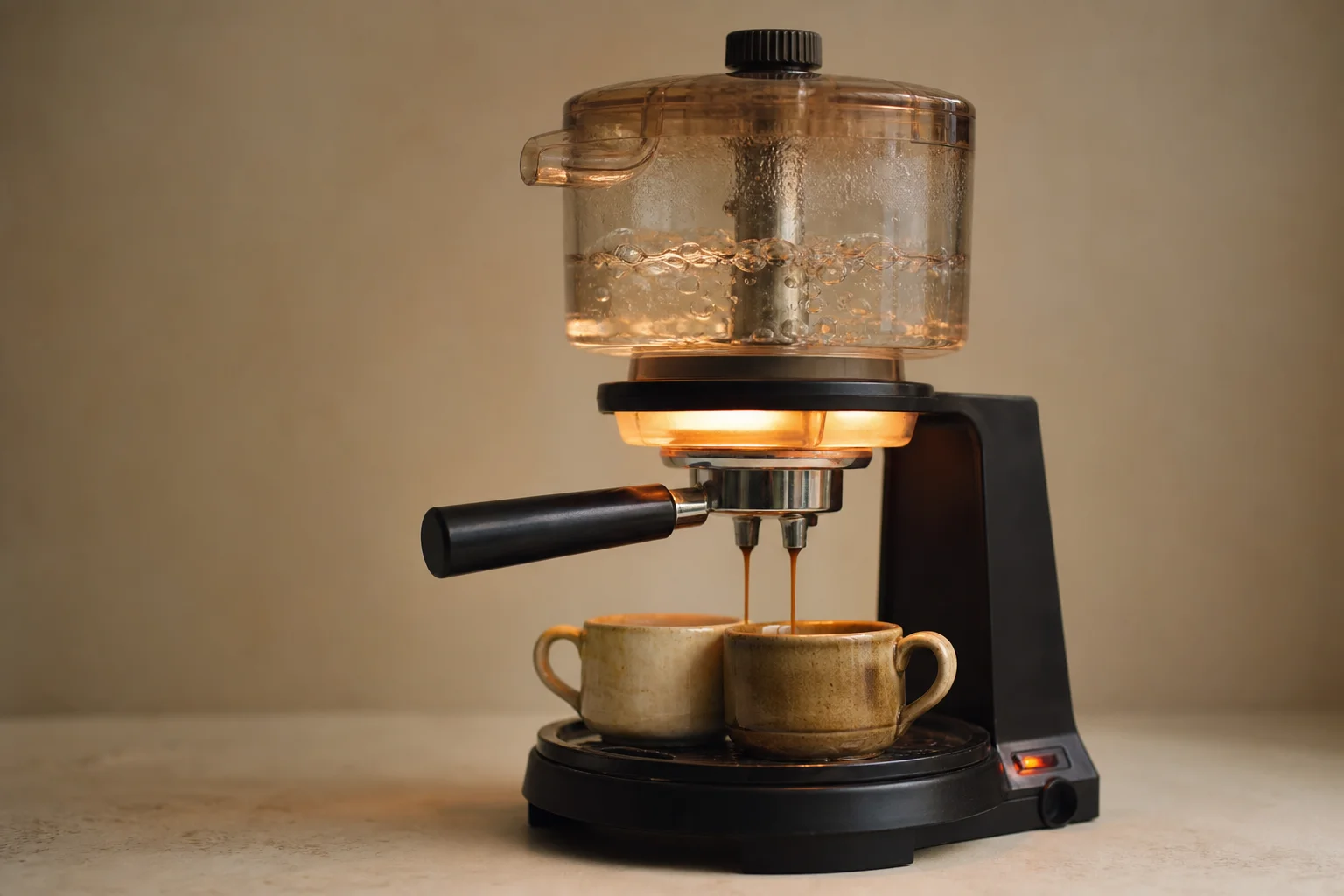
On the first attempt, using a standard moka pot grind (approximately 14 grams of coffee), the output was thin and under-extracted, lacking body or crema. The coffee smelled acceptable but tasted acrid and aggressive. A second attempt with a finer grind and slightly more coffee (approximately 7 grams) produced marginally better results, with more body and texture, but the bitterness remained dominant and unpleasant.
The machine does heat rapidly and produces output reliably. However, the lack of temperature control and the aggressive boiling cycle make it nearly impossible to extract good coffee. The design appears optimized for speed and simplicity rather than flavour. For comparison, a well-executed moka pot on a stovetop allows the brewer to control heat and stop brewing at the optimal moment; the Minibar offers no such control.
Cleaning is a miserable experience. All components become extremely hot during operation, and disassembly while warm is uncomfortable. The loose filter basket design means coffee grounds scatter easily when tapping the basket into a bin.
Verdict: A Display Piece, Not a Daily Brewer
The Velox Minibar is a historically interesting object with genuine design merit and period charm. Its compact form, original packaging, and Italian engineering represent a moment when manufacturers attempted to electrify traditional coffee-making methods. However, it is not a functional tool for making good coffee.
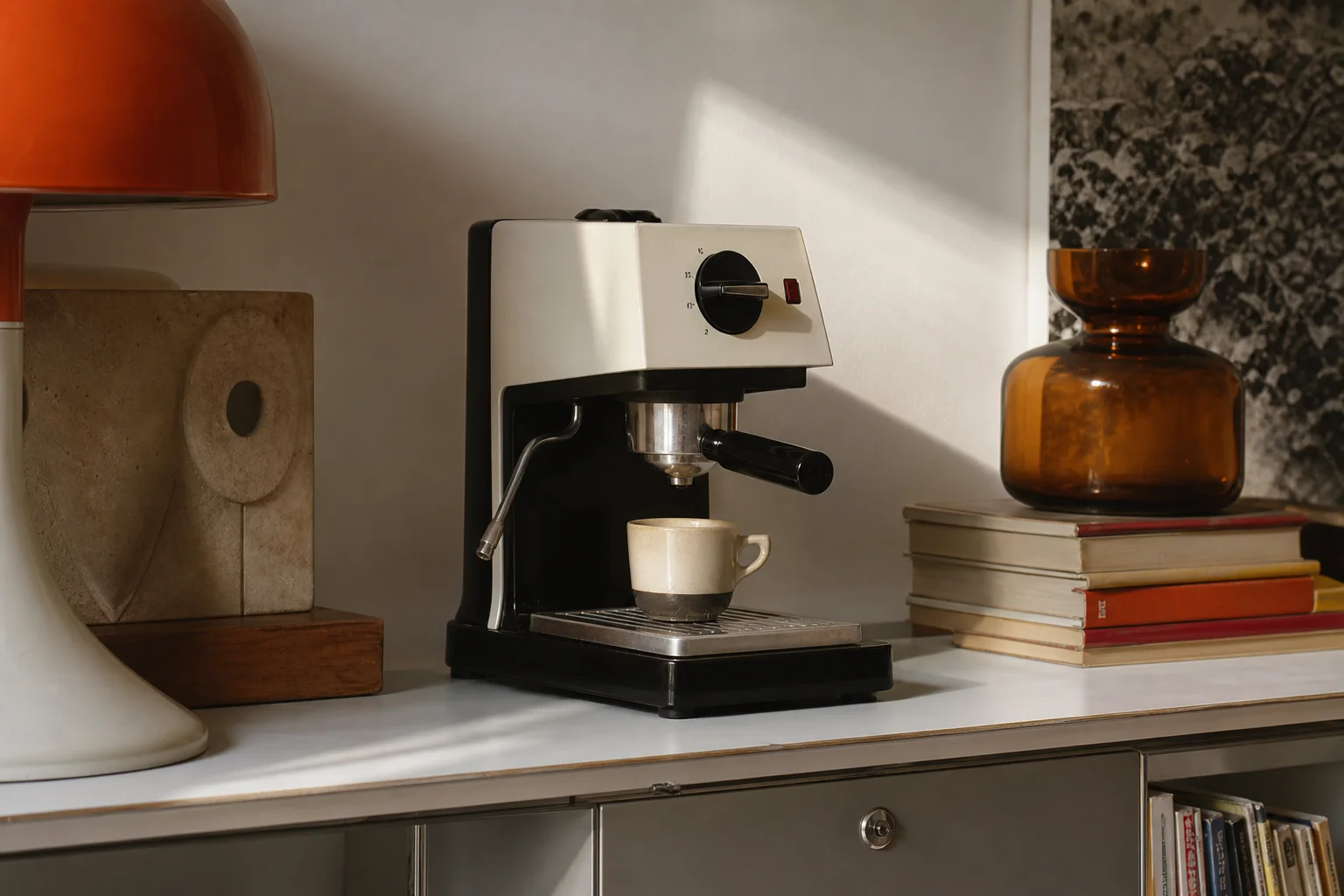
The machine is best suited to collectors of vintage kitchen equipment, design enthusiasts, or anyone drawn to mid-century Italian industrial objects. It works reliably as a conversation piece and display item. Anyone expecting to brew pleasant coffee should look elsewhere. The Minibar’s obscurity is not accidental; it is the result of a design that prioritizes novelty over usability and speed over flavour.
For those who do acquire one, treat it as a museum piece. Display it, appreciate its aesthetic, and perhaps run it once with water to experience its operation. But do not expect it to become a regular part of your coffee routine.
Conclusion
The Velox Minibar is a fascinating relic of 1970s kitchen innovation, but it serves as a cautionary example of how good design and historical interest do not guarantee practical performance. Its place is on a shelf, not on your countertop.
Product link
View more details for Velox Minibar Electric Espresso Maker
This product is mentioned in the review. Check the specifications, options, and compatibility before buying.
View more details for Velox Minibar Electric Espresso MakerFurther reading
Related Reviews
Coffee Equipment
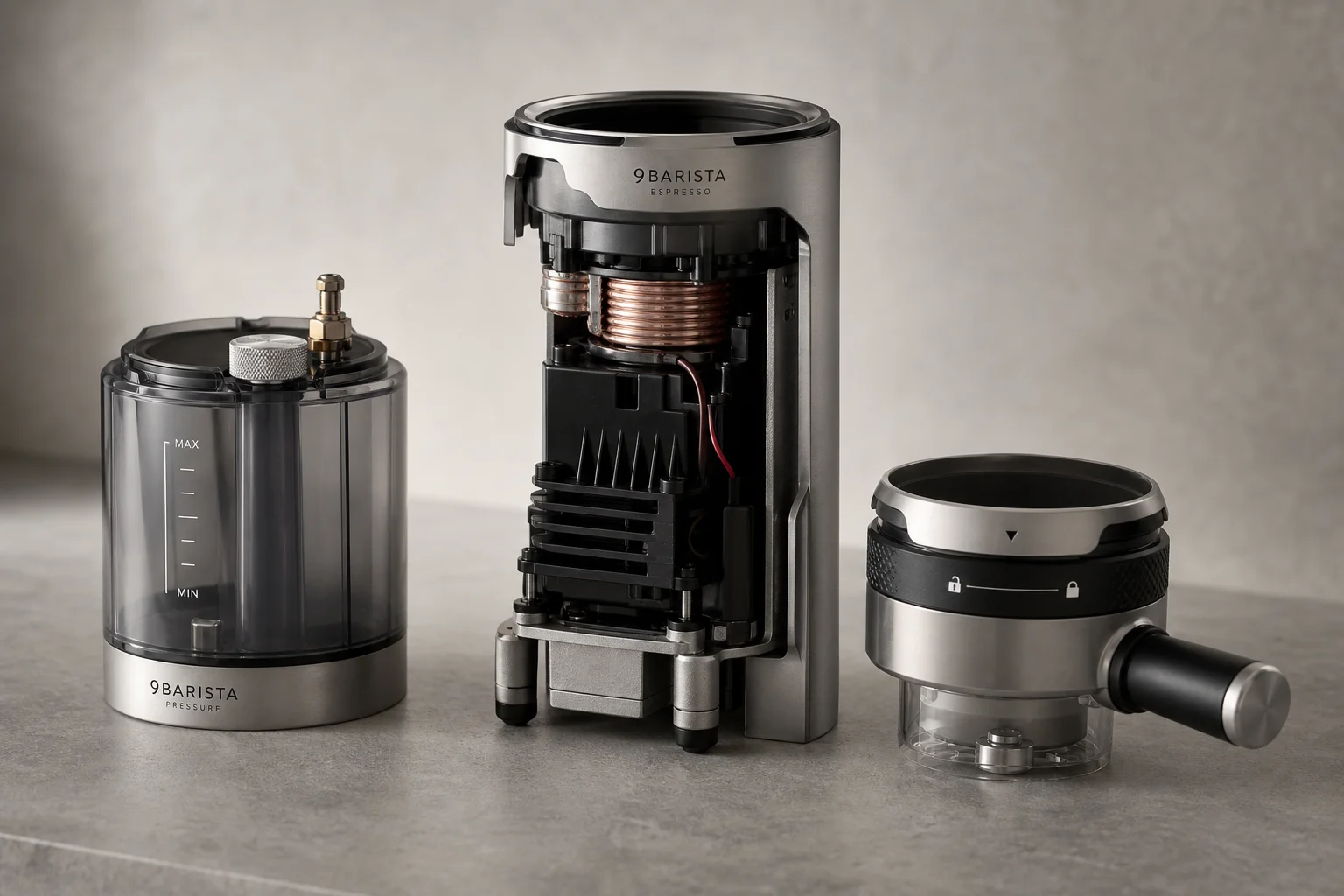
9Barista Espresso Machine Review: Stovetop Espresso for Single-Cup Enthusiasts
A cleverly engineered stovetop espresso maker that generates nine bars of pressure without electricity. Excellent coffee quality, but requires patience and suits solo drinkers only.
Coffee Equipment
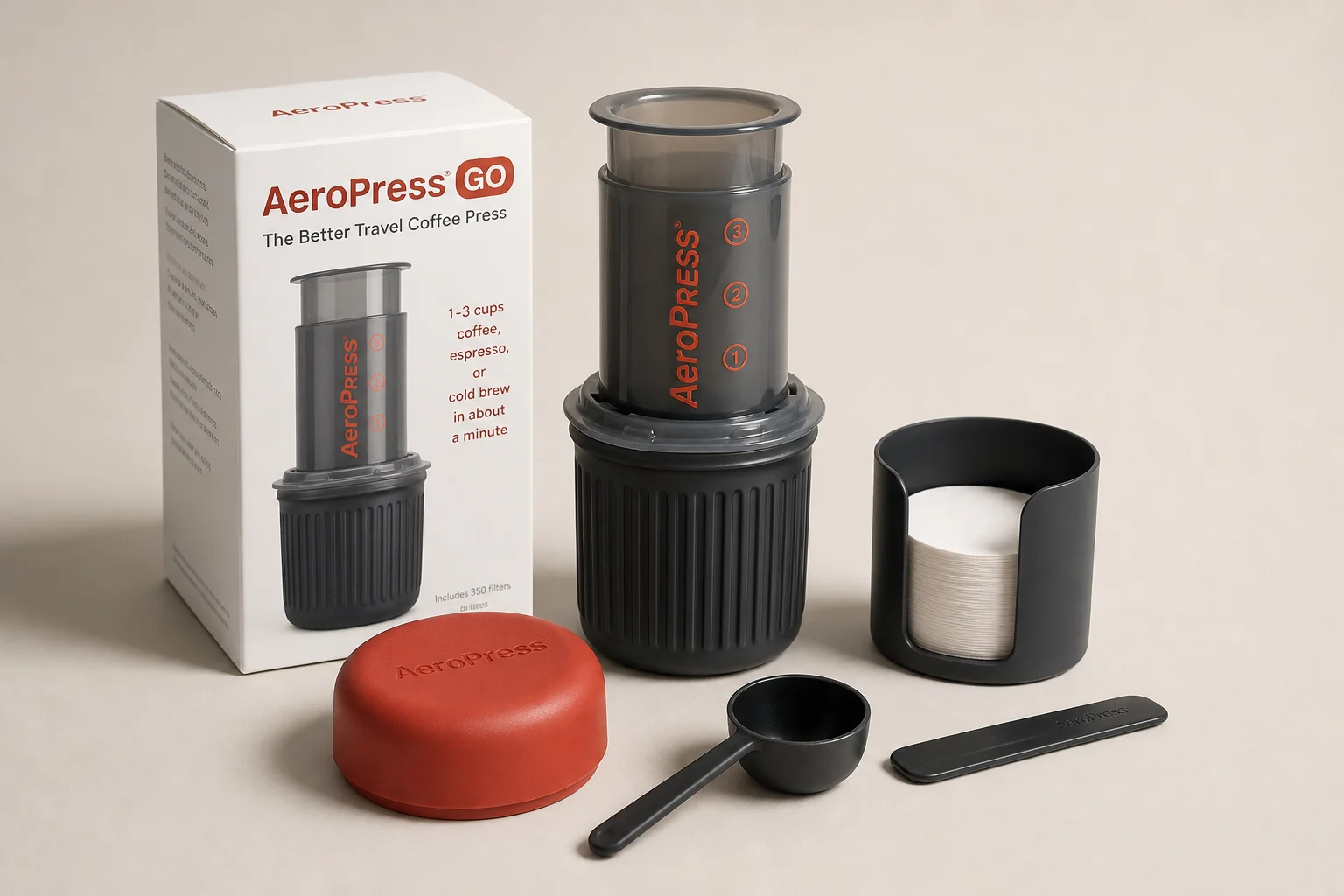
Aeropress Go Review: A Compact Travel Brewer That Solves One Specific Problem
The Aeropress Go shrinks the original design and adds an integrated cup, but it may not address the travel challenges most coffee enthusiasts actually face.
Coffee Equipment
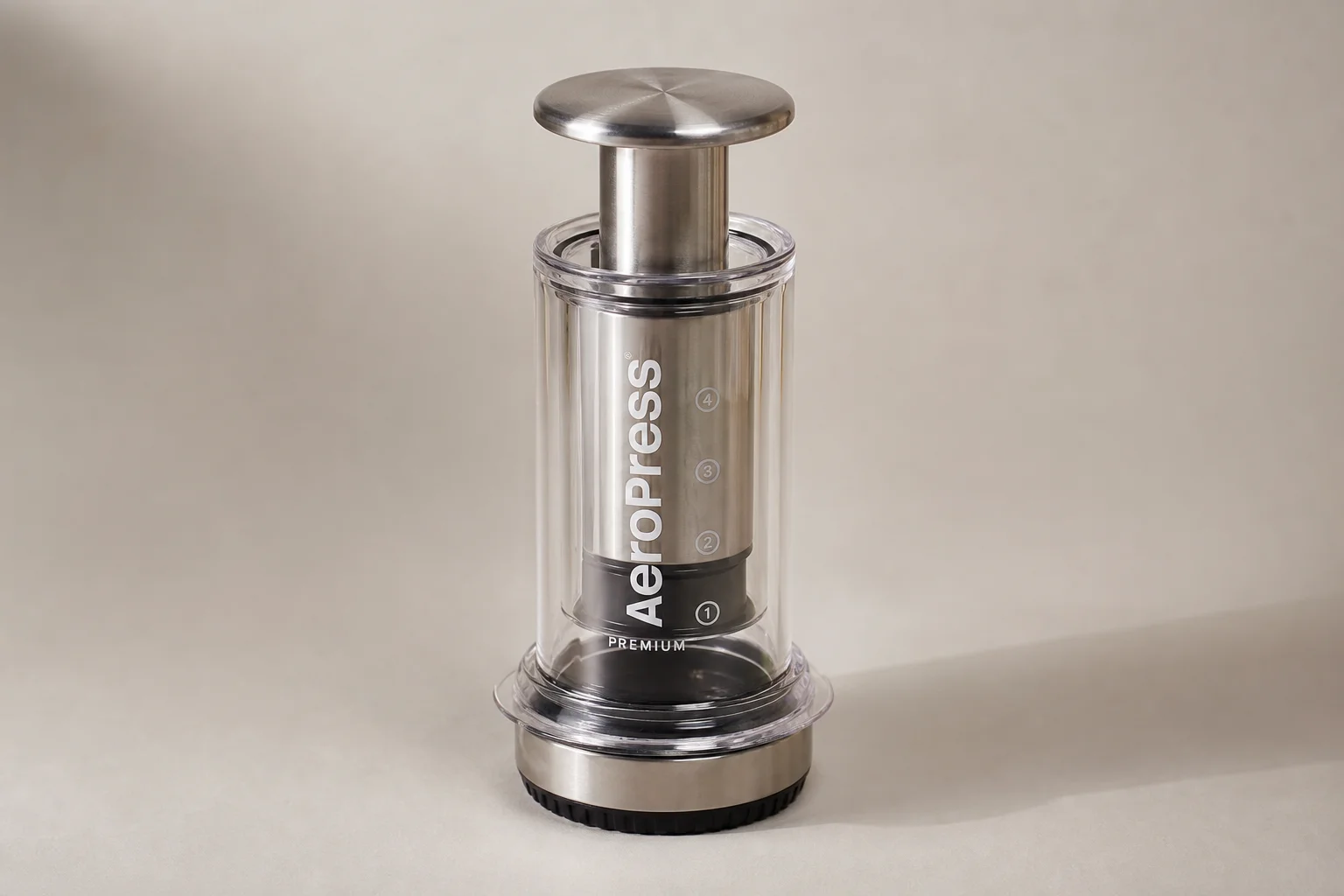
AeroPress Premium Review: Premium Materials, Practical Trade-offs
The AeroPress Premium brings glass and metal construction to a beloved brewer, but trades portability and durability for a more refined feel. Here's what changes in the cup and what matters before you buy.