Snowboard Boots
Vans High Standard OG Review: A Classic Soft-Flex Snowboard Boot
Vans' bestselling snowboard boot is a straightforward, soft-flexing all-mountain workhorse with a wider fit and few frills. Here is what to know before buying.
Introduction
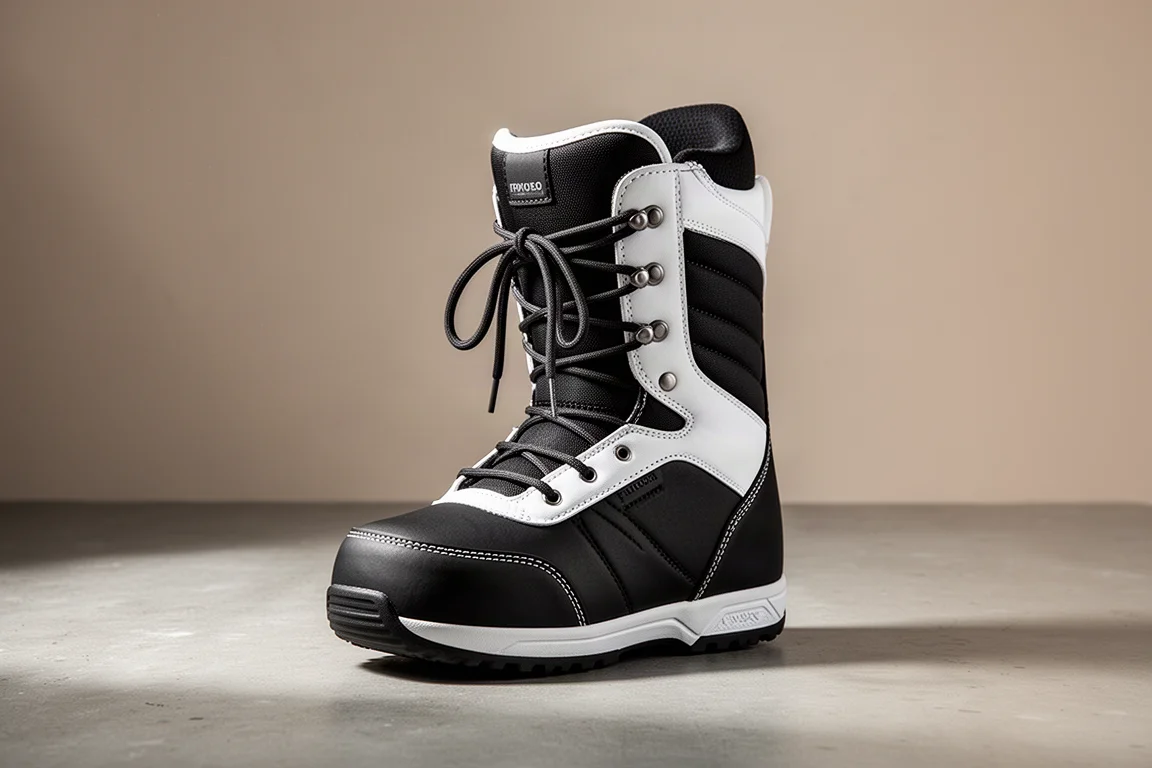
The Vans High Standard OG is the brand’s bestselling snowboard boot of all time, and it earns that status by being exactly what it is: a simple, soft-flexing, traditional lace boot without a lot of extra features. The shell has been updated slightly over the years and materials have improved, but the target rider has stayed the same. This is a boot many people started out on, and it remains a solid pick for the same audience today.
It is worth noting up front that this is a somewhat bulky boot. Do not expect a super low profile. The sole is reasonably low, but lengthwise the boot sticks out and the toe is on the chunky side. As always, the best boot is the one that fits your foot and your needs.
Shell Construction and Durability
The shell uses a more durable outer material designed to take abuse. There is plenty of stitching around the lower portion of the boot, reinforced from single up to triple rows, to help it survive contact with boards and bindings. One trade-off: if you really crank down on your strap around that area, you may feel some pressure, since that stitching zone acts as a flex point.
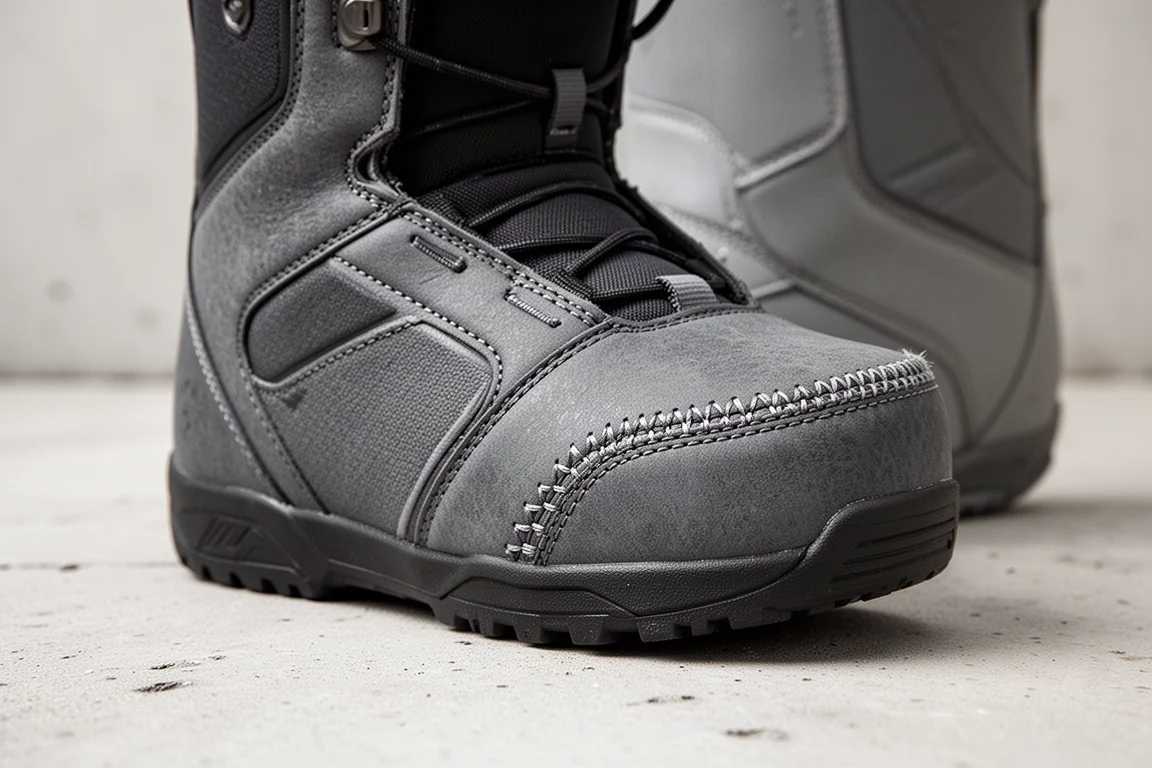
The laces are slightly recessed into the upper, which helps protect them when you rest your board against the boot. The back spine has enough rigidity to be reasonably supportive, but it will likely crease over time if you ride hard. That said, the spine runs up nearly to the back of the shell, which adds a bit of extra support.
Flex and Ride Feel
This is not a stiff boot. The High Standard OG has a soft, beginner-friendly flex that also suits a soft park boot feel. Articulation is not particularly deep out of the box, but the way you lace through the eyelets can change it: running the laces only through the front eyelets, only through the back, or crossing at the top all shift how much give you get. It is a lace boot, so experiment and dial it in.
Keep in mind that boots soften as they break in. Combined with an already soft flex, this boot gets even more forgiving the more you ride it. It also does not dampen much in the way of impacts, so you will feel a lot of what is underfoot. That is great for board feel and less great if you want support underneath you.
Outsole Grip and Wear
The outsole uses Vans’ old-school waffle tread. It grips to a reasonable extent on snow, but it wears aggressively. If you are a foot shuffler walking around base areas with a lot of concrete, expect visible wear quickly. Walking on snow is fine; anything firmer will take its toll.
Lacing and Fit Adjustability
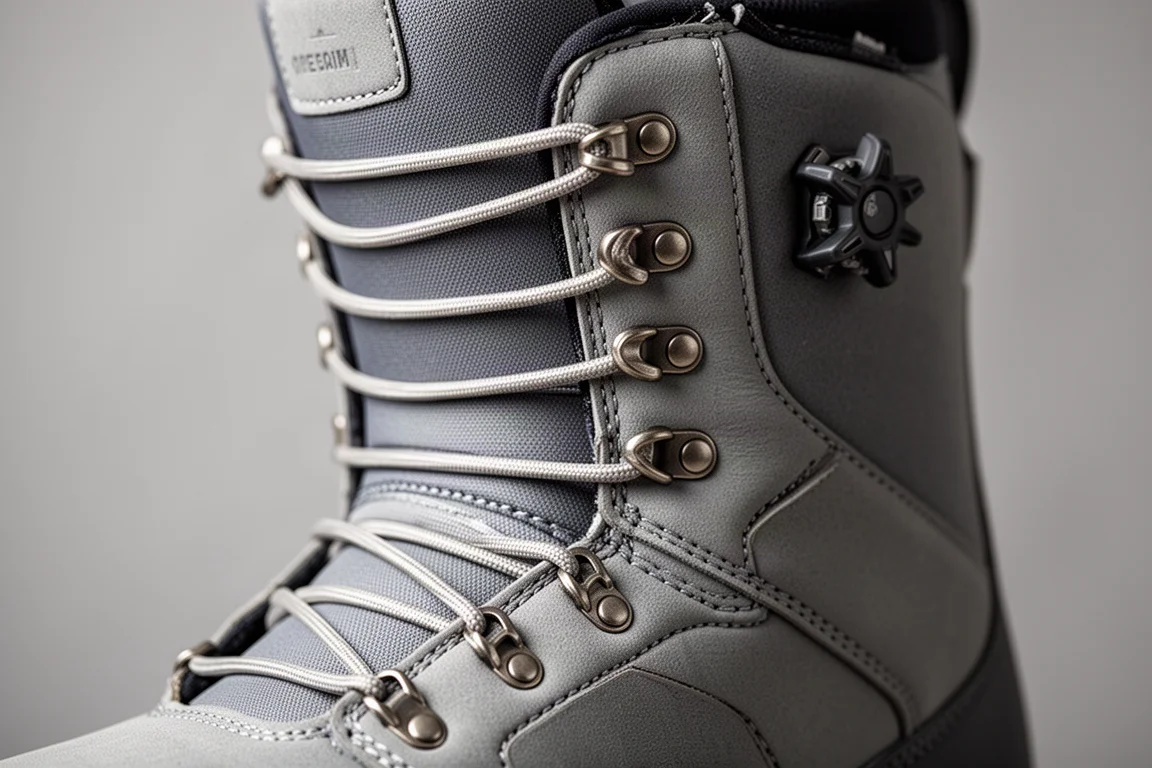
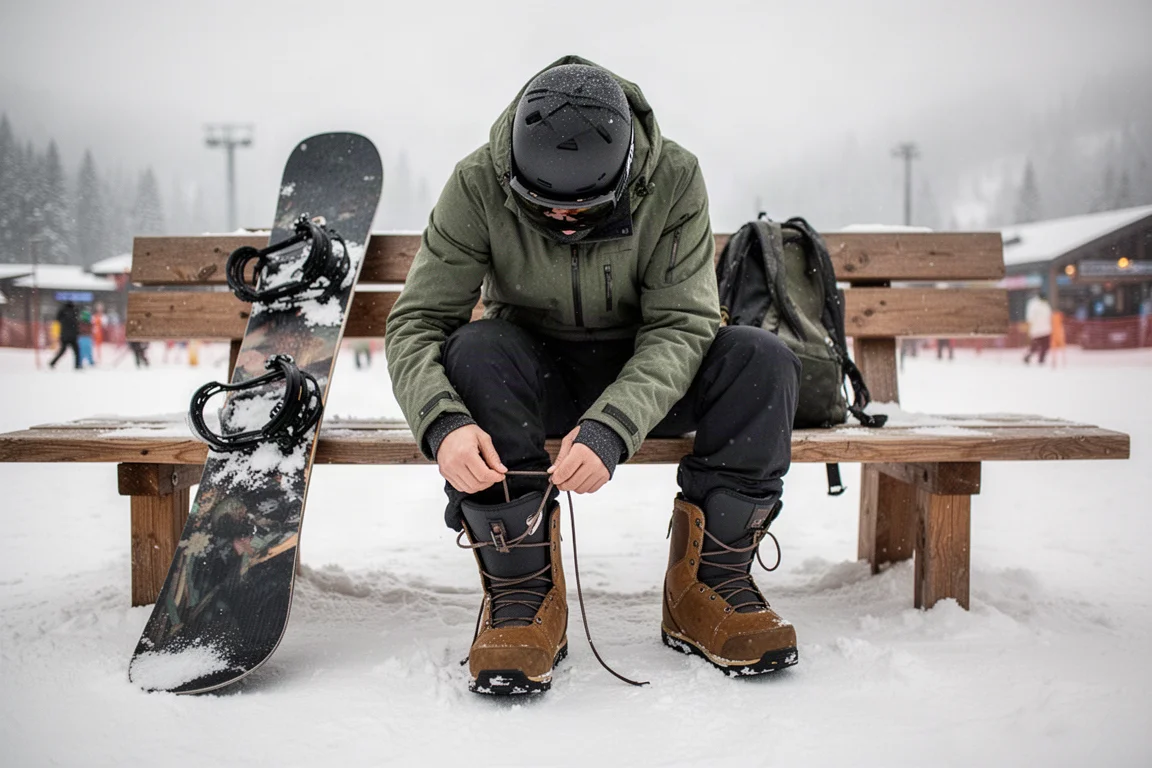
Lacing is traditional and standard, with three cleats on the side for pulling the boot tight and locking it in place. They do a good job, though a cross-tie before you cinch the cleats is recommended. Inside, a sewn-in pull harness helps snug the liner against the shell, which compensates a bit for the soft build. The boot also includes Vans’ heat retention 360, a layer that reflects heat back into the liner to keep your feet a little warmer. Nice to have at this price point.
Liner and Footbed
The liner uses Vans V1 UltraCush foam. It is not especially rigid and will pack out over time, but it offers neoprene at the toe for longer toes and a Velcro tongue strap to hold the tongue in place. The heel pocket has a U shape with aggressive J-bars. Some riders feel those J-bars as pressure points and may need to have the liner molded or adjust the foam. If you feel pressure there, check whether your insole is seated properly first.
Two seams to be aware of: one near the pinky toe, and another larger one at the instep crease near the opening. Some riders feel them, some do not. Externally the boot is not particularly narrow, and it suits a wider ankle and a U-shaped heel rather than a V-shaped foot.
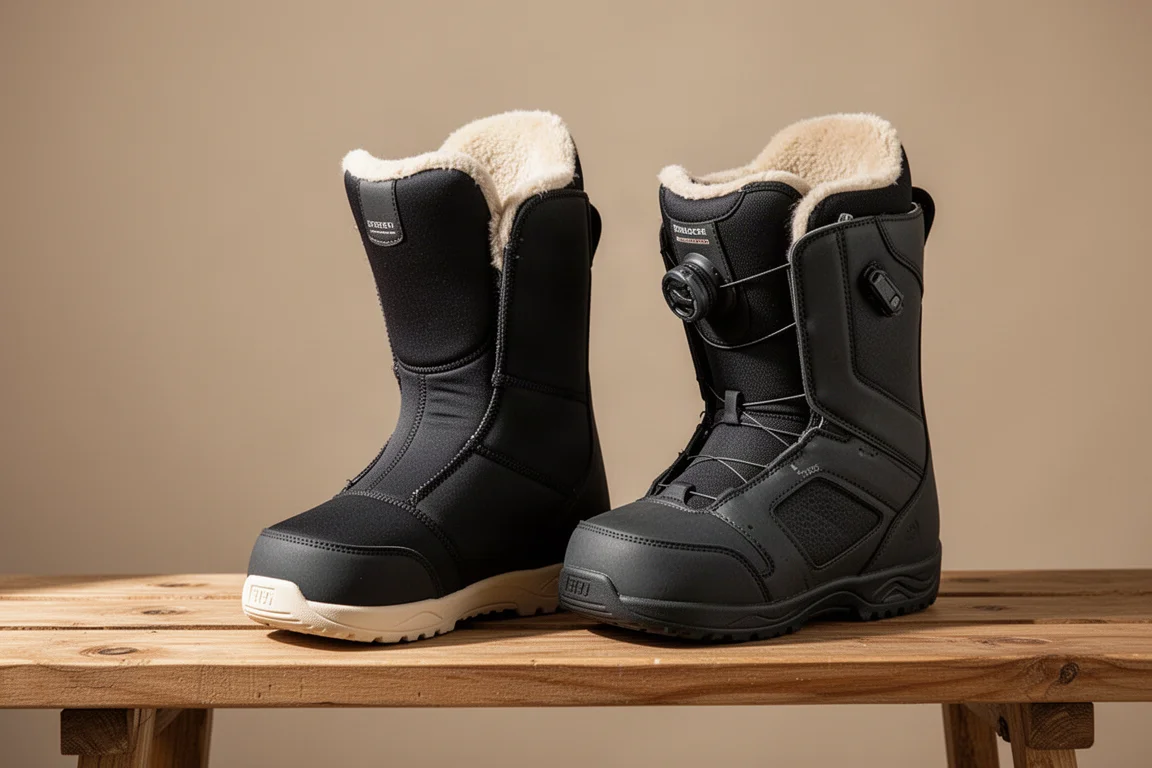
The stock footbed is the V1 PopCush. It has no posting, so the arch is easier to collapse, but it is thick and helps dampen impacts enough to keep you from getting bruised heels. It is better than many stock footbeds at this price. If you ride more than about ten days a year, replacing it is a sensible upgrade.
Sizing and Fit Notes
Measured, the boot stands just under 11 inches at the back and about the same at the tongue, with roughly 10.5 inches on the side. The shell at the back of the heel measures 10 inches, which means about an inch of liner pops out, with the tongue sitting just over 10 inches and the side just under 10.5. If you have really long legs with big calves, the liner may pop out noticeably on you.
Who the High Standard OG Is Best For
This boot fits a clear type of rider. It suits beginners with a slightly wider forefoot and a wider, U-shaped heel, riders who want a comfortable soft-flex boot without performance pressure, and park or jib riders who want a simple boot that gets the job done without extra parts to break. It is a meat-and-potatoes boot.
Heavier riders should consider moving up to something stiffer in the Vans line, since a soft flex like this can be flexed through quickly. If you need real support underfoot, the same applies. And if you are buying online rather than getting fitted in person, make sure the shop you buy from has a good return policy.
Conclusion
The Vans High Standard OG is a classic for a reason: a simple, comfortable, soft-flexing lace boot with a wider fit, decent warmth, and few things to go wrong. It is ideal for newer riders, jib kids, and anyone who values board feel over damping and support. If your foot is wider and you want an easy, dependable boot, it is hard to go wrong here. Just get sized properly and make sure the flex matches what you actually ride.
Product link
View more details for Vans High Standard OG
This product is mentioned in the review. Check the specifications, options, and compatibility before buying.
View more details for Vans High Standard OGFurther reading
Related Reviews

Snowboard Boots
32 Team Two Double Boa Review: 32's Highest-End Women's Snowboard Boot
A closer look at 32's top-tier women's snowboard boot, from the 3D molded toe box and double Boa lacing to the Performance Fit liner and heat-reflective footbed.

Snowboard Boots
Bataleon Acid BOA Snowboard Boot Review: A Serious First Entry from a Board Brand
Bataleon's first snowboard boot, designed by a former Burton boot designer, brings a stiff flex, dual BOA closure, and a heel hold system worth a closer look.

Snowboard Boots
Battalion Acid Boot Review: A Stiff, Aggressive Boot Built to Last
The Battalion Acid Boot is the brand's highest-end offering, built with seamless construction, TPU reinforcement, dual BOA lacing, and a heat-moldable liner. Here is what to know before buying.