Snowboard Boots
32 Team Two Double Boa Review: 32's Highest-End Women's Snowboard Boot
A closer look at 32's top-tier women's snowboard boot, from the 3D molded toe box and double Boa lacing to the Performance Fit liner and heat-reflective footbed.

Introduction
The 32 Team Two Double Boa sits at the top of 32’s women’s boot line. That means more features than the rest of the range and a slightly more assertive ride, which makes it worth a careful look if you want a boot that leans toward power and board feel rather than pure softness.
One piece of advice worth repeating before anything else: if you can, get to a local shop and get sized properly. A boot is only as good as the fit on your foot, and trying it on in person is the single most reliable way to find the right one.
Shell and Durability
Starting with the shell, the toe area uses a 3D molded toe box with a welded seam. If you really crank a toe strap you might notice a slight pinch point, but it is not a big concern. The benefit of this construction is durability: if you are hiking something steep and kicking your toe into snow, the toe box will not collapse on you.
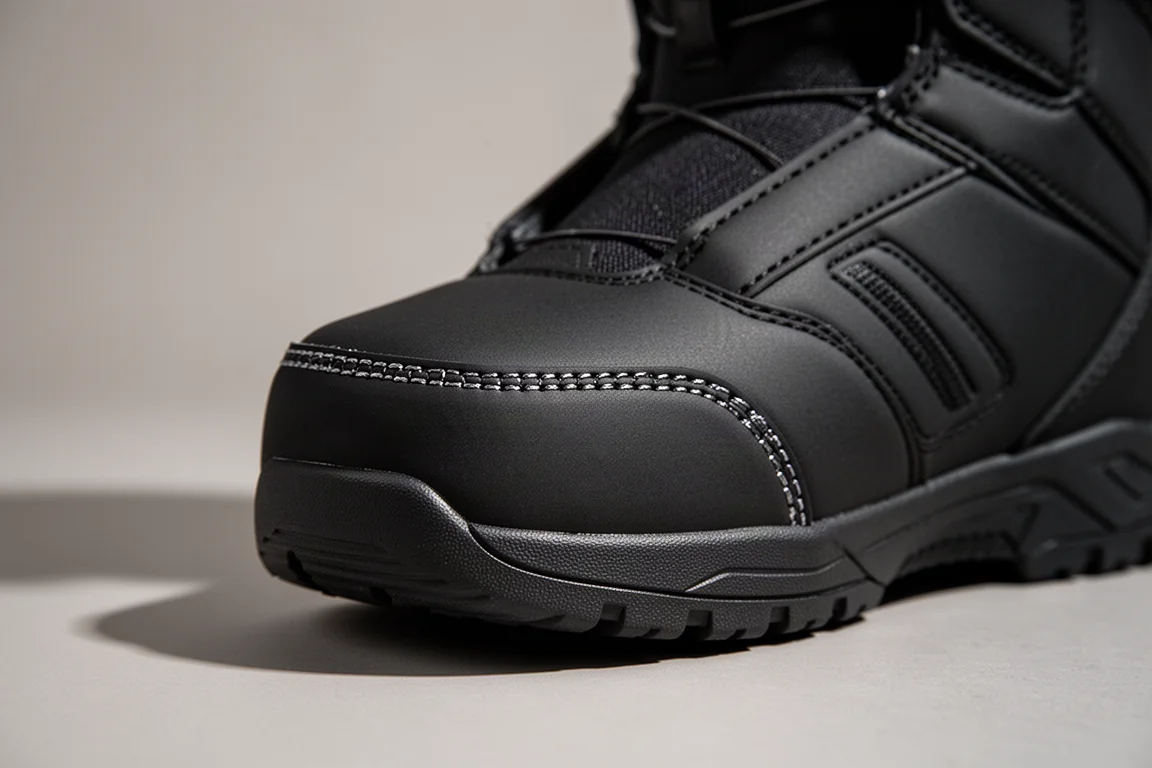
The only seam worth watching is the double stitch seam at the top of the boot, which is not recessed. If you rest the edge of your board on it repeatedly, it can wear and fray over time.
Flex, Articulation, and Back Spine
The ankle articulation starts out fairly rigid. A boot is only as stiff as the day you tried it on, and it will progressively break down with use. As it breaks in, the ankle allows more forward flexion, which translates into better drive. That means this boot needs some time to break in before it reaches its best state.
At the base of the back spine, a small strip extends down into the tread. Its purpose is entry optimization: when your boot is packed out and stiff, this strip helps you get in and out more easily by sliding on the boot’s paddle.
The back spine uses a multi-piece design, with rubber at the bottom and TPU above it. This adds some rebound to the back of the boot, though it is not as aggressive as some other boots on the market. It is more of a middle-of-the-road setup, so you still get some play rather than a fully locked-in performance feel. At the top of the spine there is a small cutout, so if you have a larger calf muscle, it will push out slightly.
The tongue contains urethane, which keeps it more rigid. You feel the power when you drive into it, and it does not break in as fast, which should help the boot hold its rigidity longer. The trade-off is that the boot will not stay peak-stiff forever; by around 100 days it will likely be well broken in, while at 50 days it should be breaking in nicely.
Underfoot Feel and Grip
Inside the shell there is heat reflective tape on the bottom, which reflects heat back in from the liner and helps keep your foot warmer for longer.
The outsole has a little give underneath, though not a large amount, and that helps dampen some of the kinetic vibration coming up through the board. The lug pattern is solid and offers good grip across various types of terrain.
The side profile is a little lower, so you sit closer to your board and get more feel underfoot. If you want heavy damping, this boot is not thick enough for that, though the foam inside still does a decent job cutting off kinetic energy. Board feel is clearly the priority here, which lines up with 32’s freestyle-focused, rider-driven identity.
Double Boa Lacing
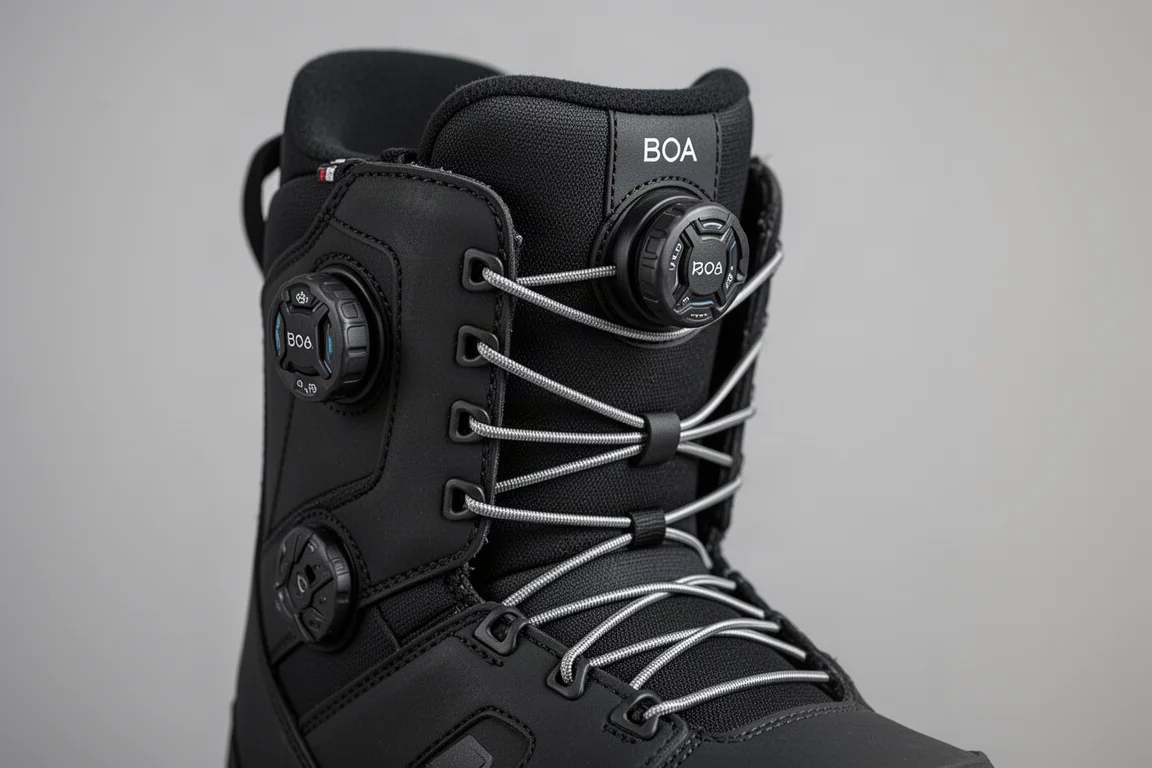
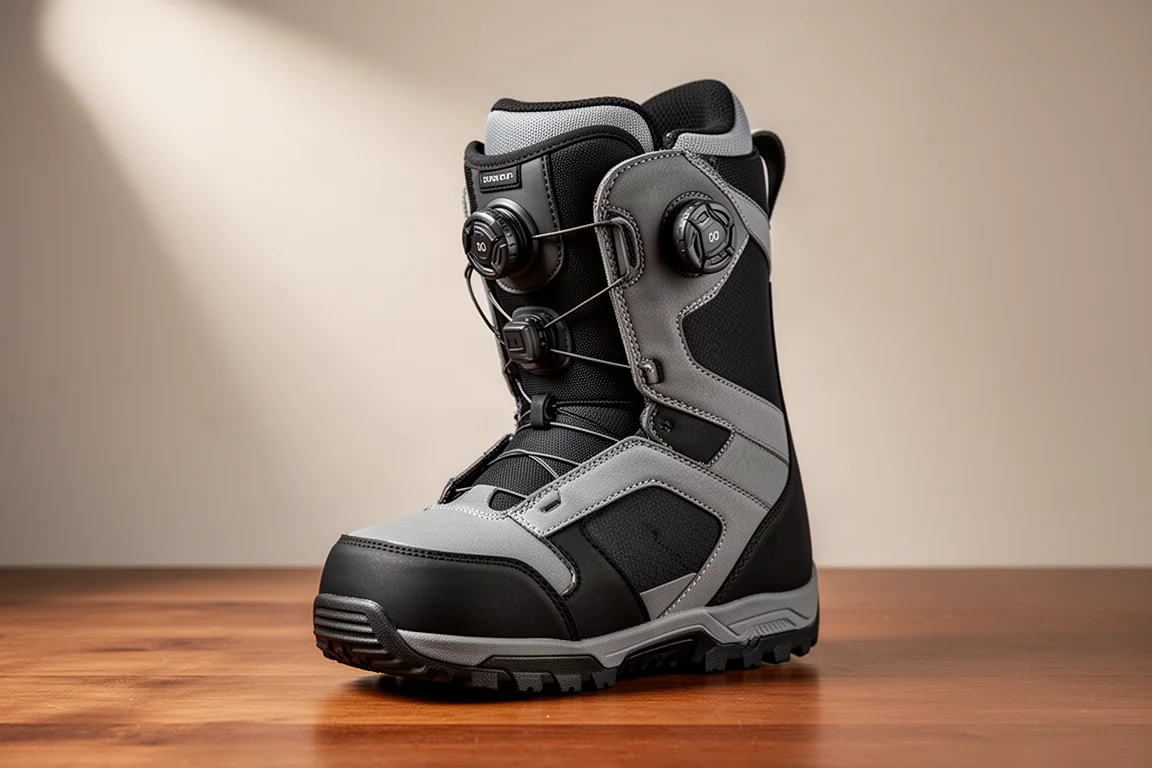
The Team Two Double Boa uses dual Boa dials: the front one controls the upper zone, and the side one controls the lower zone. These are the newer H5 coilers, which let you tighten down and, if you go too far, back the tension out click by click.
One quirk to know: on the right boot, tightening turns clockwise, and on the left boot it is reversed. It can take a moment to get used to, but the upside of dual Boa is full zone control. You can run the lower tighter, the upper looser, or any combination that works for you.
Internal Harness and Heel Hold
The internal harness sits slightly lower than some designs, and it is meant to pull the liner back into the shell for a more locked-in feel. It sits on a standard slide track: you pull it and tighten it down.
Because it is not simply sewn to the liner, it does a better job with heel hold. The slightly lower position does introduce a bit more lateral play at the top of the boot, which, if anything, helps if you like pressing and flexing.
Performance Fit Liner and Insole
The Performance Fit liner uses multiple densities of foam. The foam around the toe expands the most during heat molding, which is helpful if you have a bunion or similar pressure point. The molding extends far enough back that you avoid a seam right at the toe; some riders may still feel the seam further back, some may not.
On the liner tongue there is a panel that protects the liner from the crisscross of the internal harness and adds some rigidity. At the back, a large C-shaped structure plus a branded back panel adds rigidity to the liner. Inside that C is the heel bone pocket. If you swap in an aftermarket insole, make sure it fits precisely so your ankle bone sits in that pocket correctly. This structure also contributes to heel hold.
At the top of the liner, a double power strap is genuinely aggressive. The Velcro holds the top of the liner very well, and you can route and open it a couple of different ways depending on preference.
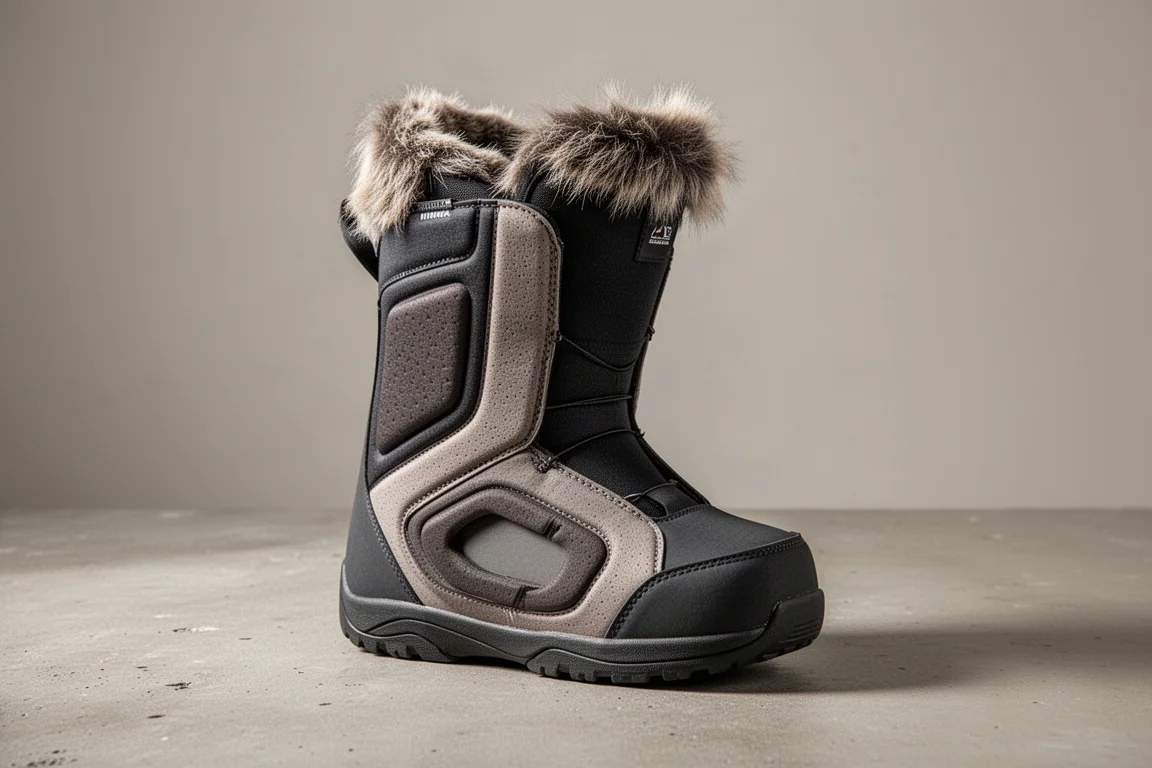
Inside the cuff, fur lining at the top helps your foot slide down into the boot. The J-bars provide a fairly mellow heel hold with more of a U-shape than a V-shape, so if you have a wider heel pocket, this may work in your favor.
The stock insole has some posting, which adds shape. If you ride more than 10 days a year, swapping it for an aftermarket insole, off-the-shelf or custom, is strongly recommended. If you ride less than that, the stock insole is more than enough.
Fit, Measurements, and Who It Suits
Measured on a women’s size 7, the shell reads 10 inches at the back and 10 and 3/4 inches at the front, with a higher cuff and a tongue that comes up, which shifts the power dynamic inside the boot. With the liner in, the shell measures 10 and 1/2 inches at the back and 11 inches at the front.
At the widest section, the shell measures 4 and 1/4 inches wide, and 11 and 1/2 inches from toe to heel. The forefoot is just shy of 4 inches wide. The footbed comes in at 9 and 1/2 inches long and 3 and 1/2 inches wide.
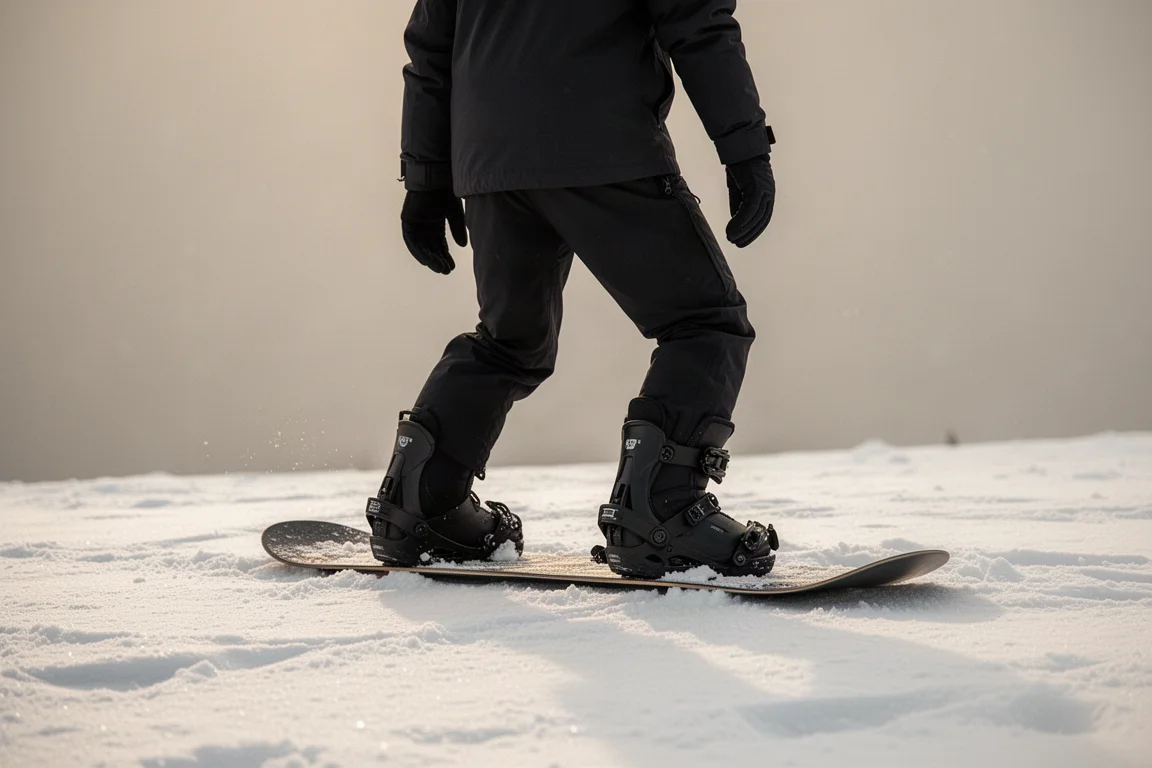
Taken together, this boot suits riders who want a feature-rich, higher-end women’s boot with good board feel, solid heel hold, and independent zone control through double Boa. It is less ideal if you want maximum damping or an extremely aggressive, performance-locked back spine. And again: it is best purchased after a proper in-person fitting at a shop.
Conclusion
The 32 Team Two Double Boa earns its place at the top of 32’s women’s line with a durable molded toe box, dual zone Boa control, a supportive Performance Fit liner, and a lower-profile feel that favors board contact over damping. If you ride frequently, plan on a break-in period and consider an aftermarket insole. If you ride less, the stock setup should serve you well. Fit it in person if you can, and it should reward you with a locked-in, responsive ride.
Product link
View more details for 32 Team Two Double Boa
This product is mentioned in the review. Check the specifications, options, and compatibility before buying.
View more details for 32 Team Two Double BoaFurther reading
Related Reviews

Snowboard Boots
Bataleon Acid BOA Snowboard Boot Review: A Serious First Entry from a Board Brand
Bataleon's first snowboard boot, designed by a former Burton boot designer, brings a stiff flex, dual BOA closure, and a heel hold system worth a closer look.

Snowboard Boots
Battalion Acid Boot Review: A Stiff, Aggressive Boot Built to Last
The Battalion Acid Boot is the brand's highest-end offering, built with seamless construction, TPU reinforcement, dual BOA lacing, and a heat-moldable liner. Here is what to know before buying.
Snowboard Boots
Battalion Rave Boa Boot Review: An All-Mountain Boot Built for All-Day Comfort
The Battalion Rave Boa boot pairs all-mountain responsiveness with a heat-moldable liner and a dual Boa system for a dialed, comfortable fit.